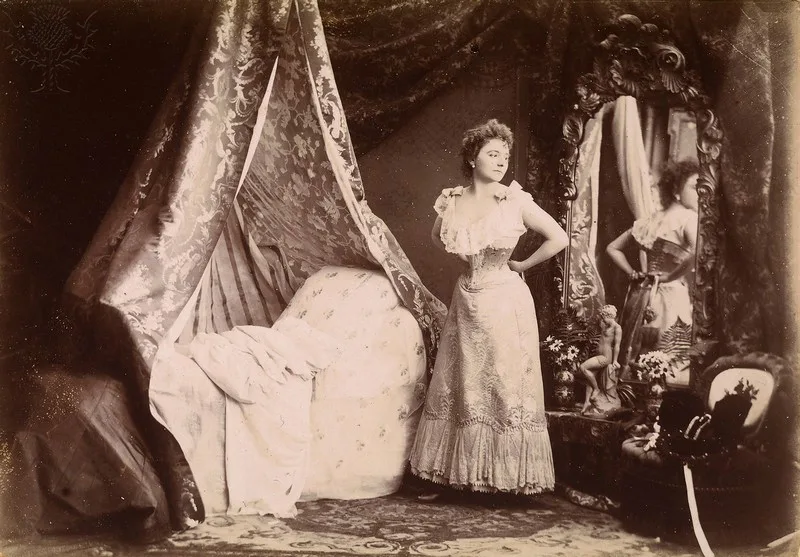
The advent of the reform dress made lacing corsets a thing of the past for many women.
The advent of the reform dress made lacing corsets a thing of the past for many women. Britannica Imagequest / Alinari Archives

Goodbye corset, hello reform dress

In the late 19th century, the corset faced growing criticism as it was deemed constrictive and damaging to health. The women’s movement fought for the reform dress, including in Switzerland – advocating freedom of movement, emancipation and a cut that served the body, rather than forcing it to bow to fashion trends.

Jasmin Mollet

Jasmin Mollet

Jasmin Mollet is an art historian currently working as an assistant curator at Basel Historical Museum
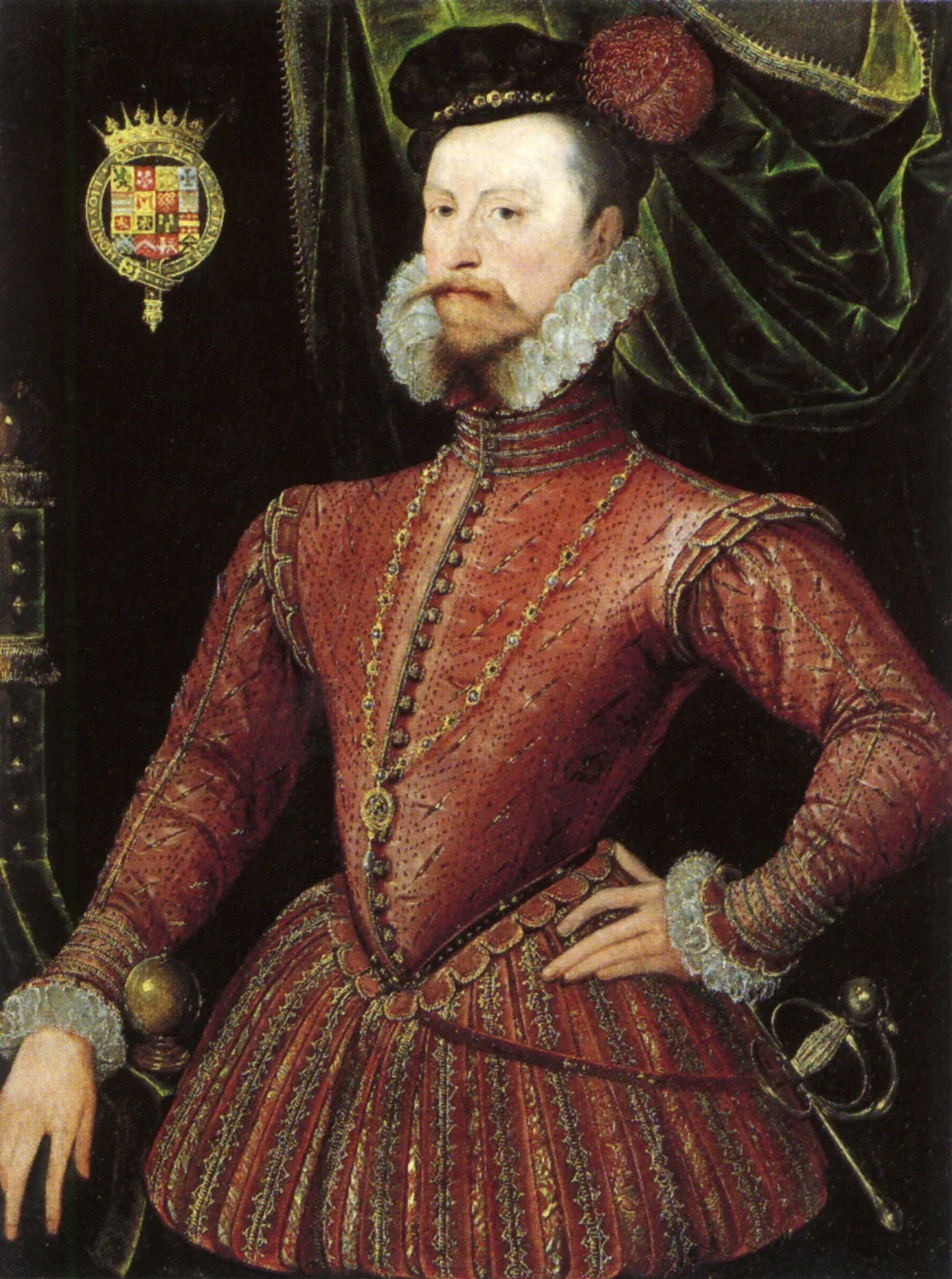
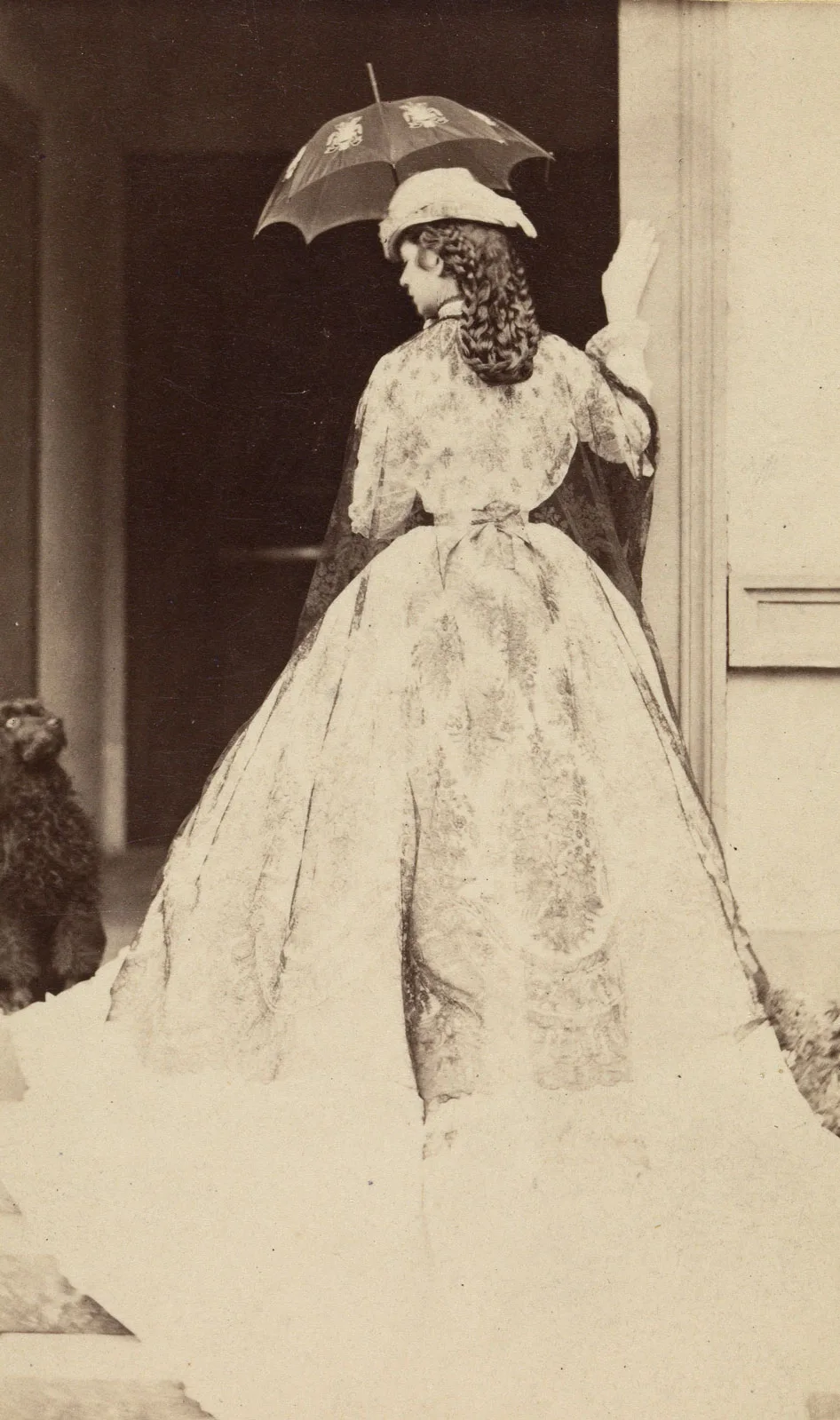
Corsets – also known as ‘stays’ or ‘jumps’ until the 19th century – had existed since the late Middle Ages. Depending on the fashion and zeitgeist, they could be worn tighter and more restrictively or laced more loosely. Corsets thus helped people sculpt their bodies to match the fashion of the time. The garment experienced its heyday in Europe in the second half of the 16th century with ‘Spanish fashion’, when the conical, rigid upper body silhouette became a sign of high social status. The corset required to achieve this body shape became popular among men and women, and was even worn by children in imitation of adult fashion.
‘Spanish fashion’ saw men, women and children wear corsets. Portrait of Robert Dudley, Earl of Leicester, circa 1575.
‘Spanish fashion’ saw men, women and children wear corsets. Portrait of Robert Dudley, Earl of Leicester, circa 1575. Wikimedia
Empress Elisabeth of Austro-Hungary embodied the 19th century ideal with her tiny waist.
Empress Elisabeth of Austro-Hungary embodied the 19th century ideal with her tiny waist. Wien Museum
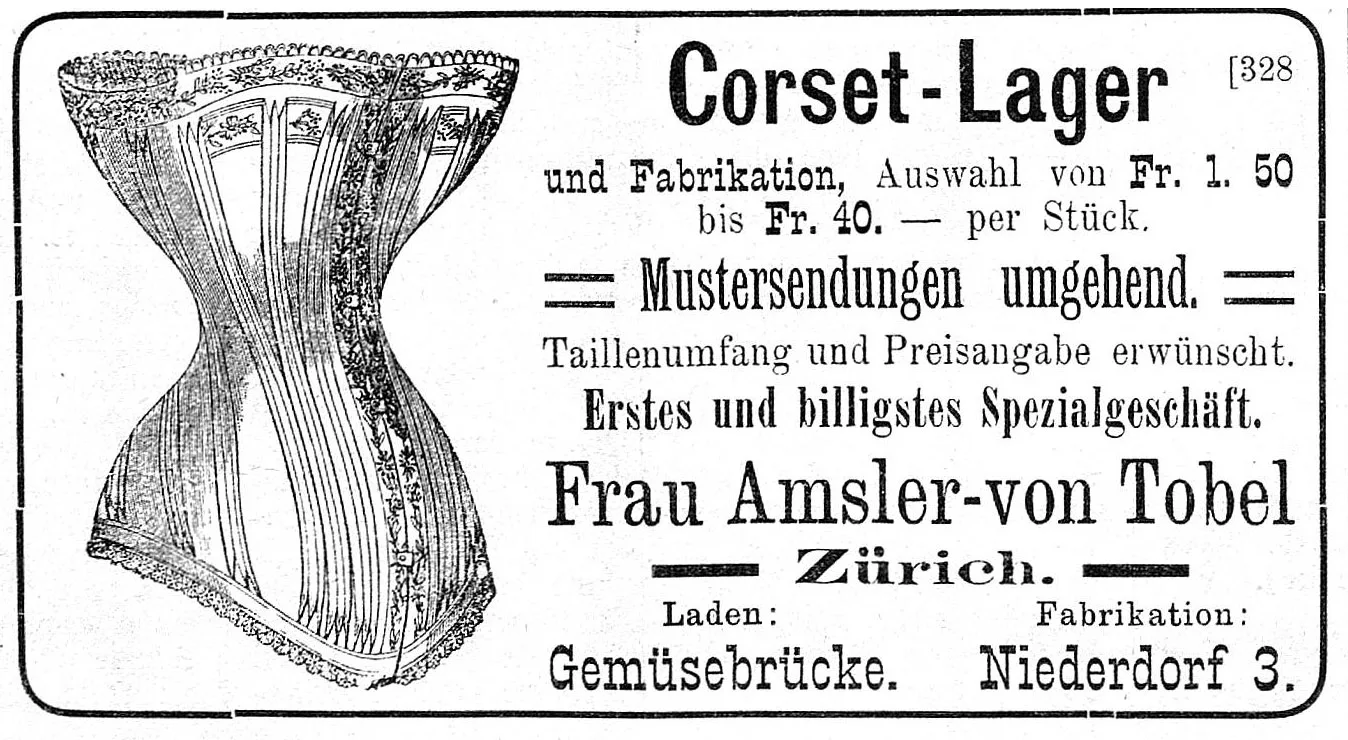
In the 19th century, the garment allowed women to achieve the desired hourglass shape with the tiniest waist possible, for which Empress Elisabeth of Austro-Hungary (1837–1898) was particularly famous. Industrialisation and the pursuit of a waspish waist resulted in the emergence of a corset industry in Germany in the 1860s, which produced corsets for export. Serial manufacture and the associated reduction in cost made corsets accessible to all classes, and they subsequently became very widespread. This meant that corsets were available for all budgets, including in Switzerland.
Advert for corsets in the Schweizer Frauen-Zeitung, October 1888.
Advert for corsets in the Schweizer Frauen-Zeitung, October 1888. e-periodica
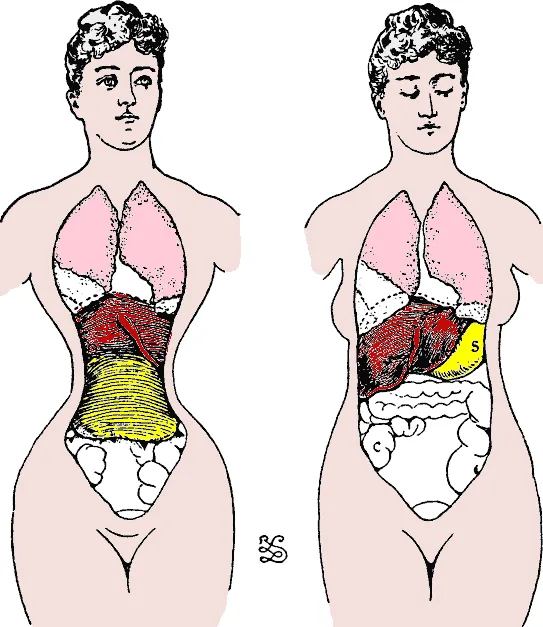
At the same time, there was growing opposition to the corset from the medical profession and from women themselves, who denounced the garment as constrictive and harmful to health. Women’s increasing mobility and gainful employment called for greater freedom of movement and therefore a transformation of fashion. The corset became a symbol of women’s physical and intellectual confinement and clothing a political statement.
Doctors warned that wearing a corset could cause possible organ displacement. Print from 1887.
Doctors warned that wearing a corset could cause possible organ displacement. Print from 1887. Wikimedia

Emancipation through movement

The Union for the Advancement of Women was established in Zurich in 1896 as a result of the merger of the Swiss Association for Women’s Educational Reform and the Association for the Protection of Women’s Rights, both of which had been set up three years previously. The objectives of this merged organisation were to improve the legal status of women, to achieve women’s suffrage and to reform education for girls.
The magazine Frauenbestrebungen was the Union’s official publication, covering current issues related to the women’s movement, highlighting its social necessity and fostering a sense of community among the activists. Also in 1896, the General Association for the Improvement of Women's Clothing was founded in Berlin as part of the women’s emancipation movement. It campaigned for healthy, comfortable and aesthetically pleasing corset-free clothing and a move away from the changing fashions dictated by Paris. Looking to Germany, the restrictive corset, seen as counter to women’s emancipation, was also discussed in the Frauenbestrebungen magazine.
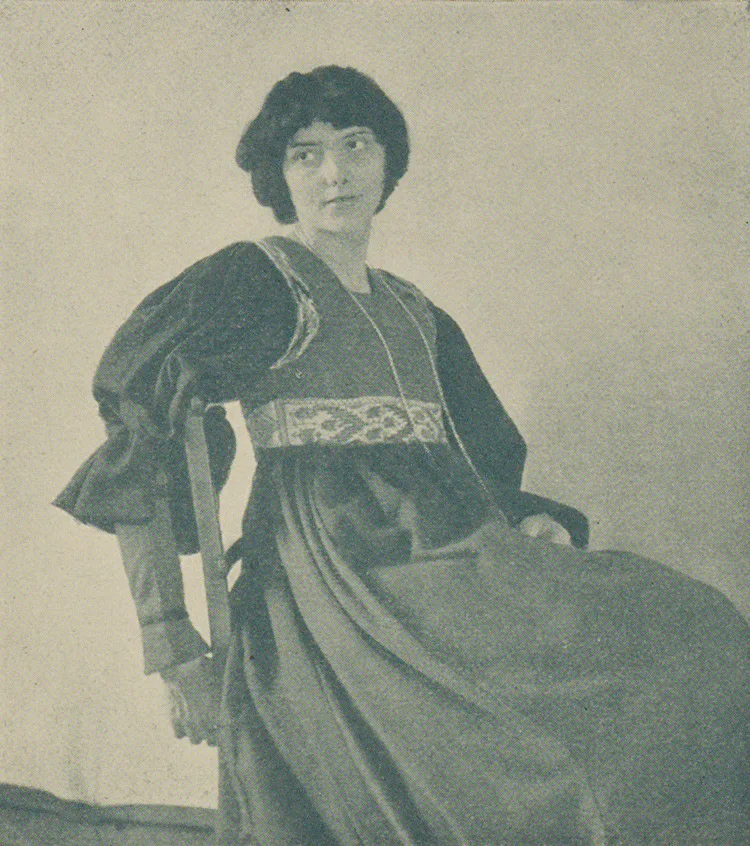
The books section of the magazine also featured reviews of publications such as the 1903 work Das Eigenkleid der Frau (‘Women’s Own Dress’), written by the German interior and fashion designer Anna Muthesius (1870–1961), which became very popular. In the book, Muthesius criticised the ‘corseted armour’ that she argued was not made for the human body, but which instead forced it to conform to fashion. The new reform dress with its loose fit was designed to adapt to the natural silhouette and allow freedom of movement. Instead of a corset, a camisole was the suggested undergarment.
Anna Muthesius in reform dress, 1903.
Anna Muthesius in reform dress, 1903. e-rara
Drawing on her own experience, Muthesius recounted how every working woman felt constrained by the corset, and even if it was loosely laced, would take it off as soon as she came home at night in order to feel more comfortable. Muthesius also mentioned how it was a widespread misconception that women breathe from the chest and only men breathe from the abdomen. To allow unobstructed breathing and movement, the reform dress not only did away with a corset, it also hung from the shoulders and had a shorter hemline to allow greater freedom of movement for the feet.
Many bought into the health arguments, but this clothing reform had a common problem: while many women wanted something better, they were not keen to wear the reform dresses as they felt the baggy ‘sacks’ were not attractive, and the movement “had come to Switzerland from Berlin rather than Paris.” What’s more, switching one’s wardrobe, which until then had been geared towards the corset, was an expensive business.
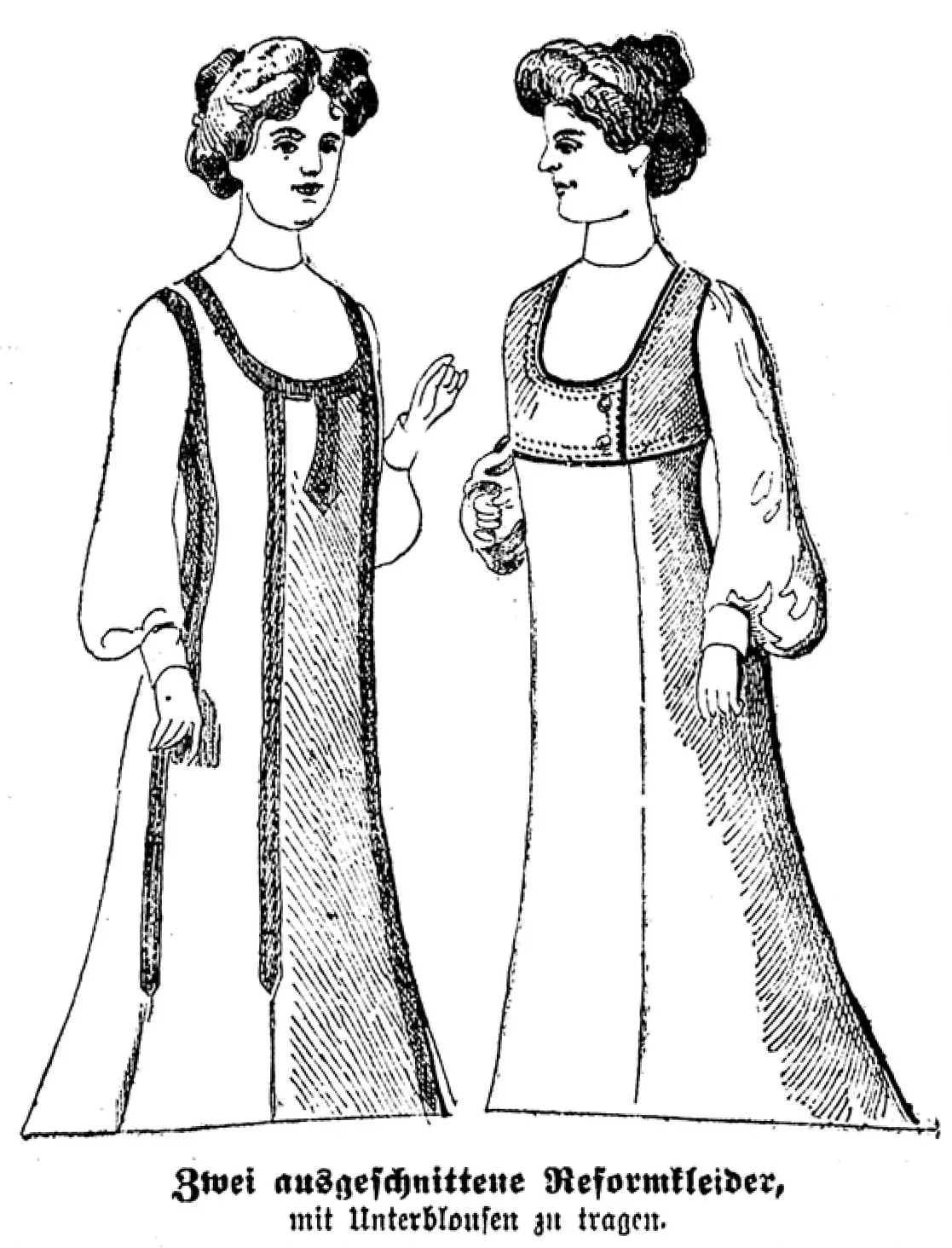
Two reform dresses from the spring and summer collections featured in the Tages-Anzeiger of 26 May 1903.
Two reform dresses from the spring and summer collections featured in the Tages-Anzeiger of 26 May 1903. e-newspaperarchives.ch

The spread of individually designed dresses
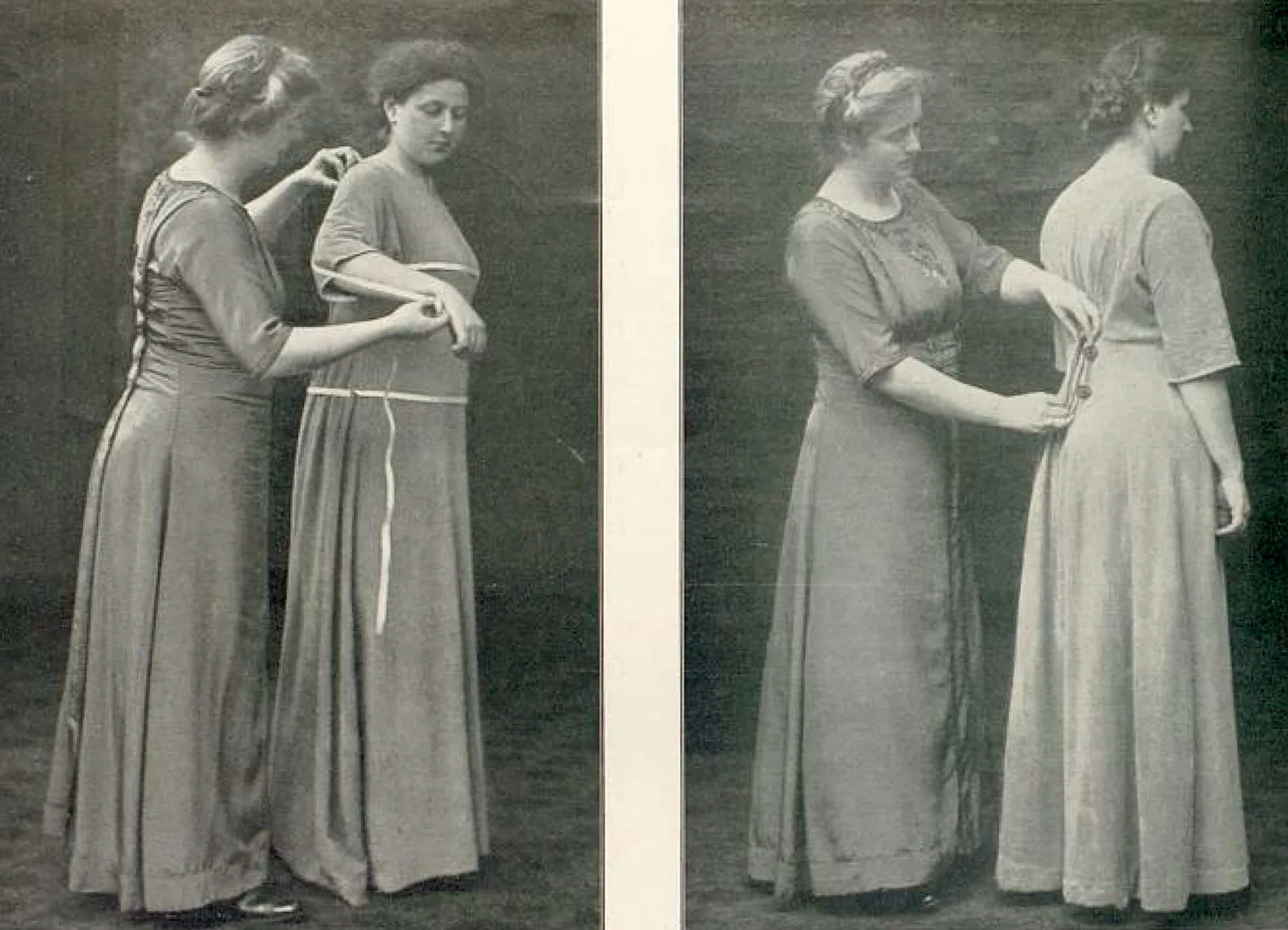
To make the reform dress accessible and aesthetically pleasing, female designers strove for simple cuts that corresponded to women’s habits of dress but avoided the restrictiveness of earlier fashions.
Their male colleagues, however, such as artist Henry van de Velde (1863–1957) focused on purely decorative aspects. As part of his interior concept as a Gesamtkunstwerk or ‘total work of art’, he designed reform dresses for his wife Maria Sèthe, treating her like an ‘object’ intended to harmonise completely with the domestic setting. The problem with artists’ attempts to integrate the reform dress into their work was their lack of knowledge about handling fabrics. They therefore submitted their design drawings to external workshops that worked with traditional methods and so were unable to make any practical improvements to the clothing. The long, ornately decorated trailing garments didn’t afford women the freedom of movement they wanted, confining them instead to domestic settings.
To deliver what women really needed – which was a dress that lent itself to domestic work and work outside the home – female reform dressmaker workshops were set up in German towns, offering their own designs. This is because although the reform movement encouraged women to make their own dresses tailored to their individual body shapes, some lacked the knowledge and skills to do so. Making their own clothes was supposed to be an expression of emancipation and empowerment that allowed women to break free from their socially prescribed roles and take action. Patterns were widely published to ensure that as many women as possible could take advantage of this opportunity. For example, the Thierbach method (named after Marie Thierbach) was a popular draping technique that allowed dresses to be made simply, quickly and affordably.
With her dress draping technique, Marie Thierbach targeted the ‘middle class working woman’. With a pattern and a set of instructions, women were meant to be able to produce a new and affordable dress on their own within six hours.
With her dress draping technique, Marie Thierbach targeted the ‘middle class working woman’. With a pattern and a set of instructions, women were meant to be able to produce a new and affordable dress on their own within six hours. Badische Landesbibliothek Karlsruhe
The Thierbach method for fastening-free reform dresses was also well known in Switzerland by 1912. The spread of easy-to-make patterns coupled with the life reform movement around 1900 led to a shift in fashion. While the corset was abandoned and nowadays only occasionally appears on the catwalk as a statement piece, the cinched waist as an ideal didn’t disappear, making a comeback whenever society was pushing traditional visions of womanhood.
The loose cut and hemline freedom of the reform dress were adopted and further developed in the ‘garçonne’ fashions of the 1920s. The freedom of movement championed by the reform dress is now so self-evident and ubiquitous that its revolutionary origins are now all but forgotten.

Further posts