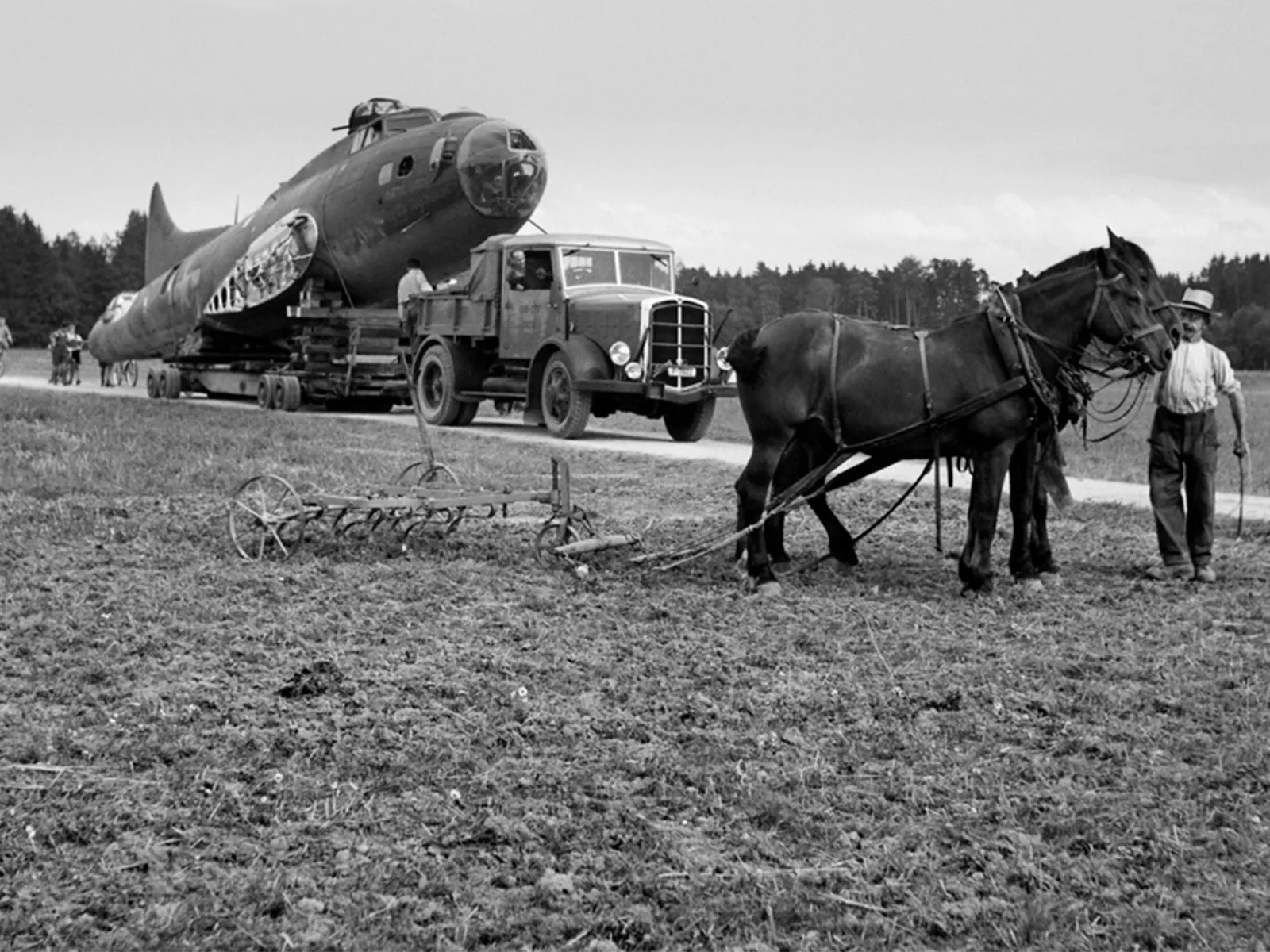
In August 1943, an Allied bomber was forced to make an emergency landing in a potato field near Utzenstorf in the canton of Bern. It was just one of many aircraft that ended up in Swiss territory during the Second World War.
In August 1943, an Allied bomber was forced to make an emergency landing in a potato field near Utzenstorf in the canton of Bern. It was just one of many aircraft that ended up in Swiss territory during the Second World War. Keystone / Photopress-Archiv

“As the world was drowning in a sea of hatred,” Switzerland interned the liberators

During the Second World War, 166 stricken US bombers landed in Swiss fields and meadows. The story of the more than 1,500 airmen who were subsequently interned in the mountains has been largely forgotten today.

Jürg Flückiger

Jürg Flückiger

Jürg Flückiger is a historian and a member of the Swiss Public History Network.
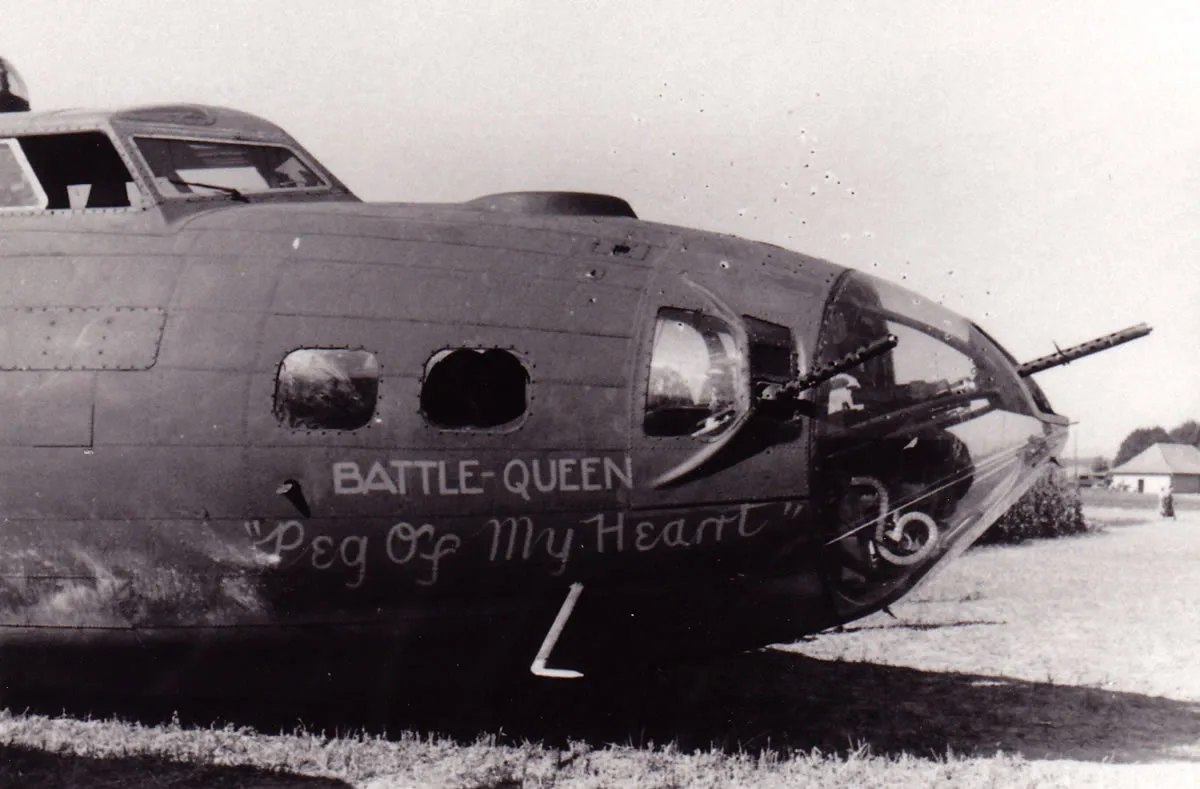
It was hot in Koppigen on 17 August 1943. Werner Steffen sat in a cherry tree, plucking the ripe fruit. The broad plain between Kirchberg and Utzenstorf in the canton of Bern stretched out before him. The area had been starved of rain for some time. He could see farmers harvesting potatoes and became aware of a droning noise far off in the distance. At the other end of the plain, Mrs Imhof was busy picking runner beans. The sound grew louder, and on looking up she saw a huge airplane over Kirchberg. It lost height dramatically as it came closer, and the farmers in the neighbouring potato field threw themselves to the ground in terror. Mrs Imhof had no time to flee and nowhere to run to. All she could do was place the basket in which she was collecting the beans over her head and duck down where she was. The aircraft landed and came skidding towards her on its belly in a cloud of dust and potatoes. With a terrifying sound, the giant grey bird came to a stop exactly above her head as she cowered among the beanstalks. Werner Steffen, who had climbed down his ladder with lightning speed and cycled over to the scene, took a good look at the strange aircraft, which bore a star marking on its flank and had the name Battle Queen – Peg Of My Heart emblazoned on its long nose. Together with the farmers, who had meantime stood up from their crouching positions, he waited to see what would happen next. When the dust finally settled, the aircraft door opened and ten young men in dashing outfits emerged, one after the other. They looked like they had come from another world.
The US bomber Battle Queen had to make a forced landing in the Bern area in August 1943.
The US bomber Battle Queen had to make a forced landing in the Bern area in August 1943. Keystone / Photpress-Archiv / Walter Studer

Witnesses to war in Switzerland’s fields
This episode in the wide landscape of the Emme river between Burgdorf and Solothurn was not an isolated incident. The waging of the Combined Bomber Offensive, a campaign agreed upon by the Western Allies at the Casablanca Conference on 21 January 1943, saw British Lancaster Bombers conduct devastating carpet bombing raids on German cities by night, while massed formations of up to 1,200 US B-17 Flying Fortresses and B-24 Liberators attacked strategic targets in Germany, such as airfields and armaments factories, by day. If the planes suffered damage and could no longer make it back to base, they often headed for neutral territory. This led to a new perception of the war in Switzerland. The first B-24, nicknamed Death Dealer,had made an emergency landing outside Wil in the canton of St. Gallen on 13 August 1943, four days before the Battle Queen crash-landed. Uncertain of what awaited them in Switzerland, the crew immediately set fire to the aircraft. Another 165 Liberators and Flying Fortresses, some of them badly hit, would seek refuge in Switzerland up to 20 April 1945.
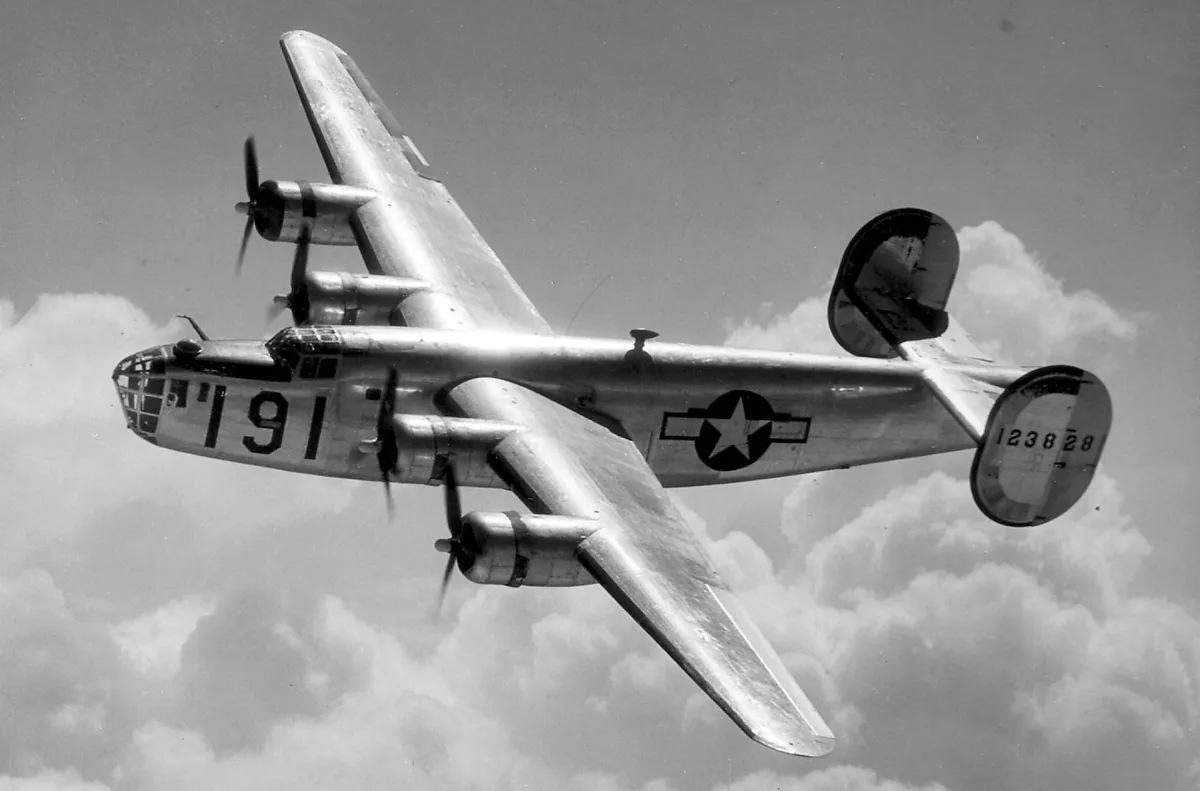
A B-24 Liberator in action. These aircraft were used to bombard the ‘Third Reich’ during the Second World War. Some of them were forced to make emergency landings in Switzerland.
A B-24 Liberator in action. These aircraft were used to bombard the ‘Third Reich’ during the Second World War. Some of them were forced to make emergency landings in Switzerland. Wikimedia / U.S. Air Force photos
The Flying Fortresses made a considerable impression on the locals at the spots where they were forced to land. Mrs Imhof in Utzenstorf had barely crawled out from beneath her basket to find herself directly under the bomber’s wing before the aircraft was surrounded by curious onlookers who came rushing to the site from neighbouring villages. Everyone wanted to be first on the scene. Der Bund newspaper ran a headline proclaiming: “Flying Fortresses make emergency landings outside Utzenstorf and Dübendorf”, surmising that they must have come from Sicily. Another publication, the Schweizer Illustrierte Zeitung, followed suit on 8 October with a report about “the aerial battles that took place last Friday on our very own territory”. During the combat, the Americans were said to have lost a plane “thanks to a direct hit by our anti-aircraft defence”. Alongside pictures of the Battle Queen, the article explained in detail how these “flying giants”, in which it assumed everyone was interested, were constructed, equipped and manned. There were usually nine or ten young Americans on board, sporting painted leather jackets and chewing on gum, their heads full of swing music. Despite their young age ‒ most were barely into their 20s ‒ they had gone through the hell of aerial warfare, facing odds of one to four of actually surviving the 25 missions they were expected to fly.
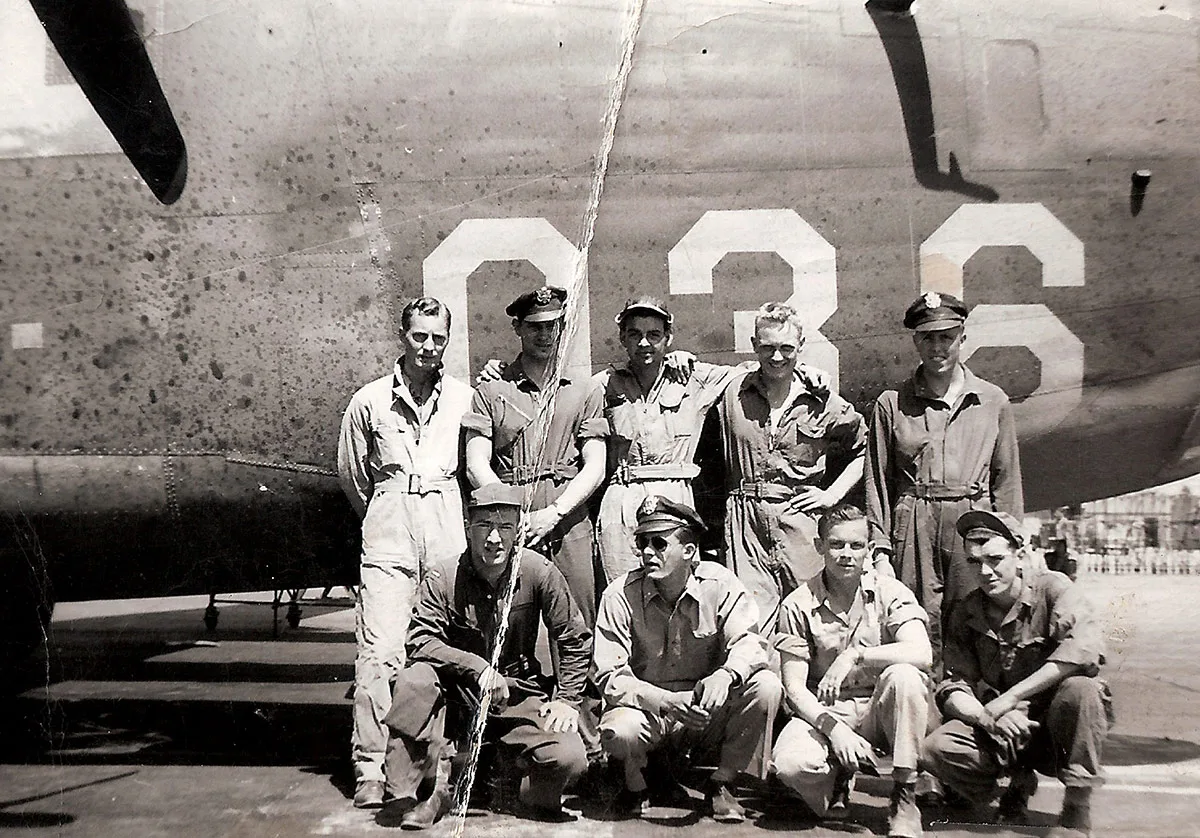
A B-24 crew usually consisted of nine to ten men. This picture shows the crew of the Mary Harriet. One of its members lost his life when the plane crash landed in Appenzell in July 1944.
A B-24 crew usually consisted of nine to ten men. This picture shows the crew of the Mary Harriet. One of its members lost his life when the plane crash landed in Appenzell in July 1944. Jim Hewlett's Wartime Log

Firing at the liberators

The Swiss state adhered strictly to its doctrine of armed neutrality and refused to tolerate any violations of its airspace. This was partly due to enormous pressure from Germany, which had already induced the Federal Council on 7 November 1940 – against the wishes of General Henri Guisan – to order blackouts from 10pm each evening in order to make orientation difficult for British bombers. But it was also a result of the very real threat emanating from the aerial warfare being waged ever closer to the Swiss border. On 4 April 1944, three days after the Americans accidentally bombed Schaffhausen, leaving 40 dead and destroying more than 1,000 buildings, Guisan gave orders to open fire on all incursions by foreign aircraft, unless they were clearly showing signs of distress or demonstrating intent to land on Swiss soil. Given this turn of events, the Federal Council also heeded the general’s words. On 12 September 1944, it decided to rescind the blackout policy and to order that border markings be made “clearly visible from afar” both at night and during the day. Consequently, flags were hoisted all along the border and Swiss crosses painted on roofs.
Video on the bombing of Schaffhausen in April 1944. YouTube / HistoryPod
Allied planes were already being shot down by the Swiss Armed Forces prior to Guisan’s orders. The B-17 nicknamed Sugar Foot had set off from Tunisia on 1 October 1943 as part of a group on a mission to bomb the Messerschmitt factories in Augsburg. Poor visibility forced the entire formation to turn back 50 kilometres short of its target. Under fire by pursuing German fighter jets, they unknowingly flew over Lake Constance and into Switzerland. In an ironic twist of fate, the 21st Swiss Anti-Aircraft Detachment succeeded in doing what the Germans themselves could not quite manage on their own, bringing the Sugar Foot and a second aircraft from the group crashing to the ground. Eight of the 21 crew members were able to bail out by parachute, the other 13 perished. Colonel Oscar Frey of the Heer und Haus (‘Army and Home’) section of the Swiss army had urged his soldiers to take proper aim to ensure they hit their target. He considered this very important if Switzerland was to be seen to take its neutrality seriously.
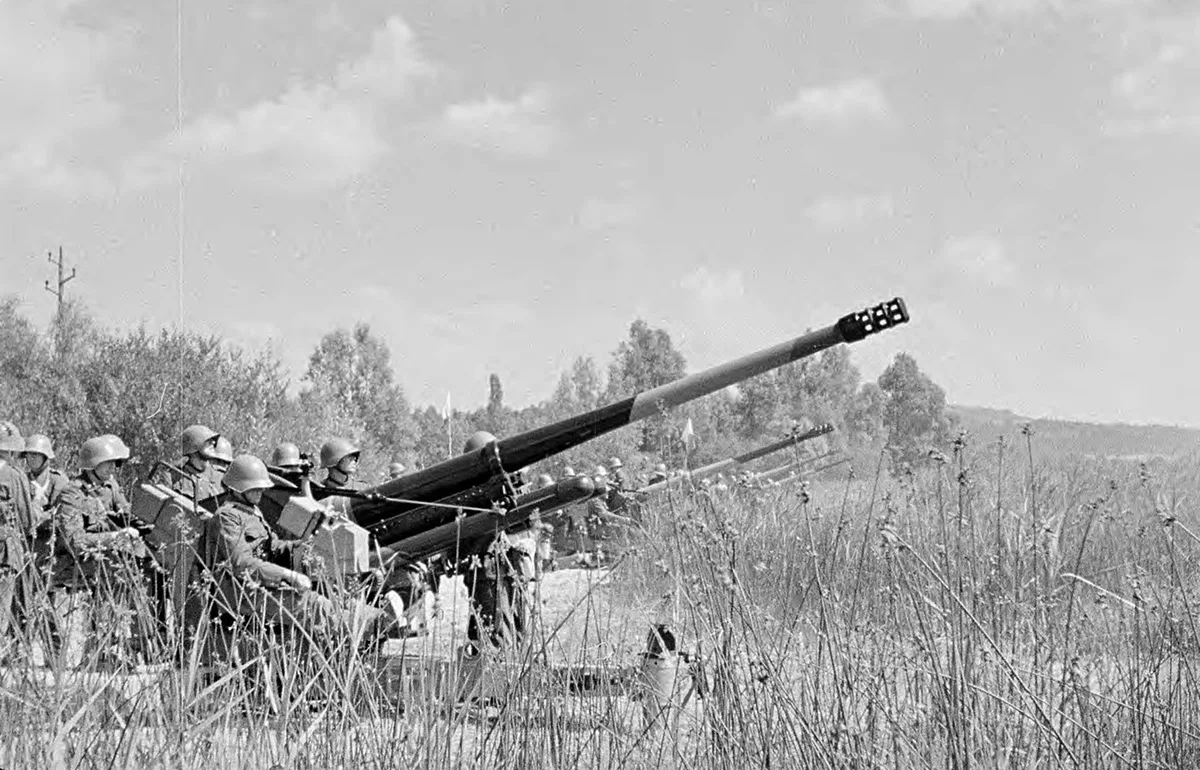
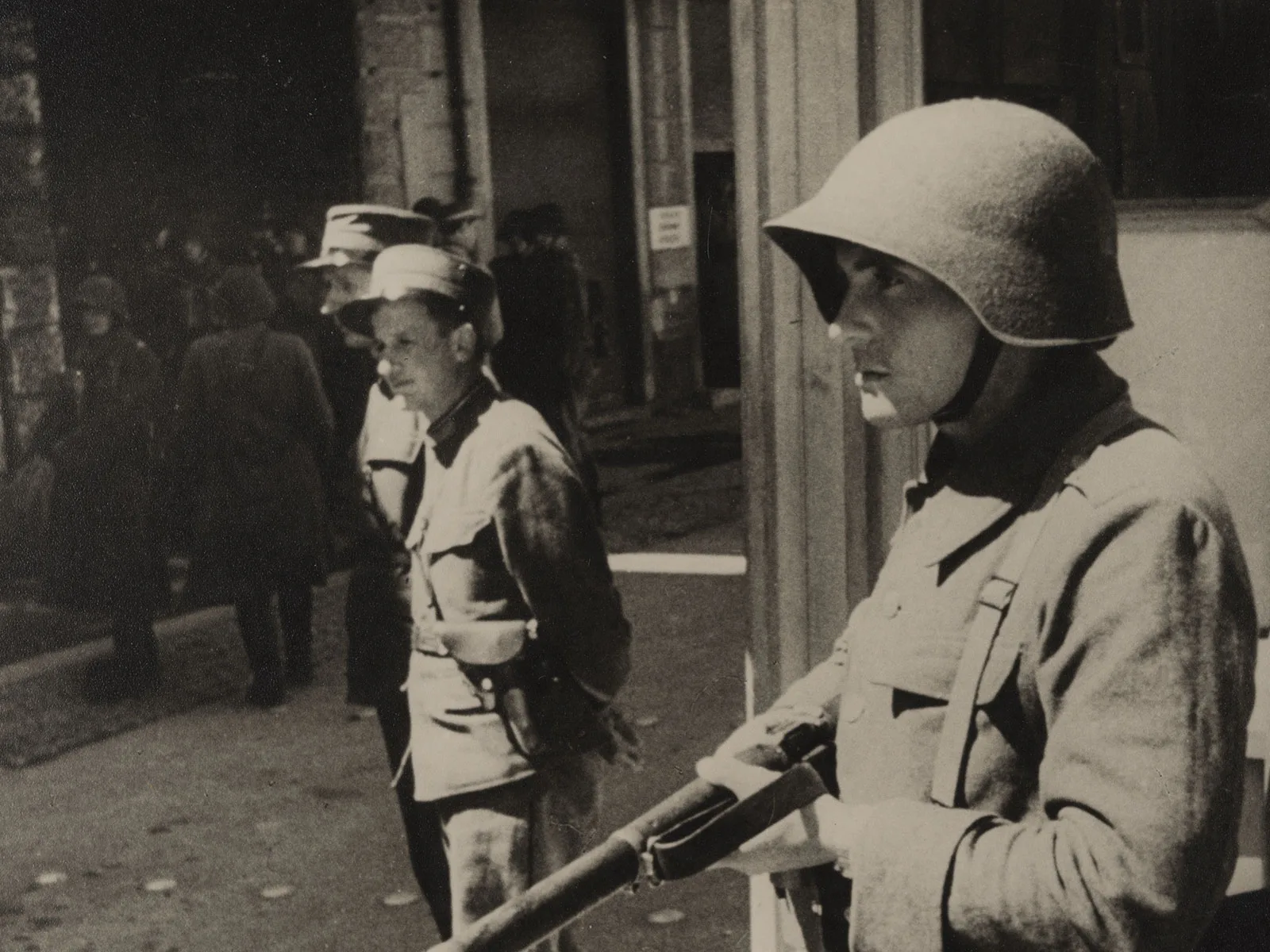
Switzerland’s anti-aircraft forces did not hold back in engaging with foreign aircraft. In some cases, they fired at already damaged planes seeking safety in Switzerland.
Switzerland’s anti-aircraft forces did not hold back in engaging with foreign aircraft. In some cases, they fired at already damaged planes seeking safety in Switzerland. Swiss Federal Archives

Interned and interred in Switzerland
A total of 61 American airmen lost their lives in this manner or during their internment in Switzerland. A special military cemetery was set up for them in Münsingen near Bern. The 1,511 US bomber crewmembers who arrived on Swiss soil alive were viewed as “troops belonging to the belligerent armies” and interned in isolated mountain resorts in accordance with the Hague Convention of 1907, a document on which Switzerland still bases its neutrality ‒ the only country to do so. The 597 officers ended up in Davos, while the remaining 914 lower-ranked men – mostly sergeants – were sent to either Adelboden or Wengen.
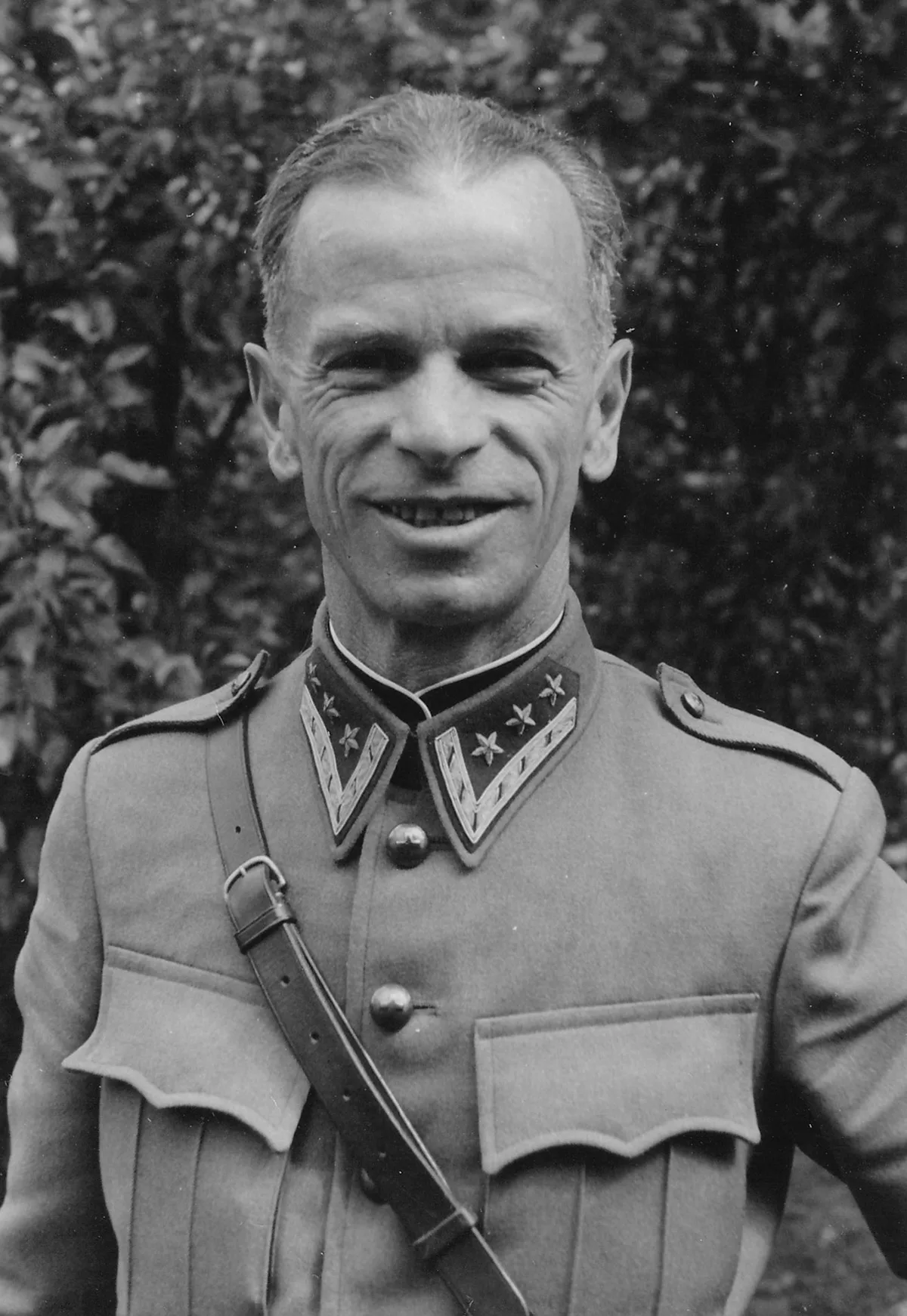
The man in charge of the mammoth logistical task of organising their internment was Colonel René Probst. A secondary school teacher in Bern in civilian life, he had very definite ideas about what constituted justice and no qualms about bypassing the law, if necessary, in order to do what he felt was right. This forthright attitude served him well as a teacher, lending him a natural air of authority, and some of his pupils remained on friendly terms with him after leaving school, even if he may have thrown blackboard sponges at them when they displayed a lack of discipline in the classroom. Probst’s military superiors described him as hard-working, reliable and serious, a clear-thinking man of humble demeanour who knew the mountains well, but who could also be slightly awkward and who did not always act as his superiors expected.
Colonel René Probst oversaw the internment of more than 100,000 members of the warring armies.
Colonel René Probst oversaw the internment of more than 100,000 members of the warring armies. Probst Family Private Archives
Until the end of the war, his Federal Commission for Internment and Hospitalisation, comprising 1,141 salaried employees and between 1,500 and 6,800 military guards, was responsible for housing and feeding 104,886 military personnel from over 35 nations. It organised hospitalisation and medical care for the sick and injured among them, and made arrangements for their burial if they passed away in Switzerland. Together with the Swiss Field Post Office and the International Committee of the Red Cross, the Commission organised a postal service for internees that would go on to convey 24.3 million items of mail by the end of the war. It even had its own postmark and a centralised censorship office, which reported directly to the Federal Council. As well as ensuring the letters did not contain any political opinions that might be harmful to Swiss neutrality, the censors’ task was to follow up on any correspondence hinting at a potential love affair or arrangements for a rendezvous, both of which were strictly forbidden to internees.

Internees as ‘spa guests’

The 1,500 or so Americans made up only a small number of the total internees. René Probst believed they were able to “live like guests at a spa resort” in the places where they were being held. As officers and non-commissioned officers could not be forced to work, they were put up in hotels. The Hague Convention stated that “a neutral Power which receives on its territory troops belonging to the belligerent armies shall intern them, as far as possible, at a distance from the theatre of war.” That arrangement suited the Swiss very well, given that all of the hotels in the mountain resorts lay idle due to the hostilities. The hoteliers were only too happy to turn their establishments into internment camps, especially knowing that the internees’ home countries would be liable for the costs once the war was over. As the Americans came from a functioning state that could pay its bills, this was an opportunity too good to pass up. A win-win situation, as we would say today. Or almost. The US servicemen were keen to return to battle and couldn’t understand why they weren’t simply allowed to move on.
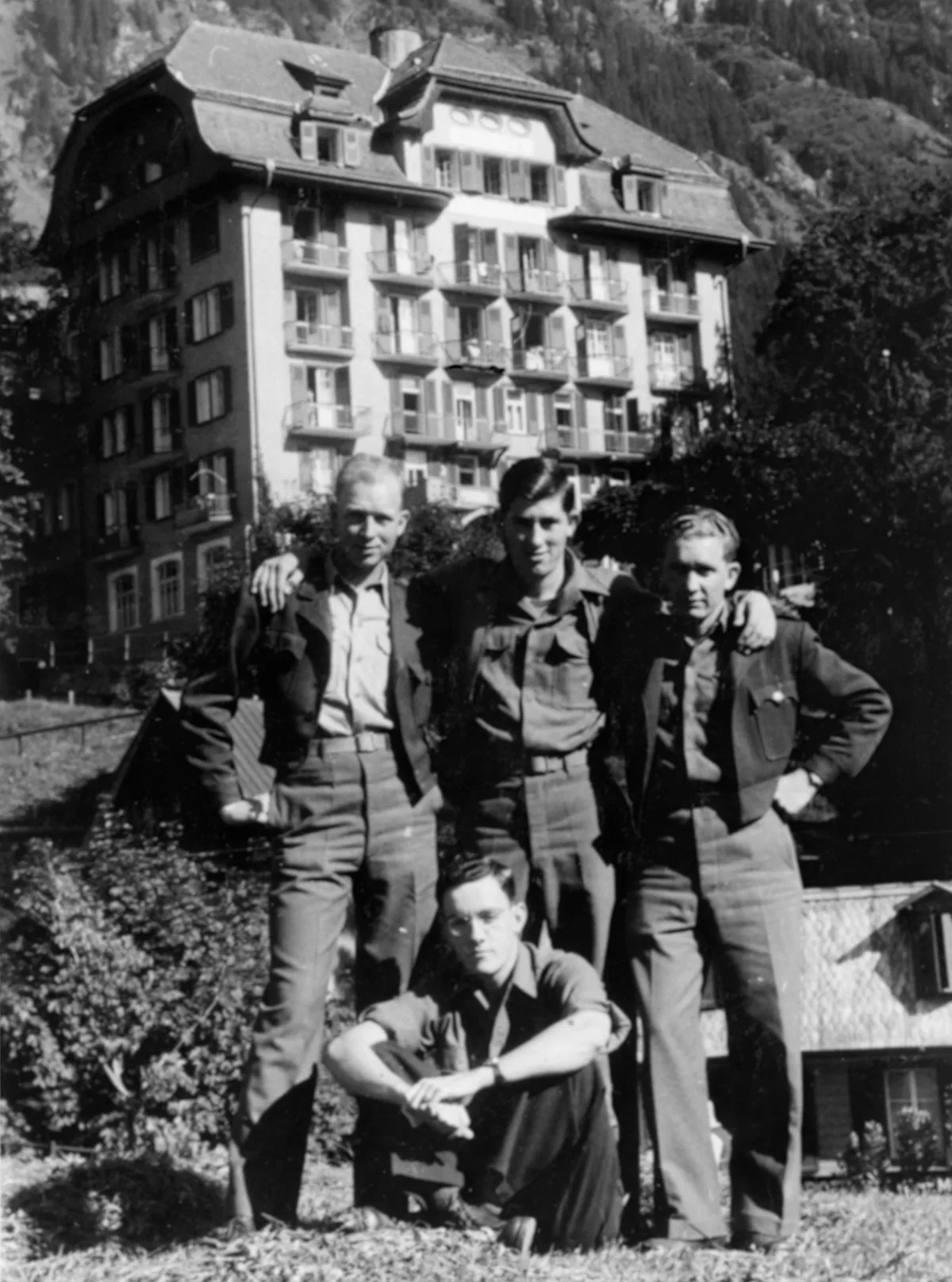
Interned Americans in front of the Hotel Regina in Wengen in the Bernese Oberland.
Interned Americans in front of the Hotel Regina in Wengen in the Bernese Oberland. George Michel's Wartime Log
The US Legation in Bern shared this view. That’s why Military Attaché Barnwell Rhett Legge ran a covert escape network for his fellow countrymen together with Allen Dulles, the head of the OSS (Office of Strategic Services), the US intelligence agency in Switzerland. The network was made up of US agents and members of the French Resistance, but also included Swiss army officers, lawyers, taxi drivers, housewives, mechanics and waitresses from Zurich, Geneva, Aargau and the internment sites.

Cemetery gardener who helped men escape
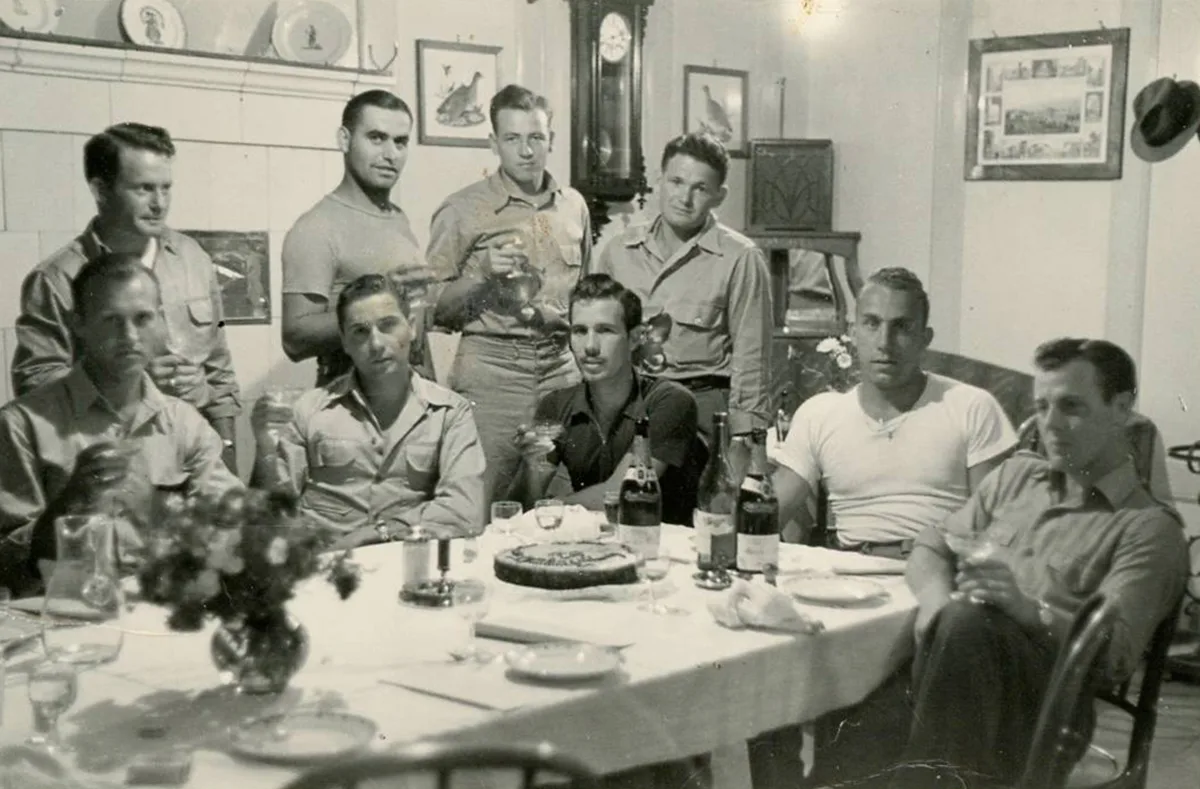
The US military cemetery in Münsingen played a special role in this operation. Floyd E. MacSpadden, who had been at the helm of the B-17 Madame Betterfly on 6 September 1943 when forced to make an emergency landing in Dübendorf after being shot at, worked there on behalf of the Americans as a cemetery gardener – providing cover for his activities as an escape agent. The US Legation appointed him as a special representative tasked with distributing films to the internees, thus requiring him to travel to Basel, Geneva and Zurich. This ability to move around the country enabled him to supply the fleeing internees with food and civilian clothing with the aid of ration coupons he received from the legation. He also brought them to “pick-up points”, secret meeting places where they were handed over to members of the French Resistance, who would take them over the border. A total of 947 of the 1,511 American servicemen interned in Switzerland attempted to flee. 763 of them succeeded.
Floyd MacSpadden (second from right) and his fellow servicemen during the construction of the American military cemetery in Münsingen near Bern. The picture was taken in 1944 at the Hotel Löwen.
Floyd E. MacSpadden (second from right) and his fellow servicemen during the construction of the American military cemetery in Münsingen near Bern. The picture was taken in 1944 at the Hotel Löwen. Swiss Internees Association Archives

“Worse than the Gestapo”

The Swiss authorities showed no mercy towards the 184 others who were caught trying to escape. Instead of the maximum 30 days’ imprisonment permitted as a disciplinary punishment under the 1929 Geneva Convention on the Treatment of Prisoners of War, they were detained for five to seven months at the notorious Wauwilermoos penal camp to the northwest of Lucerne between Nebikon and Sursee. The camp, a collection of barracks surrounded by a barbed wire fence, was run from July 1941 by a man who had previously acquired a reputation in the 1930s as a conman and fraudster: Captain André Béguin. An active member of the extreme right-wing National Frontand openly sympathetic to the Nazi regime, he oversaw the camp with inhuman severity. The food was meagre and the hygiene catastrophic, with sleeping quarters and sanitary facilities practically non-existent. Almost all of the inmates contracted infectious diseases. Solitary confinement was the routine punishment for minor infractions of the commandant’s orders. Sexual violence took place and was apparently used deliberately by the camp commandant as a means of making detainees biddable. Béguin ordered the guards to shoot at anyone trying to escape.
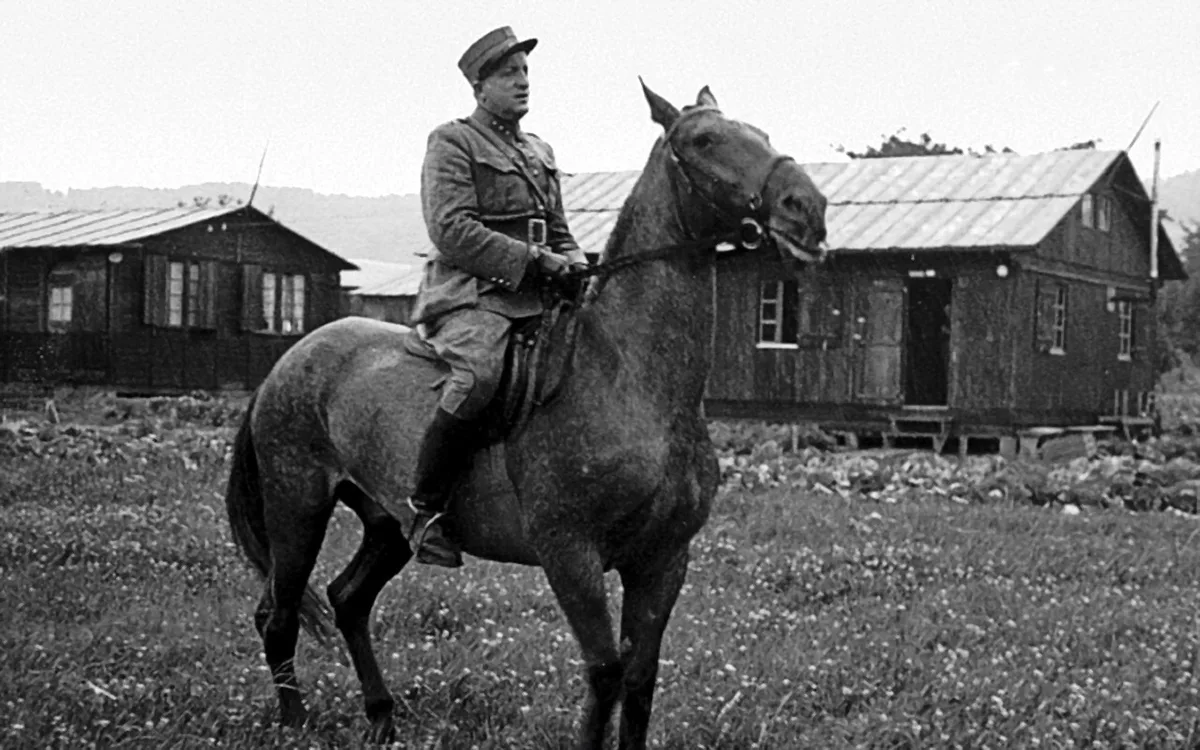
André Béguin ran the Wauwilermoos camp with inhuman severity. The photo was probably taken in 1944.
André Béguin ran the Wauwilermoos camp with inhuman severity. The photo was probably taken in 1944. Wikimedia
The punishments meted out to the would-be escapees violated international law and ultimately precipitated a political crisis when a number of officers on the Swiss Army's General Staff reported American protests about Wauwilermoos being a “concentration camp” in which the Swiss police were “worse than the Gestapo”. They feared that “the USA [could] make the affair public before Switzerland found the courage to do so”. Various members of the National Council also petitioned the Federal Council to look into the issue of the “treatment of American internees at the Wauwil [sic] penal camp”. This finally led, on 29 December 1944, to a round table involving Federal Councillor Karl Kobelt, the US military attaché Legge and high-ranking representatives from both countries’ armed forces.

From safeguarding neutrality to bitter stigma
A compromise was arrived at: first-time escape attempts “not committed under aggravating circumstances” would henceforth be punished with 20 days’ imprisonment and the Americans caught trying to escape from Wauwilermoos would be transferred to the newly set-up camp at Hünenberg in the canton of Zug and to Les Diablerets in Vaud. However, the resulting détente was short-lived.
Daniel Wyss’s 2015 documentary “Forced Landing" shows how American airmen were interned in the Wauwilermoos penal camp and what they had to endure there. Vimeo / Daniel Wyss
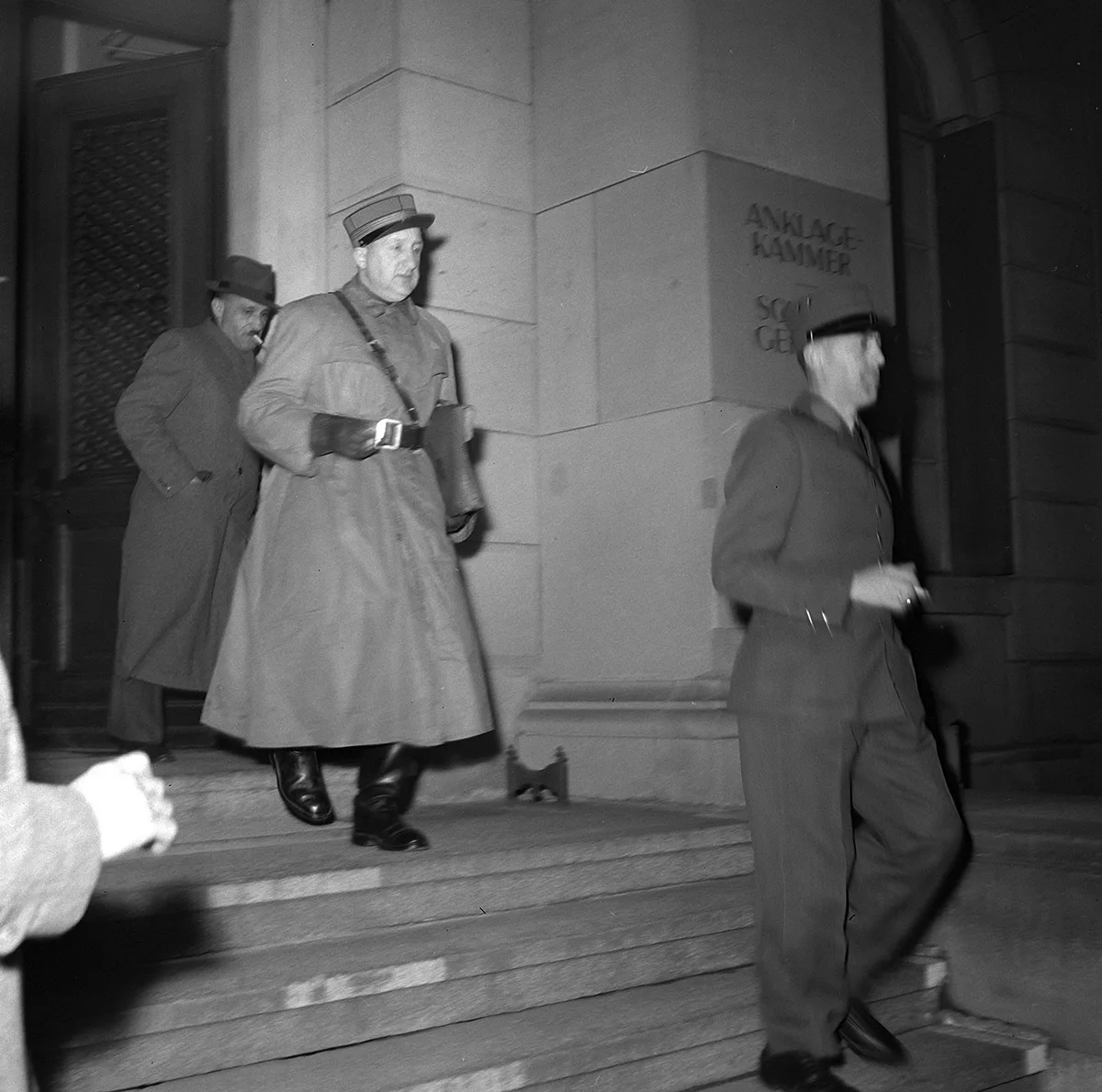
The failings in Switzerland’s internment practices continued to occupy the country’s politicians and the general public after the war as soon as the press got wind of André Béguin’s abuse of power while in charge of the Wauwilermoos camp. Criminal proceedings were instigated against him at the Military Divisional Court in Zurich on 11 July 1945. The Luzerner Neueste Nachrichten newspaper ran a detailed report of the trial on 3 September under the headline “We can no longer remain silent”, and a few days later the Neue Zürcher Nachrichten asked “When will those in command finally intervene?” On 7 September, the evening edition of Bern’s Der Bund queried “What was happening in Wauwilermoos?” Die Tat, a publication with social-liberal leanings went one step further on Saturday, 13 October 1945, fundamentally questioning the internment system as a whole: “Affirmation from a single person would have ten times more effect on the outside world than posters of mountain landscapes, if that person were able to say: ‘As the world was drowning in a sea of hatred, I found good people with kind hearts here’”. Meantime, two interpellations dealing with the allegations of corruption in the internment system had been submitted in parliament and Federal Councillor Kobelt, as head of the Department of Military Affairs, was forced to provide information at the autumn session.
The accused André Béguin leaving the courthouse in Zurich in February 1946.
The accused André Béguin leaving the courthouse in Zurich in February 1946. RDB by Dukas
René Probst, the very proper teacher with firm ideas about right and wrong, was left with feelings of deep bitterness as a result. He was unable to shake them off even when the Military Divisional Court sentenced the “lying imposter and braggart, wastrel, habitual debtor and philanderer” Béguin to three-and-a-half years in prison, stripping him of his rank and expelling him from the army, as reported in the midday edition of the Neue Zürcher Zeitung on 21 February 1946.
For René Probst, the subject of internment had ceased to be a matter of soldierly duty to safeguard Swiss neutrality. It had become a bitter stigma that would stay with him for the rest of his life. Not unlike many of his American internees, who preferred to remain silent than to admit that they had been forced to spend the war in hotels in Swiss holiday resorts, while their fellow countrymen were giving their lives in the battle against fascism ‒ and all because the Swiss believed this was necessary to maintain its neutrality.

Captive liberators

Summer 1944. For four years, Switzerland has been surrounded by the fascist Axis powers. To the west, south and east – and in the skies above – the Allied liberators are advancing. Not all of them make it through: 166 damaged American bombers seek refuge in neutral Switzerland. But the Swiss authorities do not allow their crews to leave. The airmen are interned in the mountains, torn between thoughts of escape, friendships and romantic relationships.

Drawing on personal records, Jürg Flückiger recounts this almost forgotten story in his book Gefangene Befreier, telling it from the perspective of the people involved on both sides. This work of non-fiction reads like a novel and was published by NZZ Libro in autumn 2025.
Further posts