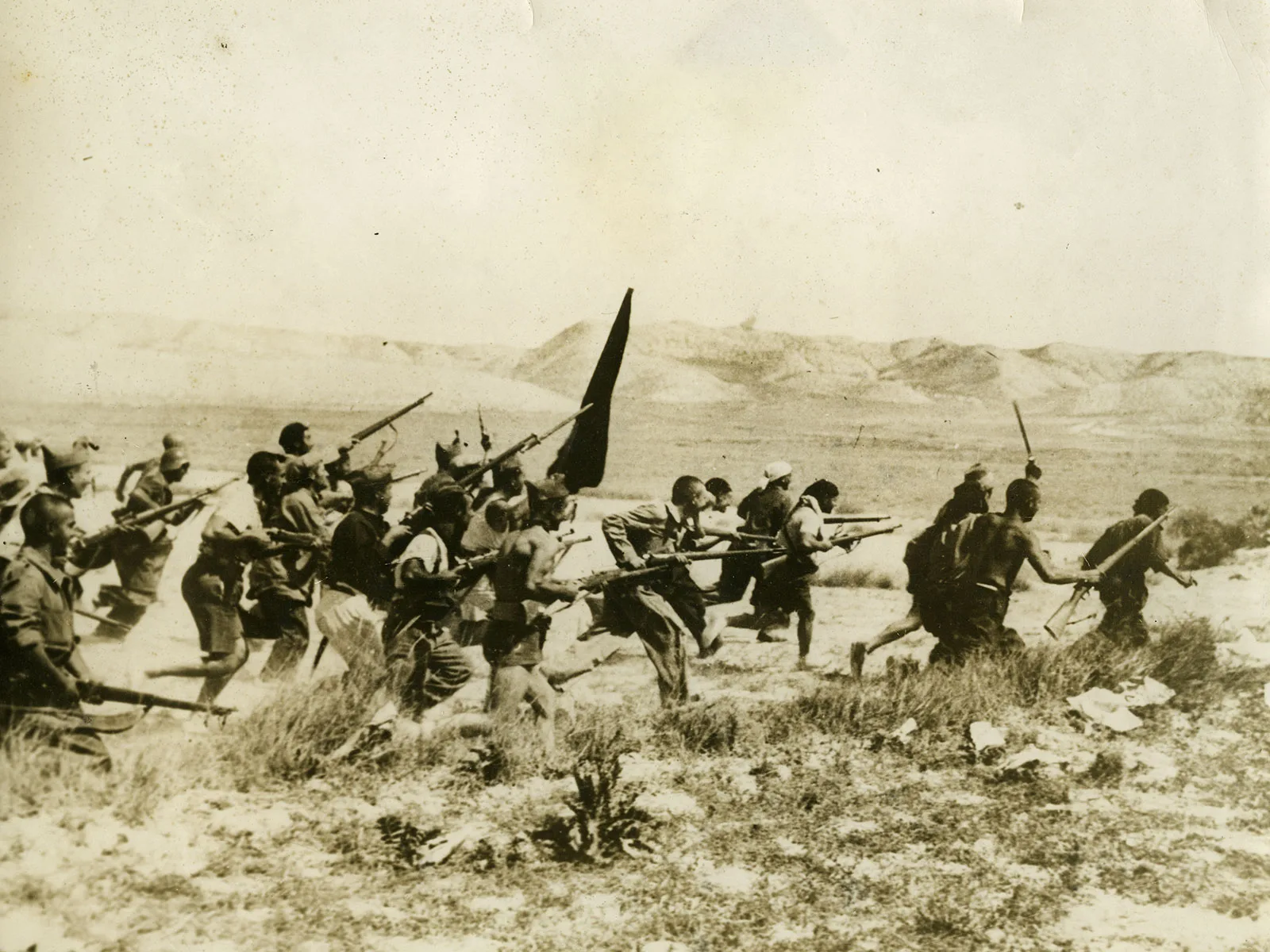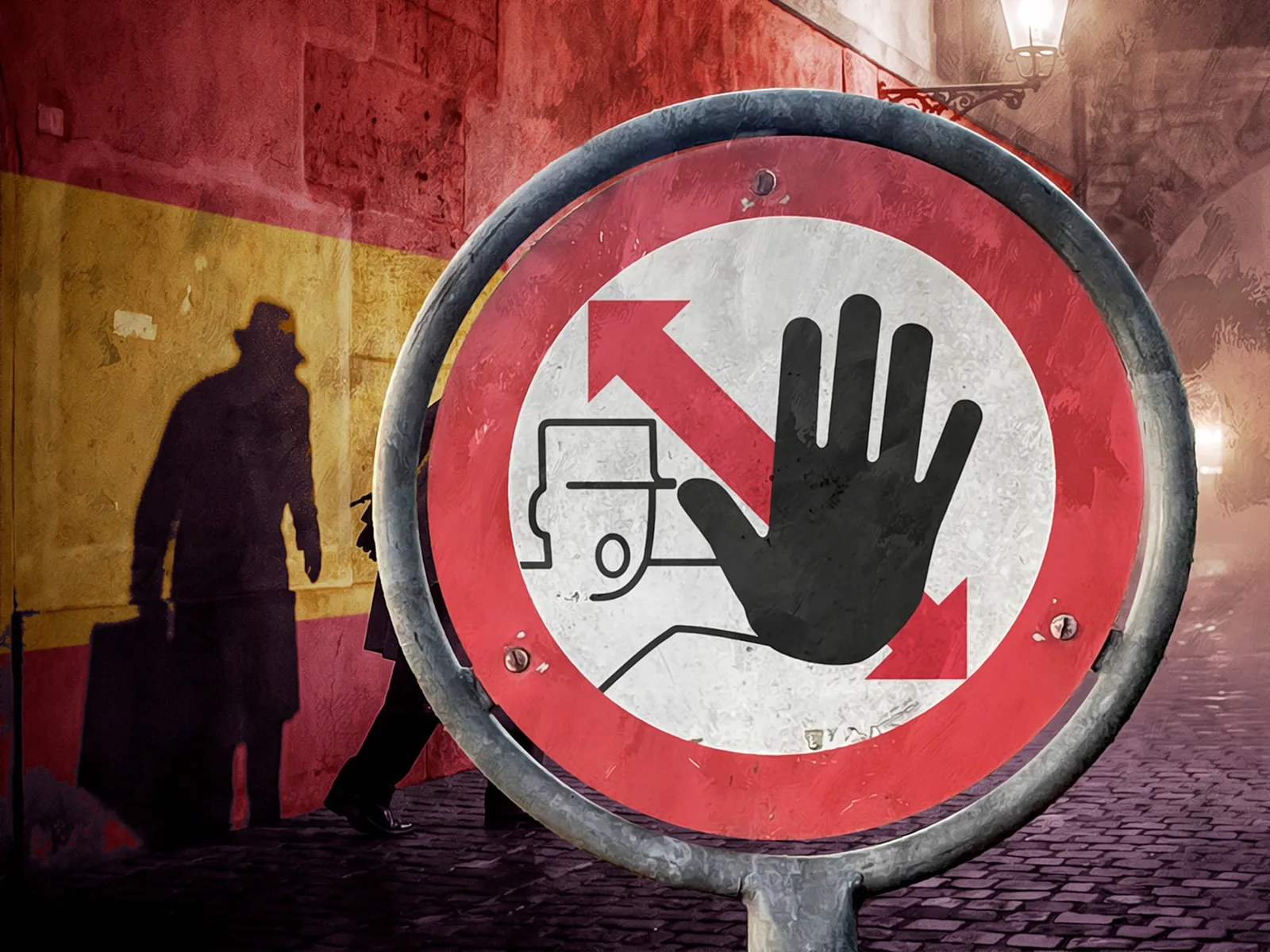
From 1936 onwards, the Swiss Immigration Police regarded refugees as transit migrants. As a result, many anti-fascists who had originally intended to seek refuge in Switzerland went to Spain instead to fight against Franco’s forces. Illustration by Marco Heer.

How Switzerland became a gateway to the Spanish Civil War

During the interwar years, Switzerland was a place of refuge for people fleeing persecution by authoritarian governments. The Swiss then changed their refugee policy in 1936, thereby inadvertently providing a boost to the republican forces in the Spanish Civil War.

Franziska Zaugg

Franziska Zaugg

Franziska Zaugg is a lecturer at the University of Fribourg and researches the history of violence and conflict.
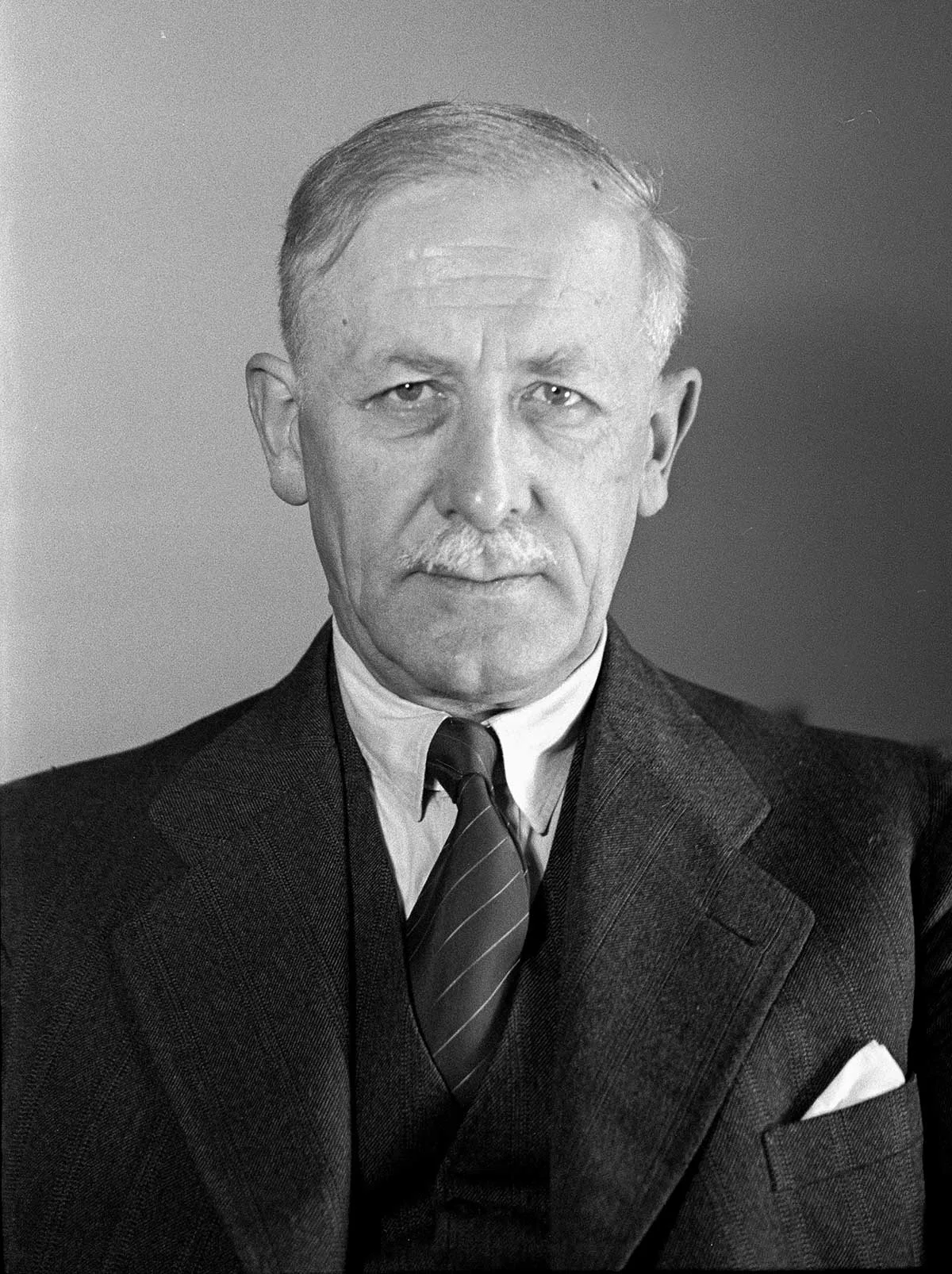
On 2 July 1936, shortly before the nationalist generals launched their putsch in Spain, a conference convened by the League of Nations in Geneva resolved that refugees who had crossed the border into Switzerland illegally would no longer be eligible for a residence permit. The head of the alien police, Heinrich Rothmund, had emphasised at this meeting that Switzerland should be regarded as nothing more than a transit state due to “foreign infiltration, unemployment [and] the huge expense involved in supporting the poor”.
Heinrich Rothmund, head of Switzerland’s Fremdenpolizei, the Federal Police for Foreigners, during World War II. Portrait dating from 1954.
Heinrich Rothmund saw Switzerland as a mere transit country for refugees from 1936. Dukas / RDB
Despite the difficulties involved, people from Germany and Italy, as well as from central and eastern Europe, had been crossing the green border into Switzerland. The 1936 directive made the illegal entrants fear extradition. When the Spanish Civil War broke out in the summer of 1936, many people in Switzerland thus regarded the country as a transit point on their way to the Spanish front. Aided by helpers, many refugees managed to cross Switzerland unnoticed into France from where they proceeded to Spain. Switzerland thus became a hub for refugees and potential volunteers for the republican side in the Spanish Civil War.
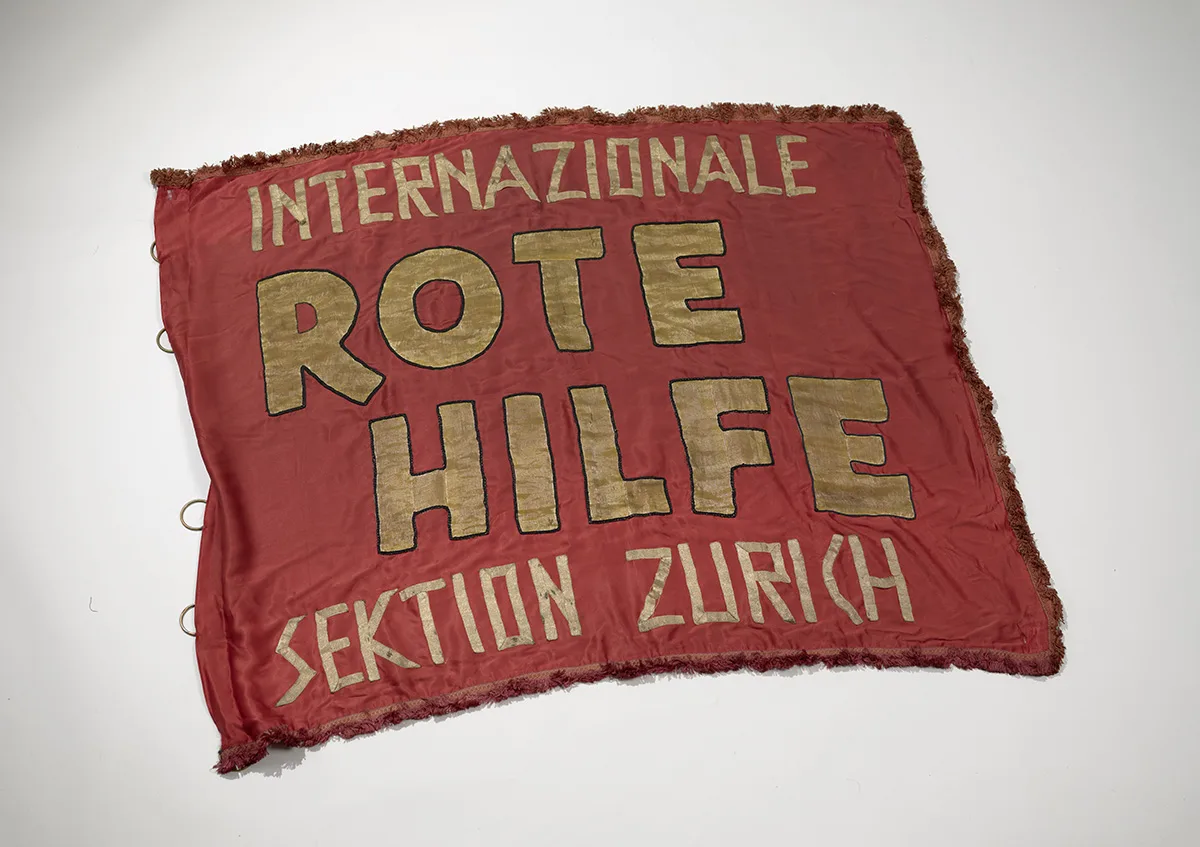
The escape routes led from the national borders to assembly points where the refugees were handed over to smugglers and brought through Switzerland to the country’s western border. Various aid organisations, such as Swiss Labour Assistance (SAH) or International Red Aid (MOPR), as well as individuals, Swiss and foreign anti-fascists living in Switzerland helped the refugees cross the country. They were often responsible for different tasks: they smuggled anti-fascist leaflets to Germany and Italy and escorted refugees into Switzerland on their way back, established contacts and provided accommodation or recruited volunteers at public events. With the threat of detention and deportation hanging over them, some even set off for Spain themselves.
Flag of International Red Aid, Zurich Section, from the 1930s.
Flag of International Red Aid, Zurich Section, from the 1930s. Swiss Social Archives
The court cases of the two men from Ticino Mario-Antonio Scotti and Luigi Maina showed how close the ties were between Switzerland’s southern border and Zurich. The two men lived in Zurich, which presented them with an ideal platform from which to bring refugees across the border into German-speaking Switzerland. On 21 December 1937, the two men were arrested at Maglio di Colla near the Swiss-Italian border. Having initially assumed they had discovered a one-off operation, the Federal Police quickly unearthed an extensive network. International Red Aid, which became operational in 1922, often comes up in the archives as having given assistance to refugees on the move. It already had a dense network in Europe by the time the Spanish Civil War broke out and was able to give financial support to smugglers and refugees on their way to Spain.

The refugees travelled along smuggling routes
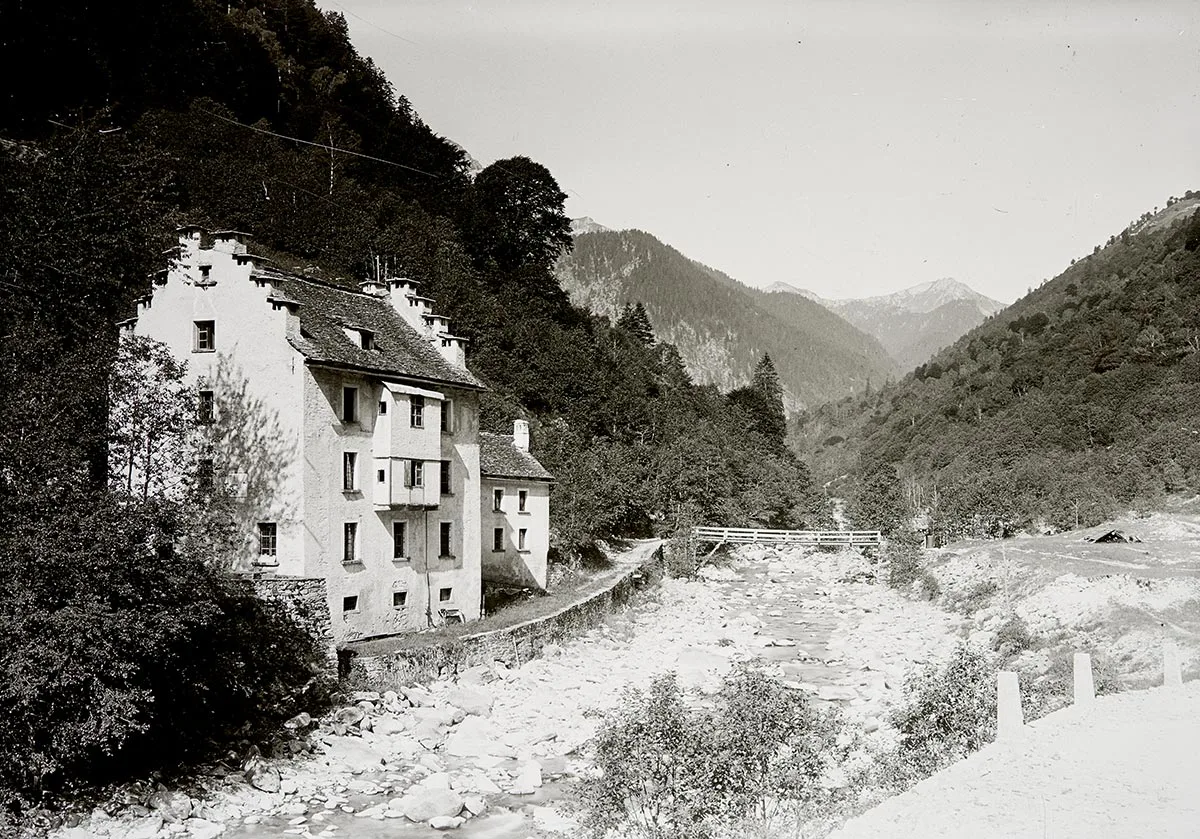
Narrow mule tracks with a long history as smuggling routes were used to assist refugees across the green border. Giuseppe Mreule from Paris, a key figure in the escape network, paid Scotti and Maina between CHF 50 and 60 per trip for organising and executing the clandestine border crossings. So, the two men were not motivated purely by their political convictions but also had a financial incentive.
The place where they were arrested, Maglio di Colla, is under two hours by foot from the Italian border and just three hours from Lugano. Valleys in Sopraceneri, Onsernone Valley for example, offered good escape routes into Switzerland. Russian-born lawyer Vladimir Rosenbaum and his wife Aline Valangin had a house in Colomogno near the border at Bagni di Craveggia. Valangin later documented their experiences with refugees in a book Dorf an der Grenze (village on the border). The couple were also able to offer refugees somewhere to stay in Zurich through Villa Baumwollhof and the housing cooperative Neubühl.
Bagni di Craveggia thermal baths offered the perfect border crossing point from Italy into Switzerland. The sparsely populated Onsernone Valley was well suited to people smuggling.
Bagni di Craveggia thermal baths offered the perfect border crossing point from Italy into Switzerland. The sparsely populated Onsernone Valley was well suited to people smuggling. Swiss National Museum
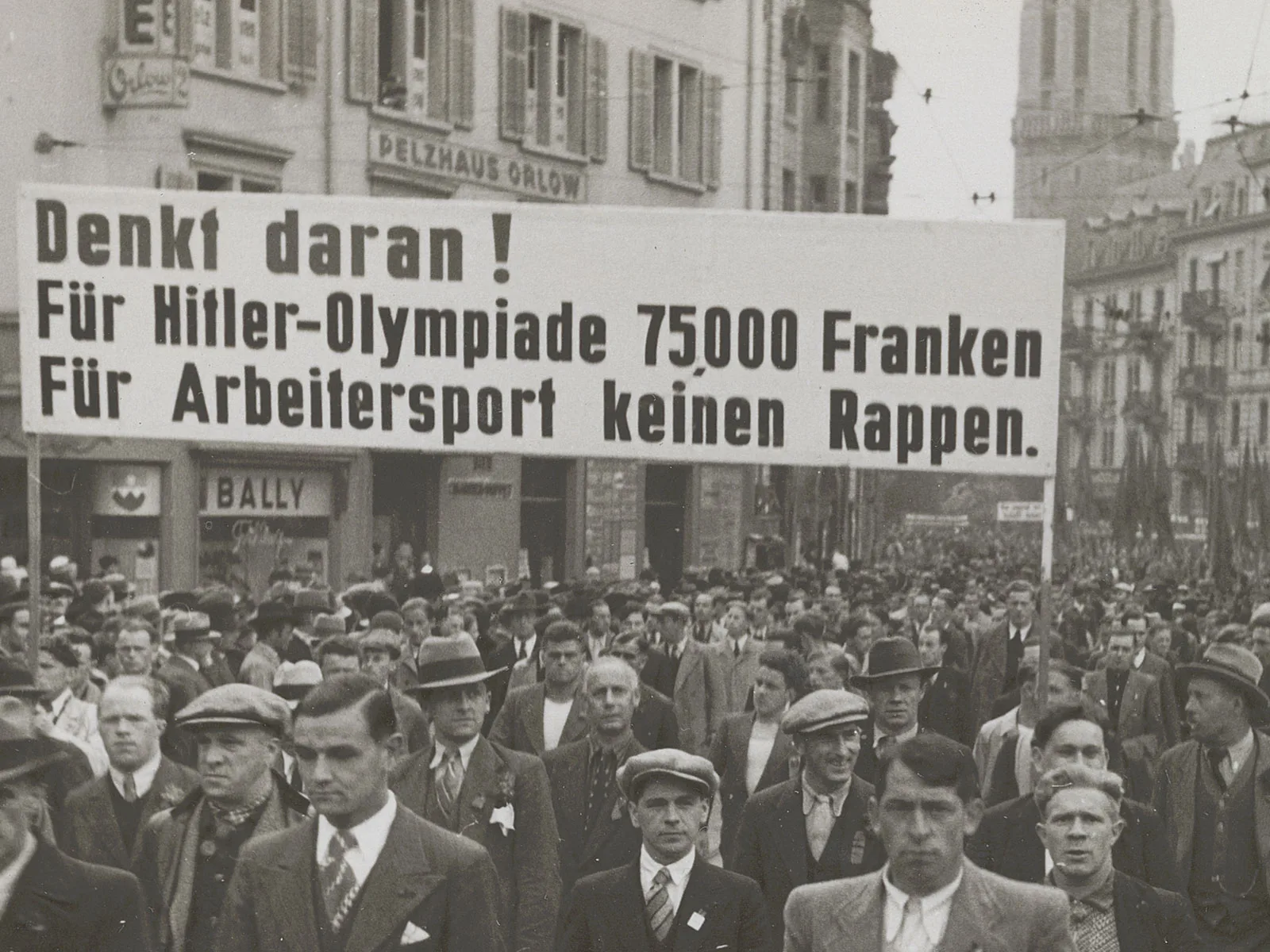
The refugees arrived in Switzerland via the south-east border through Mesolcina and Poschiavo, or via the north near Ramsen or Stein am Rhein. There was support available at the north-west border between Switzerland and Germany too, where women were also active in the network; for example, Clara Thalmann and her friend Jeanne Weiss-Rykart from Basel. After Hitler came to power in 1933 the two young women started bringing anti-fascist leaflets to Germany and refugees to Switzerland. Clara travelled to Spain in July 1936 to swim at the People's Olympiad in Barcelona. When the civil war broke out, she initially decided to stay in Spain and fight but then twice returned to Switzerland to deliver speeches exhorting people to fight in the Spanish Civil War.
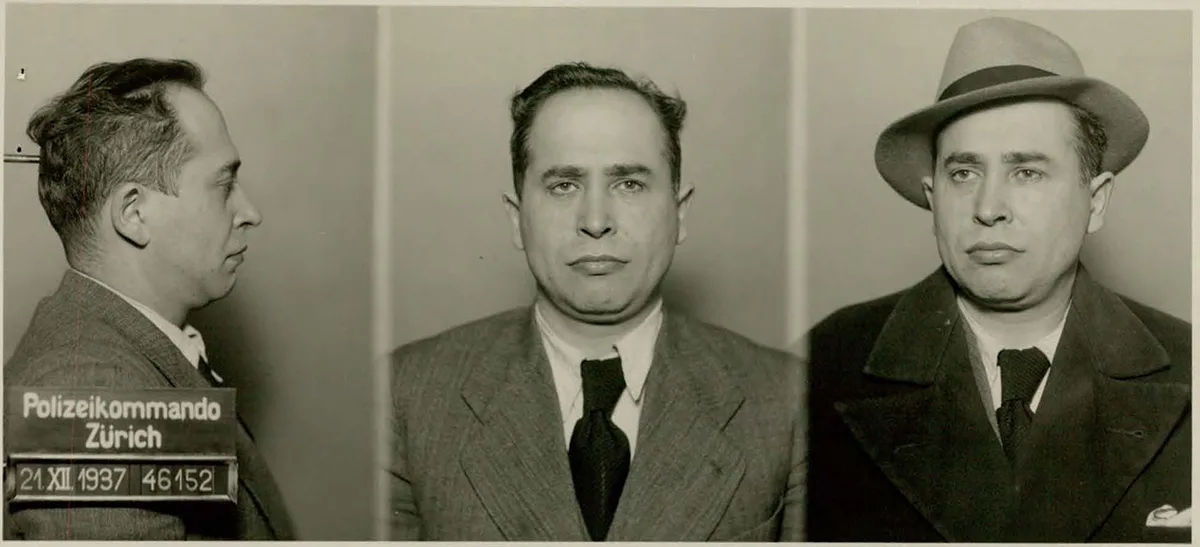
While Clara only operated at the northwestern border, the military tribunal accused Mario-Antonio Scotti of acting as the right-hand man of recruiter Francesco Romagnoli. That was because Scotti’s field of operations was not restricted to the Swiss-Italian border; it spread to the Zurich agglomeration, where he and Luigi Maina helped organise the refugees’ onward journey. Romagnoli, who was also known by his cover name ‘Cesare’, oversaw operations in Zurich. The Italian from Cesena had extensive contacts in Italy, Switzerland and France. He was arrested as one of the leading figures in the escape network in December 1937 and charged with recruiting Swiss people to fight for a foreign military power.
The Zurich police had been monitoring Francesco Romagnoli for some time before arresting him in December 1937.
The Zurich police had been monitoring Francesco Romagnoli for some time before arresting him in December 1937. Swiss Federal Archives
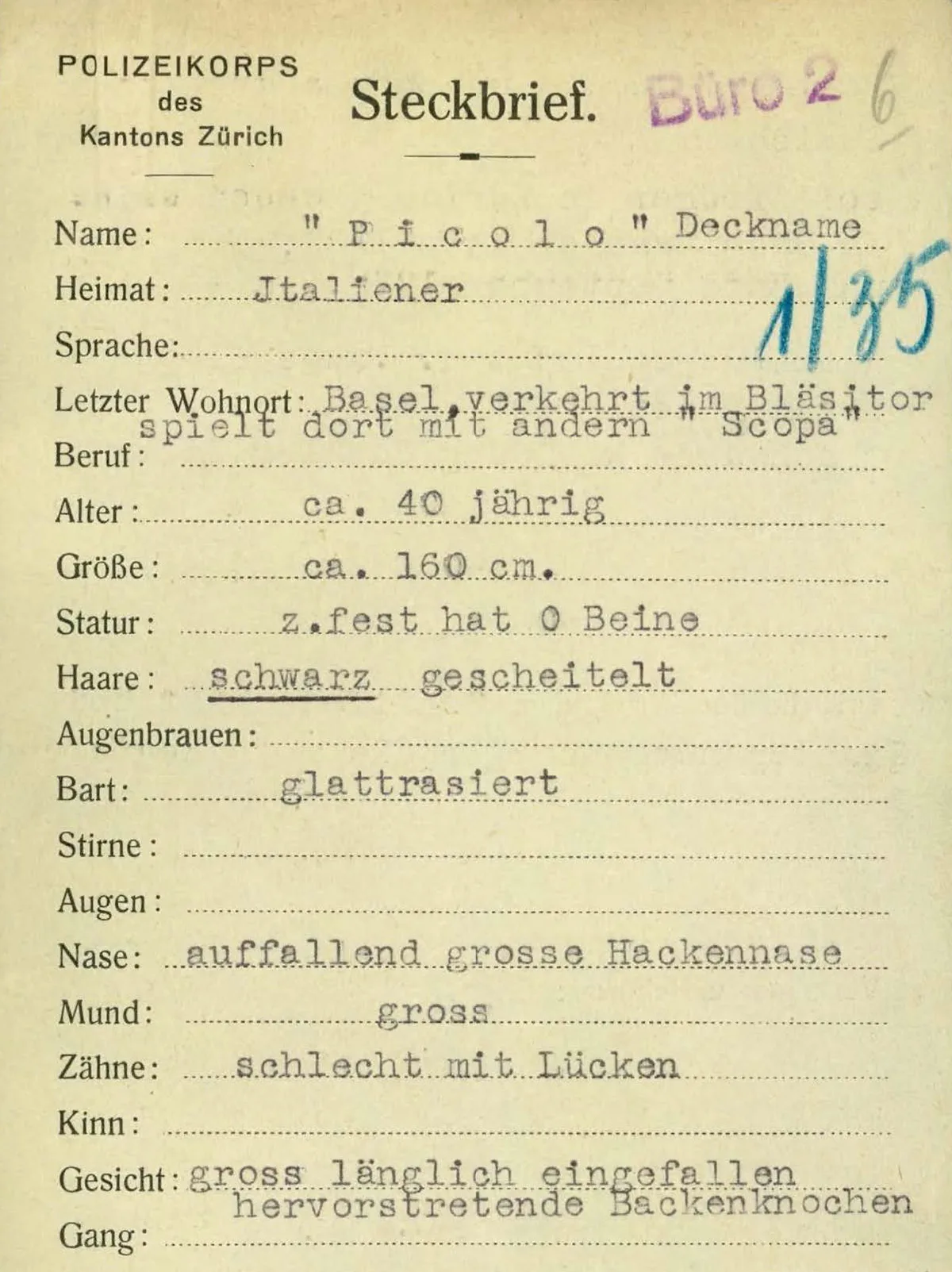
An extract from the report of a police informer provides details about the recruitment and onward-routing process: “Cesare [Romagnoli] goes several times a day to the ‘Kleinen Casino’ restaurant. [...] As far as I am aware, Cesare works on recruiting and arranging passage for Italian and Swiss citizens to fight for the Reds. He gives money to people travelling to Spain, usually CHF 30–40, with instructions to go first to Basel and present themselves at the ‘Bläsitor’ restaurant where they meet another Italian called ‘Piccolo’ who organises their further passage. Piccolo helps them cross the border into France unchecked.”

Recruitment centre in Paris

Romagnoli maintained close ties with Giuseppe Mreule in Paris as they were part of the same international escape network. The French capital was the main recruitment centre as the volunteers all convened there for the final stage of their journey to Spain. Romagnoli, who was threatened with deportation to Italy following his conviction, went to Spain himself in 1937. He served in the Garibaldi Brigade and was killed when retreating to Ebro on 7 September 1938.
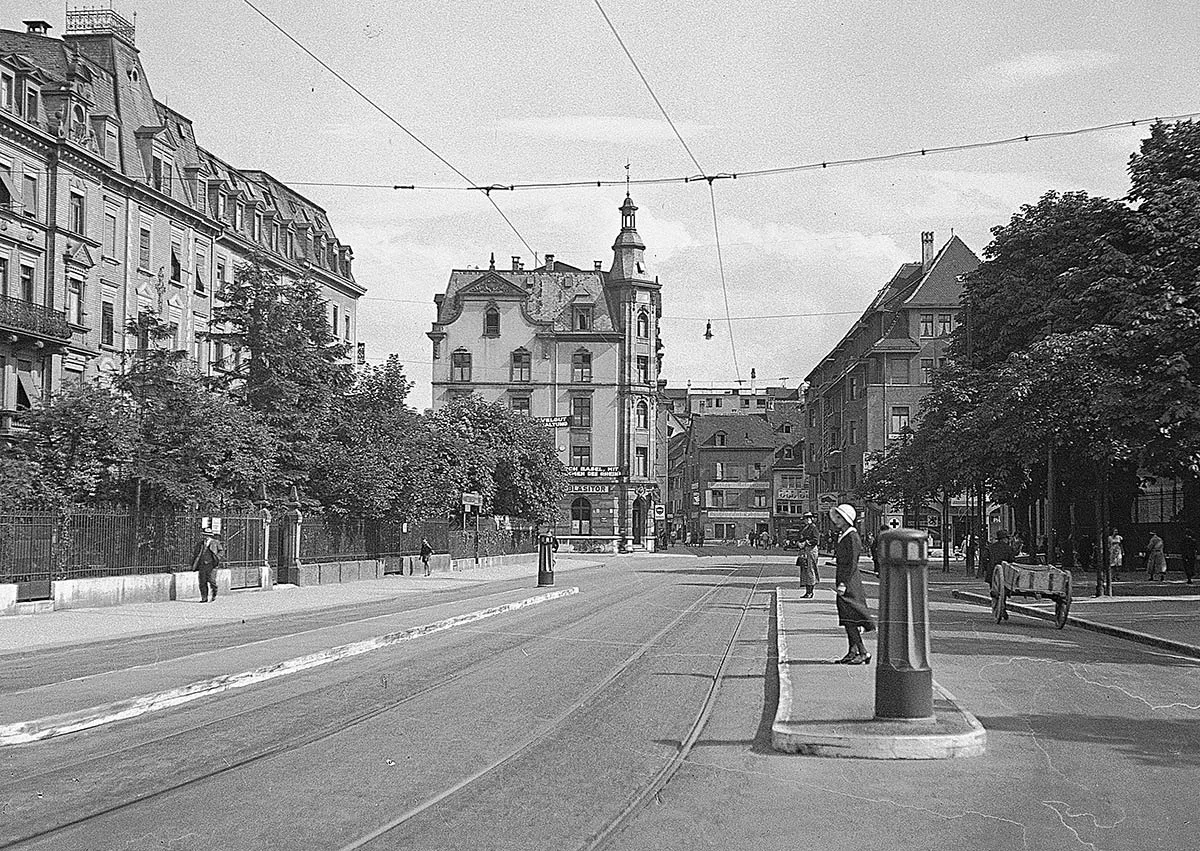
Basel was the last Swiss station on the way to the Spanish Civil War. The ‘Bläsitor’ meeting point was used by different political organisations involved in arranging the onward travel of refugees, but most of all by International Red Aid. Karl Göring was one of the people in charge of this last leg from Basel over the Swiss border into France. He subsequently stated in court that he had often spent time in ‘Zum Bläsitor’ due to having been out of work and that he had come into contact with the preexisting escape network there, which had built up around Red Aid. He was responsible for organising the passage of at least twelve refugee groups from Switzerland to France by the time he was arrested in late autumn 1936.
The Bläsitor restaurant, pictured here in 1928, was the main meeting place for the escape network in Basel.
The Bläsitor restaurant, pictured here in 1928, was the main meeting place for the escape network in Basel. Staatsarchiv Basel-Stadt, NEG 3463
The restaurant had an ‘Emigranten-Stube’ (room for emigrants) on the first floor. Italian and German refugees used the room to wait for the next leg of the trip to the border and to leave belongings that they could not take to Spain with them.
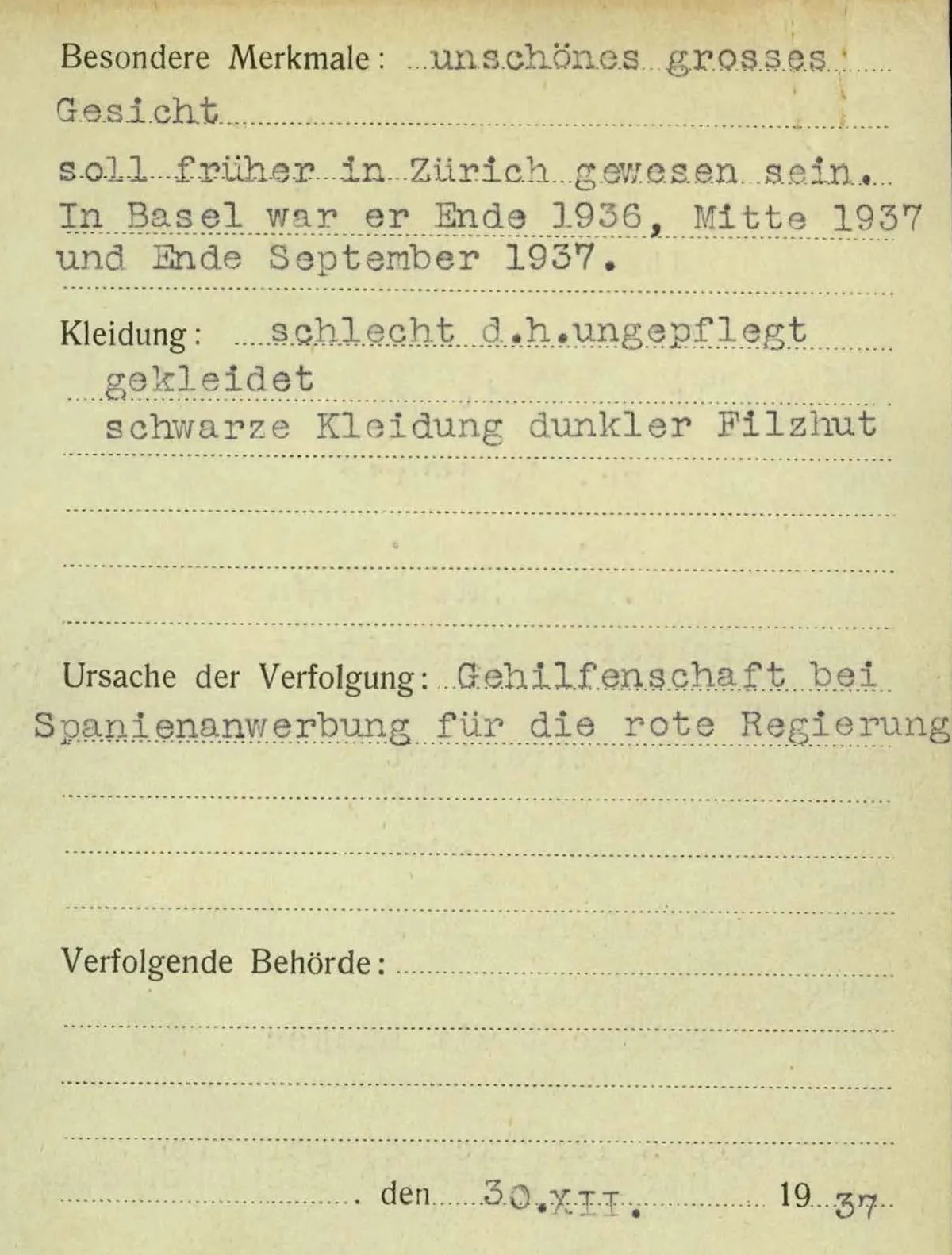
Göring was also in contact with the abovementioned ‘Piccolo’, whose real name was Severo Canonica and who operated as a contact and smuggler in Basel. Göring admitted that each group comprised one to four people. He did not always cross the border at the same place, preferring to alternate between different crossing points to avoid attracting attention. Two of his preferred locations were in Bourgfelden and St. Louis.
Police wanted notice for the Italian known as ‘Piccolo’.
The Zurich cantonal police wanted notice on suspected smuggler Severo Canonica who was only known to the authorities as ‘Piccolo’. Swiss Federal Archives / Swiss Federal Archives
On 30 August 1938, the Office of the Public Prosecutor in Basel finally dropped criminal proceedings against Göring due to lack of evidence and on the grounds that Göring could not have known that the travel ban to Spain also applied to foreign nationals. Göring had been expelled from the communist party at the end of 1936 and explained that he had stopped arranging refugee transport at that time. His exclusion was symptomatic of the internal tensions on the left, which were tangible not only in Spain, but also in Switzerland.
There has been next to no research into accounts of the journeys and the escape networks that helped refugees cross Switzerland during the 1936-1939 Spanish Civil War. When Switzerland tightened its refugee policy in July 1936, conditions in the country became too precarious for political refugees, which is why many of them chose to go to Spain and fight fascism instead.

International conference on the Spanish Civil War

17 July 2026 marks the 90th anniversary of the putsch by high-ranking generals against the second Spanish Republic. To mark the occasion, the Swiss Social Archives, St. Gallen University of Teacher Education and the universities of Bern, Fribourg, Geneva and Zurich plus Humboldt University of Berlin are organising an international conference “Ninety Years Since the Spanish Civil War. Experiences, Memories, Concepts (1936–2026)” at the Social Archives in Zurich on 19 and 20 November 2026. Both the conference and the evening lecture are open to the public. Further information is available here: Ninety Years Since the Spanish Civil War
Further posts