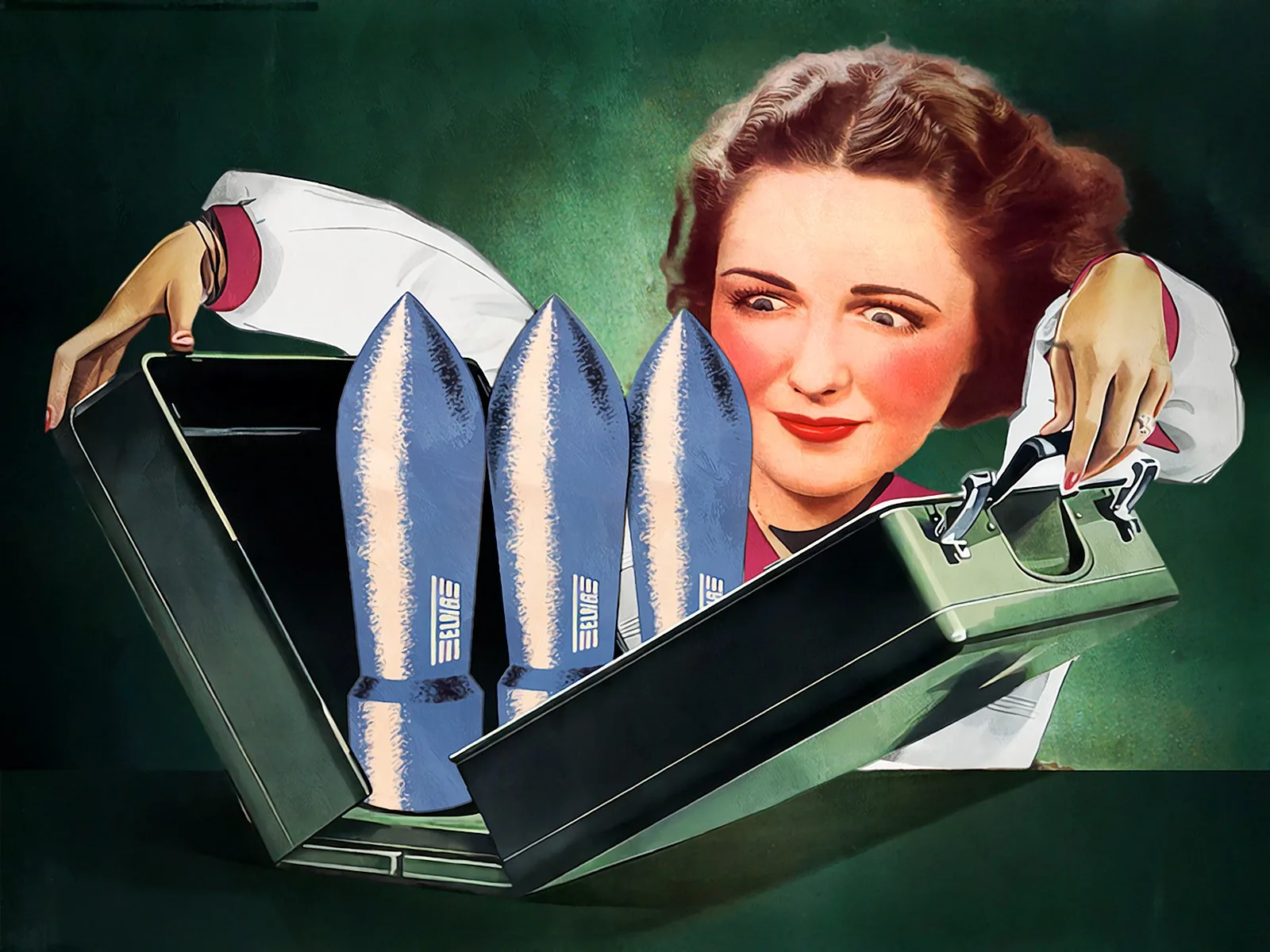
Nina came to Geneva as a dancer, but her real business went on behind closed doors. Illustration by Marco Heer.

The Nina Affair: espionage in 1930s Geneva 

A dancer, a Geneva cabaret and secret weapon plans – under the name ‘Nina’, Italian Virginie Rota moved between the stage and the worlds of diplomacy and intelligence. Her story took place in Geneva at the time of the League of Nations – in a city in which international politics and espionage rubbed shoulders.

Christophe Vuilleumier

Christophe Vuilleumier

Christophe Vuilleumier is a historian and board member of the Schweizerische Gesellschaft für Geschichte (Swiss Historical Society). He has published a number of articles on 17th and 20th century Swiss history.
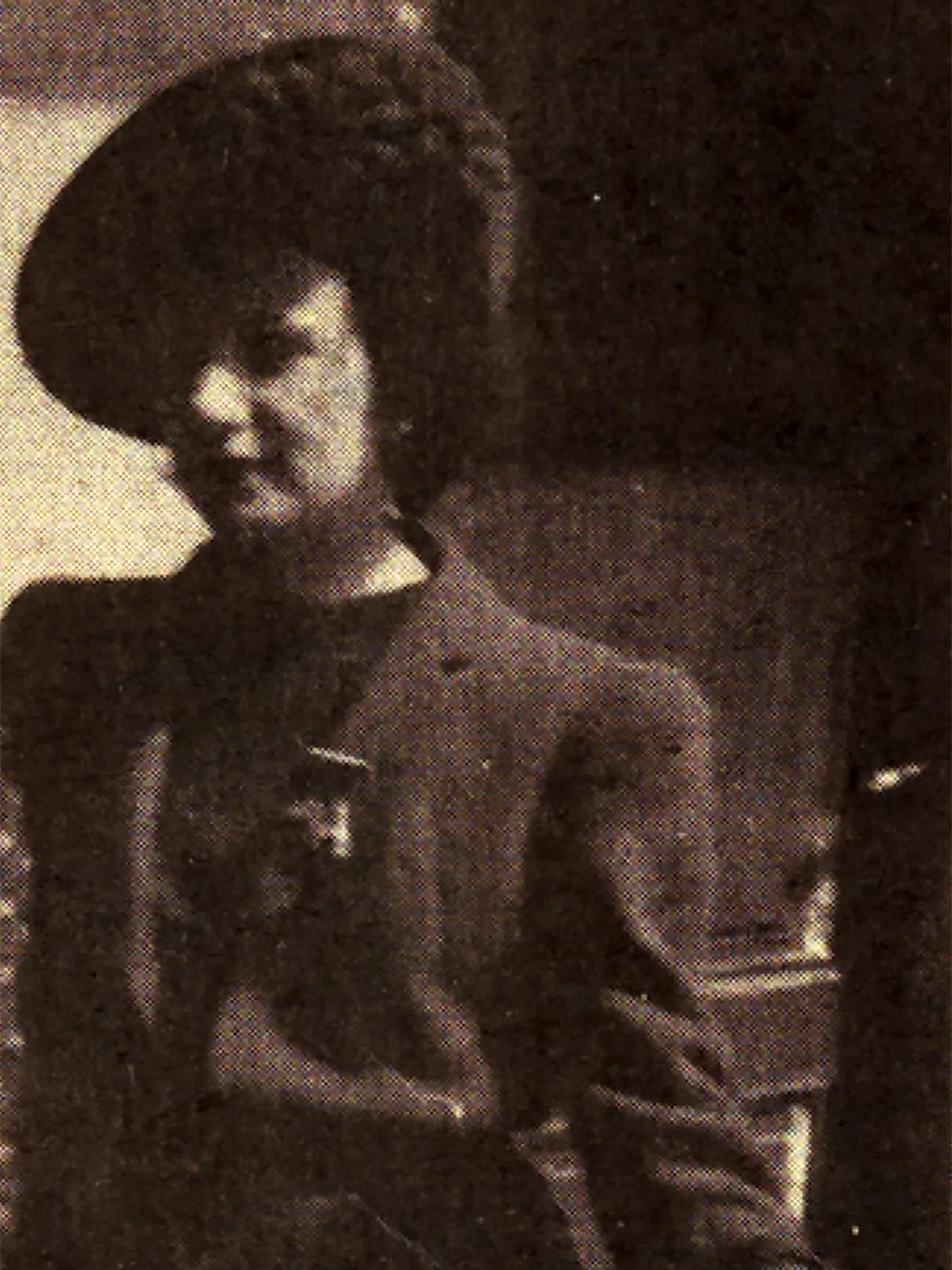
Virginie Rota was born in Lugano (or possibly Bergamo) on 28 April 1907, the daughter of Albert Rota and Marie Arrigoni. Beautiful, intelligent and adventurous, Virginie entered the service of Fascist Italy in the 1930s. She is thought to have worked in the first division of the military intelligence service, the Servizio informazioni militari (SIM). Between 1934 and 1935 she was sent by her superiors on a mission to Geneva, where she stayed at the Pension Clermont in Champel. As she was a dancer by profession, she had no difficulty finding work in a local cabaret, where she went by the name of ‘Nina’.
A young Virginie Rota, who performed as a dancer under the stage name ‘Nina’. The cabaret world brought her into contact with politicians and intelligence services.
A young Virginie Rota, who performed as a dancer under the stage name ‘Nina’. The cabaret world brought her into contact with politicians and intelligence services. e-newspaperarchives
In Geneva, she put her skills to work to obtain information from the offices of the League of Nations. As the predecessor organisation to the current UN, the League of Nations was headquartered in Geneva, and the city was therefore a key stomping ground for diplomats, politicians and members of the intelligence services. But in September 1935, a postcard from Italy addressed to Nina attracted the attention of the postal authorities, which then notified the cantonal police, who were monitoring the Nazi and fascist circles in Geneva on behalf of the Office of the Attorney General of Switzerland. This led the police to open an investigation into the young woman.
Before long, the police were convinced that Nina was engaged in espionage and arrested her shortly afterwards, locking her up in Saint-Antoine Prison. Captain Baumgartner, examining magistrate of the 1st Division, was entrusted with the investigations. The lawyer Jacques Dicker was appointed to Nina. A strange choice, as Dicker was a Socialist member of the Cantonal Parliament and a National Councillor. So, a leading Socialist was to defend a fascist spy. However, the question of whether Nina had worked solely for Italy remained disputed. Some observers later suspected that she had also maintained ties to other intelligence services and tailored the services she offered accordingly. Dicker was not given permission to visit his client during the investigation. The case was eventually dropped due to a lack of evidence. On 30 September, the examining magistrate handed the file over to the Office of the Attorney General, who released the young woman on bail. Nina was released from custody on 28 October, and ordered to leave Switzerland on 11 November.
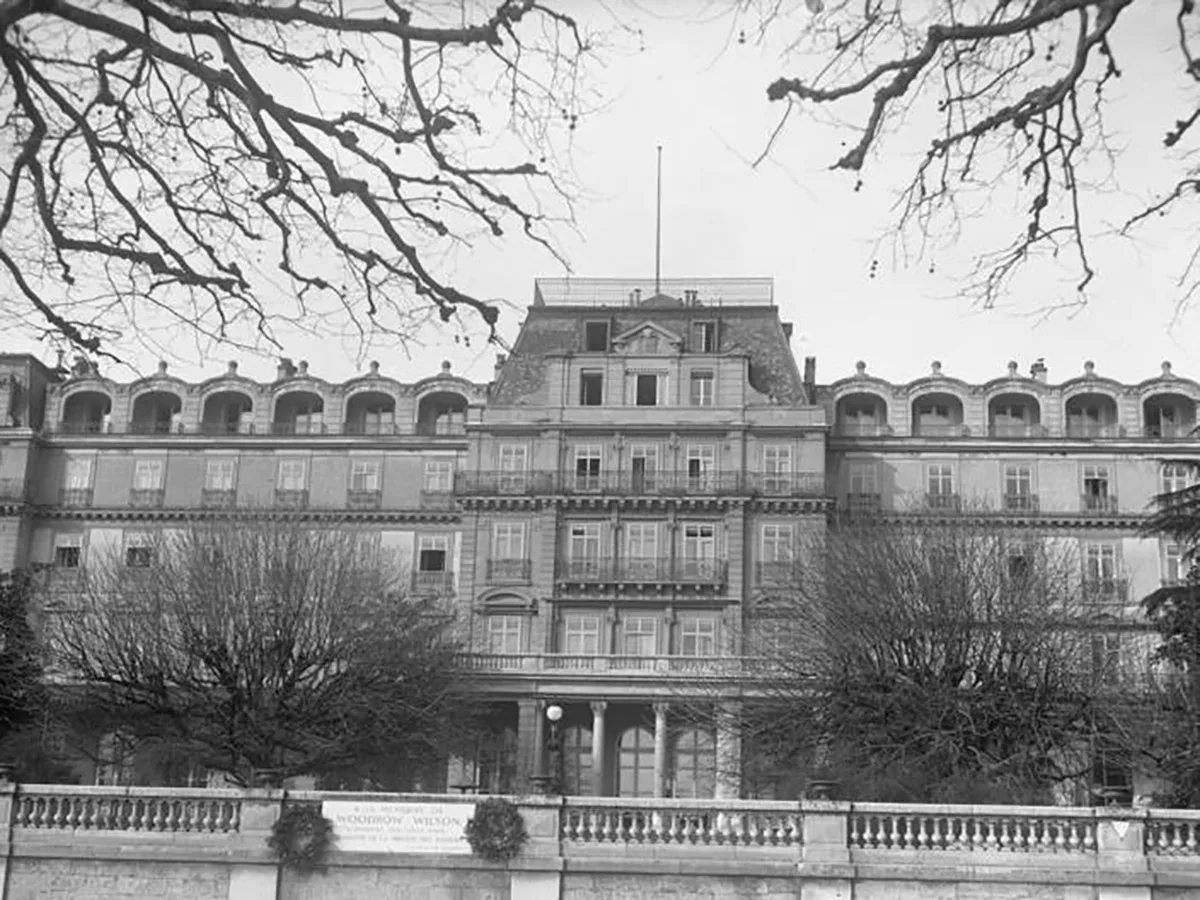
The League of Nations headquarters in Geneva, 1931.
The League of Nations headquarters in Geneva, 1931. Wikimedia / German Federal Archives
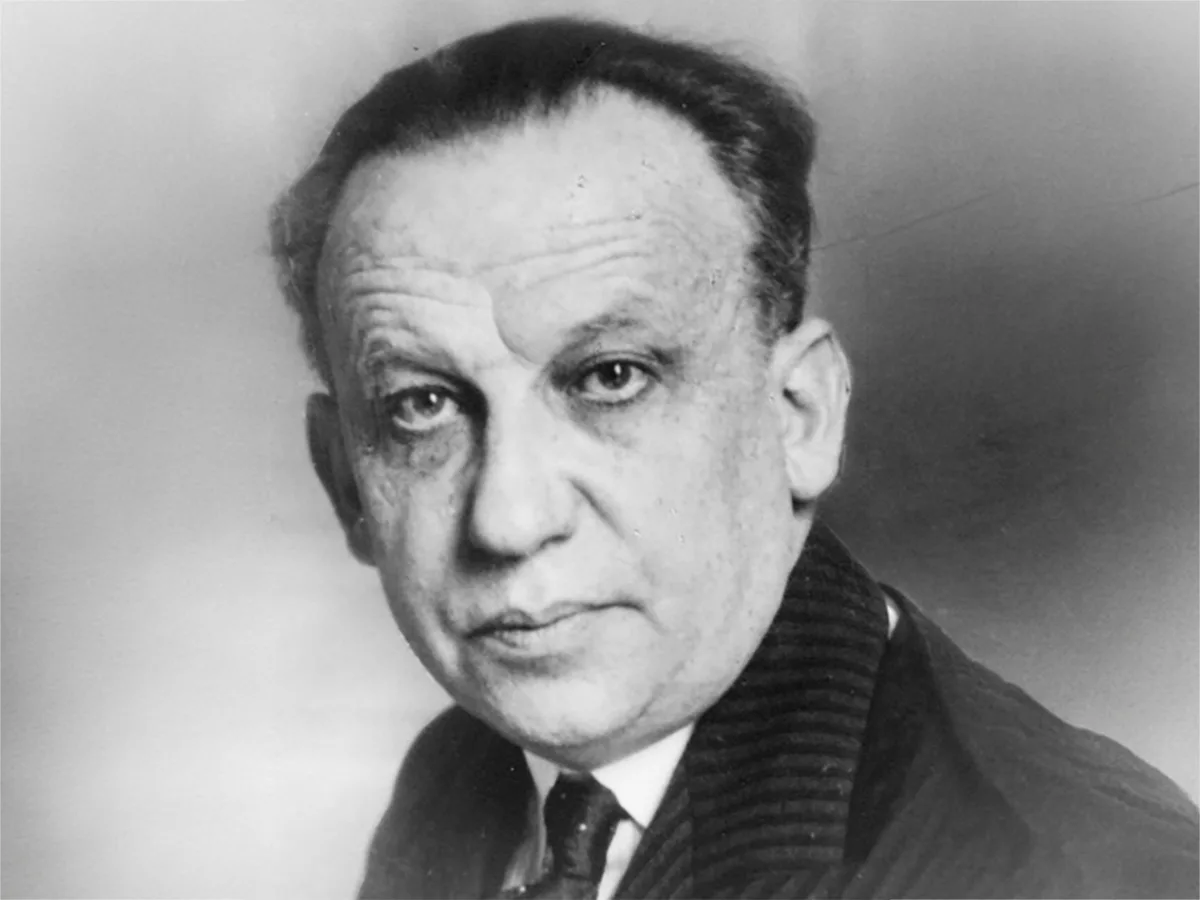
Genevan lawyer and socialist politician Jacques Dicker defended the suspected spy Nina in 1935. A brief that proved politically controversial.
Genevan lawyer and socialist politician Jacques Dicker defended the suspected spy Nina in 1935. A brief that proved politically controversial. Wikimedia

A strategic marriage to avoid expulsion

But Nina’s story was far from over. Her handlers provided her with enough money to bribe a chauffeur from Vaud named Bernard-Marius Capt to 'agree' to marry her. The wedding took place before a registrar from the city of Geneva on 4 December 1935, five weeks after her release. The marriage had decisive consequences for Nina. Under Swiss citizenship law at the time, a foreign bride automatically acquired the Swiss citizenship of her husband on marriage, including his communal and cantonal citizenship. So Nina also became a citizen of Le Chenit, where her husband was from. The expulsion order, which had already been issued, therefore became null and void. The marriage had clearly only taken place for the purpose of naturalisation, as the couple were divorced by 14 July 1938. But by then it had allowed Nina to remain in Switzerland and to continue her activities.

An intelligence network in Geneva

The authorities continued to harbour suspicions about Nina, who was living in Geneva and working as a sales representative. According to the investigation files, Nina called on the services of private detective Paul Rochat and his wife Dolly. She commissioned the pair to set up a political intelligence service. The husband would gather information on the political allegiances of individuals and of Swiss and foreign associations, while his wife kept a card index for Nina. With the aid of accomplices, Nina established an economic intelligence network, which also included a certain Adam Kolner, a German intelligence officer. Her contacts with German officers were probably connected to the collaboration between the Italian military intelligence service and the German Abwehr that began in 1938. In the years that followed, Nina remained in contact with the Italian Consulate General in Geneva. Its head in 1938 was Ambrogio Rotini, a member of the National Fascist Party of Italy. As the judicial authorities were unable to question all the suspects, the exact connections within this network remain somewhat unclear.
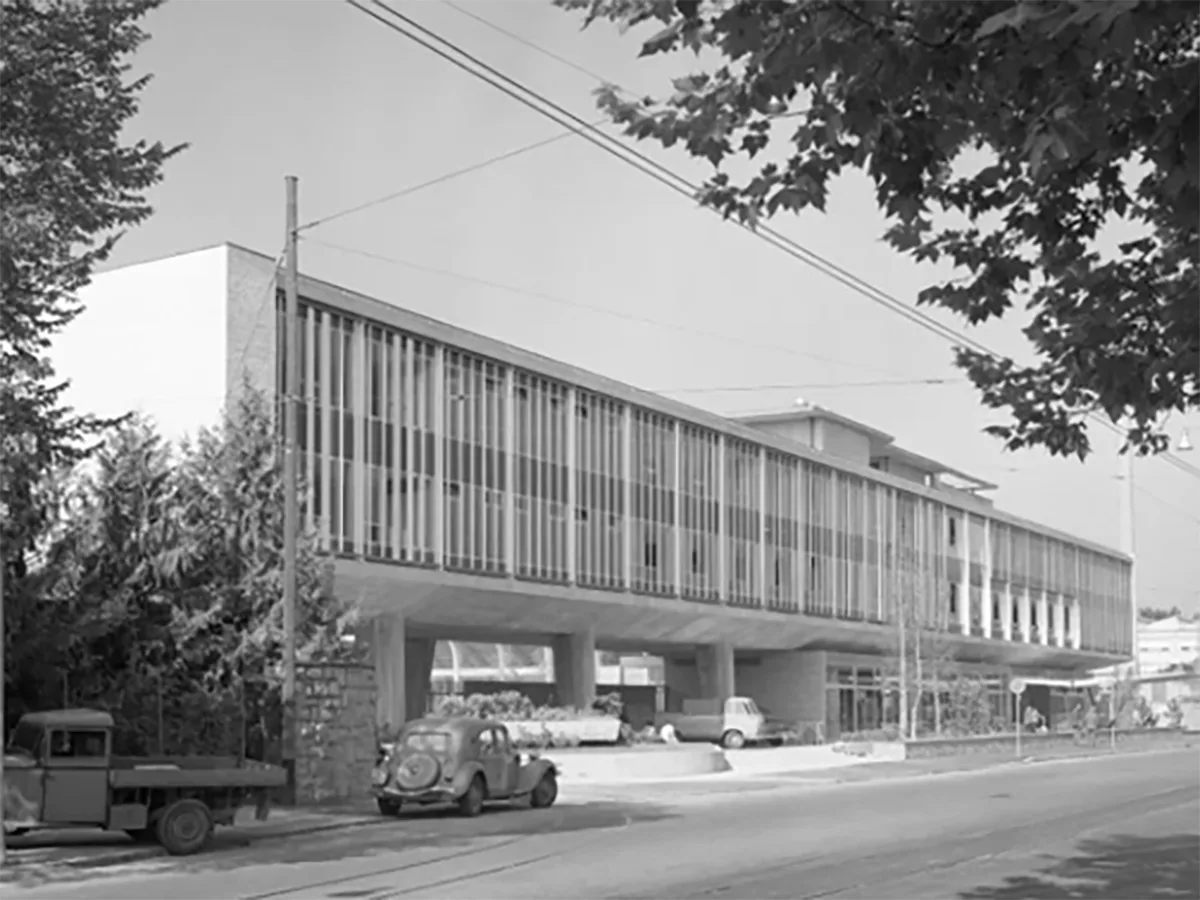
Nina was particularly interested in the projects of the Tavaro works in the Les Charmilles neighbourhood. The Geneva-based precision engineering factory, which was founded in 1934, manufactured military components and later became well known primarily thanks to the sewing machine brand Elna. At the time, Tavaro was developing plans for an artillery shell fuse on behalf of the British government. Such devices were militarily significant as a fuse determines when and under what conditions a projectile detonates.
The Tavaro works on Avenue de Châtelaine in Geneva, 1957. In the 1930s, the company manufactured military engineering components. Nina also had her sights set on its development plans.
The Tavaro works on Avenue de Châtelaine in Geneva, 1957. In the 1930s, the company manufactured military engineering components. Nina also had her sights set on its development plans. Bibliothèque de Genève
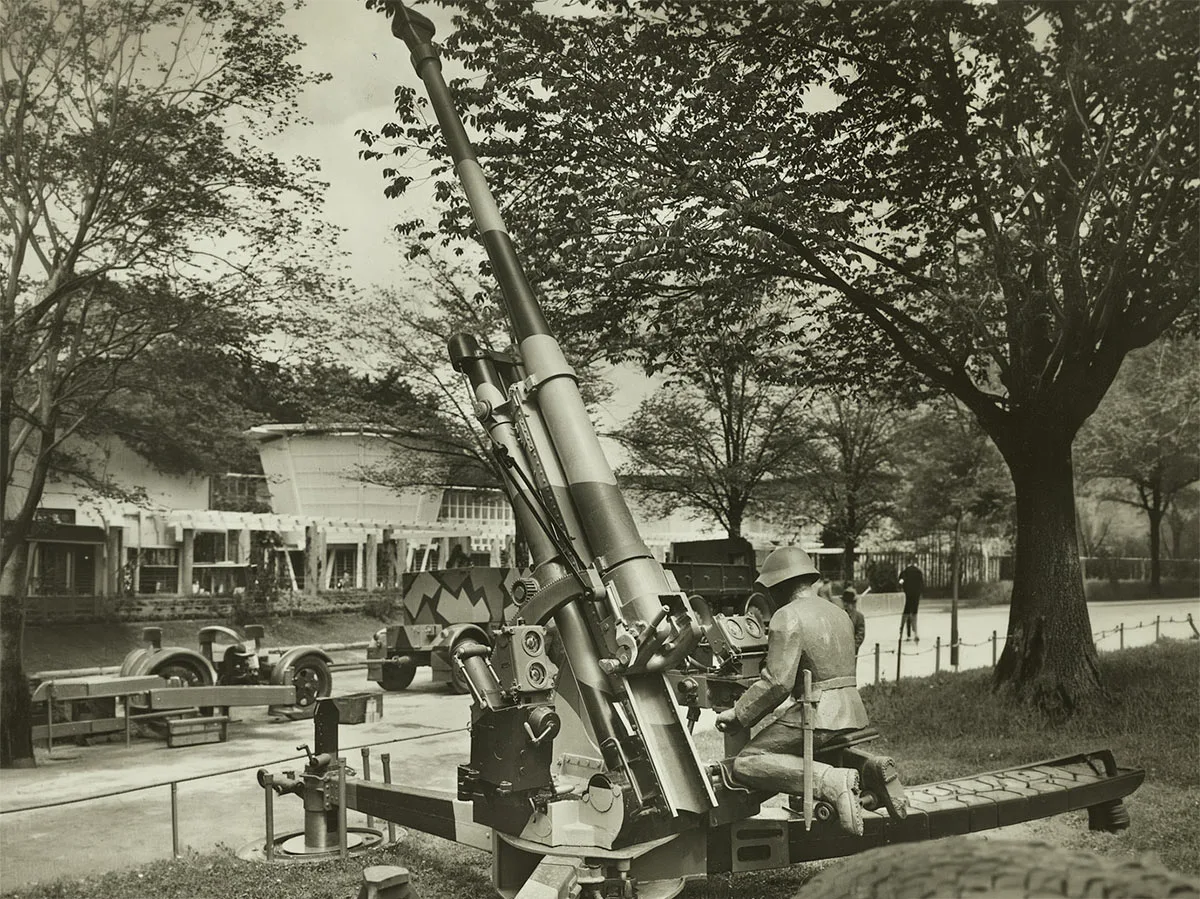
7.5-cm anti-aircraft gun belonging to the Swiss Armed Forces at the 1939 National Exhibition in Zurich. Documentation on such weapons was among the information that Nina sought to procure.
7.5-cm anti-aircraft gun belonging to the Swiss Armed Forces at the 1939 National Exhibition in Zurich. Documentation on such weapons was among the information that Nina sought to procure. e-pics
Nina made contact with Roger Joël, a technical draughtsman at Tavaro, who had produced the plans for the fuse. Through bribery, she persuaded him to hand over the assembly plans and a brass model of a safety device for the anti-aircraft guns used by the Swiss Armed Forces, as well as an aiming table. Nina and Roger, who had no idea that they were under close surveillance, were arrested on 19 December 1938 as they crossed the border in Moillesulaz. The pair were taken to Saint-Antoine Prison, where they were interrogated multiple times by the political brigade of the Geneva criminal police, assisted by inspectors from the federal police. The defendants quickly confessed to the crimes, with Nina stating that she was still in contact with the Italian consul. Nina tried to take her own life several times while in custody. After she injured her arm with glass shards from her cell, she was taken to the cantonal hospital for treatment. In the weeks that followed, the authorities placed her under tight surveillance and had her admitted to hospital again.

A court case overshadowed by the outbreak of war
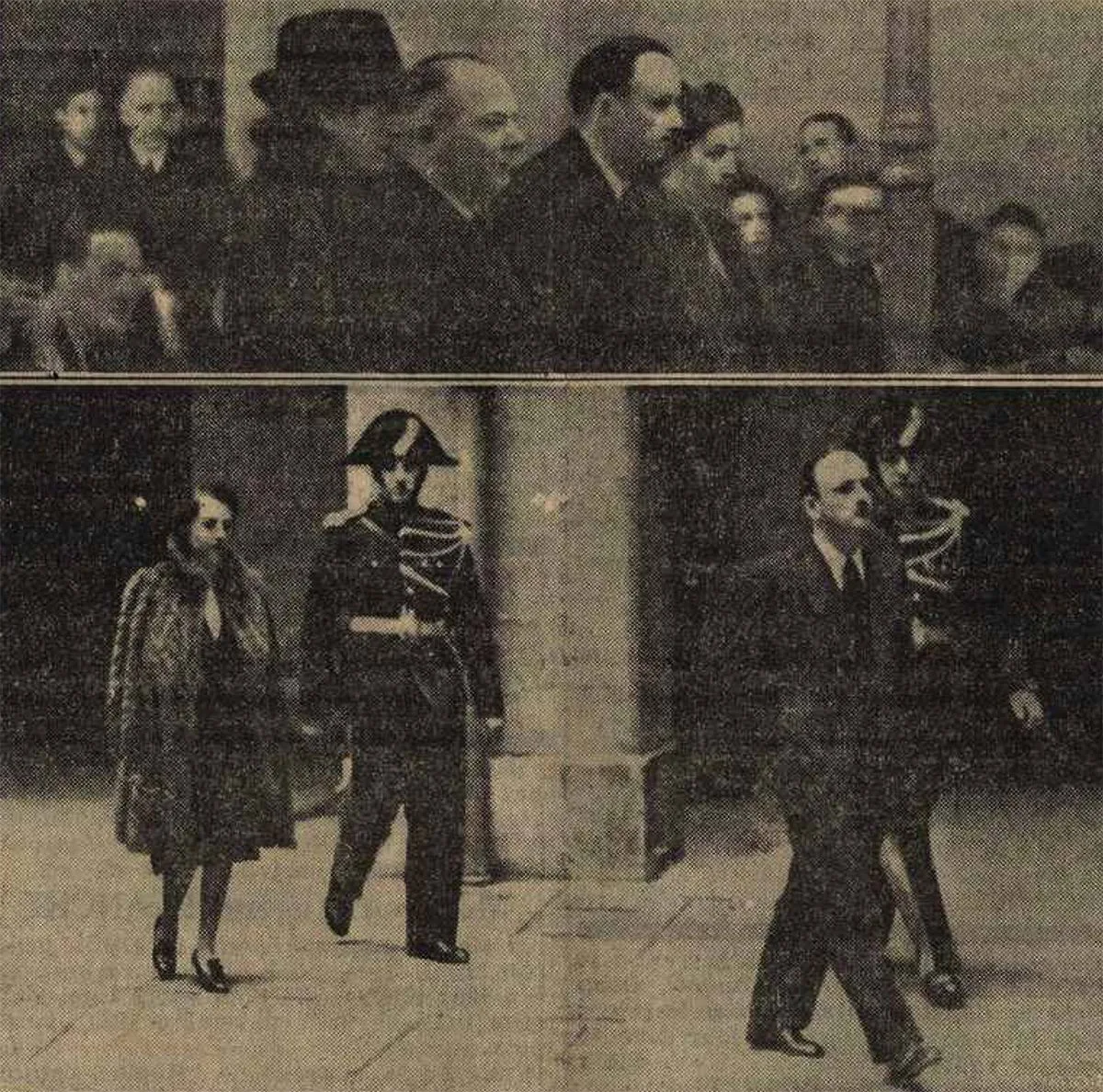
In the meantime, Nina turned again to Jacques Dicker and asked him to defend her. The fact that the prominent Socialist accepted the case met with strong resistance within his party and sparked a public controversy. In the end, it was Georges Haldenwang, a lawyer and politician from Geneva, who took on Nina’s defence. The proceedings before the Federal Criminal Court got under way in the autumn of 1939, just a few weeks after the outbreak of the Second World War on 1 September. Nina was accused of treason, incitement to treason and economic, political and military espionage in the service of a foreign state, and was sentenced to five years in prison and ten years’ deprivation of civil rights. Besides Nina, Roger Joël and Paul and Dolly Rochat were also convicted. Joël was sentenced to three years of penal servitude, and Paul Rochat 18 months in prison. Dolly Rochat-Goretta was convicted of complicity and sentenced to six months in prison.
On trial and under surveillance: Top: (from left to right) Dolly Rochat, Paul Rochat, Roger Joël and Nina (Virginie Rota). Bottom: police escort Rota and Joël through the corridor of the Palais de Justice in Geneva.
On trial and under surveillance: Top: (from left to right) Dolly Rochat, Paul Rochat, Roger Joël and Nina. Bottom: police escort Nina and Roger Joël through the corridor of the Palais de Justice in Geneva. e-newspaperarchives
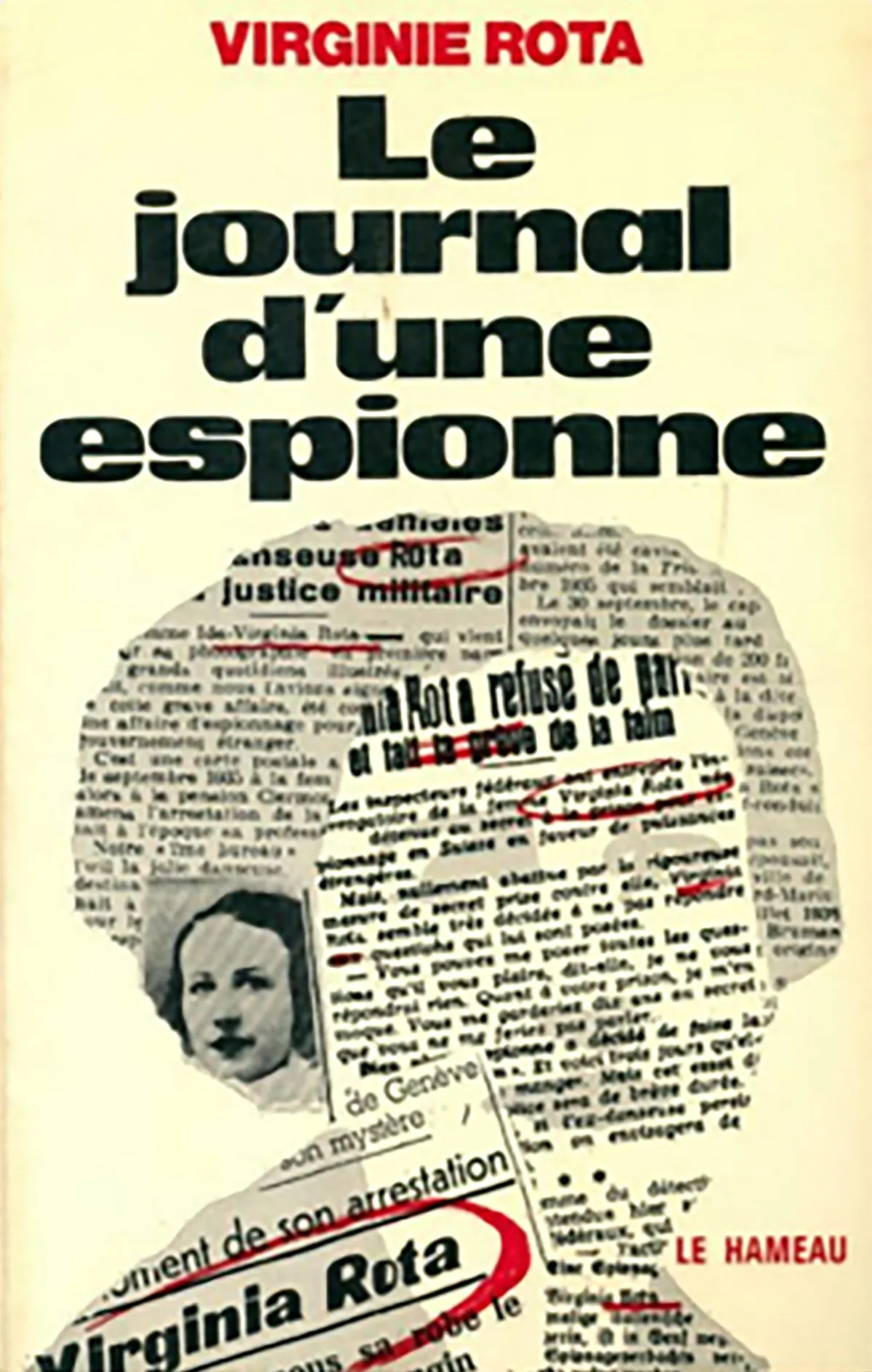
Nina, who had spent almost the whole of the war in Bellechasse Prison in the canton of Fribourg, left Switzerland after serving her sentence and published her memoir Le journal d’une espionne (‘The Diary of a Spy’) in 1974. The book is an illuminating source of information on how she later portrayed herself, although it should be read with a critical eye given the subjective view and the fact that it was written a long time after the events it recounts. Nina’s case was in the press for months. At the same time, that coverage drew attention to sham marriages, which were not designed to be genuine partnerships, but were a way of obtaining a residence permit or, as was the case at the time when a foreign woman married a Swiss man, of acquiring Swiss citizenship. The issue was legally contested in the late 1930s. Only when a federal decree was issued in 1940 was a clear legal basis established, giving the authorities the power to revoke any Swiss passports acquired through a marriage of convenience.
On the cover of her memoirs, published in 1974, Virginie Rota presented herself as a 'spy’.
On the cover of her memoirs, published in 1974, Virginie Rota presented herself as a 'spy’. Terre d'Empire

Further posts