A goddess with wrinkles
Who paints older women? A look at art history shows that painters have always struggled with the subject matter and that they usually needed a pretext to even depict them at all.

Barbara Basting
Barbara Basting worked as a cultural editor and currently heads the visual arts division in the City of Zurich’s Culture Department.
And those conventions and taboos persisted well into the 20th century. To produce dignified depictions of elderly men, painters had an array of positive role models to draw on: from saints and philosophers to scholars, and even God himself. But there were no such roles for women. Their representation therefore served no purpose.
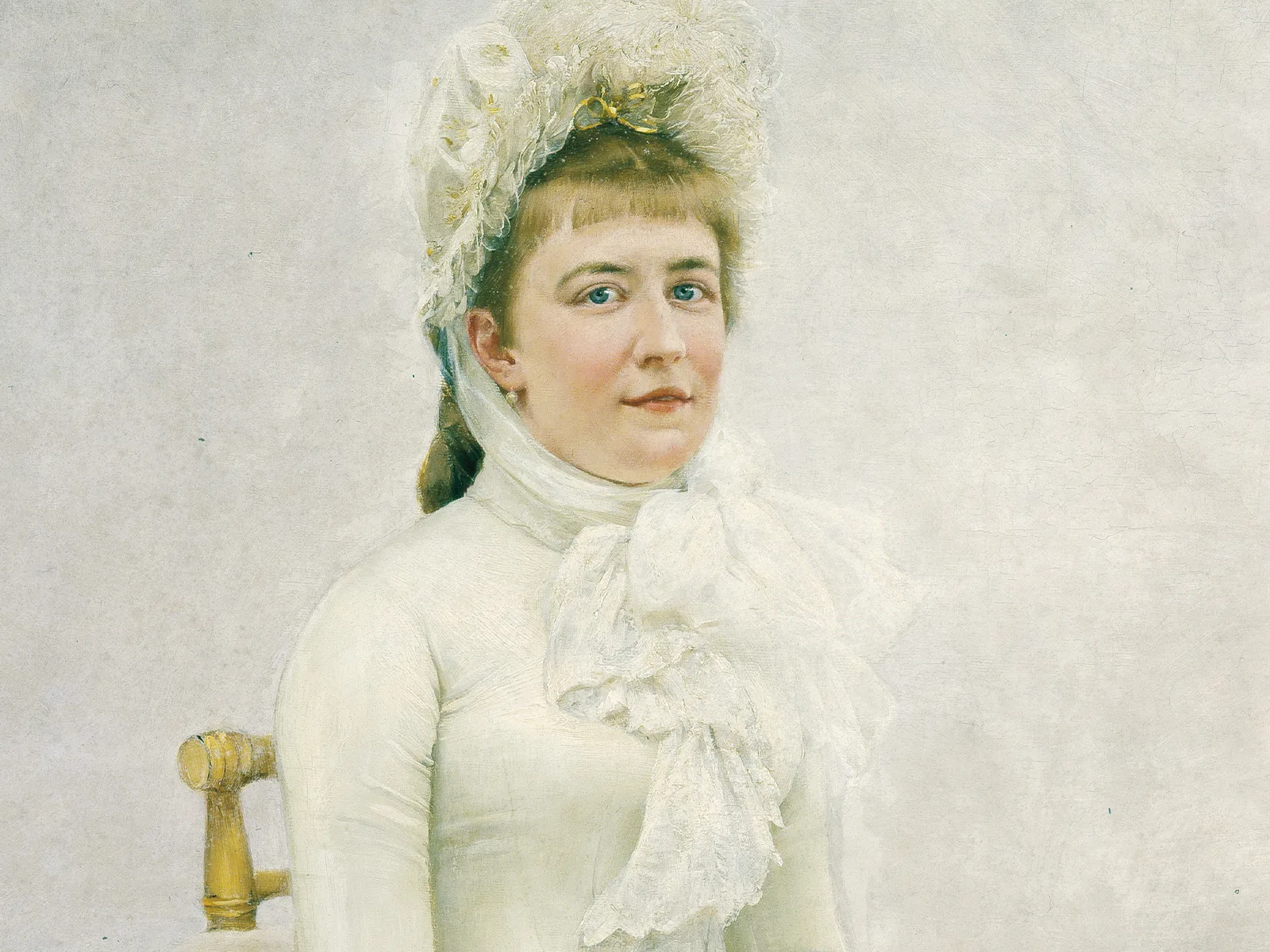
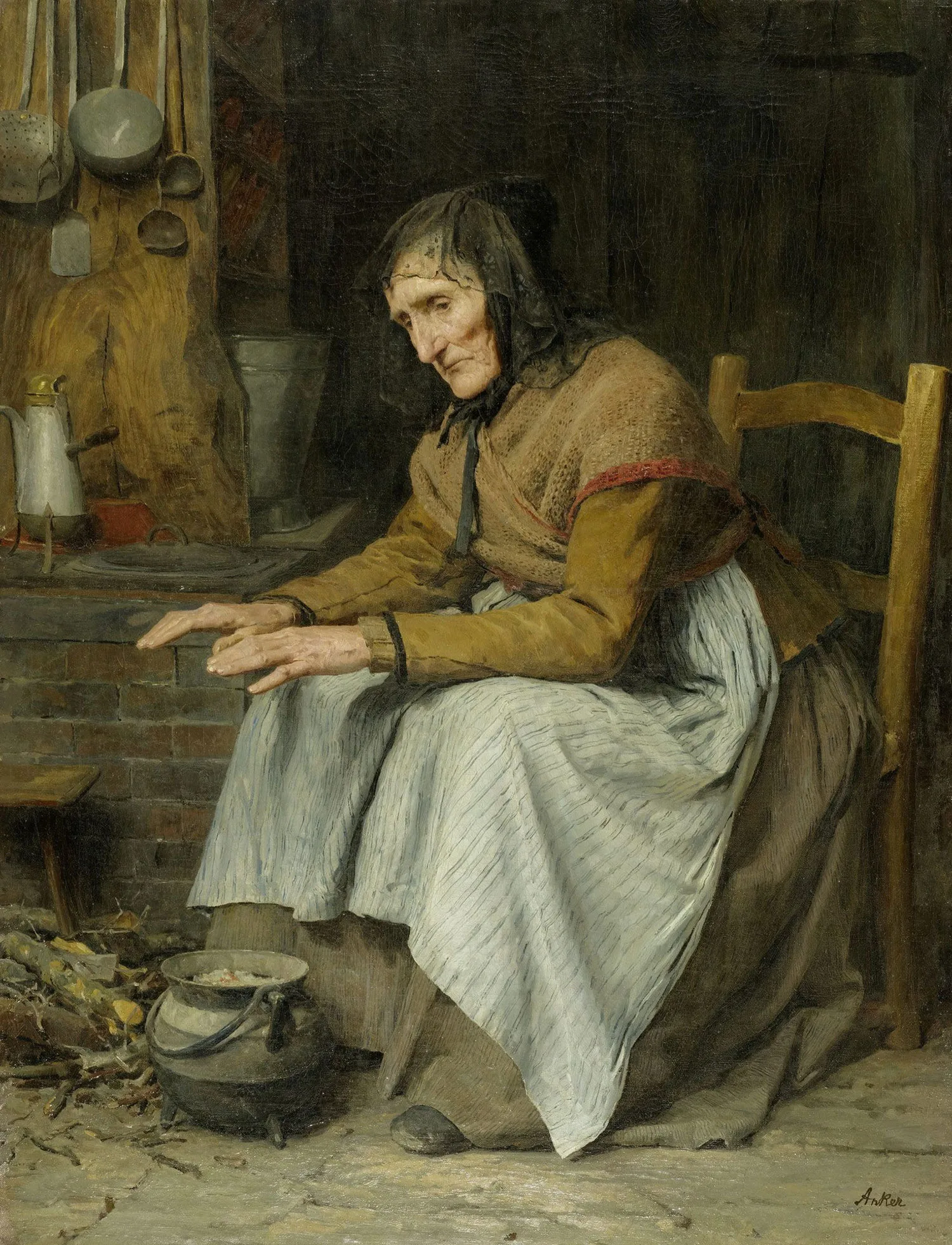
The few exceptions helped to gradually break down the taboos around this problematic subject matter, however. Particularly in the 19th century, there are plenty of examples, such as in the work of Albert Anker. In 1885, he produced two versions of his painting ‘Old Age (old woman warming up)’. Unlike Zeuxis, Anker didn’t die laughing at his depiction. In his visual universe, the old women are nothing special either. He represents them in the detailed traditional style of Dutch genre painting, which was still popular with his bourgeois public in the 19th century.
The fact that painters needed such pretexts to even depict older women is shown by the famous portrait of an old woman by Giorgione (Giorgio da Castelfranco, 1478–1510), which was painted almost 400 years earlier. Giorgione, who was a key exponent of Venetian Renaissance art, painted La Vecchia (‘The Old Woman’) in 1506. Only a small number of paintings by Giorgione survive as he died of plague at a young age. Besides madonnas and depictions of pastoral idylls featuring attractive young women, his work mainly consisted of portraits of men. In this sense Giorgione also catered to his patrons’ preferences.
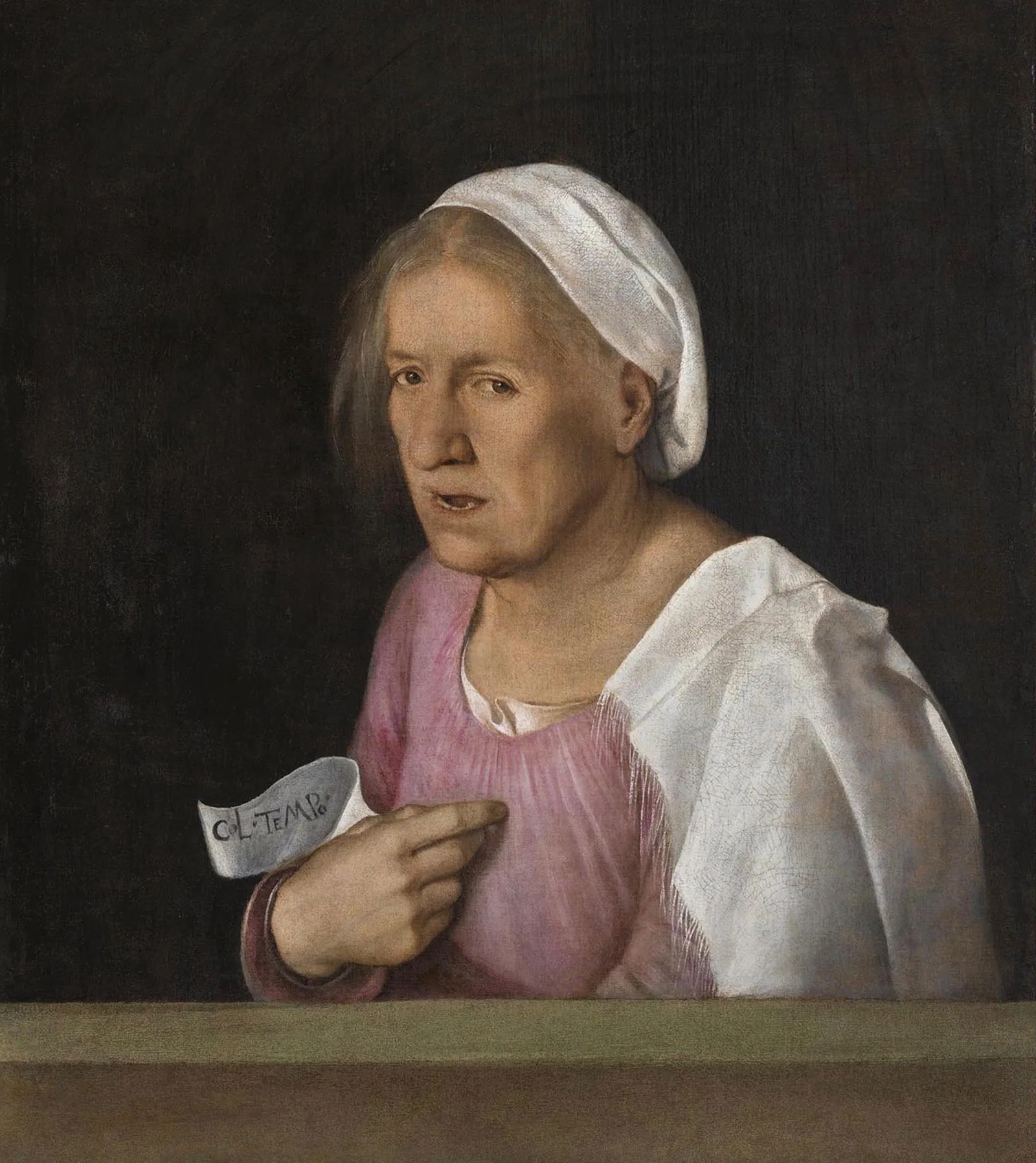
For Giorgione there’s another reason why she is secondary. She has a clearly defined role here, as an allegory, designed to embody mortality and the passing of time. This is shown by the slip of paper she is holding with the words ‘col tempo’ and the finger pointing to her breast. ‘With time’ we too will not be able to escape the ravages of old age. Furthermore, the painting also contains a hidden clue as to the prevailing constraints placed on artists. As wealthy patrons preferred youthful madonnas and flattering portraits, Giorgione could only paint careworn, elderly women under the pretext of allegory, and only in a very specific context. The Vecchia originally served as a protective cover for the portrait of a (younger) man.
In her groundbreaking analysis ‘The Coming of Age’ (1970), French feminist Simone de Beauvoir shows how literature since Antiquity has addressed physical decline in general, but especially that of women, as life’s parody. This also explains why older women were not a worthy subject for painters – because they were quite simply invisible to society. This was only just starting to change in Giorgione’s time.
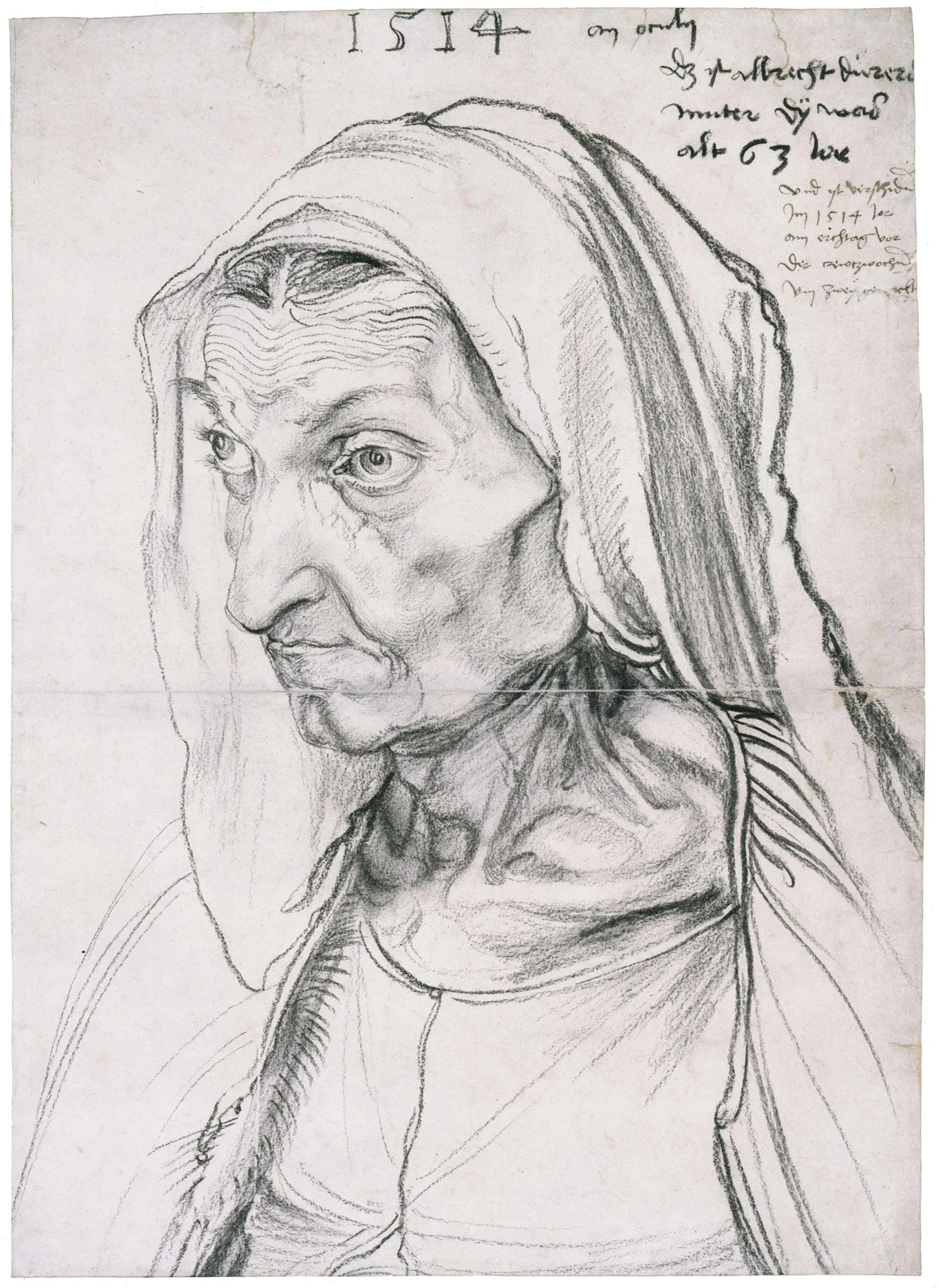
The work of Albrecht Dürer contains a unique example of this. In 1514, a few years after Giorgione’s Vecchia, Dürer drew his mother, Barbara Holper. She was 63 at the time, exhausted from bearing 18 children and very sick. She died two months after the portrait was completed.
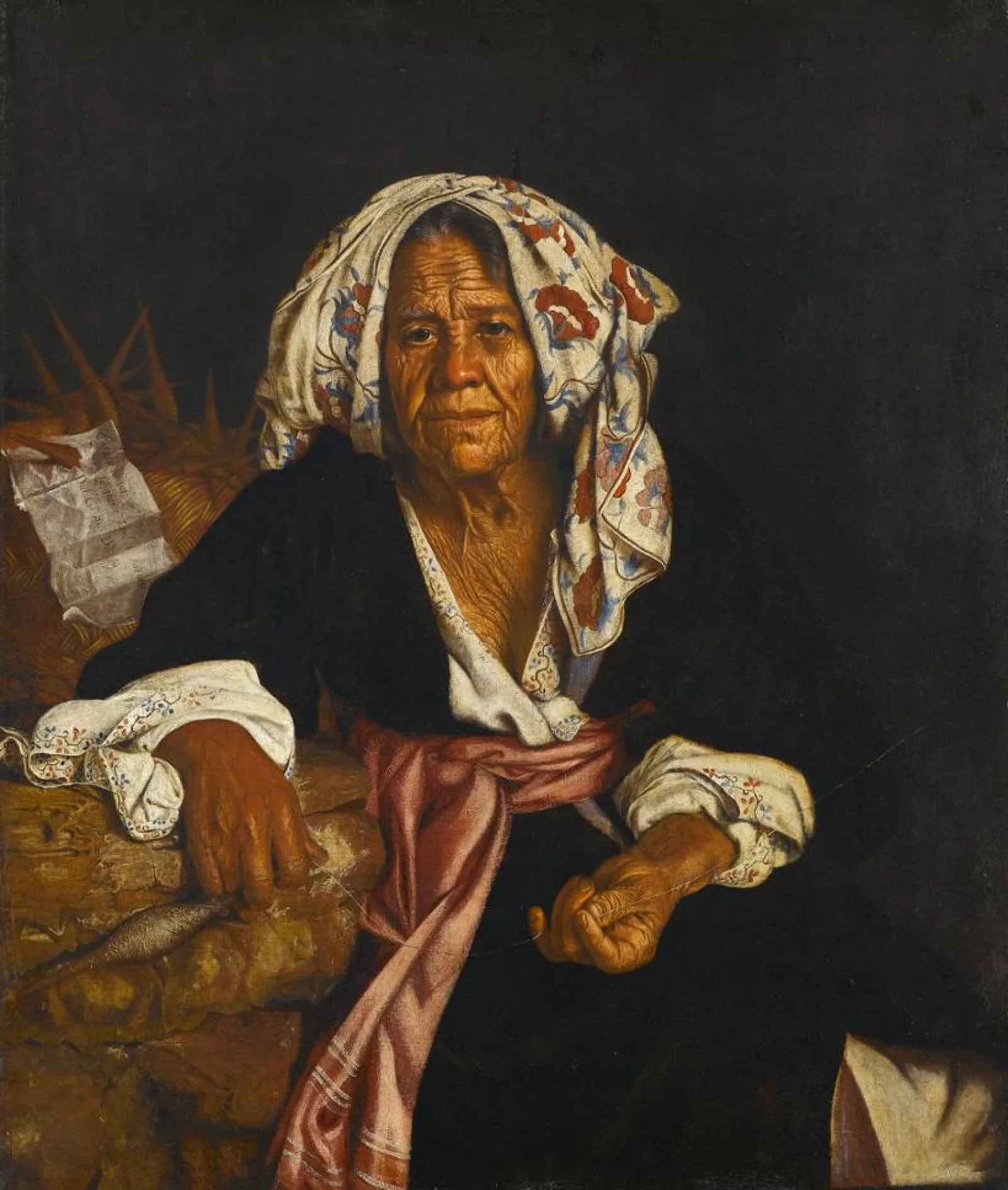
But even Bellotti’s depiction of an elderly face was not intended as an examination of an individual character. Here, too, the old woman has to slip into a well-known role to be worthy of representation: as the Parca Lachesis, she embodies one of the three Fates, which were a popular motif at the time. The (barely legible) text on the slip of paper on her left refers to the name Lachesis. Experts in mythology will recognise Lachesis straight away from the thread she is holding between her fingers as she measures the thread of life. At the same time, Bellotti appears to poke fun at those familiar with the Fates and thus the pseudo-scholarly mythological masquerade that served as a model for artists at the time. Because even the goddesses of destiny were usually depicted as naked young women.
It’s no coincidence that since the 20th century, it is primarily female artists who have picked up on the unpopular subject matter of the old or aged woman – who is useless in society’s eyes if she can’t fulfil the traditional role of procreator. This is often done in a pointed way to break taboos. As shown by current examples, such as those by Maria Lassnig or Cindy Sherman, these works are often a critique of the cult of beauty and youth. Because even today’s materialistic selfie and advertising culture remains fixated on flawless young women. This will only change as older women attract the attention of marketing campaigns and as awareness of ageism grows.