Plotting Switzerland’s borders: the case of Testa Grigia
The construction of an aerial cableway from the Italian town of Breuil to Testa Grigia in 1937 alarmed the federal authorities as the terminus was located in the sensitive Swiss-Italian border area.

Felix Frey
Felix Frey is a specialist in history at the Federal Office of Topography (swisstopo).
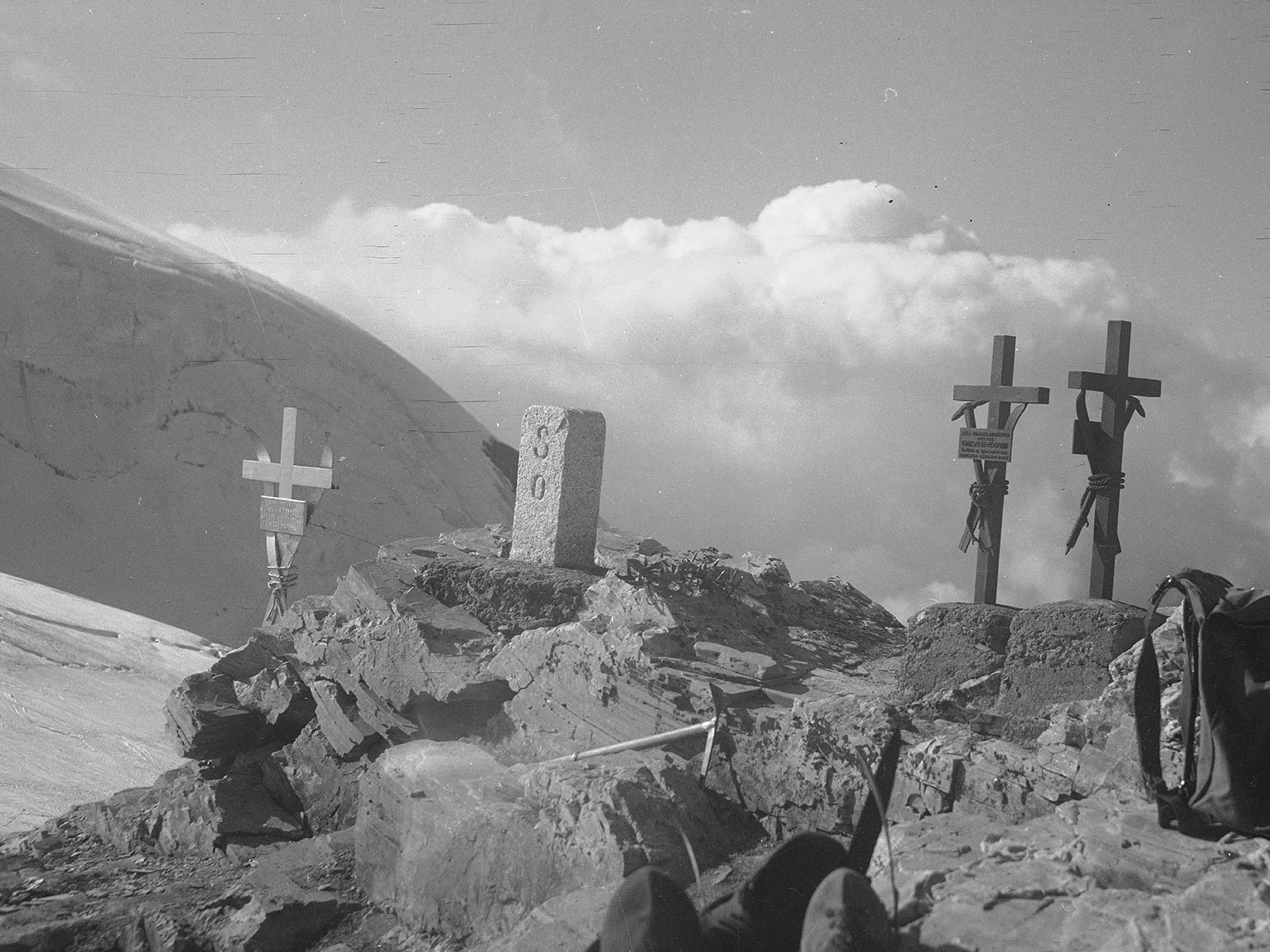
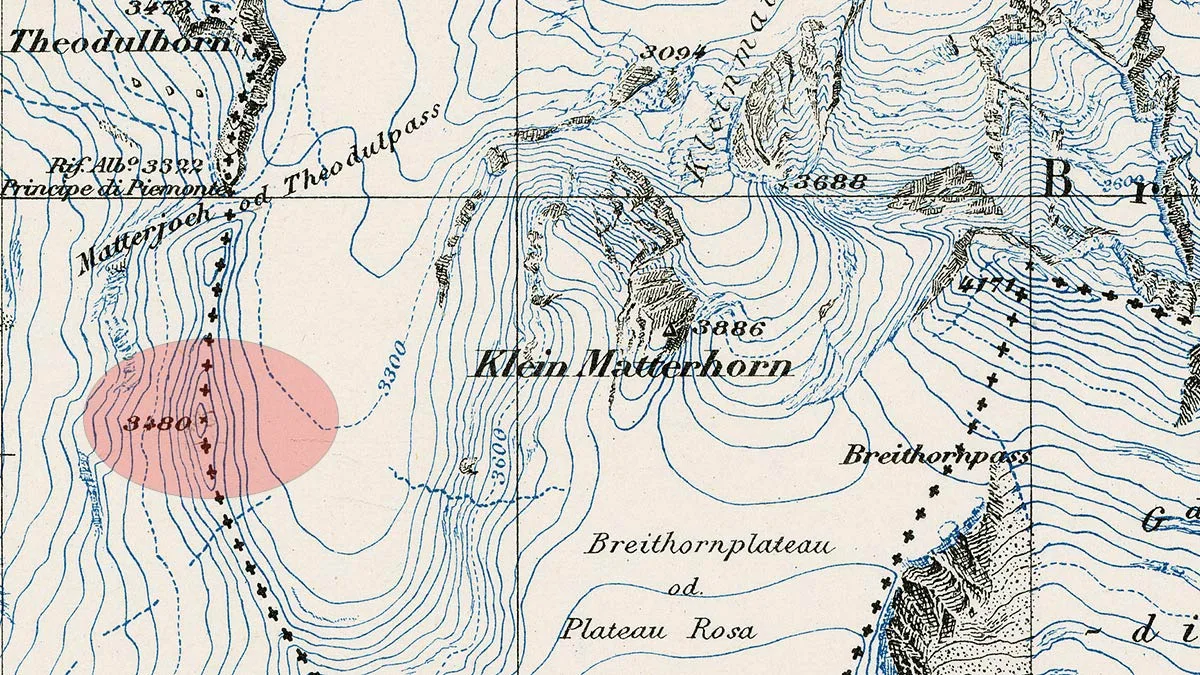
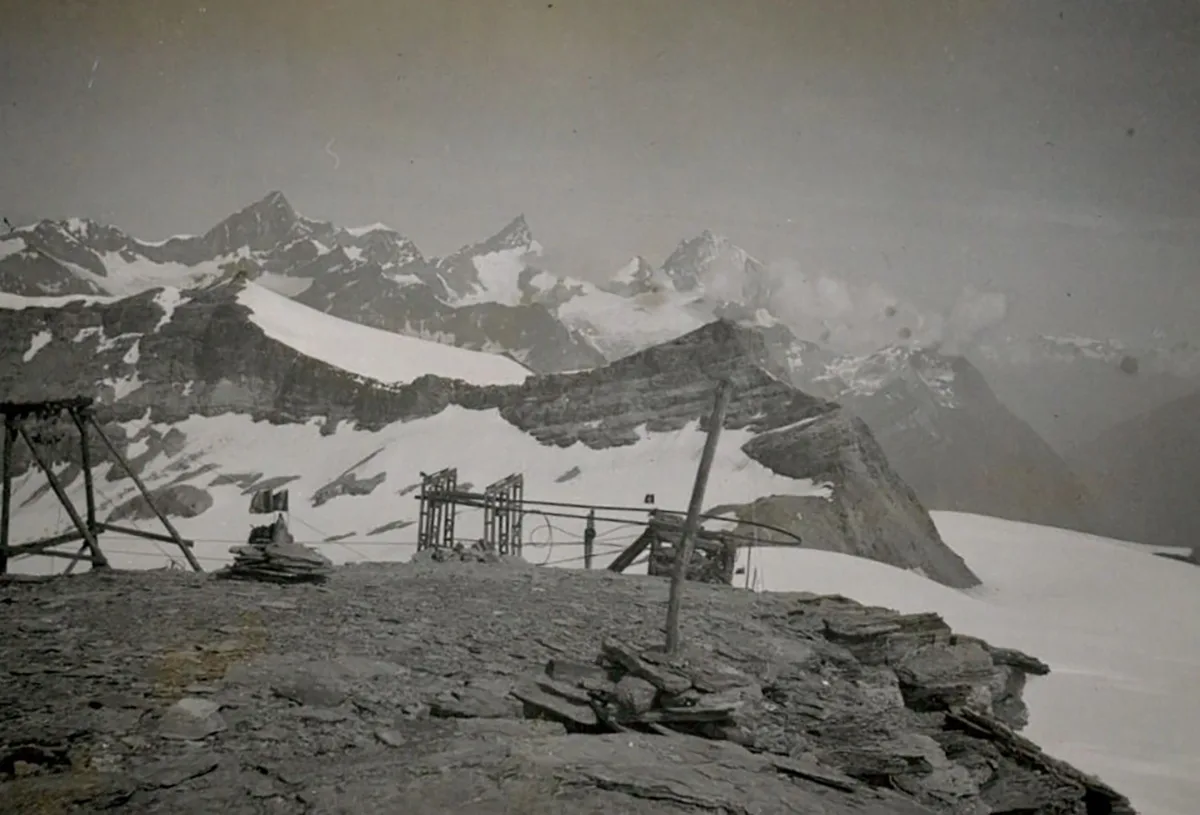
Two years after construction work got under way, the company S.A. Cervino contacted Switzerland’s representations in Turin and Rome as the site manager wanted to start work on the upper section of the aerial cableway. The last stop was to be on Testa Grigia, a rocky peak jutting out above the glacial lake. The Swiss-Italian border cut right through Testa Grigia. The construction project therefore touched the border area, which was particularly sensitive in 1937, as Switzerland’s relationship with the fascist regime under Mussolini strove to walk a fine line between compromise and distance.
The existence of a terminal stop […] that provides access to extensive ski resorts in Switzerland, also seems to pose a certain risk in terms of border control […].
The Federal Council and the authorities concerned believed that it would be advantageous if the mountain station for the cable car was at least partly built on Swiss soil, believing that this would guarantee a certain degree of control over the operations on the remote peak. This is why the Italian construction company was assured in May 1937 that the necessary licence would be granted.
Work carried out under the radar
As the senior customs official reported, the Italians had assumed that the construction work on Testa Grigia didn’t affect Switzerland. According to the Italians, a copper boundary marker found in the rock on Testa Grigia provided evidence that the whole cable car terminal was to be built on Italian soil and that further negotiations with the Swiss authorities were therefore not needed.
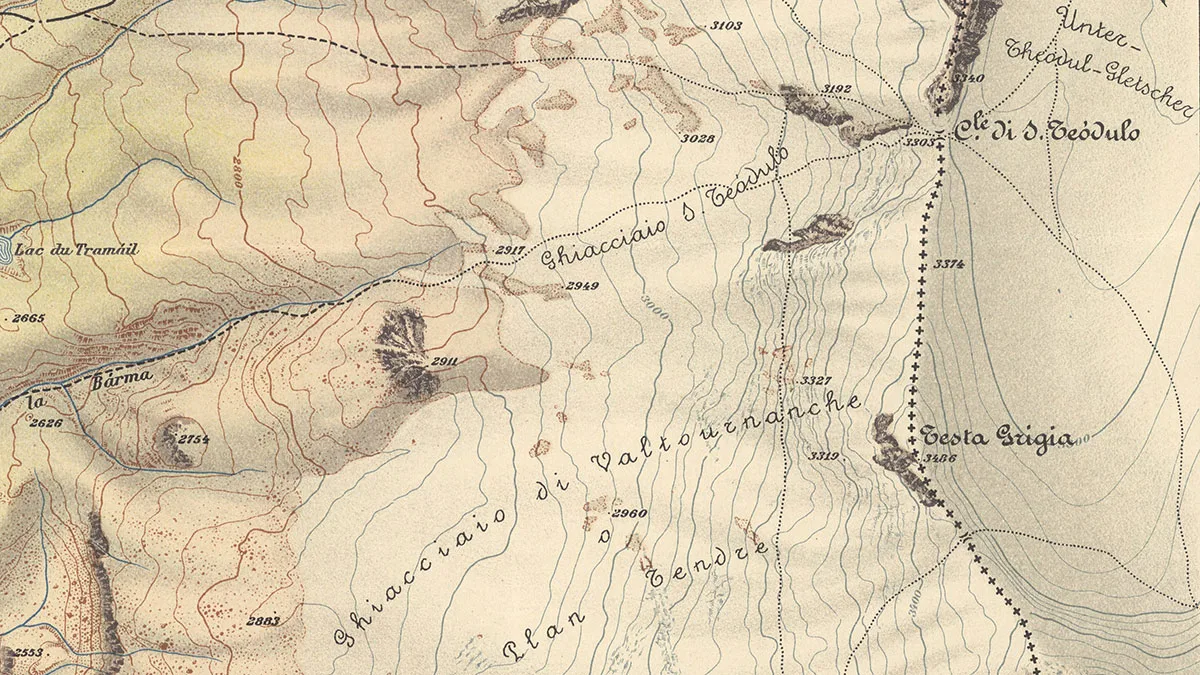
But Schneider’s intervention didn’t answer the question of where exactly the Swiss-Italian border lay as it was delineated only by the watershed. Where the water flowed from the rocky ridge to the Rhone was Switzerland, and where it flowed to the Po was Italy. The fact that the watershed was regarded as the border on Testa Grigia was a centuries-old rule, and the two countries had reaffirmed that it would continue to apply in 1931.
In view of the Italian building work taking place on Testa Grigia, by the autumn of 1937 it was clear that the exact border would have to be defined as soon as possible. The Federal Office of Topography called on the Italian-Swiss border commission to resolve the issue once and for all the following spring as soon as the snow on the peak had melted and more favourable weather conditions allowed an on-site inspection. The time finally came on 22 April 1938.
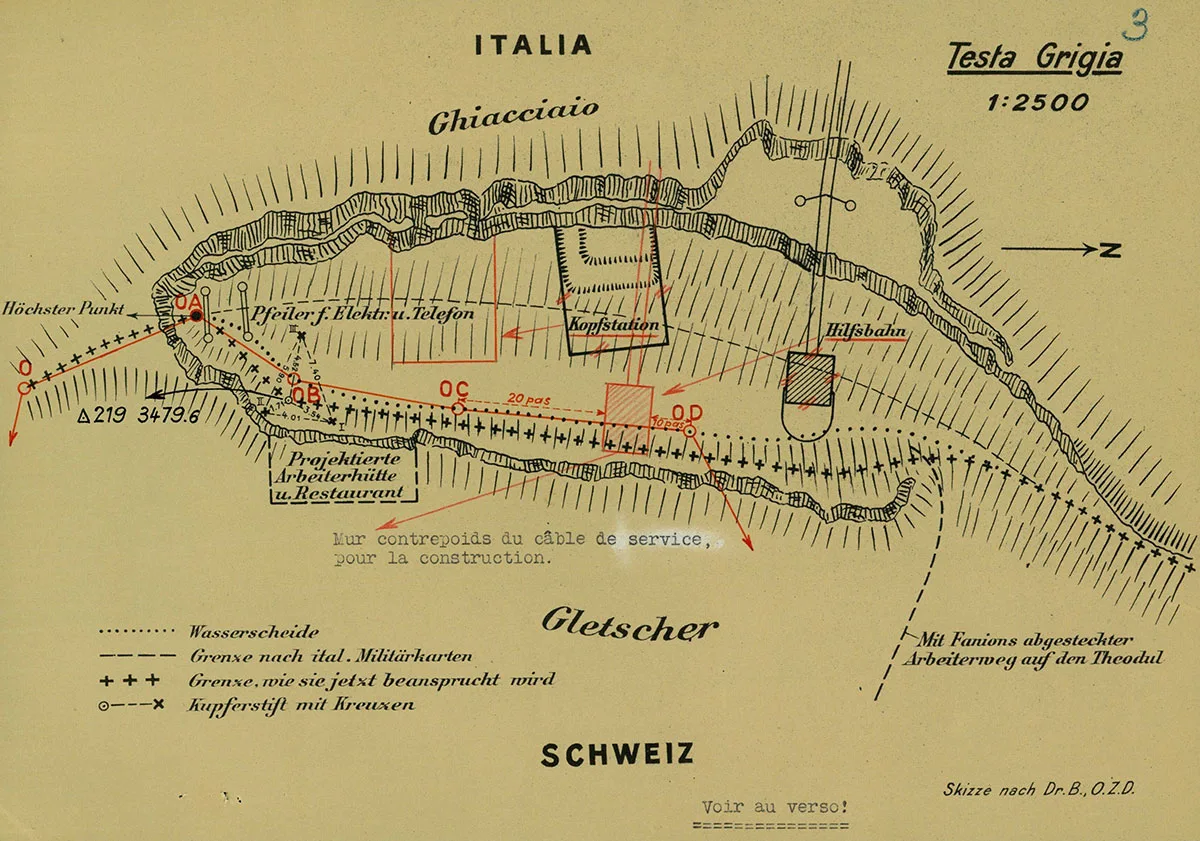
After lunch, Major Lavizzari returned to the matter, radically altered his position, and explained that there had been a misunderstanding. […] After much to-ing and fro-ing, we agreed on the border demarcation. It is clear that we can and must be satisfied with this boundary.
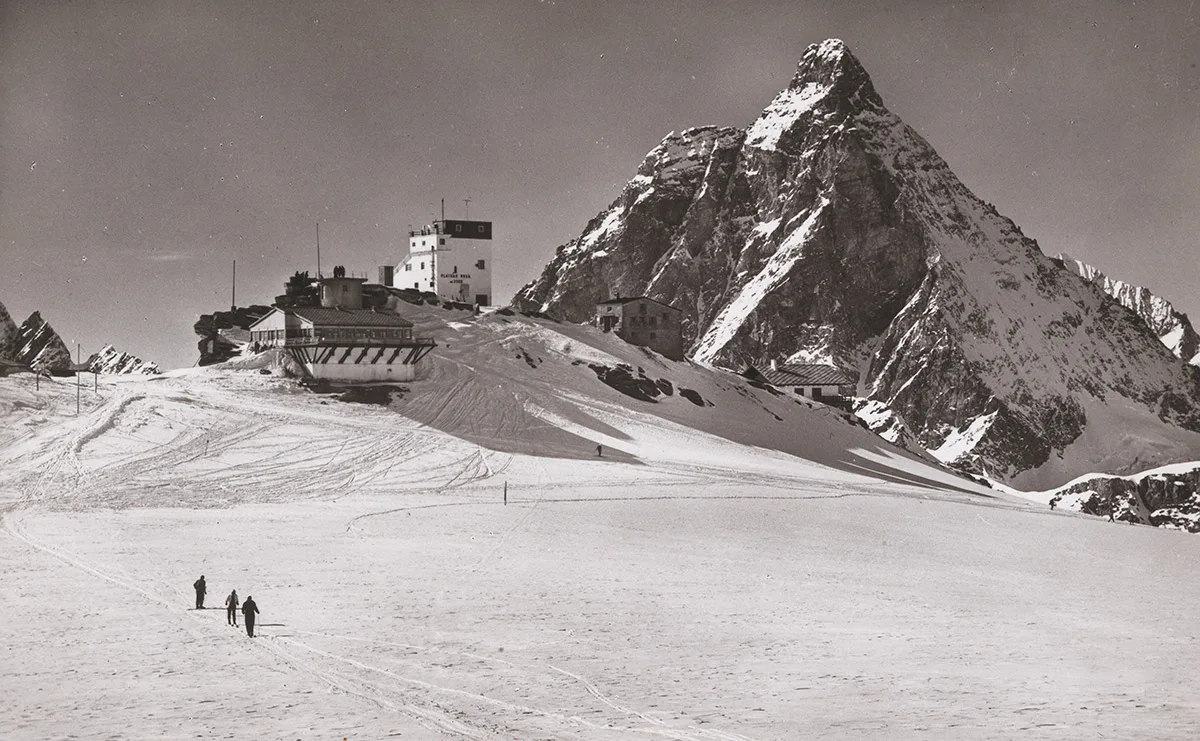
The Testa Grigia affair allowed the border question between Italy and Switzerland to be resolved by mutual agreement. The agreement paved the way for the completion of the aerial cableway, which had raised the issue in the first place. After four years of construction work, it started operating in March 1939.