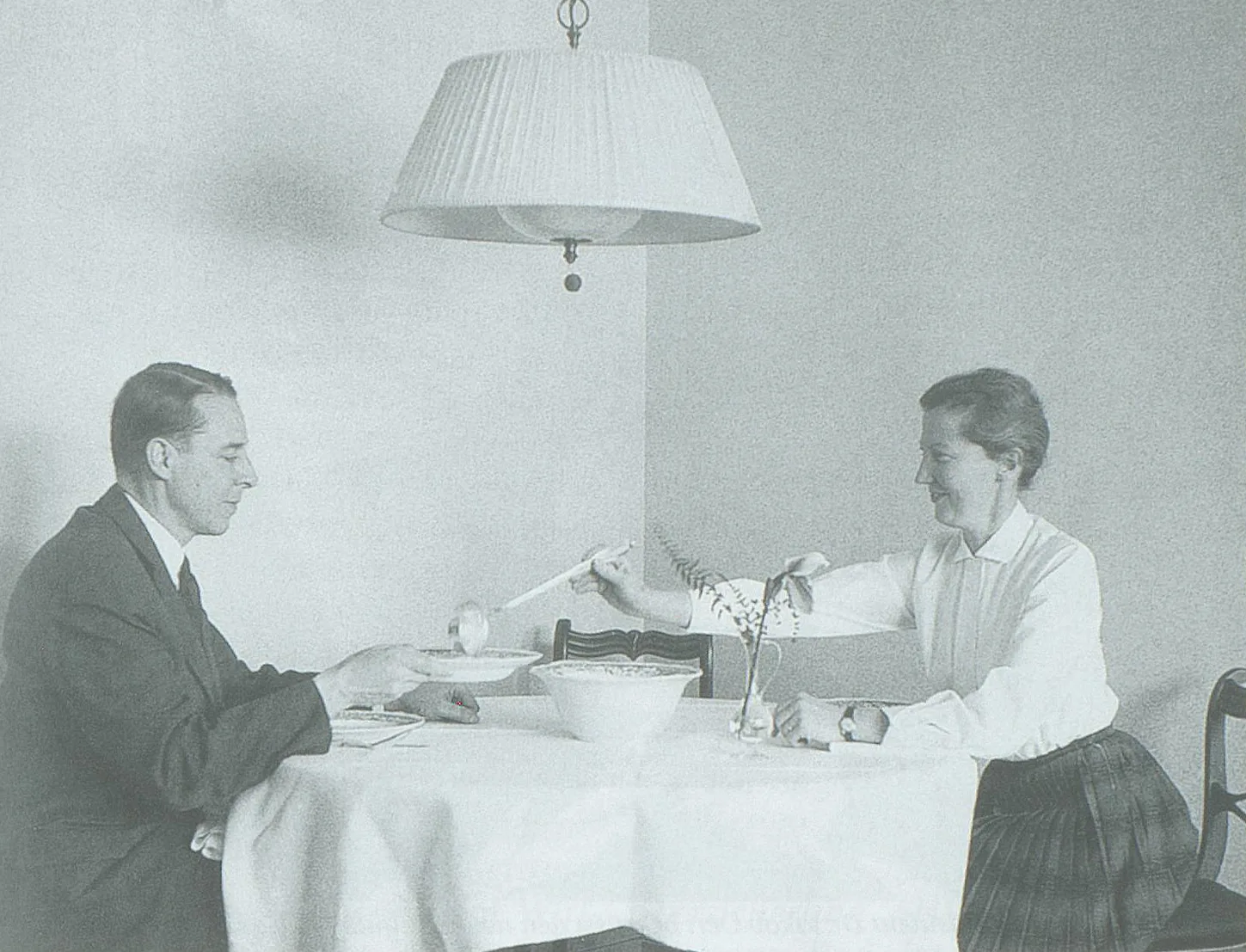
The Tschudis at dinner – the ordinariness of this scene is in stark contrast with their career achievements.
The Tschudis at dinner – the ordinariness of this scene is in stark contrast with their career achievements. e-periodica

An extraordinarily successful couple

She was one of the country’s first natural science professors and he shaped social policy in Switzerland: Irma and Hans Peter Tschudi-Steiner reached the top of their respective professions – all while staying humble.
Franziska Rogger

Franziska Rogger

Franziska Rogger is a freelance historian.

Had they been in show business, they would have been one of Switzerland’s glitziest and most photographed celebrity couples. Irma Tschudi-Steiner was a distinguished professor and natural scientist, Hans Peter Tschudi a left-wing politician whose career reached unimaginable heights. However, they avoided the spotlight. Hans Peter Tschudi’s biographer described the Federal Councillor as “modest”. His aura was that of a “dutiful, responsible person”. He also had a dry sense of humour. When travelling by train one time from Bern to Zurich, on looking out of the window in the Limmat Valley and seeing the first high-rise buildings and urban blocks the staunch Basel man observed laconically: “We should have swapped Zurich for Konstanz”.
 
For her part, his wife Irma Tschudi-Steiner recalled even appalling injustices dispassionately and was very understated about her career: “I didn’t have any problems. Everything more or less fell into place for me.” The fact that she studied natural sciences as a woman was not the only unusual thing about her. She went further still by following a career in science.
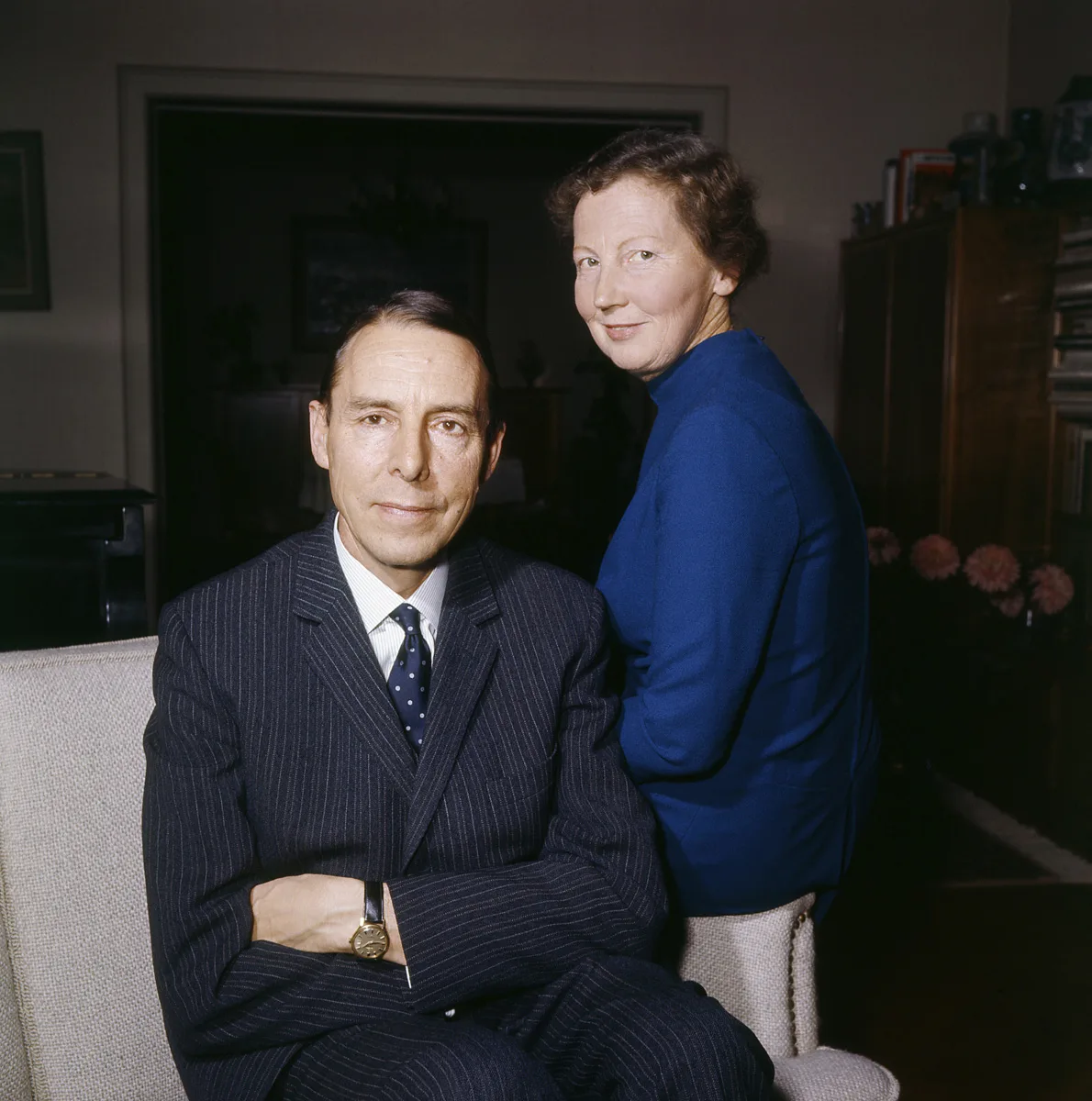
Hans Peter and Irma Tschudi-Steiner, photo from 1964.
Hans Peter and Irma Tschudi-Steiner, photo from 1964. Siegfried Kuhn © StAAG/RBA11-156_4

University was the fall-back option

Irma Steiner attended the mixed upper secondary school in Solothurn before earning her federal diploma in pharmacy at the University of Basel. She completed her pharmacy studies there in 1938 with her first dissertation before going on to write a doctoral medical thesis in 1949. In 1950, she became the first woman in Basel’s Faculty of Natural Sciences to qualify as a lecturer and went on to  teach areas of pharmaceutical specialisation. However, she had initially “entertained no thoughts of a career.” It was her Ph.D. supervisor and subsequent Nobel Prize winner Tadeusz Reichstein who pointed her in that direction. Her lectureship was a great success.
 
However, Irma Tschudi had not been entirely on board with the idea of a career in academia. She had actually dreamt of becoming a pianist. She had studied piano at the conservatory of music, successfully completing the course and giving the occasional performance. However, after talking to her father she concluded that a musical career would be too precarious and that she was not prepared to scrape a living by giving piano lessons. As a result, she opted for plan B: a career in science.
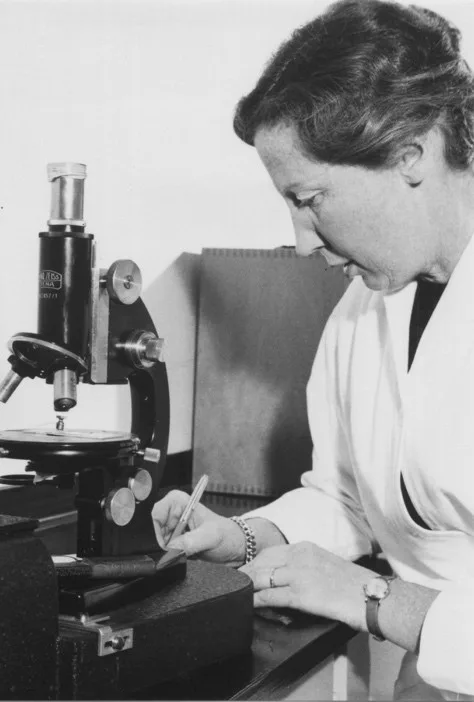
Irma Tschudi at work in the laboratory.
Irma Tschudi at work in the laboratory. Private archive of Irma Tschudi-Steiner
Having chosen a university career for the sake of security, her fall-back option turned out to be similarly financially unrewarding. That was due to her having married Hans-Peter Tschudi, who became a Cantonal Councillor in Basel shortly after the wedding and “a Cantonal Councillor’s wife does not get paid,” as Irma Tschudi later recounted. “No sooner had I married than they stopped paying my salary. Times were different then, women were seen as a quantité négligeable and not as equals.” So, she gave lectures on new medicines and prescribing free of charge at the pharmaceutical and pharmacological institute of the University of Basel.

From Basel to Bern

Hans Peter Tschudi grew up in Basel where he attended upper secondary school. He completed his doctorate in law in Basel and Paris in 1936, then went on to qualify as a university lecturer in employment and social security law. He also joined the Social Democratic Party (SP) in 1936, thus laying the foundation for his political career. Eight years later he became a member of the Cantonal Parliament in Basel-City, then Cantonal Councillor in Basel before joining the Council of States in 1956.
 
When it came to the general election of members to the Federal Council on 17 December 1959, with four seats becoming vacant, Hans Peter Tschudi was a peripheral figure who fully supported his SP party colleague Walther Bringolf. However, Bringolf’s communist past ensured he would not be elected and the official nominee withdrew his candidacy before the third voting round. That left just one person, the FDP candidate Hans Schaffner, standing against Tschudi. But Hans Peter Tschudi won the seat for the SP, and the Federal Council elections returned the first ever ‘magic formula’ (as it is now known): an executive line-up with two members each from the Free Democratic Party (now FDP. The Liberals), the Catholic Conservative Party (now The Centre), the Social Democratic Party and one from the Farmers’, Traders’ and Citizens’ Party (now the Swiss People’s Party).
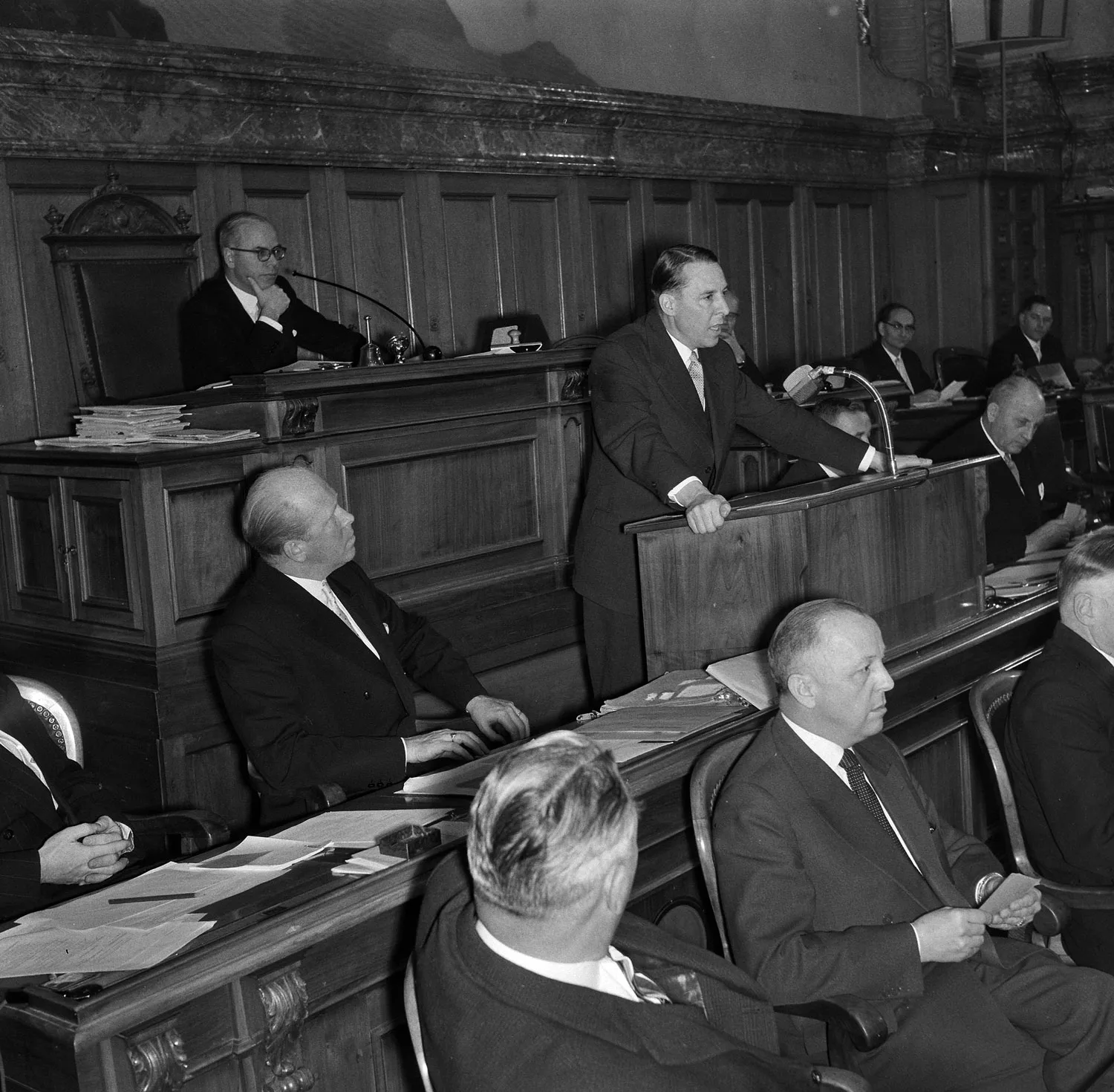
Following his election to the Federal Council, Hans Peter Tschudi stepped up to the lectern to address the Federal Assembly, 1959.
Following his election to the Federal Council, Hans Peter Tschudi stepped up to the lectern to address the Federal Assembly, 1959. Swiss National Museum
Irma Tschudi had called her husband the evening before the election and said she had an uneasy feeling that he could win. He needed to buy a new shirt. Hans Peter Tschudi went to the nearby EPA store and appeared the following day in an immaculate white shirt. He later commented on his thrifty purchase: “I’ve always been the frugal type of Federal Councillor”. His wife celebrated his election by sitting down at the piano and playing a Mozart sonata.
 
Irma had no problem retaining her status as a qualified lecturer when moving from Basel to Bern. As the wife of a Federal Councillor “no-one is allowed to put obstacles in your path,” she commented. She worked part-time (and was actually paid) as an associate professor in Bern und Basel while her husband set about modernising Switzerland at a rapid “Tschudi tempo”. He made a lasting impact on the social security system, developing pension provision with revisions of Old-Age and Survivors’ insurance (OASI) and the introduction of supplementary benefits and the three-pillar principle. During his 14 years in office, as a social-democratic politician committed to concordance, he lobbied for motorway construction and nuclear power plants. Both were seen as progressive projects at the time. They were to move Switzerland forward on the international stage and as a place to work.
Hans Peter Tschudi at the opening of the Lausanne-Geneva motorway, 1964 (video in German). Swiss Federal Archives
Hans Peter Tschudi was proud of his wife, whom he had married in spring 1952, and of her success as a scientist: “Towards the end of my time at the Trade Inspectorate, I had the good fortune to meet Irma Steiner, Dr. med. et phil. nat., a qualified lecturer and assistant at the pharmaceutical institute at the university.” He valued her certainty in factual and personal matters. As head of the Department of Home Affairs, her medical and scientific knowledge were especially valuable to him in managing the Federal Office of Public Health.

Irma Tschudi-Steiner not only stood out in terms of her career. She enjoyed smoking cigars and driving special sports cars. Her husband, on the other hand, didn’t even have a driving licence in spite of his portfolio including the national motorway network as head of the Department of Home Affairs.

Hans Peter Tschudi gained great popularity when he wrote a book on Swiss employee protection law for the Swiss Federation of Trade Unions (SGB) following his retirement. Irma Tschudi offered her services as a lecturer to the third-age universities in Basel and Bern and successfully covered topics of interest to senior citizens.
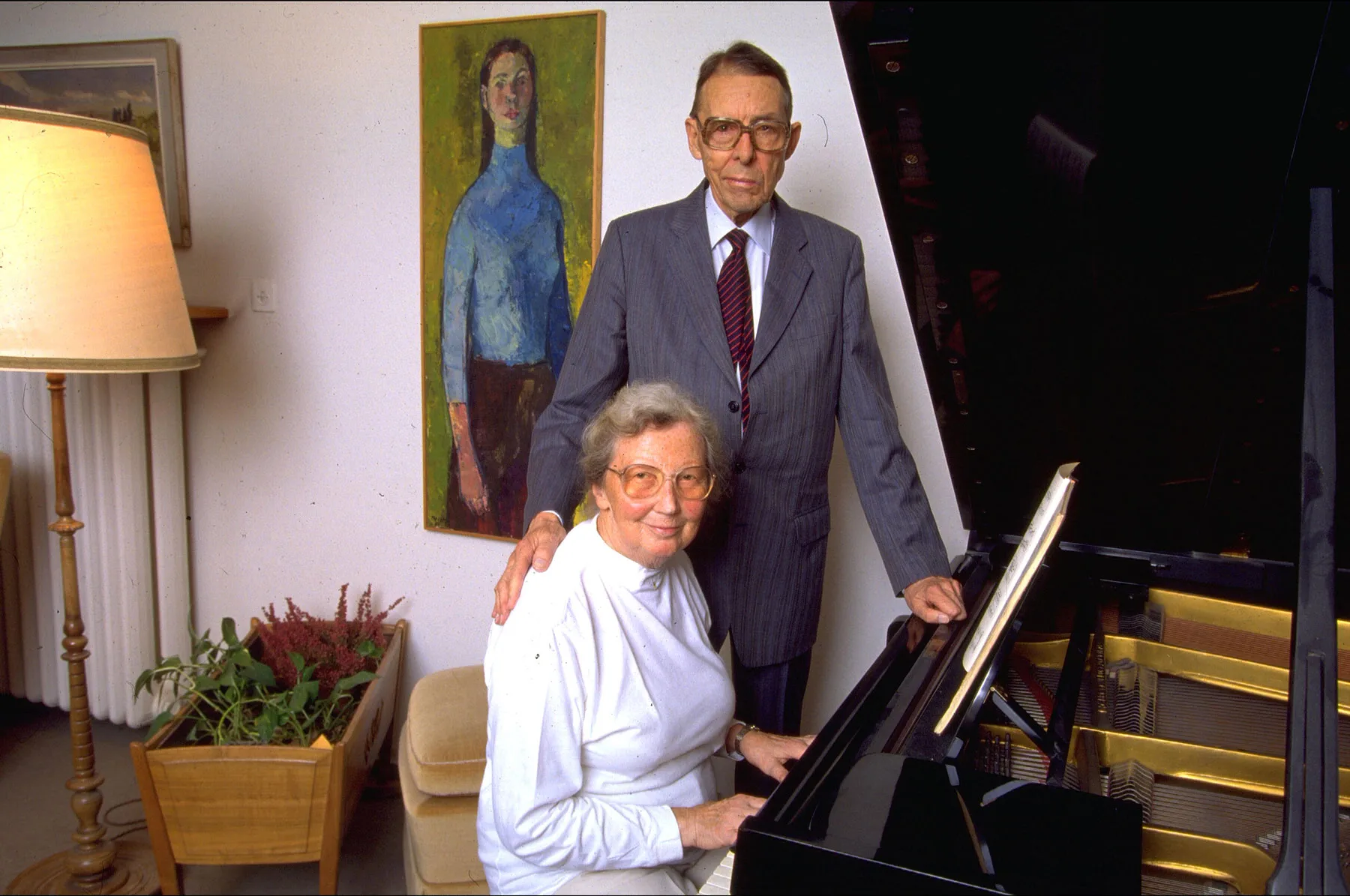
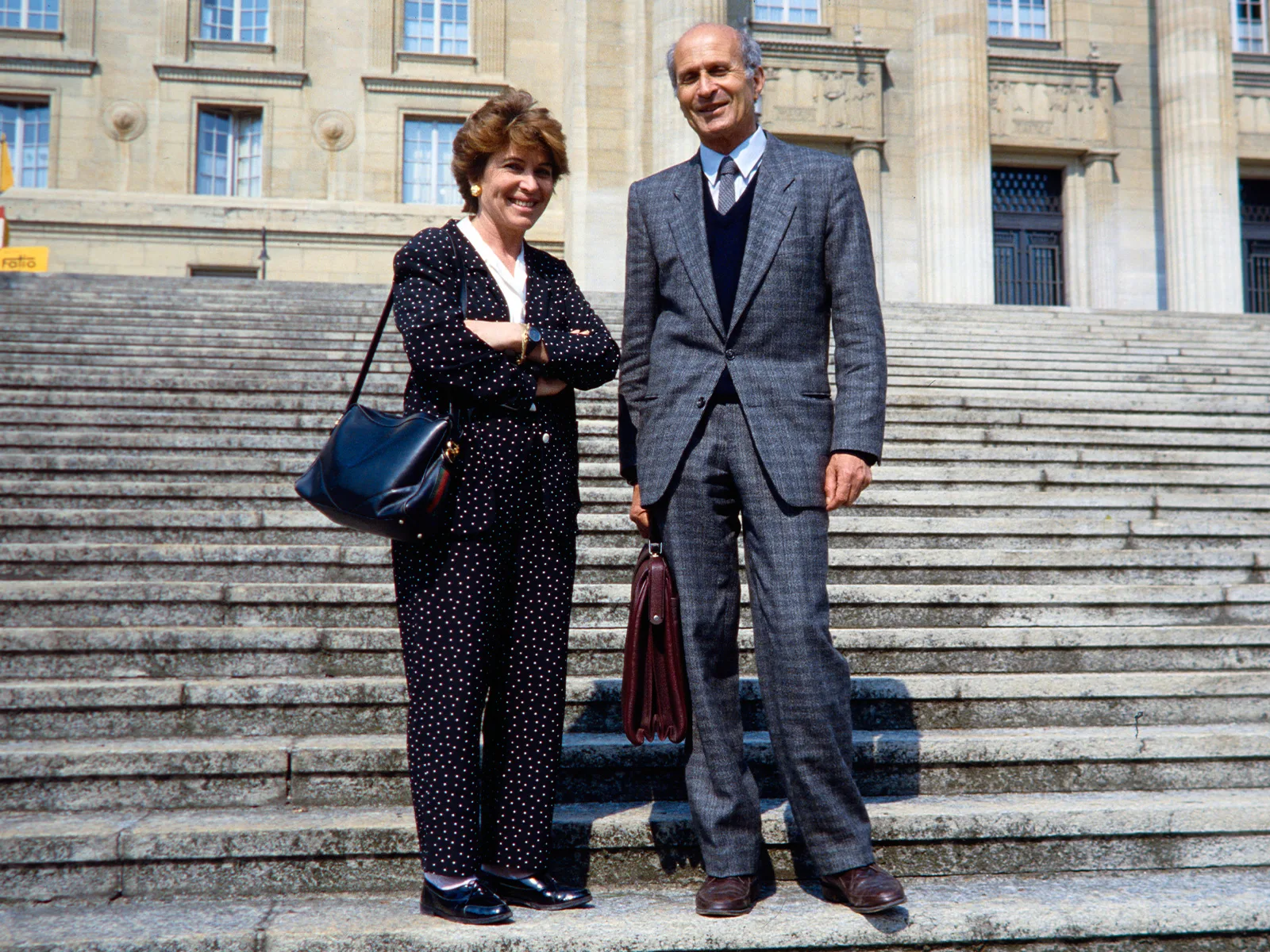
The Tschudis in 1993.
The Tschudis in 1993. Dukas
A park was named after Hans Peter Tschudi in the St. Johann area of Basel, a great honour for the former Federal Councillor. His wife donated the Irma-Tschudi-Steiner prize, which is awarded to the best pharmaceutical dissertation by a woman at the University of Basel.

Further posts