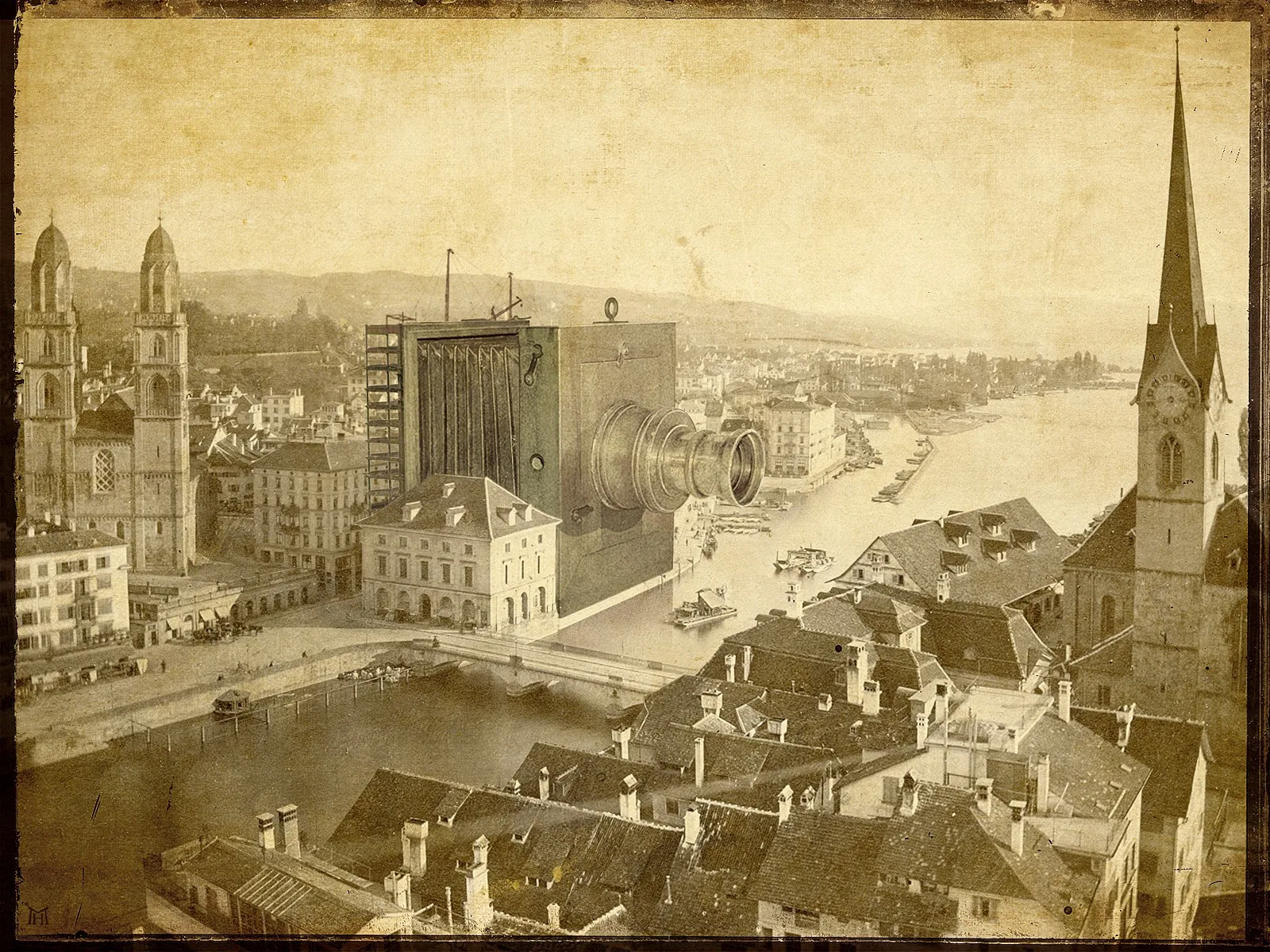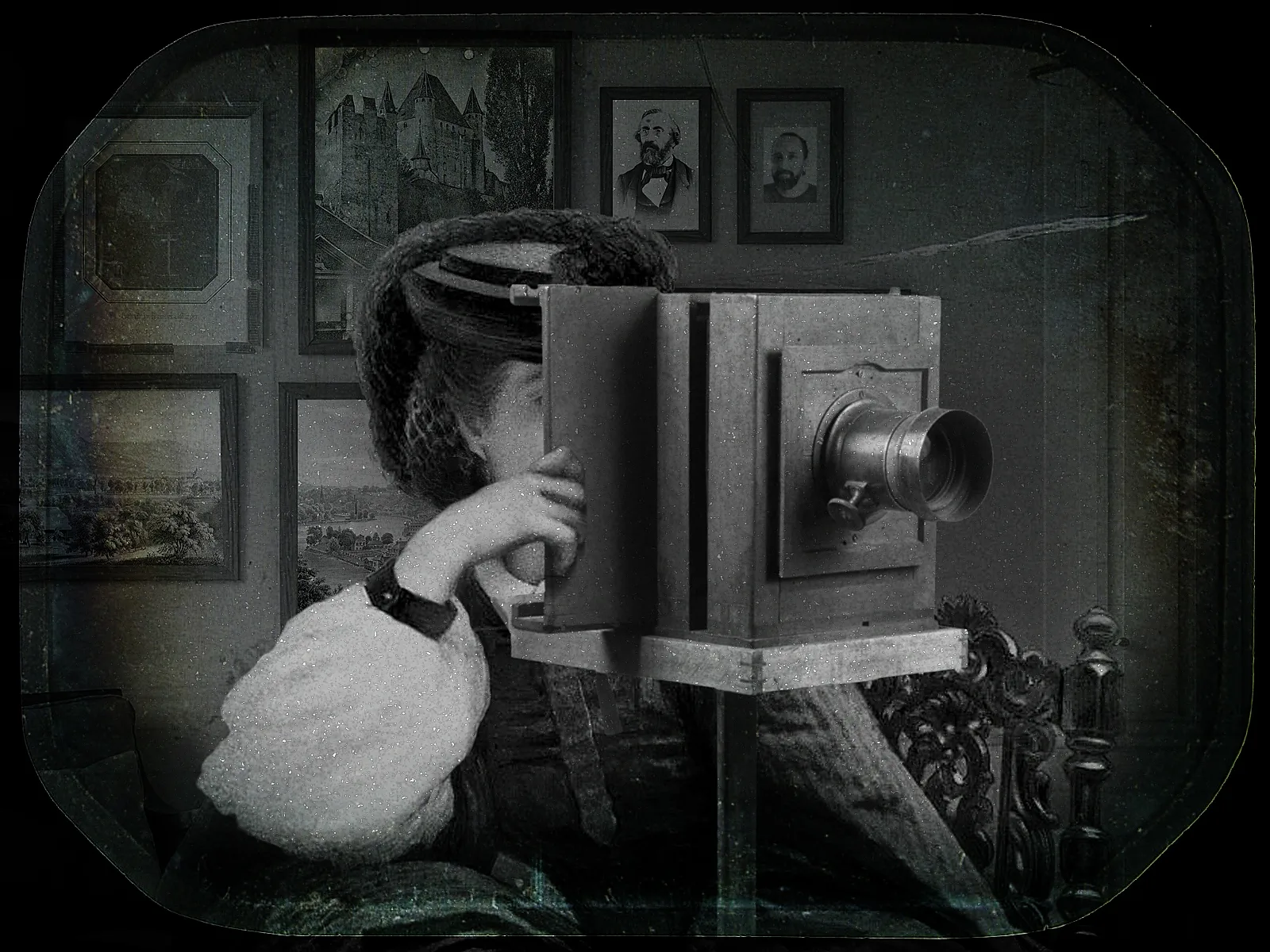
Franziska Möllinger was the first woman to use daguerrotypes as templates for prints. Illustration by Marco Heer.

Switzerland’s first female photographer

Franziska Möllinger was not only the first woman to work as a photographer in Switzerland, she was also a pioneer of the use of photographs as templates for prints. There are only two original photographs by Möllinger in circulation today, the second of which surfaced in 2024.

Patrick Borer

Patrick Borer

Patrick Borer catalogues historical material from the special collections at the Zentralbibliothek Solothurn

Taking a look at the advertising columns of historical newspapers is always a fascinating exercise, as it provides a tangible insight into daily life and commerce at the time. So if we travel back to Solothurn in 1843 by flicking through the Solothurner Blatt, we come across advertisements for ‘good juniper spirit (distilled from berries) for 26 Batzen’ (a small-value Swiss coin of the early modern period), a job vacancy for ‘two young women of good family and character to learn to iron’, and an advert for a dwelling ‘on an accessible country road a quarter of an hour outside the city’. Furthermore, someone lost a gold drop earring near St. Ursus Cathedral, and a grey poodle was found. The newspaper also features a notice by publican Johann Joseph Strausack refuting the defamatory allegation that he vandalised a fir tree in a municipal forest.

Standing out amongst all these offers, listings and information on 8 April 1843 is an advertisement – slightly larger than most of the others and highlighted in bold – with the heading ‘light portraits’. In it, a certain Franziska Möllinger announces “that she produces entirely faithful and charming light portraits”. According to the advert, an individual portrait is available for seven Swiss francs (around CHF 120 today), and a family group portrait for one franc more. The person behind this announcement was none other than Switzerland’s first female photographer – and one of the first worldwide.
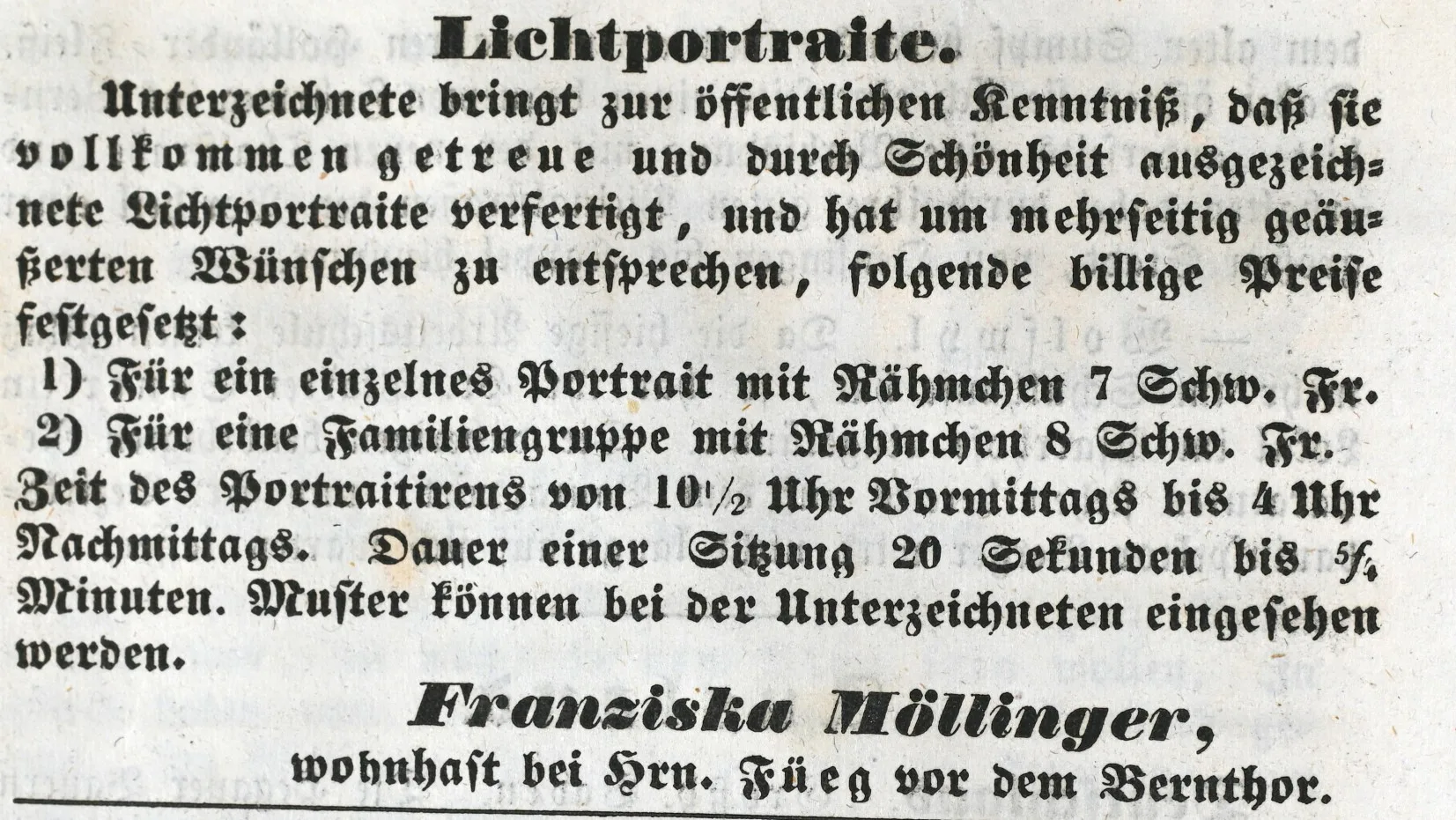
Franziska Möllinger’s advertisement in the Solothurner Blatt of 8 April 1843.
Franziska Möllinger’s advertisement in the Solothurner Blatt of 8 April 1843. Zentralbibliothek Solothurn
In 1839, Frenchman Louis Daguerre had presented a photographic technique that was suitable for commercial use. This method – the daguerrotype – caused a sensation. Up until then, if people wanted a portrait, they would have to sit for long periods for a painter with no guarantee of a good likeness, as by no means all of the many itinerant portrait painters who touted their services were really able to deliver. On the other hand, this new technique delivered a lifelike portrait in just 20 seconds, as Franziska Möllinger pointed out in her advertisement. Daguerrotypes offered a detailed and high-quality image even though the technique still had certain limitations. The exposure time, which is lengthy by today’s standards, meant that subjects had to sit or stand completely still and not move their facial features in order to obtain a sharp image. The photographs on silver-clad copper plates could not be easily reproduced either. However, the advantages of the new technique were so clear that it quickly caught on – including in Switzerland, and in Solothurn, as shown by Möllinger’s advertisement.

Franziska Möllinger and the daguerrotype
Franziska Möllinger was born in the German town of Speyer in 1817 and came to Solothurn in 1836 with her brother Otto, who had been employed as a maths teacher at the cantonal school. Otto had wide-ranging interests and quickly devoted himself to various scientific, publishing and commercial pursuits in Solothurn. He was very successful at gold plating, for example. As he had a demonstrable interest in photography and had also published works on it, his biographer Hans R. Stampfli assumes that he supported his sister. An interesting volume that may support this assumption has survived in the Zentralbibliothek Solothurn. It is an omnibus of compiled works on various topics, including galvanisation – and a German translation of Daguerre’s description of his technique dating from 1839. As the volume also features a stamp from the Solothurn school library book collection, it seems likely that the compilation, which is thematically so characteristic, was acquired by Otto Möllinger, and that his sister also had access to it.
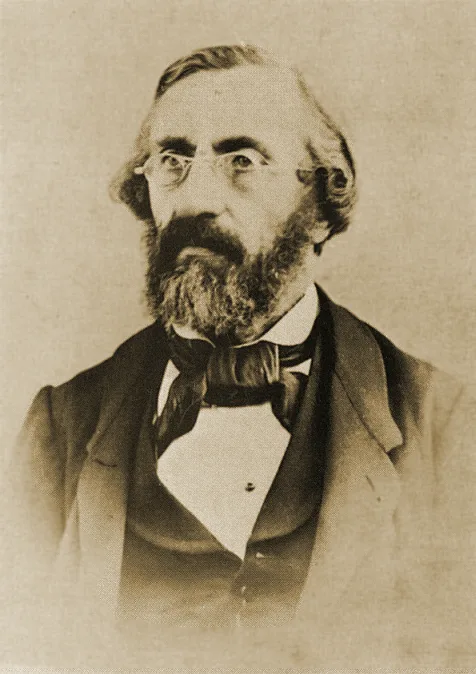
Otto Möllinger c. 1857. There are no known portraits of Franziska Möllinger.
Otto Möllinger c. 1857. There are no known portraits of Franziska Möllinger. Zentralbibliothek Solothurn
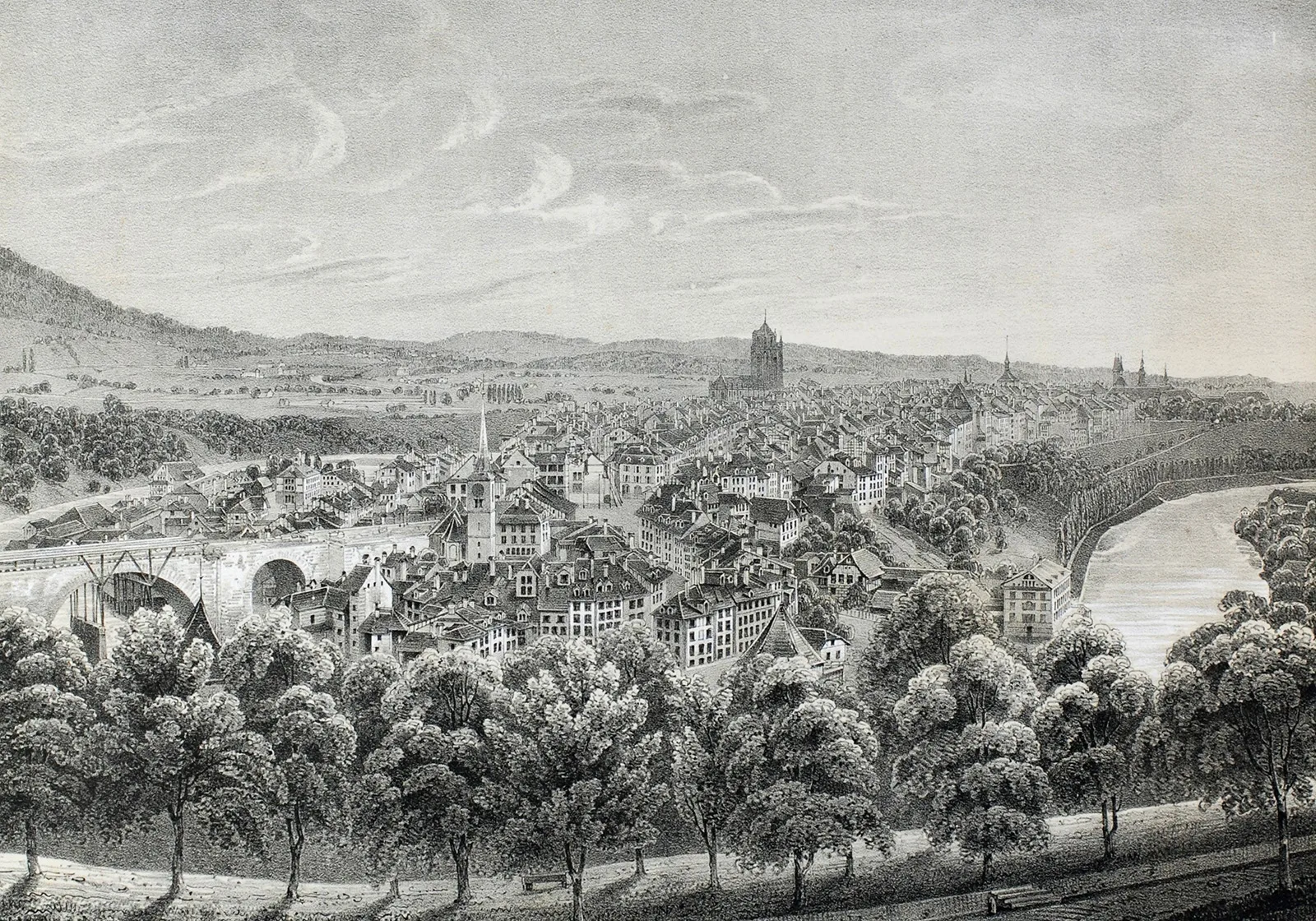
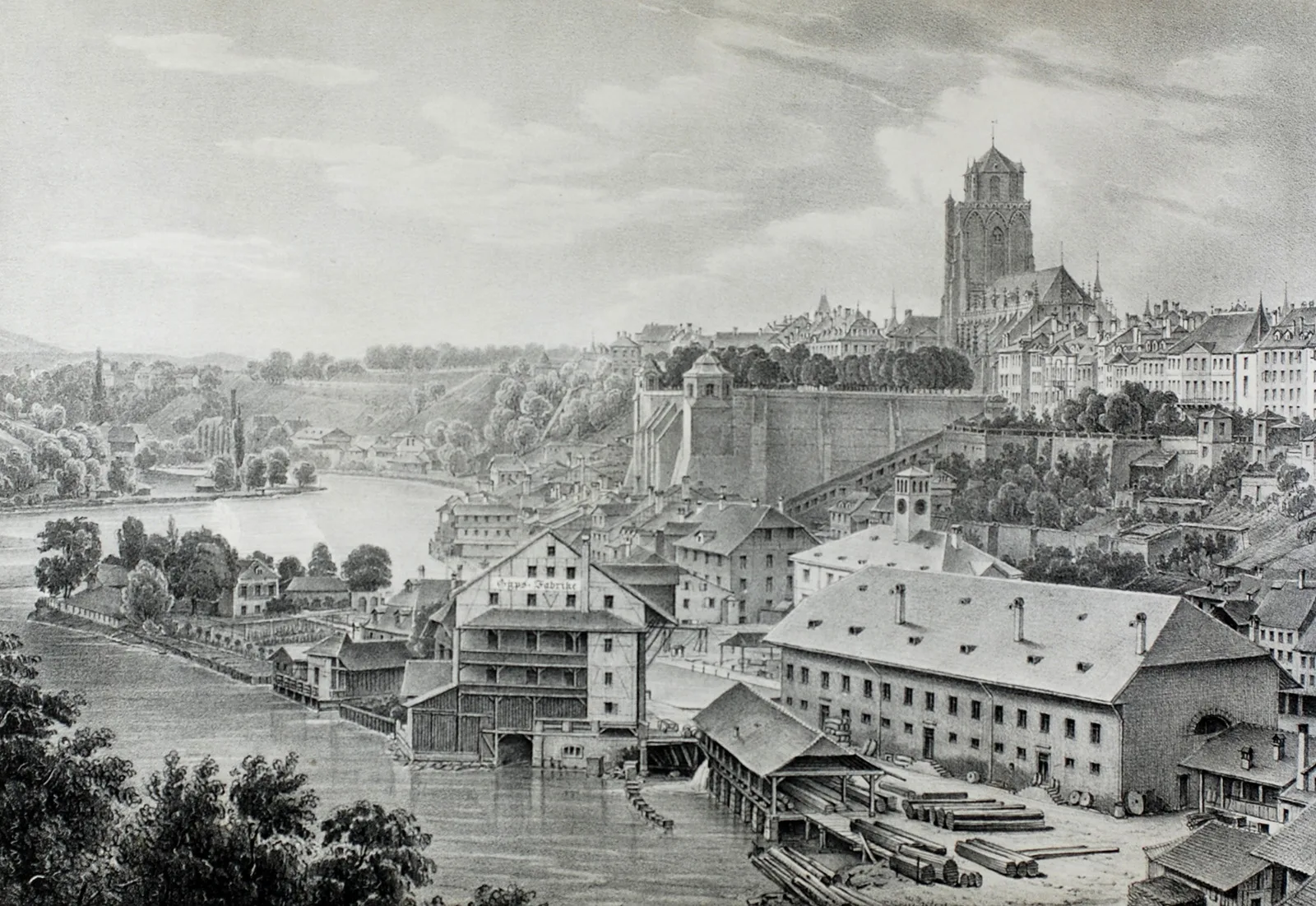
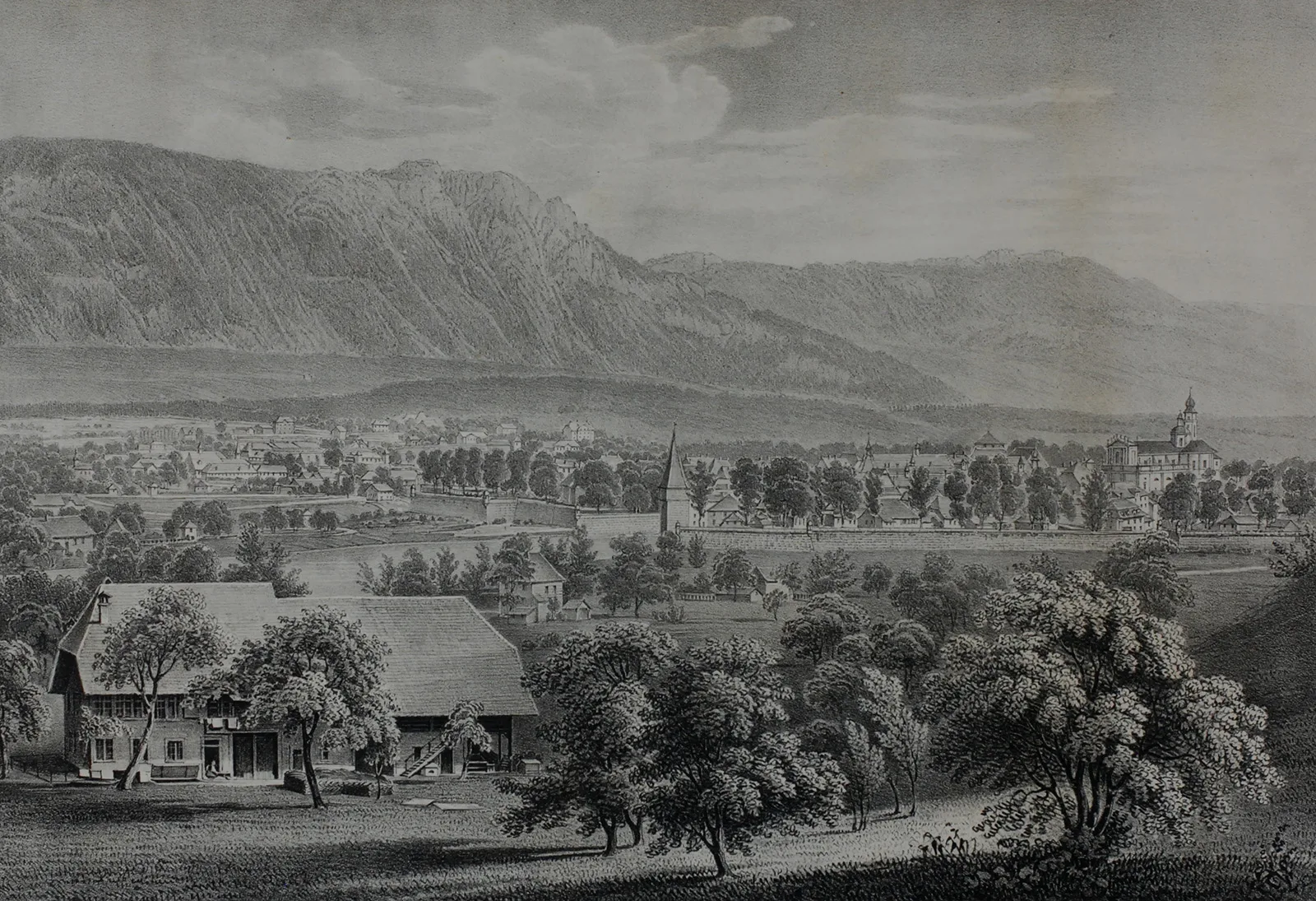
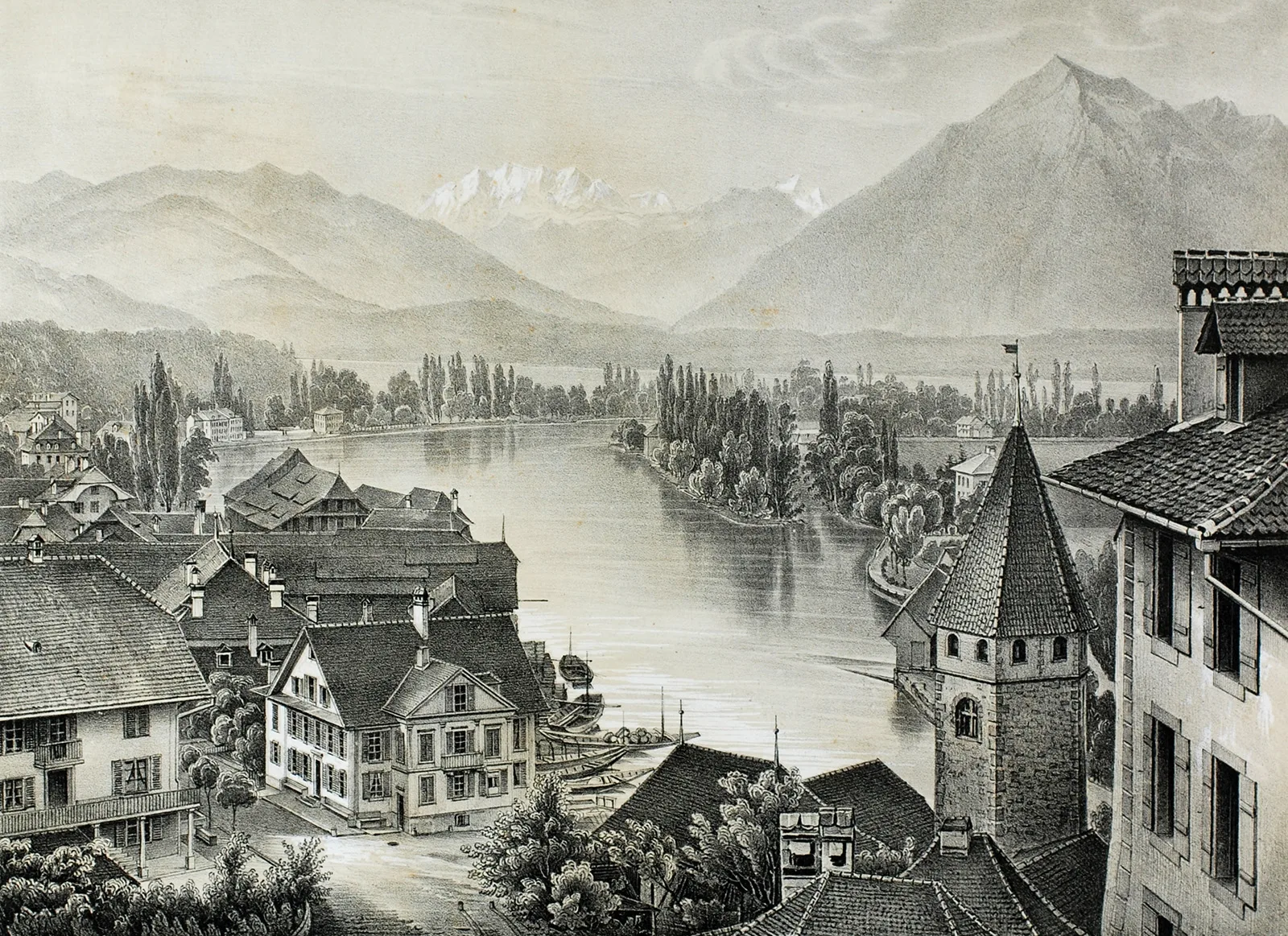
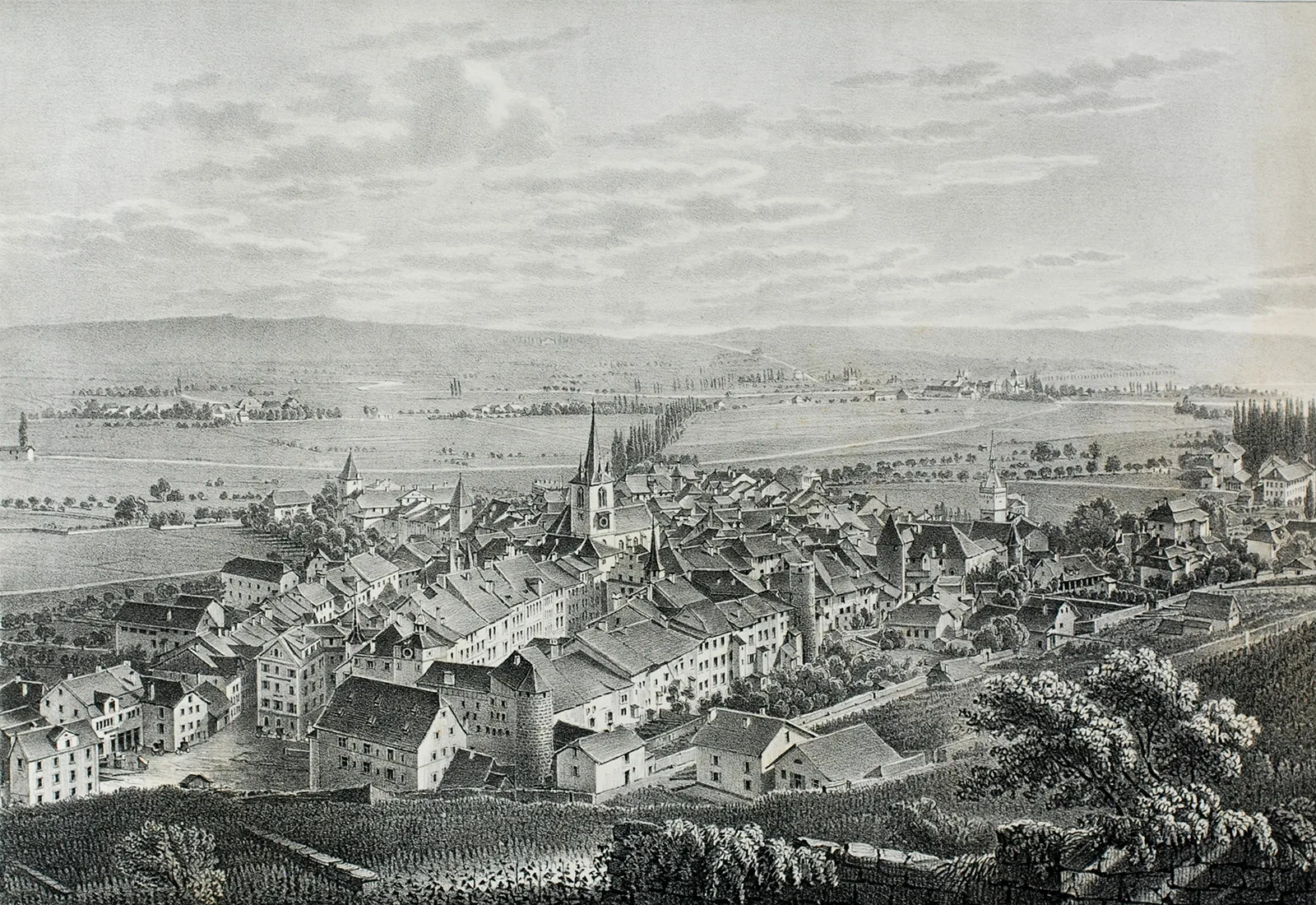
Little remains of Franziska Möllinger’s work. The best-known is a publishing project that she worked on in 1844 and 1845, involving self-published lithographic views of townscapes and rural scenes in Switzerland using daguerrotype templates. As photo historian Markus Schürpf noted, this was a pioneering achievement, since she was the first to use photographs as print templates in Switzerland. But financial success eluded her – after the first 16 views, the portfolio, which had been planned on a much larger scale, was discontinued.
A sample of Möllinger’s portfolio: Bern, 1844.
A sample of Möllinger’s portfolio: Bern, 1844. Zentralbibliothek Solothurn
Image 01 of 05
A sample of Möllinger’s portfolio: Bern, 1844.
A sample of Möllinger’s portfolio: Bern, 1844. Zentralbibliothek Solothurn
Image 01 of 05
A sample of Möllinger’s portfolio: Solothurn, 1844.
A sample of Möllinger’s portfolio: Solothurn, 1844. Zentralbibliothek Solothurn
Image 01 of 05
A sample of Möllinger’s portfolio: Thun, 1844.
A sample of Möllinger’s portfolio: Thun, 1844. Zentralbibliothek Solothurn
Image 01 of 05
A sample of Möllinger’s portfolio: Biel/Bienne, 1844.
A sample of Möllinger’s portfolio: Biel/Bienne, 1844. Zentralbibliothek Solothurn
Image 01 of 05
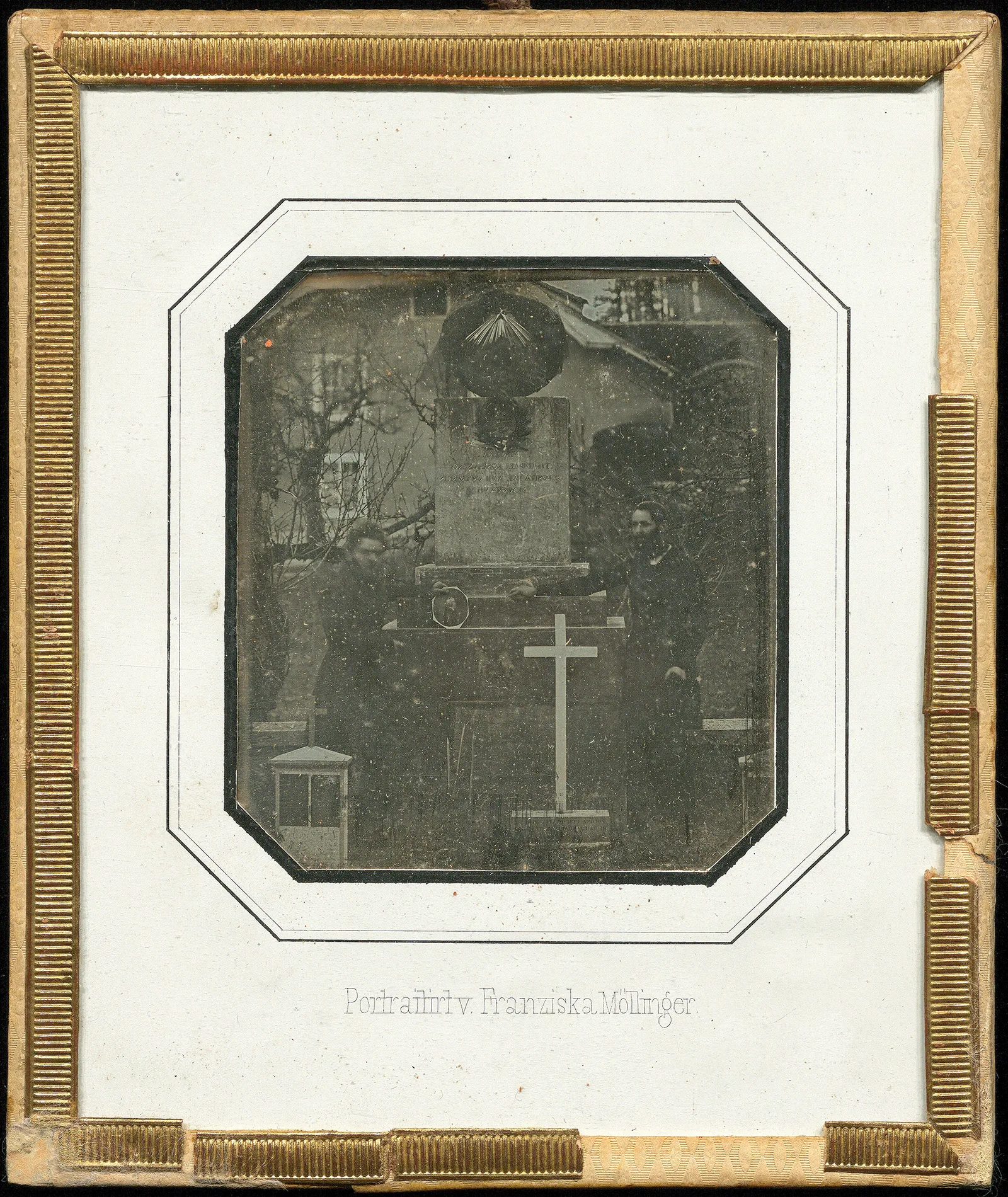
Two original daguerrotypes have survived. Until early 2024, researchers assumed there was only one – an image of Thun Castle dating from 1844. In the meantime, a second daguerrotype by Möllinger has surfaced from the same year, which the Zentralbibliothek Solothurn was able to acquire. As well as its historical significance, it is noteworthy in terms of its subject as it depicts exiles from Poland at the memorial in Zuchwil to the Polish national hero, Thaddeus Kosciuszko, who died in Solothurn. The slightly blurred face of one of the subjects is testament to the challenge of staying still for the shot.
Franziska Möllinger: Two men in front of the tomb of Thaddeus Kosciuszko in Zuchwil.
Franziska Möllinger: Two men in front of the tomb of Thaddeus Kosciuszko in Zuchwil. Zentralbibliothek Solothurn
Franziska Möllinger offered her services as a daguerrotypist in Solothurn, but also in Biel/Bienne and in her home town of Speyer. She was therefore a travelling photographer, which was not unusual at the time. She appears to have stopped working with daguerrotypes in 1845. In 1872 she moved to Fluntern near Zurich with Otto’s family, where the Möllingers ran a private mathematics institute. She died in 1880. Her cause of death was listed as a ‘shrinking of the lung’ which may have been a long-term consequence of her work as a daguerrotypist as the technique involved hazardous mercury vapours.

And that is pretty much all we know about Franziska Möllinger as we only have a broad outline of her life story. Paradoxically, there are no surviving images of this pioneering photographer and portraitist, so we can’t even get an idea of what she looked like.
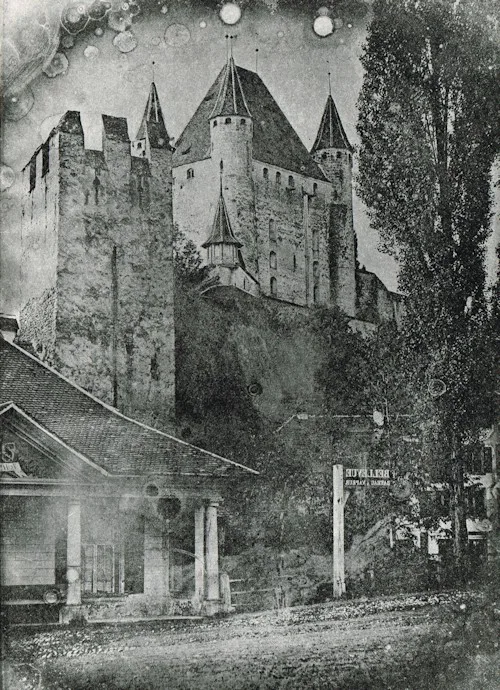
One of the two surviving original daguerrotypes by Franziska Möllinger: Image of Thun Castle, 1844.
One of the two surviving original daguerrotypes by Franziska Möllinger: Image of Thun Castle, 1844. Wikimedia
What remains are her few surviving works. Franziska Möllinger made a mark very early in the development of photography as one of the few women photographers in the world at the time. Before Franziska Möllinger, probably the only woman who worked as a freelance photographer was Bertha Beckmann in Dresden – in late 1842, so only a few months beforehand. Prior to this, only a handful of women are known to have produced photographs. There is Sarah Anne Bright from England who photographed the leaf of a plant in 1839. Also in 1839, Constance Fox Talbot, wife of the inventor Henry Fox Talbot, experimented with his photographic techniques. Additionally, sometimes cited as the ‘first female photographer’ is Anna Atkins, who published photographs (so-called cyanotypes) of seaweed in a book in 1843. However, Franziska Möllinger – as a daguerrotypist and through her publishing ventures – ranks highly among this group of female photography pioneers.

Further posts