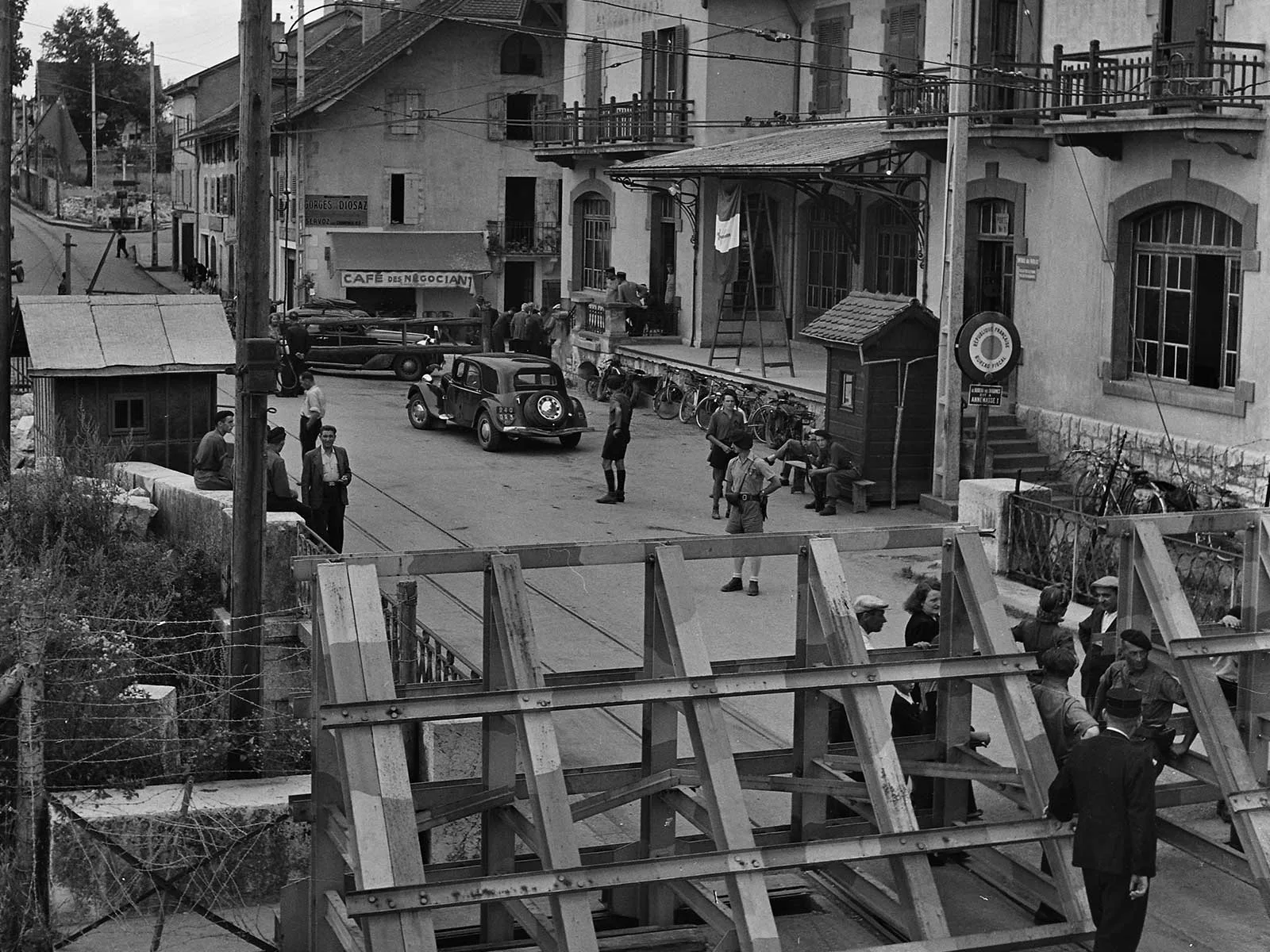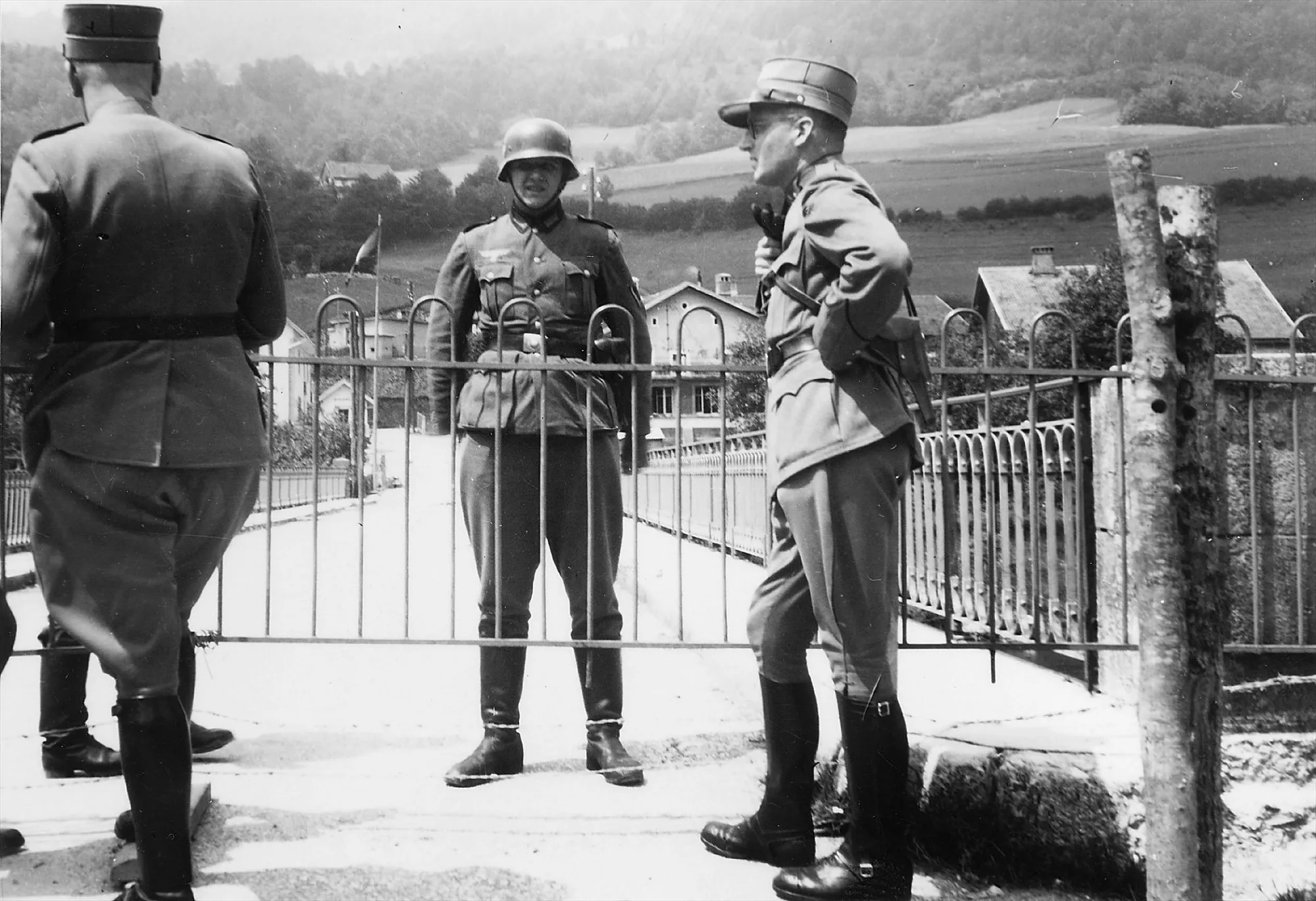
Two members of the Swiss Armed Forces and a member of the German Wehrmacht at the border between France and Switzerland near Goumois (canton of Jura), 1940.
Two members of the Swiss Armed Forces and a member of the German Wehrmacht at the border between France and Switzerland near Goumois (canton of Jura), 1940. memreg

Alsatian conscription evaders in Switzerland

After Alsace-Lorraine was annexed from the rest of France in 1942, the German Reich forcibly conscripted young men from these regions to fight for the Wehrmacht. This led many to try and flee to Switzerland, including René Grienenberger, the only survivor from a group of 18 young men who tried to escape.

Christophe Droesch

Christophe Droesch

Christophe Droesch was born and raised in Alsace. He works as a translator and has translated numerous blog posts from German into French.

On the evening of 12 February 1943, the group congregated in the Alsatian town of Ballersdorf, before setting off on foot into the darkness at around 10 pm. Their aim was to cross the Swiss border – around 15 kilometres to the south as the crow flies – to avoid being forcibly conscripted to fight in the Wehrmacht.

The men, aged between 18 and 33, were mainly farmers and students. They hailed from Ballersdorf and from surrounding towns and villages. Carrying a small number of firearms, they were intent on making their way to Switzerland, as other groups of conscription evaders had done in previous days. This had led to a crackdown on escape attempts by the German authorities, with border guards quite prepared to shoot anyone trying to cross the border illegally.

Guided only by the light of the moon, the men cut across fields, avoiding main roads and villages. Around midnight, they arrived close to Seppois-le-Bas, just four kilometres from the border. Suddenly, there were screams. The group had been discovered by a patrol of German border guards. Shooting ensued, killing three of the Alsatians, and seriously wounding a German, who succumbed to his injuries the next day.
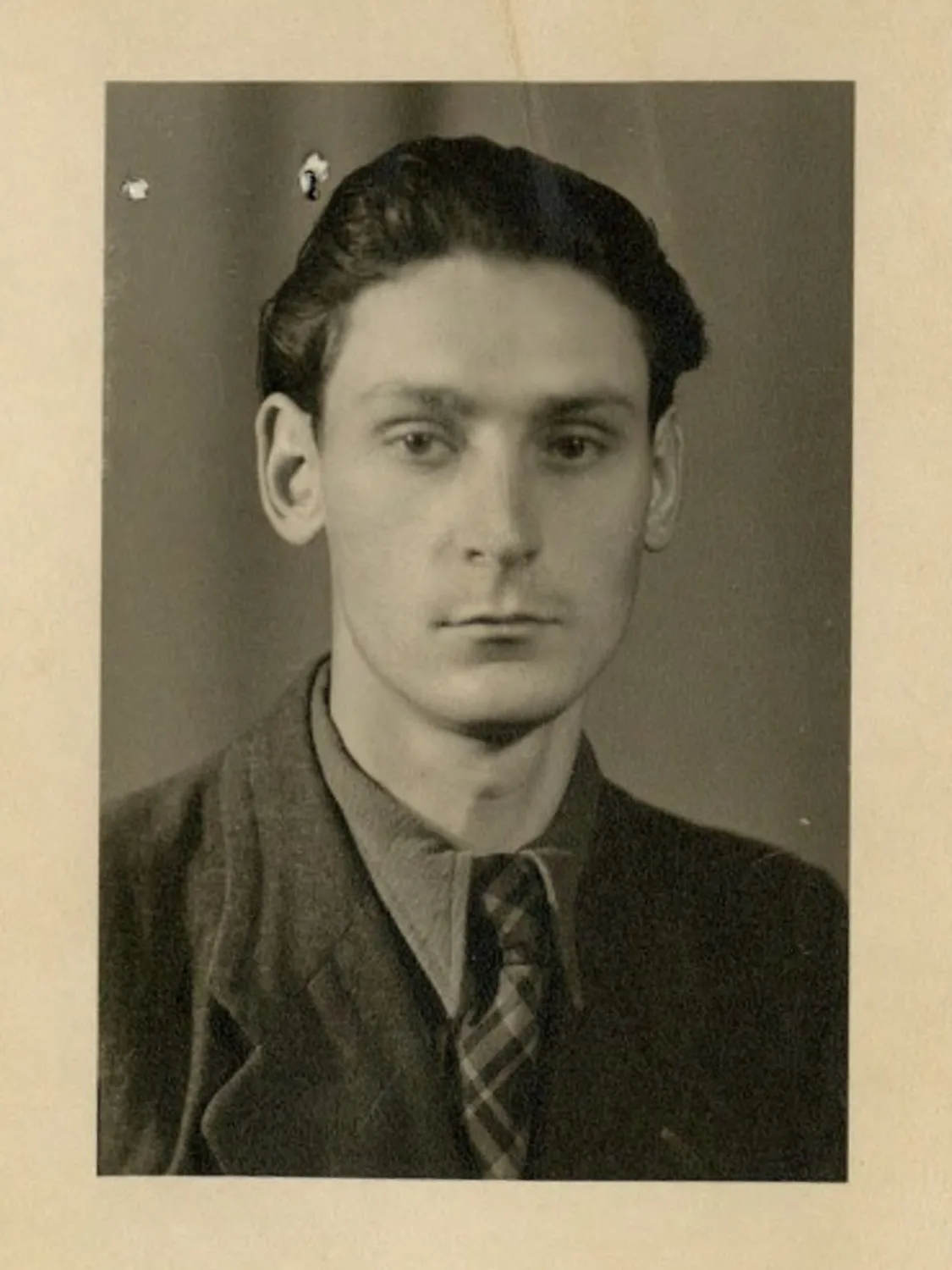
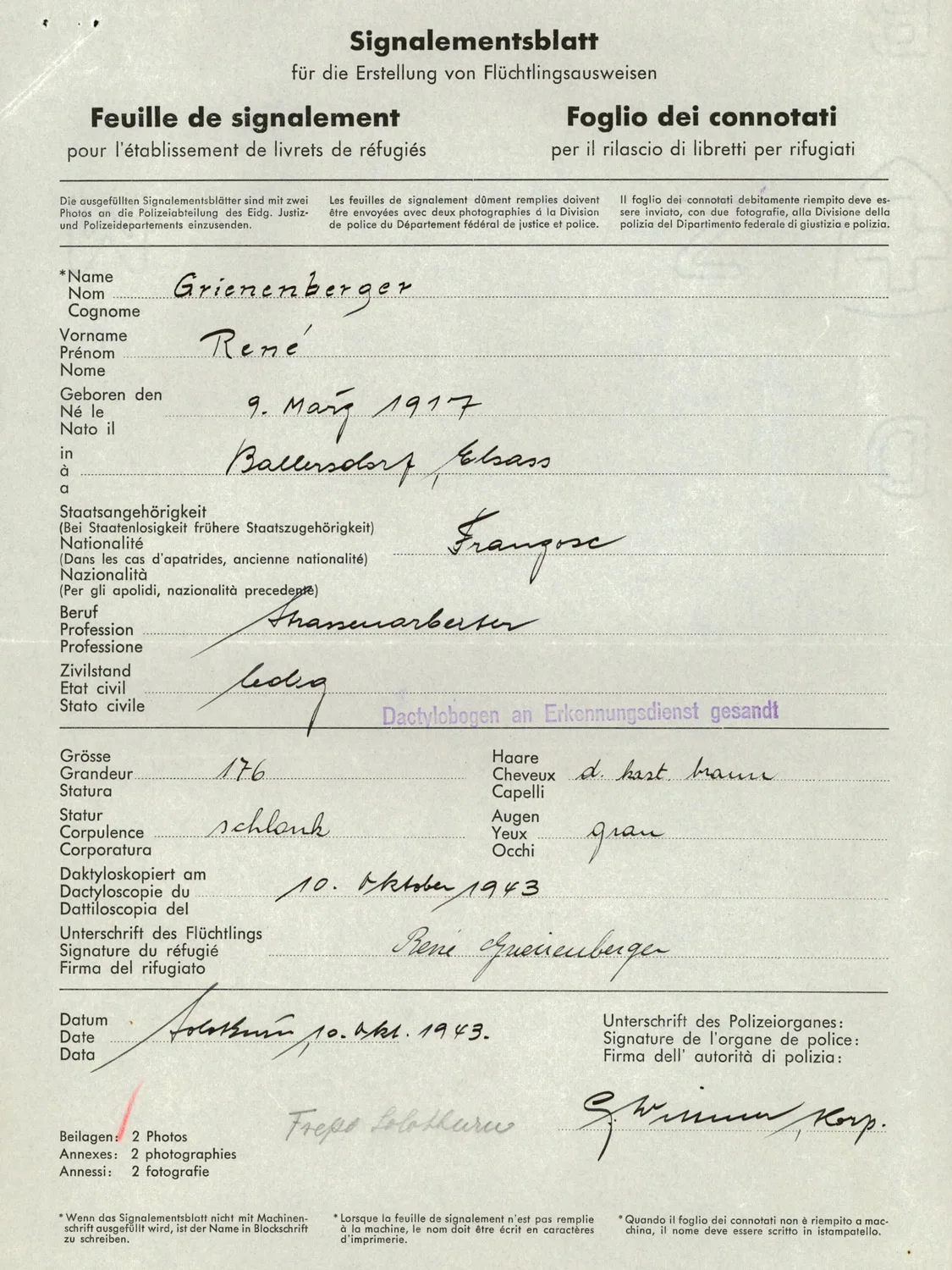
The survivors dispersed and turned back. Only one of whom, René Grienenberger, decided to try and escape again. He walked all night long, only realising in the early hours that he had lost his way and was in fact walking around in circles. He sought shelter on a nearby farm, where he stayed hidden for three days with the help of the farmer, while German patrols were actively searching for him. He then spent three months on another farm, before a people smuggling network arranged for him to be transported to Switzerland on a freight train. Once he had crossed the border, he was held in a camp at Büren an der Aare (canton of Bern), and later employed on a farm in Selzach (canton of Solothurn). In the autumn of 1944, he joined the Groupe Mobile d’Alsace, a unit made up of Alsatian conscription evaders in Switzerland, which was involved in the liberation of Alsace as part of the 1st Army. Only then did he realise the true extent of the tragedy that had unfolded since his attempted escape.
Portrait and completed signal element sheet belonging to René Grienenberger.
Portrait and completed signal element sheet belonging to René Grienenberger. Swiss Federal Archives / Swiss Federal Archives
In the days after the group from Ballersdorf had attempted to flee, the Gestapo and the SS had arrested the other members of the group and their families and taken them to the Gestapo offices in Mulhouse for questioning. The men and their families were then detained in the Schirmeck-Vorbruck concentration camp. On 16 February a special court condemned the evaders to death for “armed unlawful assembly and attempting to cross the border illegally”. They were executed the following day in the sand pit of the Natzweiler-Struthof concentration camp, and their families were deported to the German Reich.

Alsace-Lorraine under German occupation

What led this group of young Alsatian men to try and flee? In 1940, during the Western Campaign, the Wehrmacht overwhelmed France within the space of a few weeks. On 22 June of that year, France signed a momentous armistice with Nazi Germany in Compiègne. From then on, 60 per cent of France was occupied by the Wehrmacht, while the free zone (zone libre) was governed by the Vichy Regime, which was closely aligned with Germany. Shortly afterwards, the German Reich annexed Alsace-Lorraine, which comprised the current French departments of Moselle, Bas-Rhin and Haut-Rhin. The people living in Alsace-Lorraine were seen by the Nazis as ethnically German and were therefore subject to the same obligations as the German people.

A phase of Germanisation and Nazification ensued in the annexed areas: German was made the official language, teachers were ‘re-educated’ or replaced by German staff, and all traces of France, from monuments to street names and family names, were erased.
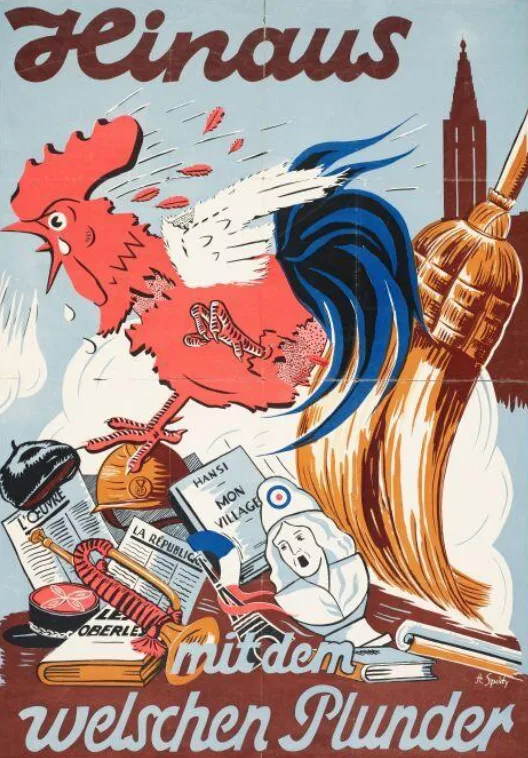
Political propaganda in a regional newspaper, 1940.
Political propaganda in a regional newspaper, 1940. Archives de Strasbourg, 505 FI 138
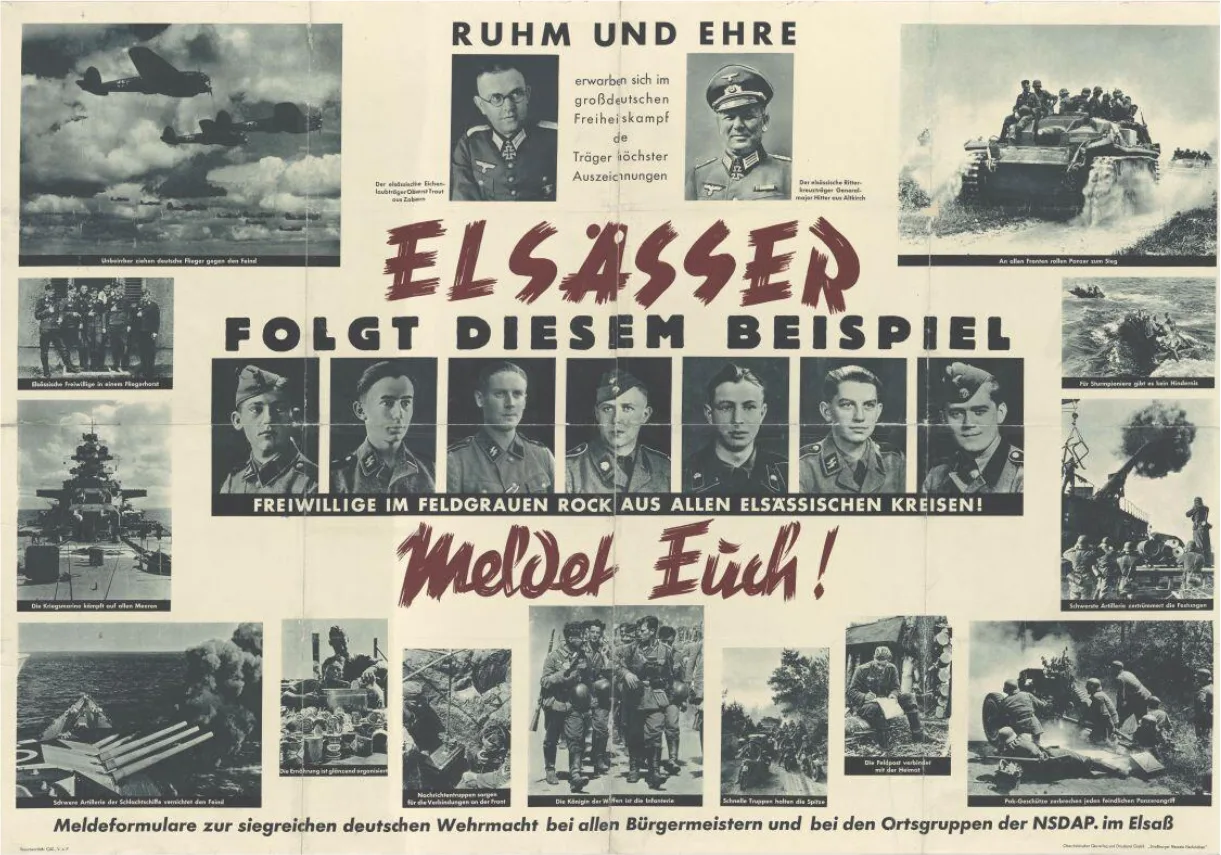
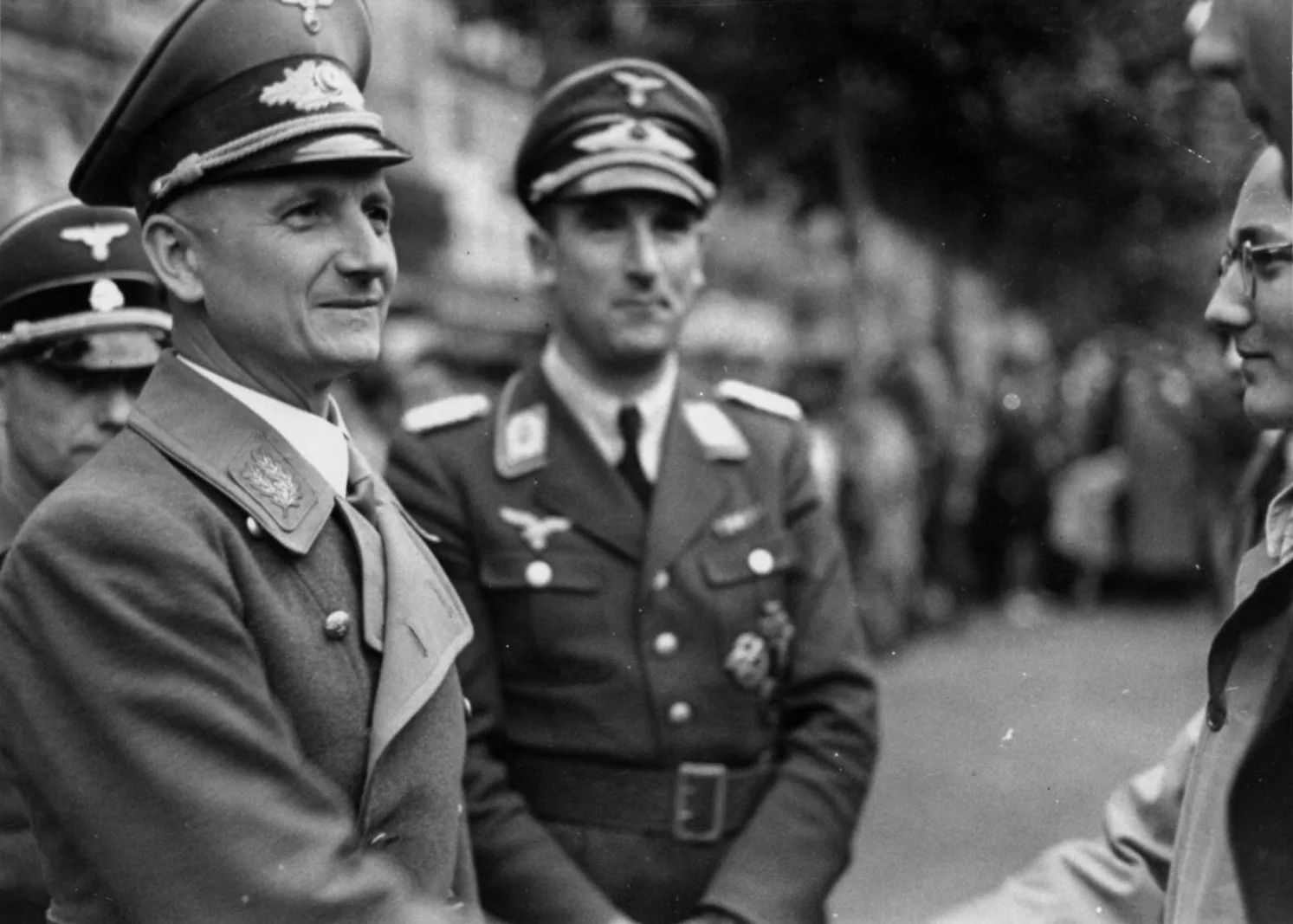
The administration of Alsace was entrusted to Gauleiter Robert Wagner, a loyal National Socialist. On 8 May 1941, Wagner introduced the six-month Reichsarbeitsidenst, or compulsory labour service. This affected around 70,000 people aged between 17 and 25, including 15,000 young women. Starting from August 1942, young Alsatians were required to complete their military service in the Wehrmacht, and for some age groups in the Waffen-SS. Those who refused faced prison, deportation or conscription in the disciplinary units of the Wehrmacht. Meanwhile, their parents and relatives were forcibly relocated to the German Reich, and their assets seized according to the Sippenhaft principle. In total, 130,000 people from Alsace-Lorraine were drafted by force into the German army and mostly sent to the eastern front. These forced conscripts are known as ‘malgré-nous’ (against our will). An estimated 30,000 men never returned.
Newspaper call for people to join the Wehrmacht.
Newspaper call for people to join the Wehrmacht. Archives de Strasbourg, 505 FI 1122
Photo of Robert Wagner (left) during the Germanisation of street names in Strasbourg, 1940.
Photo of Robert Wagner (left) during the Germanisation of street names in Strasbourg, 1940. Archives de Strasbourg, 1 FI 135 3

The implications of the armistice for Switzerland
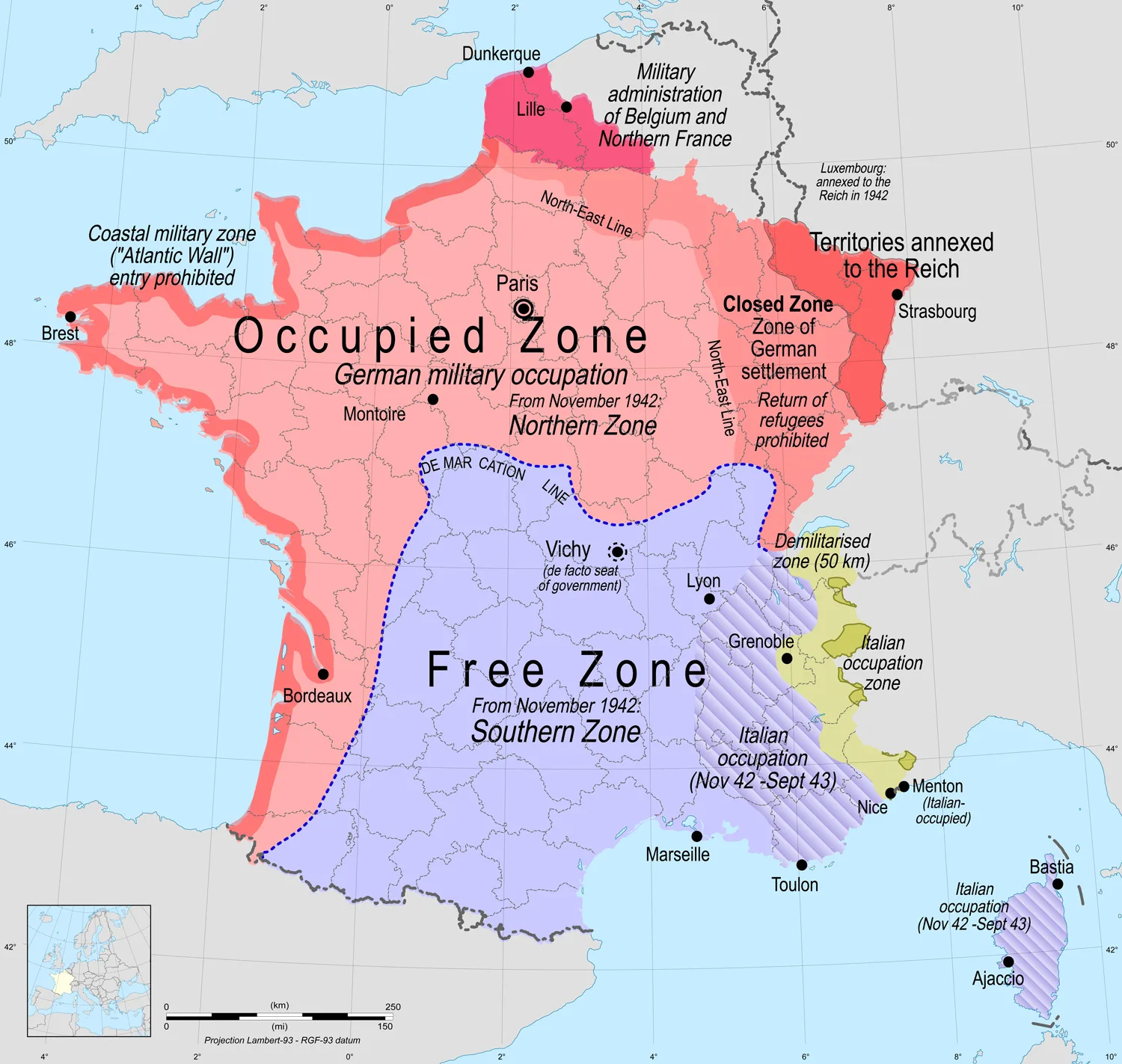
The Armistice of Compiègne in 1940 spelled the defeat of sovereign France and put Switzerland in a perilous position. As a neutral country with a long tradition of welcoming refugees, it faced the risk of invasion and infiltration by German agents among the refugees. It had to reconcile its humanitarian reputation, its limited resources, the protection of its borders, and its neutrality. On 1 October 1942, the German authorities established a three-kilometre-wide zone interdite (forbidden zone) along the Vosges and the Swiss border to prevent escape attempts.
The zones of France after the 1940 armistice.
The zones of France after the 1940 armistice. Wikimedia
In early 1943, the rate of conscription accelerated, covering more and more age groups, as the needs of the German armed forces were increasing, in particular following its defeat in Stalingrad. As well as individual border crossings to Switzerland (on foot, by train, or even swimming across the Rhine), the number of groups from Alsace attempting to flee across the border continued to grow. The ‘Espenkolonne’ of 10 February 1943 particularly stands out, as on that evening no fewer than 183 escapees from Riespach and the surrounding villages crossed the border together at Bonfol (canton of Jura). The two German border guards on duty failed to take any action to stop them. However, this mass evasion led to 24 families from Riespach being deported to the German Reich. This was followed two days later by the tragic attempt of the group from Ballersdorf. That same evening, a group of 36 men successfully crossed the border. The next day, another 87 people crossed the customs post at Rodersdorf (canton of Solothurn). These incidents led the Germans to enact legislation on Sippenhaft (kin liability), legitimising the deportation of families by way of reprisal, including with retroactive effect. From then on, Alsatian conscription evaders fled with their close family members. Alsatian soldiers – already wearing German uniforms – also deserted during leaves of absence.
 
Thanks to an agreement with the French Vichy government, Alsatian escapees who wanted to travel to the free zone (the part of France that was not occupied by the Wehrmacht), would not be sent back by the Swiss authorities. Instead they would be questioned and then deported to Annemasse via Geneva. And the costs would be borne by France.

Internment in Switzerland

The transits to Annemasse ended in November 1942 when the free zone was occupied by German and Italian troops following the Allied landings in North Africa. By late 1942, the Swiss authorities had put in place a centralised system for the reception, accommodation and internment of escapees, and significantly expanded intake capacity.

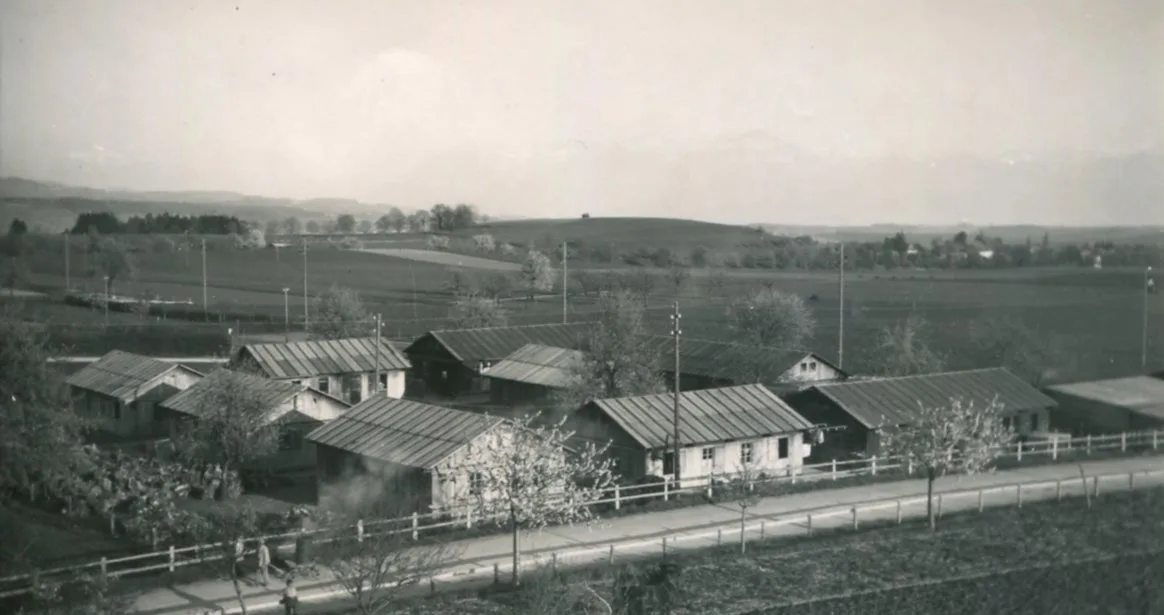
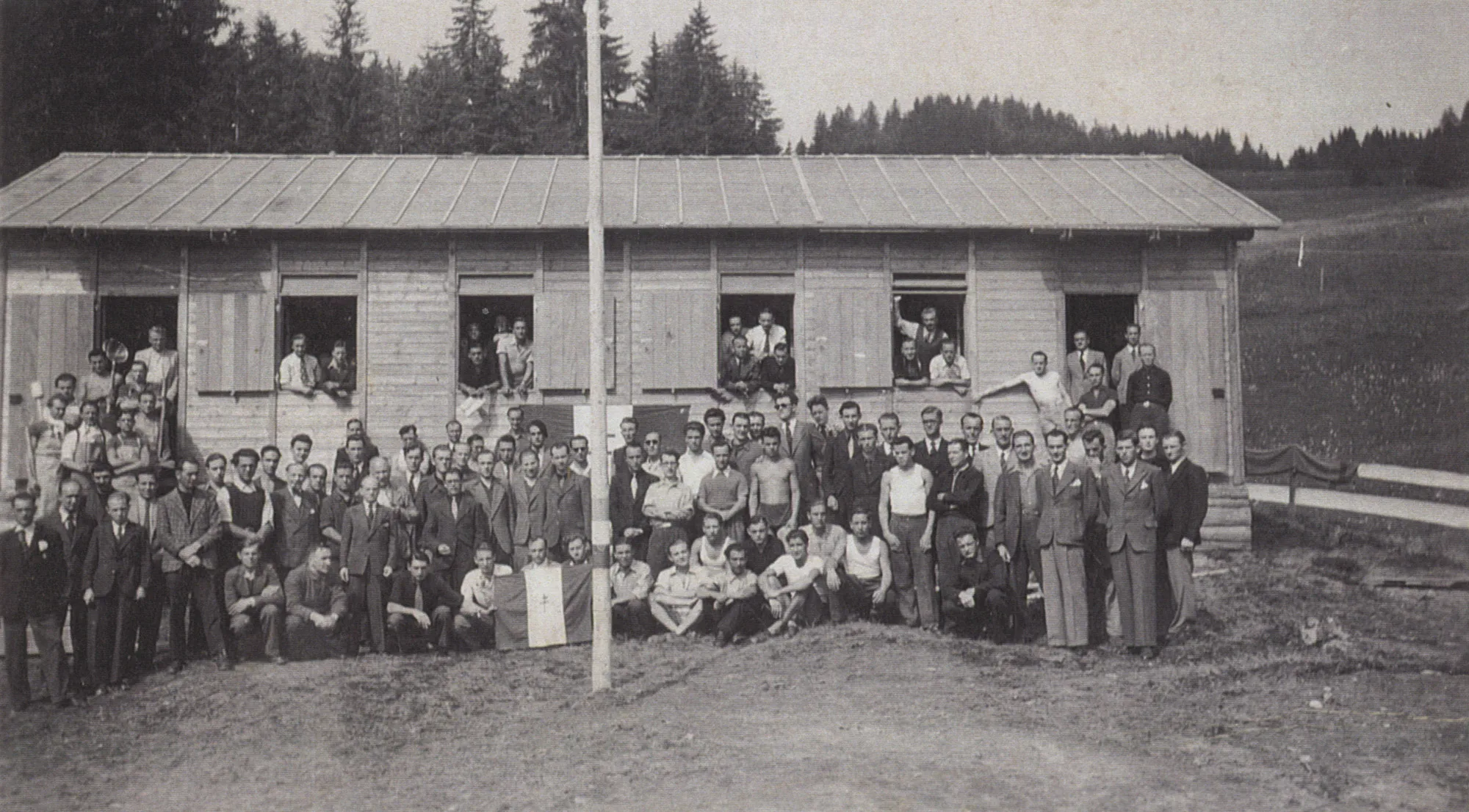
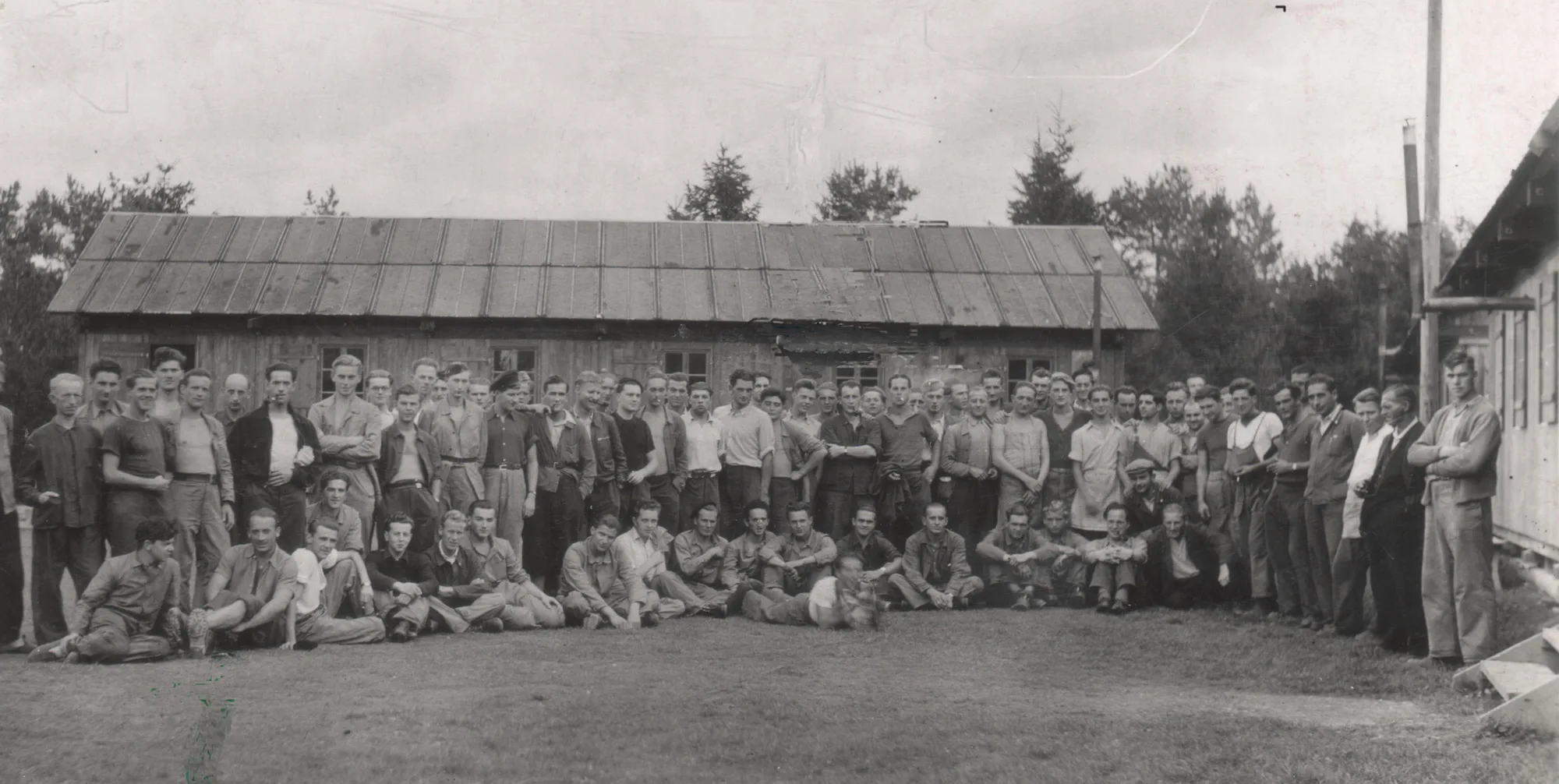
The Alsatians who entered Switzerland on the north-west border were first taken to reception and transit camps, particularly those in militarily-controlled Büren an der Aare (canton of Bern) and Büsserach (canton of Solothurn), where they underwent medical examinations and were questioned by police. They were then notified of the official decision regarding admission and internment in Switzerland, before being placed in labour camps, on farms or with relatives depending on their physical state and financial means. The work in the camps involved tasks such as clearing fallow land, extracting peat (like in Tramelan in the Bernese Jura), building roads, and carrying out groundwork along the Rhône (as in Visp). Under the Hague Convention, deserters from the Wehrmacht were interned in military camps.

A labour camp was set up in Cossonay (canton of Vaud) for academics, with 120 French internees – half of whom were from Alsace. The idea for this camp had been proposed by Father Keller, the chaplain in the internment camps. Between July 1943 and July 1944, escapees with a secondary school leaving certificate and those who were already attending university, could continue their studies there. In the mornings they helped with land-clearance and drainage work on sites in the north of the town. The afternoons were dedicated to study, which was led by a number of internees, occasionally supported by renowned professors from the University of Lausanne. The camp was officially closed on 14 July 1944 due to many internees attempting escape to Savoie with a view to France’s liberation following the Normandy landings. The internees were then transferred to the Zweidlen camp (canton of Zurich), just one kilometre from the German border: a radical measure, but one which failed to put a stop to the escape attempts.
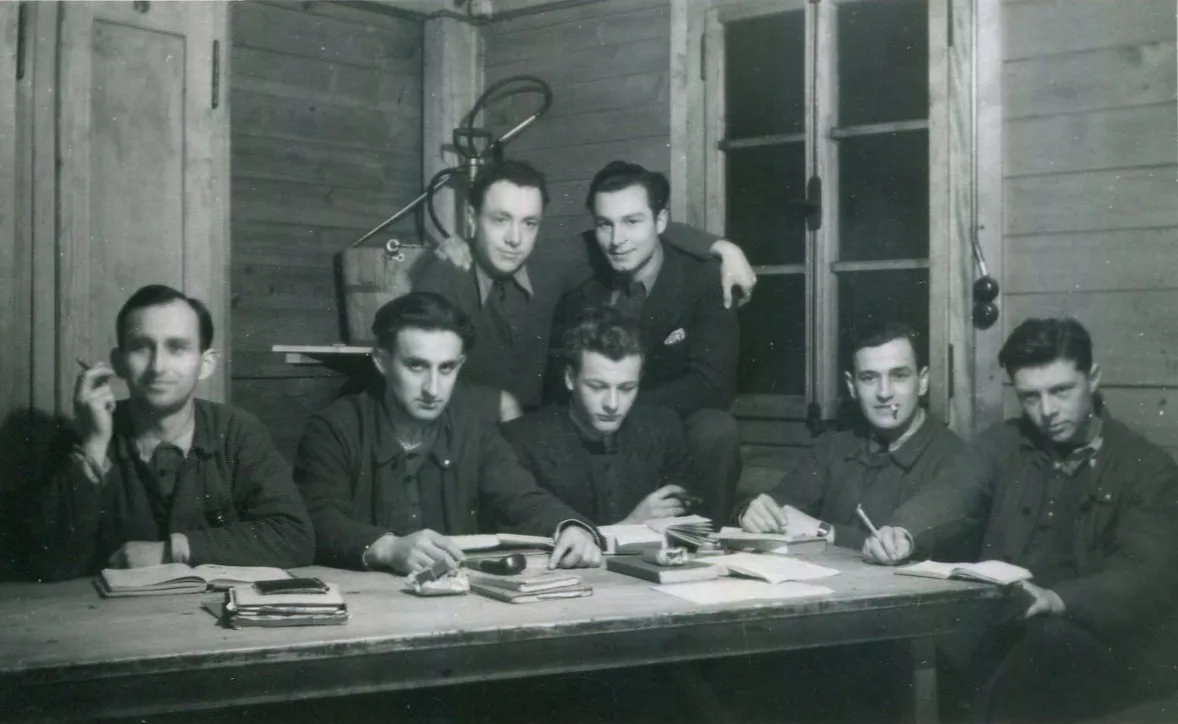
Internees continue their studies, March 1944.
Internees continue their studies, March 1944. Courtesy of A. Bihry
Image 01 of 04
The internment camp in Cossonay ...
The internment camp in Cossonay ... Courtesy of A. Bihry
Image 01 of 04
... Siehen-Eggiwil ...
... Siehen-Eggiwil ... Courtesy of J.P. Spenlé
Image 01 of 04
... and Tramelan. Historian Daniel Morgen estimates that by November 1942, a total of 3,220 people from Alsace and Lorraine had fled to the free zone via Switzerland, and a total of 4,500 were interned between November 1942 and May 1945.
... and Tramelan. Historian Daniel Morgen estimates that by November 1942, a total of 3,220 people from Alsace and Lorraine had fled to the free zone via Switzerland, and a total of 4,500 were interned between November 1942 and May 1945. Courtesy of A. Bihry
Image 01 of 04

Organised resistance from Switzerland

In early 1942, the Alsatian resistance movement Réseau Martial decided to set up secret units. Three Groupes mobiles d'Alsace (GMA) were established: GMA Sud in the southern part of France, GMA Vosges, and GMA Suisse. GMA Suisse was headed by Commandant Georges, who had crossed the Swiss border in October 1943. He was supported by chaplain Father Keller, by staff from the French consulate in Basel and from the Aide fraternelle aux réfugiés français, an association led by Pierre de Leusse, a representative of General De Gaulle’s provisional government. The ‘Free France’ committee in London financed GMA Suisse through Allen Dulles, the head of the US intelligence service OSS in Bern.

The D-Day landings on 6 June 1944 gave the GMA an additional boost. Commandant Georges and his secret general staff in Switzerland managed to recruit between 1,800 and 2,000 men, including 200 Wehrmacht deserters. These soldiers were found with the aid of lists, mainly compiled by Father Keller. As camp chaplain, Keller was able to move around freely and had decided of his own accord to collect information, which was used to locate men in 86 camps and in the homes of many individuals throughout Switzerland.

The recruitment of troops and their potential repatriation were negotiated with the Swiss authorities. Throughout the war, Switzerland was careful to maintain relations with the French authorities, while avoiding any action that could be construed as provocation by Nazi Germany. When it became clear that the Nazis were going to lose the war, the Swiss authorities adopted a pragmatic policy towards free France.

The original goal of GMA Suisse was to support the Allies by intervening behind the enemy line between the Vosges and the Swiss border. However, the difficulties encountered in the weapons and equipment airdrops in the Vosges, and the significance of the region to the German military authorities meant its mission had to be modified. GMA Suisse was integrated into the French 1st Army under General de Lattre de Tassigny, whose units had landed in Provence and were marching up the Rhône Valley.

In early September 1944, the GMA Suisse recruits received their mission order. The French consulate in Basel provided them with a sack of supplies, equipment and a transportation certificate, which they could use to reach a meeting point on the Swiss Federal Railway. An agreement was made with the Swiss authorities that they would accept voluntary repatriation requests from French internees and would initiate the administrative procedure for their departures.

The first transfer took place on 21 September, with 200 recruits transported to a camp at Col-des-Roches close to Le Locle (canton of Neuchâtel) by the Swiss Army. From there, they were taken in a French military truck to Ornans in the French department of Doubs and then on to the Valdahon Camp, where they were trained and equipped.

Within the 1st Army, the battalions of GMA Suisse took part in fighting in November 1944 along the Swiss border, a region from which many of them originally hailed. Among them was René Grienenberger, the only survivor from the group who had tried to escape from Ballersdorf.
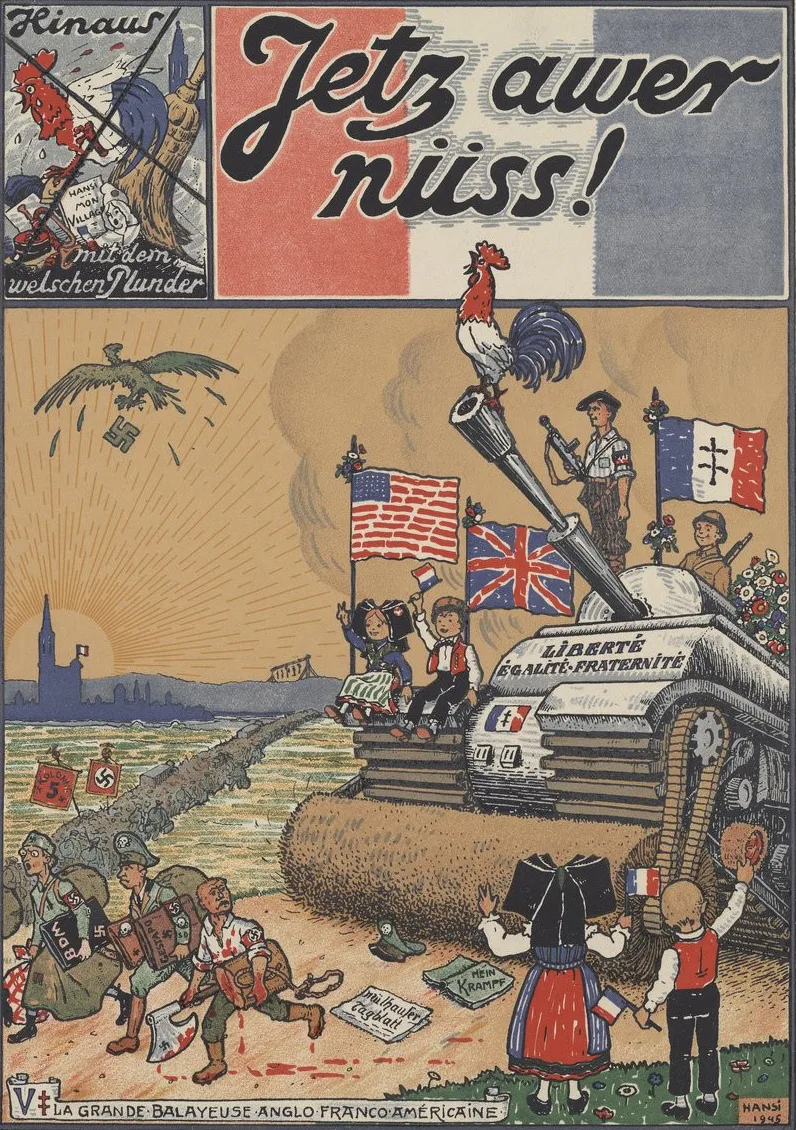
“Jetzt awer nüss!” (Time to get out of here). Counter-propaganda poster following the liberation of Alsace, 1945.
“Jetzt awer nüss!” (Time to get out of here). Counter-propaganda poster following the liberation of Alsace, 1945. BnF Gallica
The Alsatians were relieved of their military obligations on 10 December 1944, and the GMA was disbanded on 31 December of that year. Some decided to re-enlist with the French army, while others returned to their villages, where they had to wait months for their families to return from Germany. After more than four years under Nazi control, Alsace was ready to be rebuilt.

Further posts