A package for a war that never happened
The collection store of the museum in Grenchen holds a mysterious package dating back to the Cold War era. Its contents ‒ unused certificates of entitlement to food ration cards ‒ show how Switzerland was preparing for a much-feared war in the 1960s.

Anne Hasselmann
Anne Hasselmann is a historian and Director of Museum Grenchen.
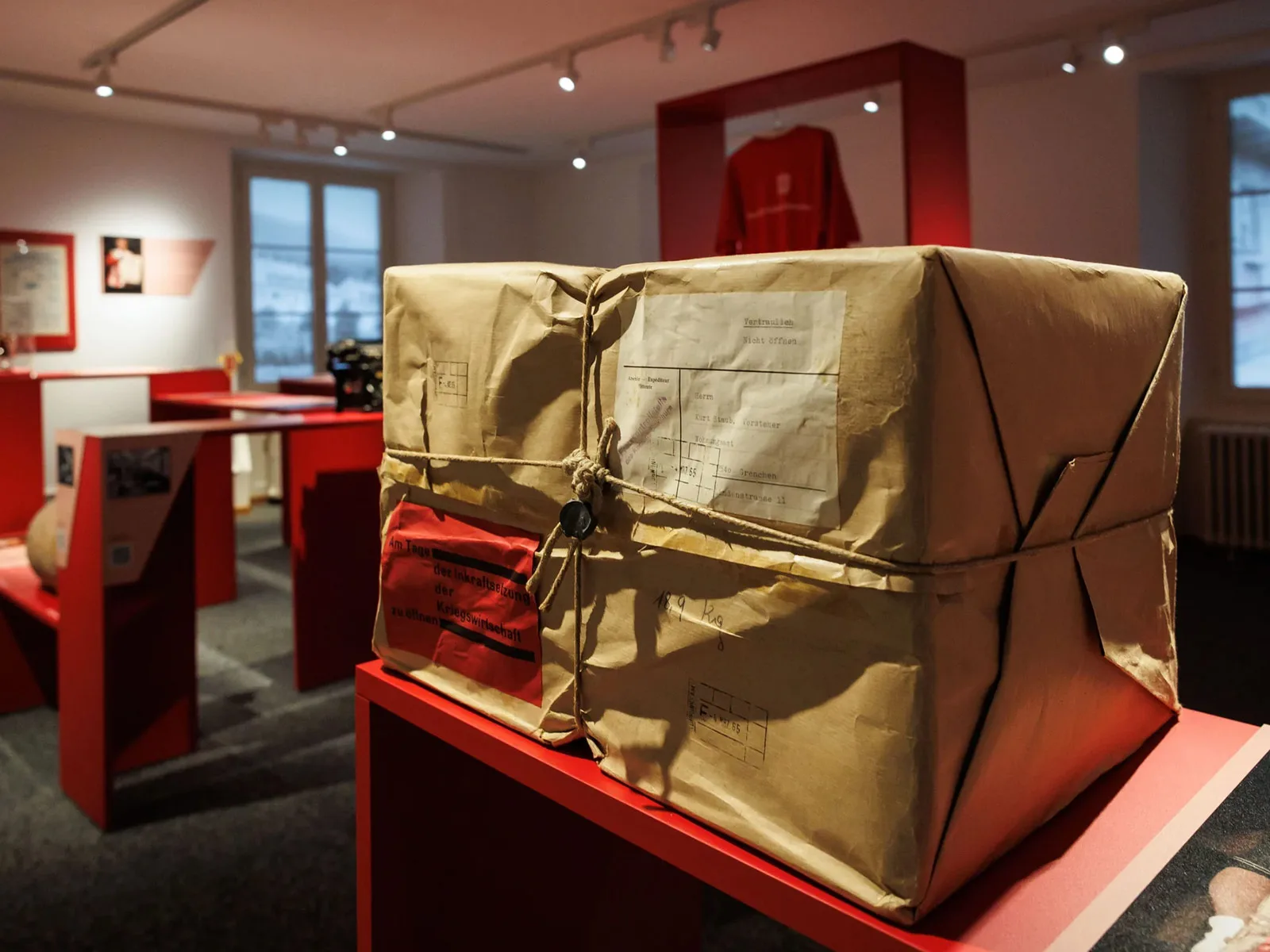
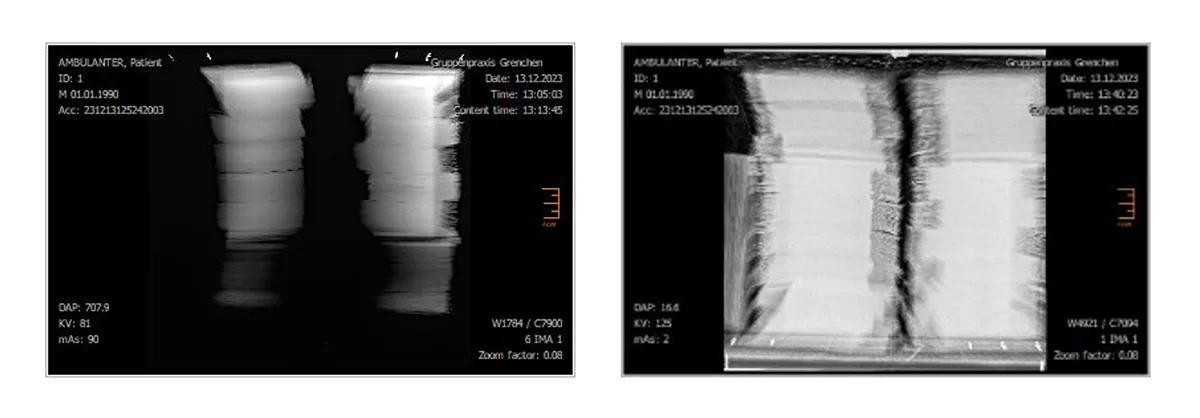
The parcel was addressed to Kurt Staub, who was head of the housing office in Grenchen (which from 1942 to 1971 was situated very close to the site of the current museum). The package had apparently been sent by the Price Control Office of the Canton of Solothurn and had its weight ‒ 18.9 kg ‒ written on it by hand. In addition to the seal and the warning sticker, the underlined word ‘Confidential’ and the instruction ‘Not to be opened’ indicated the high level of secrecy incumbent on the recipient. The postmark of 6 March 1965 places the package within the time of the Cold War.
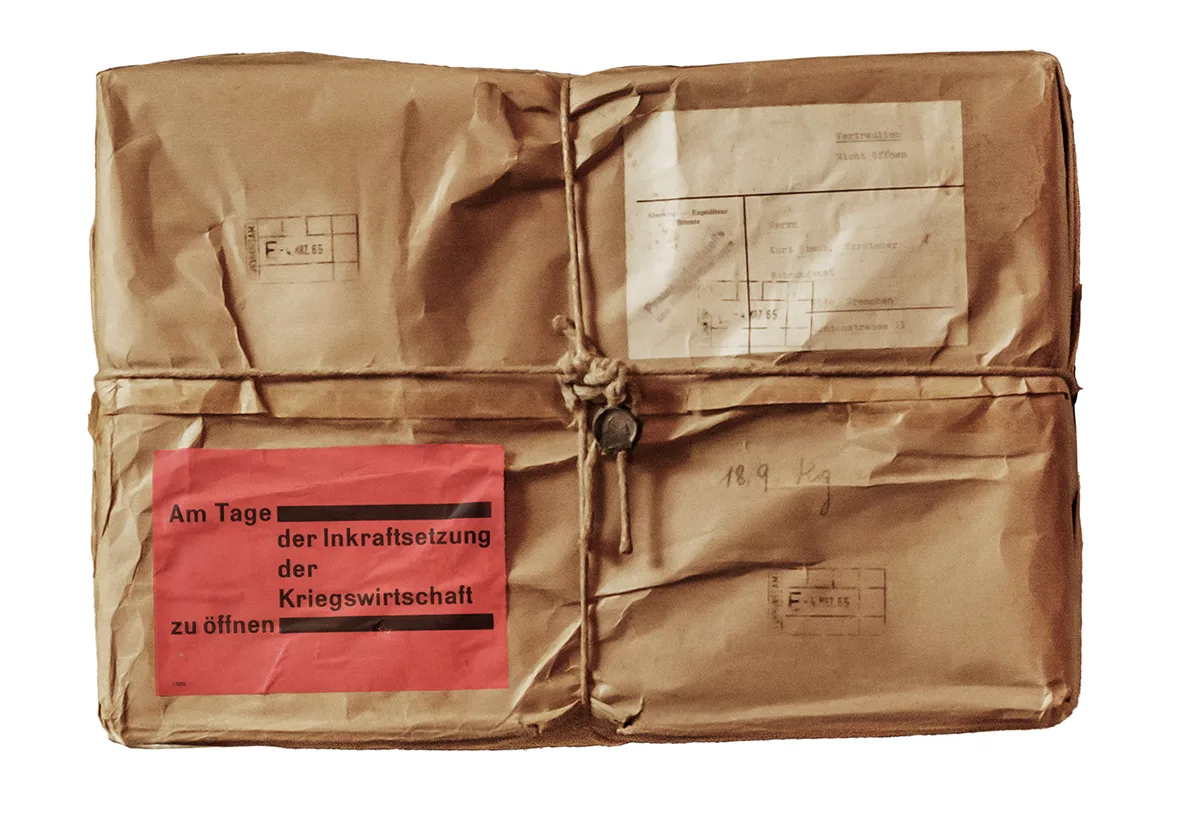
But thanks to a social media post, news of the medical centre’s ‘special patient’ quickly spread in Grenchen. It then emerged that the local authorities were aware of further similar packages, and that these had already been opened. This enabled indirect conclusions to be drawn about what the contents of the mysterious parcel must be: bundles of unused certificates of entitlement to ration cards. The authorities were even able to provide a few specimen copies of such cards, which were issued by the Solothurn Cantonal War Economy Office in the mid-1960s and sent to the residents’ register office in Grenchen for distribution should war break out.
Unfortunately, the specific reason that prompted the sending of this package in March 1965 cannot be established with any great certainty. Nevertheless, the production of these certificates of entitlement proves that the measures designed to ensure the supply of essential goods were being expanded. From 1955, the looming threat of war was no longer seen as the only incentive for state intervention: perceived power-political threats and severe shortages were additional factors.
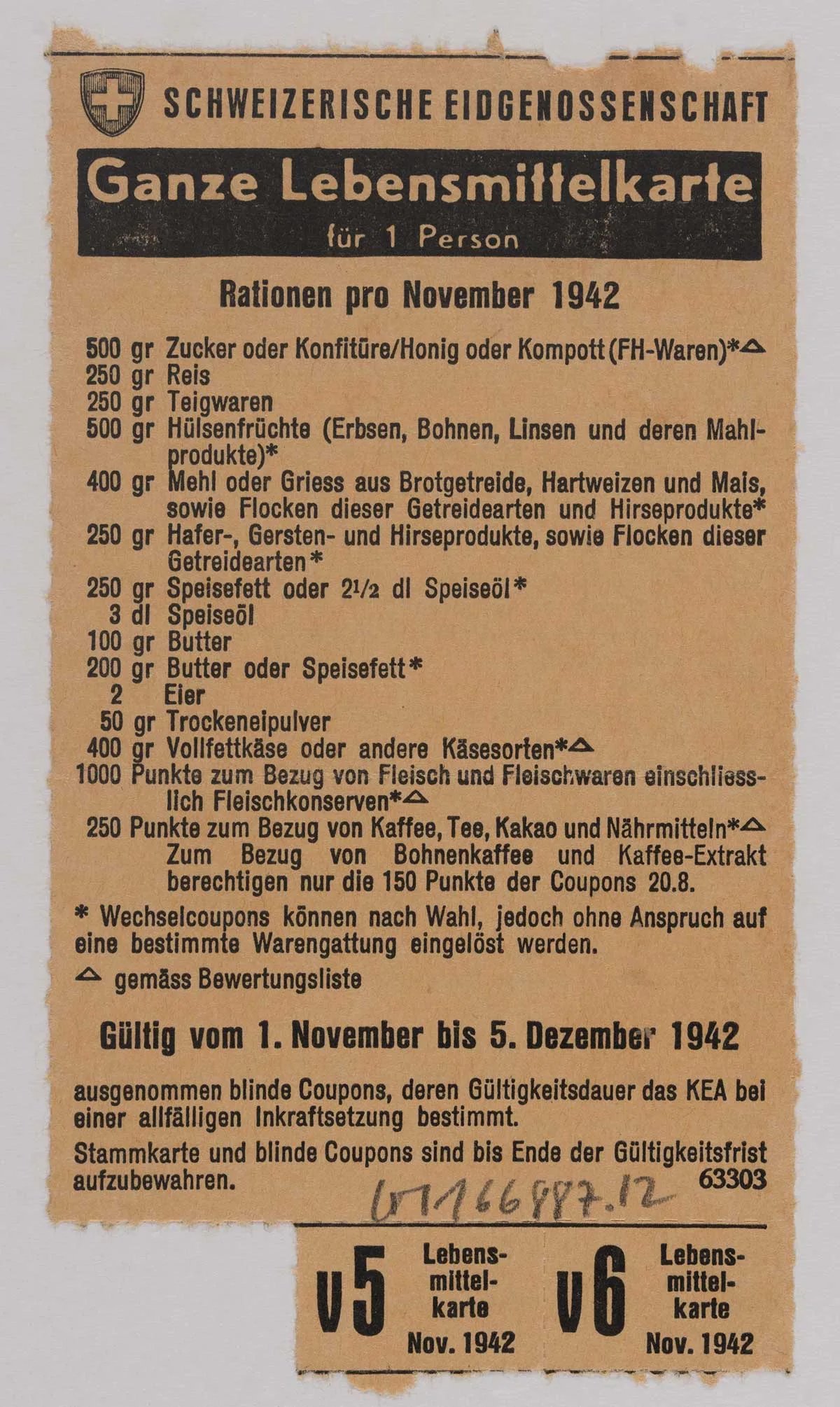
According to historian Jakob Tanner, the general strike and the Great Depression of 1929 were traumatic experiences that caused the greatest social disintegration Switzerland had ever known. He believes this what was prompted a rethink of supply policy even before the outbreak of the Second World War. That policy was to become the key component in a “successful strategic synthesis of military and economic objectives”. The decision-makers' awareness of the interconnectivity between supply, labour and social peace was as crucial as the interventionist measures taken by the Delegate for the War Economy from 1937 onwards. Quotas and rationing, imposed on the population between May 1940 and July 1948 in the form of food ration cards, led to a distribution of basic foodstuffs with relatively little regard to spending power, but which was largely perceived as fair.
This was the context, rife with hegemonic threats and potential international shortages, in which the package from Solothurn was sent in March 1965.
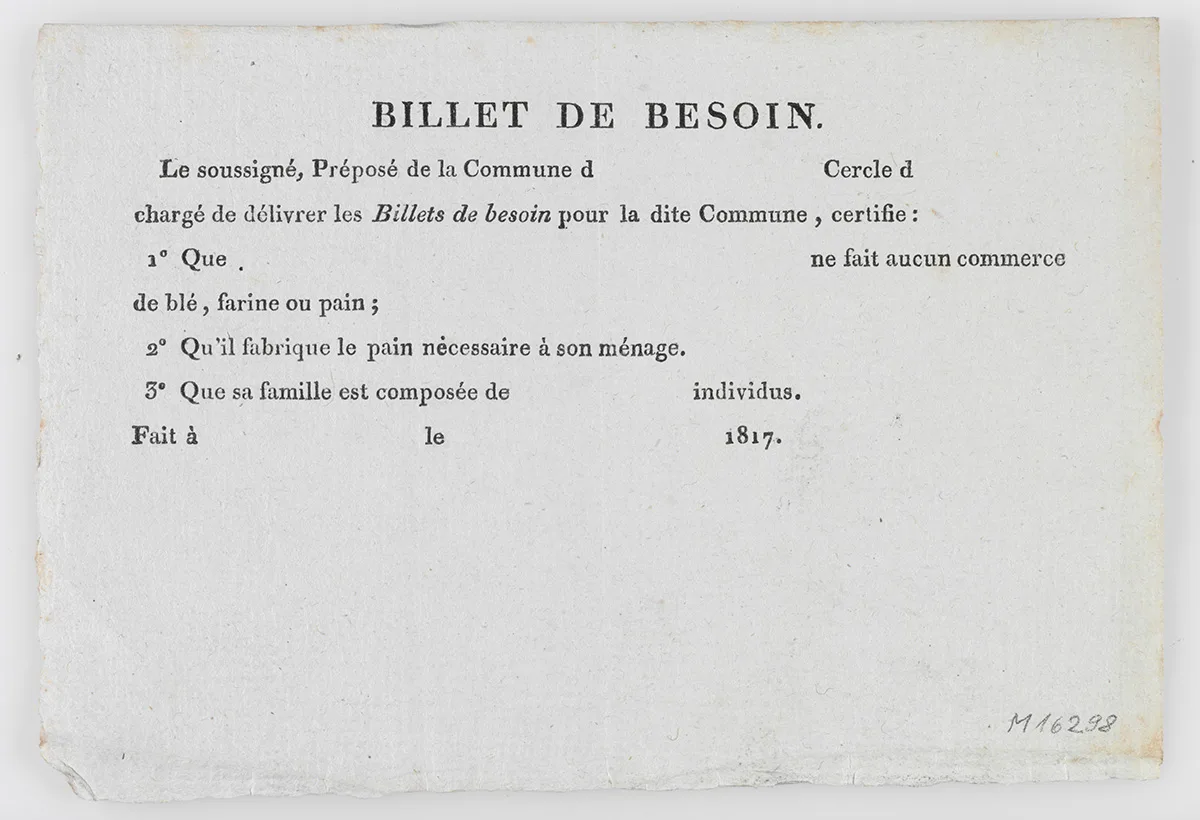
One of the first actions taken by the newly established office was to send out the certificates of entitlement to ration cards to the communes in the canton of Solothurn. Four of these parcels remain in existence in Grenchen. The 1965 certificates have been overlooked by researchers thus far. They appear to be a new iteration of the ration card system implemented during the Second World War. Initially, in October 1939, ration cards were sent by post to subscribing households. To prevent their increasing misuse and following the deterioration in the supply situation brought about by the Wehrmacht's Western Campaign, the cards were subsequently sent out by registered post from May 1940. However, as this procedure was more costly, the number of postal deliveries fell and people had to go in person to their local office to collect the cards.
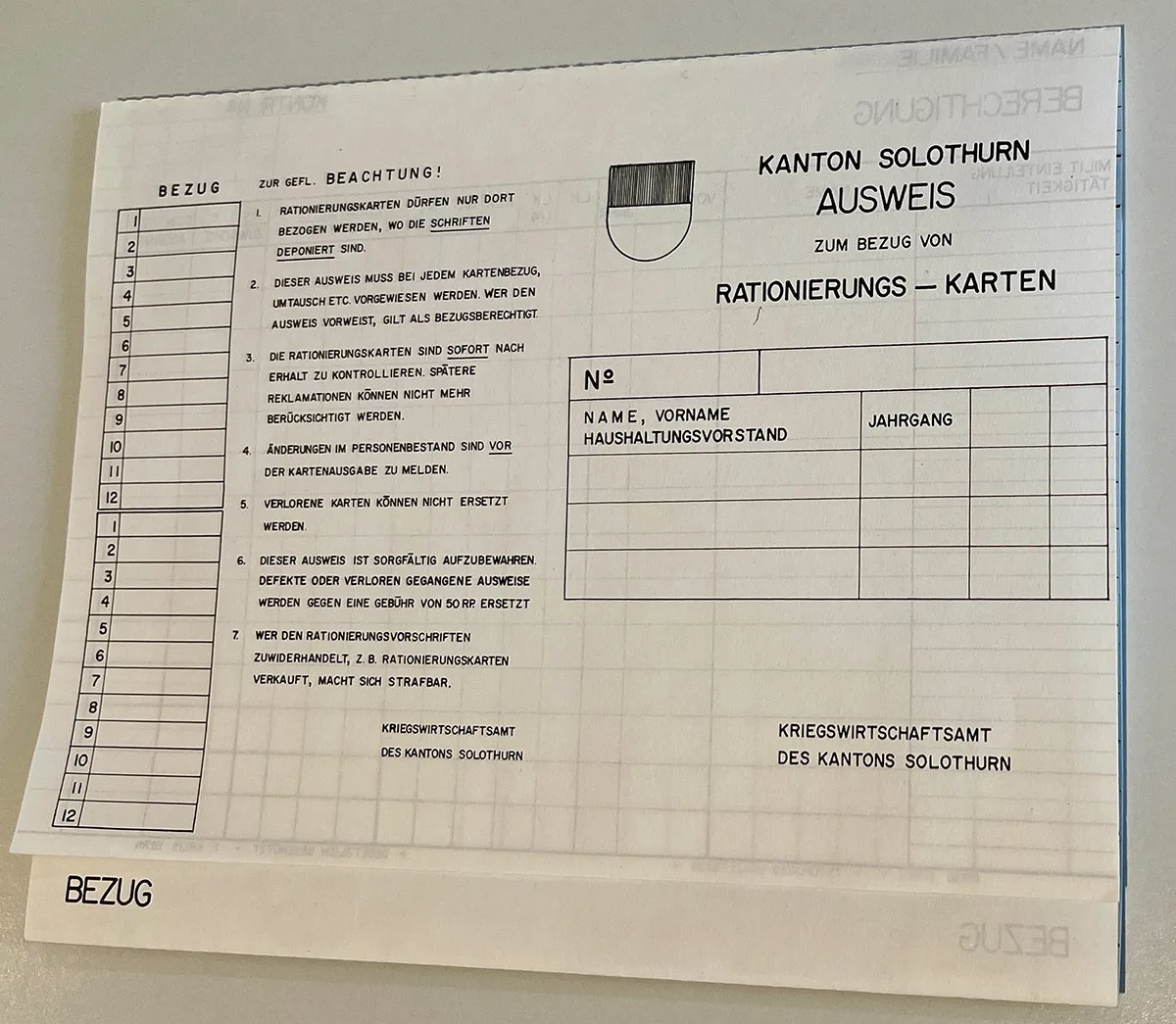
The unused certificates in the package demonstrate how the supply measures of the Cold War era built on the experiences of past wars and how lessons were learned from past mistakes. In addition, the package provides material evidence of a further turning point in the history of supply policy measures – triggered in this case not by an ongoing or imminent war, but by the threat emanating from power politics in times of economic uncertainty.
With the collapse of the USSR in 1991, the supply office was perceived to have lost two of its main raisons d’être – war and power politics. However, the corona pandemic and Russia’s war against Ukraine have placed supply security issues back on the agenda; making objects like the package sent in 1965 of topical interest again.