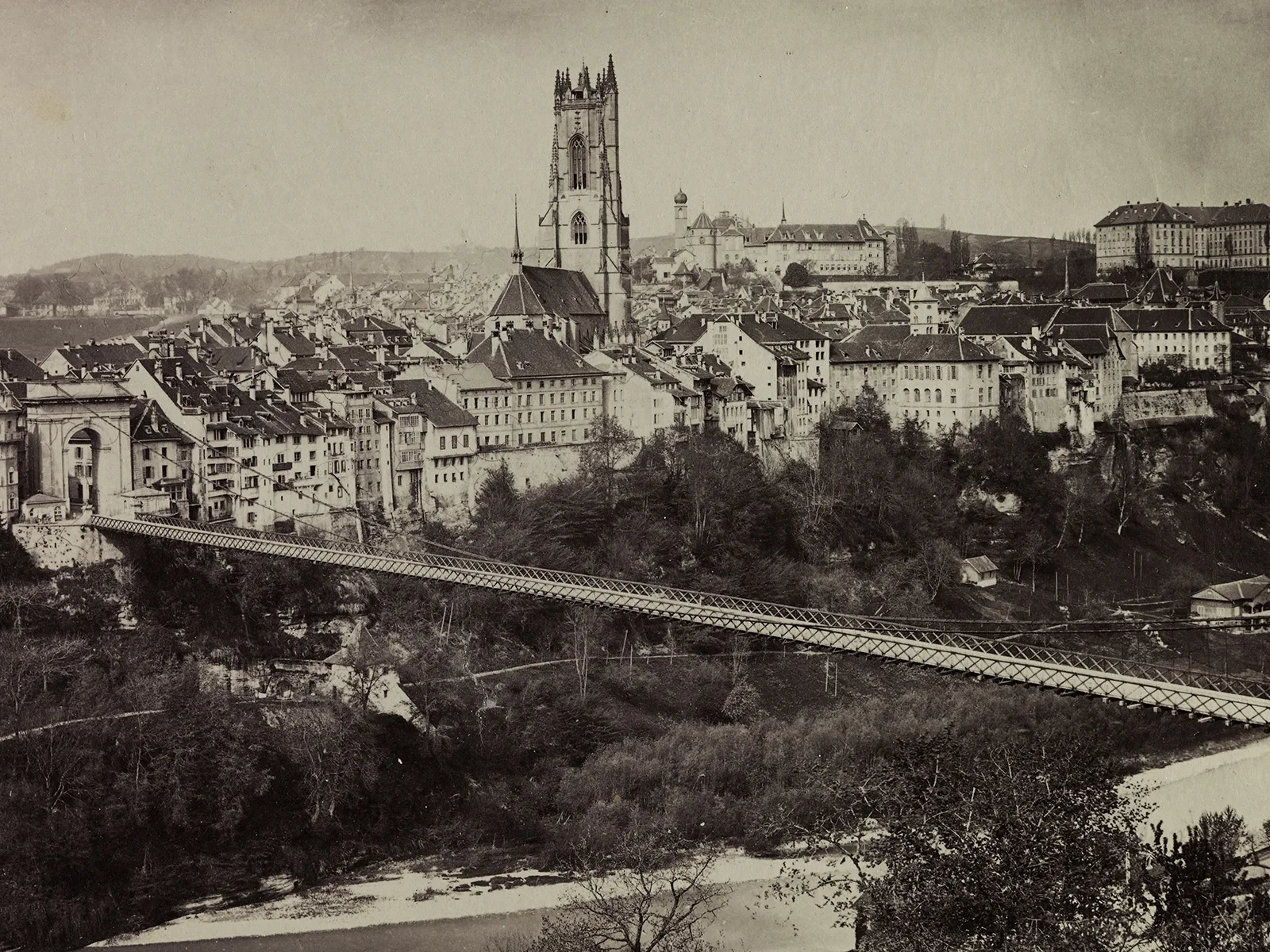
Fribourg, circa 1900. In the centre is the St. Nikolaus collegiate church and state chancellery, and in the foreground the Grand Pont suspension bridge.
Fribourg, circa 1900. In the centre is the St. Nikolaus collegiate church and state chancellery, and in the foreground the Grand Pont suspension bridge. Swiss National Museum

A diary that captures the tensions in Fribourg during WWI

The diary kept by Fribourg state archivist Tobie de Raemy during the early years of the First World War provides a unique insight into the tensions that existed between German- and French-speaking Switzerland at that time. A prime example of this is the riots that took place at Fribourg station when trains travelled through carrying the injured from Germany and France.

Kathrin Utz Tremp

Kathrin Utz Tremp

Dr Dr h.c. Kathrin Utz Tremp is an expert on mediaeval history who lectured for many years at the University of Lausanne.
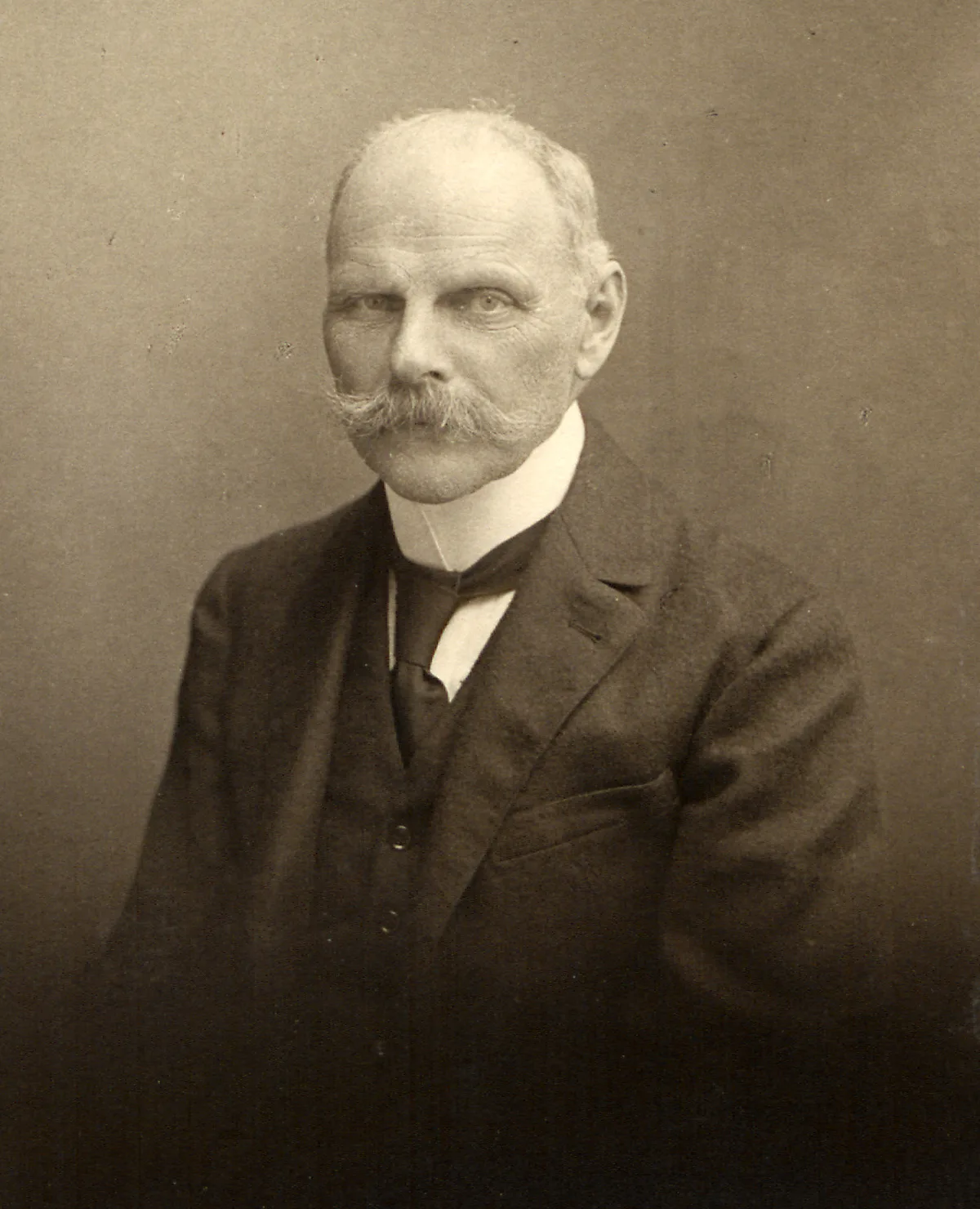
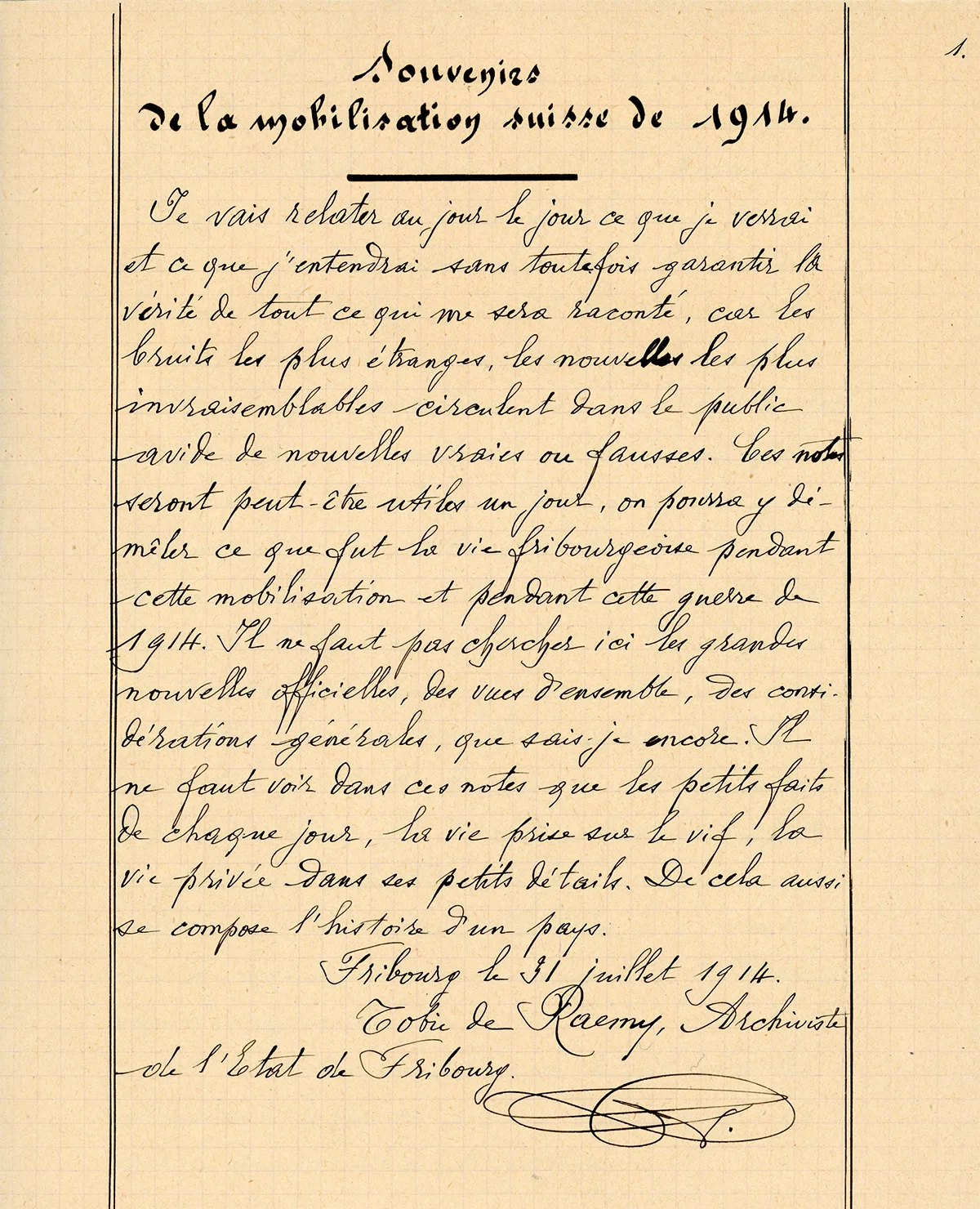
When the First World War broke out and the Swiss Army was mobilised in early August 1914, the then state archivist in Fribourg Tobie de Raemy (1864–1949) seized the opportunity to write down everything he saw and heard every day. He believed that his records could one day be useful in describing life in Fribourg during the war. His aim was not to record the major official news, but instead to capture the “minor everyday occurrences, the spontaneity of life, and private existence in all its details”, as he believed that a country’s history was also made up of such stories. Tobie de Raemy’s Alltagsgeschichte (‘Everyday history’) was admittedly the story of a patrician, and the impartiality that he had initially adopted in place of the pro-French sympathies of his patrician family and friends, gradually gave way to a certain anti-German sentiment prompted by the state of the French prisoners transported back to France through Switzerland and Fribourg. Unfortunately, his diary only goes up to the end of 1916. After this, the relocation of the state archive from the chancellery to the former Augustinian monastery took too long and he was unable to continue his diary.
Fribourg’s former state archivist, Tobie de Raemy (1863–1949)
Fribourg’s former state archivist, Tobie de Raemy (1863–1949) Pierre de Zurich estate
‘Souvenirs de la mobilisation suisse de 1914’ (Memories of Swiss mobilisation in 1914) Diary entry by Tobie de Raemy of 31 July 1914.
‘Souvenirs de la mobilisation suisse de 1914’ (Memories of Swiss mobilisation in 1914) Diary entry by Tobie de Raemy of 31 July 1914. Staatsarchiv Freiburg, Switzerland
The division of Switzerland between the French and German-speaking parts during the First World War was particularly acute in Fribourg, as a Catholic university had been established there in 1889, while all of Switzerland’s other universities were Reformed. The first professors at the new university were not selected by appointments committees as they are today; instead, Caspar Decurtins from Graubünden – a friend of the founder and Cantonal Councillor Georges Python – employed Catholic professors from Germany, Poland, Austria, Belgium and France. Decurtins’ recruitment drive resulted in a preponderance of German professors. In the predominantly French-speaking city of Fribourg, there were fears that the German professors would reinforce the German influence. Tobie de Raemy recorded in his diary that “Fribourg’s situation in Switzerland was unique and tricky” partly because of its standing as an international city, and a place where two languages meet.
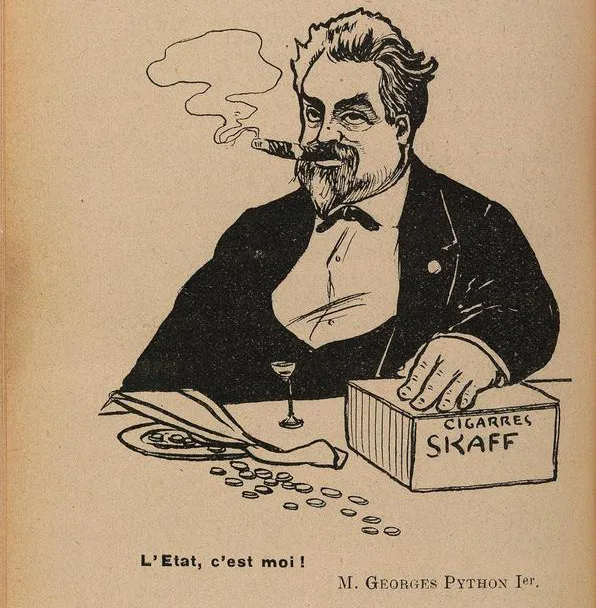
Caricature of Cantonal Councillor Georges Python, published in the Almanach de Chalamala, 1911.
Caricature of Cantonal Councillor Georges Python, published in the Almanach de Chalamala, 1911. Bibliothèque cantonale et universitaire Lausanne

Tobie de Raemy’s ‘Swiss viewpoint’

On 1 November 1914, Tobie de Raemy read an article in the review Le Correspondant entitled ‘L’Esprit public et la situation en Suisse’ (‘Public opinion and Switzerland’s situation’), which struck a deep chord with him. The article was unsigned, but the state archivist nonetheless decided to write the anonymous author a letter in which he set out his ‘viewpoint’ – one which he believed he shared with a large number of Swiss people. Tobie de Raemy himself was from a family from Aargau (German-speaking Switzerland), who had been in Fribourg for four centuries, spoke French and was a practising Catholic. He had been a pupil of the ‘Frères Chrétiens’ in Thonon, then of the Jesuits in Dole, and finally of the University of Würzburg in Bavaria. He read the Correspondant and the Revue des Deux Mondes, two French liberal periodicals. He was the great-great-grandson of a Frenchwoman, the son-in-law of a Frenchwoman, had eight nephews in the French army and five in the Swiss army, a friend’s son in the Bavarian army, and had already lost two cousins in the war. In his youth he had been a passionate admirer of France, though he had lost some of his enthusiasm and sympathy for the country on account of its "godless education" and what he saw as the consequences of that. He had relatives in German-speaking Switzerland and in Italy, and was friends with several French religious congregations and families who had been forced to flee to Switzerland. He felt deep compassion for all victims of the war, of whatever nationality, and prayed every day for the soldiers, the wounded, the dying and the dead  – and for peace. Although his sympathies inevitably lay with France, he remained Swiss, first and foremost.
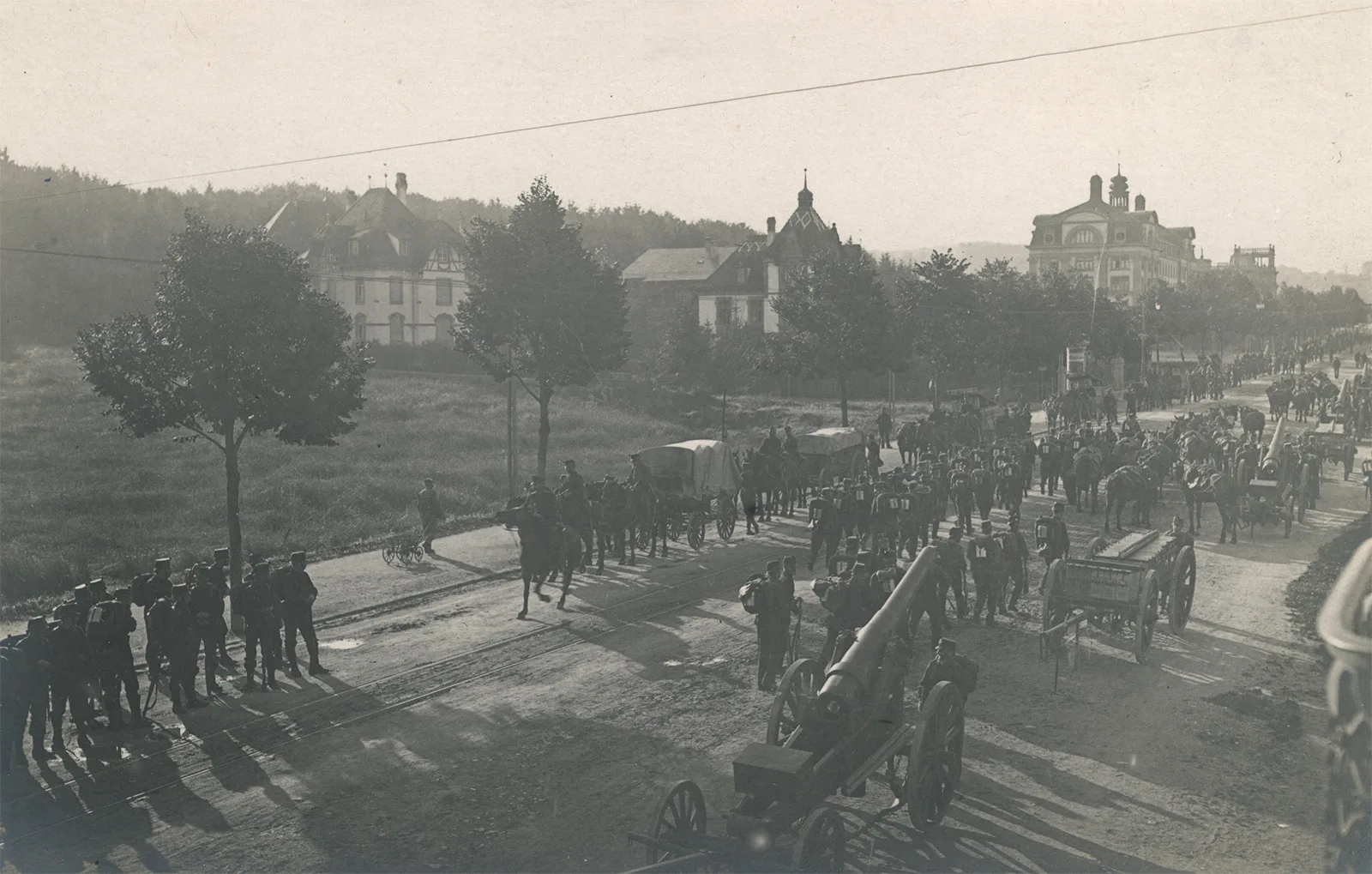
Mounted artillery and supply train in the Pérolles district of Fribourg. Preparations for the parade to mark the mobilisation in August 1914.
Mounted artillery and supply train in the Pérolles district of Fribourg. Preparations for the parade to mark the mobilisation in August 1914. Kantons- und Universitätsbibliothek Freiburg

Riots over trains carrying wounded soldiers
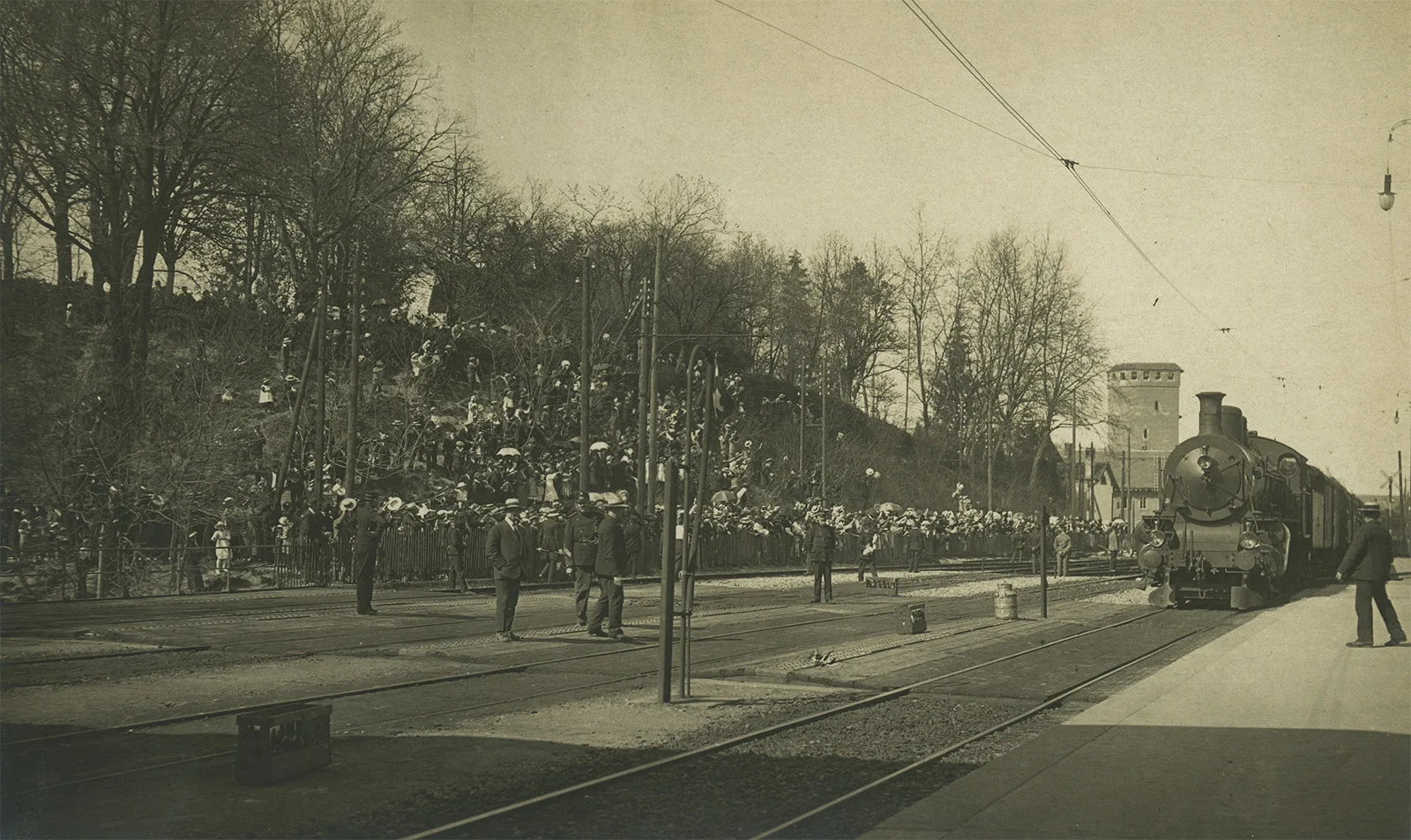
This stance shifted somewhat when Tobie de Raemy had dealings with people directly affected by the war. At the end of 1914, the first trains carrying seriously wounded soldiers began passing through Switzerland and specifically through Fribourg, travelling between Germany and France. By March 1915 these trains had become more frequent. Tobie de Raemy describes how two trains carrying seriously wounded soldiers would pass through Fribourg station: the one from Germany brought severely injured French soldiers to Lyon, while the one from France brought seriously injured German soldiers back to Germany. The two trains crossed paths at Matran, a village to the west of Fribourg. Large crowds started to gather at the stations in Fribourg and Matran to hand out items such as cigarettes, oranges, biscuits, bread rolls, coffee and chocolate to the wounded. What the French soldiers valued above all else were French newspapers. When a train carrying wounded French soldiers arrived, everyone cried ‘Vive la Suisse’; when a train carrying German casualties passed through, there was a deathly silence.
A crowd of people awaits the arrival of a train carrying French evacuees, 1915.
A crowd of people awaits the arrival of a train carrying French evacuees, 1915. Staatsarchiv Freiburg
On the afternoon of 15 March 1915, the trains stopped calling at Fribourg station. The agitated crowd suspected that Cantonal Councillor Georges Python had banned the trains from stopping at the request of the German professors, who had taken exception to the pro-French atmosphere of the gatherings. Tobie de Raemy also believed that these ‘gentlemen’ objected to what the French wounded were telling the people of Fribourg – about everything that they had suffered in Germany, and in what appalling misery Germany was sending them back to France.
The German wounded didn’t show their faces when their trains stopped in Fribourg, instead hiding behind closed blinds. When Baroness von Montenach, a native Frenchwoman, asked the wives of the German university professors to go to the station to greet the wounded German soldiers, Gustav Schnürer, professor of medieval history, declined the request on behalf of them all. If the wounded needed anything, they could simply approach the stationmaster. To Tobie de Raemy, this was a “very German way” of expressing sympathy for one's own compatriots. On the other hand, he also thought the people of Fribourg were too exuberant when welcoming the injured French soldiers. He felt that a large part of it was fuelled by curiosity, and he found it distasteful when they covered the injured men with flowers on their couchettes – as though they were already dead.
The following day saw a repeat of the same scene, except that the crowd afterwards made its way to the villa of the German professor Wagner on Rue du Botzet, smashing windows and breaking roof tiles. Tobie de Raemy had never seen local people so outraged. They said that they were free people in Fribourg and did not wish to be ordered about by foreign professors who drew handsome salaries there. Tobie de Raemy suspected that the German professors had written to Bern to inform the federal government of the chaos that descended when the trains stopped in Fribourg. Government officials in Bern had shown this letter to the stationmaster, who in turn – again swayed by the German professors – had replied: “If we want to curb the unrest, we will have to cancel the train stop.”
On 17 March 1915, the crowd gathered in the station square, at the foot of the steps, which were guarded by police. Suddenly the military moved in, surrounding the crowd, which broke through the police cordon but was unable to reach the station itself, and was eventually dispersed by the military.
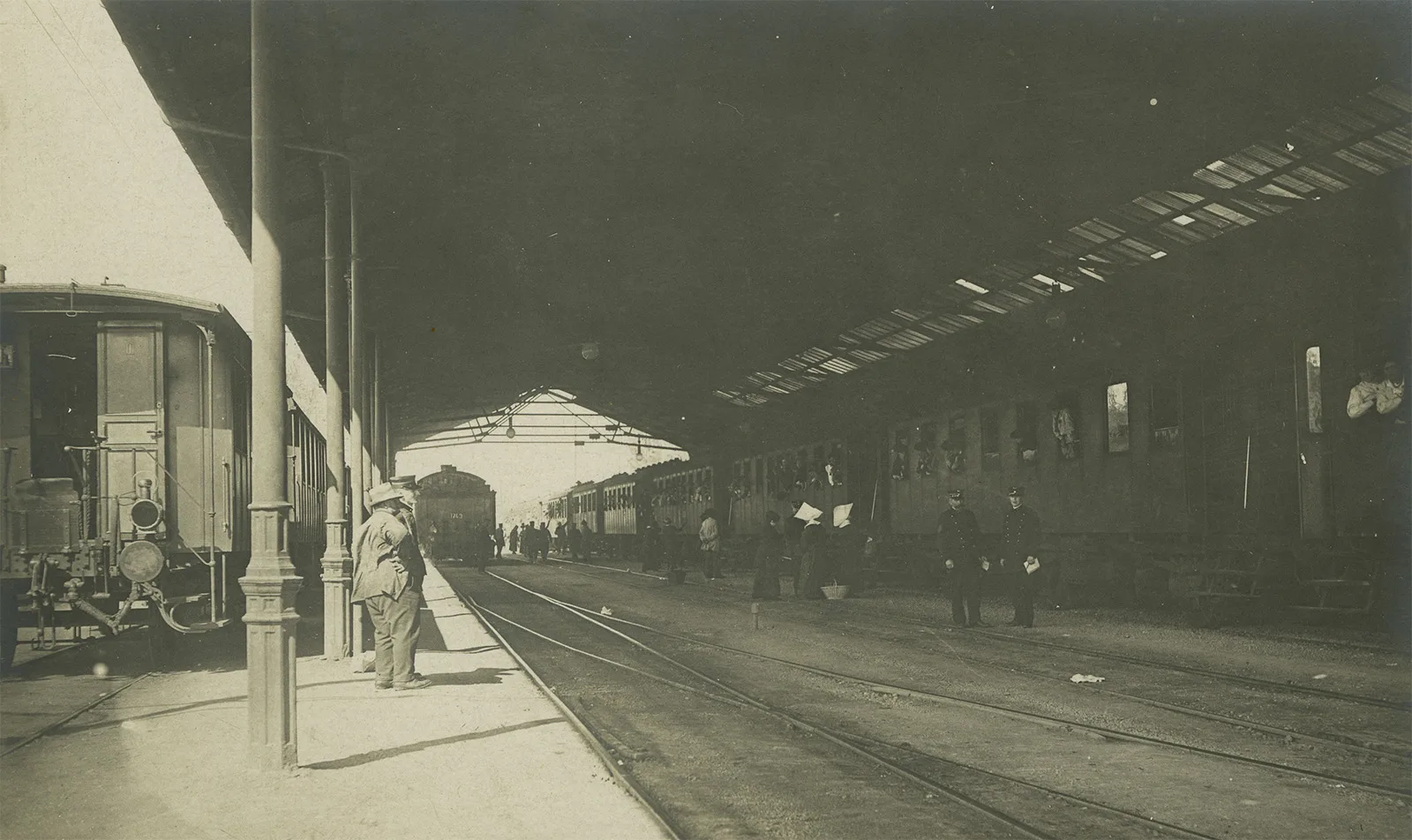
Two nuns talking with French evacuees at Fribourg station after distributing the contents of their baskets, 1915.
Two nuns talking with French evacuees at Fribourg station after distributing the contents of their baskets, 1915. Staatsarchiv Freiburg
Eventually, on instructions from Bern, the trains began stopping again, though only 20 people were allowed onto the platform. The chief of police issued passes, and those who received one had to commit to go to the station on 15 consecutive days. On 31 March 1915, Tobie de Raemy himself obtained a pass from the chief of police, who told him that a German newspaper had gone so far as to report that 11 German professors had been beaten badly enough during the unrest to require hospital treatment.
Armed with cigarettes, newspapers, bread rolls, one of his coats, several woollen garments and baby clothes, Tobie de Raemy made his way to the platform for the 2.14pm train, which was carrying civilians who had been evacuated from the German-occupied zones. He was tasked with distributing warm milk in the last two carriages, and was struck to see the large number of boys aged 15 and 16 sitting in the front carriages. In the two rearmost carriages there were many elderly men and women, and young children too. His newspapers and cigarettes were particularly popular with the men. Most of them came from Tourcoing in northern France, which had been occupied by the Germans throughout the war. They had nothing left; they were ruined, and when they had been taken away to Germany, families had been torn apart. One mother had her youngest children with her but had no idea where the older ones were. After another experience of this kind, Tobie de Raemy wrote that he did not know how he could ever shake a German's hand again after the war.
A new edition of the diary of Tobie de Raemy d'Agy has been published. It is edited by the current State Archivist Alexandre Dafflon, in Bibliotheca Otolandana, published by the Fribourg State Archives.
Further details on the Fribourg State Archives website

A perspective on the war

The newly edited version also includes many more details on the tensions in the city of Fribourg during the First World War. The role of newspapers such as the Freiburger Nachrichten is also worthy of mention. It adopted an even more pro-German stance than the Liberté, whose editor-in-chief – a clergyman – was nearly thrown into a well for that reason. Or the episode in which Tobie de Raemy catches sight of General Wille in person and has to admit that the general does not resemble the drunkard depicted on postcards and portraits. Other diary entries concern three French prisoners in Germany to whom Tobie de Raemy regularly sent bread and coded political messages. These accounts reveal the former state archivist not only to be a sharp-eyed observer of his times, but also a warm and generous human being.

Wars and us

17.04.2026 17.01.2027 / National Museum Zurich
Warfare has been a defining element of Switzerland’s history. The exhibition brings together a variety of perspectives, showing how ‒ from the late Middle Ages to the present day ‒ wars have influenced the nation’s political structures, economic interests and social order. It also invites visitors to question popular ideas of Switzerland’s relationship with war ‒ even when that war often seems distant, but is etched deeply in the collective memory.
Further posts