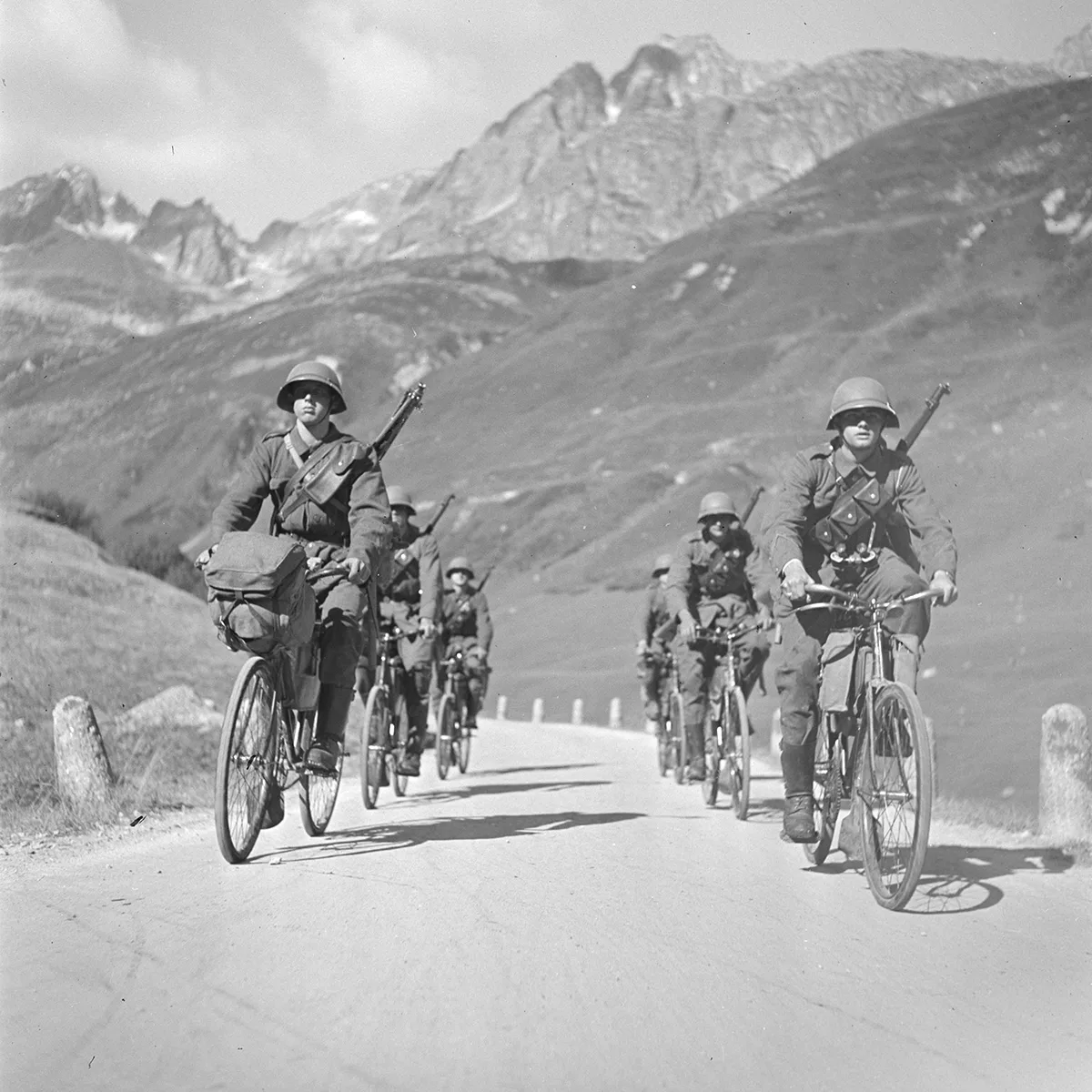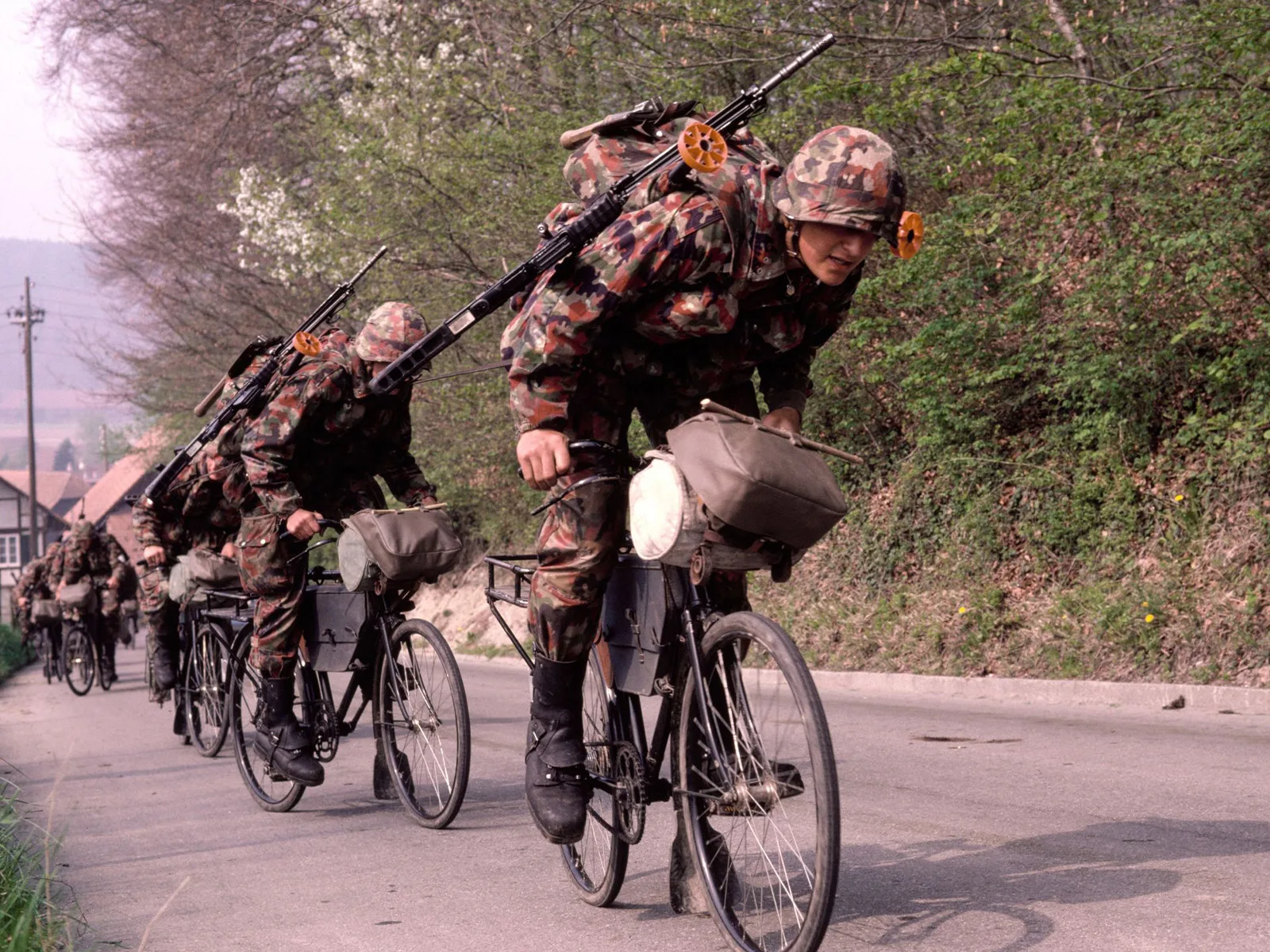
A bicycle troop negotiating a hill in full battle gear, 1981.
A bicycle troop negotiating a hill in full battle gear, 1981. Armed Forces Digital Media Centre Bern

Switzerland’s love affair with its iconic military bike

Few items of military equipment are as renowned for their longevity as the ‘Ordonnanzrad 05’ bicycle. It was a staple of military and civilian life for almost a century. In fact, its extensive use within and outside the military plus its legendary indestructibility have made it part of the country’s DNA.

Thomas Bochet

Thomas Bochet

Thomas Bochet is a historian and exhibition curator at the National Museum Zurich and co-curator of the ‘Wars and us’ exhibition.
The Swiss army lost one of its distinctive features when its bicycle infantry regiments were disbanded in 2003 after 112 years of service. The Swiss army does still use bicycles – the latest model came out in 2012 – but no longer for combat purposes. The best known army bicycle is the ‘Ordonnanzrad 05’ which was launched in 1905 and produced up until 1988 before a new model was introduced in 1993. This bicycle and the units that used it are Swiss icons. Why is that?
It starts with the name. It is not just a military bicycle, or “Militärvelo” as it is often called in Swiss dialect. It was, in official military parlance, a regulation-issue bicycle, abbreviated to ‘Frd’ (for Fahrrad [bicycle in English]), which reflects a kind of institutional prestige – it was not just a bike used by soldiers, it was the officially regulated, standard-issue bike. Although it was only a minor point, the bike’s official designation did carry some weight. The soldiers who rode a ‘Rad’ until 2003 looked down on the other regiments, which had also possessed up to 20 bikes since the Second World War referred to as ‘vélos’. In French-speaking Switzerland and Ticino, the word ‘Rad’ does not exist, so there is nothing unusual about the word ‘vélo’. They called the ordnance bicycle ‘vélo d’ordonnance’ or ‘la bicicletta d’ordonnanza’.
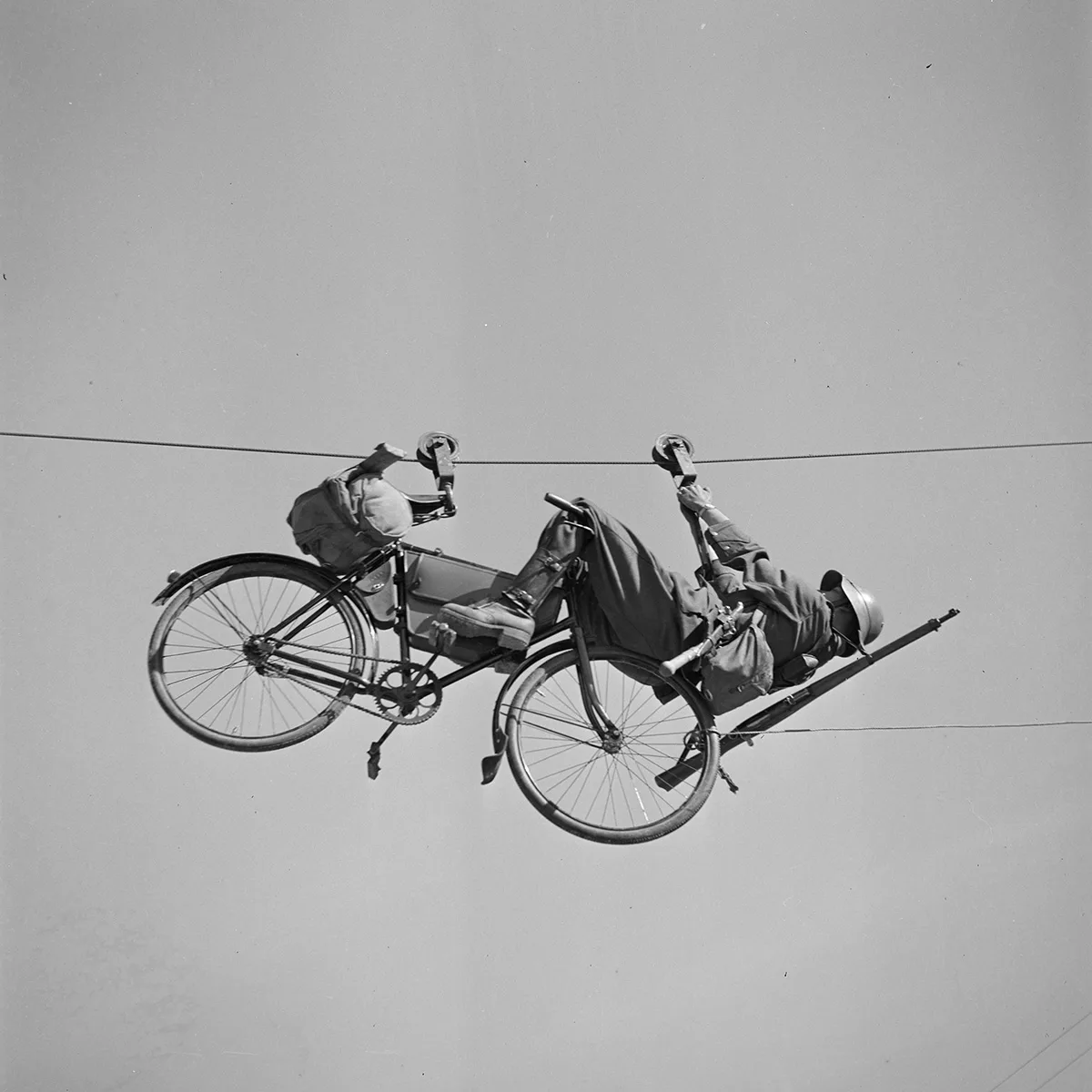
A soldier with his bike on a Tyrolean (zipline), circa 1935. Photo by Karl Egli.
A soldier with his bike on a Tyrolean (zipline), circa 1935. Photo by Karl Egli. Swiss National Museum
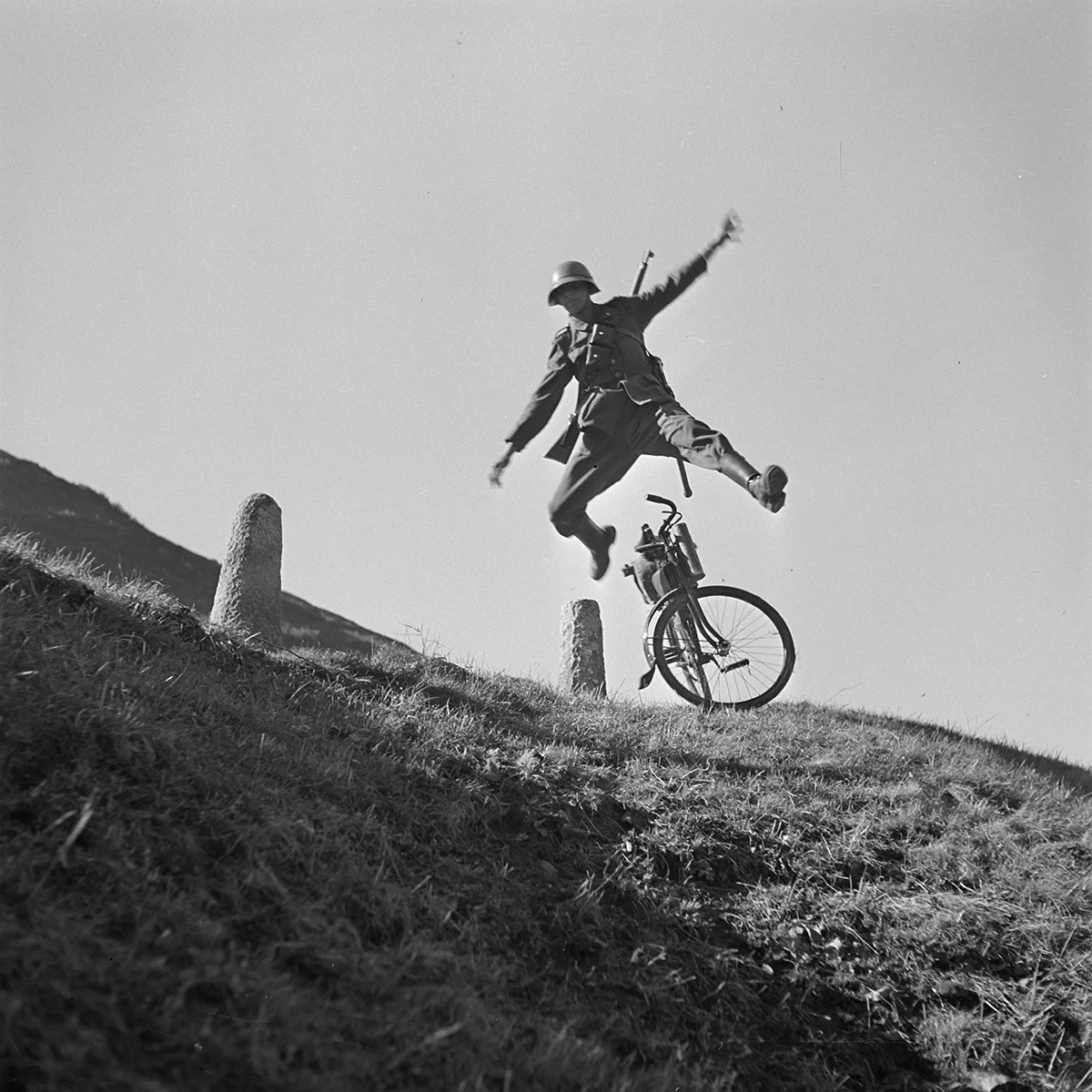
A soldier jumping over his bike’s handlebars on a mountain pass, circa 1935. Photo by Karl Egli.
A soldier jumping over his bike’s handlebars on a mountain pass, circa 1935. Photo by Karl Egli. Swiss National Museum
“Suffer in silence and keep going” was the soldiers’ unofficial motto as they rode their 22.5 kg one-gear bicycles plus all their kit up the mountain passes, circa 1935. Photo by Karl Egli.
“Suffer in silence and keep going” was the soldiers’ unofficial motto as they rode their 22.5 kg one-gear bicycles plus all their kit up the mountain passes, circa 1935. Photo by Karl Egli. Swiss National Museum
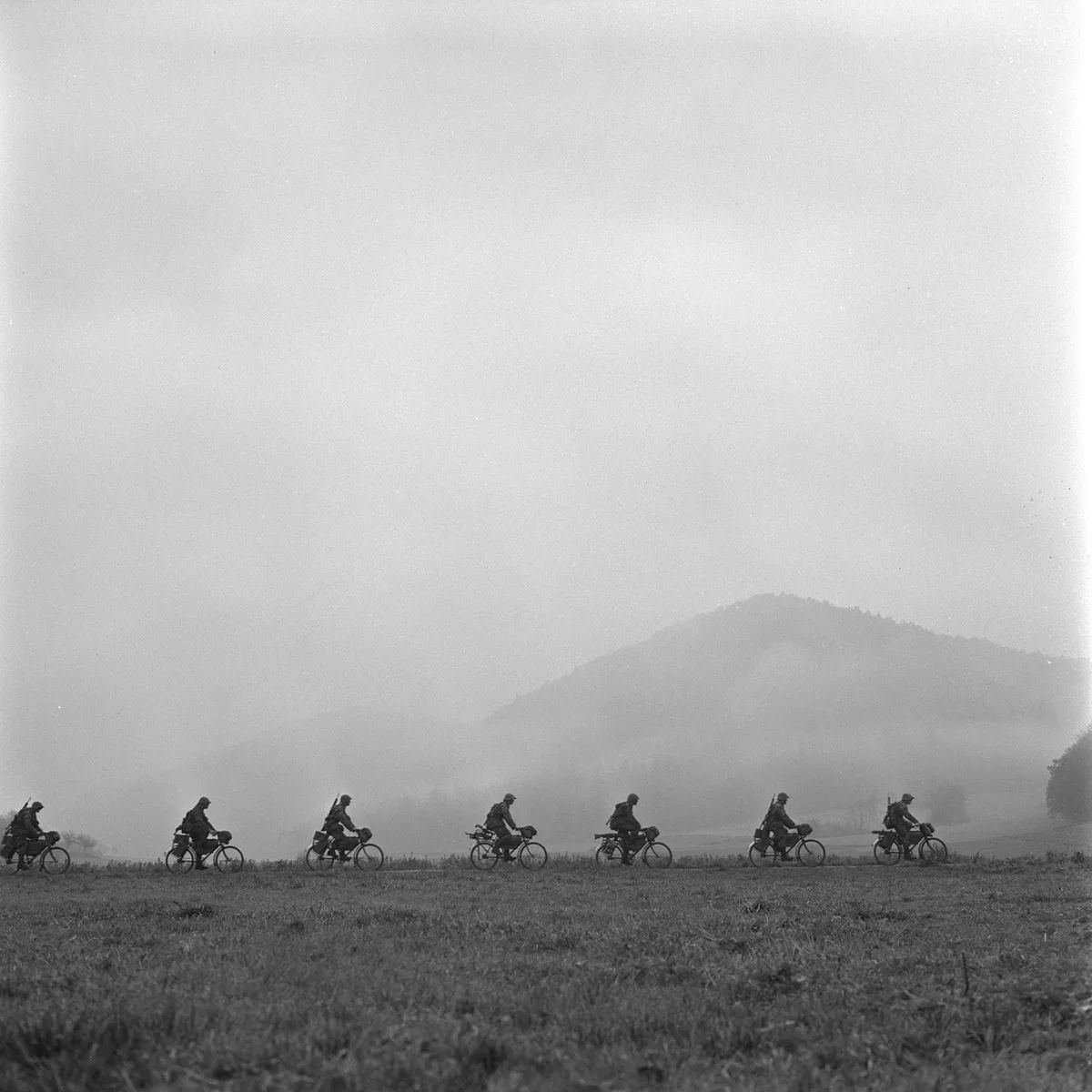
A military bike patrol in Winterthur, 1965.
A military bike patrol in Winterthur, 1965. Armed Forces Digital Media Centre Bern

How did it all start?

The Swiss army’s bicycle units have the reputation, at least within Switzerland, of having been a unique fighting force in the world. This was not necessarily due to their mode of transport, as the Swiss were not the only country whose military used bikes in 1891. Nor had they been the first to do so. Almost all Europe’s major armies and the US experimented with bicycle units from the 1880s and 1890s, initially for courier services. Moreover, the bicycle was coming into its own as a mode of transport and standardised models were being produced during this period. There was also an interconnected road network incorporating the big Alpine passes for cyclists to travel on. The bike thus quickly became a cheaper and more efficient alternative to a horse. Furthermore, a military bike had to be sturdy enough to cross all terrains.

From the richest to the fittest

Soldiers had to buy their own bicycles until 1905. Farmers and manual workers did not have the means to buy what was at the time a very modern means of transport. As a result, the bicycle regiments (before the ‘Ordonnanzrad 05’ arrived in 1905) tended to comprise rich people, the offspring of the urban monied classes with sporting aspirations. They jostled for primacy with the elite cavalry units. When the ‘Ordonnanzrad 05’ came into service, the state paid half and the soldiers paid the rest from their salary, leading to the democratisation of the regiment. At the same time, the bicycle was rapidly becoming a mainstay of civilian life as industrial mass production brought prices down, making it the main mode of transport for the working and rural classes. The selection criterion thus changed from: “Are you rich enough?” to “Are you fit enough?”
During the First and Second World Wars, other countries sent their bicycle units to the front – an experience that the Swiss were naturally spared from. After the Second World War, these armies gradually began to mechanise their infantry units and stopped using bicycles in combat. Switzerland did not follow their lead. This was a military-strategic decision in line with the defence doctrine during the Cold War. Soldiers on bikes are logistically almost self-sufficient as well as low-cost, silent and flexible, even in destroyed infrastructure, making them ideal for asymmetrical campaigns based on surprise against more ponderous foes.
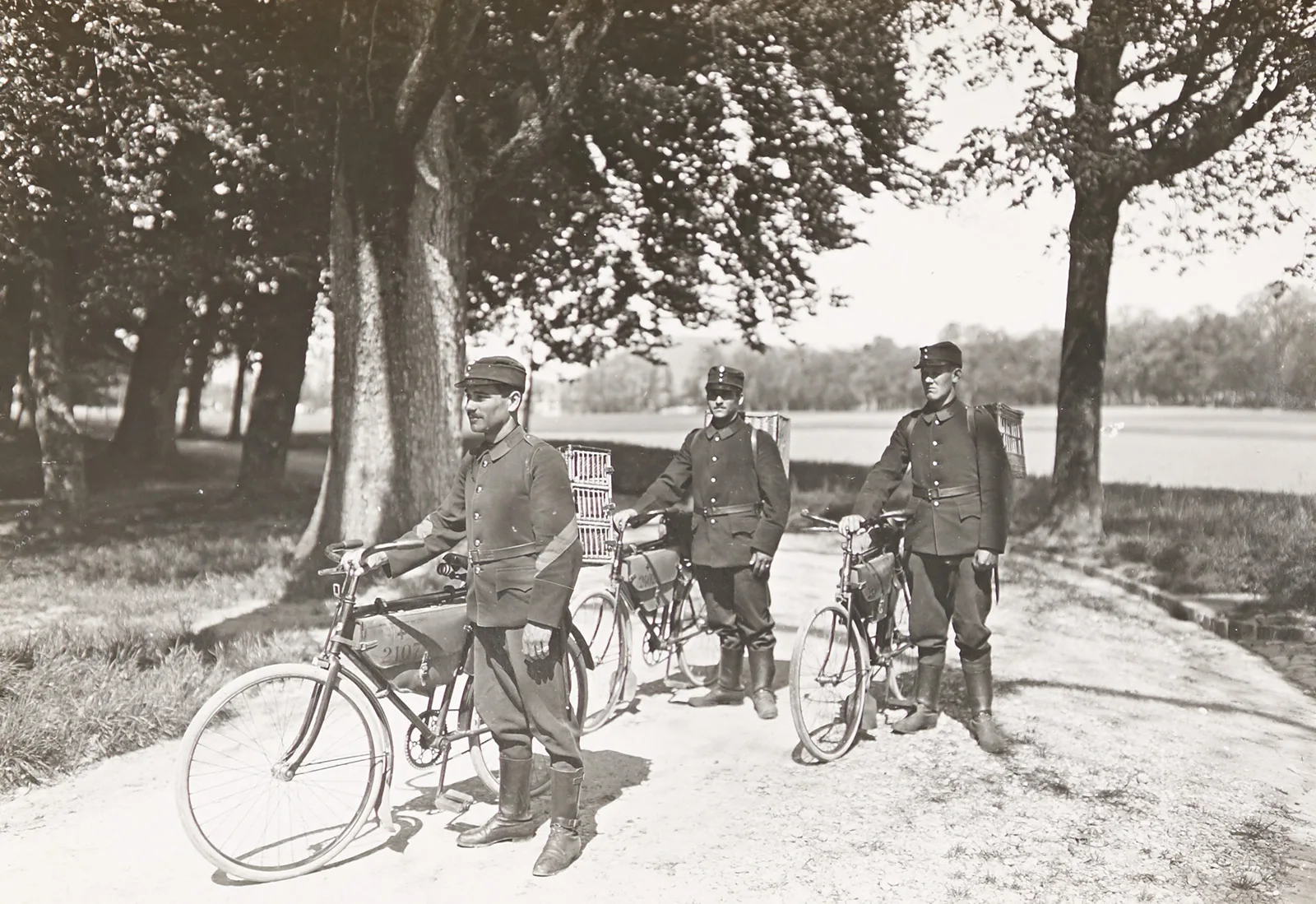
Swiss bicycle infantry patrol with carrier pigeons, from a photo album ca 1914-1918.
Swiss bicycle infantry patrol with carrier pigeons, from a photo album ca 1914-1918. Swiss National Museum
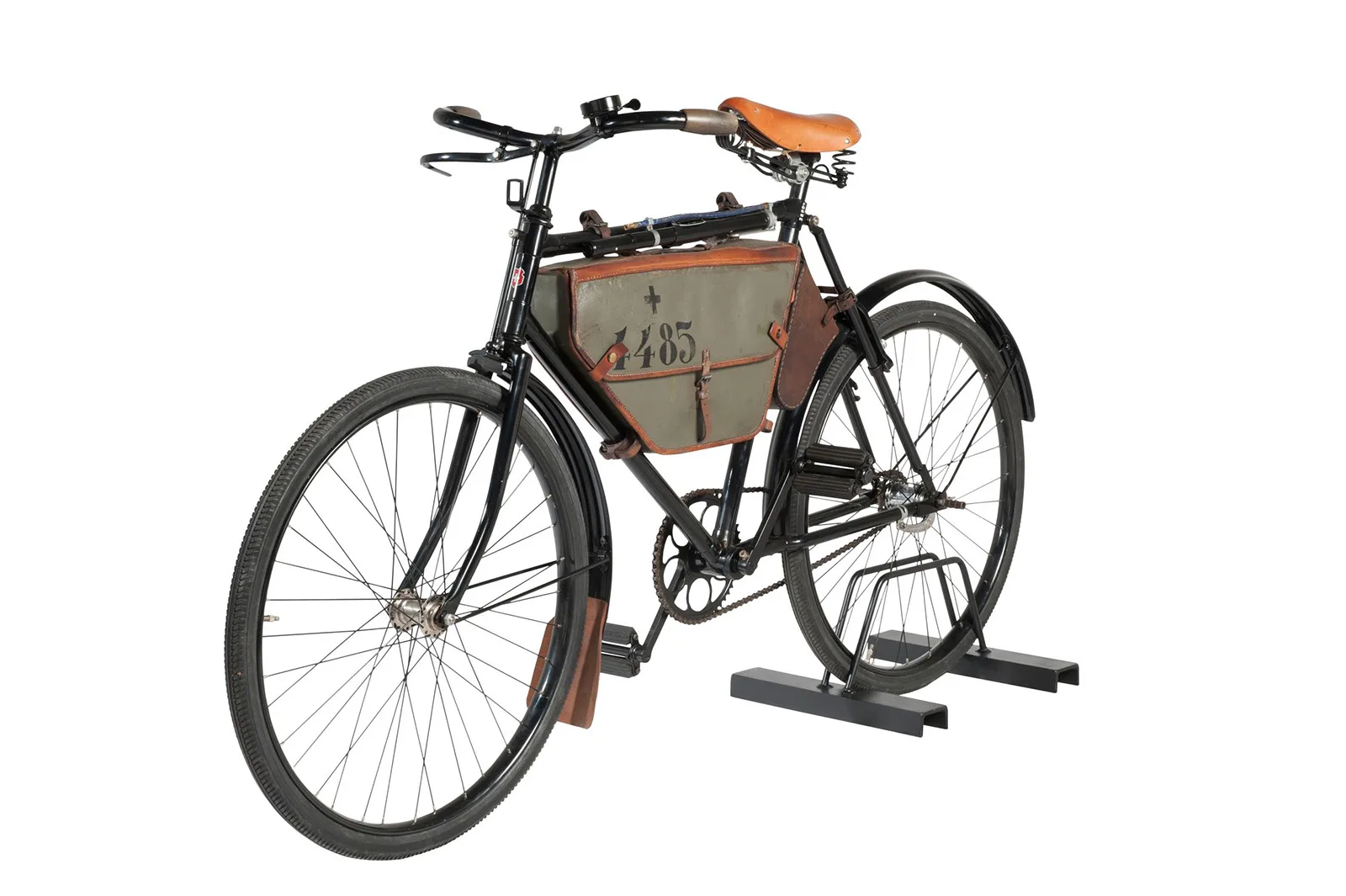
‘Ordonnanzrad 05’ made by Schwalbe (in production from 1906 to 1951) with panniers. Its full weight inc. accessories is 22.5 kg.
‘Ordonnanzrad 05’ made by Schwalbe (in production from 1906 to 1951) with panniers. Its full weight inc. accessories is 22.5 kg. DDPS / Stefan Tschanz

A timeless piece of equipment

However, what really set Switzerland’s bicycle infantry apart was its duration and imperviousness to technological progress. By the 1980s, Switzerland had become the only modern industrial country to maintain fully operational, regular bicycle infantry units. Moreover, no other country in the world was still using a first prototype with just one gear, a standardised frame design and a braking system from 1905 for military manoeuvres. The 22.5 kilogram ‘Ordonnanzrad 05’ is still known for its sturdiness and extremely low maintenance requirements. The very good workmanship is another reason why this bike in particular and the bicycle infantry in general are seen as typically Swiss. Several Swiss companies produced over 68,000 of them in total. The bicycles all look the same to the layperson, but not to the trained eye. Cyclists (and collectors now) distinguish between the different makes and models: Condor, Cosmos, Schwalbe, Zesar, MaFag are recognisable from the different chainrings. There was a certain prestige associated with orders from the military; being able to advertise bikes bearing the military quality label for sale to civilians was an added perk. A company called Condor from Courfaivre (canton of Jura) was the main producer and provided the army with its first models in 1904, as well as producing the ‘Ordonnanzrad 05’ up until 1988. Condor was the main manufacturer of the machines and produced over 30,000 models between 1931 and 1981.
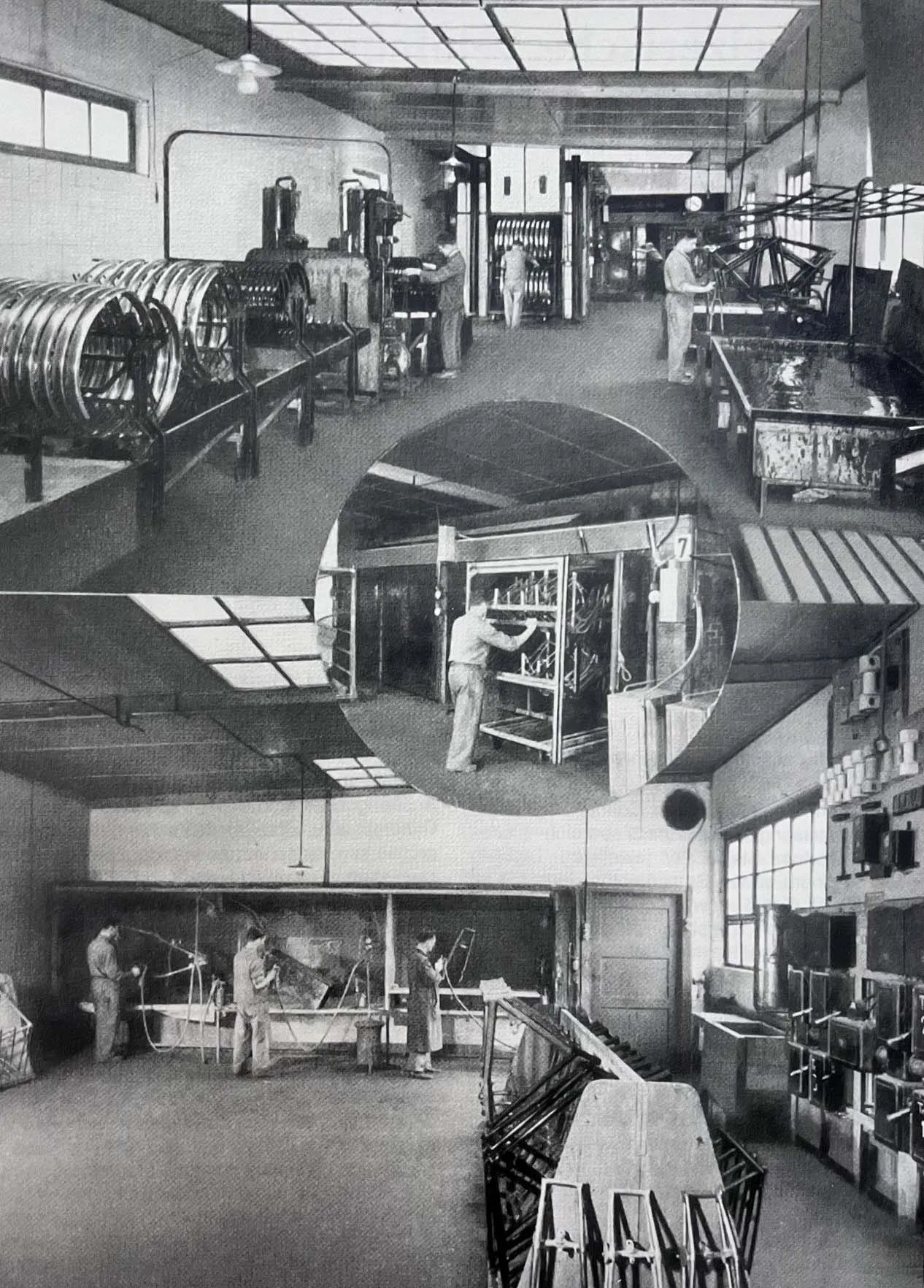
The enamelling department of Condor bicycle factory in Courfaivre (Jura), 1943.
The enamelling department of Condor bicycle factory in Courfaivre (Jura), 1943. Condor international SA Courfaivre
In 1993, the army replaced the ‘Ordonnanzrad 05’ with a new model, the ‘Ordonnanzrad 93’, and Condor produced 5,500 units up to 1995, when the company stopped manufacturing bikes. The highly popular and robust, albeit low tech 05 model had finally become obsolete. The army had decided to upgrade using the (at the time) revolutionary mountain bike technology. The new army bicycle was not only a lot lighter, it also had wide offroad tyres, a mountain bike chainring and hydraulic mountain bike brakes. However, 20 years later the army stopped using bicycles for combat. It was motorway construction from the 1960s that slowly brought the curtain down on the use of bikes by the army, after road construction had made it possible in the first place. Motorised civil mass transport exploded, and military transport was taken over by lorries and tanks. Rapid military technology advancements and a lack of protection from fragments and splinters ultimately made the bicycle superfluous in the modern battlefield of the 2000s.
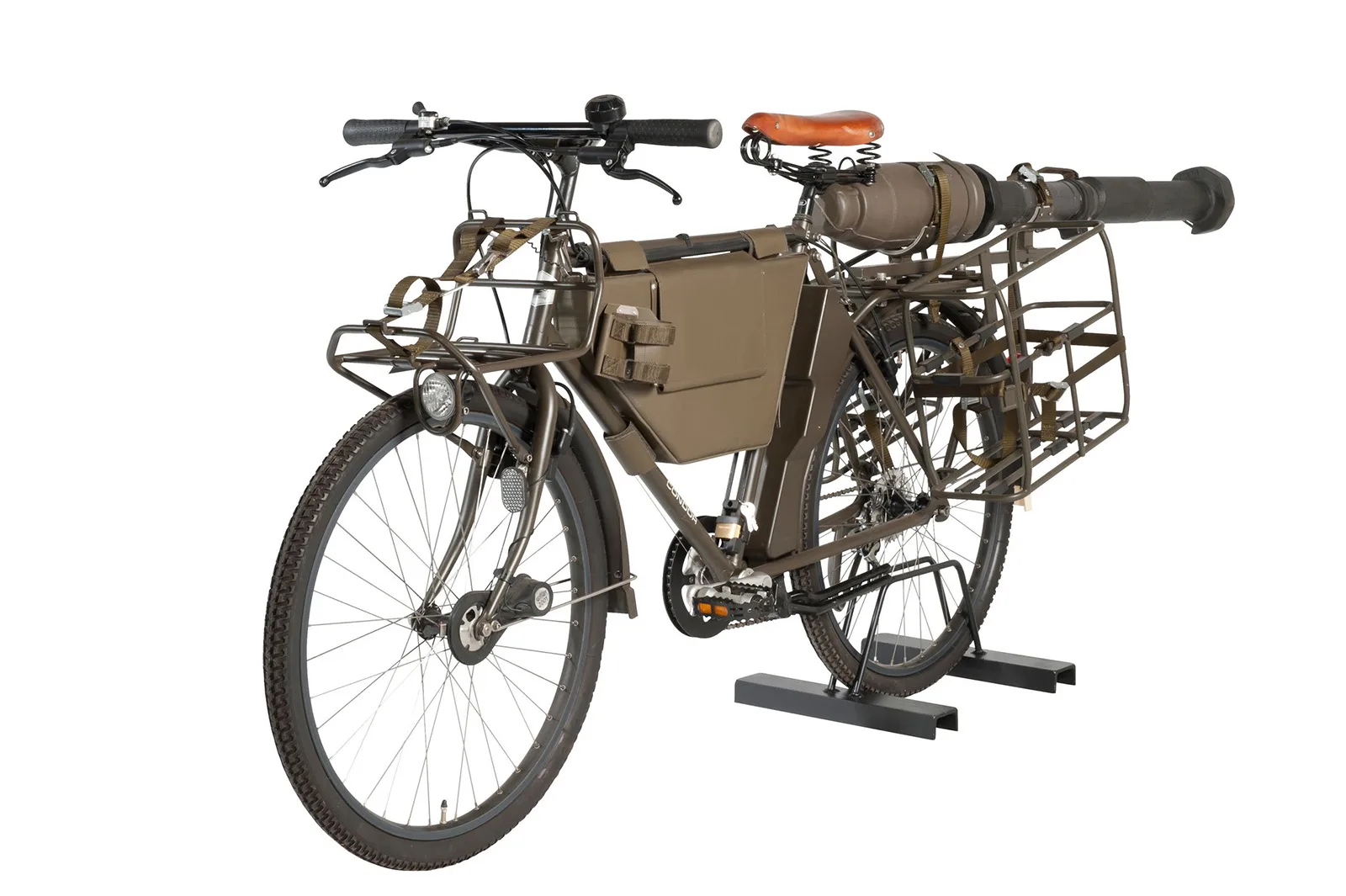
The seven-gear ‘Ordonnanzrad 93’. The rear carrier has mounts for weapons and munitions carriers, e.g. a bazooka (earlier rocket tube) plus ammunition.
The seven-gear ‘Ordonnanzrad 93’. The rear carrier has mounts for weapons and munitions carriers, e.g. a bazooka (earlier rocket tube) plus ammunition. DDPS / Stefan Tschanz

The militia symbolism

And yet, the myth of the Swiss soldier on two wheels lives on. Veterans of those units love to reminisce about their experiences and talk about the extraordinary esprit de corps in the regiment: “Einmal Radfahrer, immer Radfahrer!” (once a bicycle infantryman, always a bicycle infantryman) as the last troop commander commented when the unit was finally disbanded. There was also a great deal of pride associated with the bicycle infantry: the Swiss Troop Ordinance of 1936 put them with the cavalry and motorised units in the same category as the mobile, subsequently mechanised troops. This allowed the bicycle regiments to develop their own culture and they received their own operational doctrine in 1965. Possibly more important still for the special status of the military bike was its popularity, which is closely connected with the ‘Ordonnanzrad 05’ which, following the democratisation of the regiment, embodies the “militia army” – most soldiers in the Swiss military are part-time conscripts who return to civilian life between periods of service – almost more than any other symbol. The bicycle was the most popular form of transport for the public until the 1960s and its military association made the public identify more closely with the bicycle regiments. Moreover, the soldiers were allowed to keep their bicycles until 1961, making them part of everyday life. When the bicycle was subsequently fully financed by the public purse, the soldiers had to buy their bikes if they wanted to keep them. And once social standing lost its relevance, the regiment was seen as a performance-oriented, character-building elite outfit.
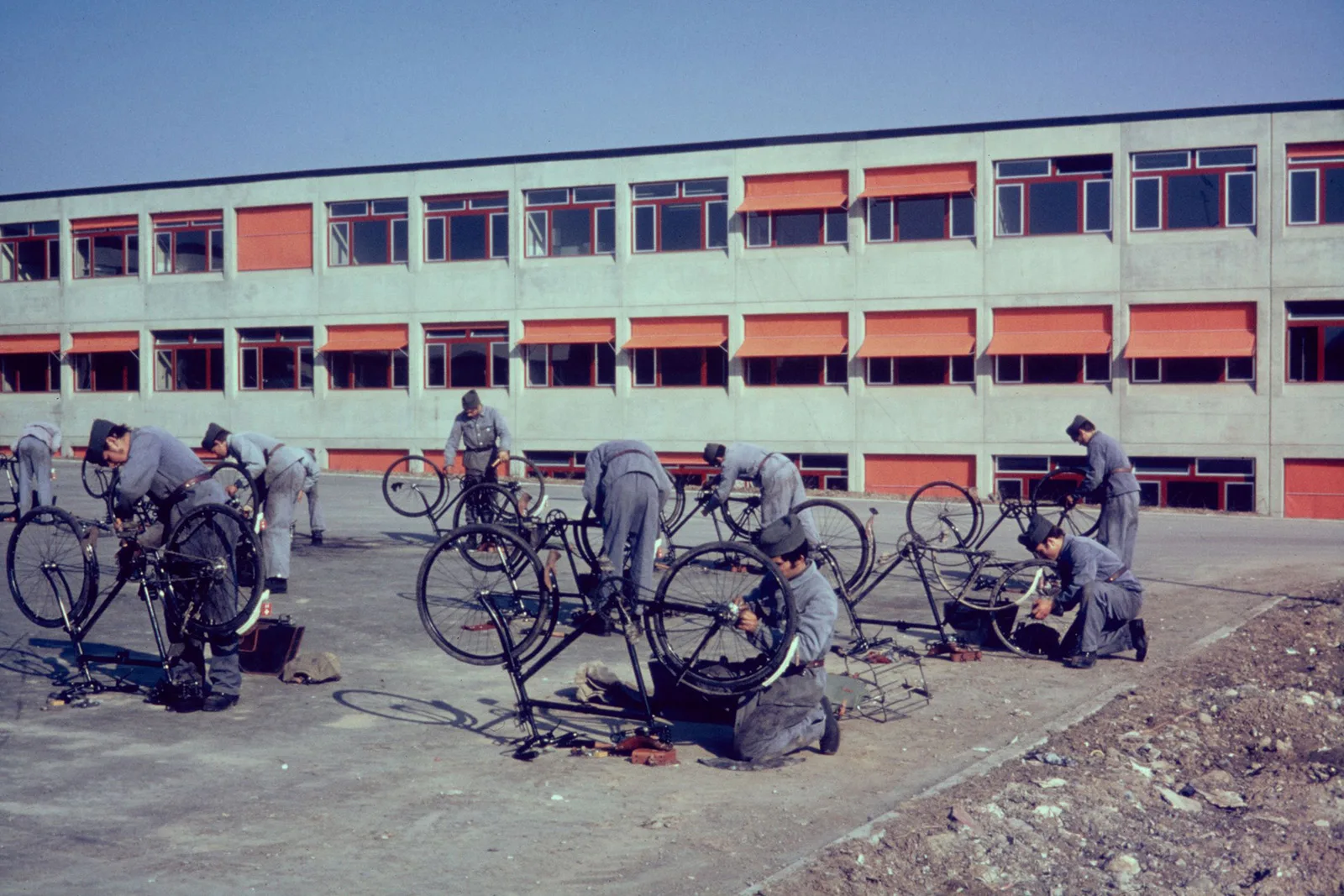
Low maintenance and durable: soldiers working on their bikes, 1981.
Low maintenance and durable: soldiers working on their bikes, 1981. Armed Forces Digital Media Centre Bern
This special status is also evident from the military cycling races held since the founding of the cycling regiments. Until the Second World War, the purpose of the highly popular races was to select the fittest recruits so they could hone their cycling skills in the army. These events became big public festivals from the 1950s, such as the classic St. Gallen – Zurich race or the event in Fehraltorf known as the ‘Militärradquer’ where participants rode the ‘Ordonnanzrad 05’ military bikes, usually in uniform. There were even military races at the Hallenstadion velodrome for the Six Days of Zurich. The military usually recruited active or even professional cyclists in those days. The military competitions began to decline after the cycling regiments were abolished. The few races that remain today are basically nostalgia events with a hardcore fan base. A ‘Wetten-Dass’ programme (a TV show where guests bet on the outcomes of unusual challenges) in 2009 achieved cult status when military cyclist Daniel Markwalder defeated professional Jens Voigt in a sprint. It was also an example of the bike’s growing nostalgically romanticised image.
Wetten-Dass-Show of 2009: military bicycle against racing bike. YouTube/hansiperner

A collector’s item

The bicycle is now a highly sought-after collector’s item. In the 2000s, the old military bikes, especially the ‘Ordonnanzrad 05s’, could be bought in army goods stores for CHF 150. Now they can sell for more than ten times the price, depending on the rarity value and add-ons. Replacement parts no longer in production are in scarce supply and they are also collected and traded to the extent that some bike mechanics opt to keep the parts instead of using them for repairs. Military bike enthusiasts, mechanics and collectors have stepped into this gap in the market by not only selling bikes but also keeping a military bike culture alive through their websites with blogs, repair tips and written accounts of the bicycle’s history. But there are also ‘Ordonnanzrad 05s’ to be seen out and about. Granted they are rarely in their original condition, but they are still as indestructible as ever and will remain so for another 100 years.
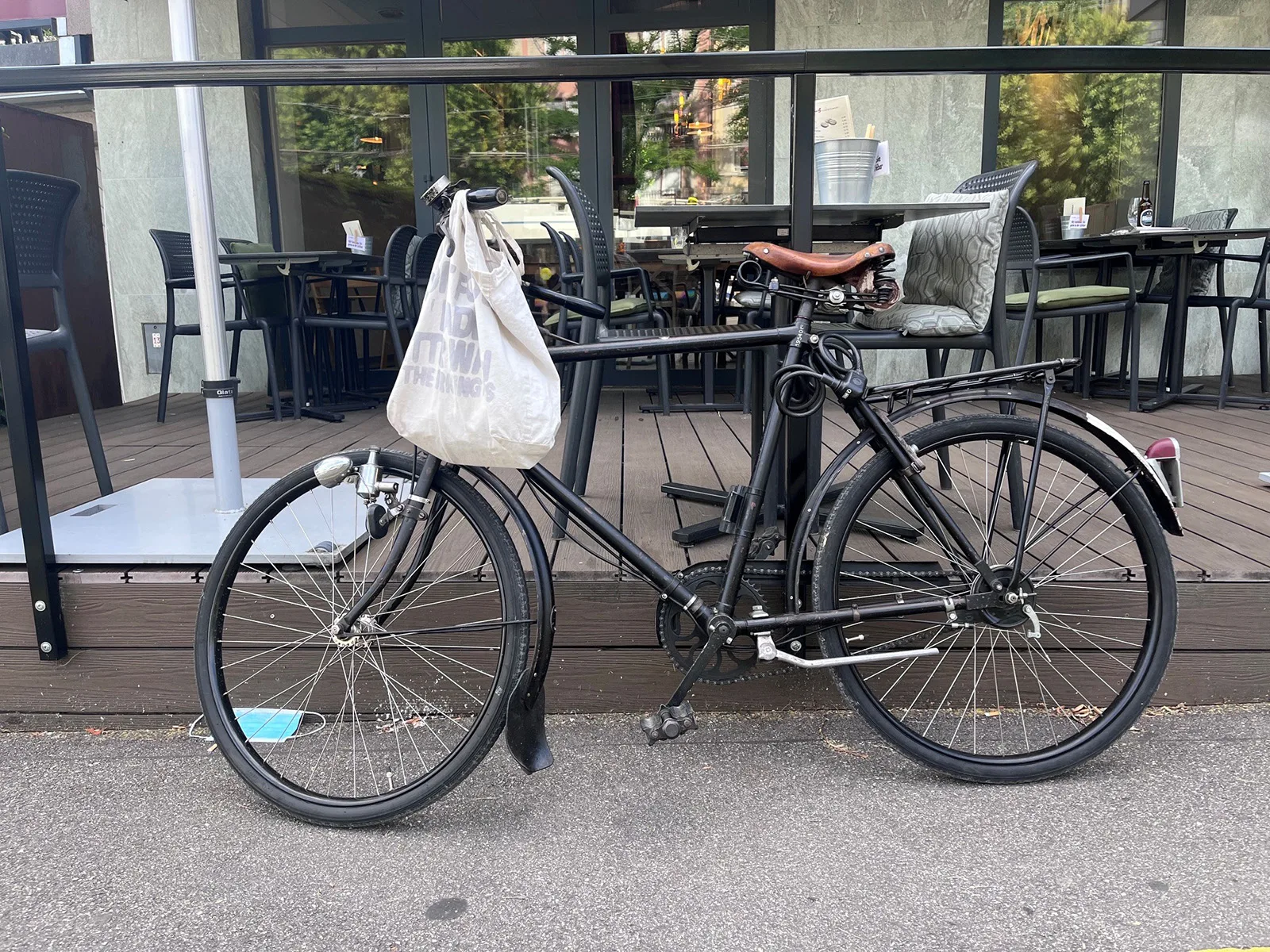
‘Ordonnanzrad 05’ in front of a bakery in Zurich, 2026.
‘Ordonnanzrad 05’ in front of a bakery in Zurich, 2026. Thomas Bochet

Wars and us

17.04.2026 17.01.2027 / National Museum Zurich
Warfare has been a defining element of Switzerland’s history. The exhibition brings together a variety of perspectives, showing how ‒ from the late Middle Ages to the present day ‒ wars have influenced the nation’s political structures, economic interests and social order. It also invites visitors to question popular ideas of Switzerland’s relationship with war ‒ even when that war often seems distant, but is etched deeply in the collective memory.
Further posts