The Swiss de Bulkeley regiment serving Ireland and the Swiss von Eptingen regiment serving France, graphic print from 1772. Animation by Klaas Kaat.

Swiss mercenaries: flag-flying, fearsome fighters

Swiss mercenaries in foreign service, known by names such as Reisläufer (ones who go to war) or Cent-Suisse (‘Hundred Swiss’; soldiers who guarded the French king), were feared throughout Europe. They began bearing regimental flags with flame-like designs from the 17th century while in the service of France. These flags became synonymous with Switzerland’s illustrious military tradition.

Maël Roumois

Maël Roumois

Maël Roumois is a historian and curator of arms and military artefacts at the Swiss National Museum.
Feared throughout Europe, Swiss mercenaries long enjoyed an outstanding, albeit somewhat intimidating, reputation among Europe’s royal and princely courts and among any troops standing in their way. From the 13th century, Swiss military entrepreneurs sold mercenaries for military campaigns or wars. These assignments were of fixed duration.
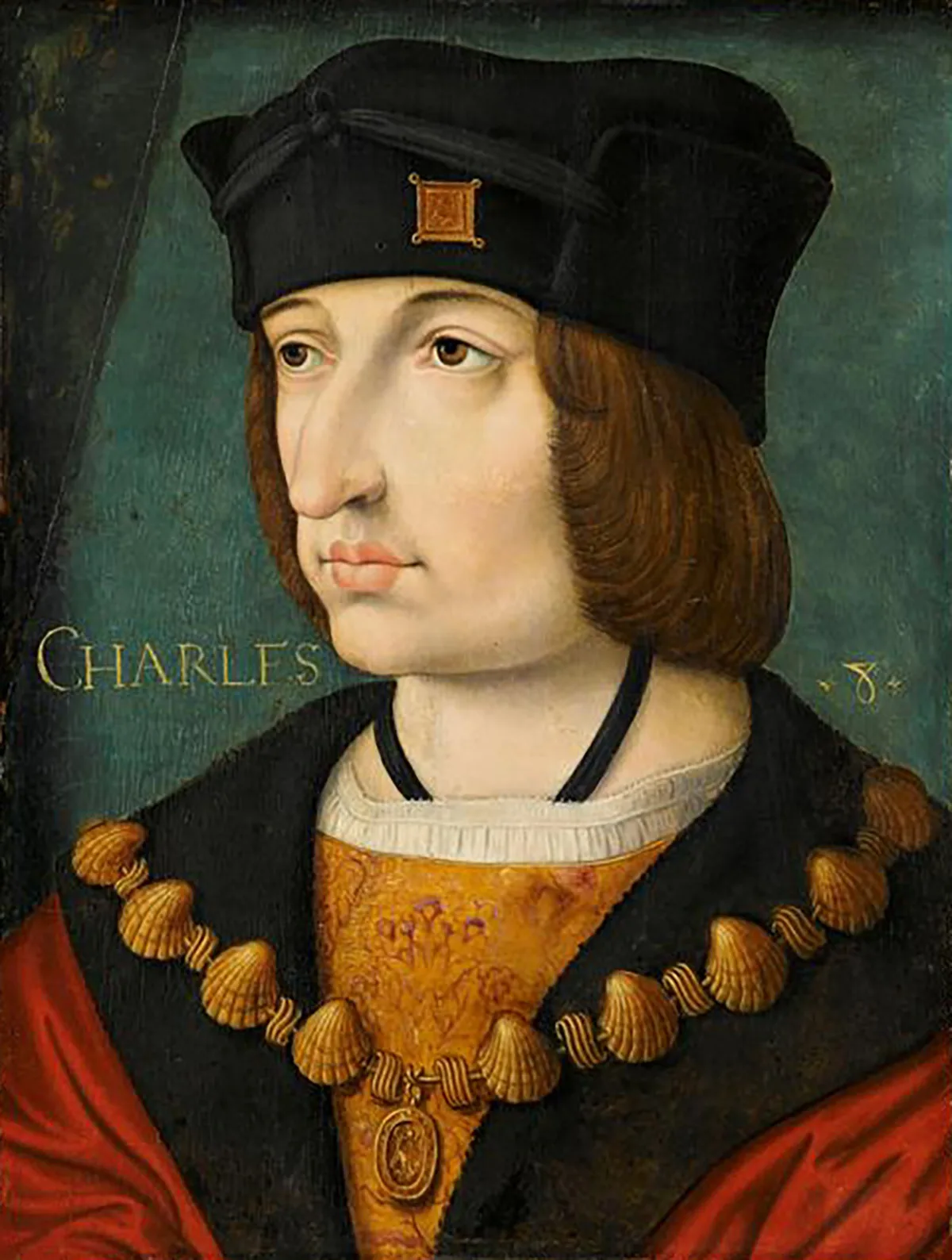
The French kings were one of the first to employ Swiss military muscle. In 1496, King Charles VIII of France even went so far as to entrust his life entirely to Swiss guards: he founded the Cent-Suisses (or Hundred Swiss),who acted as his personal and palace security detail. This is the oldest incarnation of a Swiss guard, predating that of the Pope in Rome (founded in 1506) by ten years. The cantons of the Old Swiss Confederacy began concluding more long-term mercenary alliances from the 17th century. The Swiss regiments were integrated into the standing armies of foreign powers and spent several years fighting in various wars and campaigns.
Portrait of King Charles VIII of France (1470–1498).
Portrait of King Charles VIII of France (1470–1498). Wikimedia
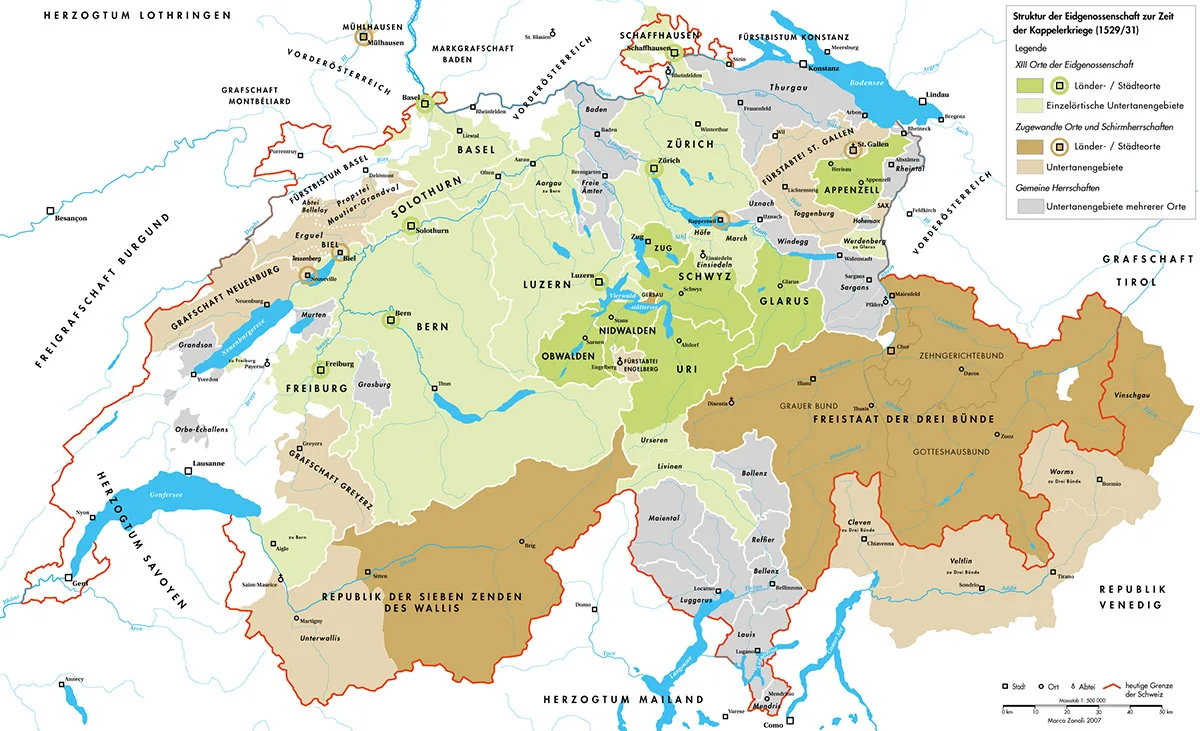
The map shows the Confederacy around 1530 including the 13 old constituent cantons.
The map shows the Confederacy around 1530 including the 13 old constituent cantons. Wikimedia / Marco Zanoli
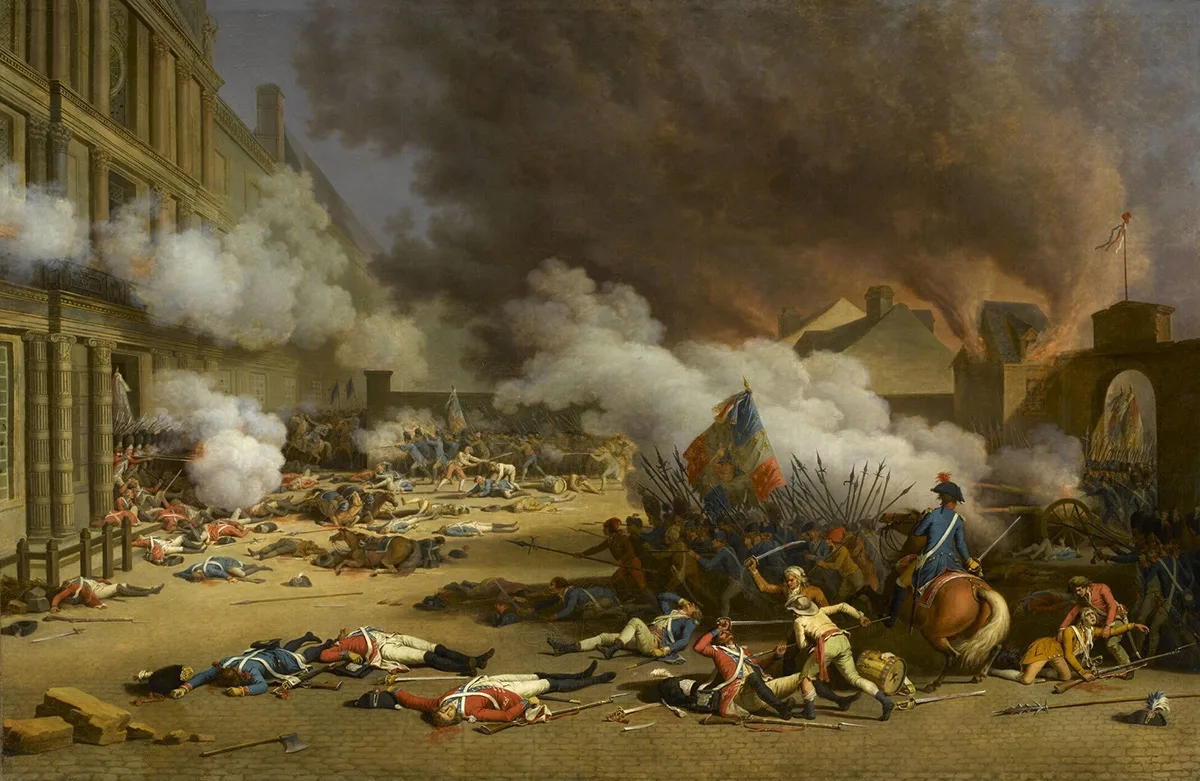
Following their defeat at the battle of Marignano in 1515, the 13 cantons of the Old Swiss Confederacy signed a perpetual peace deal with the French Crown in 1516. This treaty formed the basis of the service pact (Soldbündnis) of 1521, whereby the Confederacy pledged to supply the French king with 6,000 Swiss mercenaries, although that number could be raised to 16,000 soldiers if needed. Until the disbandment of all Swiss regiments in the service of France in 1792 during the French Revolution, there had always been several thousand Swiss troops available to the French monarch.
The storming of the Tuileries Palace on 10 August 1792. The Swiss guards wore red and white uniforms.
The storming of the Tuileries Palace on 10 August 1792. The Swiss guards wore red and white uniforms. Wikimedia
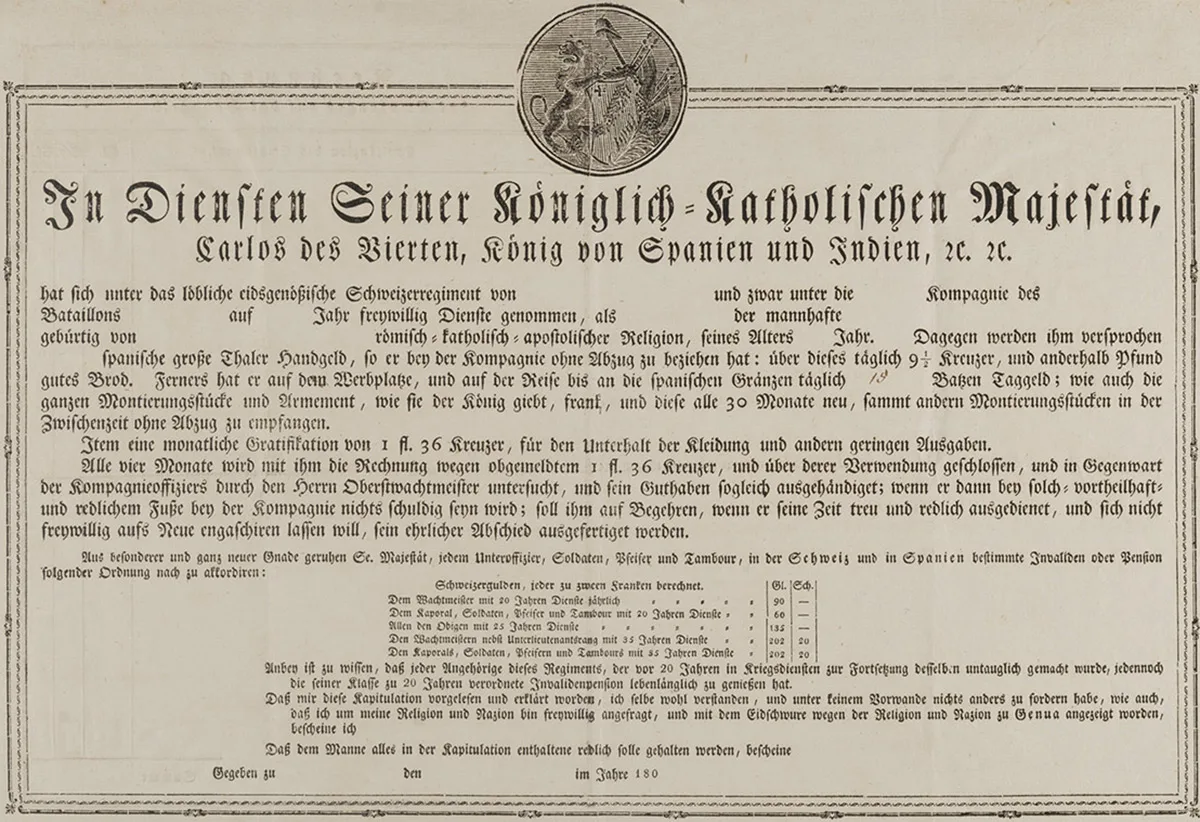
Some of the old cantons concluded an official treaty with the French king, known as a ‘military capitulation’. It defined the precise terms of the service to be provided, including troop strength and remuneration as well as the jurisdiction and religious freedom of the soldiers. The Swiss regiments remained as standalone units answerable to the cantons while serving as allies of France.
A military capitulation for Swiss regiments in service to Spain under King Charles IV after 1800.
A military capitulation for Swiss regiments in service to Spain under King Charles IV after 1800. Swiss National Museum

Serving the flag

Each regiment carried its own flags into battle. The military standards of a unit were of the utmost representative significance and symbolism: the flags were “often brought back torn, flecked with blood, covered in honour from the battle”. Consecrating the flag was a solemn act whereby a field chaplain who was responsible for the soldiers’ spiritual guidance recited a pledge with the soldiers to stay loyal to the flag until death.
In the 16thcentury, the French infantry and the Swiss mercenary regiments fighting with them carried a flag with a white cross stretching out to the edges. This evolved into a hallmark of the flags used by Swiss regiments in the service of France and was later adopted in other countries. The centre of the cross usually displayed a symbolic image of a saint, a coat of arms or a slogan.
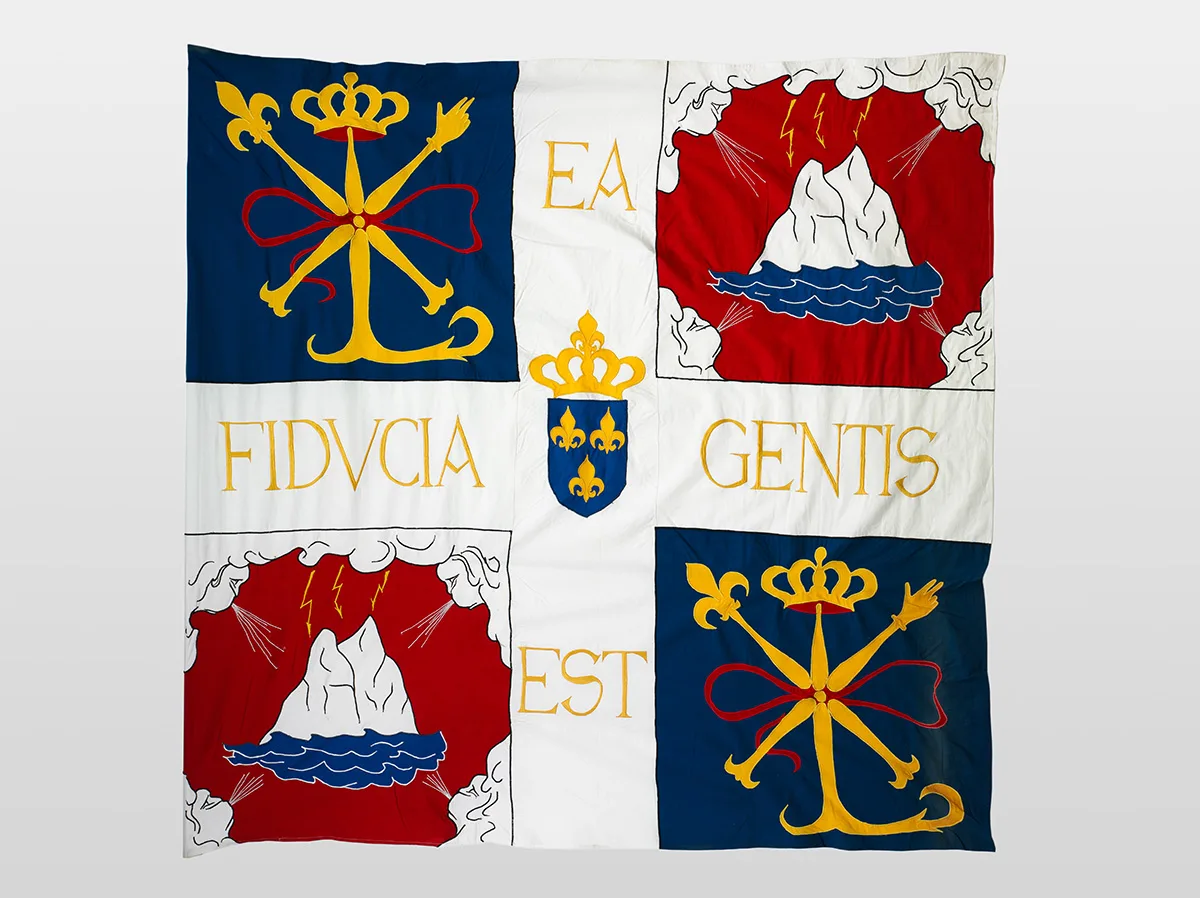
Replica of a regimental flag of the French king’s bodyguard, the Cent-Suisses or Hundred Swiss.
Replica of a regimental flag of the French king’s bodyguard, the Cent-Suisses or Hundred Swiss. Swiss National Museum
In 1665, the Hundred Swiss had a flag bearing the Latin words “EA EST FIDUCIA GENTIS” (“such is the loyalty of this nation”), which had probably been their motto since the regiment was founded. There was also an extravagantly decorated “L” in two opposite quarters of the flag, plus a crown and lilies, which stood for King Louis XIV. In the other two quarters, a rock surrounded by water, being battered by waves and hit by lightning and storms, was meant to portray the Hundred Swiss’s unshakeable sense of duty. The middle of the cross displayed the French king’s coat of arms with a crown and lilies.

Under a flaming banner: the ordonnance flags of the Swiss regiments
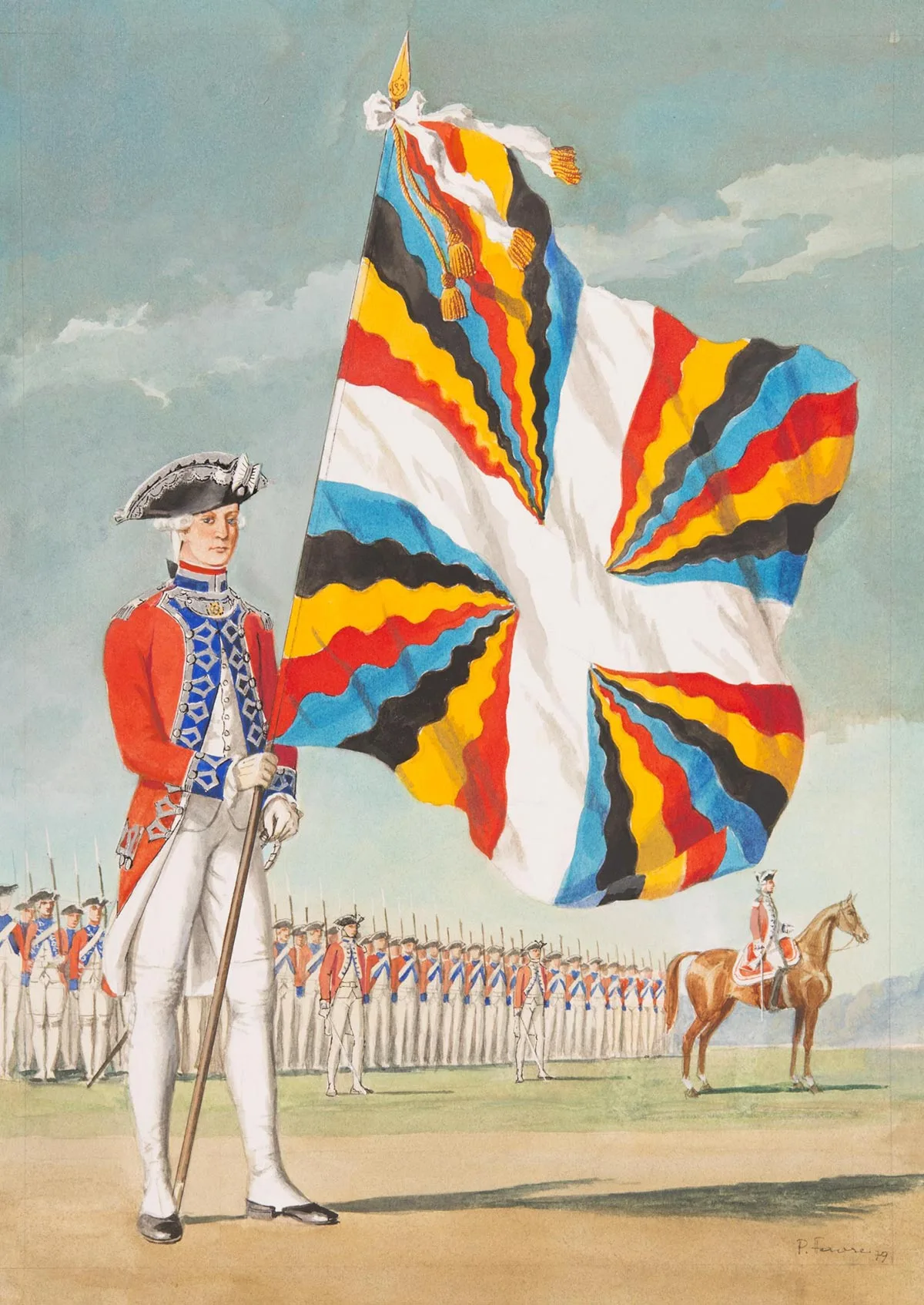
A new design graced Swiss military flags from around the mid-17th century: an end-to-end white cross at the centre, with flames of different colours radiating out into each of the corners. In 1672, when the first permanent line regiment was established, this design became the official emblem of the Swiss regiments serving the French king. The colours used corresponded to the colours of the coat of arms of the regimental colonel in charge. Each colonel paid for the ordonnance flags of their own regiment. The regiments bore the names of their respective colonels as well as the regimental colours. For example, there were the Erlach, Lochmann and Reding regiments.
A flammé ordonnance flag, hand drawing from 1978.
A flammé ordonnance flag, hand drawing from 1978. Swiss National Museum
When a colonel died, the colonel-general proposed a successor, who was then appointed regimental colonel by the French king. This led to the regiment receiving a new name and flag, and the old flag was burned. Due to this ritual, only a few of these regimental and company flags have survived. However, many images and colours used on the flags are known to us through documents such as books of flags and other drawings and descriptions.

The flame-bearing flag became a symbol of Swiss military glory
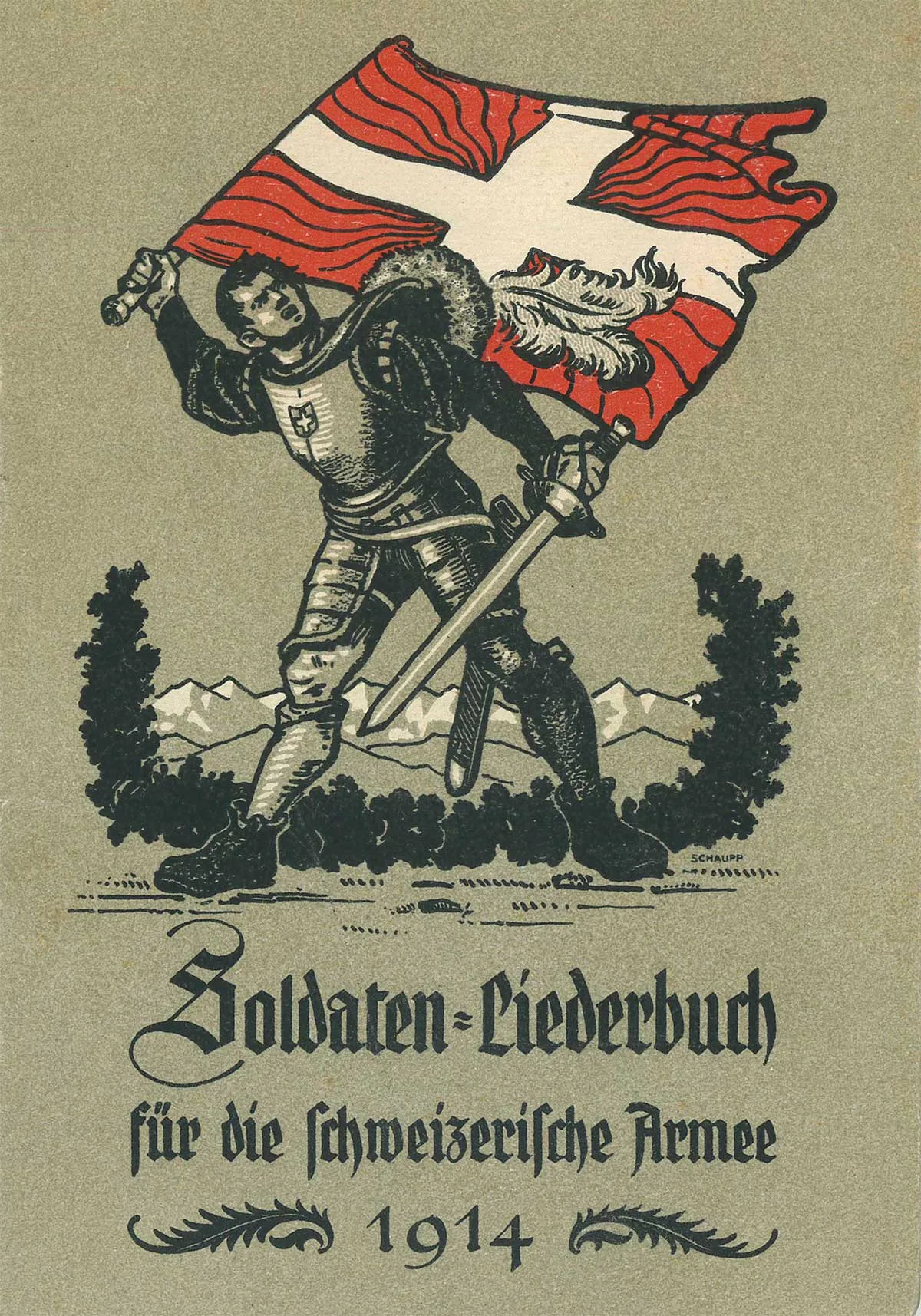
All the Swiss regiments were disbanded in 1792. Some cantons that had provided colonels for France adopted the flag with flame design for their own troops. Cities displayed city banners with an end-to-end cross at the centre and flames radiating out to the quarters. The flame pattern became more widespread in the 19th century and moved beyond military flags; it was also displayed on the flags of students’ associations, fraternities, valley communities, choirs and other associations.
The soldiers’ song book of 1914 shows a typical Swiss warrior in armour with a flag in the flame design.
The soldiers’ song book of 1914 shows a typical Swiss warrior in armour with a flag in the flame design. Swiss National Museum
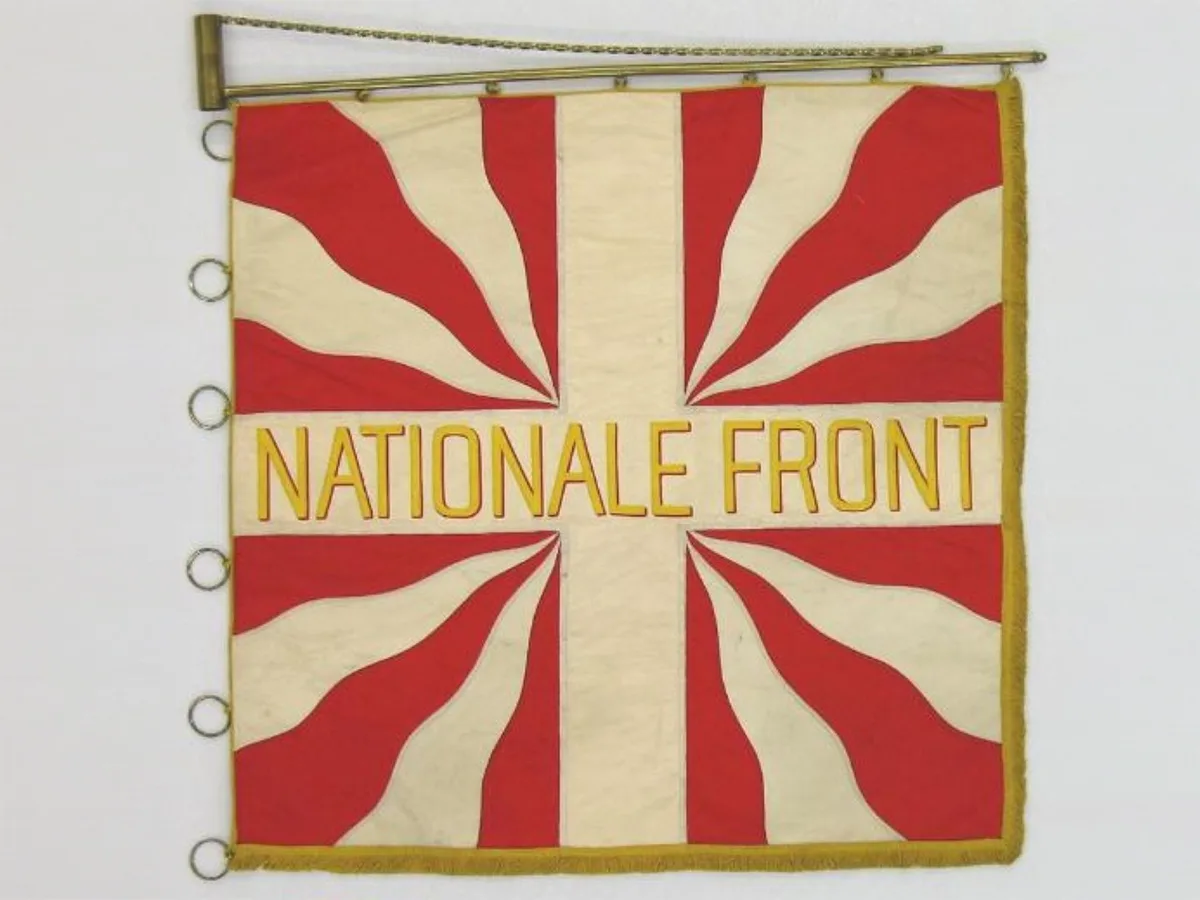
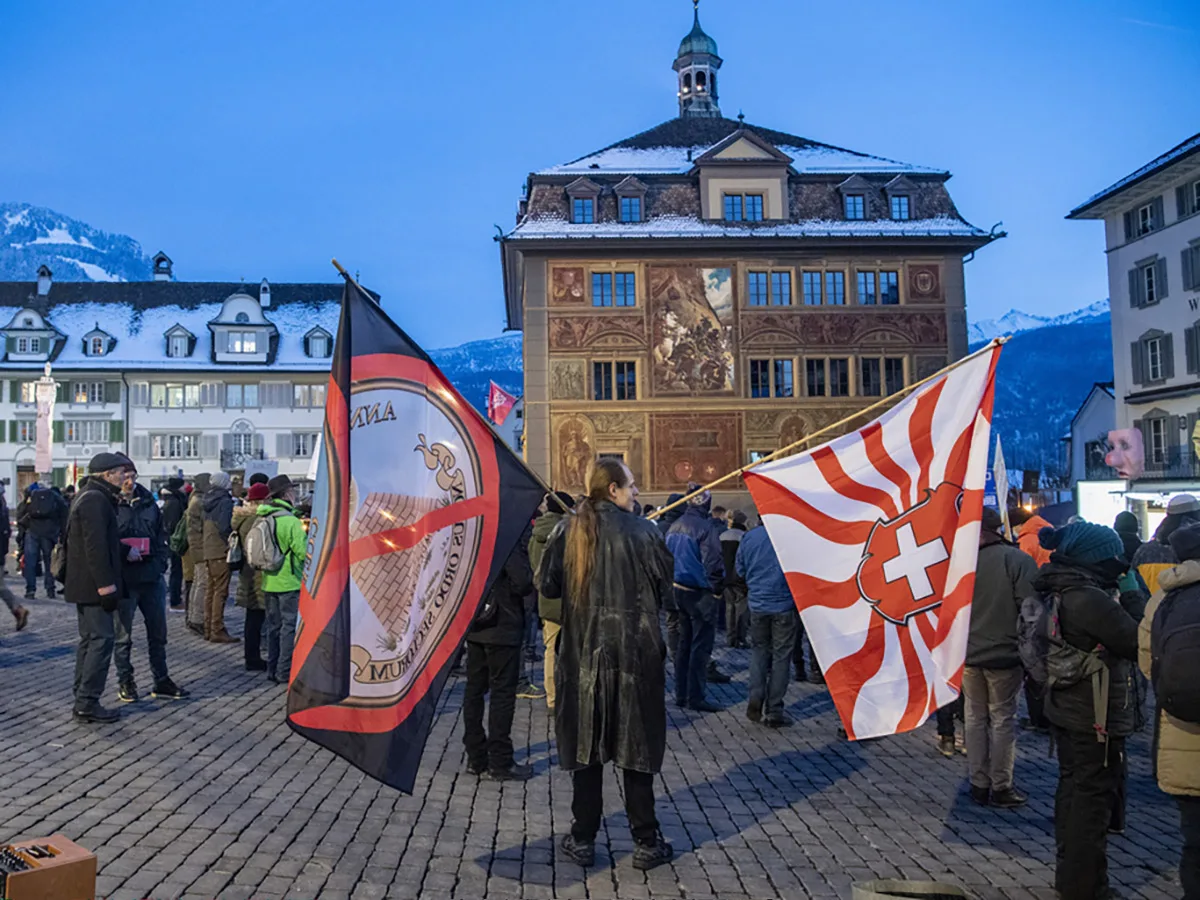
For many, the flame design embodied the virtues (“loyalty and honour”) of Swiss soldiering and the military glory of the Swiss warriors of the Ancien Régime. This imagery was also used in the 1930s by the National Front, a far-right, fascist grouping that glorified German national socialism. It designed a flag with a white cross extending to each edge and flames in the surrounding quarters. During the Second World War, this “Nazi and fascist group” was banned and the flag was confiscated by the Zurich police. It is currently part of the collection in the Swiss National Museum, having been donated by the cantonal police department in 1990. In more recent times, the flame-bearing flag has appeared at demonstrations and rallies of extreme right and other groupings hostile to the state, which, like the National Front before, sought to align themselves with the symbolism of heroism and patriotism associated with the flame-bearing flag that was the hallmark of Swiss mercenaries.
Flame-bearing flag of the National Front from the 1930s.
Flame-bearing flag of the National Front from the 1930s. Swiss National Museum
Flame-design flags still appear at rallies sometimes, for example at this demonstration in Schwyz in 2021.
Flame-design flags still appear at rallies sometimes, for example at this demonstration in Schwyz in 2021. Keystone

Further posts