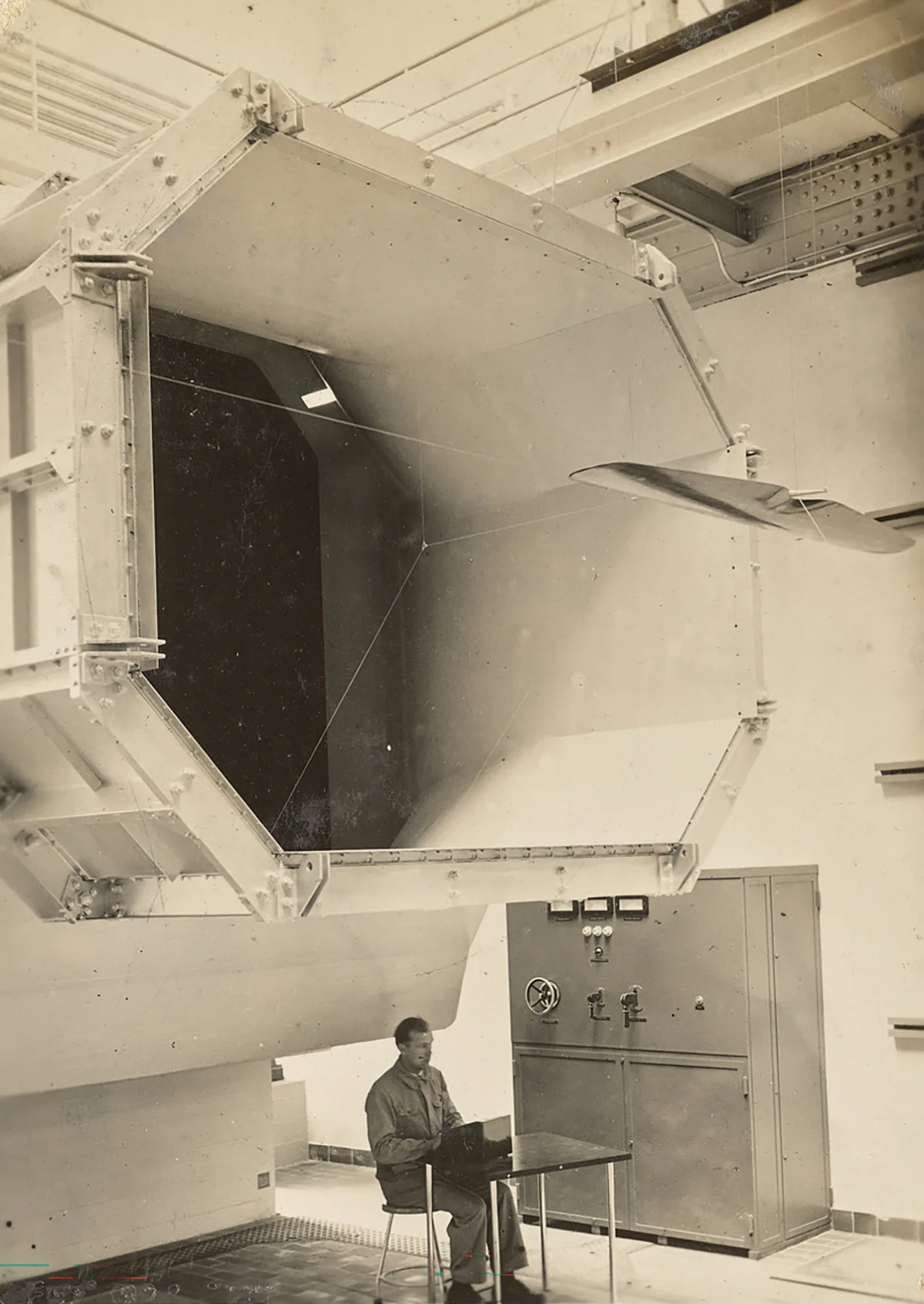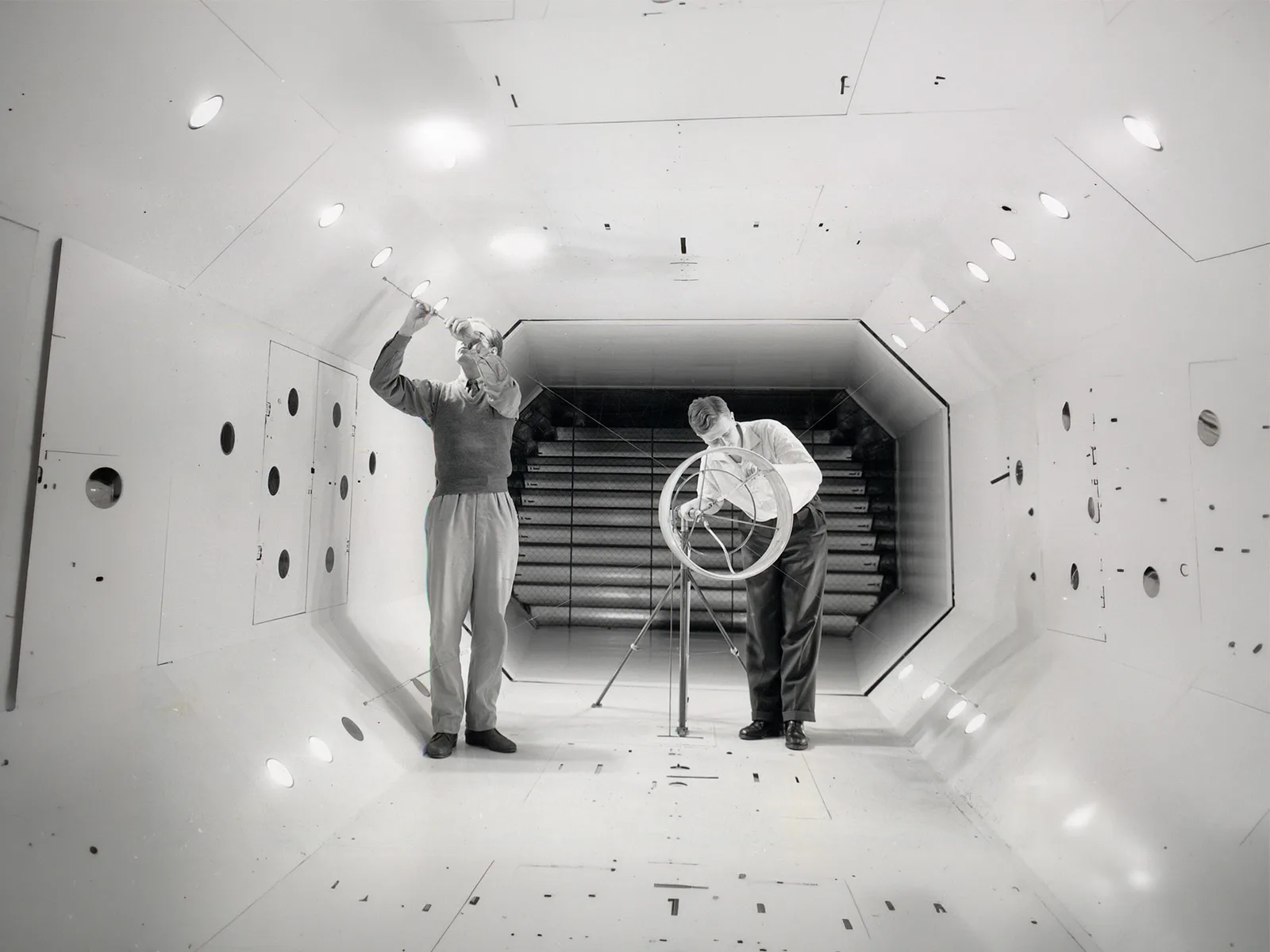
Test set-up in the wind tunnel with a ring wing, 1955
Test set-up in the wind tunnel with a ring wing, 1955 e-pics

The ETH wind tunnel: small models, major discoveries

From airplanes to wings and skyscrapers: historic scientific discoveries were made in the wind and supersonic tunnels of ETH Zurich during the 1930s. Models used for teaching and research in the two tunnels serve as reminders of a pioneering spirit, military requirements and unrealised dreams.

Roberta Spano und Dorothe Zimmermann

Roberta Spano und Dorothe Zimmermann

Roberta Spano and Dorothe Zimmermann are historians and responsible for the ETH Library’s collection of scientific instruments and teaching materials.
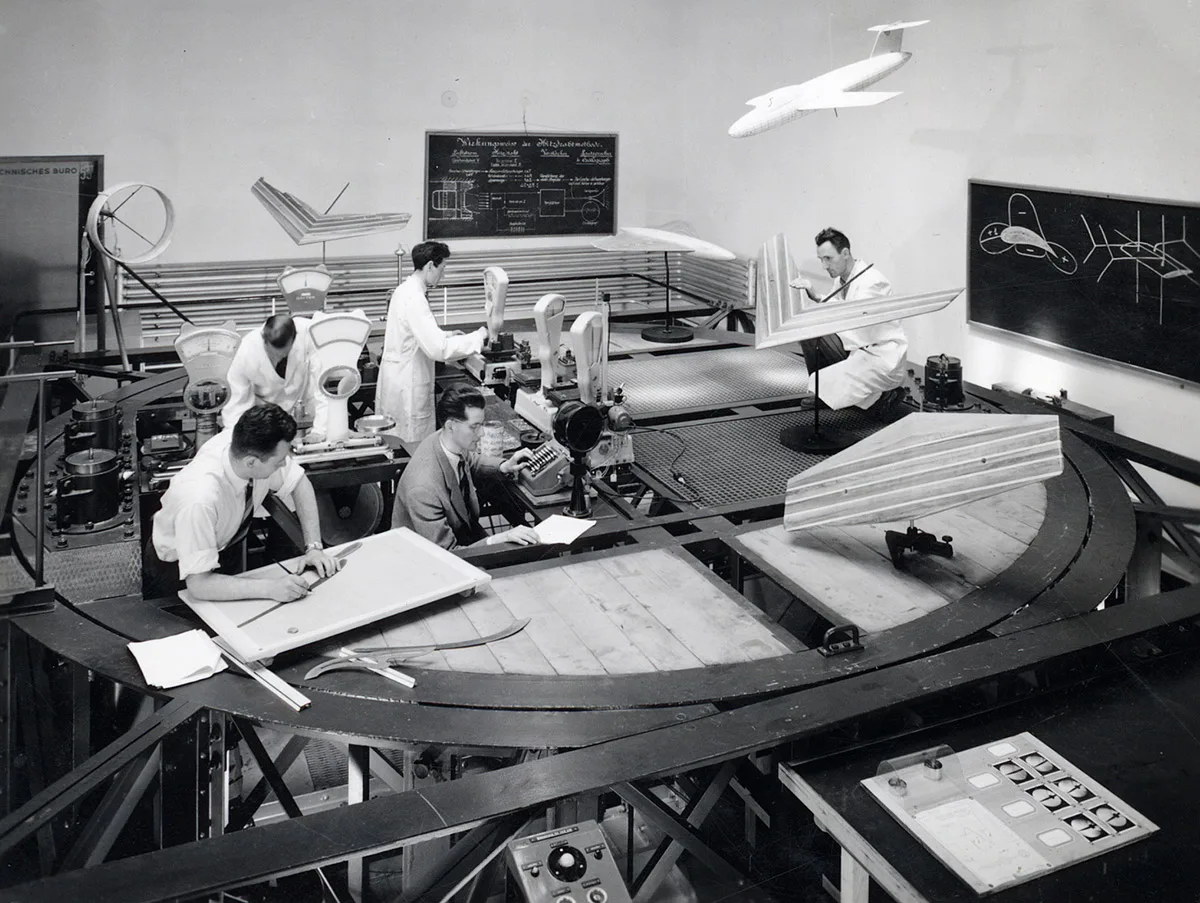
Five men are concentrating on their work. They are measuring, calculating, drawing, weighing. They are most likely budding or trained flight engineers. They sit, stand and kneel surrounded by drawing tools, computers and scales as well as some airplane and wing models.
Students building airplanes in the measuring room of the Institute for Aerodynamics, 1955.
Students building airplanes in the measuring room of the Institute for Aerodynamics, 1955. e-pics
The picture above was taken on 22 June 1955 by the Photographic Institute of ETH Zurich. It shows the measuring room above the wind tunnel of the ETH Institute for Aerodynamics. We now know that the photographs from this series were staged and the placement of the men making measurements was choreographed.
The models shown still exist. They are part of the collection of scientific instruments and teaching aids at the ETH Library. The collection is the material memory of ETH and includes objects used in teaching and research since the university was founded in 1855. These items come from a very broad range of disciplines, such as IT, mathematics, astronomy, geobotany and even aerodynamics.

New Year’s Eve 1934: the date of the first test run in the wind tunnel
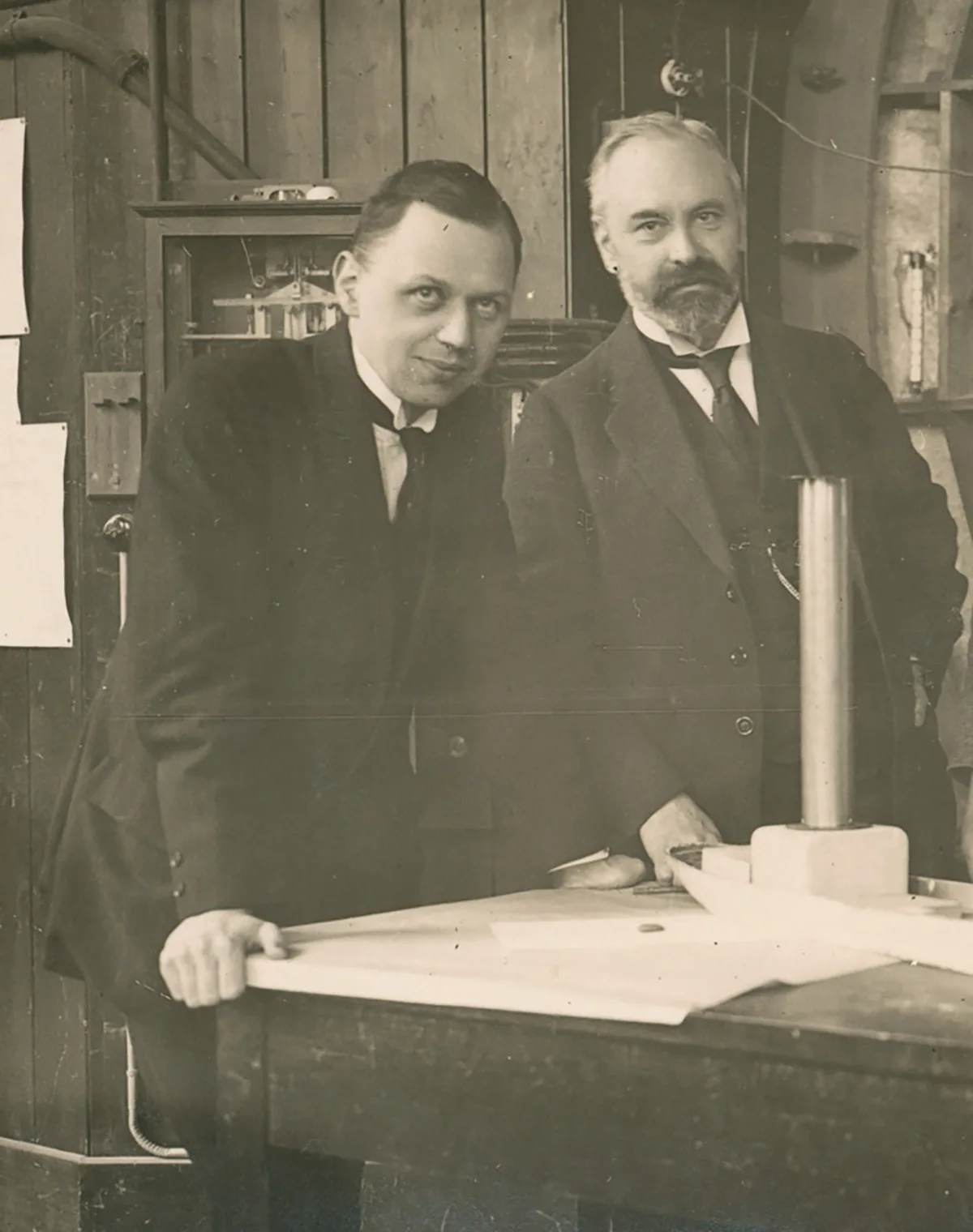
The history of aerodynamics at ETH Zurich began in the 1920s when the Swiss military said it needed an aerodynamic research and testing facility. When the first one-year course for flight engineers at ETH met with great interest in 1928/29, it was seen as confirmation of how important aviation had become. In 1931, the ETH Executive Board decided, despite financial constraints, to set up an aerodynamic testing facility in the Machine Laboratory. A cost report from 1933 shows that it was planned for both research and teaching as well as for use by private parties and official bodies.
Jakob Ackeret (1898‒1981) who was employed as a private lecturer at ETH was assigned the task of setting up the facility. Ackeret became a key figure in Zurich aerodynamics. He had studied with one of the most famous aerodynamicists Ludwig Prandtl (1875-1953) at the Max-Planck-Institute for Dynamics and Self-Organization in Göttingen. Ackeret was appointed a full professor at ETH in 1934 and assumed responsibility for the old laboratory, which had meanwhile been upgraded to the Institute for Aerodynamics. He consistently promoted the practical applications of flow analysis in aviation and machine construction. Together with his staff, he made a material contribution to developing aerodynamics and flow physics. He thus established a solid foundation for this scientific discipline, which was still in its infancy at the time.
Jakob Ackeret, left, as a student in Göttingen, circa 1924, with Ludwig Prandtl.
Jakob Ackeret, left, as a student in Göttingen, circa 1924, with Ludwig Prandtl. e-pics
The wind tunnel, which became operational in 1934, was the showpiece of the new institute. Despite an initial planning phase as well as some teething issues, the construction and use of the facility seemed to have progressed quickly as evidenced by a report from 1935: “The entire facility [wind tunnel] was designed two years ago. Construction did not start until February 1934 for several reasons. The work progressed in 1934 so that the first test run was conducted on New Year’s eve 1934.”
Wind tunnel, Machine Laboratory, Institute for Aerodynamics, circa 1934.
Wind tunnel, Machine Laboratory, Institute for Aerodynamics, circa 1934. e-pics
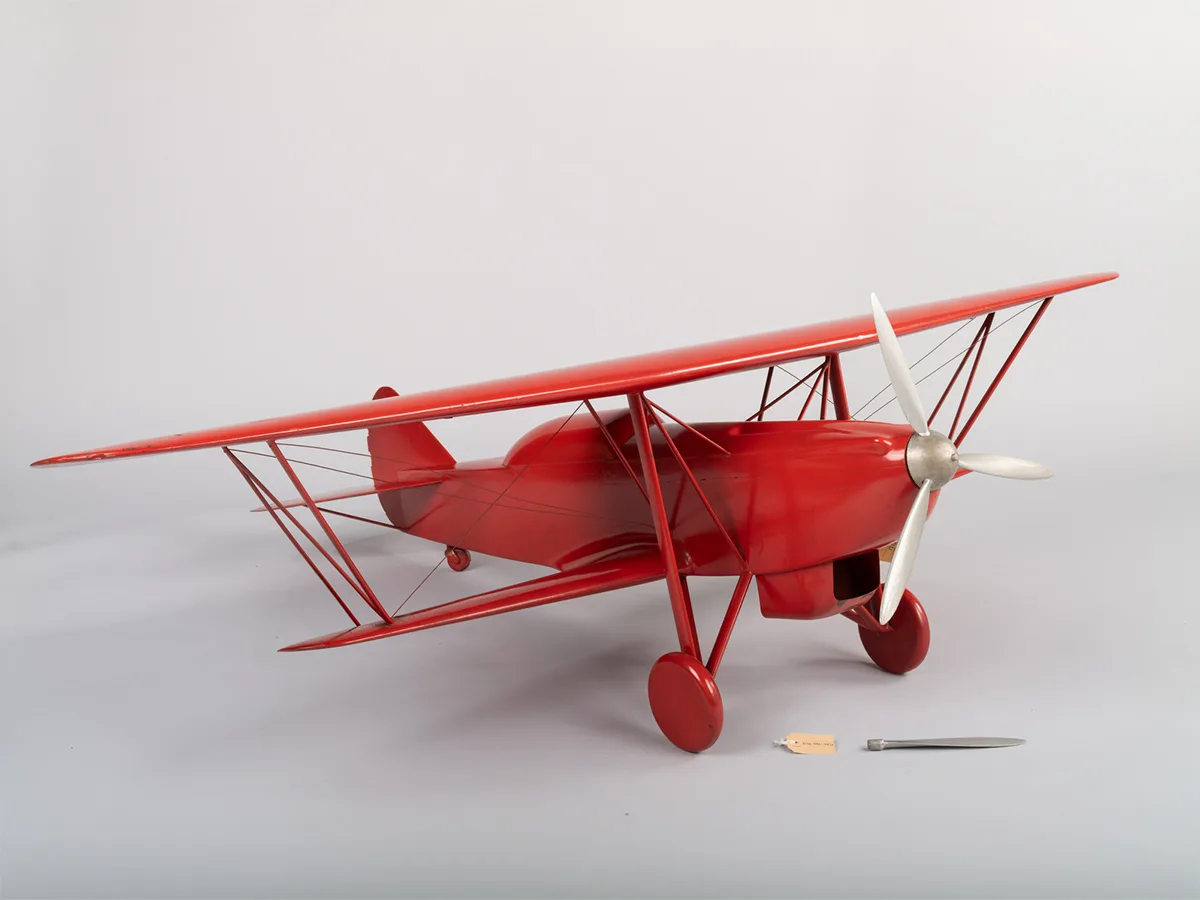
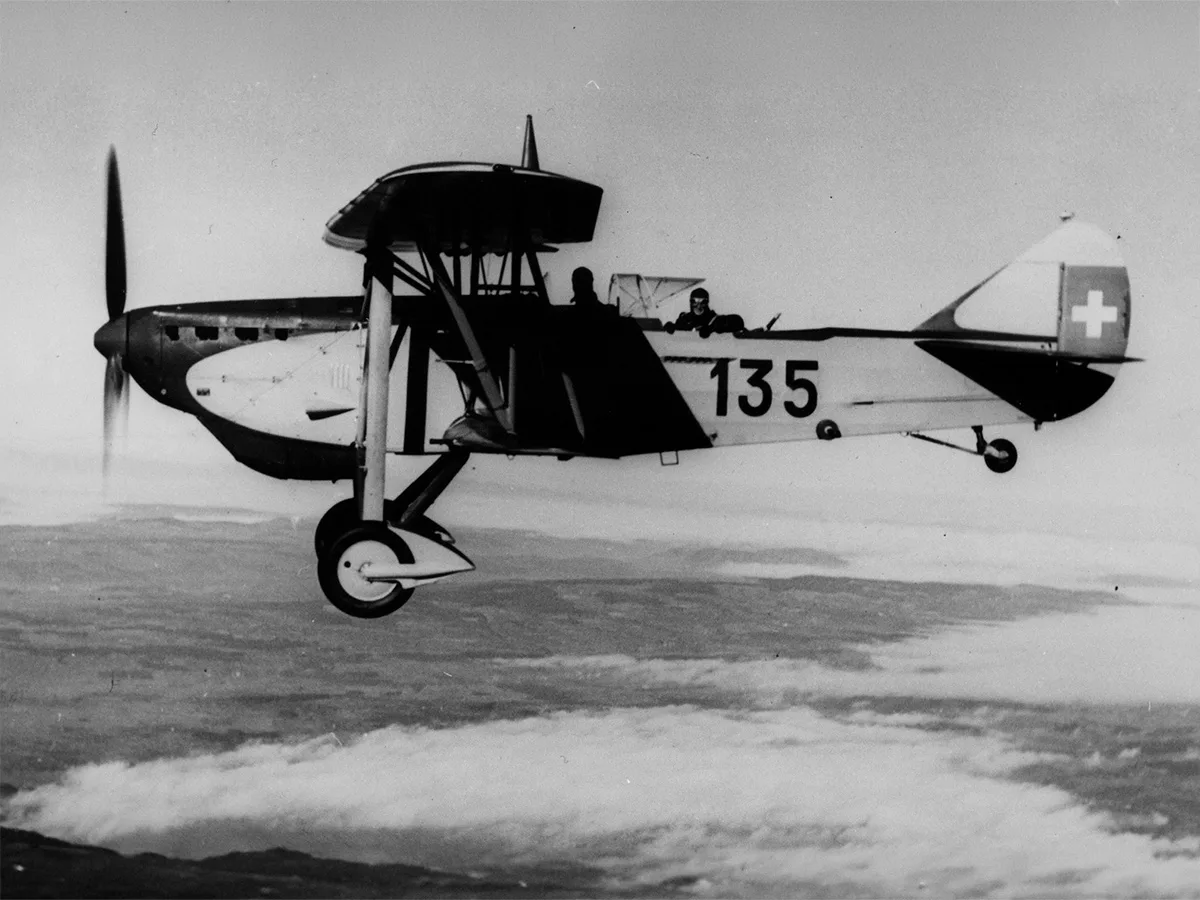
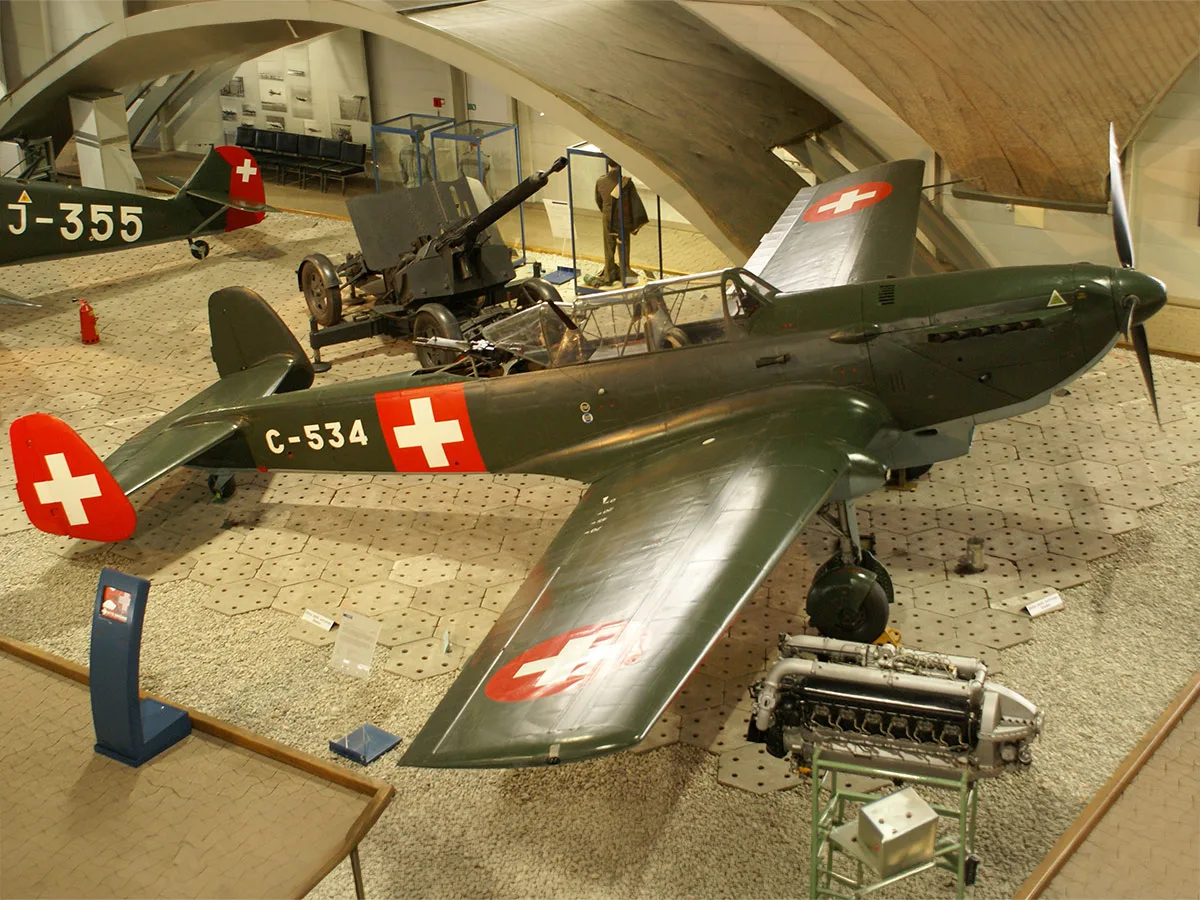
The wind tunnel had the capacity to generate an even airflow with a cross-section of 3 × 2.1 metres and speeds of up to 320 km/h. The Swiss military tested one of the first models of its C-35 combat aircraft before the calibrations had been definitively finalised. The C-35 was a biplane built in the Federal Construction Works in Thun from 1936. Although it was designed as a reconnaissance plane, the C-35 was also equipped to drop bombs.
Wind tunnel model of a C-35 aircraft, circa 1934.
Wind tunnel model of a C-35 aircraft, circa 1934. e-pics
A C-35 aircraft in flight, 1938.
A C-35 aircraft in flight, 1938. e-pics
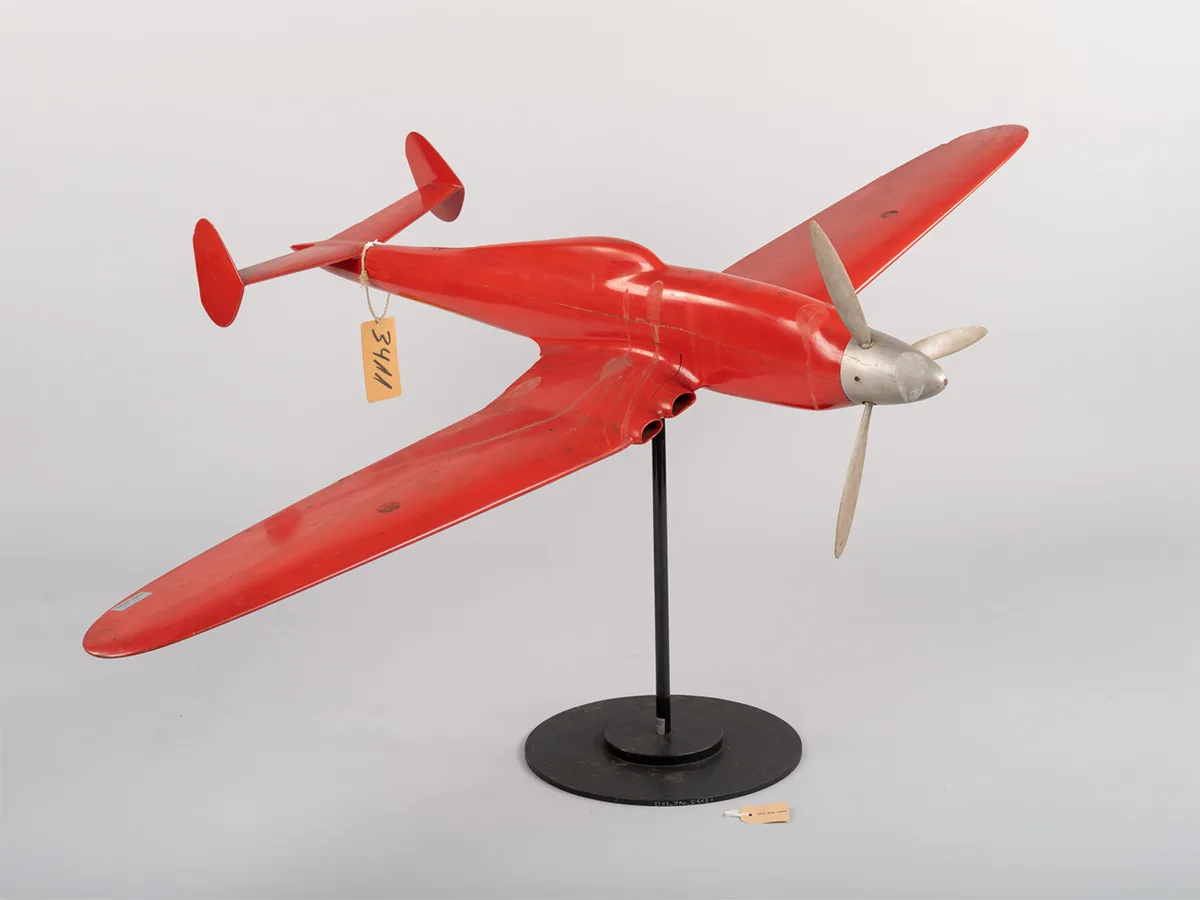
A total of 88 C-35 aircraft were in service by the end of the Second World War. However, they were already dated at the beginning of the war as shown by the successor model, the C-36, which started development in Thun in 1939. The C-36 models were also tested at ETH. There were 142 C-36 in operation from 1942 to 1952. They were subsequently converted to target towers and used for shooting exercises until the 1970s.
Wind tunnel model of a C-36 turboprop airplane, 1940–1950.
Wind tunnel model of a C-36 turboprop airplane, 1940–1950. e-pics
Reconnaissance C-3603-1 aircraft of the Swiss air force, in operation from 1942 to 1952.
Reconnaissance C-3603-1 aircraft of the Swiss air force, in operation from 1942 to 1952. Wikimedia / Sandstein
All the military aircraft were tested in the ETH wind tunnel from the 1940s. This initial close connection to the military ensured the rapid rise of the fledgling discipline at ETH plus a strong emphasis on practical application. The university also considered its remit to include the education of “competent flight engineers” in the interests of national defence.

The first closed supersonic tunnel
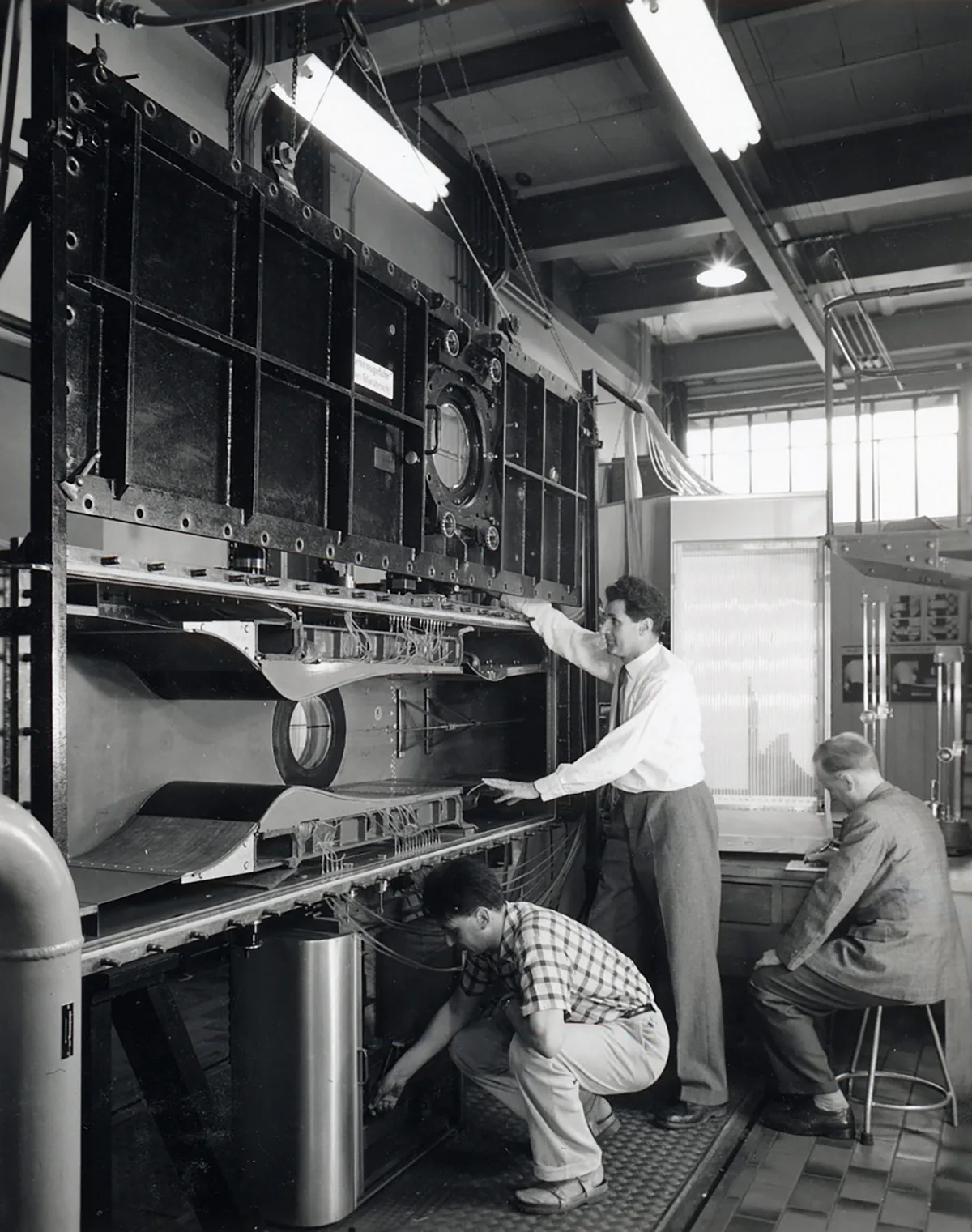
In 1935, the Institute for Aerodynamics created a supersonic wind tunnel with support from local machinery producers. It reached windspeeds of up to 2,450 km/h – around Mach 2, or twice the speed of sound. Jakob Ackeret introduced the concept of the Mach unit, which measures the speed of an airborne craft relative to the speed of sound, in his postdoctoral thesis in 1928. Ackeret’s idea of an airtight closed loop enabled him to generate a constant airflow, which was a global first. The concept became an international standard and is still used today.
Supersonic tunnel at the Institute for Aerodynamics, ETH. The photo was taken in 1955.
Supersonic tunnel at the Institute for Aerodynamics, ETH. The photo was taken in 1955. e-pics
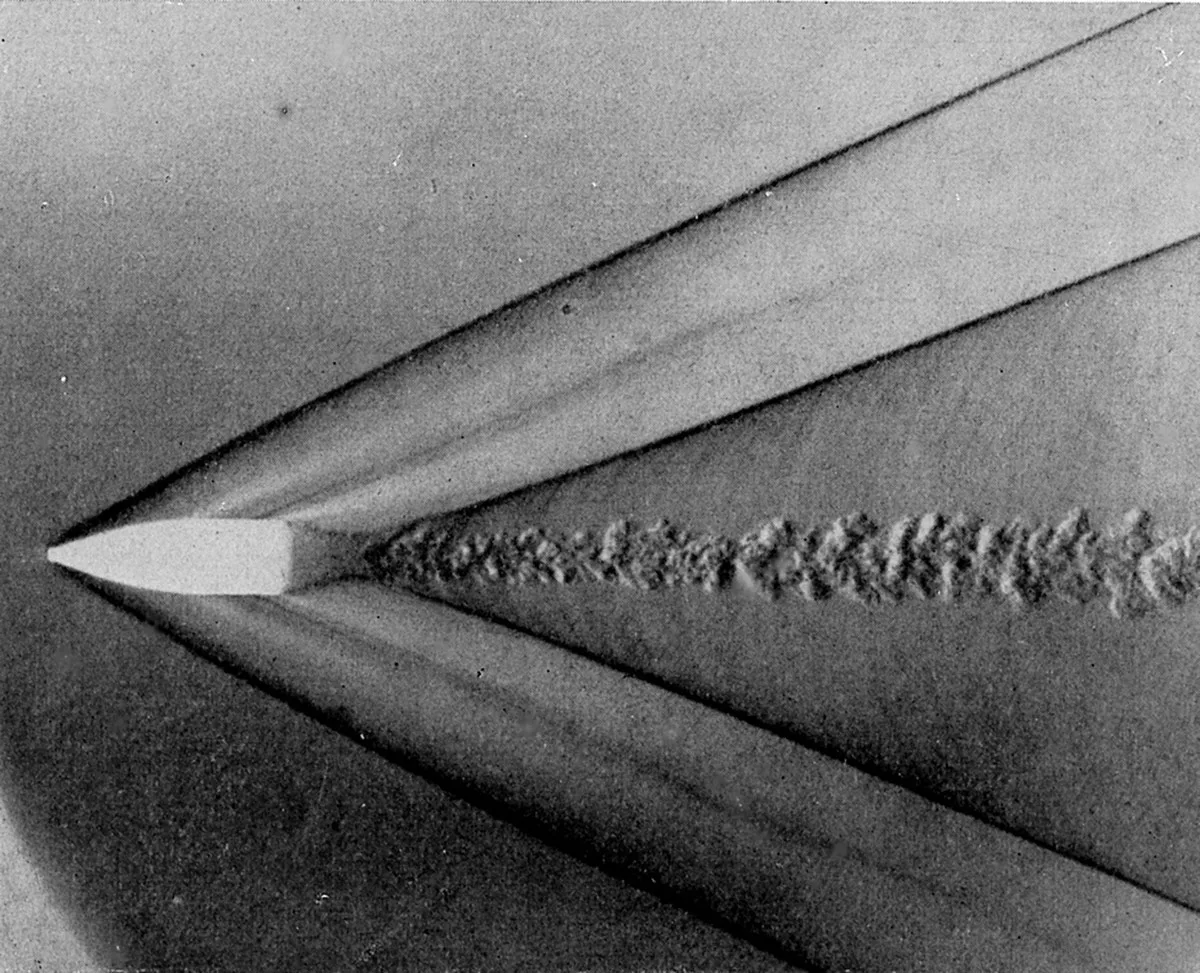
Very small models were tested in the supersonic tunnel. The air pressure and density around the models varied greatly at the high flow velocities, giving rise to invisible shock waves among other things. The Schlieren method made these changes visible by slightly bending light rays when passing through changing air density. A special optical test setup enhances this effect, so differences in density appear on images as bright and dark lines. This showed  how the air flowed around the model.
Schlieren image of a pointed projectile, 1930.
Schlieren image of a pointed projectile, 1930. e-pics
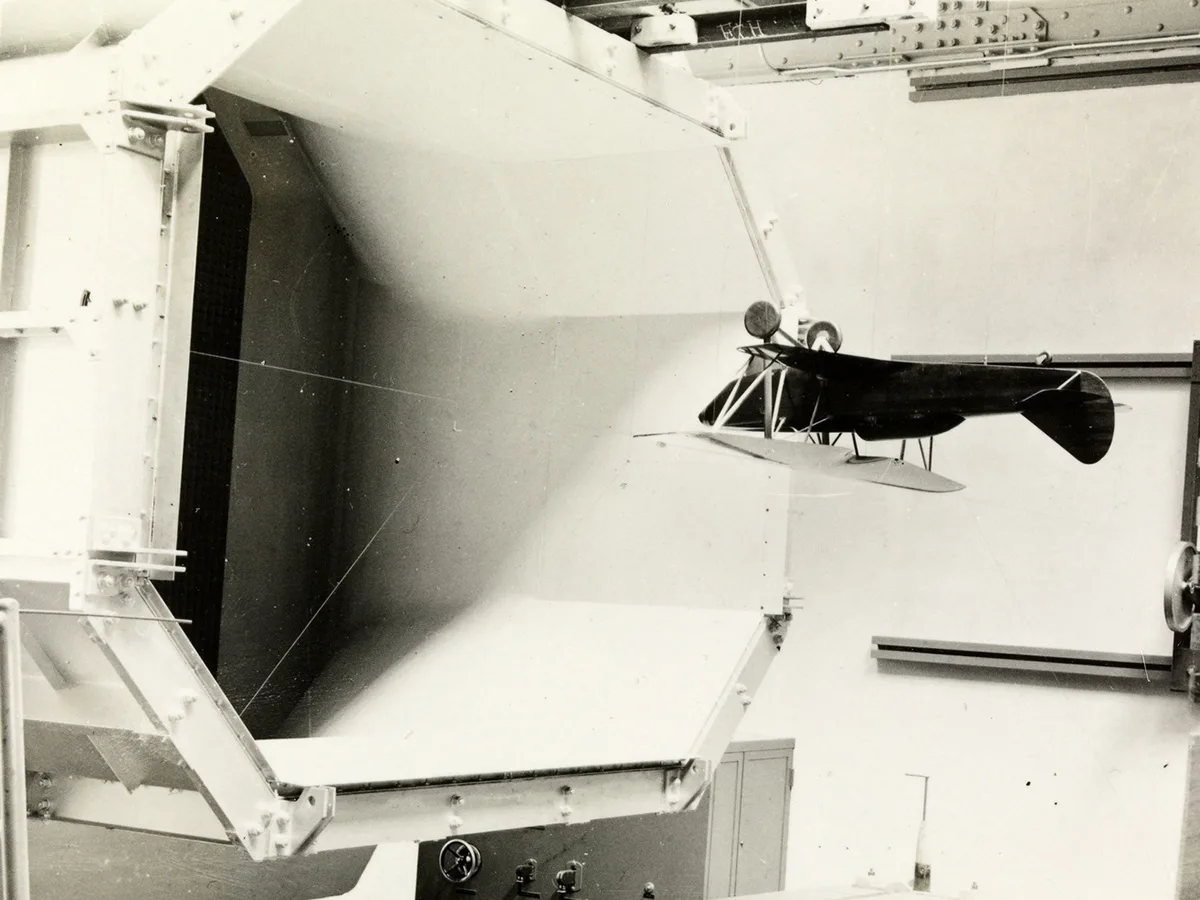
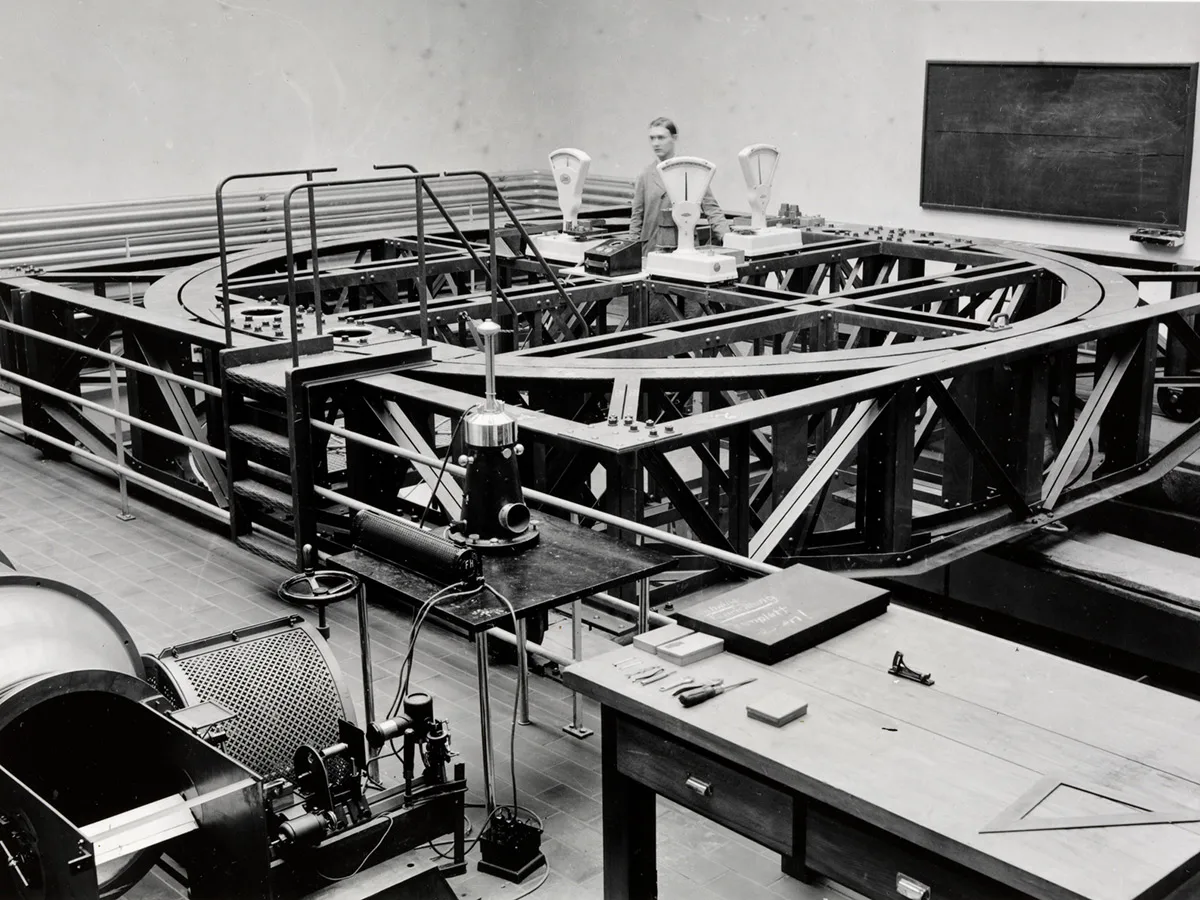
The big wind tunnel was different: the scientists did not only test the airflow. They also measured directly which forces impacted a scaled down airplane model. The model was suspended upside down in the tunnel. The wings were connected to scales above the tunnel via thin sensors. When air flowed past the model, it exerted a degree of force on the wings. As the model was upside down, this force weighed down on the scales. This same force would normally push an airplane upwards providing the lift that makes a plane become airborne.
Wind tunnel experiment on the C-35 model, 1935.
Wind tunnel experiment on the C-35 model, 1935. e-pics
Turntable with scales, Institute for Aerodynamics, 1936.
Turntable with scales, Institute for Aerodynamics, 1936. e-pics
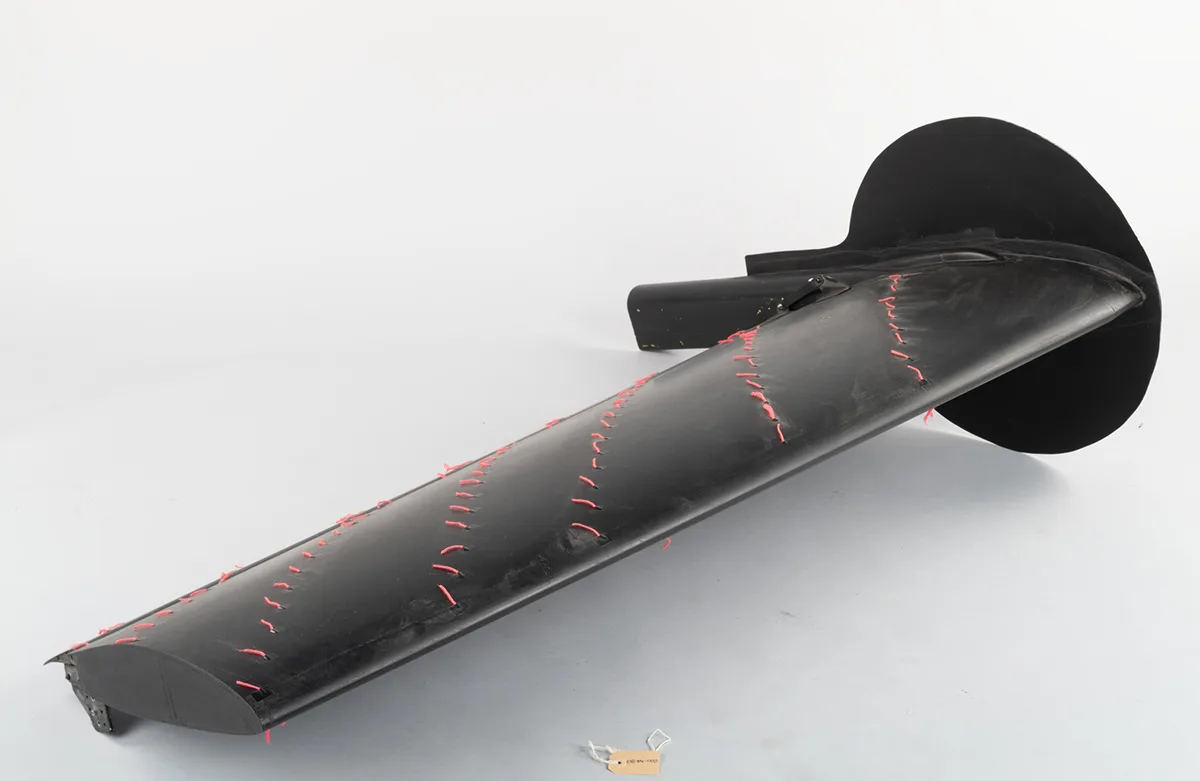
Other sensors were connected to pressure gauges to measure the air pressure at different points of the wing. Woolen threads on the wings also showed how the air flowed over the surface. This allowed the researchers to identify adverse air flows on the models early on and try out improvements at relatively low cost, subsequently applying their findings to the full-size version of the aircraft.
Wind tunnel model of a wing: the threads show the path of the air flow.
Wind tunnel model of a wing: the threads show the path of the air flow. e-pics
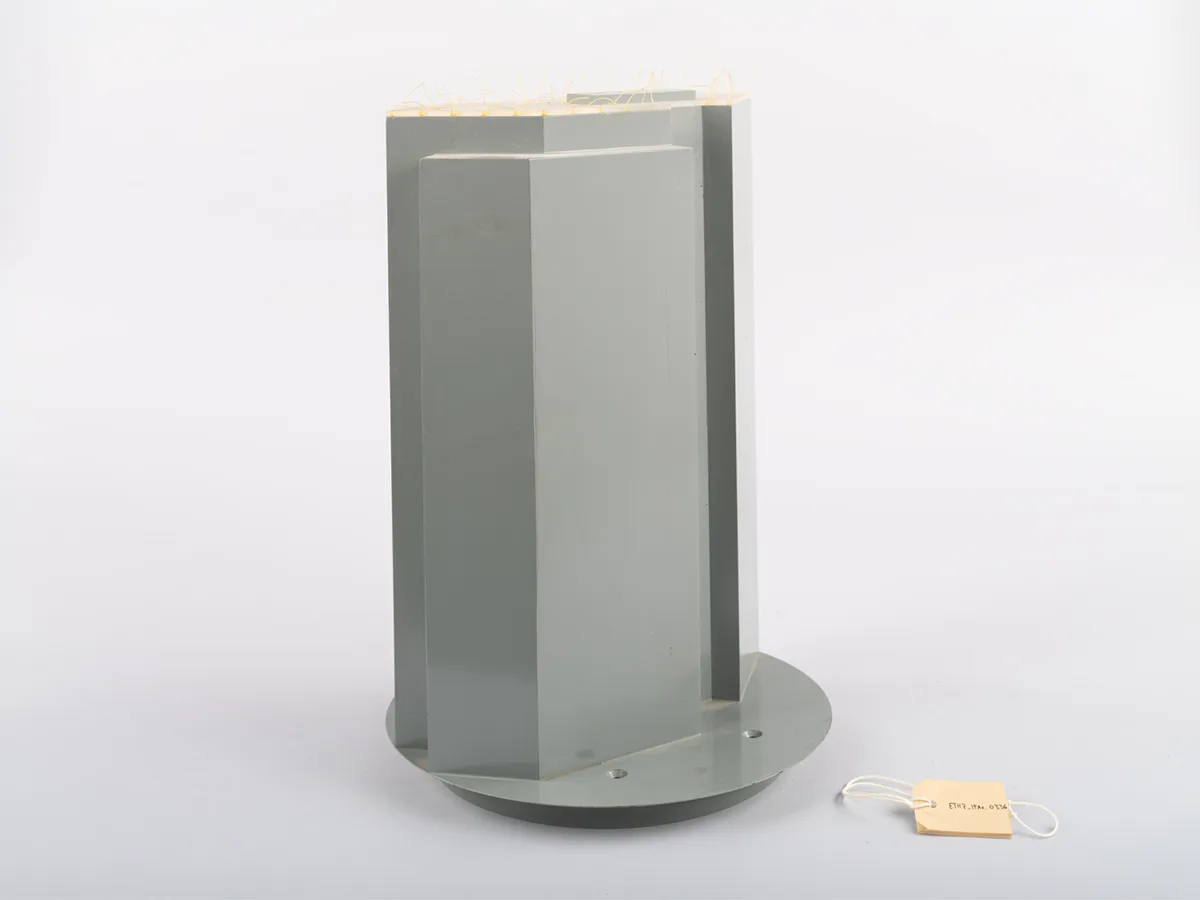
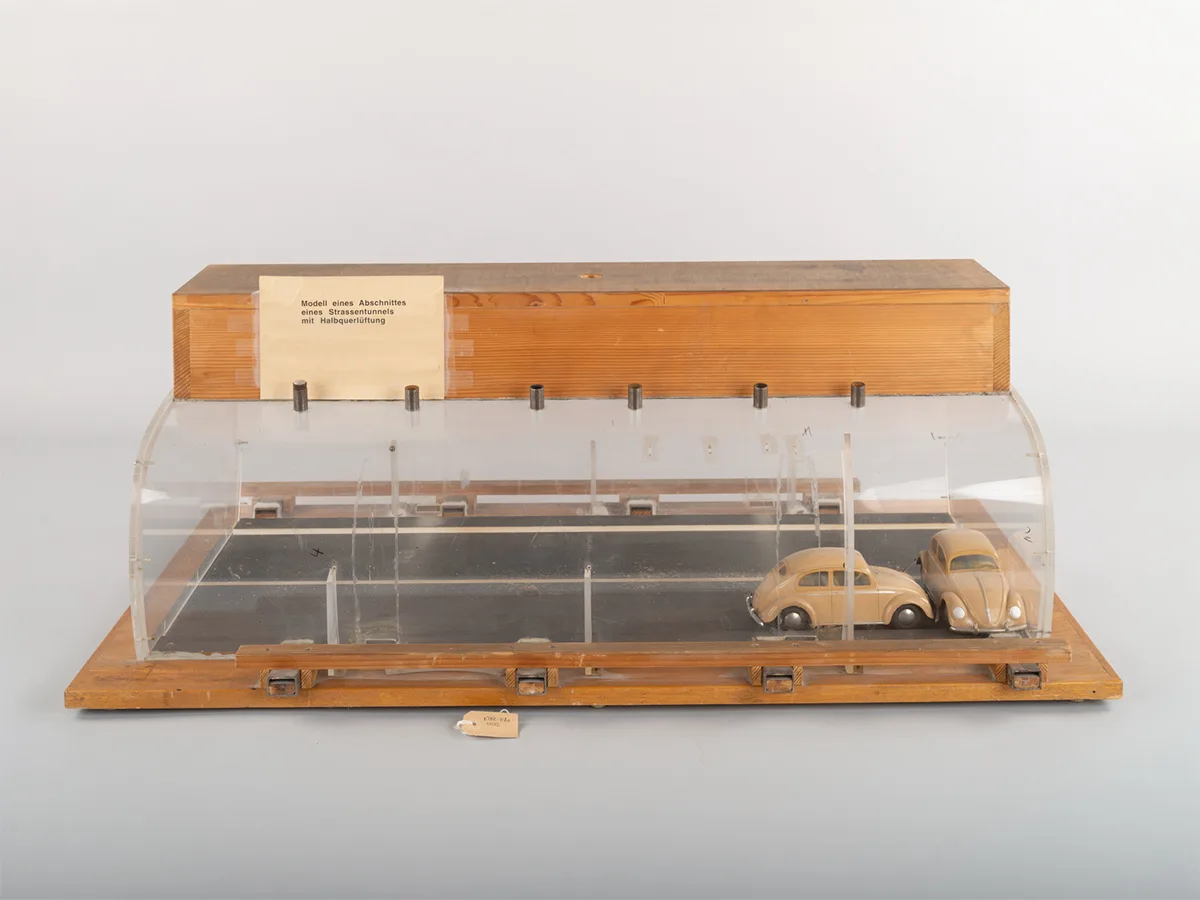
The wind tunnel was not just for aviation research. Scientists also investigated how wind affected high-rise buildings, how road tunnels could be effectively ventilated and how cars respond to aerodynamic pressure. The wind tunnel needed models to test airplanes, high-rise buildings and cars. These were usually custom-built for the research projects in the ETH modelling workshops.
Wind tunnel model of a high-rise building, circa 1970.
Wind tunnel model of a high-rise building, circa 1970. e-pics
Wind tunnel model of part of a road tunnel cross section with semi-transversal ventilation, circa 1961.
Wind tunnel model of part of a road tunnel cross section with semi-transversal ventilation, circa 1961. e-pics
These research models were usually disposed of to save space once the experiments had been completed, as they were just seen as aids as opposed to standalone research items. Despite their significance in the history of science, many models thus ended up being lost over time. That is why collections at many universities include teaching models but not the research versions.
The collection at the ETH Library of scientific instruments and teaching aids with its wealth of aerodynamic research models is thus something of a rarity. The professors and employees at ETH understood the value of the models beyond their role in experiments. This provides a multi-faceted image of aerodynamic research at ETH Zurich with the images from the ETH Image Archive and the documents in the university archive.

The tunnels today

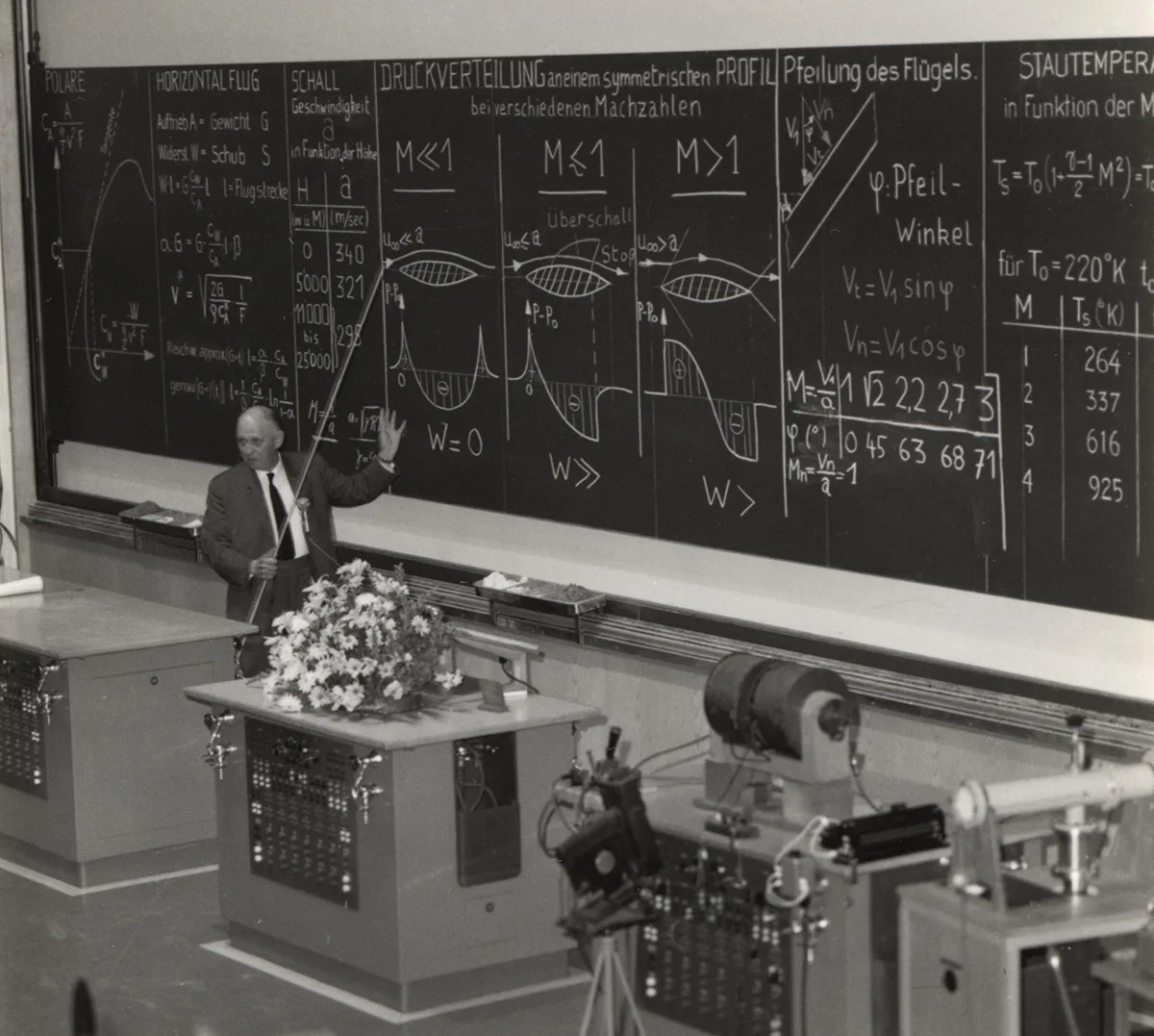
One ambition associated with the wind and supersonic tunnels at ETH was unfulfilled. Jakob Ackeret’s dream was a supersonic passenger aircraft. This did not happen, even when he was working with Swissair during the sixties. Economic and environmental concerns were too great, even back then. His farewell lecture on 10 July 1967 drew a line under the matter.
Farewell lecture entitled “The path towards supersonic passenger aircraft” by Jakob Ackeret.
Farewell lecture entitled “The path towards supersonic passenger aircraft” by Jakob Ackeret. e-pics
The supersonic tunnel was dismantled in the 1980s. The big wind tunnel still exists and now has listed status. It is still used for research at the Institute of Fluid Dynamics. The models from the wind tunnel tell this story chapter by chapter: from the pioneering years in the 1930s when ETH influenced international research right up to the unfulfilled visions of supersonic flight.

Models – shaping knowledge

21.08.2026 27.06.2027 / extract ETH Zürich
The exhibition presents over 500 historical and current teaching and research models from the scientific collections at the ETH Zurich and the University of Zurich – many of which are on public display for the first time. It provides a comprehensive overview of the diversity of the models covering anatomy, geometry, crystallography and aerodynamics. Each object tells a story of how researchers illustrate complex interrelations and derive new knowledge from observing the model.
Further posts