The Confederation’s policy of concordance
The Swiss Confederation has had a constitution since 1848. Yet the history of this legal document, which is still in force today, dates back much further. It would be almost impossible to imagine the federal state in its current form without this historical prelude.

René Roca
René Roca has a PhD in history and is a secondary school teacher and Director of the Research Institute for Direct Democracy fidd.ch.
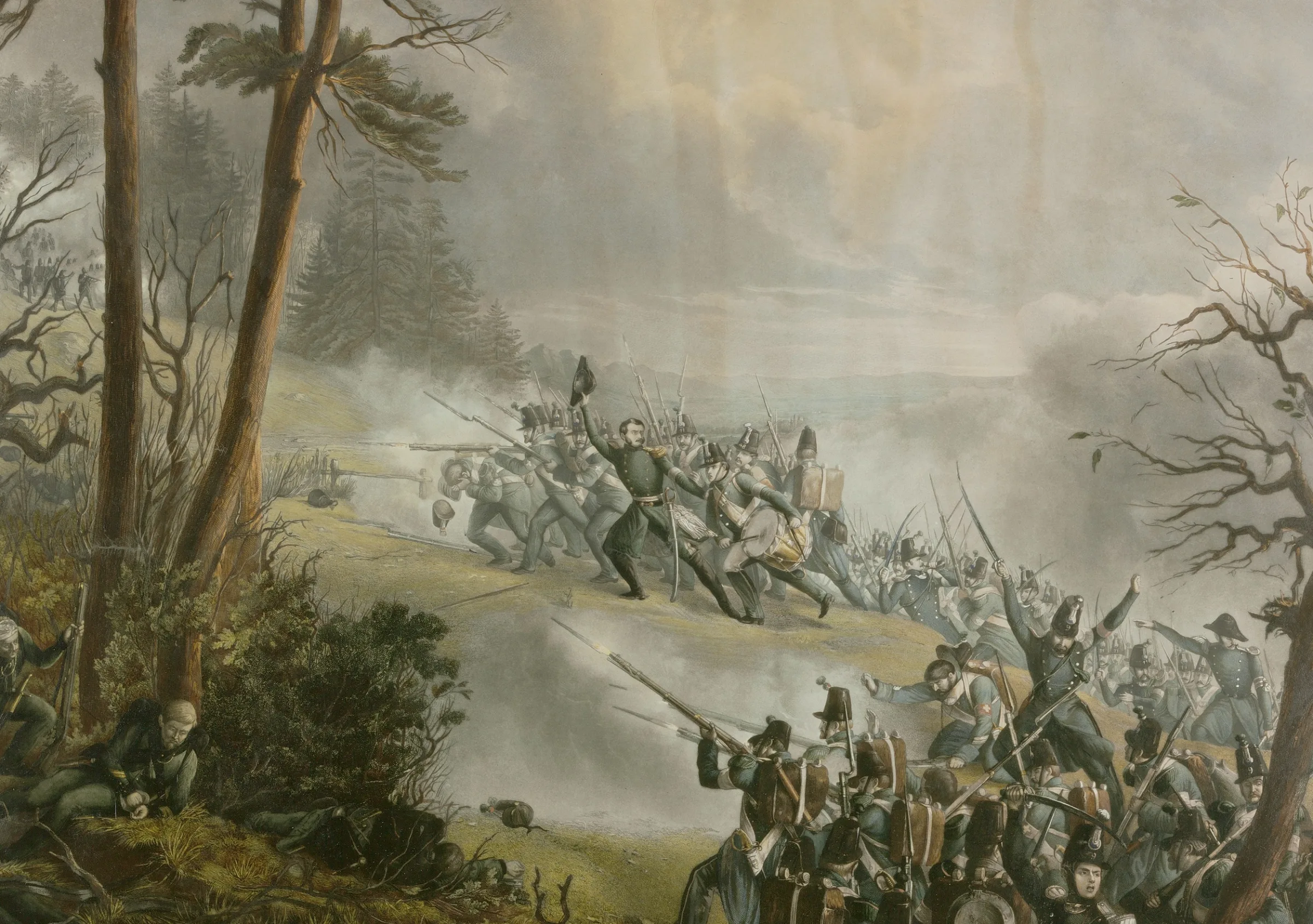
The Sonderbund (and its stance on the Jesuit issue, for example) played into the hands of certain liberal-radicals who believed that Switzerland could not be transformed without recourse to violence. They therefore waged a propaganda campaign that pushed the conflict ever closer to civil war. For their part, the Sonderbund's supporters managed to isolate themselves by accentuating the conflict's confessional aspects to such an extent that the Protestant conservatives and others who had sympathised with the Sonderbund's political concerns now turned their backs on it or remained neutral.
In this respect, we will begin by looking at two important historical developments in Switzerland in greater detail: Switzerland's neutrality and the cooperative principle, both of which were constitutive elements of the policy of concordance. We will then consider the attempts to revise the Confederation's Federal Treaty during the Regeneration period, before finally discussing the founding fathers' efforts to form a federal state, which were heavily influenced by the will to integrate.
Policy of concordance
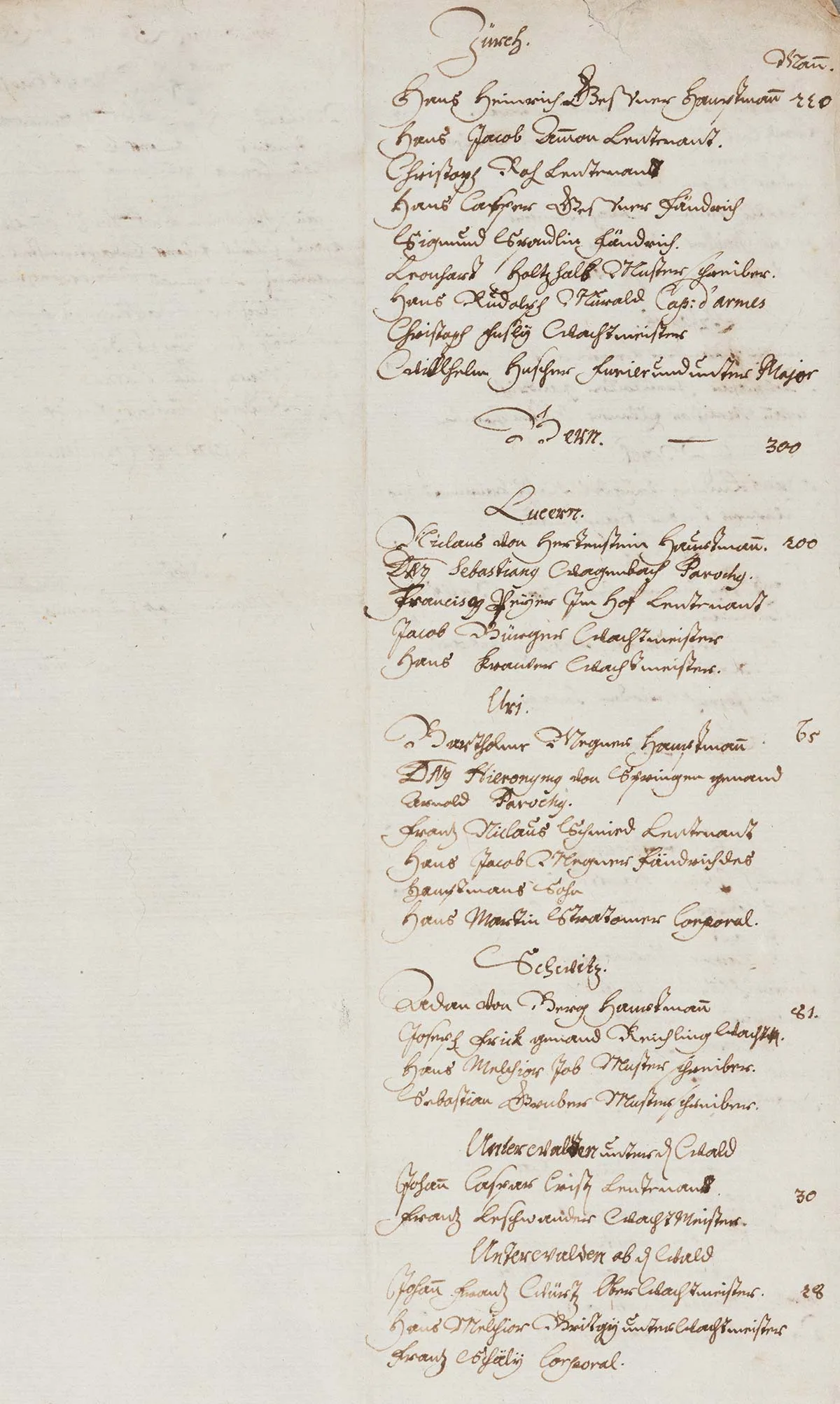
However, the Confederation remained entangled in numerous alliances, leading to disaccord and power-political interests that repeatedly got in the way of peaceful development. Neither was the mercenary system conducive to a foreign policy based on trust. Nevertheless, Switzerland's declared neutrality increasingly brought about the desired unity, and this multilingual country divided along denominational lines was able to develop relatively independently following its formal recognition by the international community as a sovereign state in the Peace of Westphalia (1648). The Confederation subsequently managed to stay outside the European wars of faith, conquest and succession in the early modern era. The concept of armed neutrality began to take shape during the Thirty Years' War (1618–1648), when the Defensionale of Wil (1647) created the first set of Confederation-wide military regulations. Switzerland developed its own arbitration procedures for peaceful dispute resolution. Initially intended as domestic policy measures, they later also gave rise to protecting power mandates on behalf of other countries.
Following the difficult periods of the Helvetic Republic (1798–1803) and the Mediation (1803–1815), which had nevertheless also generated significant momentum, Switzerland was once more able to develop more independently and to integrate the tradition of concordance, agreement and balance in its policies to a greater extent. It is possible to describe the cantons as ‘laboratories of liberty’ as early as the Restoration period (1815–1830). In due course, this too contributed to the development of democracy at the communal and cantonal level. These processes led to more direct democracy, but they also helped many valuable experiences to be gained and prevented disagreements from degenerating into political violence.
Attempts to revise the Federal Treaty, and the Sonderbund War
In addition, the liberal-radical faction was soon pushing for the Federal Treaty to be revised in the spirit of the new cantonal constitutions, based partly on an appeal made by Kasimir Pfyffer, an eminent citizen of Lucerne. However, revising the Federal Treaty faced a high political hurdle. As the document did not contain any provisions concerning its own revision, a heated debate erupted in the Diet as to whether a unanimous vote or a simple majority was required to change it.
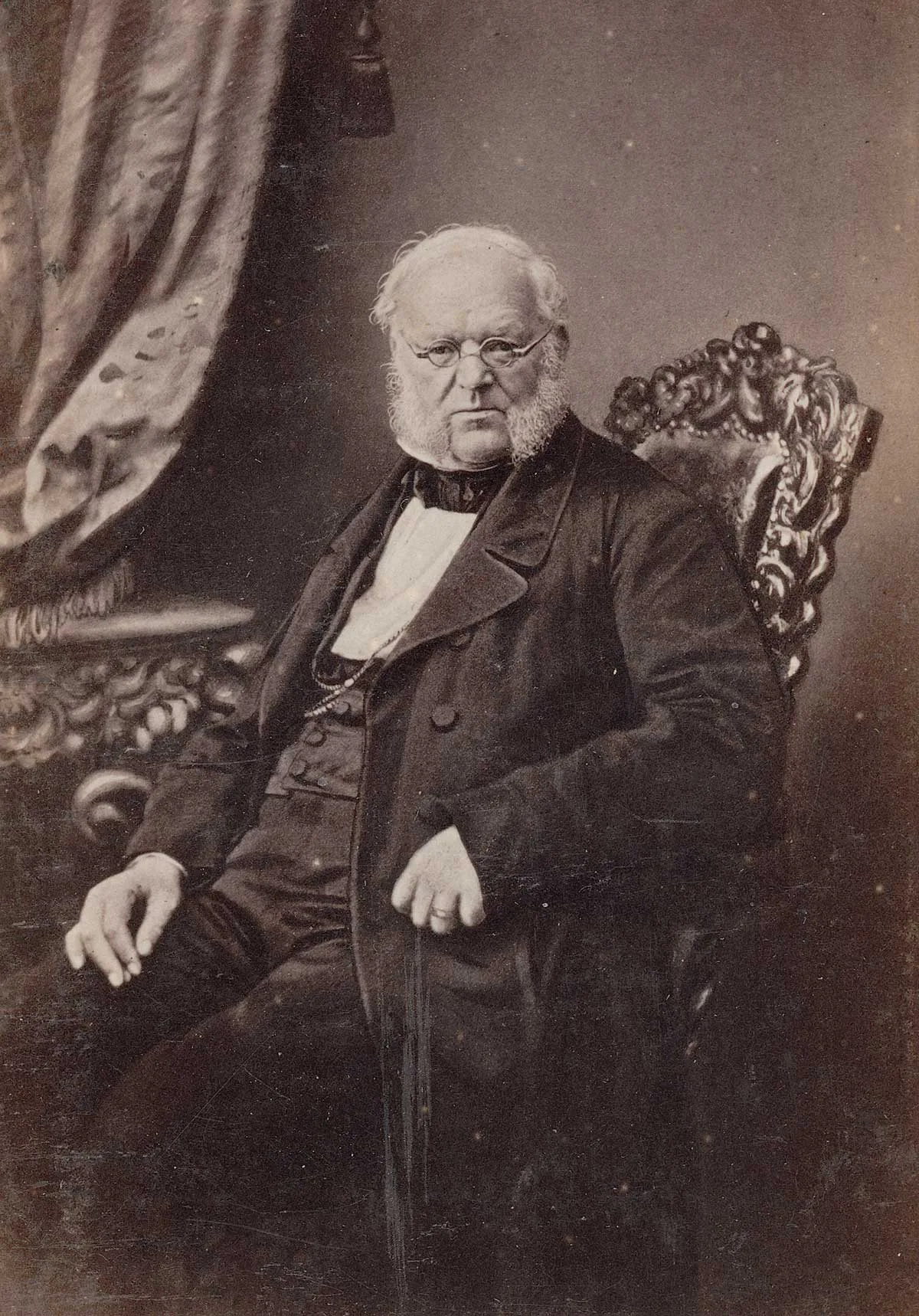
Among the economic measures, the free movement of persons and goods was to apply in Switzerland and a single currency was to be introduced. The draft was no doubt too ambitious overall, as considerable changes were made to it when the Diet met in May 1833. Following its approval by ten cantons, Rossi's draft was rejected in a popular referendum in Lucerne, the presiding canton that was also a candidate to become the seat of federal government, in July 1833, thus effectively scuppering the project. The opponents of the Rossi Plan, mainly Catholic and Protestant conservatives, and federalists, had won the day with their insistence that any amendment to the Federal Treaty would require unanimity. A second attempt at revision in 1833–1835 also met with failure. It must be noted that the Rossi Plan as a whole, along with three other non-official draft constitutions, represents an important milestone in the Swiss Confederation's constitutional history. However, although a start had been made, progress was far too slow for the liberal-radicals, who therefore continued to push the revolution forward, even if this meant violating the law on occasion and eventually led to retaliatory measures by the conservatives and to the Sonderbund war.
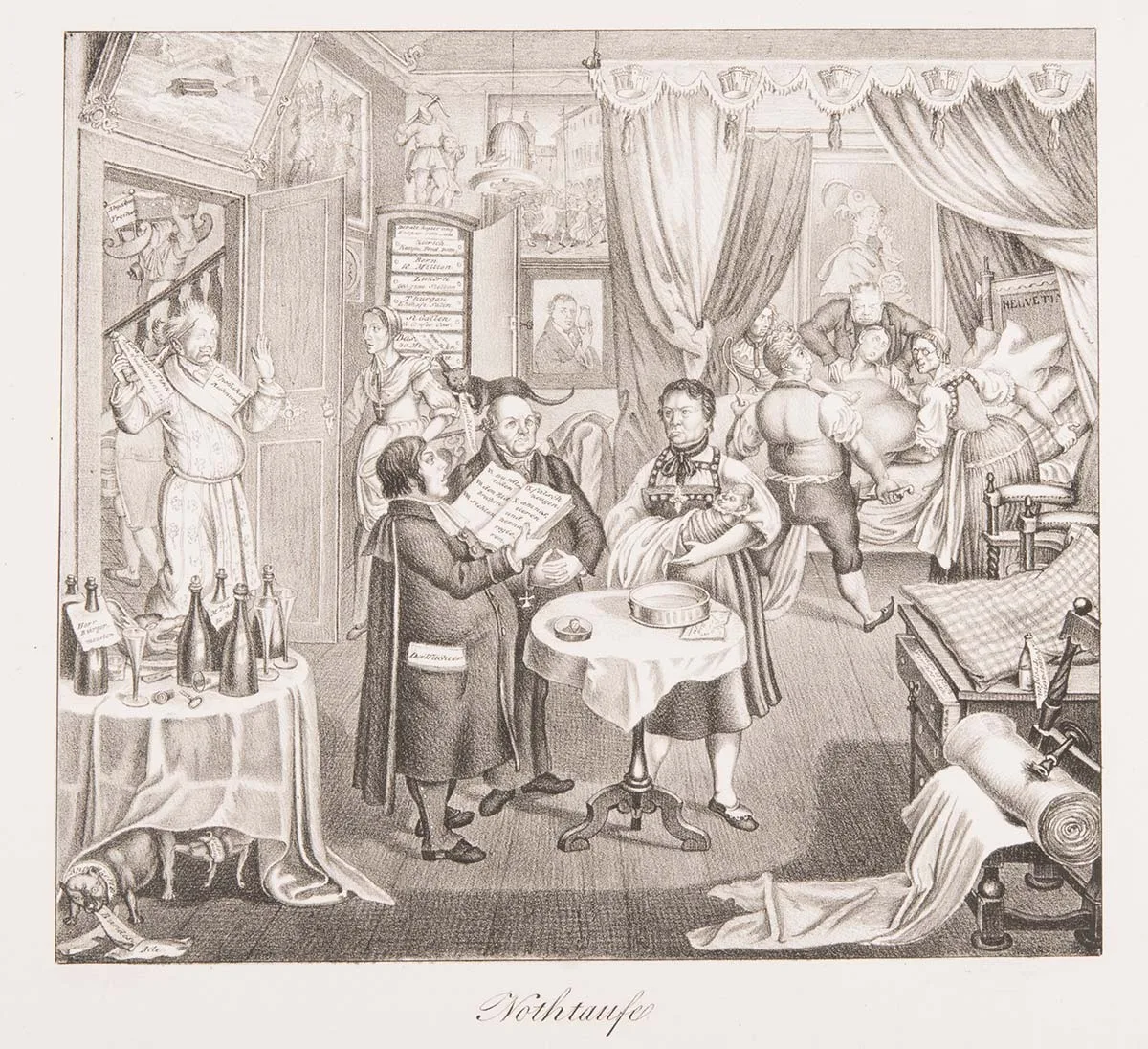
The policy of concordance was consolidated at the end of the short Sonderbund War when the new Federal Constitution was drawn up. Consequently, this process and the subsequent introduction of the Federal Constitution was no ‘Zero Hour’ as argued by Rolf Holenstein in his book Stunde Null. That aside, the private protocols and secret reports featured in the book make it a treasure trove of history in relation to the emergence of the Swiss federal state, and one which closes a number of gaps in the research. What is important, however, is the view that the Federal Constitution as a whole and the federal state are the result of a longue durée, or an extended period of development. In this context, Vasella states that "the spirit of wanting to understand one another, the determination to get along" has been significant in Swiss history. He goes on to say: "It took a long historical process to achieve [this] ethical basis."
The genius of the Federal Constitution
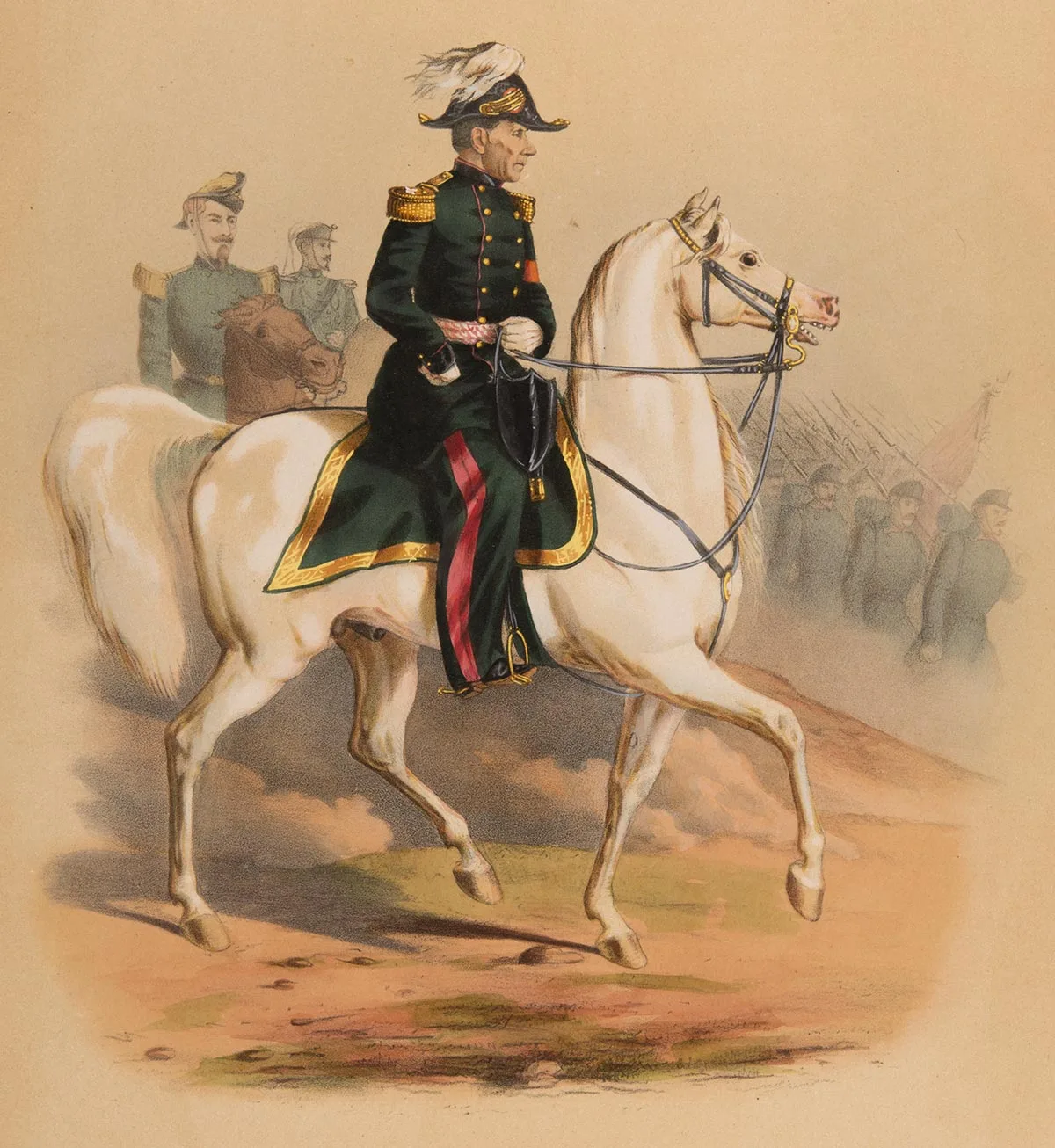
Just five days after the commission sat for the first time in February 1848, revolution broke out in Paris. It quickly spread to Europe's authoritarian monarchies, which only a few weeks earlier had been threatening to intervene should the Federal Treaty be amended. This development significantly weakened the external anti-liberal forces. The 23-strong commission seized the opportunity presented to it. Forgoing further improvements to the old Federal Treaty, it created the Federal Constitution in 51 days.
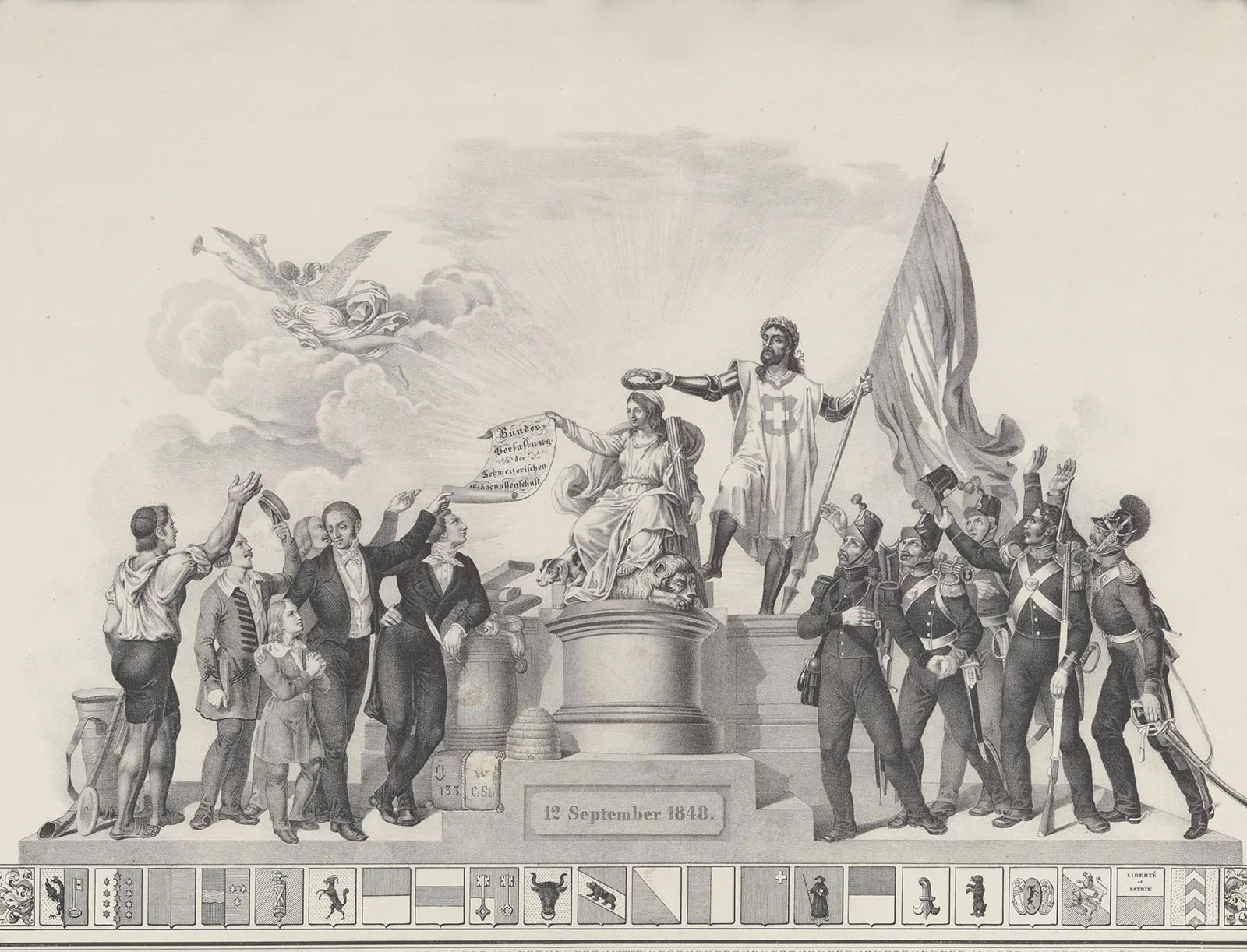
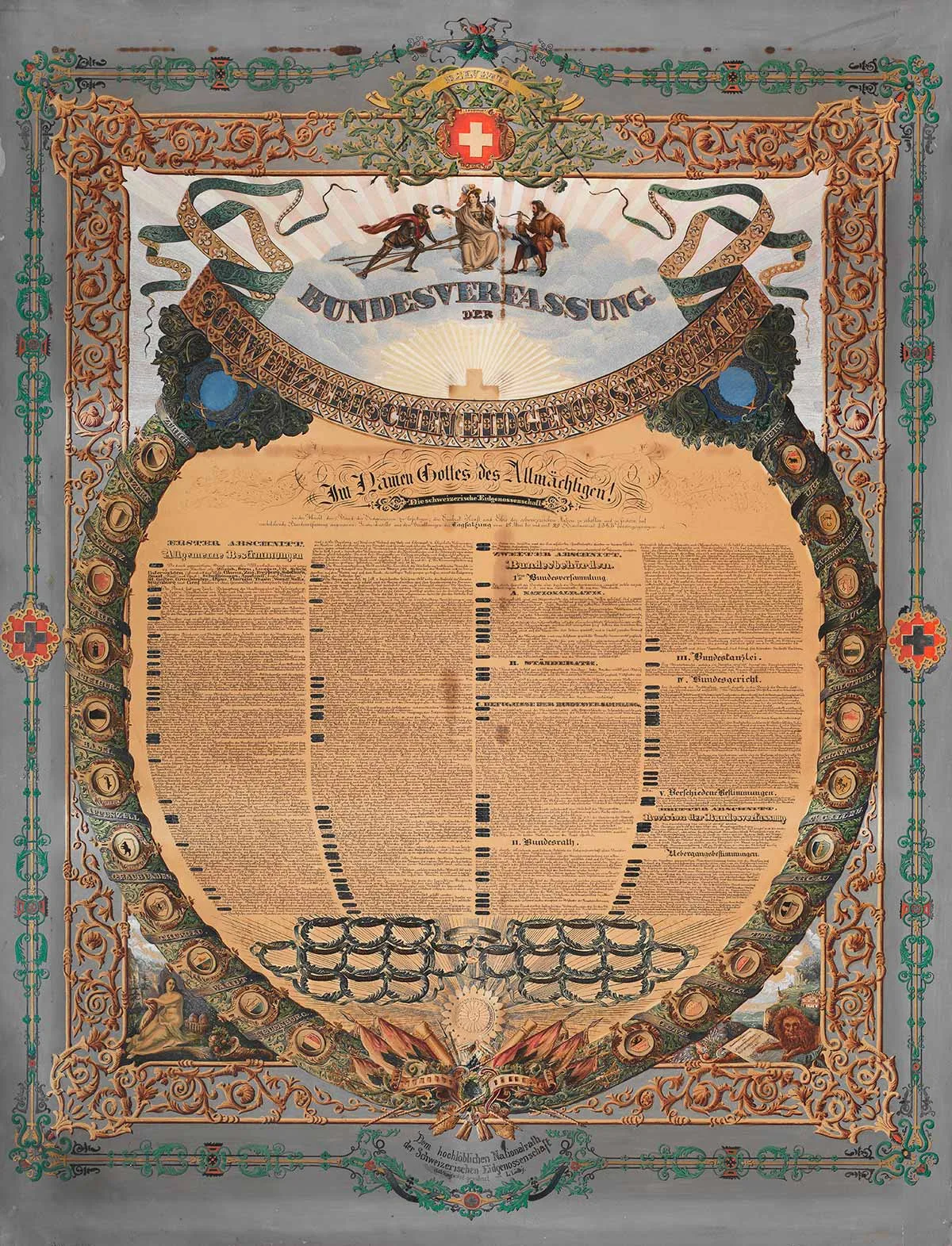
The Diet thus approved the new constitution in June 1848. Referendums were held in the cantons in July and August, with 15½ in favour and 6½ against. All the cantons of central Switzerland, plus Ticino and Valais said 'No'. Uri, Obwalden and Nidwalden also rejected the proposal at their Landsgemeinde cantonal assemblies. Lucerne said 'Yes', although that was due to a special procedure in which abstentions were counted as votes in favour. The former Sonderbund canton of Fribourg also voted in favour by virtue of a decision of the cantonal parliament. None of these events can exactly be described as a good omen for the new Federal Constitution, and hence for concordance and the integration of the losing side. However, it must be stressed that the defeated Catholic conservative camp was not opposed to the project per se and that most of the opposing cantons accepted the majority principle through gritted teeth and agreed to be bound by the Constitution, not least because some of their concerns had been incorporated into it. On 12 September 1848, the Diet thus declared the Federal Constitution adopted and in force as the basic law of the Confederation.
Integrating the losers
Neither must the ban on the Jesuits be allowed to conceal the clear federalist accents set by the federal state in giving the cantons power over the schools and churches, setting up the Council of States and introducing the requirement that a majority of the cantons must vote in favour of a proposal for it to be accepted. The Federal Constitution enshrined the principle of nationhood while allowing the cantons to retain their sovereignty. The Confederation and its member states fulfilled their mandate by means of bilateral cooperation based on subsidiarity. Thus, the Sonderbund indirectly helped to make a centralist solution more difficult and to prevent further revolutionary upheavals as called for by the radicals.