The Grenchen spy camera: a favourite of the Stasi and the CIA
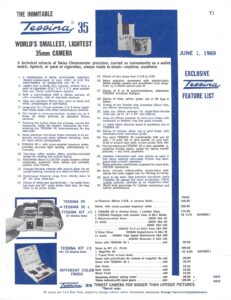
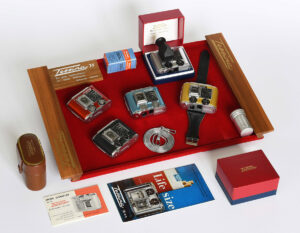
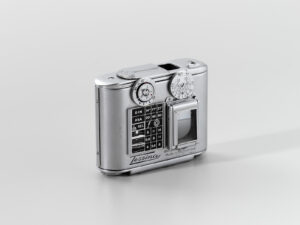
In 1960 an unusual camera came onto the market: the Tessina, made in Grenchen. It was the world’s smallest 35mm camera at the time. Although never a bestseller, it proved popular with some of the intelligence services.
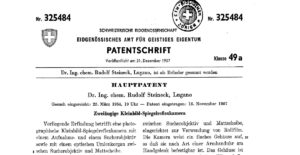
The Tessina came onto the market in 1960. It was made as a twin lens reflex camera. The picture-taking and viewing lenses were at the top. And it had a clockwork motor, which emitted a characteristic whirring sound when winding. The Tessina was the smallest camera at the time to use the conventional 35mm film format as well as the smallest twin lens reflex camera in the world.
The Minox came onto the market at the same time: it was also highly thought of in espionage circles, but it used a very small negative format. The Rollei35, another 35mm camera, launched in 1966, was more successful.
Although the camera was not financially successful and encountered numerous design issues, especially in the early stages, the Tessina was nonetheless a mechanical masterpiece that is still sought after by collectors today. It was used as image advertising for the company and demonstrated the quality of precision engineering associated with Grenchen.
Part of the Watergate affair
In spring 1971, Daniel Ellsberg, a military analyst from the RAND think tank, passed on to the New York Times and Washington Post 7,000 pages of a confidential report commissioned by the government to identify persistent shortcomings in the Vietnam war. The documents, known as ‘The Pentagon Papers’ outlined how the US government had been lying to Congress and the public for years. The two newspapers published extracts from the documents until a court order prevented them from continuing to do so. The President was incandescent with rage and appointed a small task force (nicknamed ‘the Plumbers’ within the White House) to identify the leak.
The ‘Plumbers’ Task Force’ was dissolved at the end of 1971. However, Howard Hunt and his accomplices continued to work for the White House. On 17 June 1972, they orchestrated a break-in at the Democratic National Committee headquarters in the Watergate building in Washington DC. A night watchman noticed them and called the police, leading to the arrest of five people by the FBI. They found many spy gadgets among their belongings, including two miniature cameras. It is not known whether a Tessina was one of the items found.
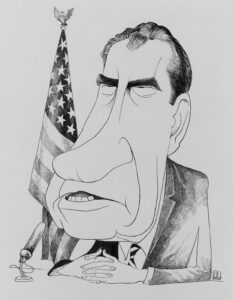
These arrests led to further investigations and two Washington Post reporters, Bob Woodward and Carl Bernstein, uncovered further disturbing findings with the assistance of their FBI source ‘Deep Throat’. Faced with the weight of evidence against him, Nixon ended up resigning on 9 August 1974.
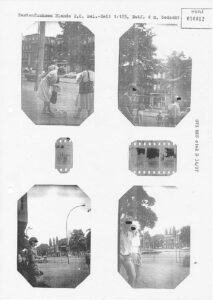
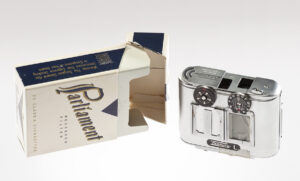
The cameras were hidden in key holders and shopping bags, in neckerchiefs, umbrellas and wallets and even concealed in a plaster cast for use “in front of hospitals”. The ‘cigarette’ model of 1972 was especially sophisticated: opening the packet would initially reveal cigarette filters that could then be removed. Two of the cigarettes were real. The inventors were rewarded with 50 East German marks each.
Supporting role in a Hitchcock thriller
He wants to access the plans for stationing Soviet ballistic missiles on Cuba. Before joining Cuban Rico Parra on the hotel balcony where the revolutionary is going to greet his supporters, a body search reveals the Tessina. “What’s that?”, the Cubans ask. “It’s my camera,” answers Dubois. “That’s a funny little camera,” says Parra. Dubois adds: “A very good one.”
Film clip in which the Tessina can be seen briefly (01:19). YouTube
The Tessina is now a coveted collector’s item that fetches about CHF 500 for the most basic model. Particularly colourful or special models are a lot more expensive. They are included in many museum collections, including that of the Swiss National Museum.