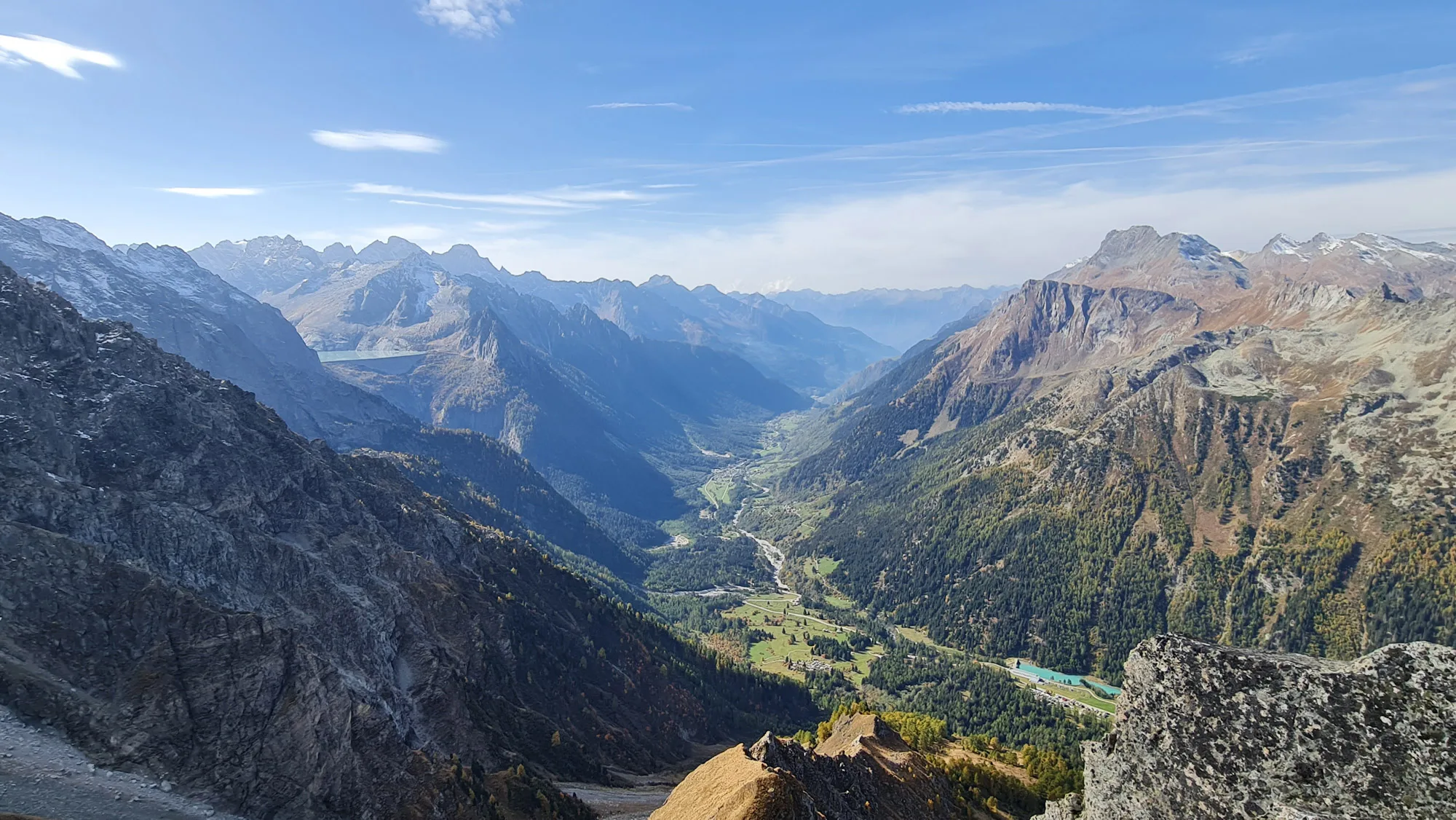
Val Bregaglia as seen from Piz Salacina: The valley emerged in the sixteenth century as a rare centre of Italian Protestantism within the Alps.
Val Bregaglia as seen from Piz Salacina: The valley emerged in the sixteenth century as a rare centre of Italian Protestantism within the Alps. Wikimedia

The Reformation in Val Bregaglia

Val Bregaglia (Bergell) has long been a crossroads, geographically and culturally, lying between Italian, Rhaeto-Romanic, and Germanic Europe. Characterized by trade routes, traditions of local autonomy, and religious ferment, the remote valley transformed into a unique refuge for Italian Protestants during the sixteenth century.
James Blake Wiener

James Blake Wiener

James Blake Wiener is a world historian, Co-Founder of World History Encyclopedia, writer, and PR specialist, who has taught as a professor in Europe and North America.

Graubünden’s Val Bregaglia is situated at an important intersection between Southern and Central Europe due to its proximity to the Septimer, Julier, and Splügen Passes. During the Middle Ages, trade and lucrative tolls on the roads lying in and around the Val Bregaglia enriched the Bishop of Chur, in addition to elite local families: the Salis, the Torriani, the Castelmur, and the Prevosti. As the Middle Ages drew to a close, the inhabitants of Val Bregaglia sought increased independence from the Bishop of Chur. Communities began to exercise their political rights through the election of a podestà – the highest civil magistrate in a municipality – at the dawn of the 1400s. In the decades leading up to the Reformation, Val Bregaglia, which had long functioned as a single administrative unit within the League of God’s House, split into two municipalities: the Sopraporta (“above the gate”) and the Sottoporta (“below the gate”).

Across the border in Italy, the doctrines of Luther and Zwingli sparked widespread interest and debate in the 1520s and 1530s, particularly in the cities of Lombardy, Piedmont, the Veneto, and Tuscany. Responding to the growing interest in his work among Italian readers, Zwingli addressed Italian evangelicals in the preface to his work "Commentary on True and False Religion" (1525).
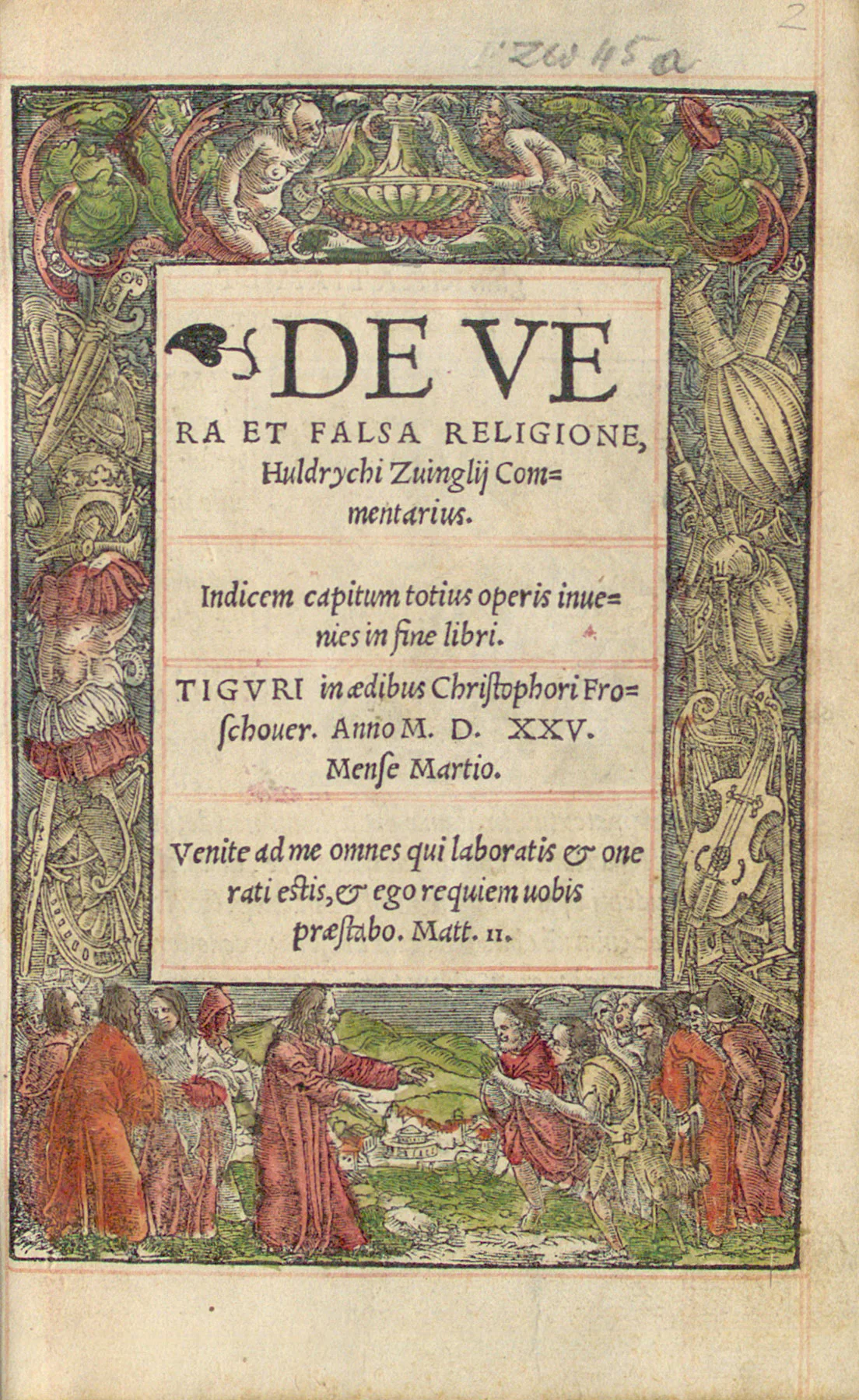
Zwingli's "De Vera Et Falsa Religione" generated considerable interest in Italy.
Zwingli's "De Vera Et Falsa Religione" generated considerable interest in Italy. e-rara
For many Italian scholars and reformers, Zwingli's writings became the foundation of their Christian beliefs and practices. Convinced by the principles of sola scriptura and sola fide – by scripture and faith alone – these Protestant Italians also upheld Zwingli’s calls for scriptural purity and his understanding of the Lord’s Supper. The first Italian reformer to preach reformed sermons in Val Bregaglia was Bartolomeo Maturo, the former head of a Dominican convent in Cremona, who arrived in the Sopraporta in 1532. Though his successes were modest, Maturo’s determination and devotion heralded the coming wave of Italian Protestant influence in the valley.

In 1541, Pope Paul III established the Supreme Sacred Congregation of the Roman and Universal Inquisition – later known as the “Holy Office” – in Rome. A few years afterwards, the Venetian Holy Office, an extension of the Roman Inquisition, was established in Venice in 1547.
This video offers an overview of the Roman Inquisition. Youtube
Thousands of Protestant refugees – artisans, merchants, former members of the clergy, and humanists – fled Italy due to fears of persecution by the Inquisition. A sizable number found sanctuary in nearby Switzerland, while others moved to England, France, German duchies, Moravia, Poland-Lithuania, and Transylvania.

A good number of the refugees who reached the Old Confederation and the Three Rhaetian Leagues were educated and cosmopolitan. Their conversion to Protestantism often stemmed from personal engagement with scripture, commercial contact with Swiss and German Protestants, or conflicts with Catholic authorities, including those arising within monastic orders. Others were renowned theologians who ultimately became entangled in fiery theological disputes: Bernardino Ochino (1487-1564) of Siena, Peter Martyr Vermigli (1499-1562) of Florence, Celio Secondo Curione (1503-1569) of Cirié, and Lelio Sozzini (1525-1562) of Padua.

In Italy persecution is growing fiercer, and the mischief is that some retract and deny Christ; but still knowledge is greatly spread.
Pietro Paolo Vergerio in a letter written in March 1551 about the state of Protestantism in Italy
Val Bregaglia’s appeal to Italian Protestant refugees owed much to the Articles of Ilanz, first promulgated in 1524 and reaffirmed in 1526, which institutionalized communal choice of confession within Graubünden. By the 1540s, parish records reveal that pastoral leadership in the valley was overwhelmingly Italian.
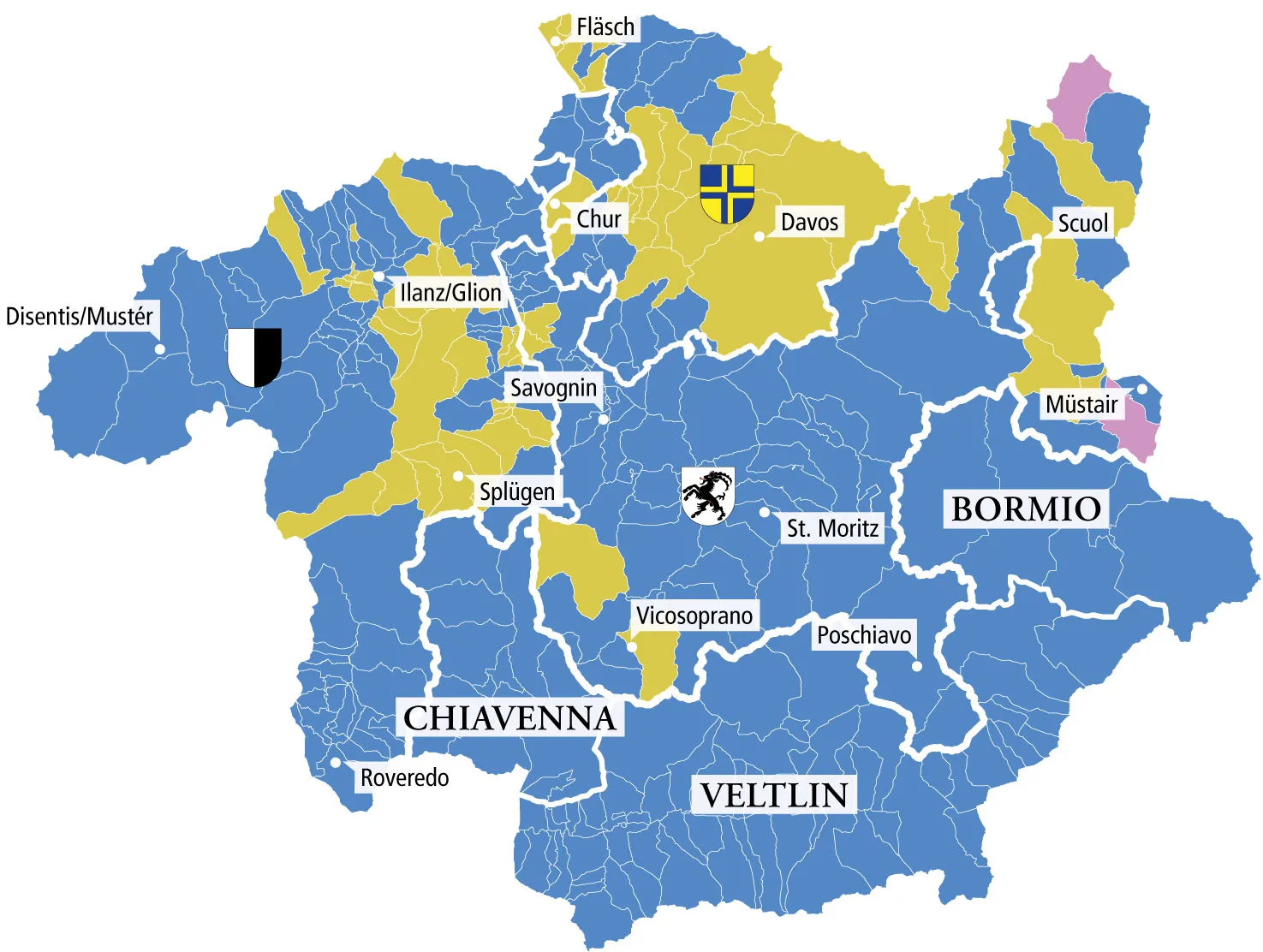
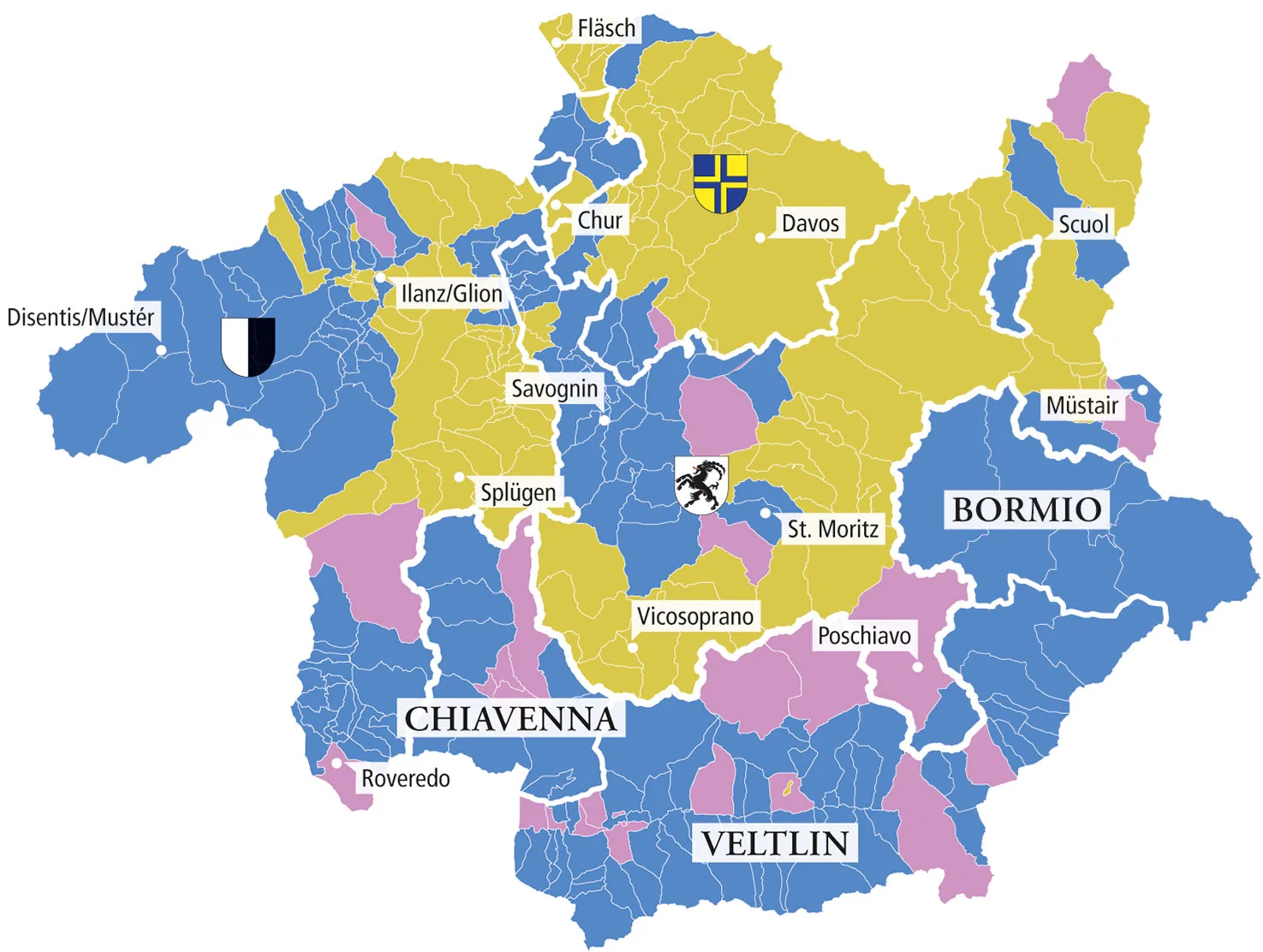
Comparison of religious denominations in Graubünden between 1530 (left) and 1570 (right). Many municipalities converted to Protestantism (green) from Catholicism (blue) or became mixed confessional (purple) thanks to the efforts of Italian Protestant émigrés like Pietro Paolo Vergerio and Michelangelo Florio.
Comparison of religious denominations in Graubünden between 1530 (left) and 1570 (right). Many municipalities converted to Protestantism (green) from Catholicism (blue) or became mixed confessional (purple) thanks to the efforts of Italian Protestant émigrés like Pietro Paolo Vergerio and Michelangelo Florio. Kulturforschung Graubünden / Kulturforschung Graubünden
Pietro Paolo Vergerio (c. 1498-1565), who was born in Venetian-controlled Istria, is perhaps the most noteworthy of the refugees who came to Val Bregaglia in the immediate aftermath of the establishment of the Inquisition. Vergerio’s remarkable career mirrors that of a Renaissance gentleman. A graduate of the University of Padua, Vergerio was a poet, prosecutor, and judge before becoming a papal nuncio to Archduke Ferdinand of Austria in Vienna and Prague. Although Vergerio initially believed that Protestants and Catholics might be reconciled, his interactions with Luther and other German reformers led him to embrace Protestantism. Thereafter, he espoused a vociferous hostility to corruption within the Catholic Church. Vergerio’s beliefs and extensive correspondence attracted the scrutiny and ire of the Venetian Inquisition between 1544–1546. Rather than face trial, Vergerio fled to Val Bregaglia, by way of Chiavenna, in 1549.

Upon his admittance to the Graubünden Synod, Vergerio became the pastor of Vicosoprano in 1550, where he served for three years. His preaching resonated so strongly with the valley’s independent-minded population that he succeeded in converting the towns of Soglio, Stampa, and Bondo to Protestantism in under two years. Castasegna fully converted in 1555. Although Protestantism spread peacefully throughout Val Bregaglia thanks to Vergerio, he was a committed iconoclast. With his encouragement, a mob desecrated the church of San Gaudenzio in Casaccia in 1551, throwing objects of veneration into the Orlegna River. In addition to his work in Val Bregaglia, Vergerio played an active role within Dolfino Landolfi’s printing house in Poschiavo, which published Protestant literature for Italian and Romansh readers. His personal zeal and oversight of the publication of anti-Catholic polemics further consolidated the Protestant presence in Val Bregaglia, Poschiavo, and the Upper Engadin.
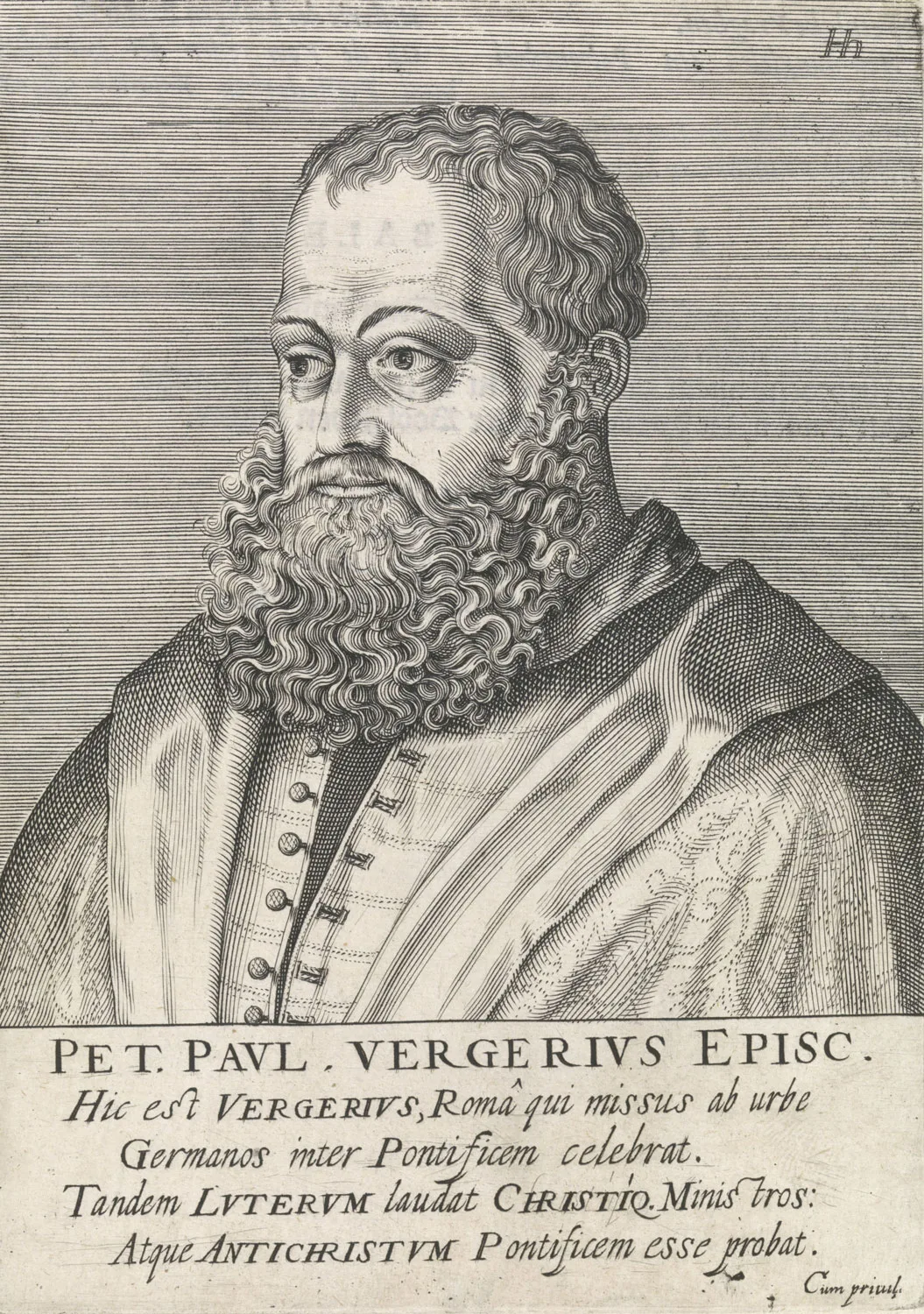
Managed to convert several towns in Val Bregaglia to Protestantism: Pietro Paolo Vergerio (c. 1498-1565).
Managed to convert several towns in Val Bregaglia to Protestantism: Pietro Paolo Vergerio (c. 1498-1565). Wikimedia
Vergerio additionally maintained an energetic correspondence with the leading Protestant theologians in Zürich, Basel, Bern, and Geneva during his ministry in Vicosoprano, but Heinrich Bullinger found Vergerio's understanding of the Lord's Supper to be too “Lutheran.” In the Old Confederation and Three Rhaetian Leagues, Italians preaching beliefs deemed “heretical” faced recrimination, exile, and even death. Those suspected of holding secret Anabaptist or Anti-Trinitarian views received no sympathy whatsoever. Fearful of persecution or reprisal, Vergerio left Val Bregaglia in 1553 in order to undertake diplomatic missions for Christoph, Duke of Württemberg across Eastern Europe. Vergerio continued to author pro-Protestant tracts throughout the duration of his life; he also played a key role in assisting the Slovene Protestant reformer, Primož Trubar, in the translation of the New Testament into Slovenian before dying in Tübingen, Germany in 1568.

If you will be a traveler, have always two bags very full. That is one of patience and another of money.

John Florio (c. 1552-1618), son of Italian scholar and Protestant preacher Michelangelo Florio (1518-1566)
Protestant Italians continued to migrate through or settle Val Bregaglia in the 1550s, 1560s, and 1570s. Many of the later arrivals came from Lucca and other Tuscan cities and had already lived elsewhere in Europe before settling in the valley. They arrived with impressive, wide-ranging contacts from across Protestant Europe. Noteworthy among these is the humanist Michelangelo Florio (1518-1566). Born into a family of Jewish origins in the Tuscan town of Figline Valdarno, Florio was orphaned at a young age and raised by extended relatives in Trentino. Florio pursued a religious vocation as a Franciscan friar and was a devout Catholic until he discovered and read illicit Lutheran texts. Persuaded by the clarity and rhetorical strengths of the Protestant reformers, Florio passionately embraced Protestantism despite the dangers it entailed. His open preaching of Reformed ideas led to an arrest on charges of heresy and imprisonment in Rome in 1548.

The shrewd Florio, however, escaped prison before being sentenced to death. He fled first to Venice where he contacted the English ambassador, who, in turn, helped Florio relocate to London by the end of 1550. Thanks to his connections, including the Archbishop Thomas Cranmer of Canterbury and the statesman William Cecil, Florio received an appointment to preach at the Stranger Italian Church in London and a generous annuity of £20 (equivalent to approximately £9,102 in 2025) from Edward VI. In England, Florio, moreover, tutored Lady Jane Grey in Italian, wrote an Italian language grammar book, and made the acquaintance of the future Elizabeth I. Although Florio was an excellent orator, his impassioned sermons proved unpopular with members of the Stranger Italian Church. Several members even accused him of impropriety with the mother of his son, the celebrated humanist John Florio (c. 1552-1618).

When the Catholic Mary I ascended to the English throne in 1553, Florio felt compelled to flee abroad along with other Marian exiles. By sheer chance, Florio met the Graubünden-born nobleman, Frederick of Salis, in Strasbourg in April 1555. Frederick had converted to the Reformed faith on Christmas Day in 1552, in spite of deep opposition from his family, and he needed new allies to retain his influence in Val Bregaglia. Frederick thus offered Florio the vacated position of pastor of Soglio at the Church of San Lorenzo, which another Italian refugee, Michele Lattanzio, had previously filled. Florio accepted Frederick’s offer even though Soglio, located in the Sottoporta, was a stark contrast from London with only about 400 inhabitants. Florio and his young son, John, arrived in Soglio on May 27, 1555.
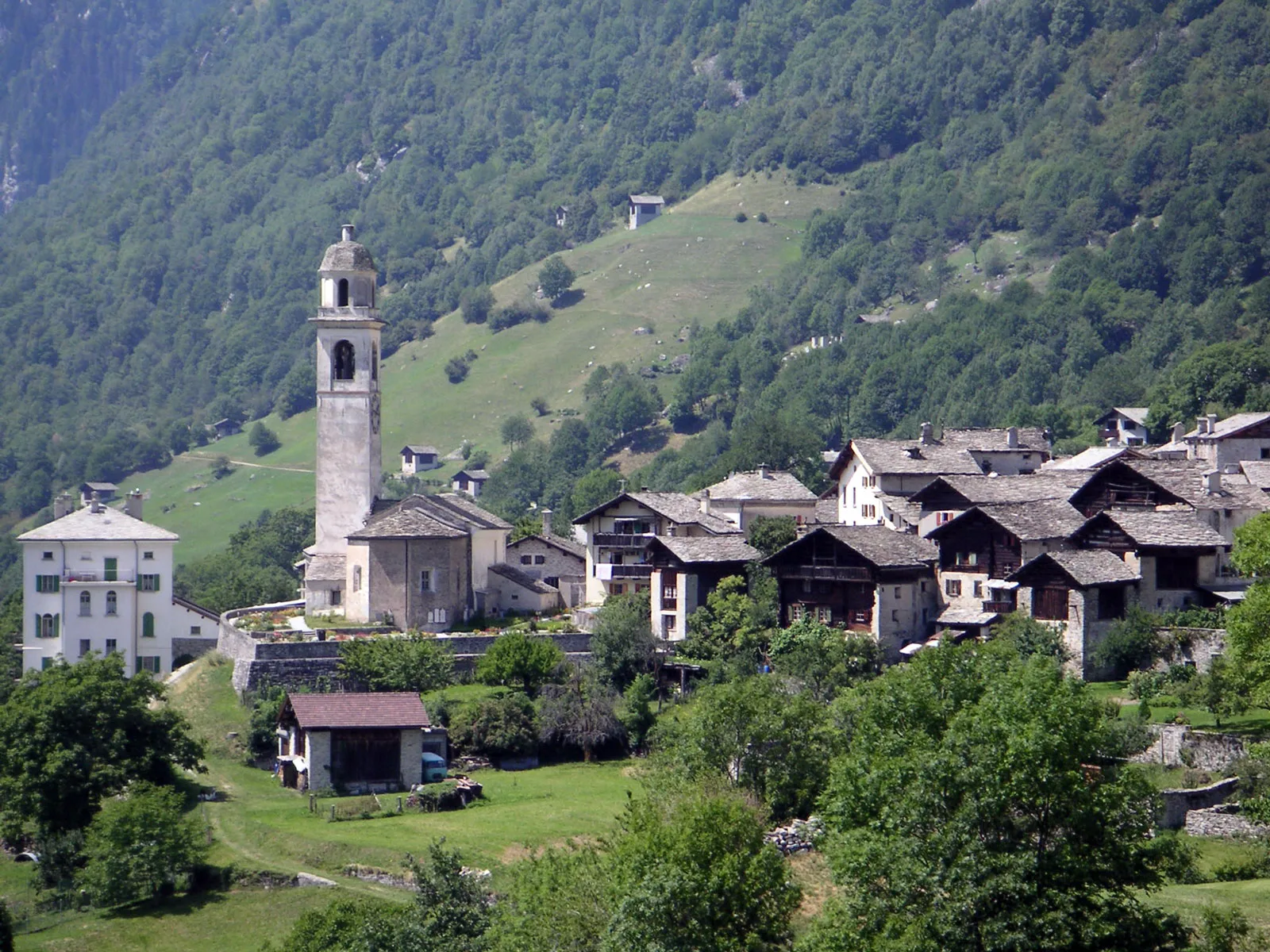
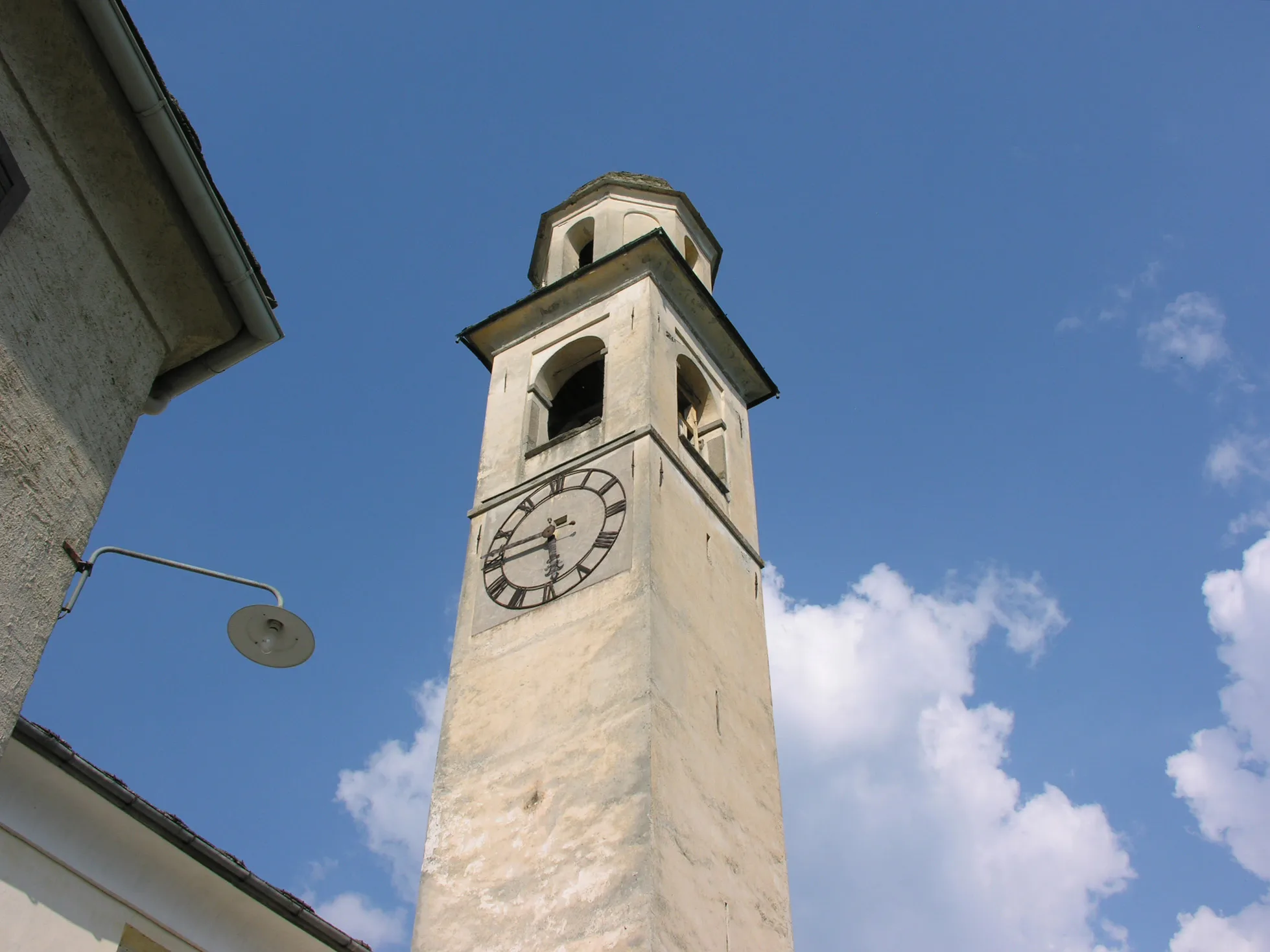
View on the Church of San Lorenzo and the village of Soglio.
View on the Church of San Lorenzo and the village of Soglio. Wikimedia
Image 01 of 03
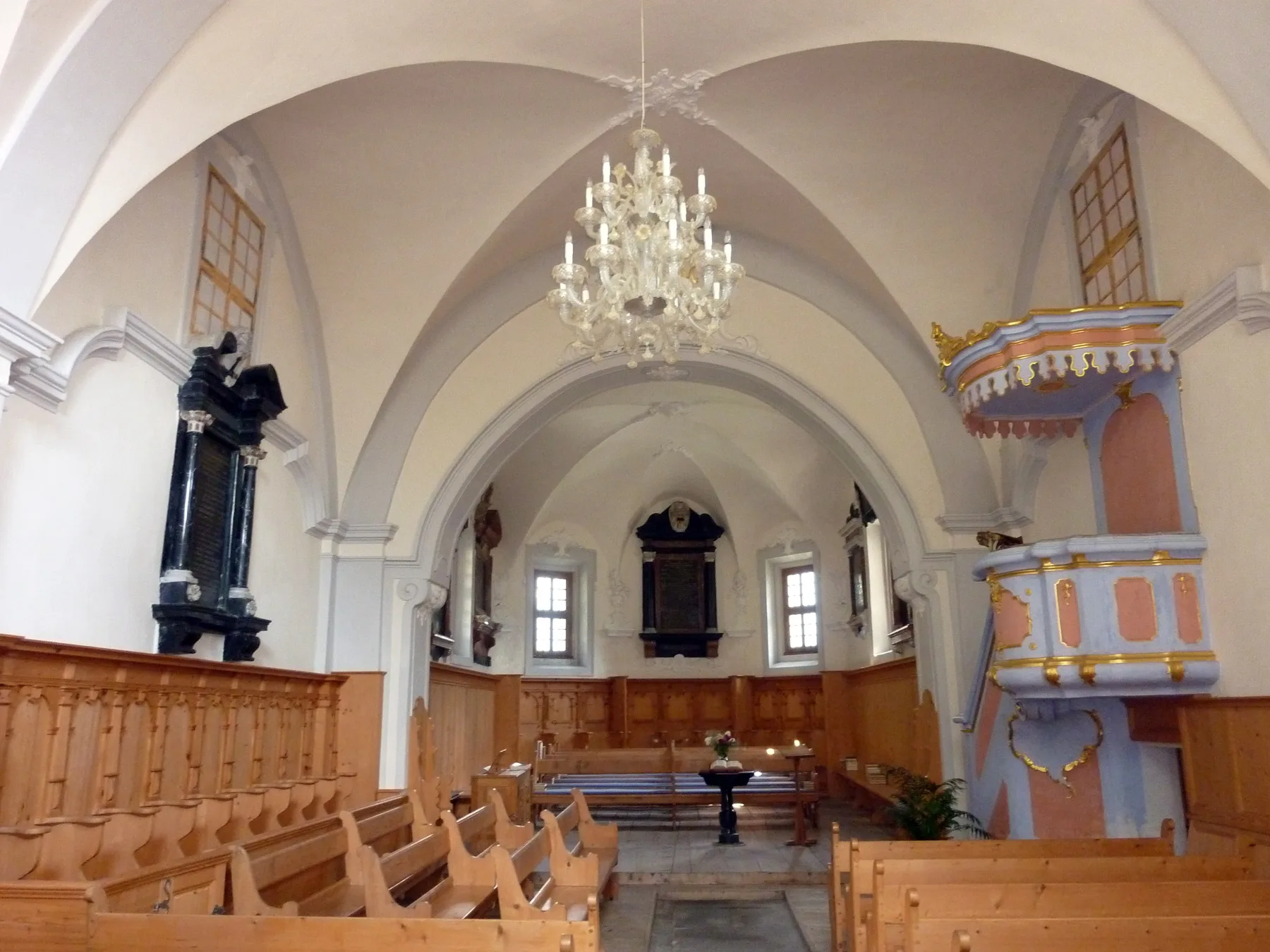
In this church, the reformer Michelangelo Florio preached.
In this church, the reformer Michelangelo Florio preached. Wikimedia
Image 01 of 03
The simple interior of the church reflects the enduring legacy of Italian Protestant refugees in the region.
The simple interior of the church reflects the enduring legacy of Italian Protestant refugees in the region. Wikimedia
Image 01 of 03
In addition to his Sunday duties, which included delivering a three-hour sermon, Florio worked as a notary in nearby Piuro and served as a private tutor. He continued his scholastic pursuits, translating the most famous text on mining from Latin into Italian in 1563: De re metallica (1556) by Georgius Agricola. Florio dedicated the translation to his erstwhile friend, Elizabeth I of England. He made frequent visits to Chiavenna to see his former colleague, the famed Neo-Classicist and dramatist Lodovico Castelvetro, and to Castasegna to visit the Sicilian minister Girolamo Ferlito, who would one day assume Florio’s former post at the Italian Stranger Church in London. Florio enjoyed relative tranquility during the last decade of his life in Val Bregaglia, but his long philosophical flirtation with anti-Trinitarianism eventually caught up with him. In 1561, the Reformed Synod of Chur questioned Florio on the matter of anti-Trinitarianism, and he had to retract his earlier support.

In the sixteenth century, Val Bregaglia was marked by a distinctive cosmopolitanism shaped by Italian Protestantism. Preachers like Pietro Paolo Vergerio and Michelangelo Florio brought Reformed ideas northward from Italy, establishing the valley as one of the rare European regions where Protestant doctrines spread from the south to the north. The arrival of these reformers and their followers transformed the valley’s ethnic, religious, and linguistic composition. Today, Val Bregaglia remains overwhelmingly Protestant and Italian-speaking, and the austere interiors of its churches continue to bear witness to the enduring cultural, spiritual, and intellectual legacy of these Italian Protestant refugees.
Further posts