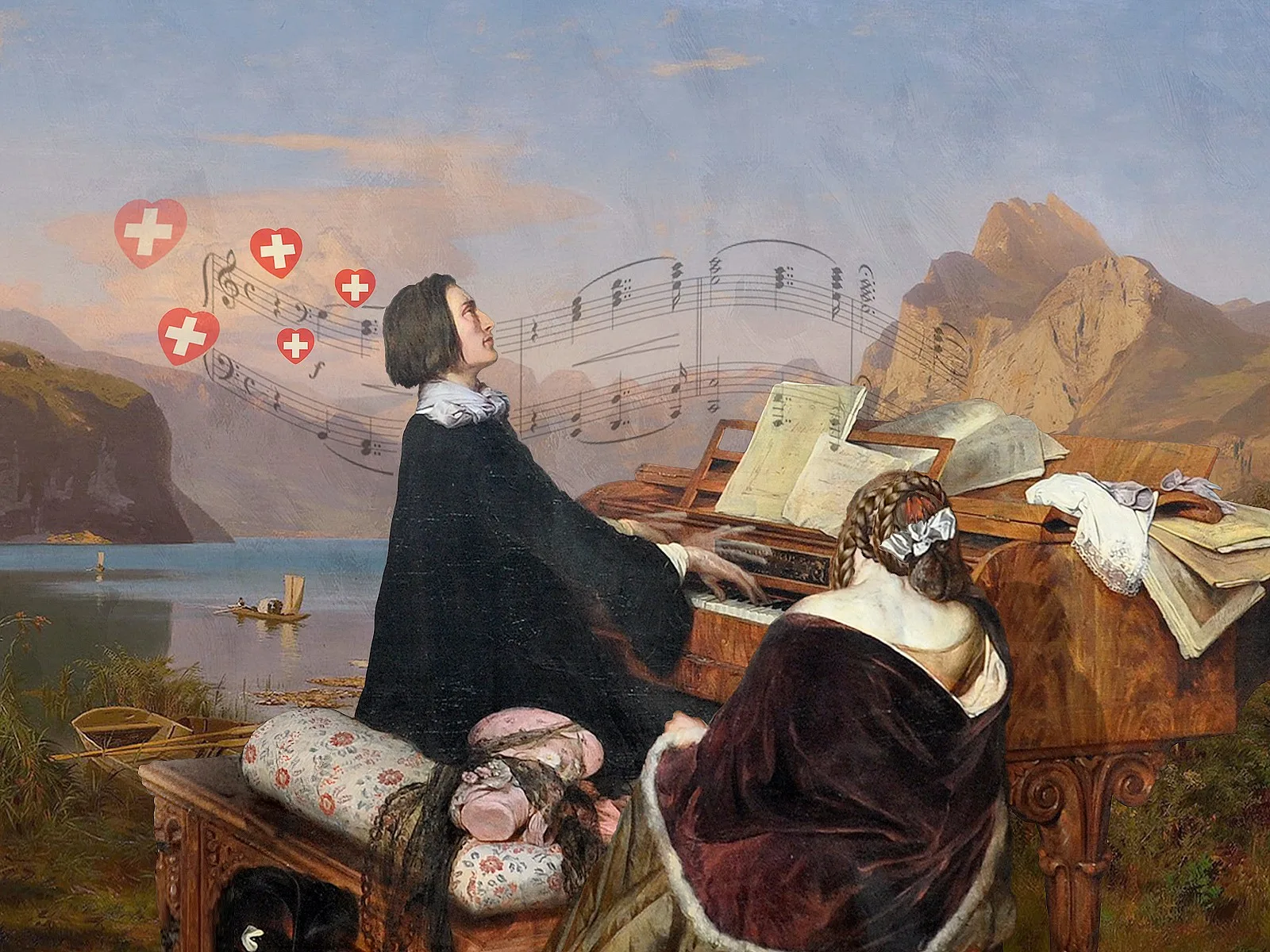
Franz Liszt also immortalised a piece of Switzerland in his melodies. Illustration by Marco Heer.

Switzerland as seen by a virtuoso

Composer Franz Liszt created his own image of Switzerland in his famous work ‘Années de pèlerinage’. Poems and illustrations accompanied his music.

Barbara Basting

Barbara Basting

Barbara Basting worked as a cultural editor and currently heads the visual arts division in the City of Zurich’s Culture Department.
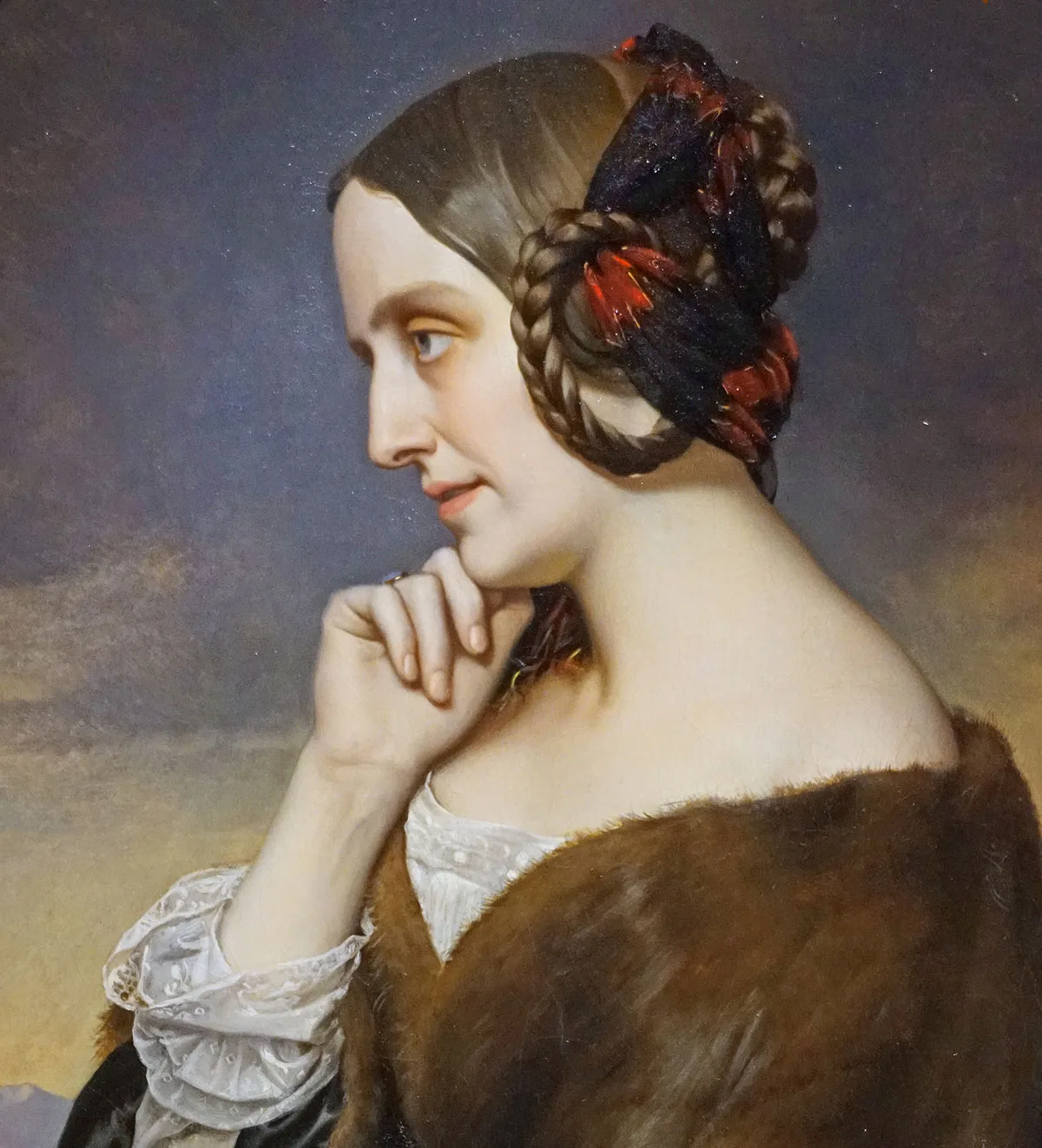
“The shores of Lake Wallenstadt detained us for some time. Franz wrote for me there a melancholy harmony, imitative of the sigh of the waves and the cadence of oars, which I have never been able to hear without weeping”. These sentimental lines about Franz Liszt (1811–1886) come from the memoirs of Marie d’Agoult (1805–1876). Born into the highest circles of society and married to a man befitting her rank, the countess was already the mother of two young children by the time she first encountered the virtuoso in a Parisian salon. Their subsequent liaison would go down in the annals of music history.
Countess Marie d'Agoult, painted by Henri Lehmann, 1843.
Countess Marie d'Agoult, painted by Henri Lehmann, 1843. Wikimedia / Musée Carnavalet, Paris
The vibrant cultural scene in Paris was a stomping ground for piano prodigies from all over the world. Liszt and his friend Frédéric Chopin stood head and shoulders above the rest. One contemporary witness, the author Heinrich Heine, wrote about Liszt: “He is without doubt the artist who finds in Paris the most unreserved enthusiasm, as well as the keenest opposition. It is significant that no one speaks of him with indifference”.
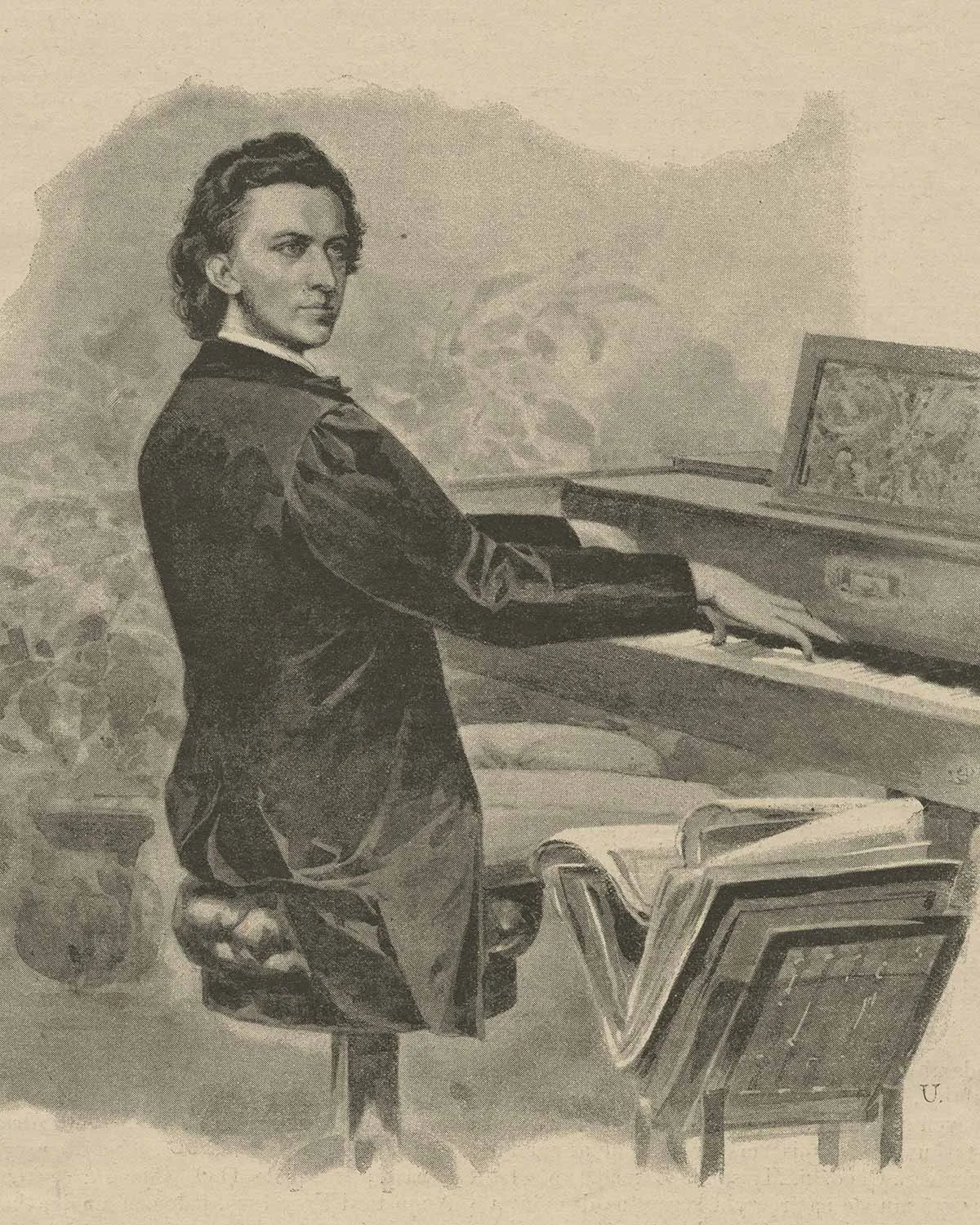
Artistic portrait of Frédéric Chopin, 1892.
Together with Frédéric Chopin ... Wikimedia / Mazovian Digital Library
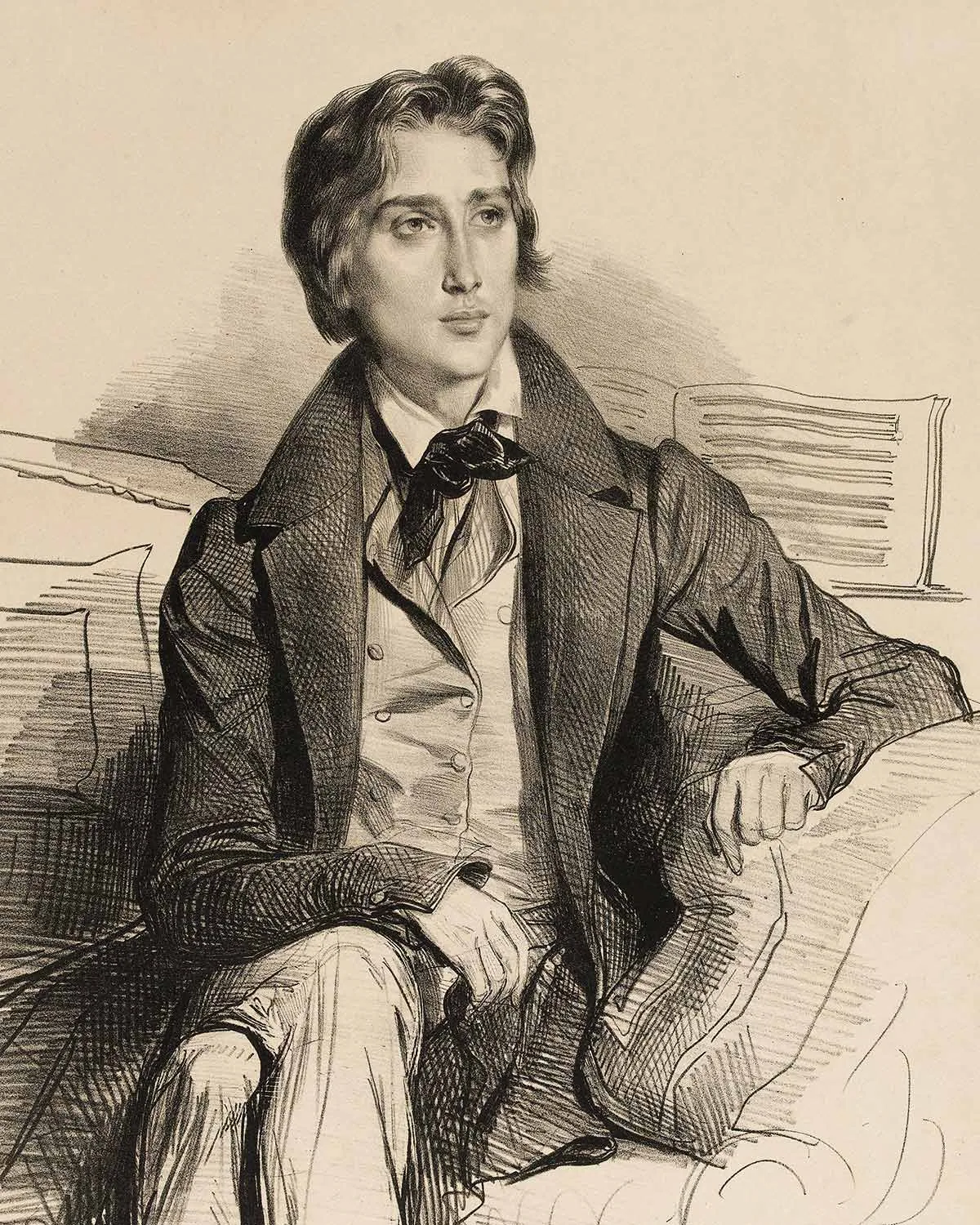
Artistic portrait of Franz Liszt, 1832.
... Franz Liszt shook up the Parisian music scene. Wikimedia / Musée Carnavalet, Paris
D’Agoult sought solace in the liaison from a loveless marriage and the death of a daughter at the tender age of six. For Liszt, the son of a civil servant from the Hungarian provinces who had worked his way up the social ladder in Paris and a man of reckless ambition, there was probably also an element of calculation involved. “The game I am now playing needs three years to be won or lost,” he wrote in a letter in 1835. For Liszt, this “game” meant finishing three large-scale works in a short period of time, thereby establishing his reputation as a serious composer. The works in question were the ‘24 grandes études’, the ‘Marie-Poème en 6 chants ‘(for piano) and the ‘Harmonies poétiques et religieuses’ cycle (in complete form, meaning five or six new pieces). Prior to this, Liszt had mainly been known for piano arrangements and improvisations.
The ‘Feux follets’ is probably the most famous of the études Franz Liszt began composing in 1826. It is extremely challenging as it contains wide intervals and extreme changes of position, as well as passages that veer off in seemingly illogical directions. YouTube
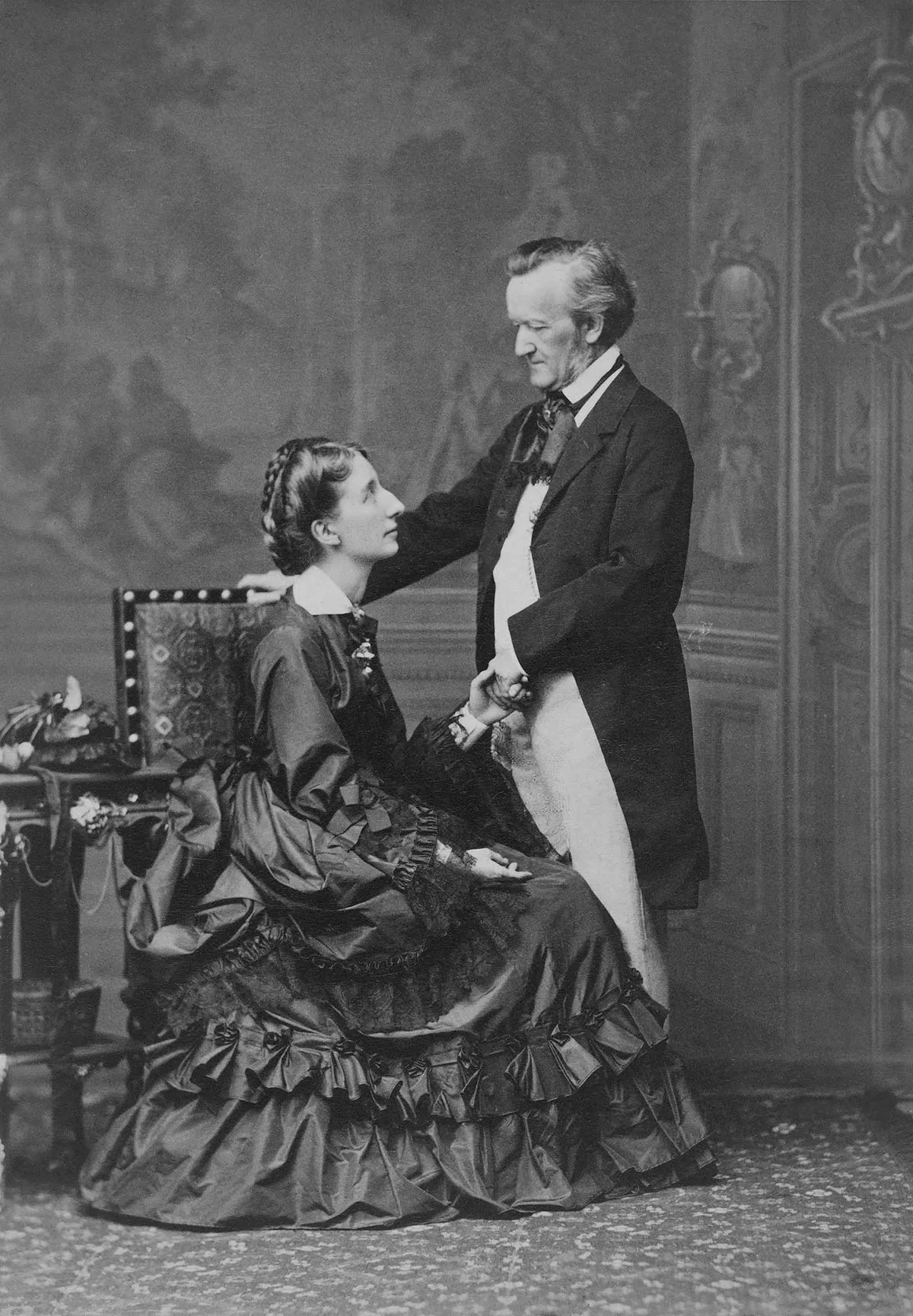
The relationship between Franz Liszt and Marie d’Agoult was considered scandalous, and so the couple decided to leave Paris. They planned to head first to Switzerland before moving on to Italy. It took them several weeks to reach Geneva, travelling on a leisurely route via Basel, Lake Constance, eastern and central Switzerland. They stayed in the city for a few months, during which time Liszt’s first daughter Blandine was born. The couple would go on to have two more children: Daniel, who died at the age of 20, and Cosima, who would eventually marry opera composer Richard Wagner and become the indomitable caretaker of his legacy following his death.
Cosima, seen here with Richard Wagner, was the third child born to Franz Liszt and Marie d'Agoult. This photograph was taken in 1872.
Cosima, seen here with Richard Wagner, was the third child born to Franz Liszt and Marie d'Agoult. This photograph was taken in 1872. Wikimedia
As planned, Liszt lay the groundwork for later compositions during this Swiss sojourn. These included ‘Années de pèlerinage’ (Years of Pilgrimage), a set of three suites for solo piano, which was not published in complete form until 1855. Today, it is a staple of the standard repertoire.
The 26 character pieces that make up the cycle, mainly inspired by Liszt’s travels throughout Switzerland and Italy, capture the essence of his piano compositions: breakneck virtuosity – with many of the pieces pushing even professional pianists to their limits – combined with tone-painting in a musical language that was new at the time and which ultimately paved the way for the musical impressionism of Claude Debussy, for example.
This can be heard readily in the piece entitled ‘Au lac de Wallenstadt’. Liszt and Marie d‘Agoult arrived at the Hotel Schwert in Weesen by Lake Walen on 19 June 1835. They immediately went out boating. Pianistically, the gentle rippling of the waves on the summer waters of the lake was transformed into recurring triplets in the left hand. ‘Au lac de Wallenstadt’ originally formed part of Liszt’s earlier work ‘Album d’un voyageur’.
The waves of Lake Walen, set to music by Franz Liszt. YouTube
But we mustn’t let Marie d’Agoult’s recollections of their time at Lake Walen lead us astray. Because most of the nine individual pieces published by Liszt in the first volume of ‘Années de pèlerinage’, dedicated to Switzerland, were actually composed later in Italy. D’Agoult’s sentimentality about it’s being written for her should also be taken with a pinch of salt. Her relationship with Liszt remained embittered following their initial separation in 1839 and final parting in 1844.
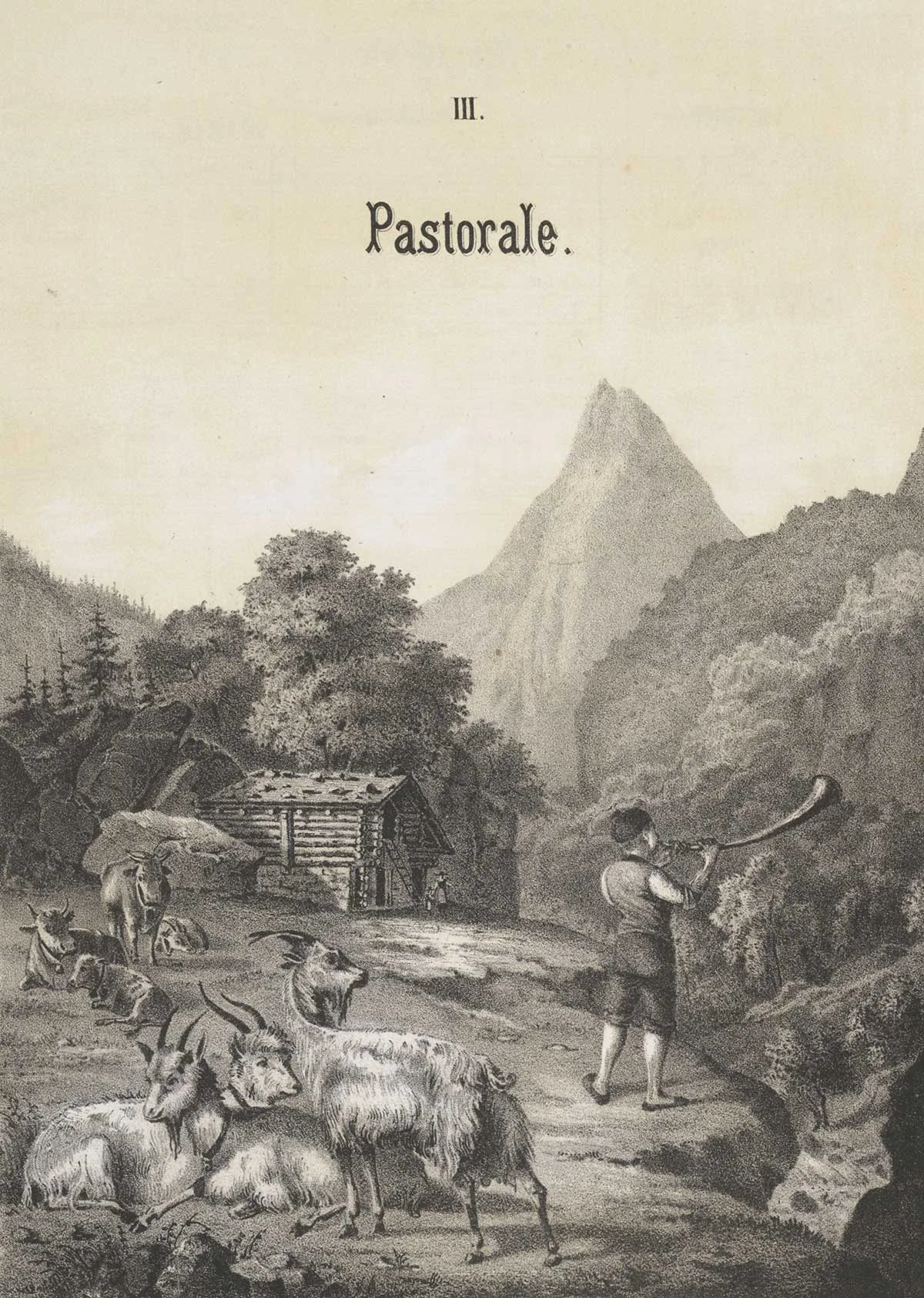
The Swiss volume of Liszt’s ‘Années de pèlerinage’ includes further programmatic pieces, such as the gentle ‘Pastorale’ and the pianistic thunderstorm of ‘Orage’. Although each stands on its own as a musical statement, as part of a cycle they nevertheless indicate that Liszt was concerned with much more than musical landscape impressionism. Given his social and political sensitivities, like many of his contemporaries Liszt was interested in Switzerland as a political model in a post-revolutionary Europe scarred by the aftermath of Napoleon’s campaigns. Switzerland was held up as a nation to be emulated by others when it came to the struggle for self-determination.
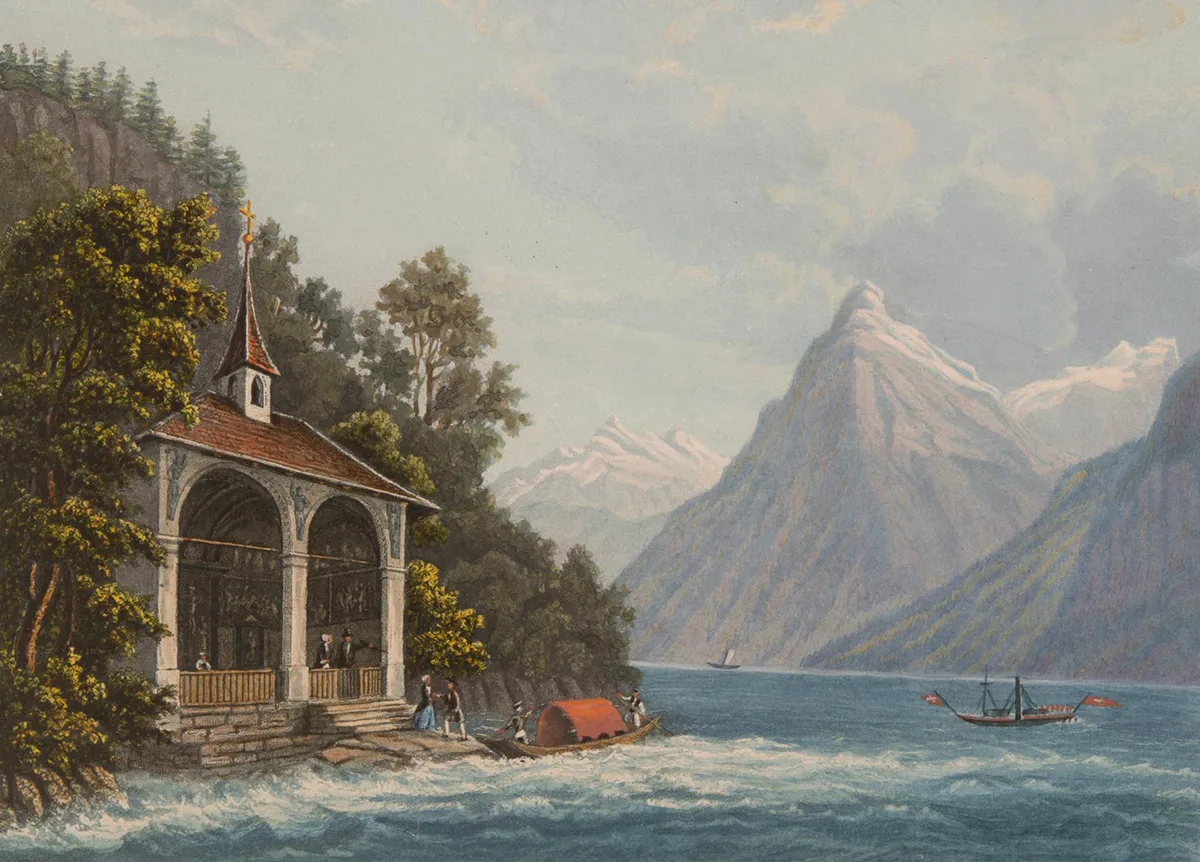
In the final edition of the work, this finds expression in the first piece ‘Chapelle de Guillaume Tell’. Liszt prefaces the piece with a motto that was becoming increasingly popular in Switzerland at the time: ‘All for one – one for all’, leaving no doubt as to his intentions.
Tell and his chapel impressed Franz Liszt to such an extent that he immortalised them in one of his works.
Tell and his chapel impressed Franz Liszt to such an extent that he immortalised them in one of his works. Swiss National Museum
That such ideas were being expressed in music may not have been immediately clear to the audience. Because, in many ways, Liszt was breaking new musical ground. In addition to their demonstration of sheer virtuosity with thunderous scales, endless double trills and unorthodox intervals, Liszt’s compositional ideas pushed the boundaries of established musical forms. For example, he often spins out tiny motifs to the absolute limit. The result: sonorous landscapes of the soul. Like the contemporary Romantic literary spirits and philosophers that Liszt so admired, he too wanted to use the artistic means at his disposal to capture the attitude to life of a generation born into an era of upheaval.
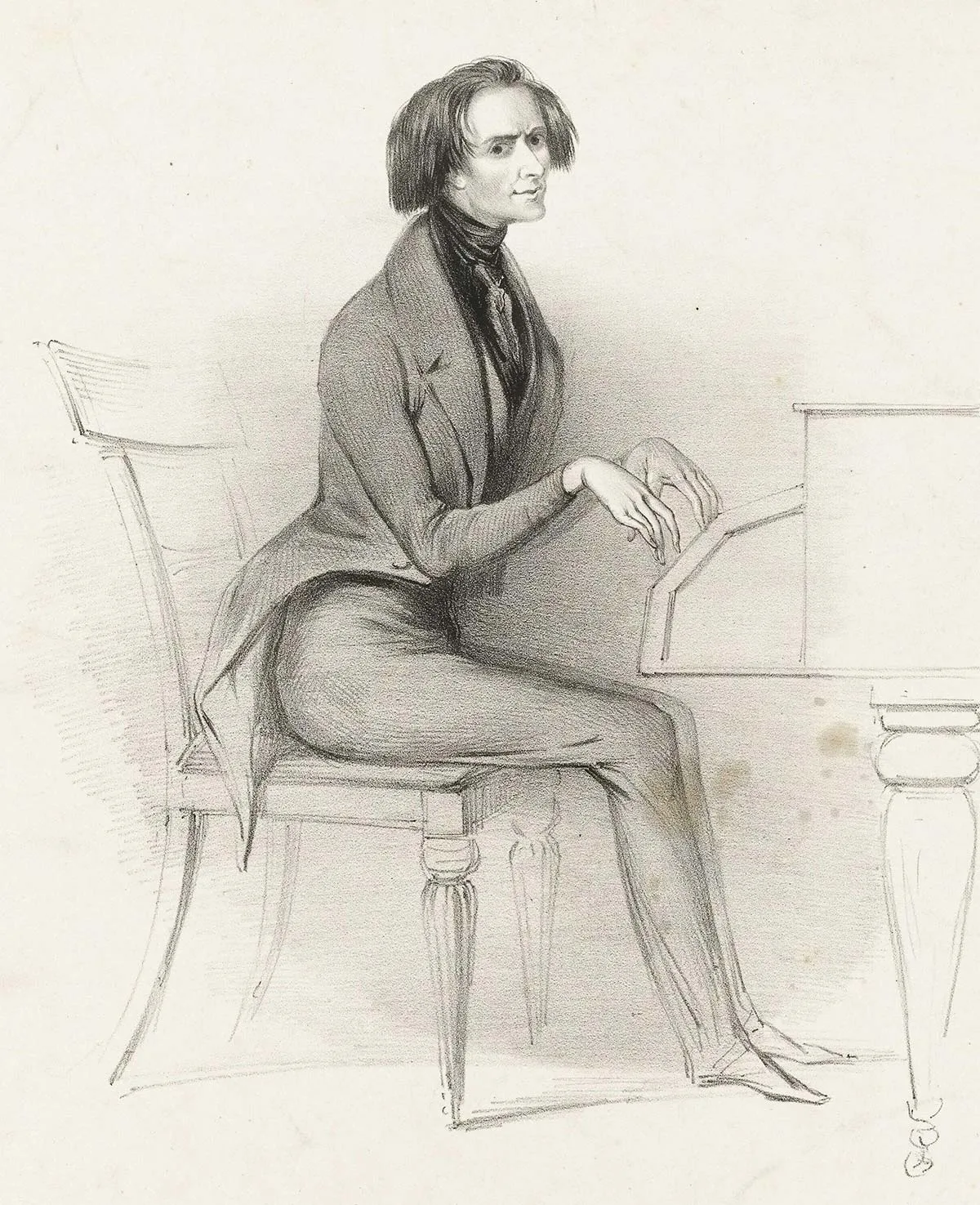
For many of his contemporaries, Franz Liszt walked a tightrope between genius and madness. This caricature of the composer dates back to 1840.
For many of his contemporaries, Franz Liszt walked a tightrope between genius and madness. This caricature of the composer dates back to 1840. Wikimedia
In the foreword to the first edition of ‘Album d’un voyageur’ he thus wrote that music was a poetic language “(…) one that, better than poetry itself perhaps, more readily expresses everything in us that transcends the commonplace, everything that eludes analysis, everything that stirs in the inaccessible depths of imperishable desires and feeling for the infinite”.
This is made particularly clear in one of the most famous and riveting pieces of the Swiss cycle, ‘La Vallée d’Obermann’. You won’t find the Obermann Valley on any map. It’s a fake, cobbled together from common Swiss clichés. It was invented by Étienne de Senancour, a French author of the early Romantic period, for his epistolic novel of the same name, which was a bestseller in its day. Senancour’s hero travels around Switzerland, plagued by melancholy and ennui, giving himself over to contemplation. Perfect inspiration for Liszt, who sought to convey Obermann’s constantly changing moods through a series of variations on the memorable opening melody.
For Liszt, a fictional Swiss valley becomes the setting for powerful emotions. YouTube
Liszt prefaced ‘Les cloches de Genève’ with a motto from Lord Byron's staggeringly successful narrative poem ‘Childe Harold’s Pilgrimage’ (1812-1818) that characterises the heightened sensibility of the time: “I live not in myself but I become/Portion of that around me”. In his enthusiasm for Byron, Liszt even captioned ‘Au lac de Wallenstadt’ with a slightly altered quotation from the British poet originally dedicated to Lake Geneva.
Liszt also expanded his listener’s horizons by listening very precisely to the music he encountered on his many travels, like an ethnomusicologist. The ‘Ranz des vaches’, a melody traditionally played on the Alphorn, can be heard in ‘Album d’un voyageur’. Jean-Jacques Rousseau, the principal advocate for a ‘return to nature’, had helped bring it to greater prominence with an entry in his ‘Encyclopédie’. Liszt unmistakeably incorporated other folk dances and melodies into his music, as well as thematic references to fellow composers he admired including Beethoven, Schubert, Schumann, Berlioz and Chopin.
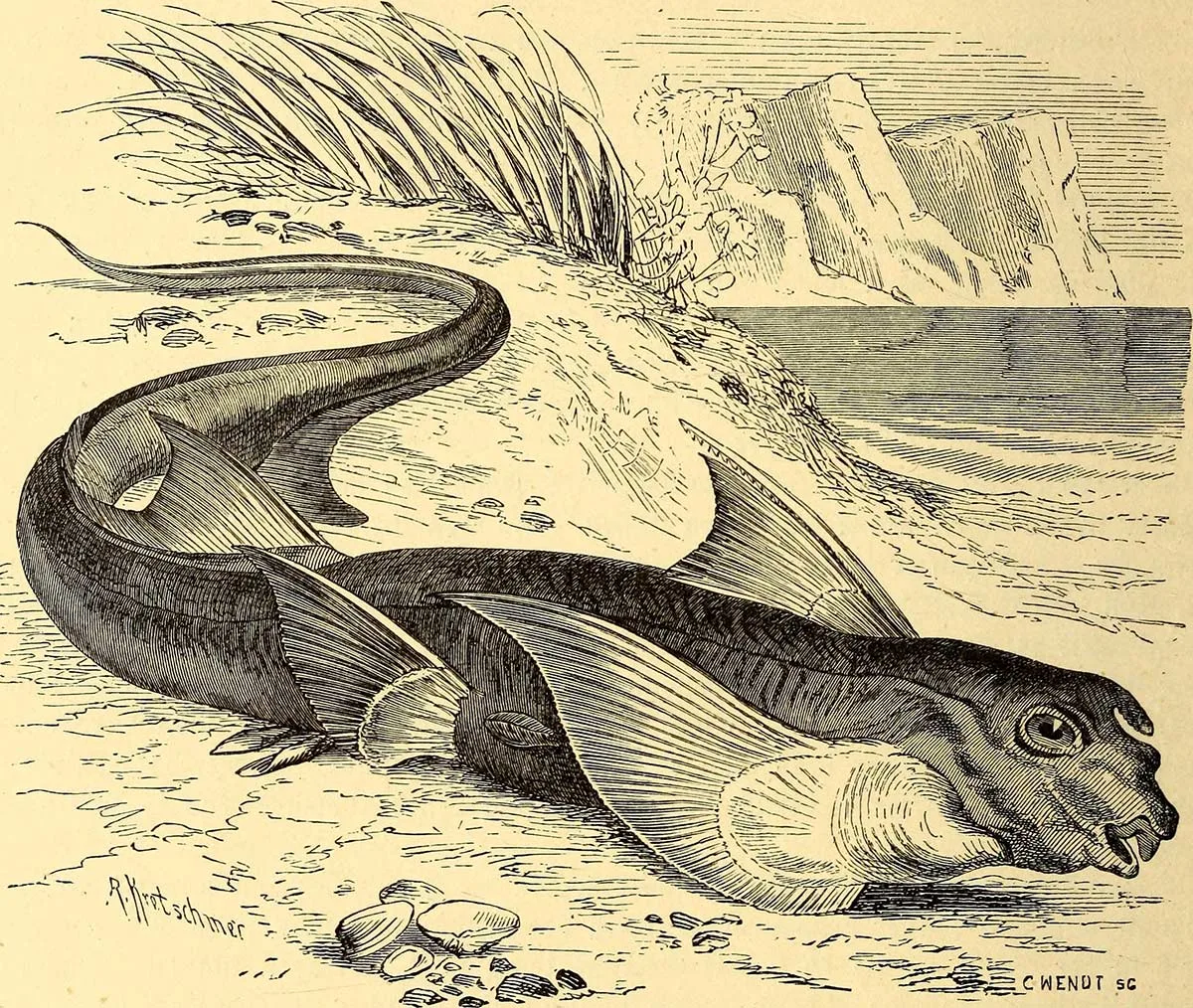
Many years passed before 1839’s ‘Album d’un voyageur’ finally became the first volume of ‘Année de pèlerinage’. The history of its composition and publishing is complex. For Liszt, the entire cycle, including Parts II and III, which are primarily dedicated to his time in Italy (and among which ‘Les jeux d'eaux à la Villa d'Este’ is the standout piece), was of such importance that he insisted that the first complete edition be released in deluxe form in 1855. He even commissioned illustrations of his music, something completely unheard of at the time. The man he hired was Robert Kretschmer, a renowned illustrator, famous for his detailed drawings for the zoological encyclopaedia ‘Brehms Tierleben’.
Robert Kretschmer made a name for himself with his illustrations for the zoological treatise ‘Brehms Tierleben’. He also offered his services to Franz Liszt in the mid-19th century.
Robert Kretschmer made a name for himself with his illustrations for the zoological treatise ‘Brehms Tierleben’. He also offered his services to Franz Liszt in the mid-19th century. Wikimedia / Smithsonian Libraries
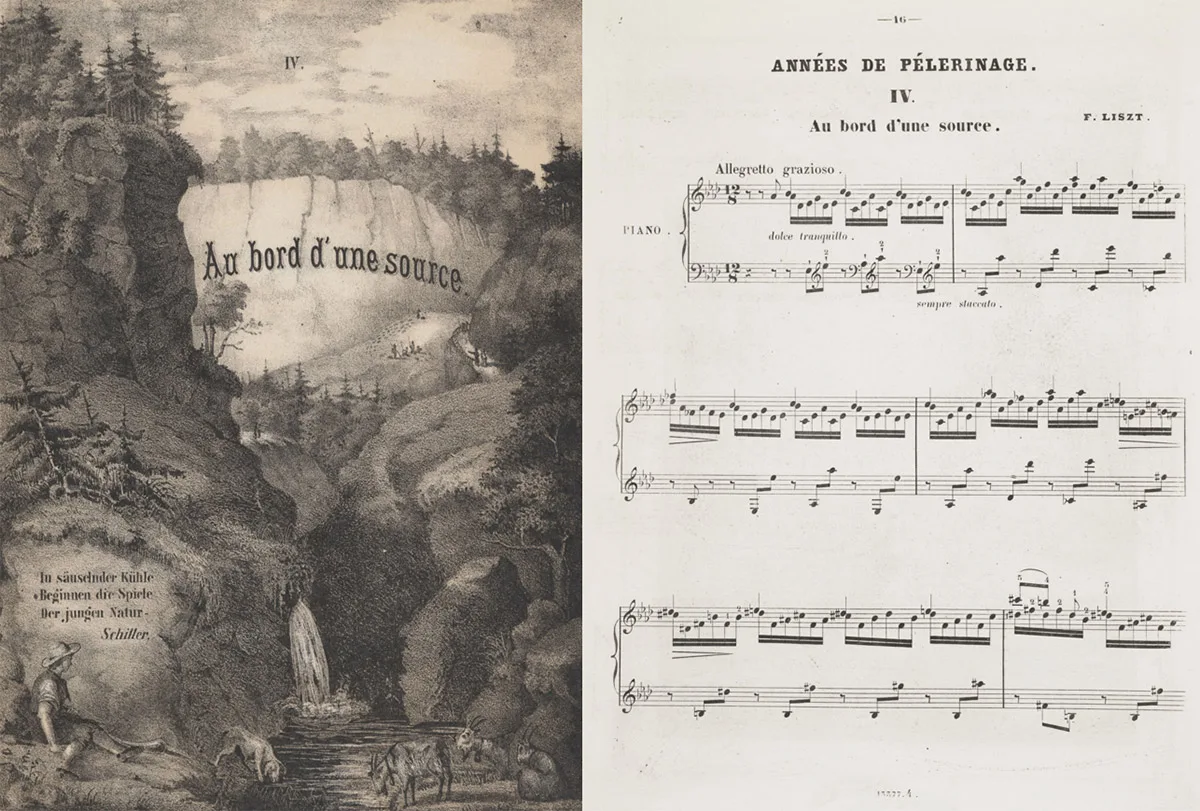
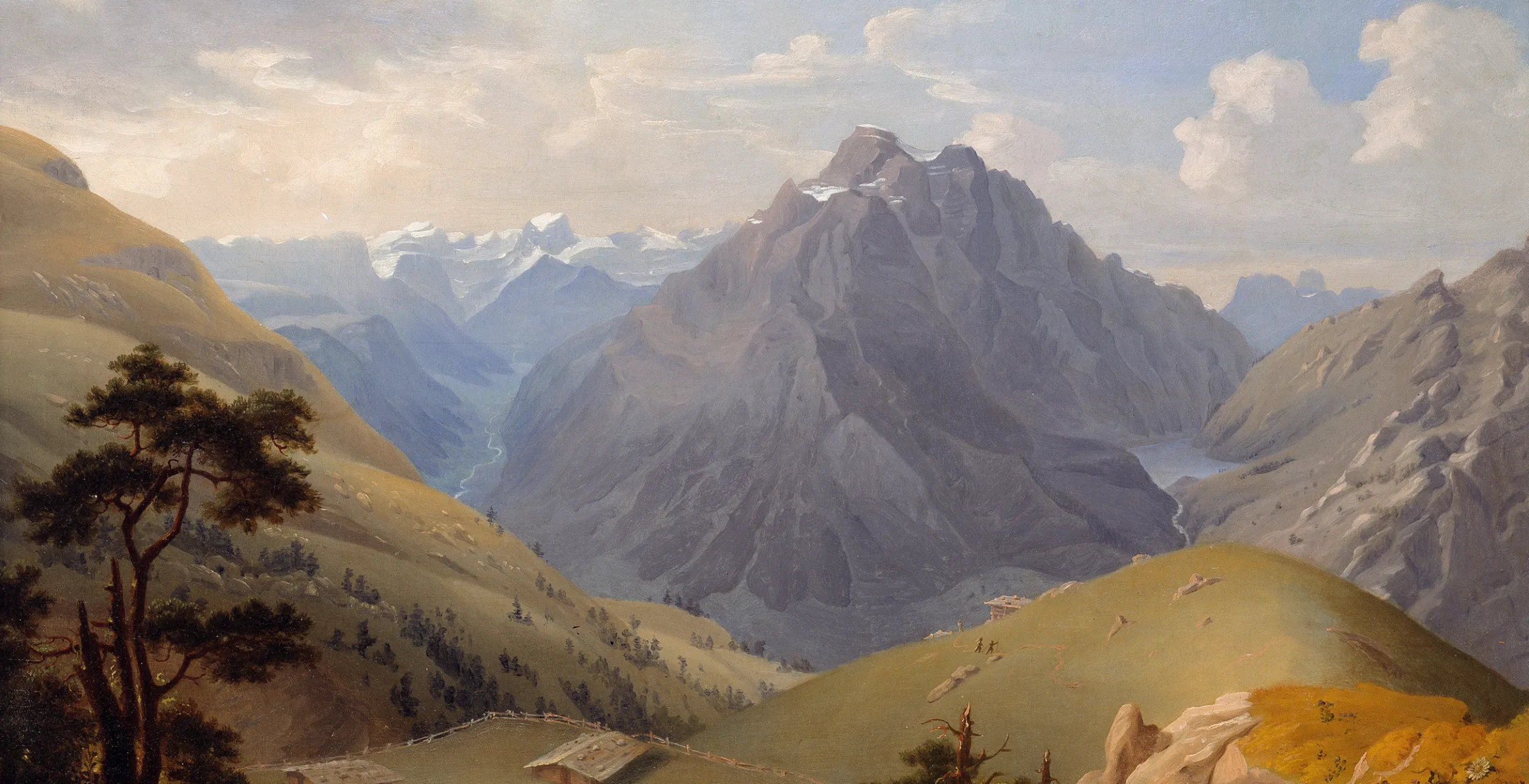
Kretschmer created a series of full-page lithographs for Liszt, in which he incorporated the previously mentioned literary quotations. The illustrator borrowed every Swiss cliché he could from the flourishing genre of landscape painting: tall mountains, gorges, idyllic valley meadows with goats and goatherds, welcoming huts, magnificent waterfalls, deep lakes, windswept trees. An endless zone of longing, a unique visual ‘Vallée d’Obermann’.
Kretschmer did not shy away from using clichés in his works for Franz Liszt. Illustration for the ‘Années de pèlerinage’, published in 1855.
Kretschmer did not shy away from using clichés in his works for Franz Liszt. Illustration for the ‘Années de pèlerinage’, published in 1855. IMSLP Petrucci Music Library
Kretschmer was clear about what his client wanted and therefore reflected the function attributed to the Alps by 19th-century Alpine researcher Werner Bätzing whereby they provided an idealised vision of man and nature in perfect harmony. Through this pictorial ‘frame narrative’ Liszt expressly provided any poor pianist facing the challenge of playing the piece, and their audience, with an aid to interpretation. And with its appeal to well-bred young ladies learning to play the piano, this magnificent edition also created a completely new connection between visual perception, music and marketing. Similar landscapes have been adorning the covers of recordings of ‘Années de pèlerinage’ ever since.
Franz Liszt knew how to appeal to his audience on different levels, and that sometimes meant promoting the beauty of the Swiss mountains.
Franz Liszt knew how to appeal to his audience on different levels, and that sometimes meant promoting the beauty of the Swiss mountains. IMSLP Petrucci Music Library
Liszt was not only a pioneering genius of the piano. He was also a virtuoso when it came to using literature and art to aid the production and distribution of his music. The enjoyment of his art and the uniqueness of his oeuvre were to be enhanced by every means possible. He was the first composer to write himself into the still burgeoning success story of Switzerland and the Alps as a gigantic canvas for projection. This original pairing of nascent tourism and music was just waiting for the right person to express it.
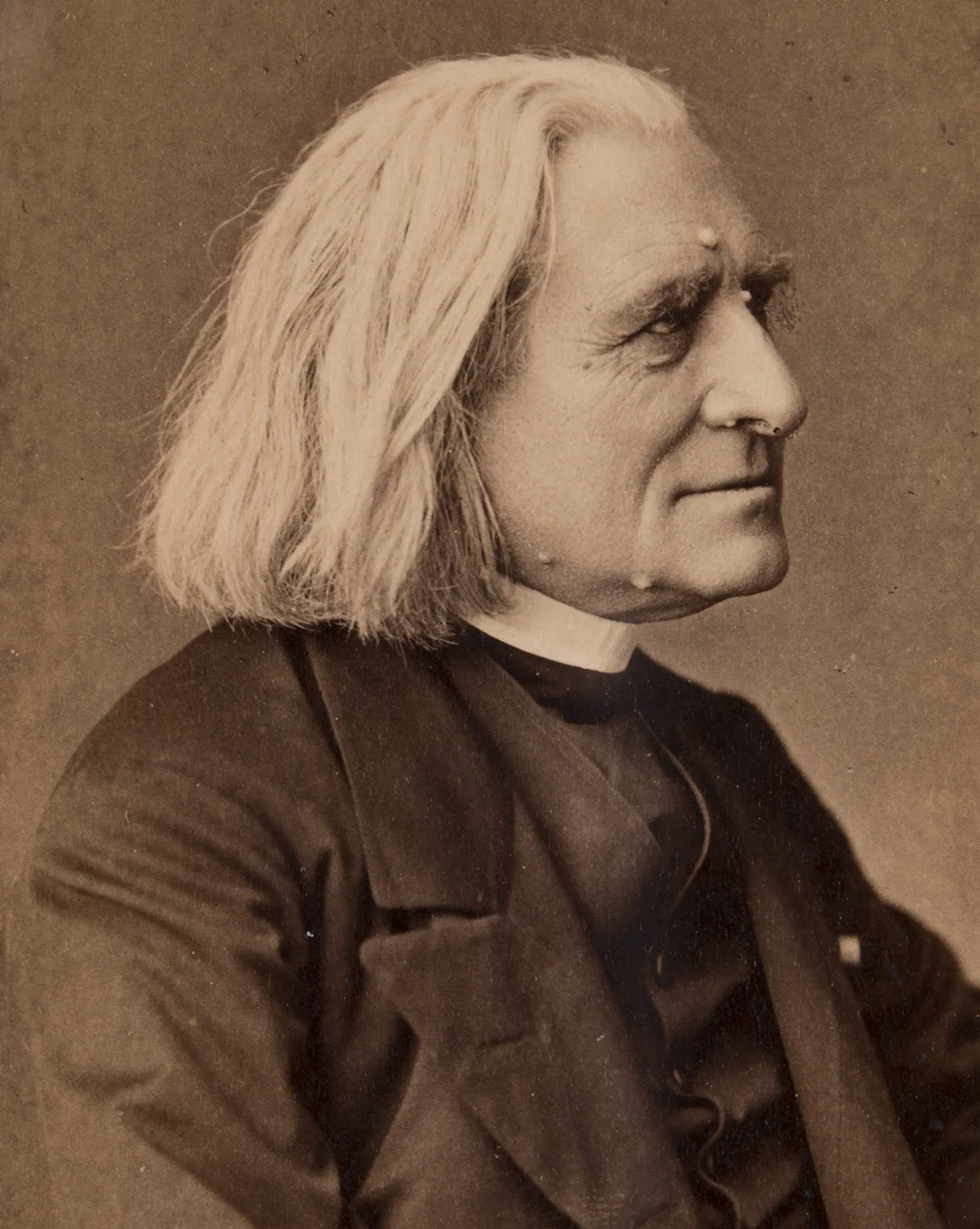
Portrait of Franz Liszt photographed in the 1880s.
Portrait of Franz Liszt photographed in the 1880s. Swiss National Museum

Further posts