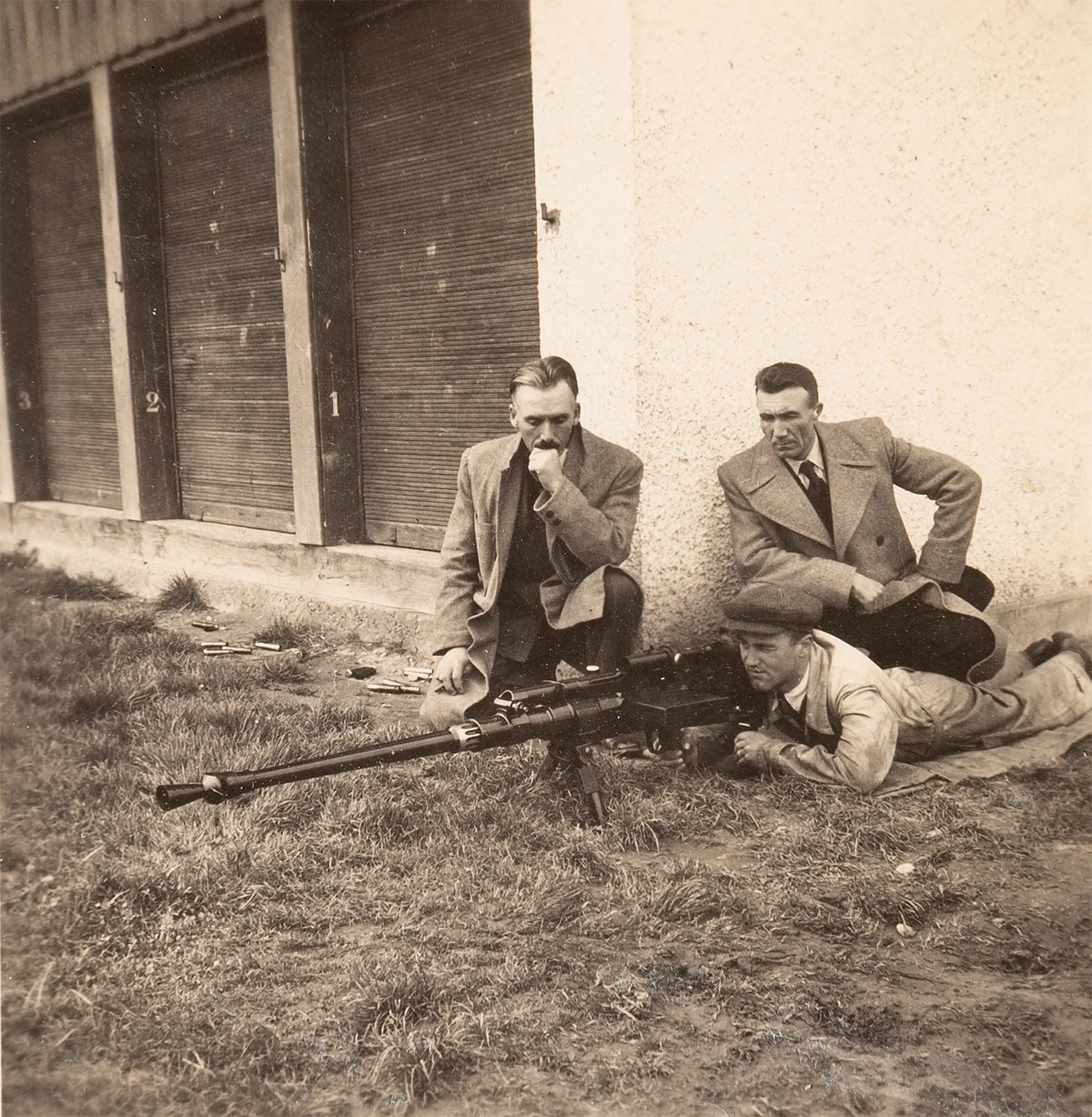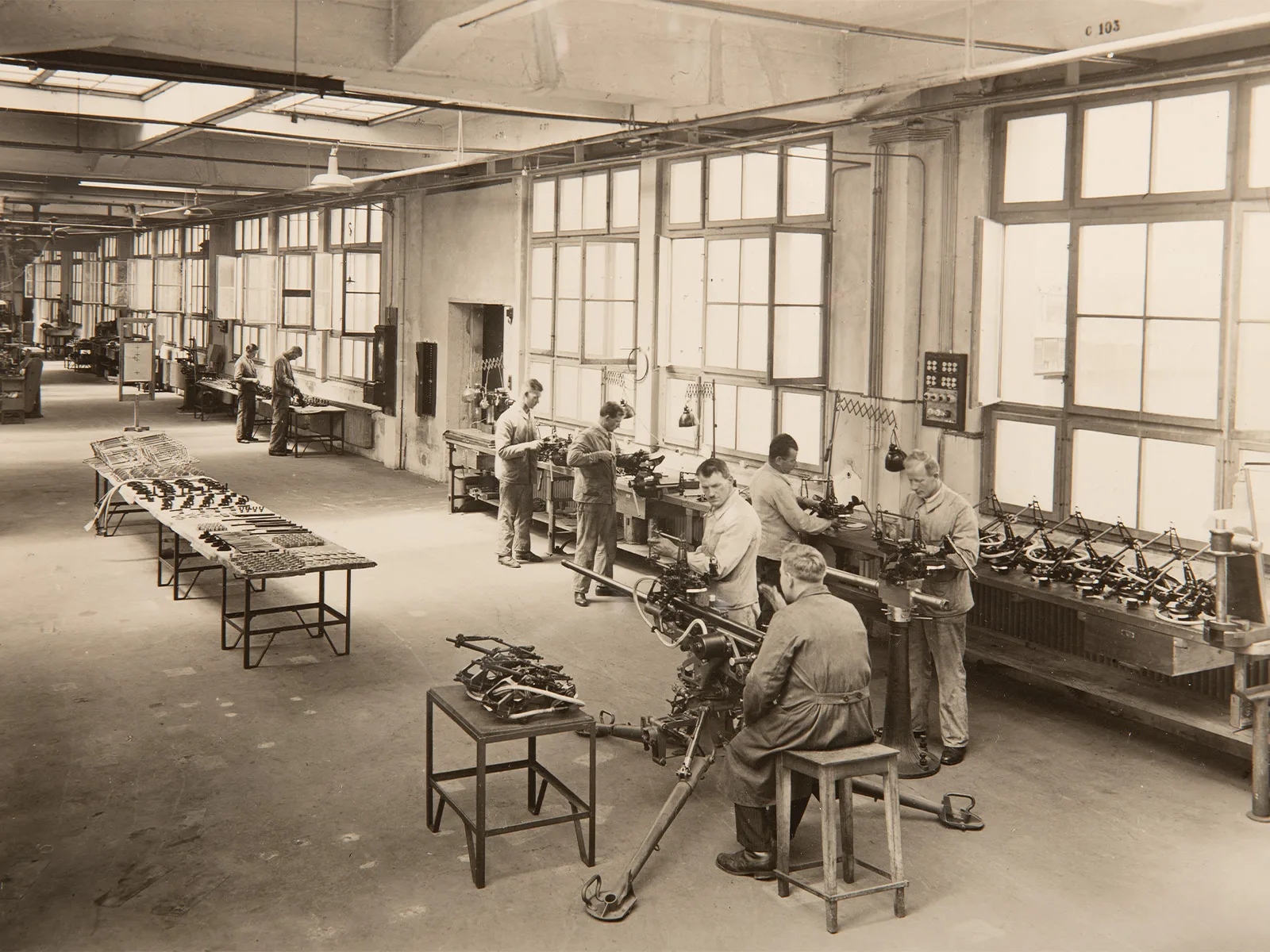
Adjusting and working on an S5-100 20 mm automatic cannon at the arms factory in Solothurn, circa 1930.
Adjusting and working on an S5-100 20 mm automatic cannon at the arms factory in Solothurn, circa 1930. Museum Altes Zeughaus

Swiss-made arms destined for Hollywood?

The arms factory Waffenfabrik Solothurn AG not only found itself on the Allies’ blacklist after the Second World War, it was also embroiled in a lengthy liquidation process. And what would happen to the arms stored there? A tempting offer came unexpectedly from Hollywood in 1951.
Adrian Baschung

Adrian Baschung

Adrian Baschung is historian and director of the Museum Altes Zeughaus in Solothurn.

In 1951 Waffenfabrik Solothurn AG existed only on paper, as a limited company. Following a lengthy liquidation process, initiated in 1946, the factory site in Zuchwil in the canton of Solothurn was sold to the Winterthur-based firm Gebrüder Sulzer AG in 1950, which built a weaving machine factory there. With the exception of a few individuals, the workers from the arms factory had been laid off. There had been no interest in the equity stakes offered to potential investors and yet the company still owned large quantities of arms and ammunition. So what was to happen to it?
To better understand the predicament in which Waffenfabrik Solothurn AG found itself in 1951, the following provides a short insight into the company’s history and sheds some light on the situation.

The history of Waffenfabrik Solothurn AG
The story began in the spring of 1929, when the company was set up as a subsidiary of the German firm Rheinische Metalwaaren- und Maschinenfabrik Actiengesellschaft – Rheinmetall AG for short. During the First World War, the company Rheinmetall AG with branches in Düsseldorf, Sömmerda and Berlin Tegel rose to become one of the main arms factories of the German Empire. After the war, severe restrictions were imposed on Germany under the Treaty of Versailles of 28 June 1919. The German military was massively curtailed, and the arms industry was effectively banned. The development and manufacture of arms had become virtually impossible in Germany, which led industry, with the support of what was left of the military, to seek ways to avoid falling behind in the international arms race. To circumvent the restrictions set out in the Treaty of Versailles, German arms companies invested in existing firms and factories or built new branches in neutral or pro-German countries. Germany sought to continue to rearm in the shadow of Versailles – its aim was ‘clandestine rearmament’.
Rheinmetall AG therefore set up an arms factory in Zuchwil, Solothurn, in which infantry weapons from the Rheinmetall company were built, tested and prepared for mass production. Through the dedication of Solothurn’s FDP National Councillor and subsequent Federal Councillor Hermann Obrecht, and the Austrian arms industrialist Fritz Mandl, Zuchwil was chosen by Rheinmetall AG as a location for its factory site. A new arms factory was set up in the buildings of the former Solothurn AG cartridge factory, in which Obrecht and Mandl had already been heavily involved.
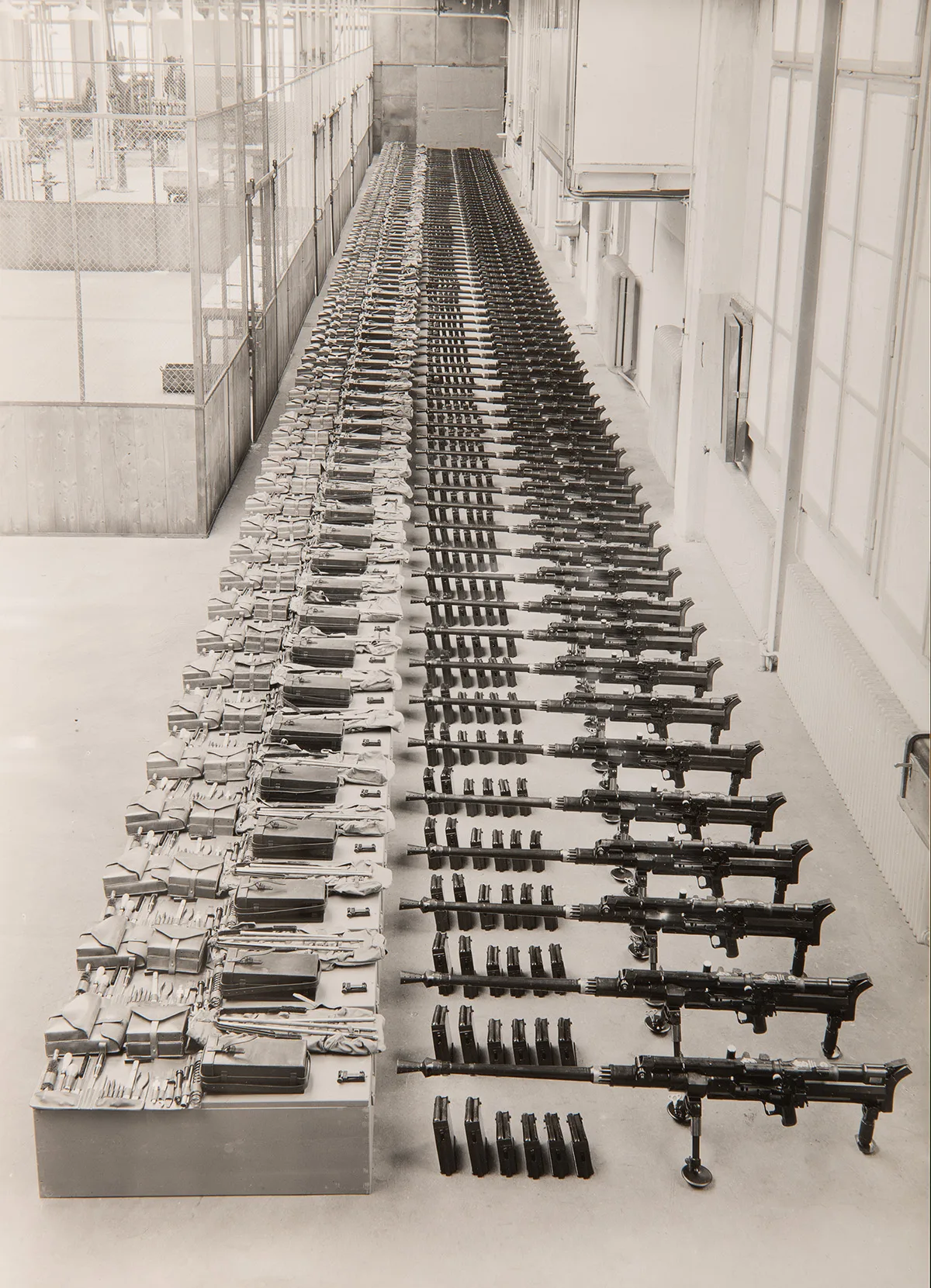
Factory-built 20mm anti-tank rifle S18-150 including accessories, circa 1934/35.
Factory-built 20mm anti-tank rifle S18-150 including accessories, circa 1934/35. Museum Altes Zeughaus
Business initially boomed at the new Solothurn arms factory, and it was able to secure lucrative contracts. However, things changed rapidly from 1933 when the Nazi Party under its leader Adolf Hitler seized power in Germany, and progressively flouted the restrictions of the Treaty of Versailles, openly pressing ahead with German rearmament. ‘Clandestine rearmament’ therefore became increasingly unnecessary and the external site of Rheinmetall AG in Solothurn became less significant for the German company.
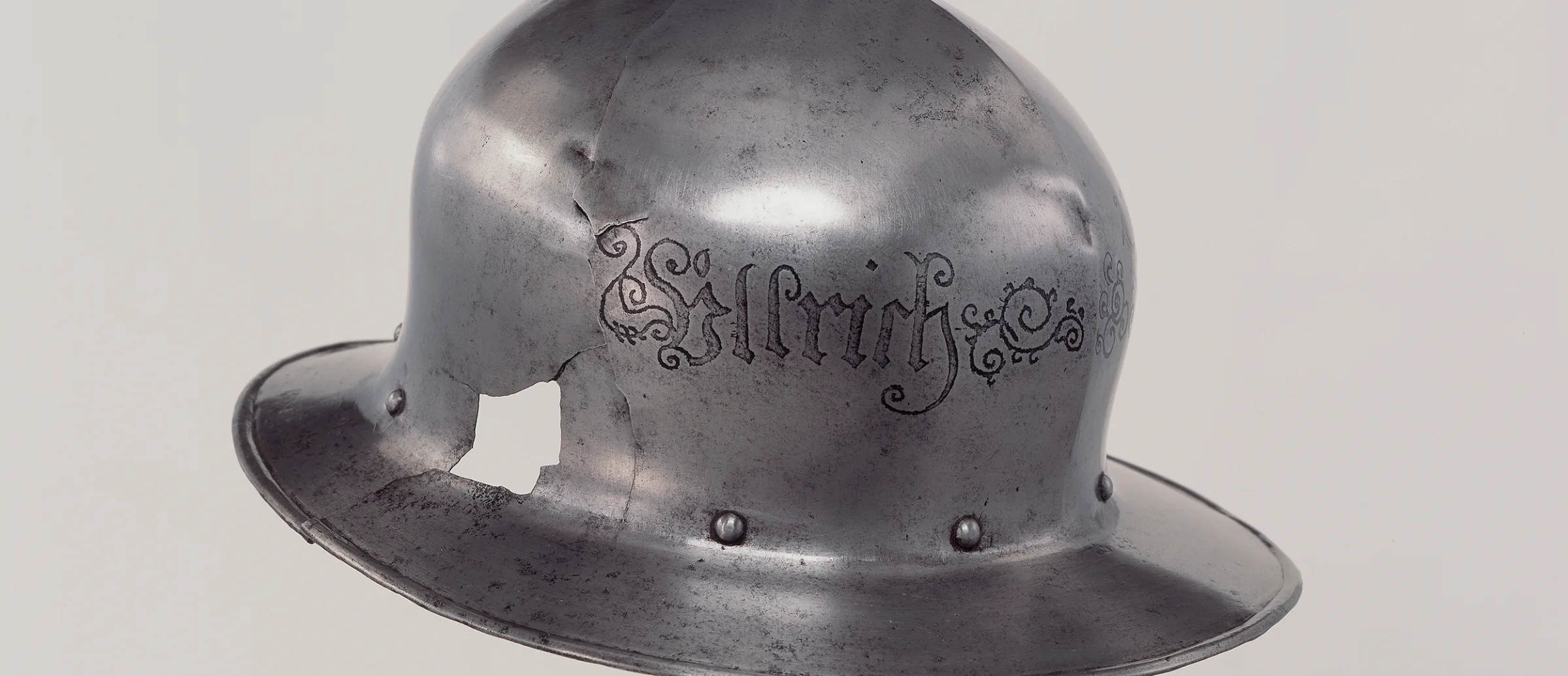
To counteract these trends, from 1934/’35 the arms factory in Solothurn relied on a new product, which was to be developed and manufactured in Solothurn – a heavy 20mm infantry anti-tank rifle. This anti-tank rifle, known as the S18-100 and its iterations, were intended to re-establish the Solothurn-based company on the international arms market. However, until the outbreak of the Second World War in September 1939, the order books failed to fill up as hoped, and the factory in Solothurn had to be sustained financially by Rheinmetall.
Shooting test with the S18-150 anti-tank rifle at the Solothurn-Zuchwil shooting range, circa 1934/35. The technical director of the weapons factory in Solothurn, Austrian engineer Wolfgang Rossmanith, can be seen kneeling in the back right.
Shooting test with the S18-150 anti-tank rifle at the Solothurn-Zuchwil shooting range, circa 1934/35. The technical director of the weapons factory in Solothurn, Austrian engineer Wolfgang Rossmanith, can be seen kneeling in the back right. Museum Altes Zeughaus
Larger orders were secured from 1940, but they were repeatedly jeopardised by the progress of the war. For example, the Netherlands ordered over 700 advanced anti-tank rifles from Solothurn, but the contract was suspended following the German occupation of the country in the summer of 1940. The biggest order came in 1941 from fascist Italy for the delivery of 2,000 anti-tank rifles including the associated mounts, promising the company in Solothurn work and money for several years. But this contract was also abandoned following the fall of Italian dictator Benito Mussolini in 1943, leaving the factory saddled with surplus weapons and debts. The situation was so bad up until the end of the war that from 1944 almost no more weapons were produced in Solothurn. Efforts were made to keep the company afloat by switching to the production of machine tools. But this was not a great success.
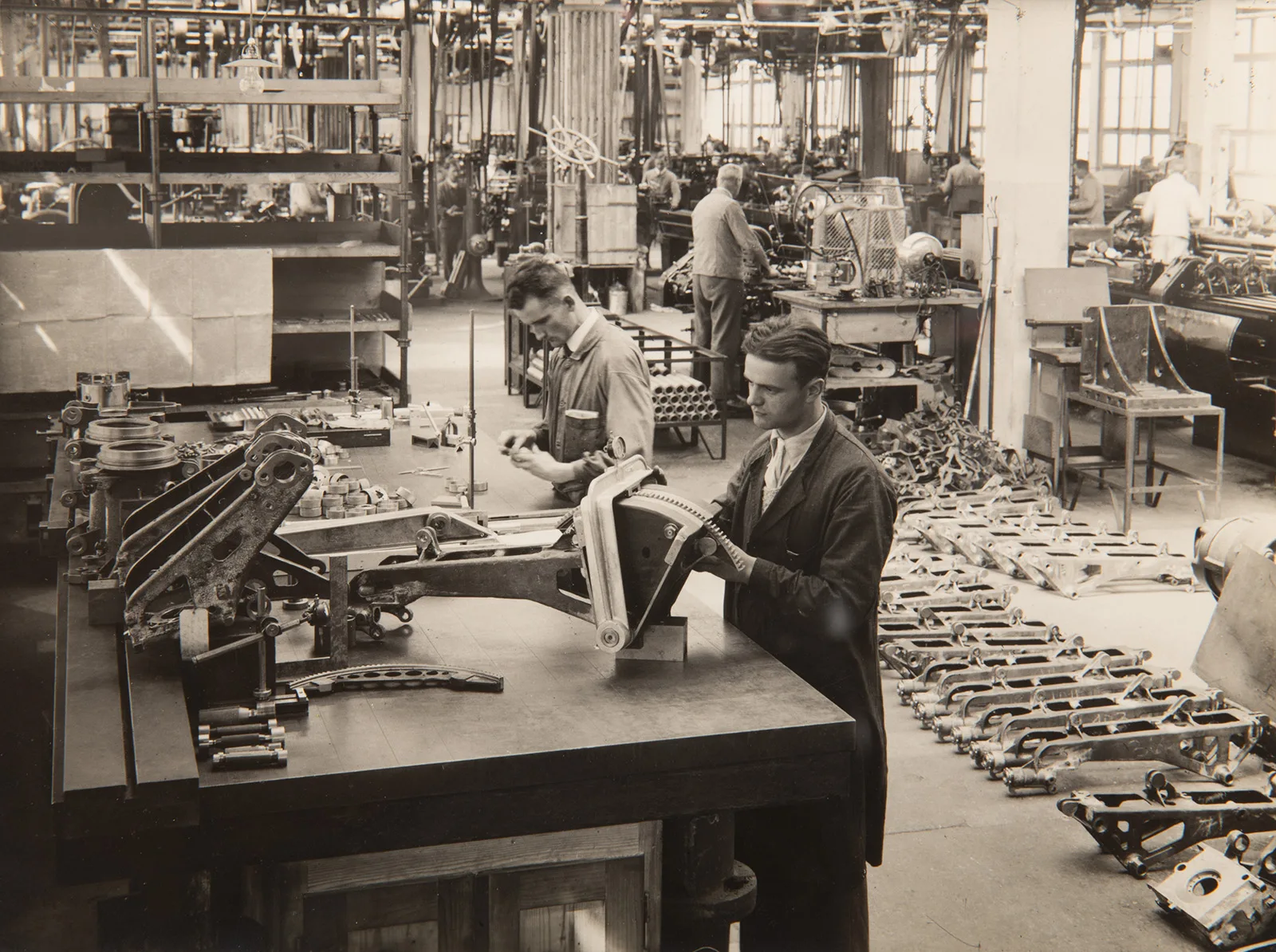
Mount production at the arms factory in Solothurn, circa 1930.
Mount production at the arms factory in Solothurn, circa 1930. Museum Altes Zeughaus
As a subsidiary of the Germany company Rheinmetall AG, Waffenfabrik Solothurn AG ended up on the Allies’ blacklist. Companies and businesses in Switzerland, Sweden, Portugal and other countries, which had maintained close economic and business ties with Nazi Germany, were added to such lists and blocked. After the Second World War, on 25 May 1946, the Washington Agreement was signed between Switzerland and the Allied powers: the US, France and the UK. It set out how much Switzerland was to pay towards the rebuilding of Europe, and regulated the registration and liquidation of German assets in Switzerland. In accordance with this treaty, it was subsequently decided that Waffenfabrik Solothurn AG should be liquidated. This task was carried out by the Swiss Clearing Office, based in Zurich. All of the Solothurn-based company’s social and financial affairs had to be reviewed and approved by the clearing office during the liquidation process starting in 1946. The advertisement of equity stakes for sale was unsuccessful; however; the factory site was sold in 1950, as mentioned above.

What to do with the weapons?

During the liquidation process, efforts were made to sell off the anti-tank rifles that had been manufactured during the war but remained unsold. However, the problem was that these weapons had become obsolete during the war as they had failed to keep pace with the rapid development of armoured fighting vehicles between 1939 and 1945. In 1948, the arms factory in Solothurn tried to reduce its anti-tank rifle stocks through a weapons supply agreement with Ethiopia. However, the deal was not signed off by the federal authorities.
In 1951, the issue suddenly seemed to resolve itself. An American named Leo Lippe approached the management of the limited company in Solothurn, which still existed with a skeleton staff. Mr Lippe said he was a Hollywood filmmaker looking for weapons from the Second World War. He said he needed movie props and in particular weapons for future war films – which he claimed would be produced in Hollywood.
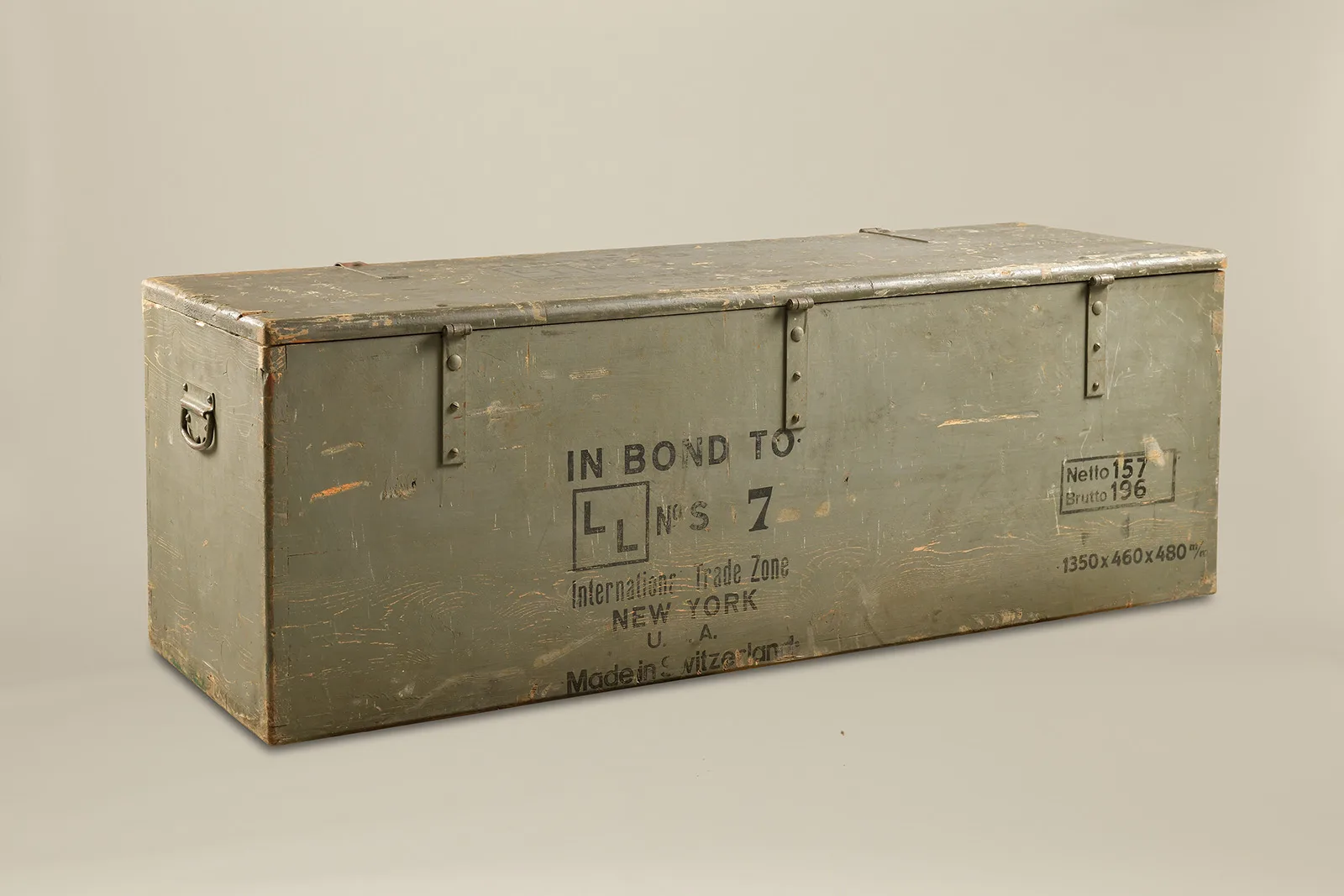
To the great astonishment of the bosses in Solothurn, Mr Lippe was prepared to buy up the remaining anti-tank rifles (approximately 450 of them) for around CHF 2.5 million. Money did not appear to be a problem. The deal was sealed on a handshake, the money paid, the weapons packed up in transport crates and labelled for export to New York. At the freight station in Solothurn, the crates were loaded onto railway carriages and the export permit was submitted to the federal government for approval. But once again, as in 1948, the federal authorities decided to scupper the deal. Due to insufficiently documented payment formalities, the transaction was stopped, the crates had to be unloaded, and the money refunded to Mr Lippe.
Transport crate with a delivery address in New York, which was to be shipped to the US in 1951. Each crate had space for an anti-tank rifle including accessories and a mobile mount.
Transport crate with a delivery address in New York, which was to be shipped to the US in 1951. Each crate had space for an anti-tank rifle including accessories and a mobile mount. Museum Altes Zeughaus
The American filmmaker apparently took the whole thing sportingly. He was also impressed by the various machine tools which had been manufactured in the former arms factory. Once a clear purchase agreement had been drafted and the relevant formalities sorted out, several machines were sold to the US.

Who was Leo Lippe?

Leo Lippe did work in the film industry, although he wasn’t a media mogul from Hollywood, but an accredited special effects cameraman. Born in the Bronx in New York, Lippe apparently dropped out of school early, leading him to experience reading and writing problems throughout his life. His best-known film work is the opening sequence of the feature-length drama Crime Without Passion of 1934. The surreal film montage featuring three Furies that rise from the blood of murdered women and wreak havoc, was filmed by Lippe and directed by well-known American filmmaker Slavko Vorkapic. But how did a cameraman end up buying weapons in Europe for multi-million dollar sums in the 1950s?
Opening sequence of ‘Crime without Passion’ of 1934, filmed by Leo Lippe. YouTube / Josh Hadley
The answer can be found a long way from the film world in California, namely in the centre of Washington D.C, where the Central Intelligence Agency (CIA) was headquartered until 1959. Leo Lippe was hired by the US foreign secret service as a front man to buy up World War surplus weapons on a large scale in Europe. They were to be used by the CIA to equip anti-communist forces, particularly in Asia. Lippe was sent to Geneva for this purpose, where he stayed in a hotel suite and posed as a media mogul from Hollywood. The money used came from the CIA and was transferred via an account at a Genevan bank. As Lippe knew nothing about arms, he was assisted by an expert adviser: a 24-year-old man from Philadelphia named Samuel (Sam) Cummings. Cummings, who had been a keen arms collector from a very young age, was responsible for scouring Europe in search of weapons stockpiles and arranging the trades, while Lippe secured the funding in Washington and authorised the payments. This is how – according to an interview with Cummings from the 1990s – arms purchases worth USD 100 million were carried out between 1951 and 1952. The CIA agents had no luck in Solothurn, however.
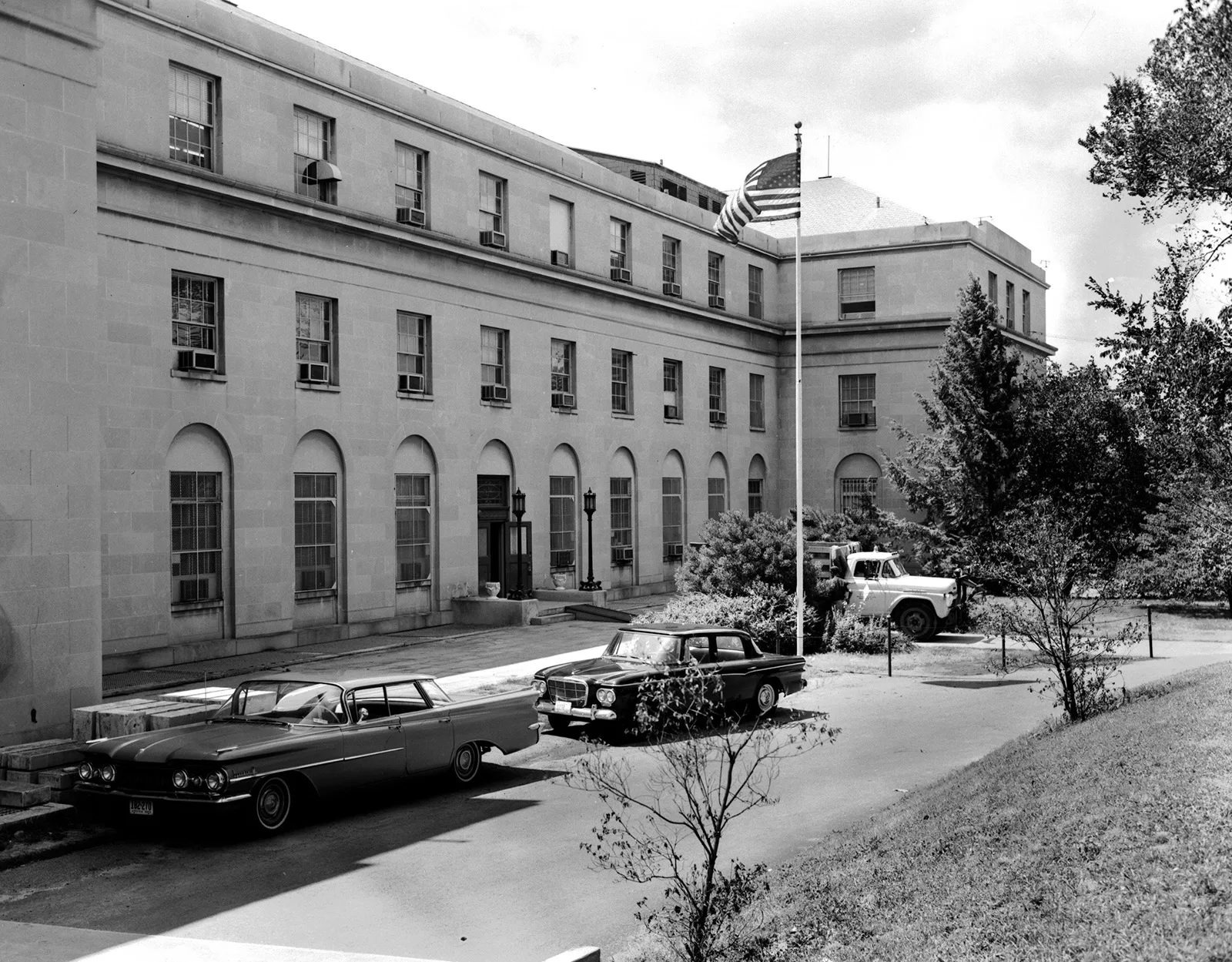
The request to Solothurn came from this historic office building in Washington, known as the ‘E Street Complex’. Birthplace and first head office of the Central Intelligence Agency (CIA).
The request to Solothurn came from this historic office building in Washington, known as the ‘E Street Complex’. Birthplace and first head office of the Central Intelligence Agency (CIA). Wikimedia
While Leo Lippe vanished into the shadows of history after 1952, Samuel Cummings was able to turn this experience to considerable professional advantage. In 1953 he left the CIA, set up the armaments trading company, International Armament Corporation (Interarmco), built up an arms trading empire and ended up becoming one of the world’s biggest weapons dealers. Until his death, Cummings – who was married to a woman from Obwalden and had two daughters – split his time between Monaco and Villars-sur-Ollon in the canton of Vaud.
The fate of the remaining weapons produced in Solothurn was sealed when they were destroyed at the steelworks in Gerlafingen in 1961.

In the spotlight. The dark history of the arms factory in Solothurn

22.11.2025 25.10.2026 / Museum Altes Zeughaus Solothurn
After the First World War, Germany relocated parts of its arms development to neutral countries such as Switzerland, in order to get around the military restrictions. Waffenfabrik Solothurn AG was therefore set up in Zuchwil in 1929 with the participation of the Germany company Rheinmetall. A special exhibition at the Museum Altes Zeughaus highlights the history of this factory and its links to politics, the military and business.
Further posts