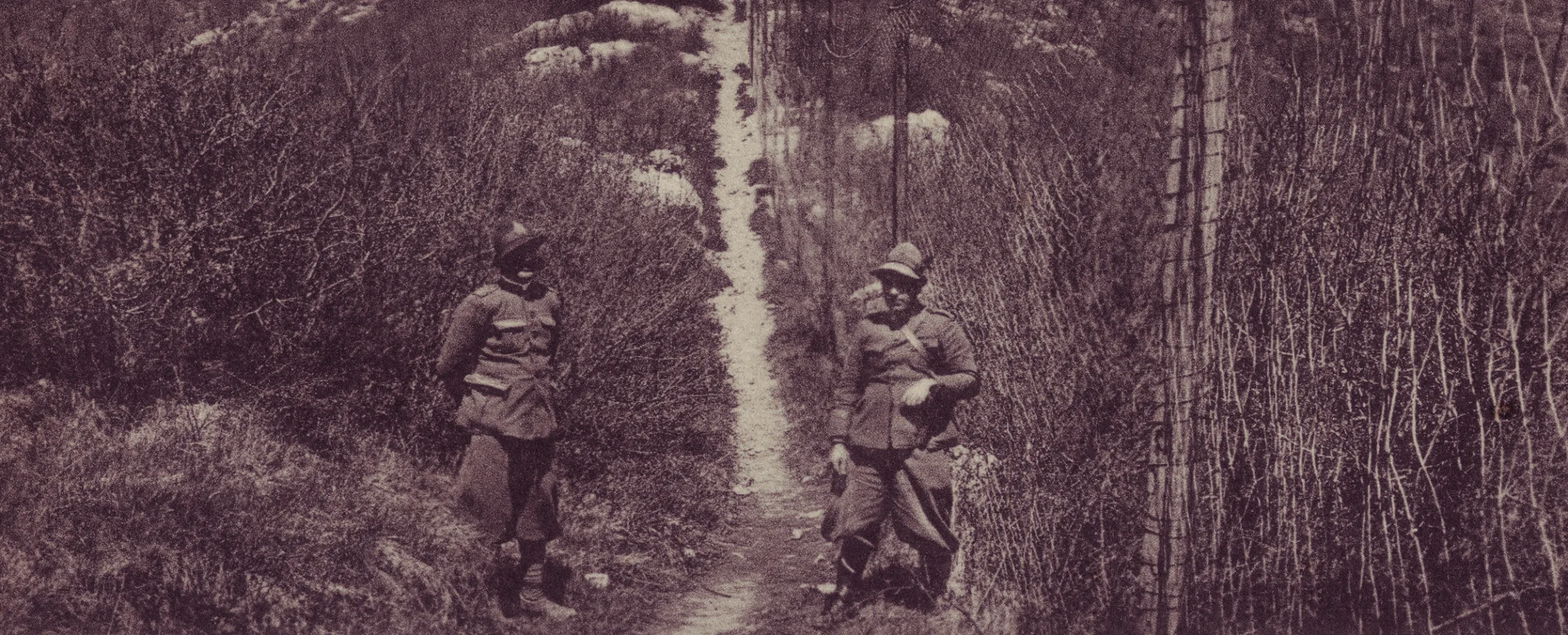
Shootouts at the Italian border: attempts to clampdown on smuggling in Ticino claimed the lives of several people shortly after the Second World War. Illustration by Marco Heer.

Death at the border

Border guard Ovidio Maggi was shot dead by Italian smugglers in late October 1945. After the Second World War, the spiral of violence at Switzerland’s southern border escalated. With fatal consequences.

Adriano Bazzocco

Adriano Bazzocco

Adriano Bazzocco ist Historiker und Spezialist der Schmuggel- und Flüchtlingsgeschichte an der schweizerisch-italienischen Grenze.
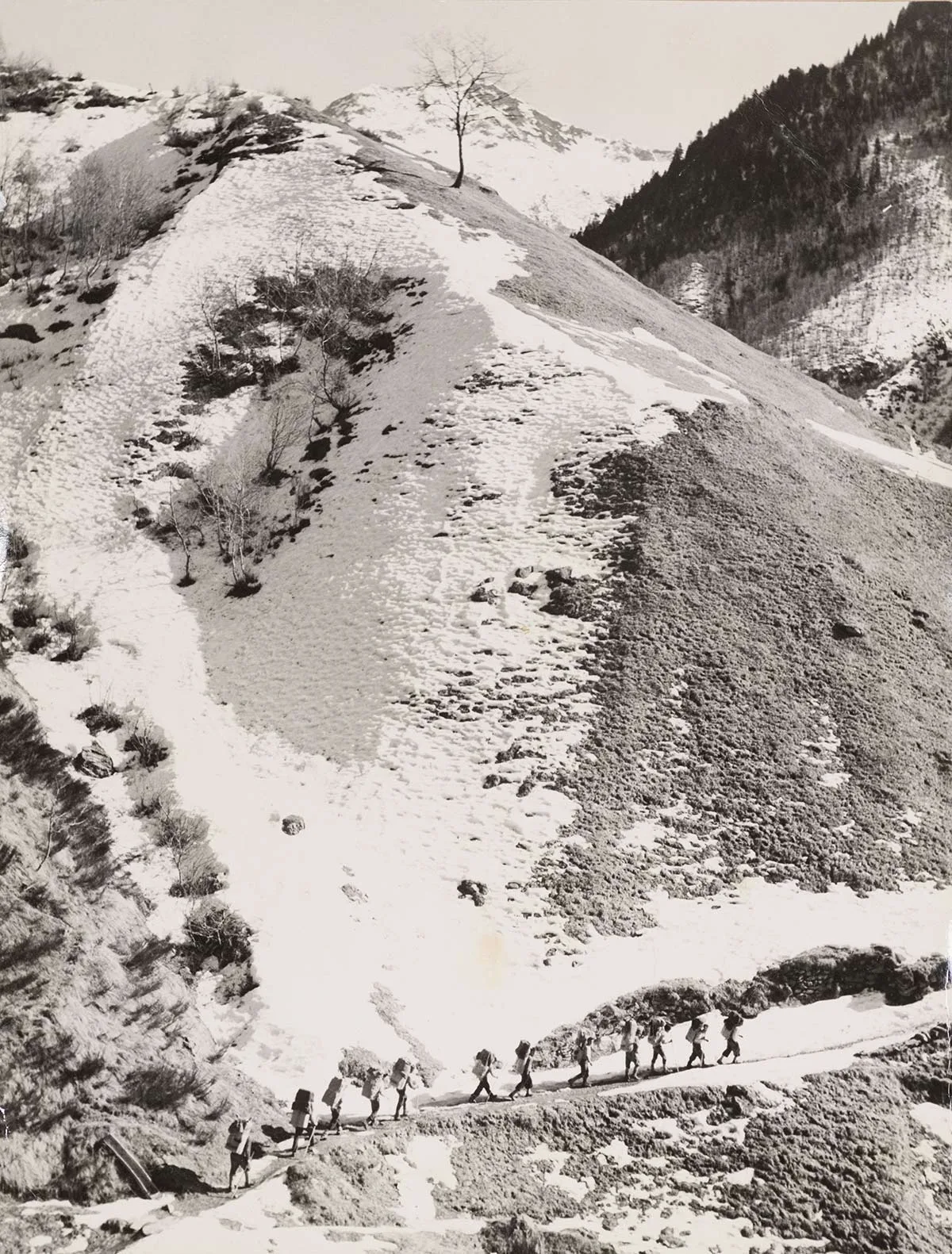
Wherever there is a national border, there are smugglers. However, smuggling activities took on a particular intensity along Switzerland’s southern border during the Second World War. A deep economic crisis drove large numbers of men, women and teenagers to flock across the border from villages on the Italian side, carrying a wide variety of goods, but especially rice – tonnes and tonnes of rice. The inhabitants of the cantons of Ticino, Graubünden and Valais were happy to buy this Italian commodity. Partly because it was hard to come by in Switzerland, and partly because they believed they were helping people in need by doing so.
A band of 12 smugglers with heavy loads on their backs pass through the Carena area near Bellinzona. The photo was taken in February 1949.
A band of 12 smugglers with heavy loads on their backs pass through the Carena area near Bellinzona. The photo was taken in February 1949. Swiss National Museum
The Swiss authorities had traditionally turned a blind eye towards smuggling, believing that it hurt no one apart from the Italian exchequer. But they banned it during the Second World War in an effort to combat all forms of black market trading and cracked down hard on smugglers. During this period, people were shot at for trying to evade checks. And so, several dozen smugglers lost their lives for a few kilogrammes of rice.

Post-war spiral of violence

But smugglers were not the only casualties during that time: several border guards also perished. Italy was going through a period of turbulence after the end of the war, and violence was widespread. Poverty, the high number of weapons in circulation and the unwillingness of many people to return to a normal life, which would have meant accepting the political and moral authority of the recovering post-war state, led to a sharp rise in acts of violence.
It was only logical that some of these armed individuals would become involved in the business of smuggling goods. Consequently, there was an upsurge in armed skirmishes and exchanges of gunfire in areas along the Swiss border. Several border guards were injured, and some ‒ like Ovidio Maggi from Ticino ‒ even lost their lives.
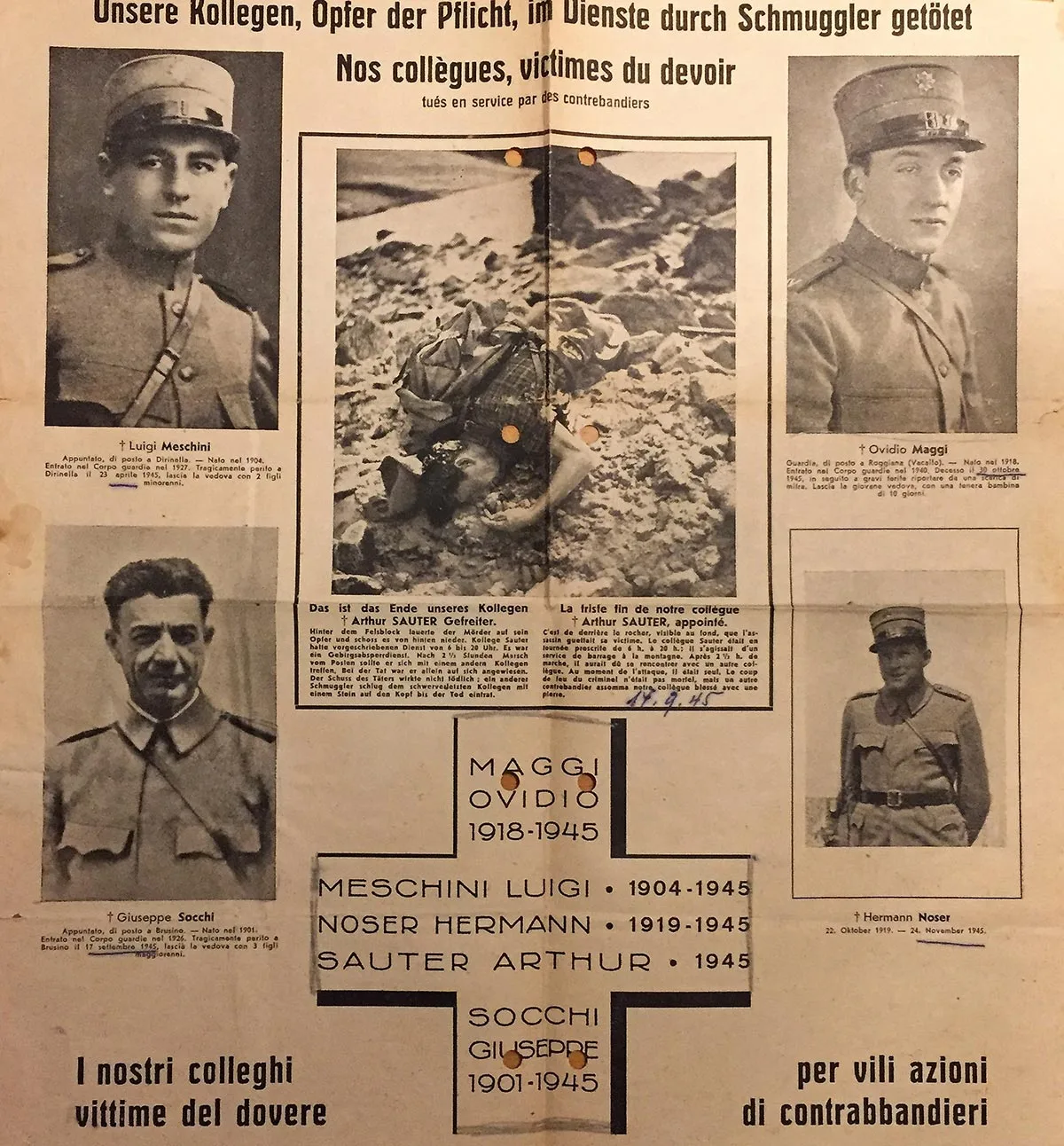
Poster commemorating five Swiss border guards, who lost their lives in the crackdown on smugglers in 1945.
Poster commemorating five Swiss border guards, who lost their lives in the crackdown on smugglers in 1945. Swiss Customs Museum

Abrupt end to a love story

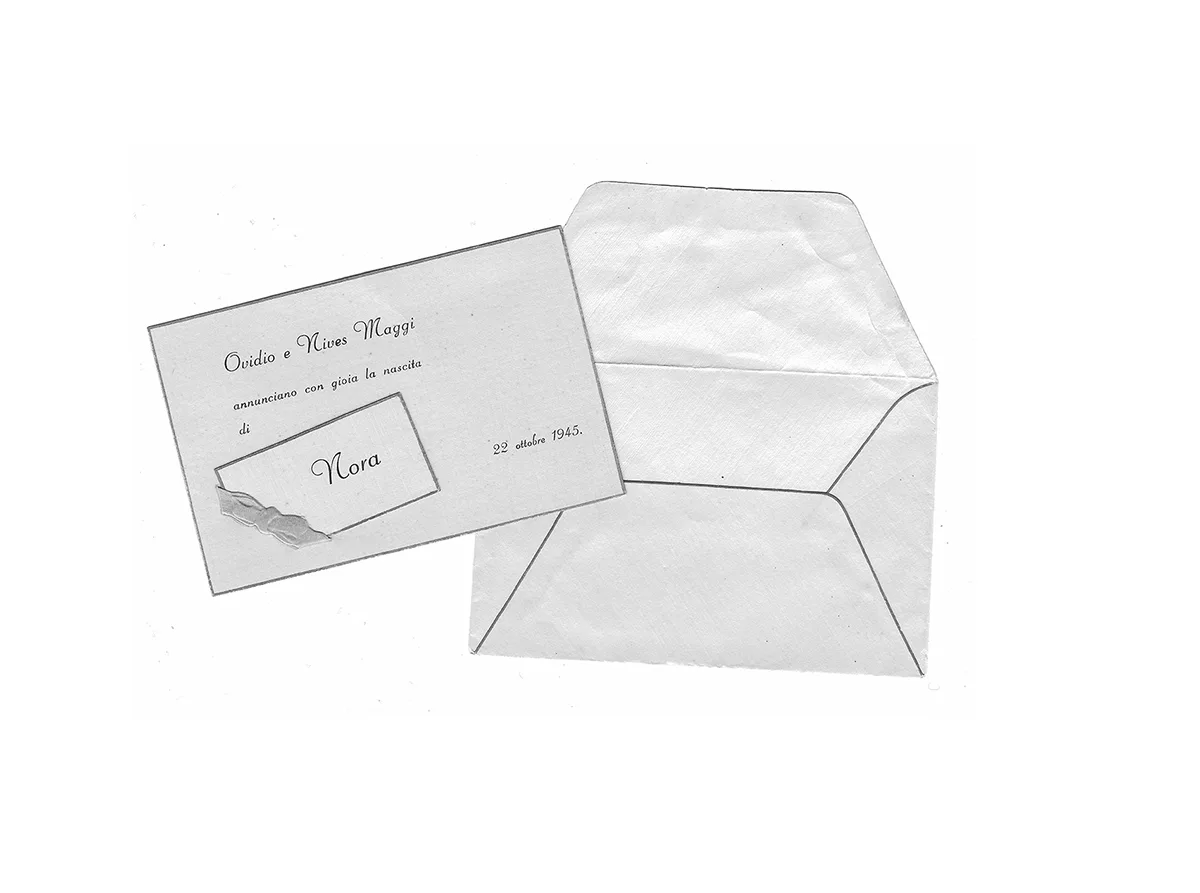
Maggi came from Cabbio in the Valle di Muggio, Switzerland’s southernmost valley. He was married to Nives, a woman of the same age he had known since childhood. The two former classmates tied the knot in December 1944. Theirs was a storybook romance, and when Nives gave birth to daughter Nora on 22 October 1945 at the hospital in Mendrisio the little family’s happiness seemed complete. But it was not to be.
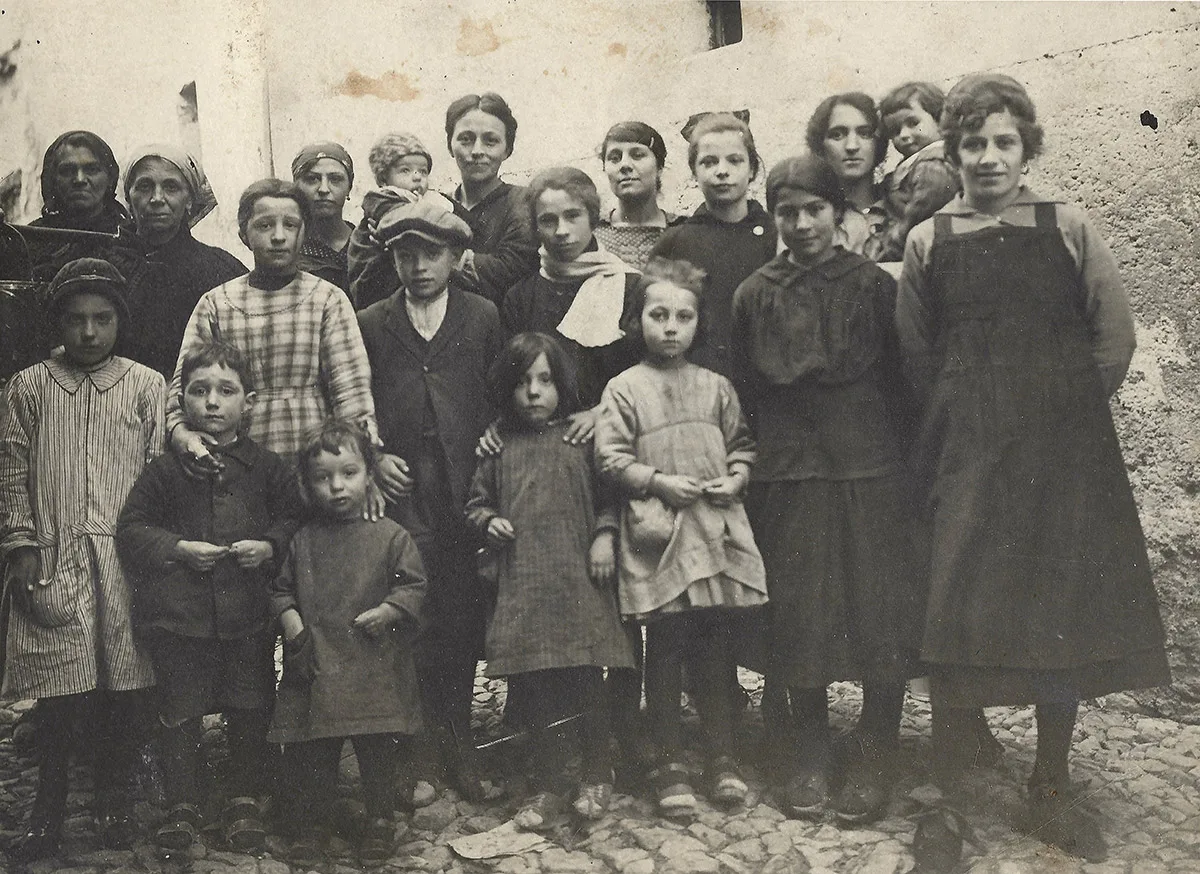
Group photo including Ovidio and Nives, taken in Cabbio in 1921.
Group photo including Ovidio and Nives, taken in Cabbio in 1921. Di Noia Family Private Collection
Wishing to fetch his wife and daughter home from hospital on 31 October, Ovidio swapped shifts with a colleague and agreed to work the evening before. On that fateful 30 October 1945, when he wasn’t even supposed to be on duty, Ovidio Maggi went out on patrol with fellow officer Giovanni Pelli and a service dog. In Vacallo, a village just above Chiasso, the two border guards took up position in the courtyard of a private home. Towards five in the morning they noticed a few individuals, each turning one after the other into a small street. One of them stopped in front of a door and knocked. A brief conversation was heard to take place. Possibly an attempt to sell smuggled goods. In that moment, the border guards gave the usual command: “Stop! Swiss Border Guard, hands up!” A submachine gun then opened fire from a nearby vineyard. The two border guards were hit and fell to the ground. They were later transported by the emergency services to the hospital in Mendrisio. Giovanni Pelli walked away with a graze and a fright. But Ovidio Maggi was badly injured and died that same evening.
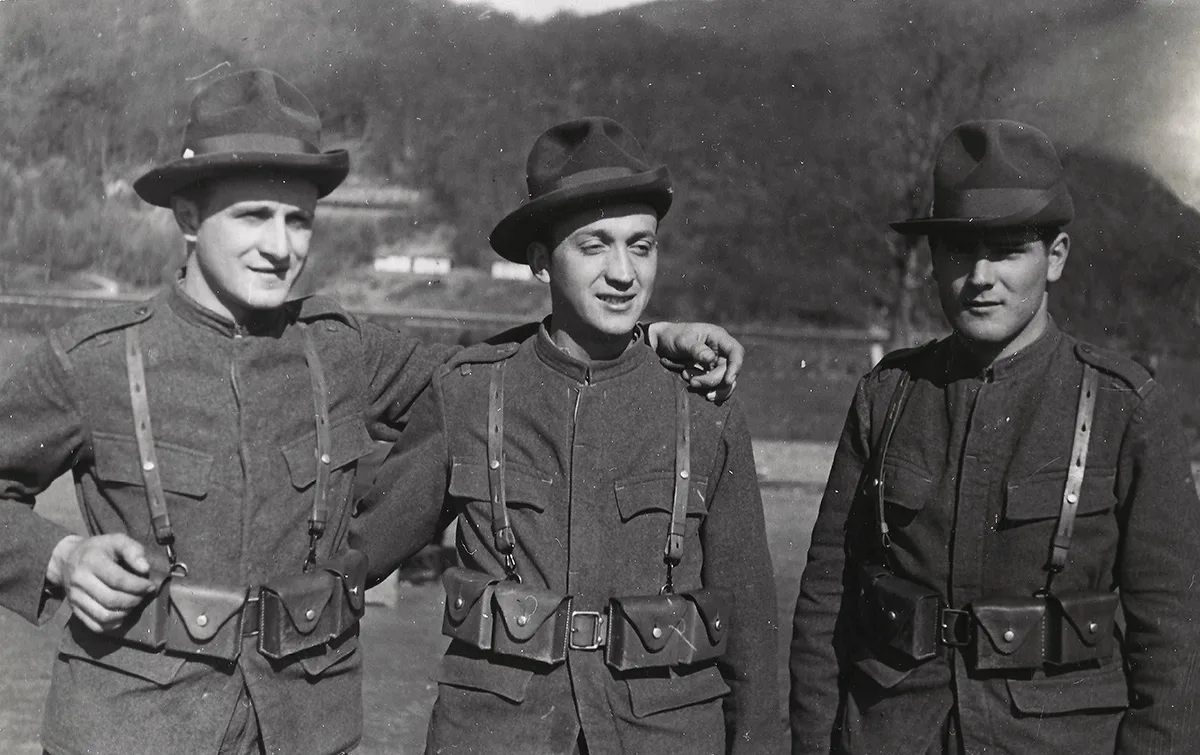
Ovidio Maggi, centre, enjoying a carefree moment with two co-workers.
Ovidio Maggi, centre, enjoying a carefree moment with two co-workers. Di Noia Family Private Collection
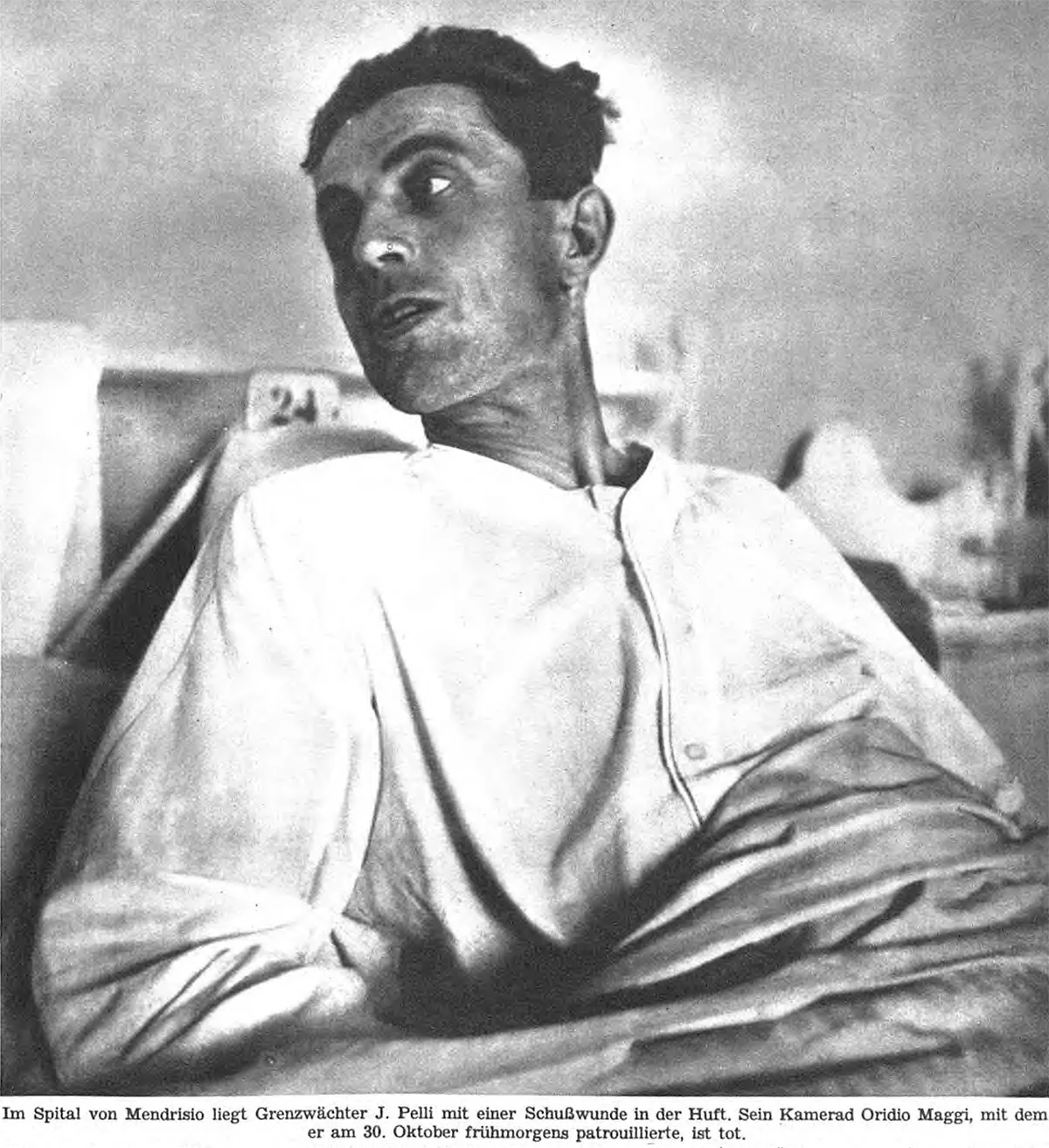
Ovidio Maggi’s wounded colleague Giovanni Pelli in hospital in Mendrisio.
Ovidio Maggi’s wounded colleague Giovanni Pelli in hospital in Mendrisio. Schweizer Illustrierte, 14.11.1945, p. 23
Nives Maggi and her daughter were discharged from hospital the next day as planned. But theirs was no joyful homecoming. Accompanied by the local doctor they set out on the journey to Cabbio, with the car carrying Nives and little Nora in front and the hearse carrying Ovidio following on behind. A memorial stone in Vacallo still commemorates those dramatic events of October 1945.
Little Nora’s birth certificate. Ovidio returned to the place he was born on the same day as his wife and newborn daughter. But as a dead man rather than as a father.
Little Nora’s birth certificate. Ovidio returned to the place he was born on the same day as his wife and newborn daughter. But as a dead man rather than as a father. Di Noia Family Private Collection

A reward and media interest

The case caused quite a stir and was a clear sign of the climate of violence that had become characteristic of smuggling operations at Switzerland’s southern border. The authorities therefore decided to take extraordinary measures. Consequently, the Federal Department of Finance offered a reward of CHF 1,000 for any information that would help capture the killers. Investigations led to the arrest of three young men from Maslianico on the Italian side of the border. They were sent to prison for between 7 and 20 years, although their sentences were later reduced following appeal proceedings.
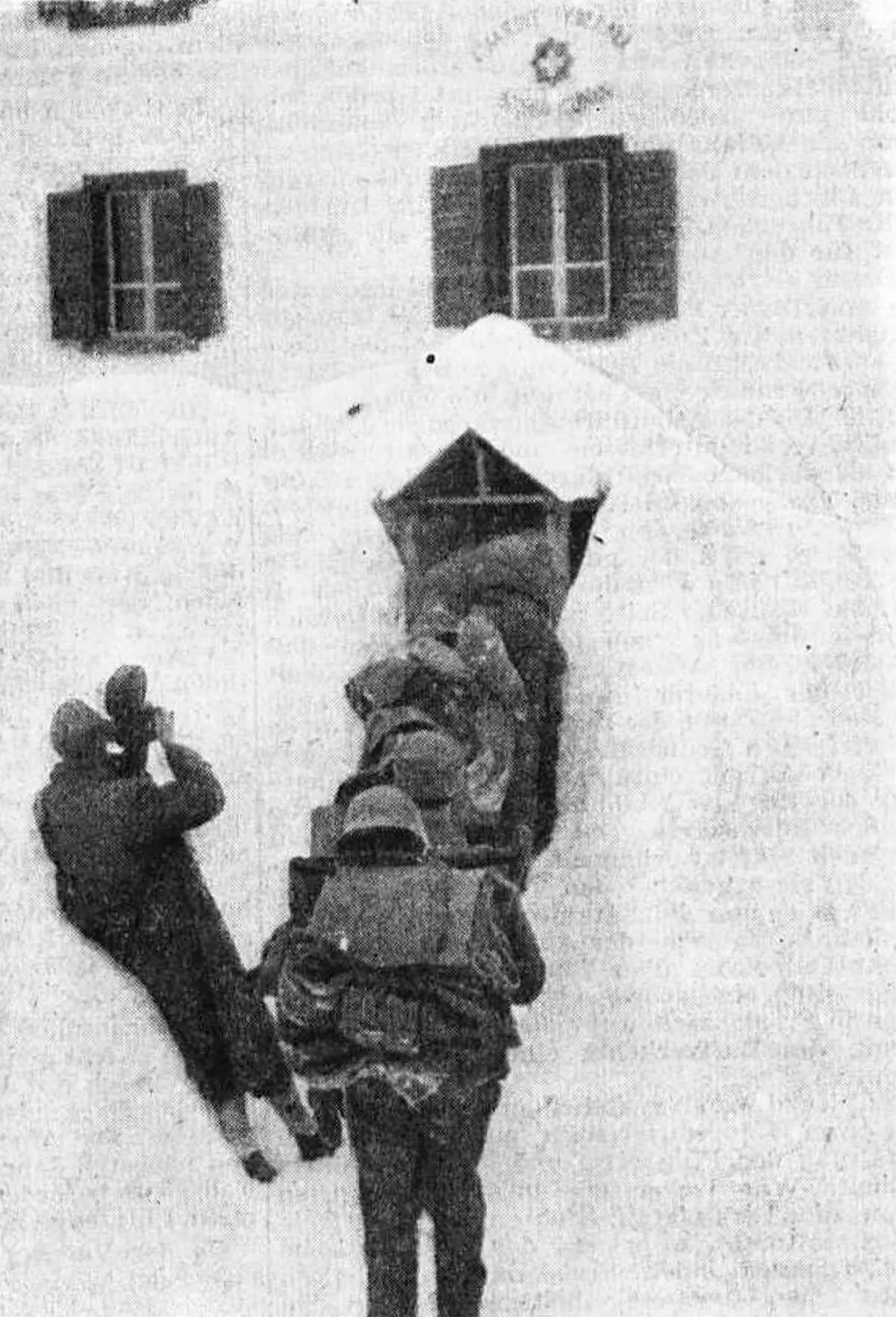
Media correspondents from all over Switzerland were sent to the Italian border to report on these events. Headlines such as “Wild West at the southern border” and “Smugglers terrorising our border to the south” were typical. In December, the cantonal governments of Ticino and Graubünden called on the Federal Council to intervene and send in the army. In February 1946, 800 soldiers were called up on active service to assist the Border Guard in keeping watch on Switzerland’s border with Italy. Fortunately, the situation soon returned to normal, and this special contingent was demobilised again in November that year.
In 1946, 800 soldiers were deployed in the fight against smuggling.
In 1946, 800 soldiers were deployed in the fight against smuggling. e-newspaperarchives
The face of smuggling changed as Italy gradually began to return to some form of economic and political stability from 1945. Although smuggling activities remained intense ‒ and illegal ‒ economic factors once again became the primary motivating factor and there was less violence involved.

Further posts