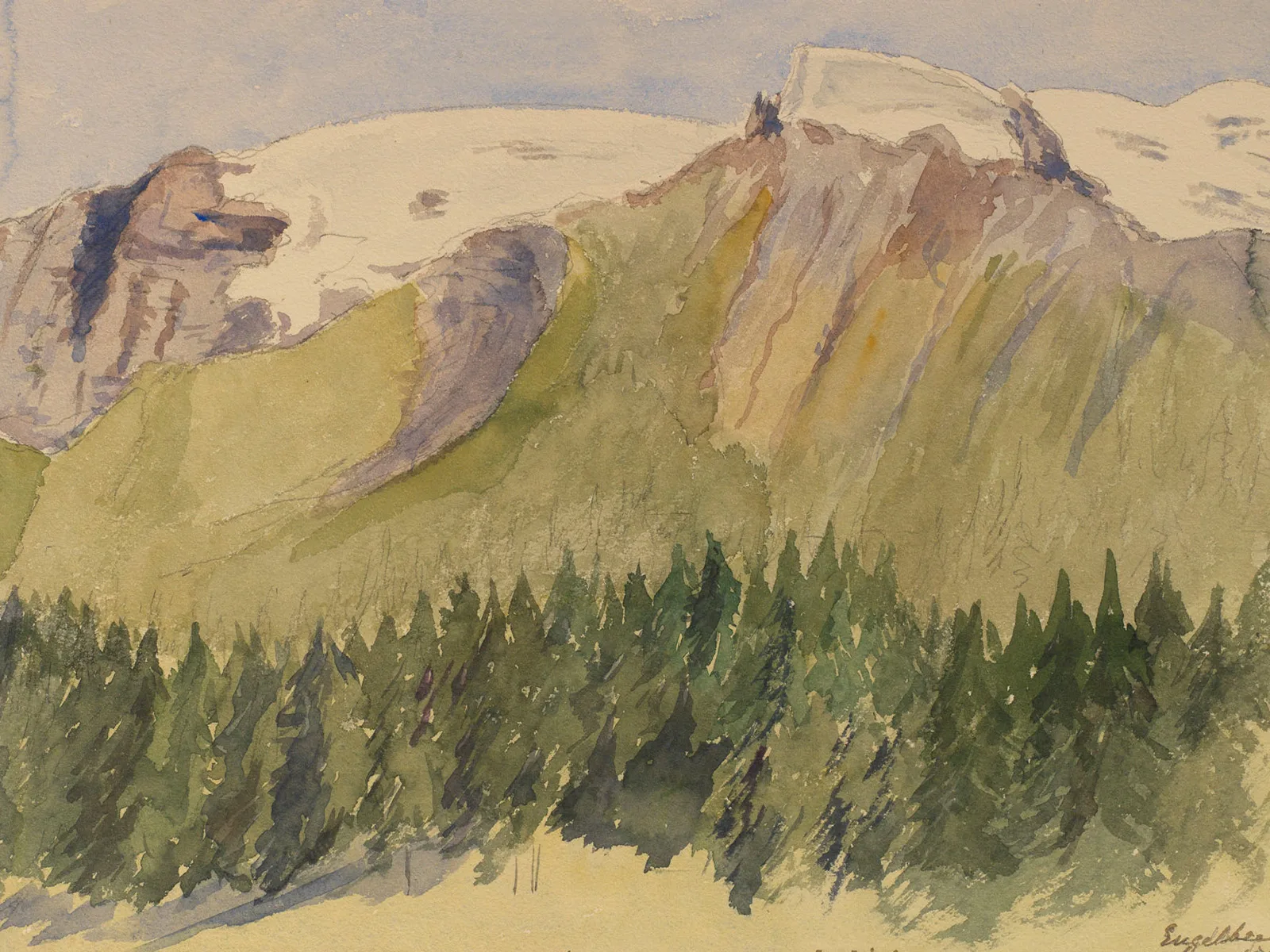
Hans Holbein: The Swiss Years
Hans Holbein the Younger (c. 1497–1543) came of age in an era reshaped by print culture, humanism, and religious turmoil. His years in Switzerland laid the foundation for his artistic dexterity and subsequent international acclaim.
James Blake Wiener
James Blake Wiener is a world historian, Co-Founder of World History Encyclopedia, writer, and PR specialist, who has taught as a professor in Europe and North America.
Website: worldhistory.org
As a child, Hans grew up with his older brother, Ambrosius, in his father's workshop, which lay alongside Augsburg’s canalized Lech River. Augsburg was then a veritable nexus of early modern dynamism, as much defined by capital as it was by art. Jakob Fugger, nicknamed "the Rich," oversaw Europe's most powerful banking and trading empire from the city, while Albrecht Dürer, Martin Schongauer, and Hans Burgkmair had all worked in Augsburg as well. It was in this milieu that the young Holbein brothers trained in their father’s profession.
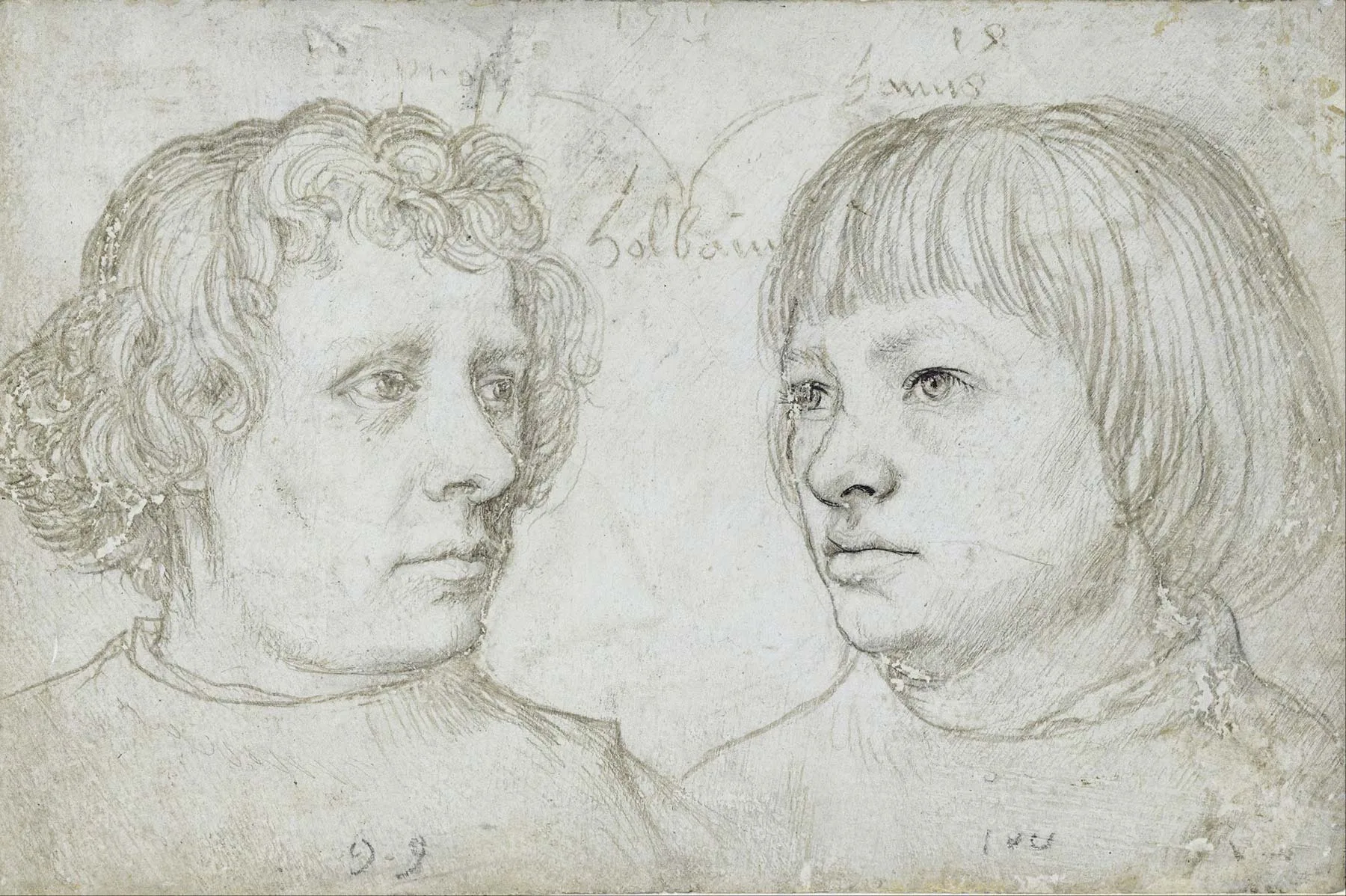
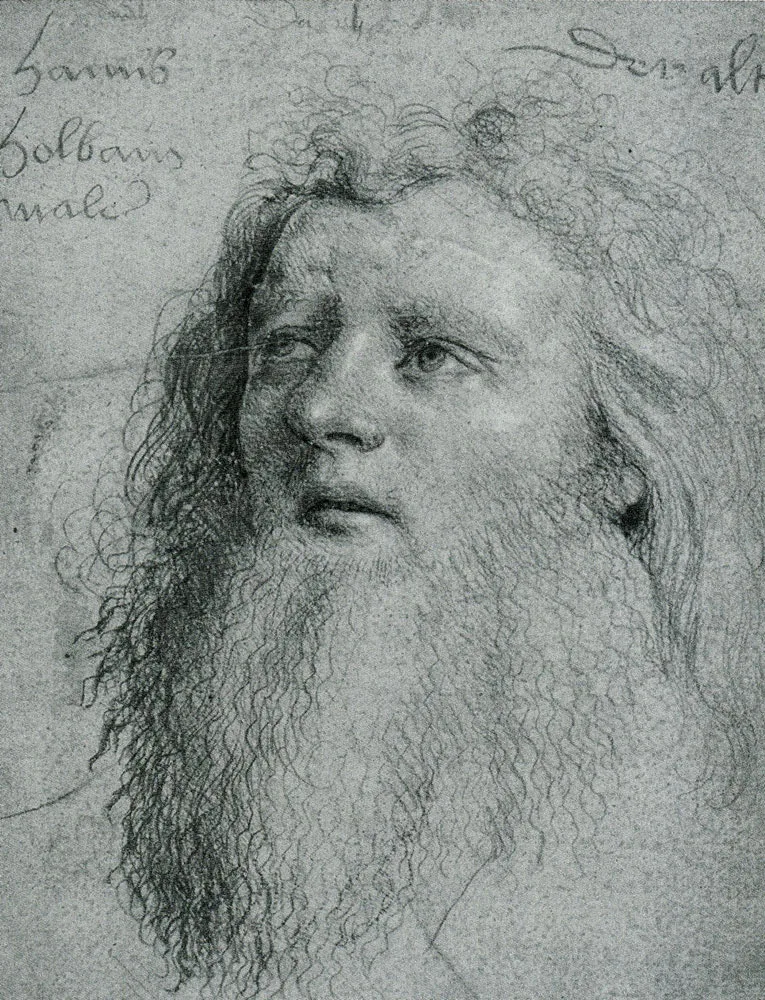
Ambrosius Holbein appears to have left first, around late 1514, to work on a project in Stein am Rhein. There, he is thought to have assisted Thomas Schmid, a painter from Schaffhausen, in decorating the murals in the banquet hall of St. George's Abbey around 1515.
Towards the end of 1515, Hans joined Ambrosius in Basel to work as a journeyman. If Augsburg's urban culture had been courtly, mercantile, and dominated by systems of elite patronage, Basel's was patrician, scholarly, and dominated by relationships between humanists. Though neither as grand nor as wealthy as Augsburg – and home to only about half its population – Basel, nonetheless, offered ample opportunities for ambitious and well-connected young men.
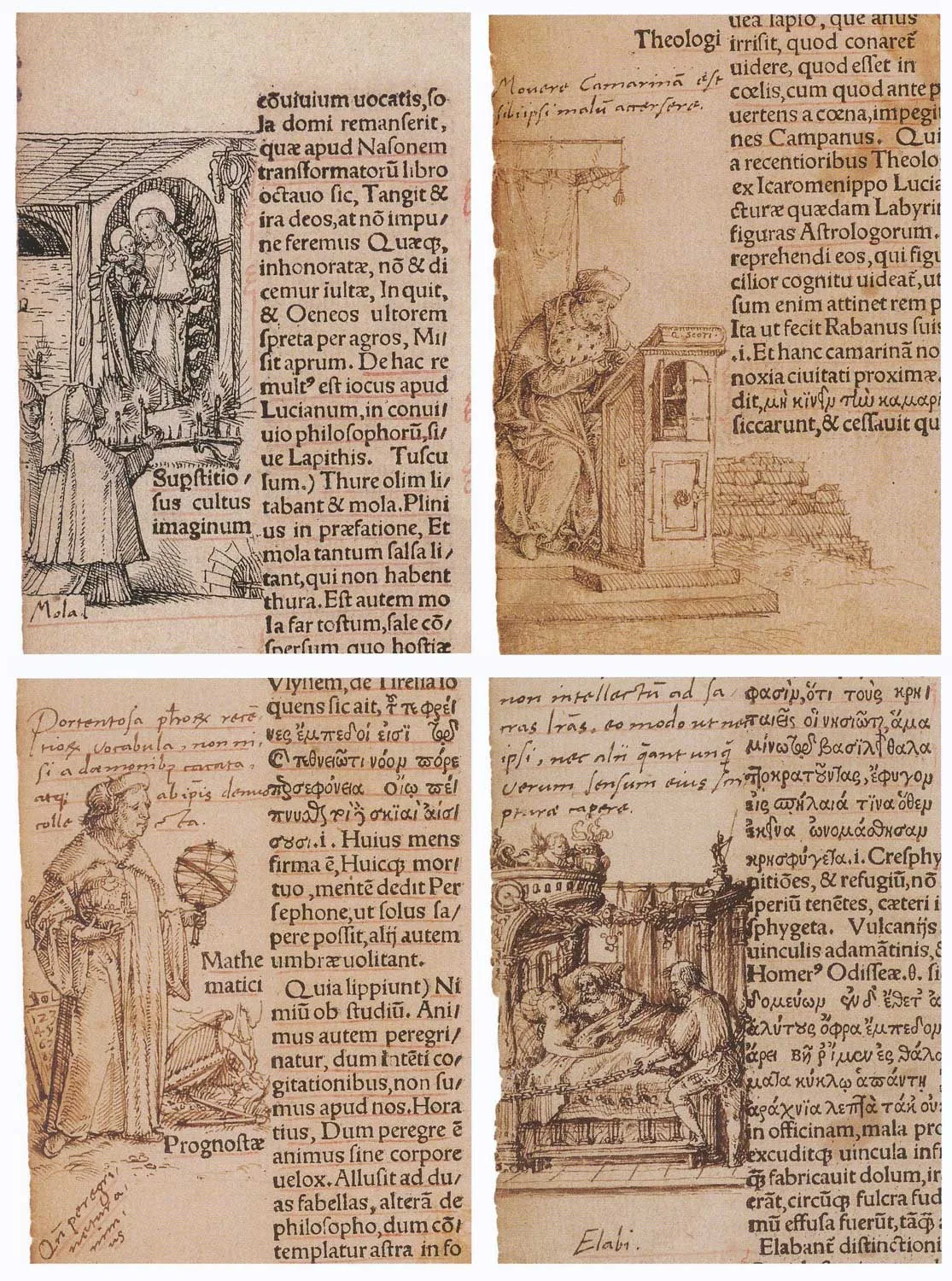
Jörg Schweiger, a Basel goldsmith who had known Hans Holbein the Elder back in Augsburg, helped Hans Holbein the Younger and Ambrosius find employment in the workshop of Hans Herbst, an Alsatian painter and member of the city's elite painters' guild, zum Himmel. The brothers proved diligent workers and were eager to secure their place in Basel society. During their spare time, they studied Latin — a critical skill for artists interested in finding work within the city’s publishing houses — and socialized with members of Basel’s humanist circles, including the scholar and future Protestant theologian Oswald Myconius. At some point, Holbein and Ambrosius filled the margins of Myconius' copy of Erasmus' In Praise of Folly with witty, animated sketches — an inside joke now regarded as one of the finest examples of Northern Renaissance marginalia.
[…] the honourable Hans Holbein, their dear citizen, who is widely renowned above other painters for his art […]
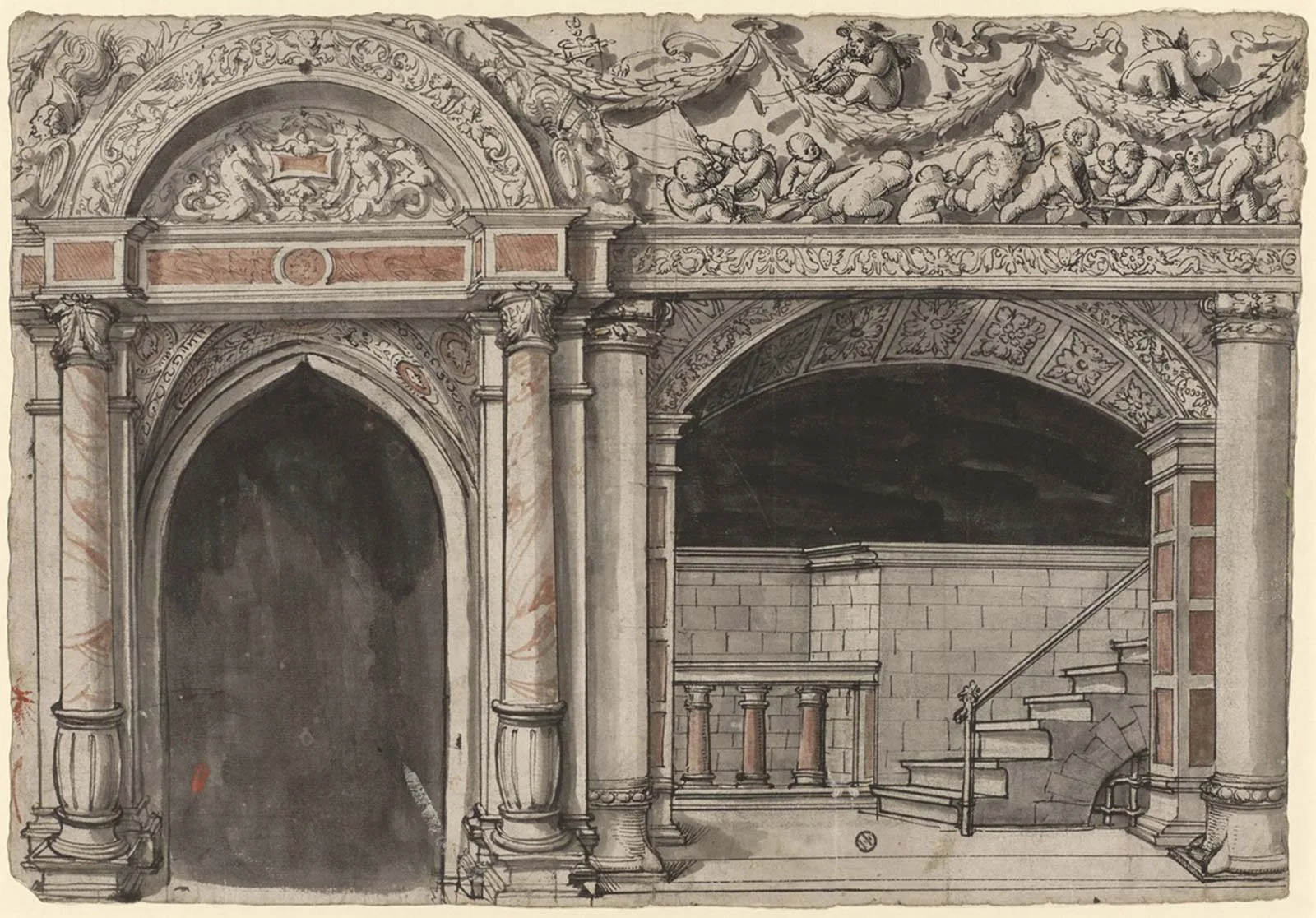
It was through Erasmus’ influence that Holbein gained access to a wider European network of scholars, artists, and patrons. Holbein’s friendship with Myconius had also opened the doors to Basel’s thriving print industry, which spread Renaissance ideas north of the Alps into Germany, France, Austria, and the Low Countries. Over the next decade, Holbein received frequent commissions from the city’s leading printers – Johann Froben, Adam Petri, and Johann Amerbach – to design title pages, woodcuts, and illustrations. These works reflect a blend of classical motifs, satire, and religious themes, which highlight Holbein’s technical skill, versatility, and ability to communicate complex ideas visually.
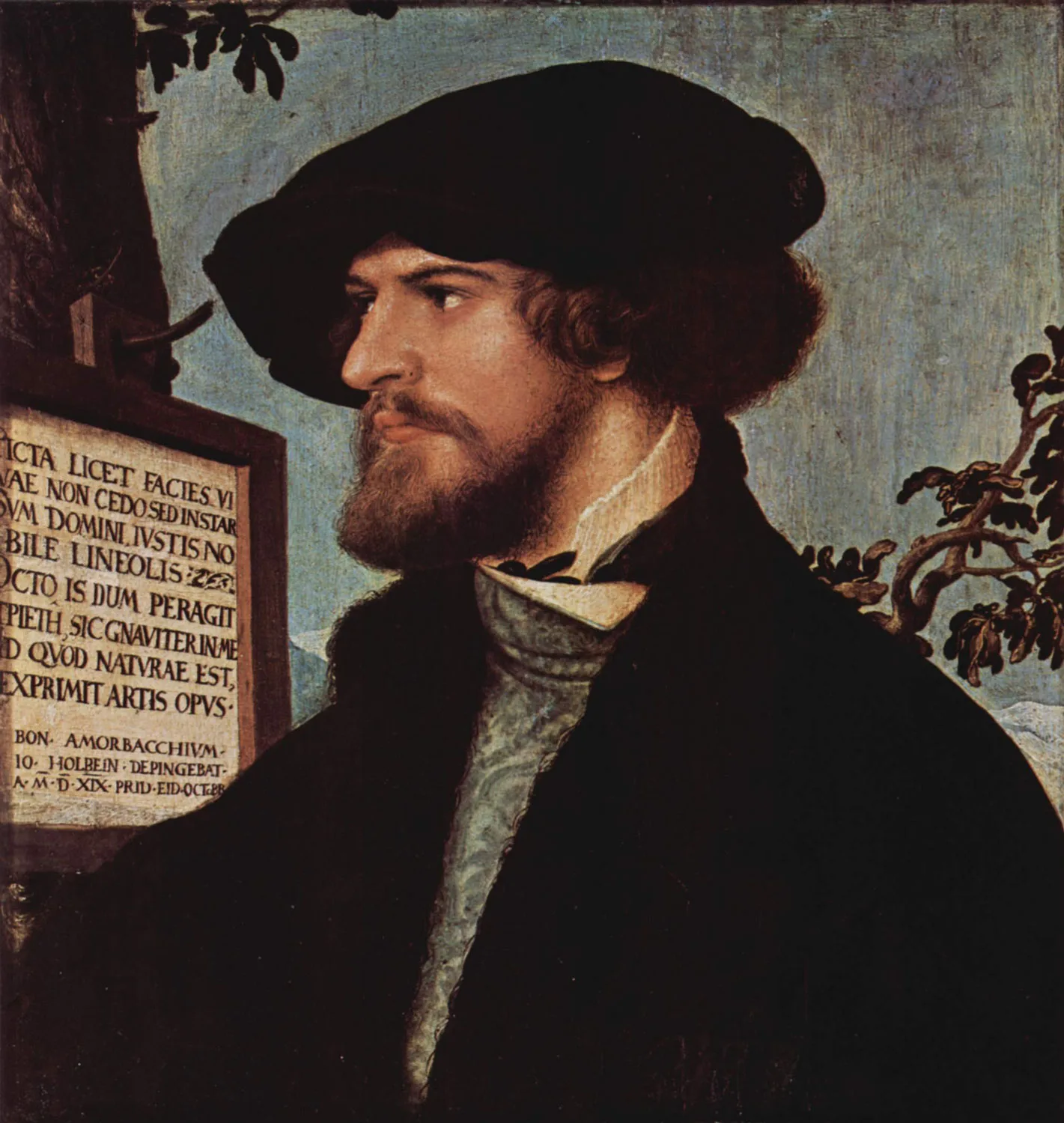
From c. 1515 to 1526, Holbein spent the majority of his time in Basel, but historians are aware that he worked elsewhere for select Swiss patrons too. One of the earliest works attributed to Holbein in Switzerland comes from the now-destroyed façade of the Hertenstein house in Lucerne. Around 1517, the wealthy merchant and alderman Jakob von Hertenstein commissioned Holbein and his father to paint scenes from classical antiquity, as well as a vibrant portrait of his son, Benedikt.
Holbein’s Lucerne frescoes demonstrate strong classical influences from ancient Roman models, sharp linearity with precise contours and sculptural modeling, dramatic perspectives full of spatial illusion, and the careful integration of architectural space. Unlike his father, the younger and more worldly Holbein perhaps took inspiration for the Hertenstein house frescoes from Venetian and Lombard artists, and from Andrea Mantegna in particular. Scholarly evidence suggests that Holbein may have even traveled to Milan at some point during his sojourn in Lucerne, between c. 1517 and c. 1519, but this remains a topic of speculation among art historians. It is known, however, that Holbein completed a now-lost altarpiece for the Franciscan church in Lucerne, in addition to designs for stained glass windows, before returning to Basel.
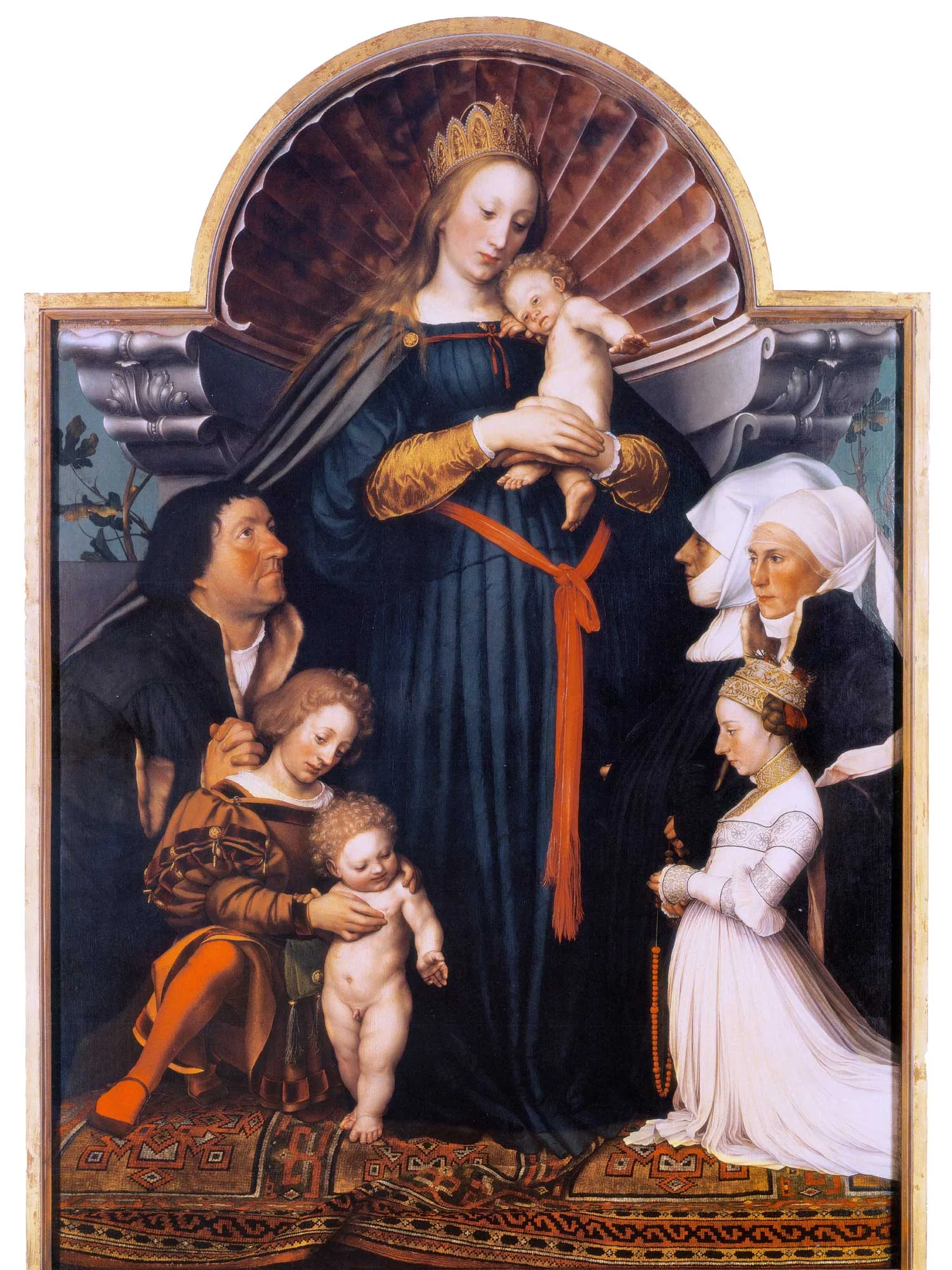
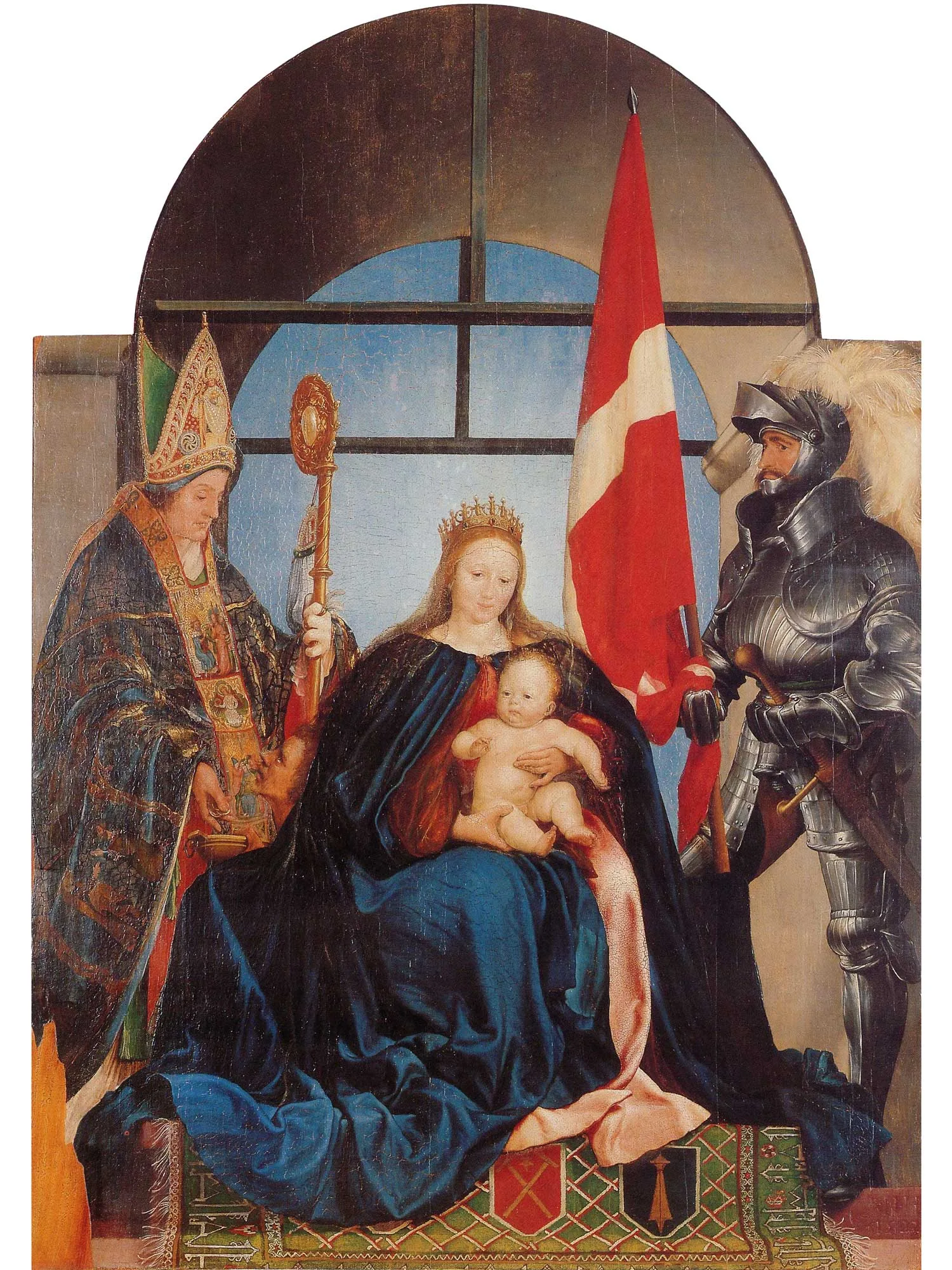
One of Holbein’s most important patrons during these years was the Basel tradesman, mercenary, and mayor Jakob Meyer zum Hasen, who had first hired Holbein to paint a portrait of himself and his wife, Dorothea Kannengiesser, around 1516. Meyer later requested several other pieces by Holbein, of which the so-called Darmstadt Madonna (c. 1526) is considered a masterpiece for its finesse, and innovative fusion of portraiture and religious art. In the Darmstadt Madonna, Meyer and his family are shown as pious donors, while dressed in civic finery, kneeling before the Virgin and Child. Herein, Holbein’s calm, almost detached realism seamlessly unites private devotion with civic portraiture.

Holbein additionally traveled to France to seek the patronage of Francis I around 1524, as tensions between Protestants and Catholics escalated in Switzerland. Although unsuccessful in this pursuit, he visited Francis I’s magnificent collections of Italian Renaissance art and is thought to have met France’s most prestigious Renaissance master, Jean Clouet. Holbein admired Clouet’s miniatures and technical approach to drawing; upon his return to Basel, he began to use chalk rather than silverpoint to soften the outline of his sitters just like those of Clouet.
Your painter, my dearest Erasmus, is a wonderful artist.
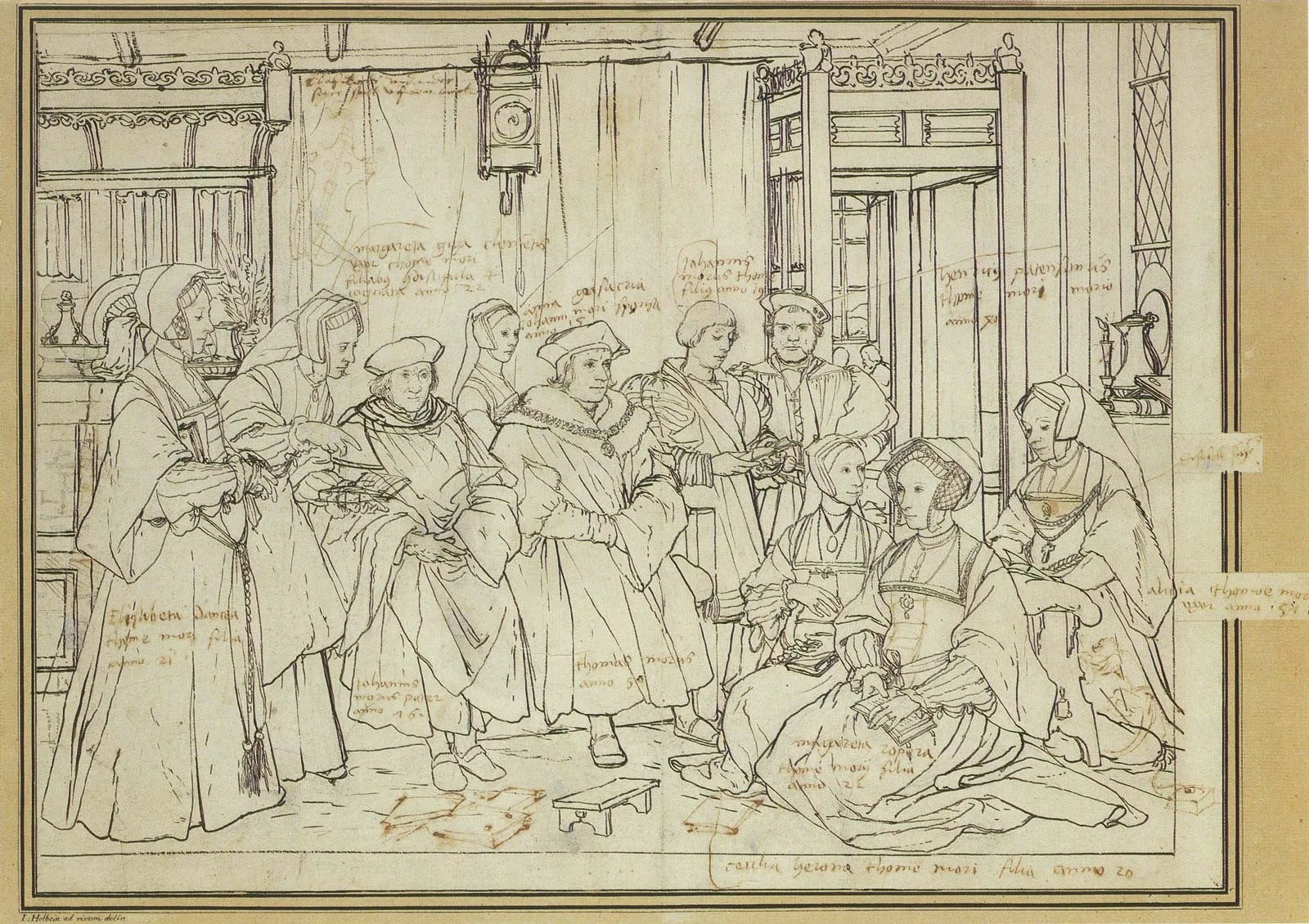
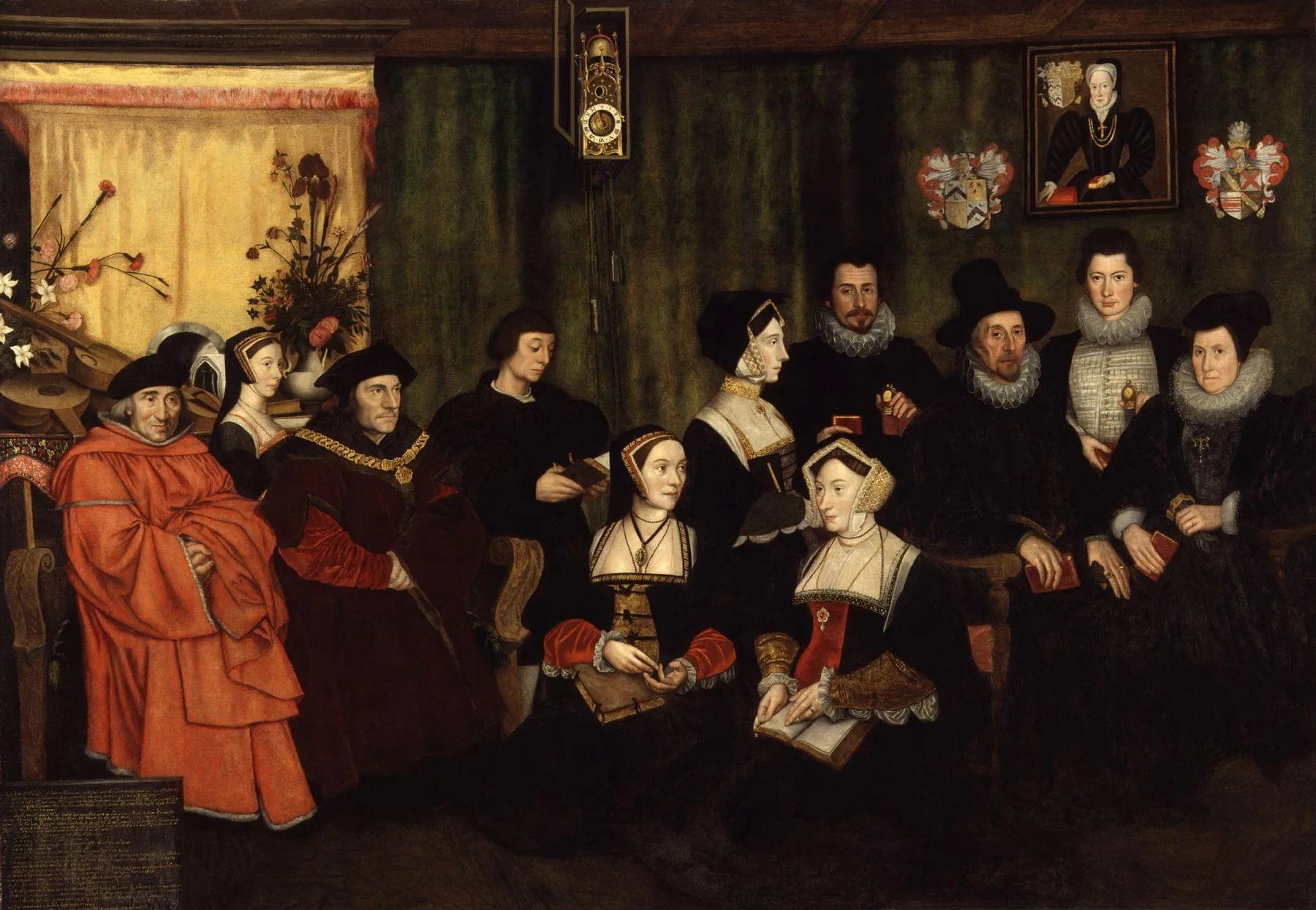
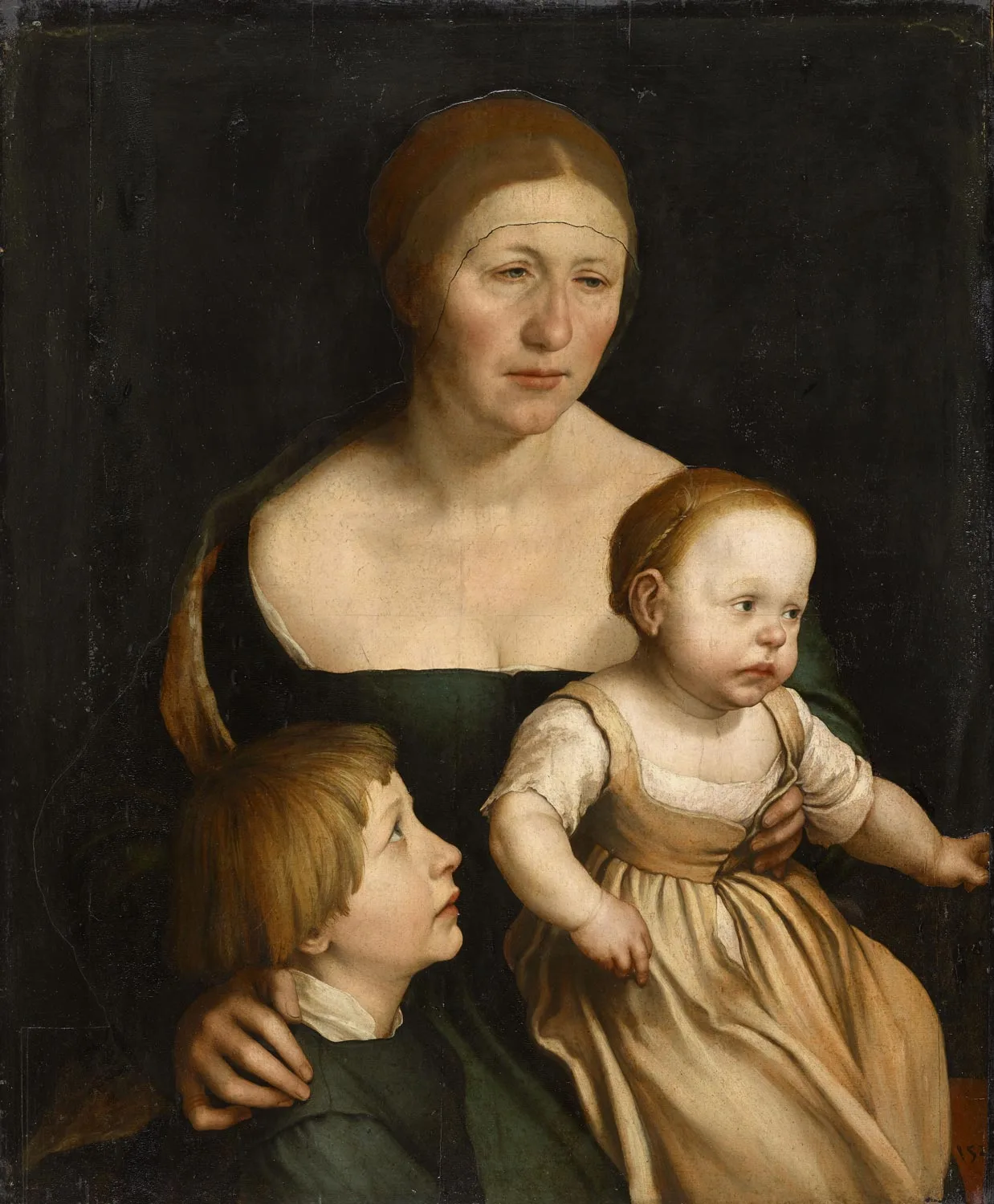
In 1532, Holbein departed Basel for England, returning only briefly to his adopted city in 1538. Although he had twice ignored summonses from the guild authorities, the citizens of Basel honored him with a street celebration in Johanns-Vorstadt. The city’s elders granted him a pension of 50 guilders, after which he returned to England, never to set foot in Switzerland again.
Know that I can make seven farmers into seven lords in a minute, but I cannot make one Holbein out of seven lords.