Stefan Lux tried to shock the League of Nations into action with his suicide. Illustration by Marco Heer.

Stefan Lux: the warning no one heeded

In 1936, Stefan Lux shot himself during a plenary session of the League of Nations. He had wanted to jolt the international community into taking a stand against the politics of the Nazi regime.

Noëmi Crain Merz

Noëmi Crain Merz

Noëmi Crain Merz is a historian, university lecturer and curator.
Geneva, 3 July 1936. A chilly and wet morning. In the conference hall of the League of Nations, the address by the Spanish delegate is dragging on. Many seats are empty, the lunch break is approaching, minds are wandering.
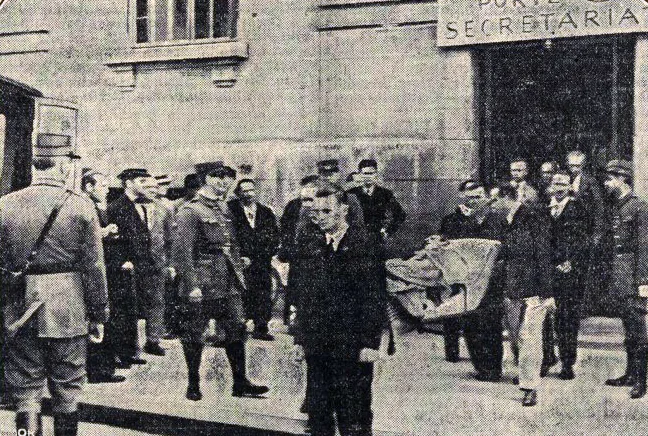
Until a shot rips through the monotony. For a moment, time seems to stand still. The speaker and the interpreter break off mid-sentence, and the hall quickly descends into panic. Below the rostrum a man is lying in a pool of blood with a gun next to him. A few seconds beforehand, he had lifted his arm into the air and shouted out something unintelligible. A member of the Canadian delegation rushes forward to administer first aid. Severely injured, the man is taken to hospital, where he dies of internal bleeding later that evening.
Seriously injured Stefan Lux is carried out of the building.
Seriously injured Stefan Lux is carried out of the building. e-newspaperarchives
His name was Stefan Lux. Born into a Jewish family in the Habsburg Empire, he lived in Germany in the years prior to 1933, where he worked as a journalist for the Weltbühne magazine and tried to make it as a film director. After Hitler seized power, he fled Germany with his wife and nine-year-old son and moved back to the town of Malacky, where he had grown up, which by then had become part of Czechoslovakia. He worked as a photojournalist for the Prager Presse there.
Why did he do it? A young American woman who was close by when it happened said in her statement that Lux kept pointing at his folder. In it was his legacy in the form of letters and articles. Lux wanted his suicide to galvanise the international public, to make it recognise what was happening to Jews in Germany, to point out how close Europe was to the abyss, and to urge governments to grasp the consequences of their inaction.

A public death as a warning

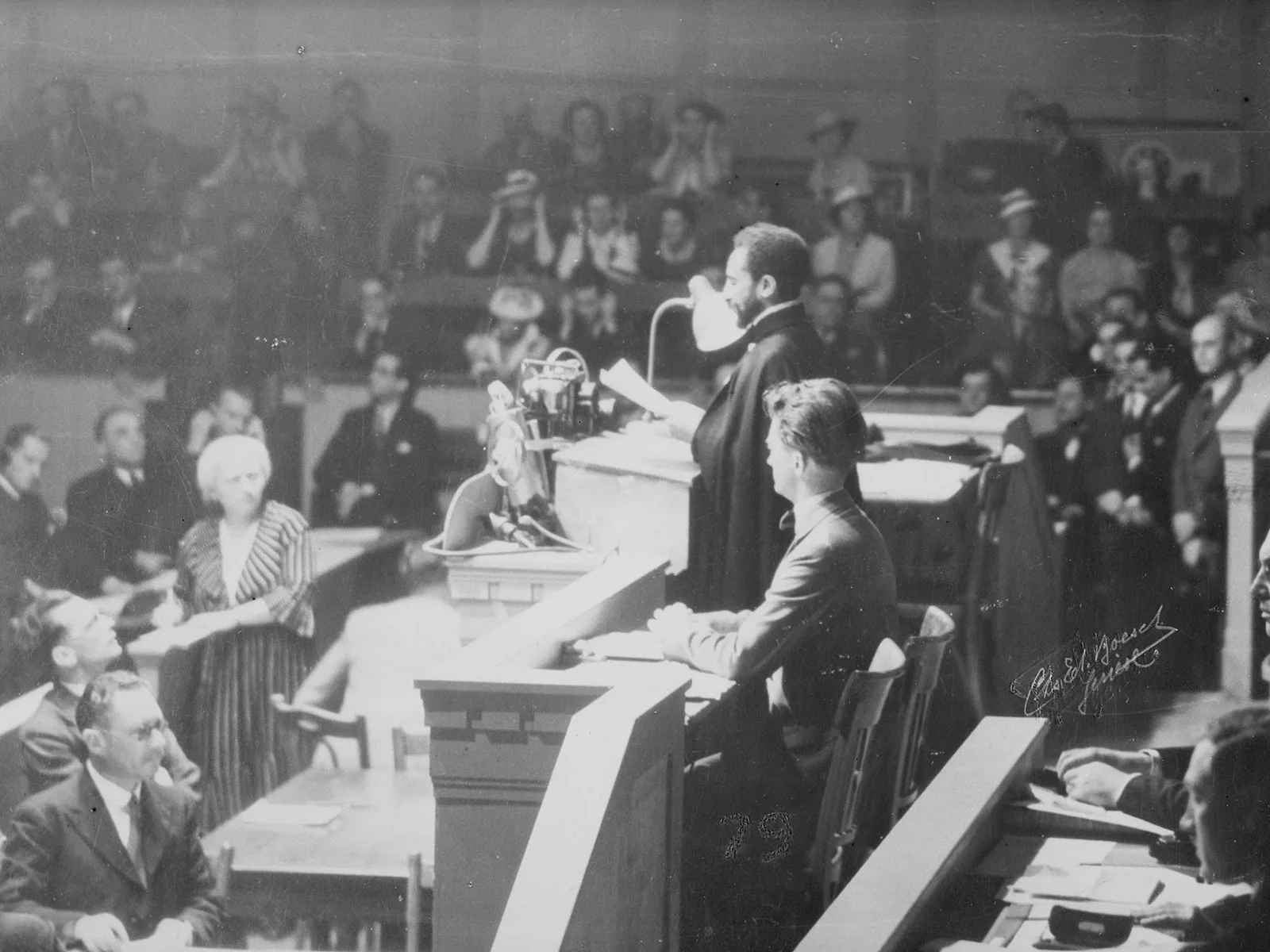
A few days before the act, Stefan Lux had travelled to Geneva. He had checked into a hotel and got himself accredited as a photojournalist to gain access to the League of Nations, where on 30 June the Ethiopian Emperor Haile Selassie was to address the Assembly. The year before – in 1935 – Ethiopia had been invaded by Fascist Italy led by Benito Mussolini. Although Italy and Ethiopia were both members of the League of Nations, the international community had issued a half-hearted response with limited economic sanctions, although it was aware that the Italian army was using toxic gas against soldiers and civilians and was establishing a colonial apartheid system in the occupied regions.
In his address, Selassie appealed urgently to the principles of the League of Nations and warned emphatically that inaction would have far-reaching implications. He said that failure to impose meaningful action against Mussolini’s aggression would undermine the whole international order. Stefan Lux reached the same conclusion, albeit in terms of Hitler and Europe. He believed that if the international community failed to take decisive action against National Socialism, not only the Jews would be lost, but the whole continent.
The journalist pinned his hopes on the United Kingdom, to whom he addressed his parting words, which were only to reach their recipient after his death. Lux hoped that his public suicide would make international headlines and force people to take notice of his message.
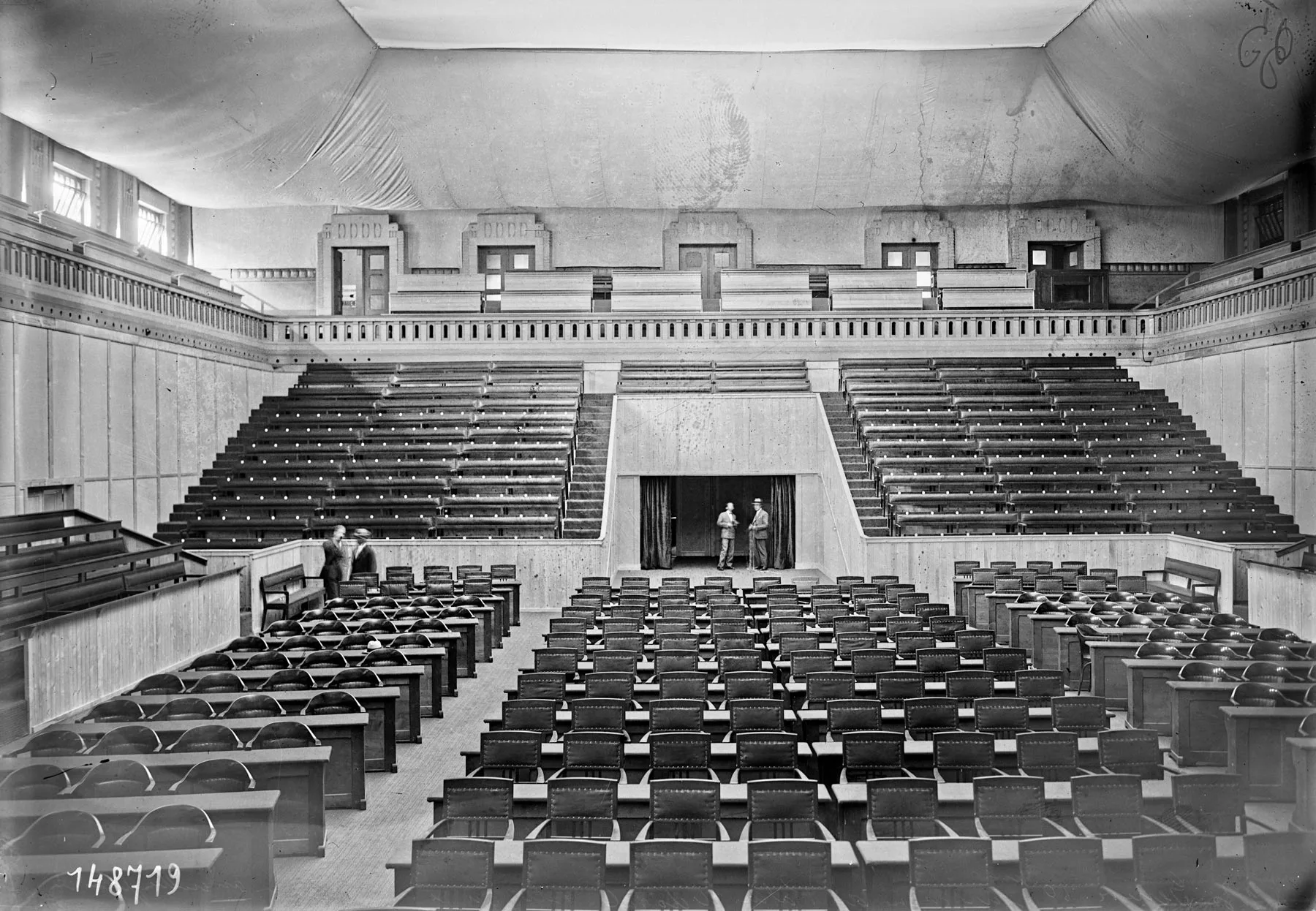
The League of Nations Council Chamber, 1930.
The League of Nations Council Chamber, 1930. Wikimedia / Bibliothèque nationale de France

Frighteningly prescient

Lux wrote to the British Foreign Secretary, Sir Anthony Eden, saying that only the UK could avert disaster. He said that to do so, it would have to get other states to stand up to Germany instead of continuing to negotiate with its leaders. He wrote that all European governments were well aware that Germany was arming “with blatant disregard for all international treaties and customs” like no state had ever done before. Still, he made the case to Eden that the world was clinging to the Nazis’ assurances of peace because people refused to acknowledge one thing: “that the German government – the group that is now determining the fate of the once great German people in an arbitrary and completely unchecked manner – entirely consists of out-and-out criminals.”
He went on to say that historians would probably one day be able to explain how this band of criminals was able to surreptitiously gain power over an entire people through a “mass deception, the like of which the world has never seen”. He also suggested that it would be all but impossible to answer a more fundamental question: Why an entire world has, for three and a half years, watched this insane rampage with inhuman apathy – an apathy from which it could not be shaken even by the agonising, bleeding misery of hundreds of thousands of living, sentient human beings. Lux’s warnings were to be gruesomely confirmed, but the hundreds of thousands of victims ended up running into the millions.
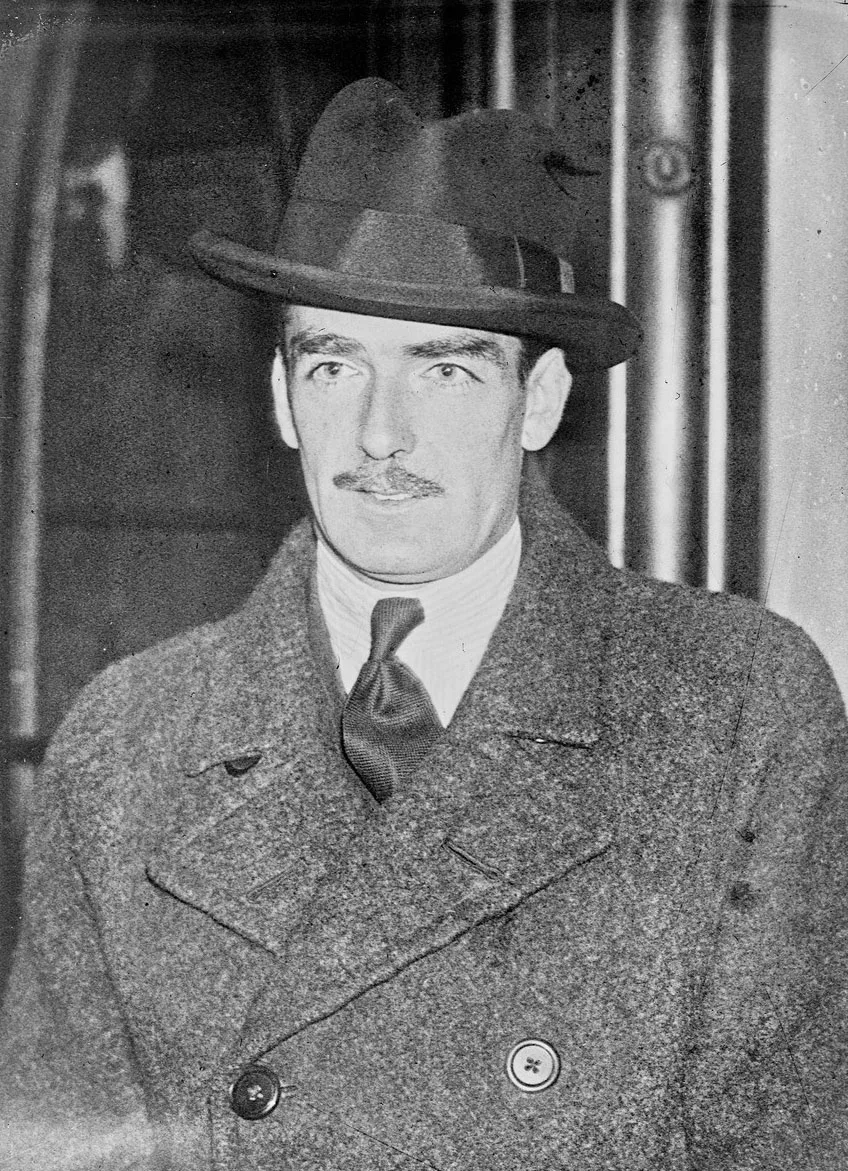
The man on whom Lux was pinning his hopes: British Foreign Secretary Anthony Eden, pictured on an earlier visit to Geneva, 1934.
The man on whom Lux was pinning his hopes: British Foreign Secretary Anthony Eden, pictured on an earlier visit to Geneva, 1934. Bibliothèque nationale de France

Vain hope

The deadly shot led to a brief interruption, and then the League of Nations continued its session as if nothing had happened. The incident was not mentioned at all and doesn’t feature in any official records. The day after Lux’s suicide, the Assembly decided to lift the sanctions imposed on Italy due to the war in Ethiopia. When the Spanish Civil War broke out several days later, the League of Nations declared the conflict a domestic matter for Spain. Even the bombing of the Basque town of Guernica by the German Condor Legion with the support of Fascist Italy’s air force in April 1937 didn’t change this. The Fascist regimes realised that they could violate international law with impunity.
“I want to fervently believe that a miracle will happen and the death of a little-known, minor writer […] will spread some clarity and truth,” wrote Stefan Lux in his suicide note.
“I want to fervently believe that a miracle will happen and the death of a little-known, minor writer […] will spread some clarity and truth,” wrote Stefan Lux in his suicide note. Wikimedia
Lux’s hope that his suicide would galvanise the international public failed to materialise. All the same, his message was picked up by the New York Times, which wrote that the tragedy in the Council Chamber reflected the despair of much of the world’s population at the League’s failure. The Guardian also recognised that Lux had sacrificed himself for the ideal of human solidarity. Yet neither the Manchester-based newspaper nor The Times in London published the full argument that Lux had sent to the two publications before his suicide.
Most of the articles reduced Lux’s message to a protest against the persecution of the Jews. They therefore essentially took the same view as the German press, which discredited him as a Jewish fanatic. However, Arthur Haller, a friend of Lux’s from Prague, put it as follows in a telegram addressed to the League of Nations’ Secretariat: Lux did not die for the Jews, but for the humanitarian ideal, and last but not least for the League of Nations. Haller wrote that he hoped his friend’s heroic act would not remain in vain.

[His last words] were: “Ich bin der letzte” (“I’m the last”), which perhaps means that he is the last person to give his life in protest against Geneva’s methods of tiptoeing around every issue. But they may have been: “Ich bin nicht der letzte” (“I’m not the last”), meaning that this shot ringing out in the conference hall in Geneva symbolises the fact that the deadly weapon of violence now holds sway over Geneva as well.
The Thurgauer Zeitung newspaper speculating on Lux’s final words, 7 July 1936.
Four weeks after Lux’s death, Hitler opened the Olympic Games in Berlin. The Nazi regime presented itself as a peaceful host, anti-Jewish hate speech temporarily disappeared from the streets, and the persecution was kept under wraps for the duration of the Games. This made it easier for international policymakers to ignore the Czech journalist’s warnings – until it was too late.
The League of Nations, founded in the wake of the First World War as the first international peacebuilding organisation, remained largely ineffective. Only after the disasters of the Second World War and the Holocaust did the United Nations establish a much stronger international order with the UN Charter and the international protection of human rights. Yet even that has often been unable to prevent wars and violations of international law. The culture of looking the other way that Lux denounced is still in evidence today.

Further posts