Napoleon and his memorable alpine crossing
The Great St Bernard Pass has always been known as a major alpine crossing point. Napoleon Bonaparte made skilful use of it for propaganda purposes.

Barbara Basting
Barbara Basting worked as a cultural editor and currently heads the visual arts division in the City of Zurich’s Culture Department.
The rider is easily identifiable as Napoleon Bonaparte. The creator of the huge painting is also well known. Jacques-Louis David (1748–1825) is one of the heavyweights of European art history. Having started out as a court painter, he went on to play a leading role in representing the ideals of the French revolution and even voted in favour of beheading King Louis XVI. His painting commissioned by the National Convention (the revolutionary government of France) ‘The Death of Marat’ (1793) is an icon of the French revolution. He subsequently devoted himself to portraying the rise of Bonaparte, initially to First Consul and finally as Emperor (1804) and became his visual propagandist.
This painting is one of his most significant commissioned works in the service of Napoleon. David’s career path was shaped by opportunism and tells us something about the dependencies of premodern artists.
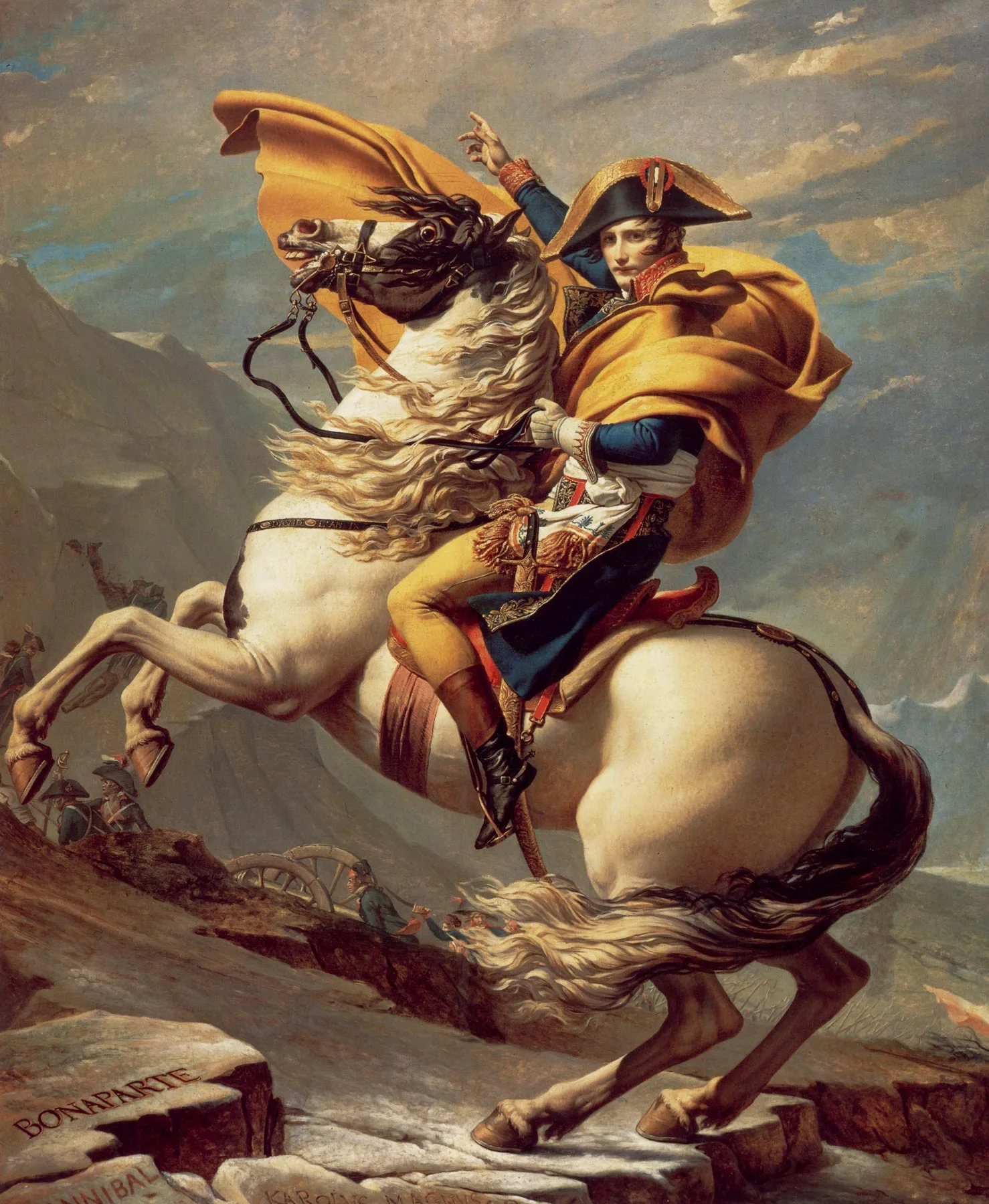
In fact the title is basically the only real connection between the painting and the alpine pass. And unsurprisingly so, as David, unlike Napoleon Bonaparte, never actually went to the pass. The mountain landscape is generic. The artist also uses his imagination extensively. Take the rocks on the bottom left of the painting for example: Bonaparte – Hannibal – Karolus Magnus, i.e. Charlemagne. These letters were not engraved by a stonemason, they are a figment of David’s imagination.
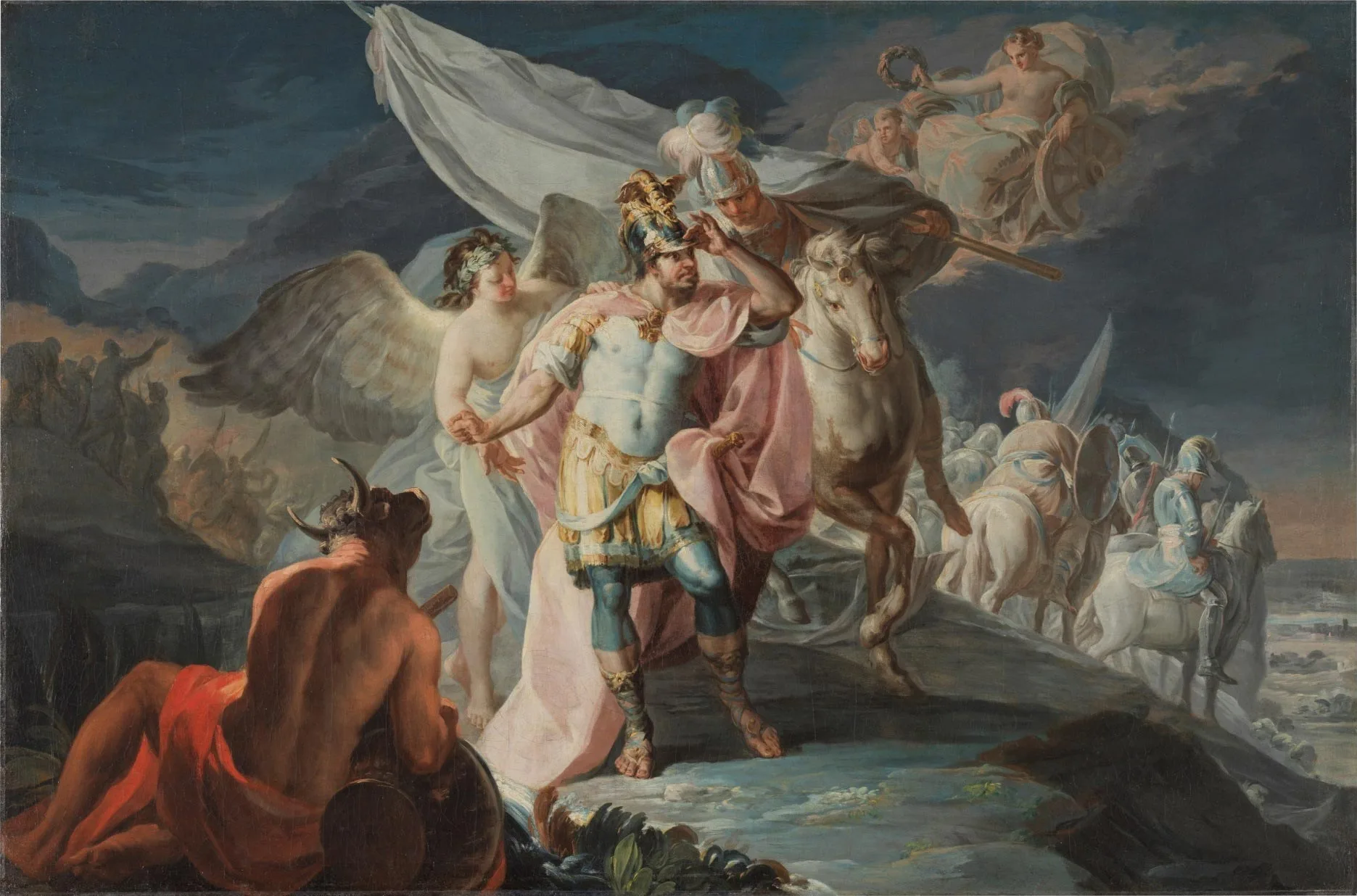
The painter added some illustrious references to Bonaparte’s alpine crossing by employing such methods. David and his public did not care that Hannibal had chosen the flatter Col de la Traversette for his alpine crossing, as we now know. David was exercising his artistic licence and was familiar with Francisco Goya’s history painting from 1771 depicting Hannibal’s alpine crossing in splendid Baroque. David used the cultural-historical aura of the pass to add gravitas to his work.
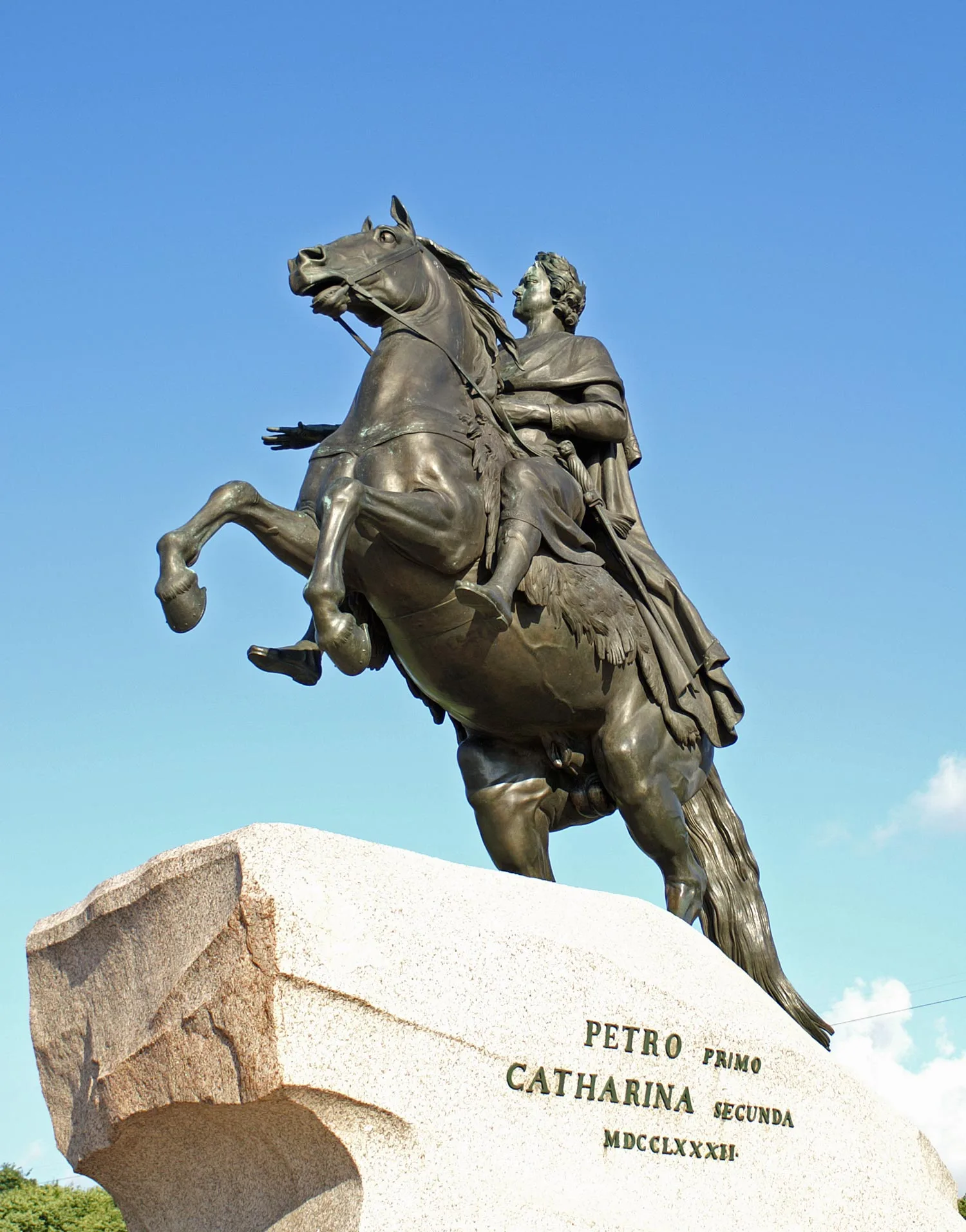
David’s depiction of a horse in the wind was also inspired by other art-historical precedents. Gian Lorenzo Bernini brought Baroque dynamism to ancient equestrian statues. His marble statue of the absolute ruler Louis XIV was a commissioned work that the king strongly disapproved of. Etienne Maurice Falconet, who was also unimpressed by the work, surpassed Bernini’s ungainly rider with his audacious equestrian statue of Peter the Great in St. Petersburg. This ‘iron rider’ caused quite a stir in Europe and prompted a host of replicas and pictures, which David was also familiar with.
But why was this crossing of the Great St. Bernard Pass a valuable propaganda tool for Napoleon? The answer lies in the battle of Marengo near Alessandria in the Po valley in northern Italy. This was where Bonaparte achieved a hard-fought victory in the second of the coalition wars against the remaining monarchies in Europe and forced the Habsburgs of Austria to surrender northern Italy.
The key to Napoleon’s victory was the arrival of General Louis-Charles-Antoine Desaix with the Army of the Rhine from Basel via the Gotthard Pass.
By choosing the Great St Bernard Pass, Napoleon had exploited a strategic advantage inherent to that particular route. He decided against the flatter route via Mount Cenis as that is what the Austrians had been expecting. Napoleon also avoided the Simplon Pass built by Kaspar Stockalper and upgraded by Napoleon himself after 1801 because the route from Martigny via Simplon was too long for a surprise attack. The route over the Great St Bernard Pass also enabled the troops to decide at the last minute whether to go via Turin or Alessandria.
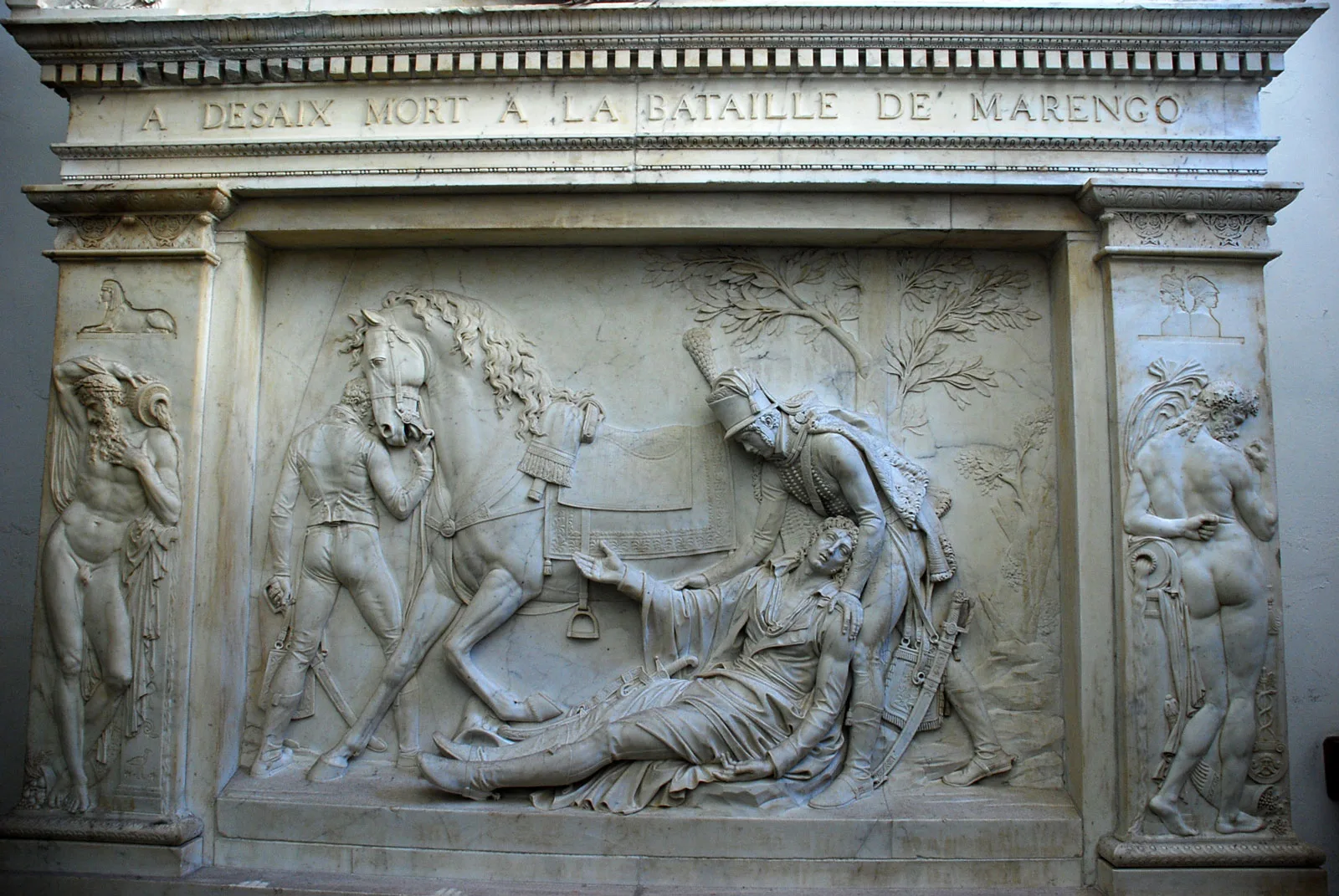
Returning to the pass itself: there was no stone with the ‘Bonaparte’ engraving on the pass despite David having painted one. However, there is a monument by Jean-Guillaume Moitte erected at the hospice in 1806 dedicated to General Desaix who was killed in the battle of Marengo. Napoleon had insisted on this monument despite Desaix never having seen the pass. This shows how Napoleon made a point of associating the pass with his exploits.
The locals from the village on the pass Bourg-St-Pierre spilled the beans, recounting how Napoleon shamelessly pressed the villagers into supplying and transporting his baggage train, including heavy cannons, across the pass. Moreover, the promised compensation did not materialise until 1984 in the form of a medallion donated by French president François Mitterrand.
The mountain farmers working as guides for travellers following Napoleon’s route were not short of caustic anecdotes, which they readily shared. These were repeated in literature. None other than Alexandre Dumas, the successful author of the novels ‘The Three Musketeers’ and ‘The Count of Monte Cristo’, describes in his travel diaries from Switzerland in 1832 how he crossed the almost 2,500-metre high pass under the most severe conditions and that the farmers had made fun of Napoleon. Napoleon and his baggage train had apparently just made it over the challenging route and had almost fallen into an abyss.
Alexandre Dumas had good reason to try and undermine Napoleon’s legend: his father Thomas-Alexandre Dumas from Haiti, honoured nowadays as the first black general to serve in Napoleon’s army, had been dismissed with no pension due to his opposition to Napoleon’s conduct in Egypt, with far-reaching consequences for him and his family. He died young and Dumas’ youth was blighted by poverty.
Moreover, Dumas did not like to see Bonapartism on the rise again around 1832 with the bloody battles through which Napoleon had tyrannised Europe being overlooked. In addition, his visit to Switzerland had not been entirely by personal choice but because he temporarily had to flee France in 1832 due to his political beliefs.
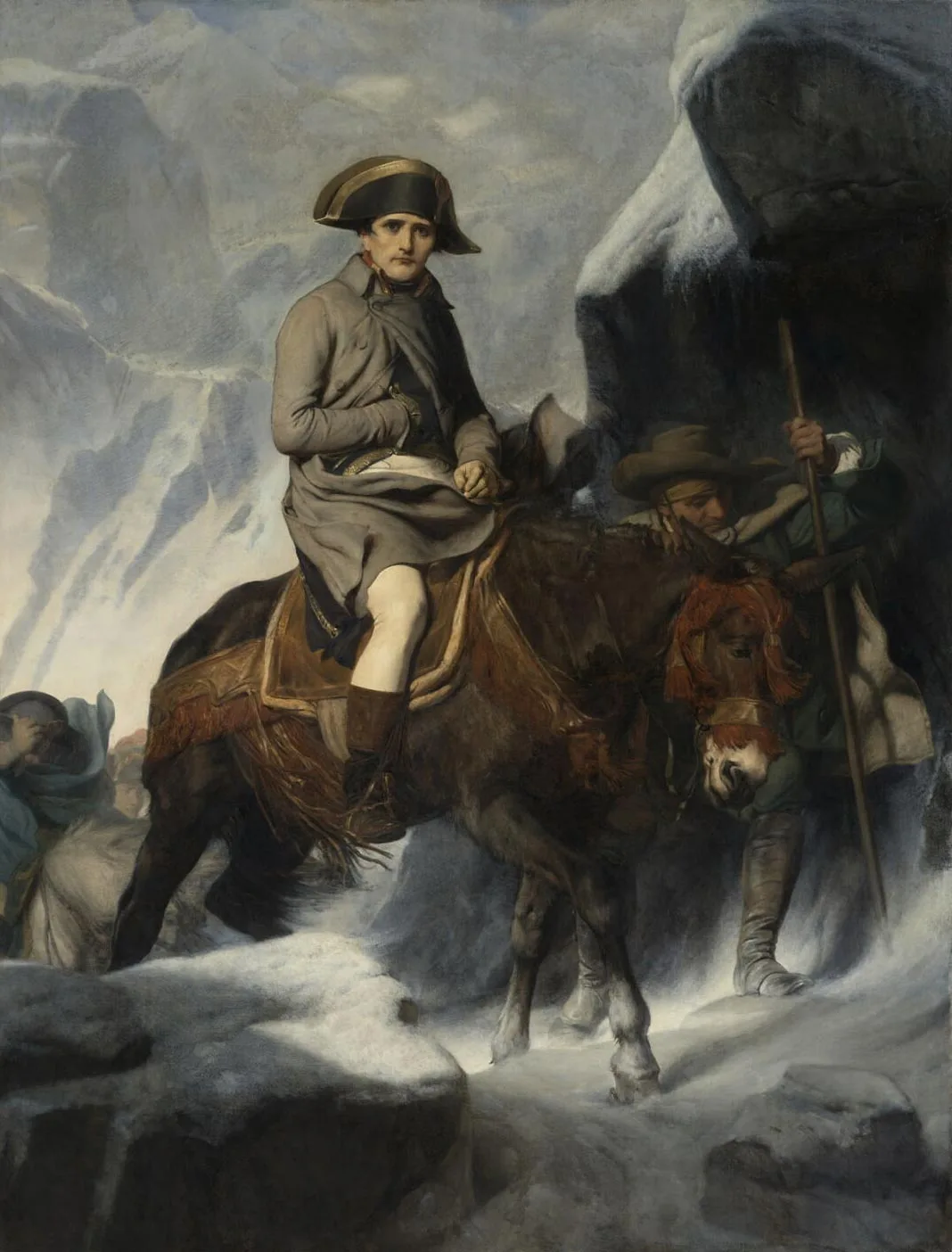
Adolphe Thiers, a politician who became President of France in 1871, also presented a much more realistic account of Napoleon’s journey than David in an historical work published in 1845. Thiers’ account inspired painter Paul Delaroche to present an almost exaggerated portrayal in 1848 of Napoleon crossing the Great St Bernard Pass looking haggard and freezing astride a mule, as if Waterloo had already taken place.