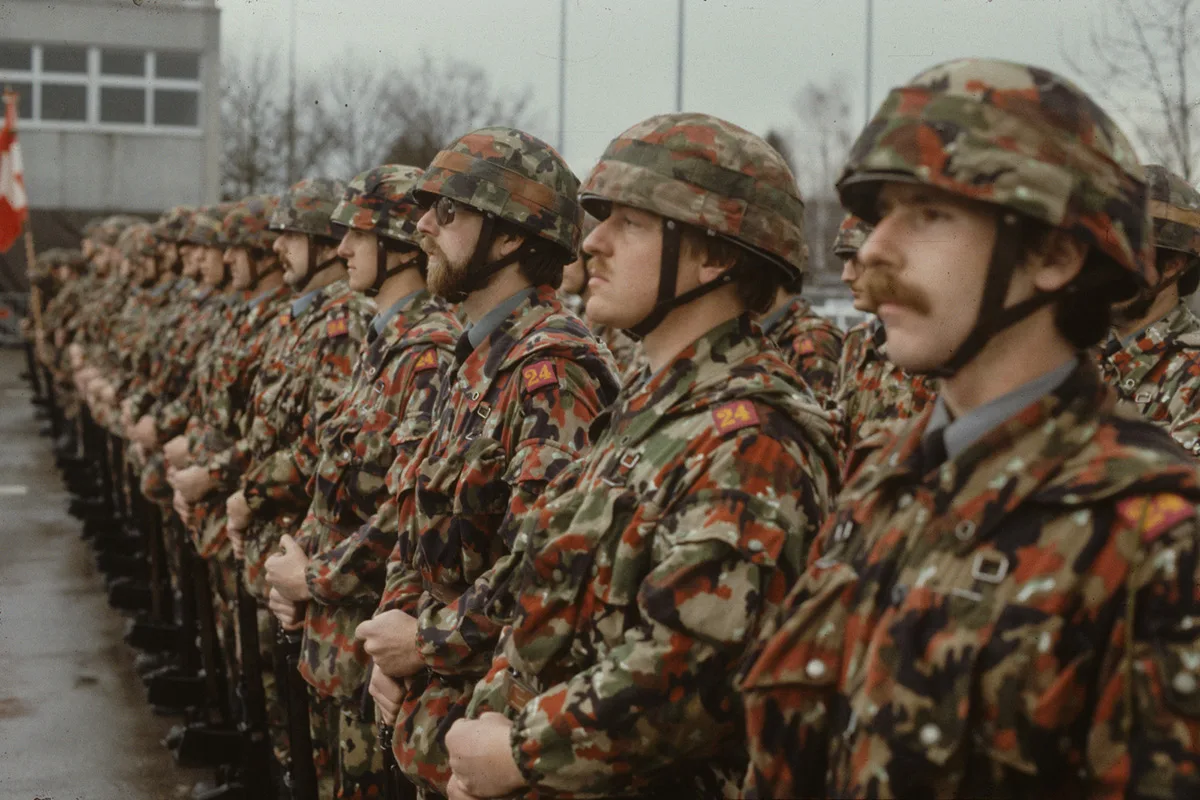
Swiss soldiers in camouflage battledress with helmet covers in the characteristic Alpenflage pattern, 1979.
Swiss soldiers in camouflage battledress with helmet covers in the characteristic Alpenflage pattern, 1979. e-pics

From combat uniform to style statement

When Switzerland realigned its defence strategy during the Cold War, it produced a camouflage pattern that refused to blend into the background. The Alpenflage became the most visible attempt at reinventing invisibility.

Christoph Kummer

Christoph Kummer

Christoph Kummer is a historian and freelance journalist who is interested in people and events that have been consigned to the margins of our collective memory.

‘Alpenflage’ (a portmanteau of Alpine and camouflage), is now the common term for the distinctive multi-coloured pattern featured on Swiss combat uniforms and camouflage battledress. It features irregular, high-contrast patches with striking red and orange tones. Camouflage is supposed to make people and equipment blend into their surroundings. Alpenflage appears to do the opposite at first glance as its bold contrasts make it distinctive. For decades the pattern shaped the image of the Swiss Armed Forces and became one of its best-known symbols. Yet its story didn’t end with the military chapter.

A fresh spin on camouflage

The pattern doesn’t originate in the Alps, but in Germany. In 1945, shortly before the end of the war, the Wehrmacht (German Armed Forces) continued to work on new camouflage designs, despite facing inevitable defeat. This gave rise to what is known as ‘Leibermuster’, an early camouflage pattern consisting of irregular, overlapping patches, which was supposed to optically break up the human silhouette.
‘Leibermuster’, a camouflage design developed by the German armed forces in 1945.
‘Leibermuster’, a camouflage design developed by the German armed forces in 1945. Wikimedia / Julianmuhle
The Leibermuster was an early example of camouflage materials designed to avoid detection by technical means. Modern reconnaissance was not limited to visible light: certain devices, such as active infrared night-vision equipment can capture differences in the reflection in the infrared range. In the Leibermuster, designers therefore experimented with dyes designed to reflect less infrared radiation. This was supposed to make the wearer more difficult for these optical devices to spot.
After the Second World War, various countries picked up on these ideas. In Switzerland, this trend came amid the tensions between East and West. The Swiss Armed Forces assumed that a major European conflict, for example as part of a potential Soviet invasion, could also threaten the neutral country. The national defence was therefore to be prepared for an attack and be able to assert itself in its own, topographically challenging terrain. This required equipment that was not only functional and robust, but that was as inconspicuous as possible in forest, rocky and mountain landscapes.
Switzerland caught up in the Cold War: TV report, 1999 (in German). SRF

Studying colour in the Alpine region
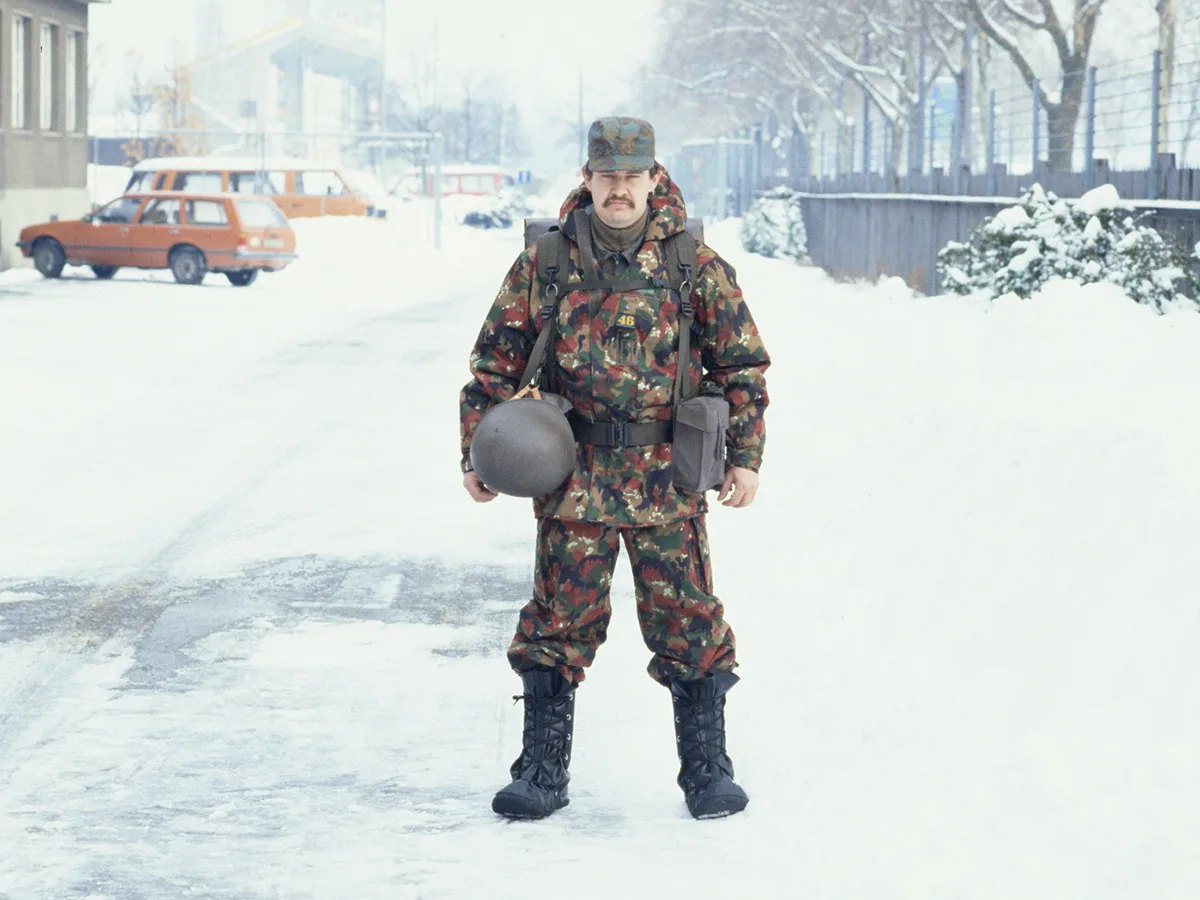
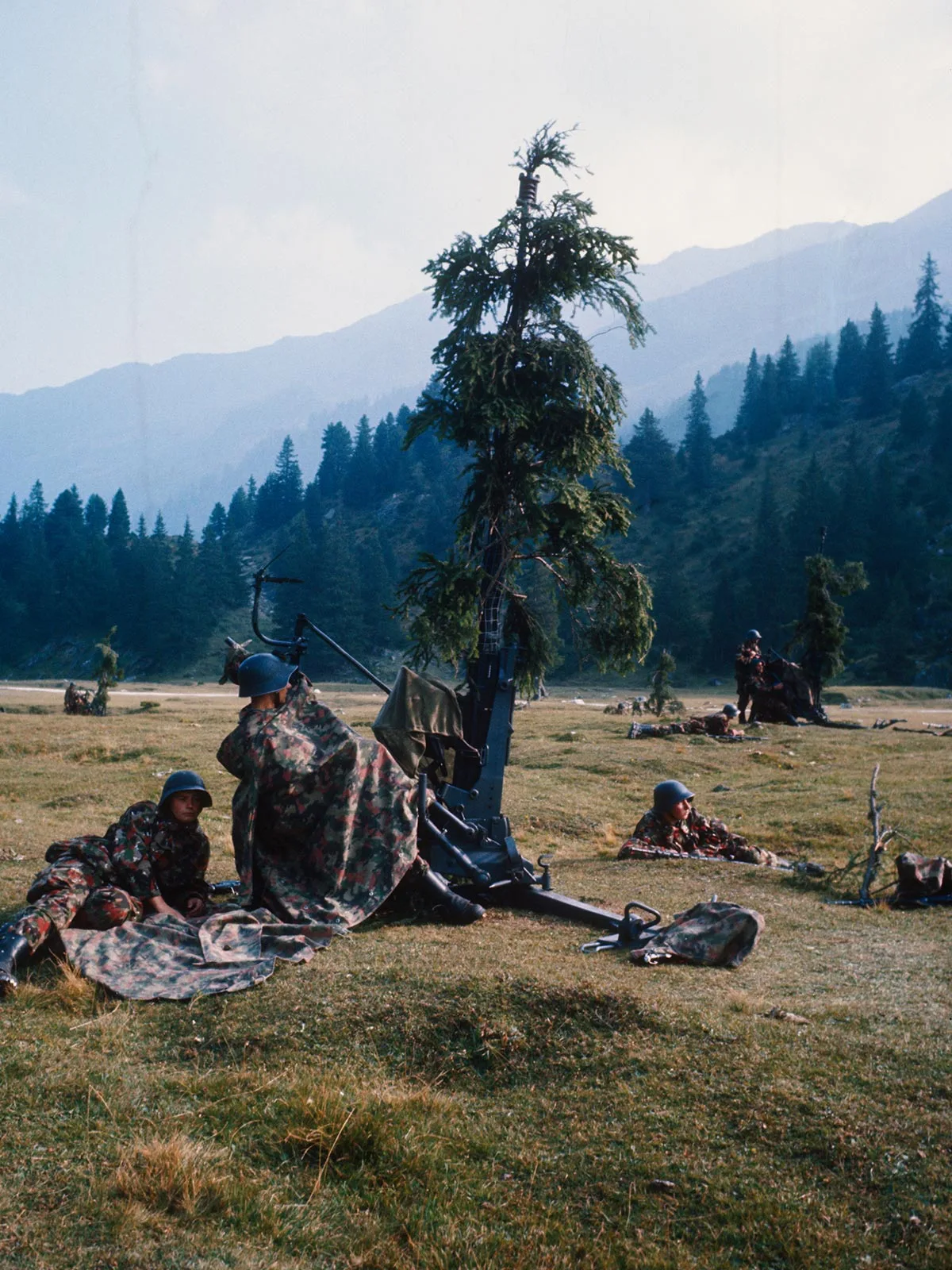
Following the first wear tests, the Swiss Armed Forces settled on a specific type in early 1957, which gave rise to the Kampfanzug 57 combat uniform. It went on to shape the further development of Swiss camouflage clothing known today as Alpenflage. In the ensuing years, the uniform was put to the test in various settings, including infantry recruit schools and at the shooting school in Walenstadt. The experiences gained from these trials were continuously incorporated into its development and in late 1961, the cut, pockets, fastenings and other key details were decided on.
Soldiers operating a 20-mm anti-aircraft gun in the mountains, 1966. They are wearing the ‘Kampfanzug 57’ combat uniform. Camouflage fabrics and natural vegetation help conceal the position and equipment in the terrain.
Soldiers operating a 20-mm anti-aircraft gun in the mountains, 1966. They are wearing the ‘Kampfanzug 57’ combat uniform. Camouflage fabrics and natural vegetation help conceal the position and equipment in the terrain. e-pics
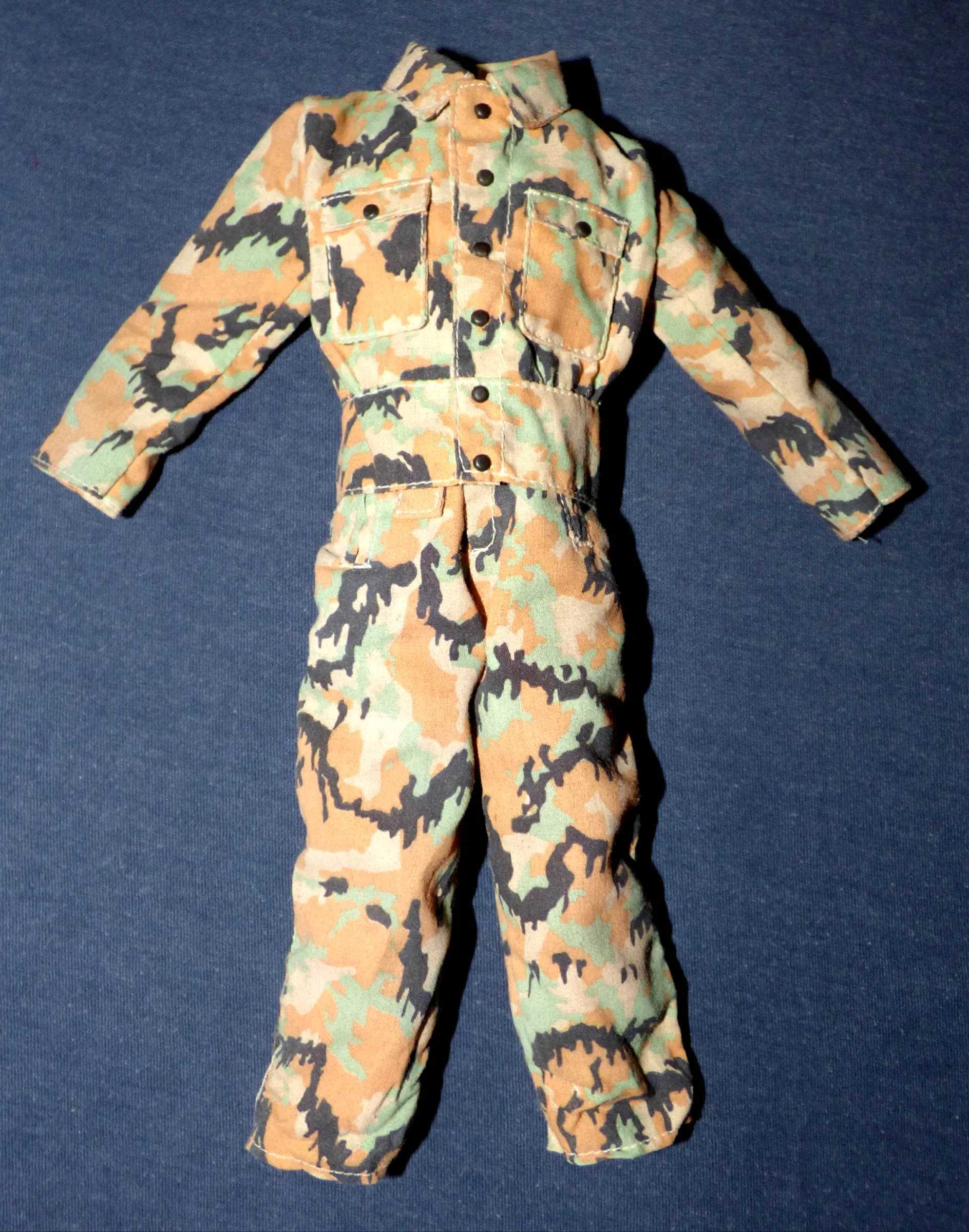
Other variants of Swiss camouflage clothing followed the Kampfanzug 57. The pattern was reworked several times and took on its best-known form with the Tarnanzug 83 camouflage battledress in the 1980s. The characteristic colour choice of green, brown and black remained, complemented by red and orange. What might today seem unusual or even contradictory, had a practical reason: besides green and brown tones, Alpine and mixed landscapes featured reddish colours, for example in earth, foliage, rock or in the light from the sun when it is low in the sky.
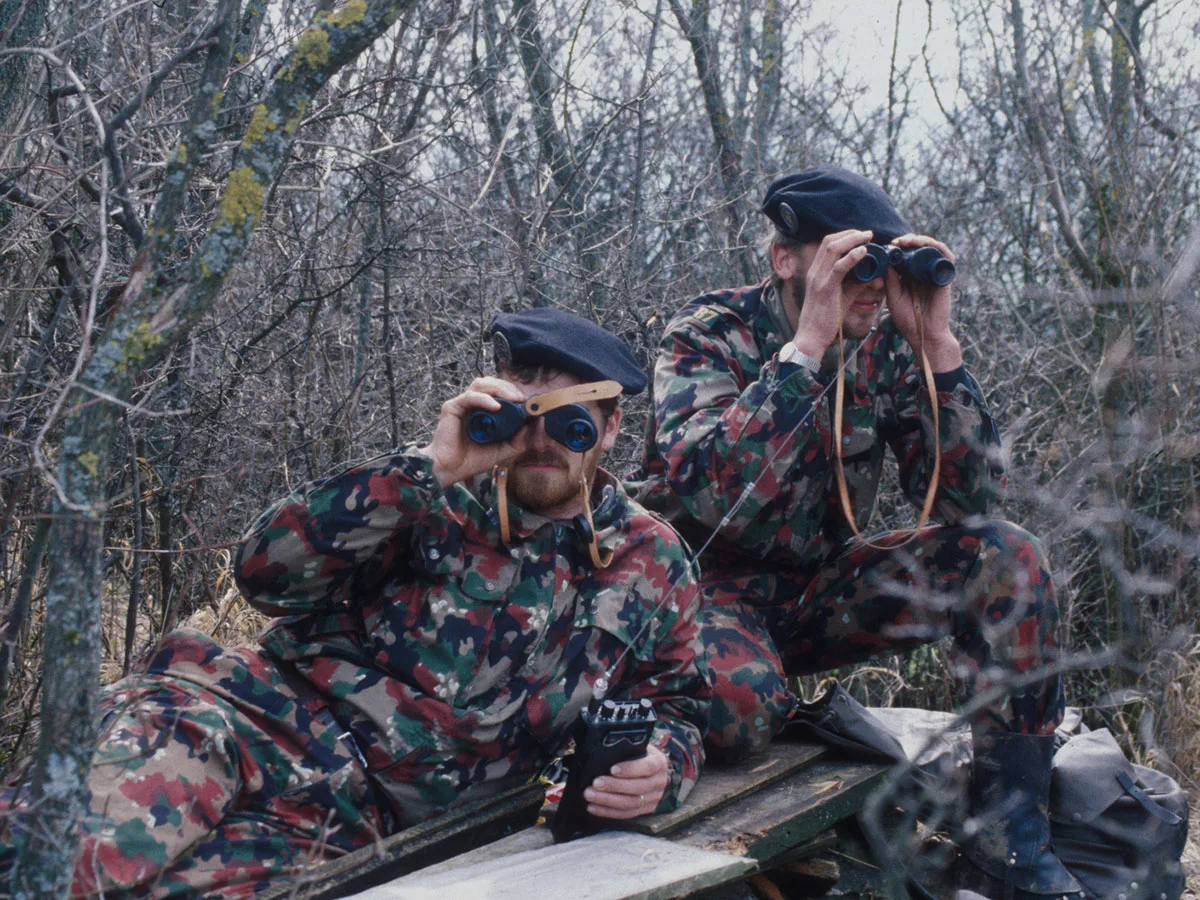
But it wasn’t the choice of colours alone that made the difference. A camouflage pattern looks different close up than it does from a distance. The large-scale and irregular forms of Alpenflage were designed to break up contours and prevent the eye from quickly discerning a human figure. This design was particularly effective in rocky terrain with sharp shadows, changing light and uneven surfaces. Camouflage didn’t mean disappearing completely, but rather making it difficult for the viewer to make out what was in front of them. Alpenflage was therefore a trade-off between camouflage research, material technology and military practice. It had to be suitable for a conscript army whose soldiers needed to be able to equip themselves, move, and operate in the terrain quickly in an emergency. The pattern therefore had to provide sufficient camouflage across Switzerland’s varied types of terrain, not just in one landscape.
Report on the launch of the refined military uniform, 1982.
Report on the launch of the refined military uniform, 1982. e-pics
Surveillance in the border area: soldiers in action on the ‘green border’, 1991. Between the shrubbery and leafless branches, this shows how Alpenflage was designed to break up the contours of the uniform in the terrain.
Surveillance in the border area: soldiers in action on the ‘green border’, 1991. Between the shrubbery and leafless branches, this shows how Alpenflage was designed to break up the contours of the uniform in the terrain. e-pics

New requirements for a new era

Alpenflage remained the standard in the Swiss Armed Forces for over three decades. However, when the Cold War ended in 1991, things shifted. The political and military situation no longer had the same clear and long-anticipated threat to contend with. This changed training, planning and operational concepts. Whereas before, the emphasis had been on camouflage for a very specific, anticipated area, the focus shifted to the need to be able to function flexibly in different environments and to adapt to multinational exercises and benchmarking against other armies.
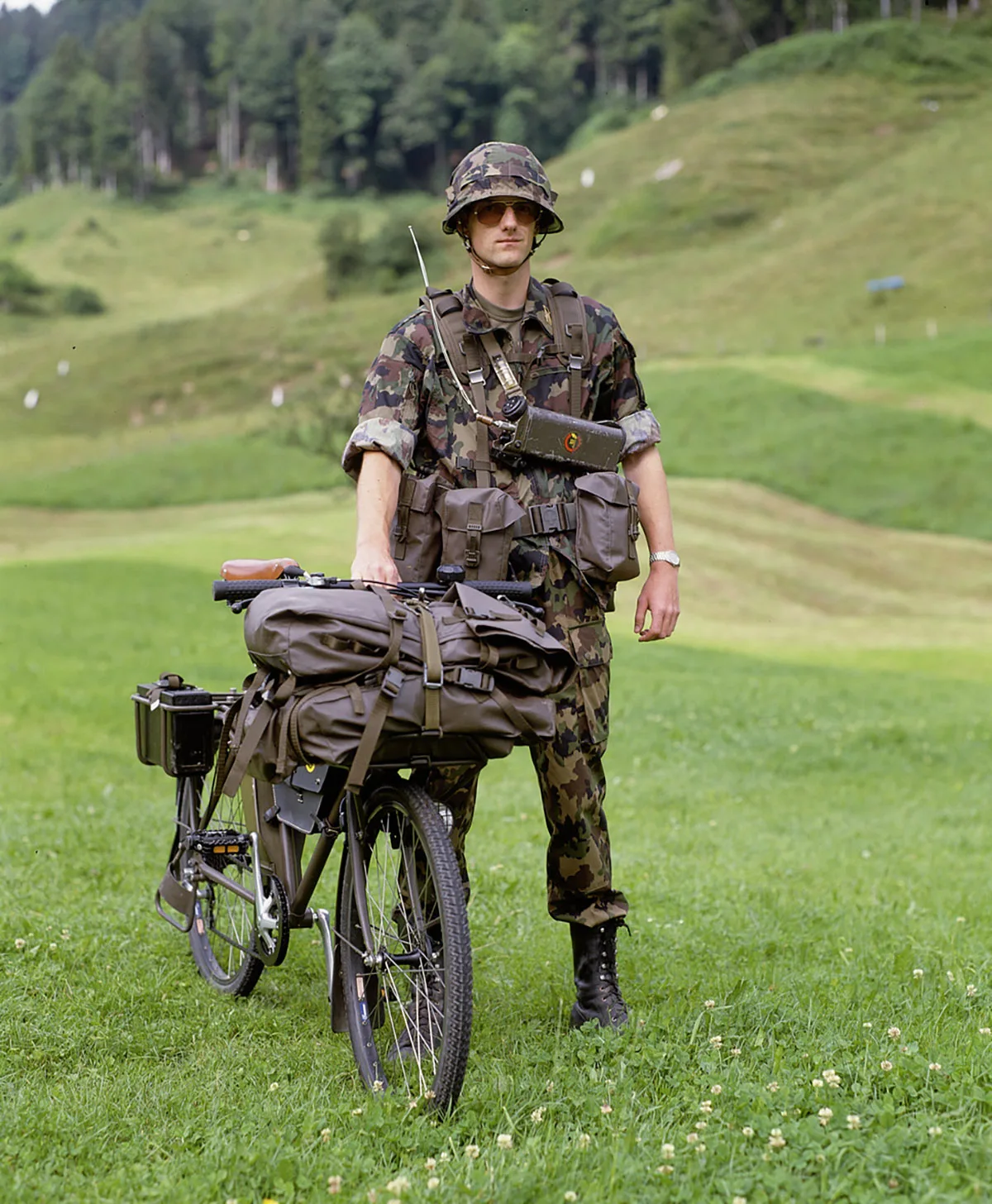
In the 1990s, the Alpenflage was therefore gradually replaced by the Tarnanzug 90 combat uniform, which was based on a blotch camouflage pattern consisting of green, brown and black, but without any red. This was not just for reasons of style, but also part of a new direction. As materials and dyeing techniques had advanced, the reflection behaviour of fabrics could be controlled more precisely in the visible and in the near infrared range. The uniforms therefore needed to stand out as little as possible, not only in daylight, but also under light-amplifying night-vision equipment. The effect of textile camouflaging against thermal imaging devices was limited, however, as they detected differences in temperature. In addition, a less conspicuous pattern was more versatile in different landscapes, such as in wooded areas, or outside of the Alpine region. As a result, the Alpenflage pattern disappeared from everyday military use. Culturally, however, it went on to gain a new lease of life.
The ‘Tarnanzug 90’ battledress followed the ‘onion skin principle’ whereby several coordinated layers could be added or removed according to the weather conditions and mission requirements. Photo taken in 1991.
The ‘Tarnanzug 90’ battledress followed the ‘onion skin principle’ whereby several coordinated layers could be added or removed according to the weather conditions and mission requirements. Photo taken in 1991. e-pics

From army fabric to style statement

When large quantities of stock were phased out, they moved into civilian circulation. Initially people wore them for practical reasons as they were robust, affordable and widely available. But their significance soon shifted. Second-hand shops, thrift stores and army surplus outlets helped bring the pattern to a wider public. Sub-cultures seized on the pattern and consciously wore it in urban settings, such as in the skater and punk scene, where former combat uniforms were repurposed as everyday jackets and trousers, making the step from functional item to style statement. From the 2000s, upcycling projects emerged, where original fabrics were turned into jackets, bags or individual pieces. Small production runs by Swiss designers cropped up in fashion shows. Since then, Alpenflage has lived on in countless forum threads, Reddit discussions and Etsy shops, where fans talk about the pattern, reinterpret it, and share their own creations.
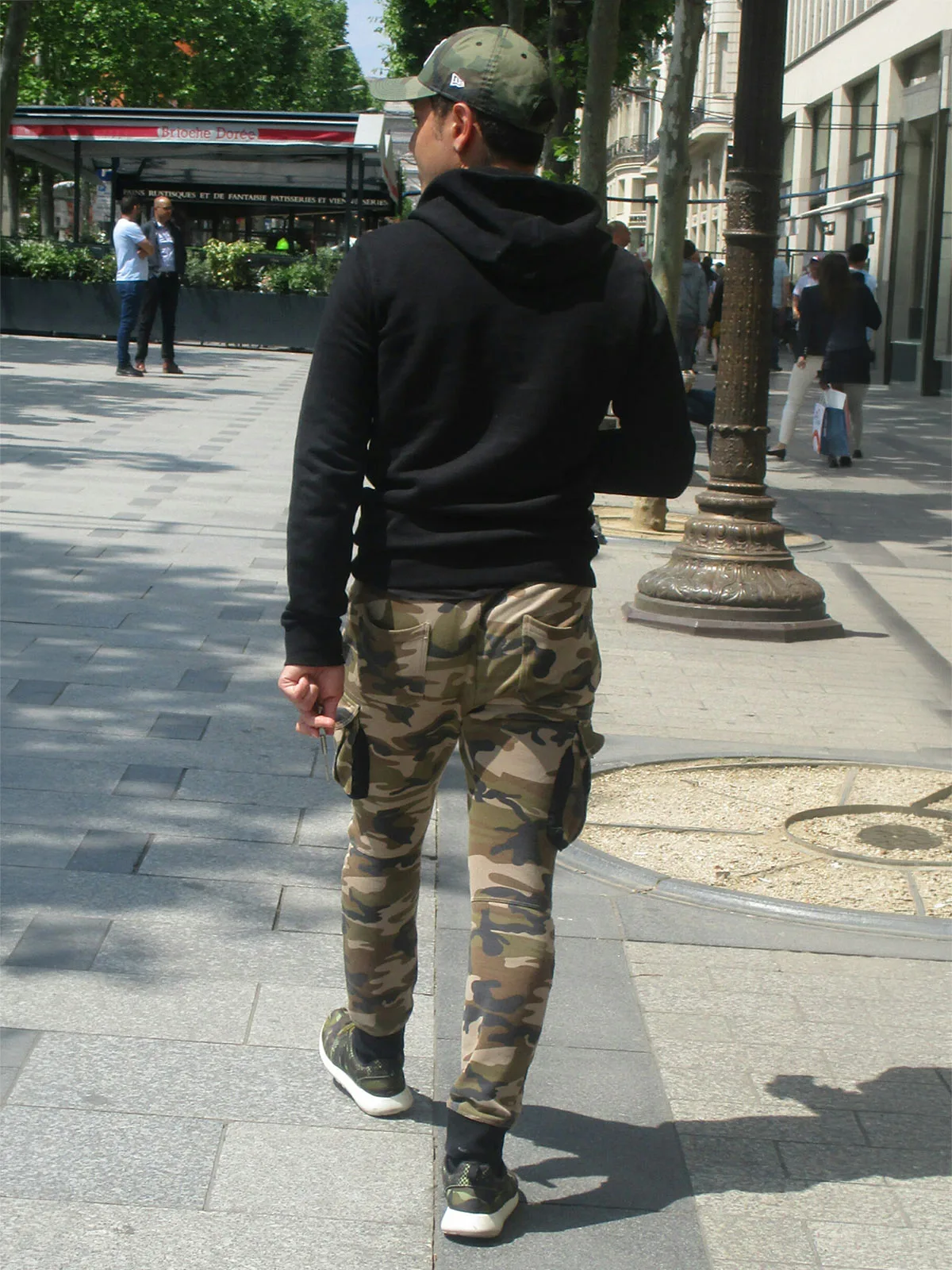
Camouflage as streetwear: what is used to camouflage and conceal in a military context becomes a striking style statement in everyday urban attire.
Camouflage as streetwear: what is used to camouflage and conceal in a military context becomes a striking style statement in everyday urban attire. Wikimedia / Thomon
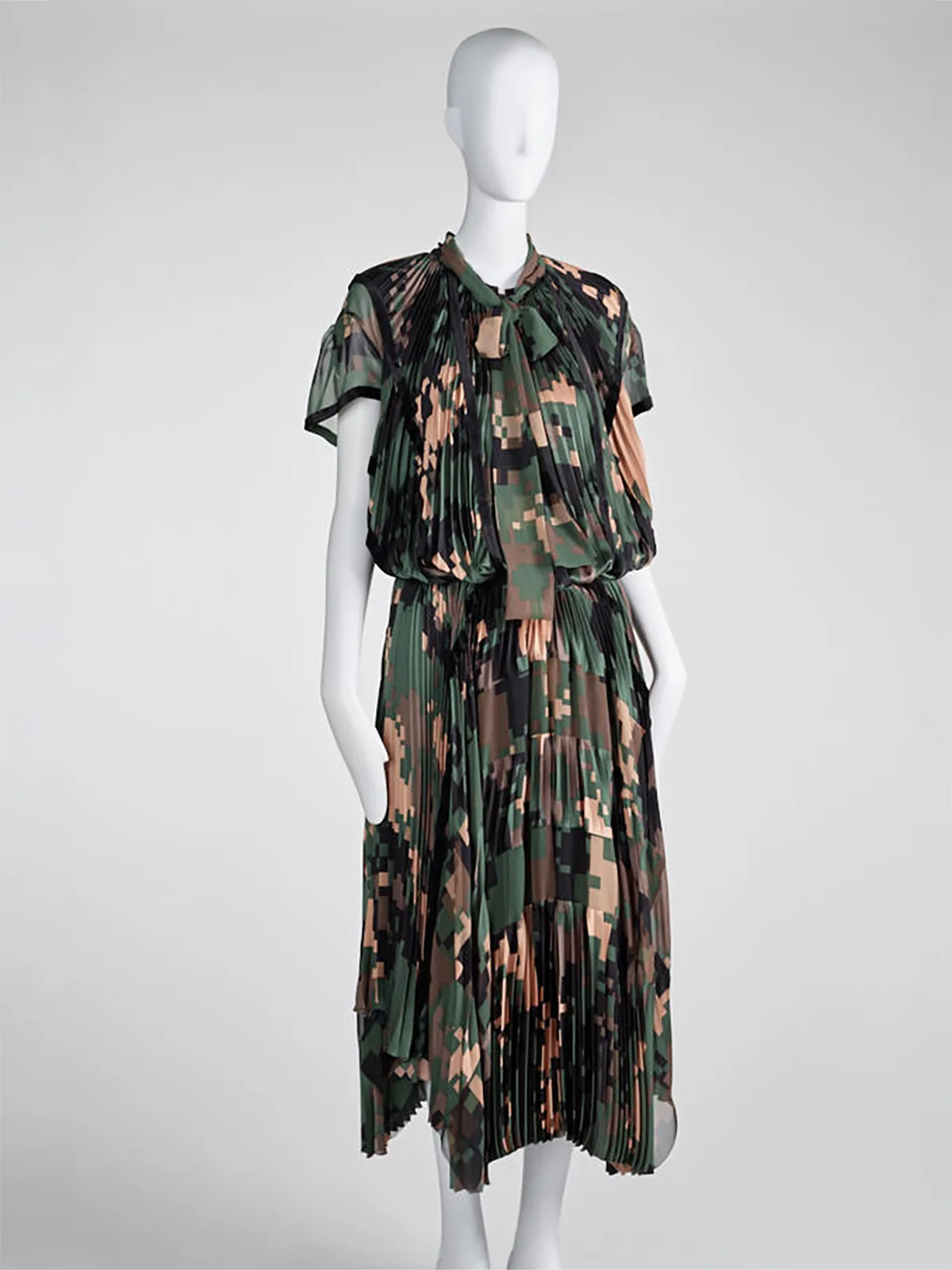
Camouflage as haute couture: in her 2017 autumn/winter collection for Sacai, Chitose Abe worked a camouflage pattern into a pleated two-piece dress.
Camouflage as haute couture: in her 2017 autumn/winter collection for Sacai, Chitose Abe worked a camouflage pattern into a pleated two-piece dress. Wikimedia / Rhode Island School of Design Museum of Art

Wars and us

17.04.2026 17.01.2027 / National Museum Zurich
Warfare has been a defining element of Switzerland’s history. The exhibition brings together a variety of perspectives, showing how ‒ from the late Middle Ages to the present day ‒ wars have influenced the nation’s political structures, economic interests and social order. It also invites visitors to question popular ideas of Switzerland’s relationship with war ‒ even when that war often seems distant, but is etched deeply in the collective memory.

Further posts