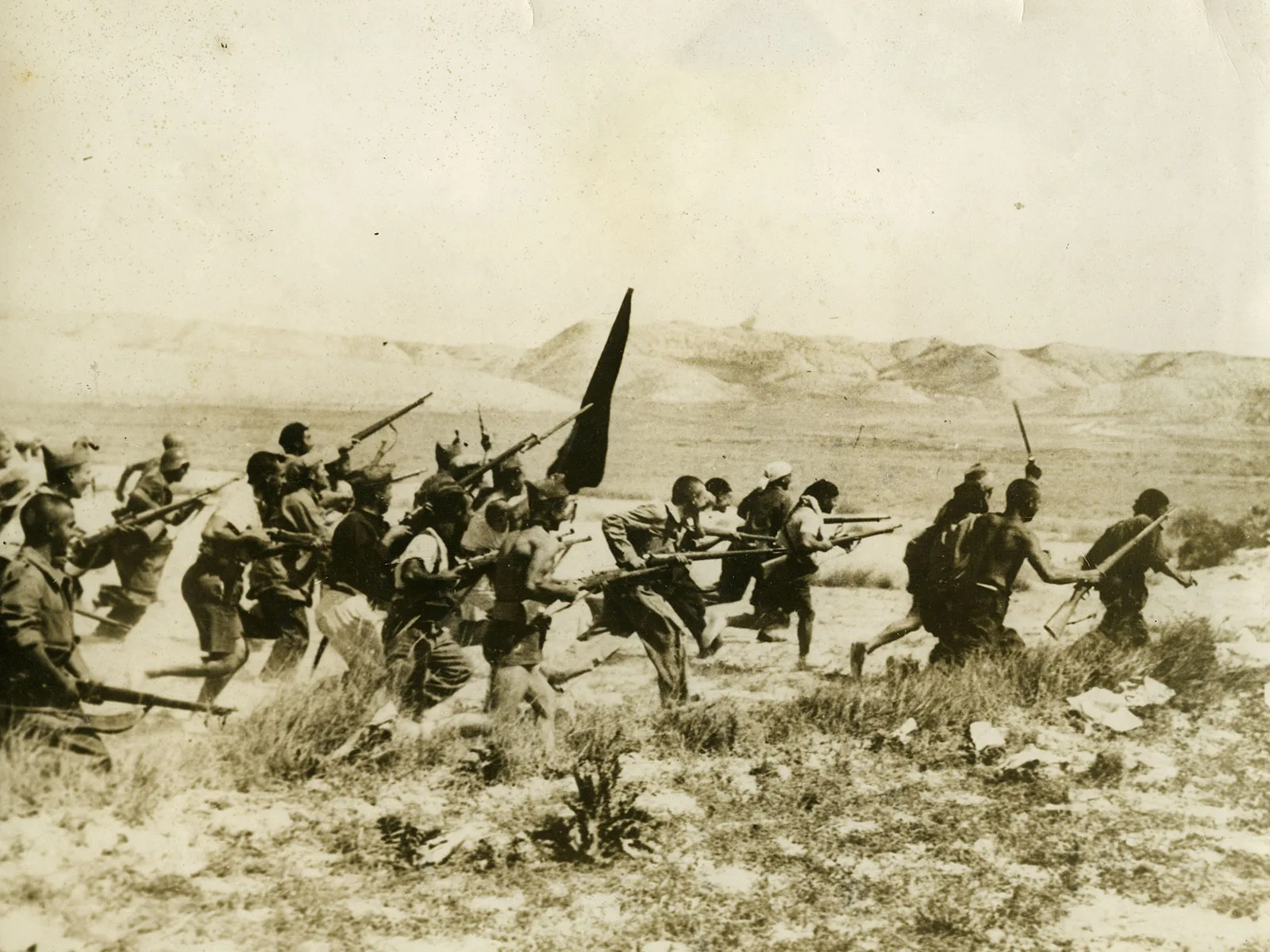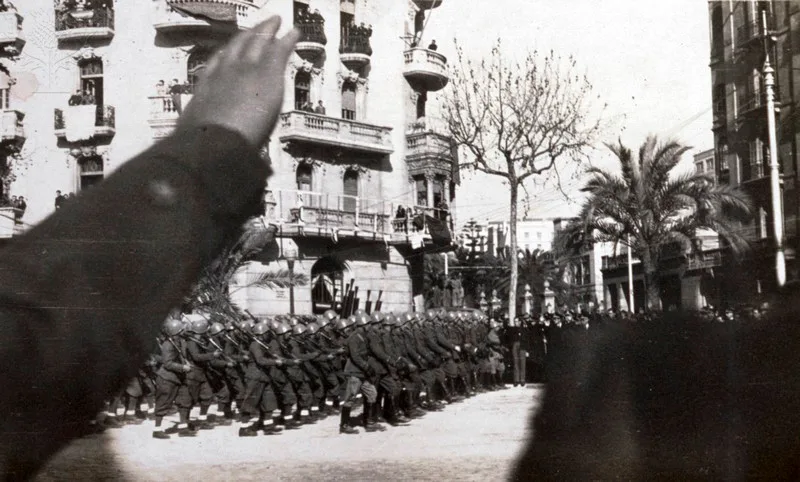
Legionaries loyal to Franco march through the streets of Barcelona.
Legionaries loyal to Franco march through the streets of Barcelona. Alinari Archives / Universal Images Group

Fighting for General Franco

Around 30 Swiss fought for General Franco in the Spanish Civil War. What made them go to Spain, and why did the Swiss authorities often show them such amazing understanding?

Peter Huber

Peter Huber

Peter Huber was a lecturer at the University of Basel. His research focuses in particular on the Communist International and volunteering for military service.
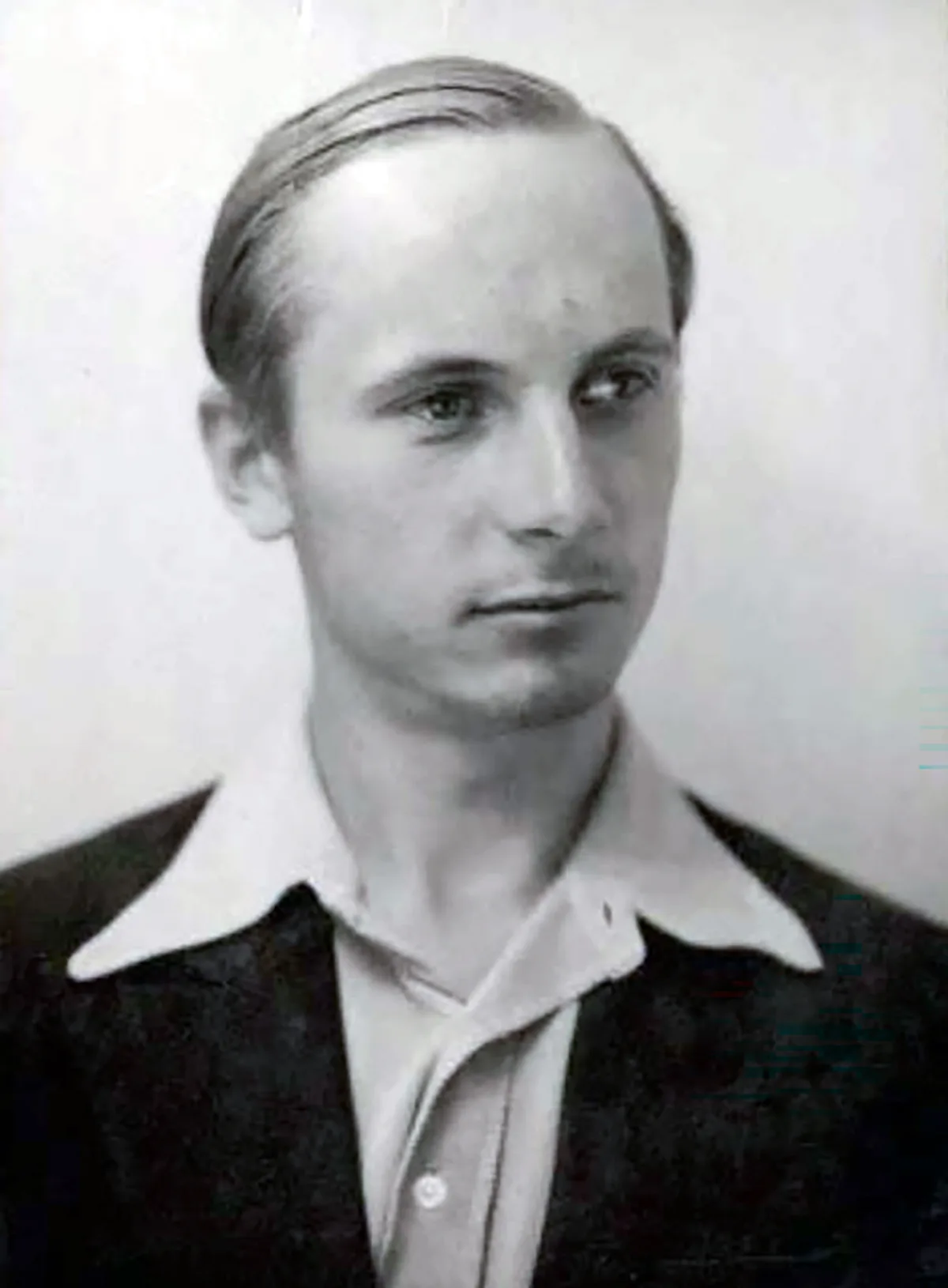
While some 800 Swiss fought on the Republican side, a mere 30 or so took up arms for General Franco. Their reasons for doing so varied: some were members of far-right groups like the Swiss National Front or the Volksbund (Popular League), others were Catholic-conservative activists. Yet others were seeking adventure, had a love of military technology or felt that their lives in Switzerland had been uprooted.
Hermann Maurer, a trainee barber from Zurich, was young, single, footloose and loved all things military. He was inspired to go to Spain to take up the fight against vague elites and a “rotten democracy”. Maurer joined the Falange in Pamplona in the autumn of 1936, but was captured and sent back to Switzerland as part of a prisoner exchange. Appearing before a military tribunal, his father testified that his son was a “fanatical believer in National Socialist ideology” with “a thirst for action and the desire to experience something.”
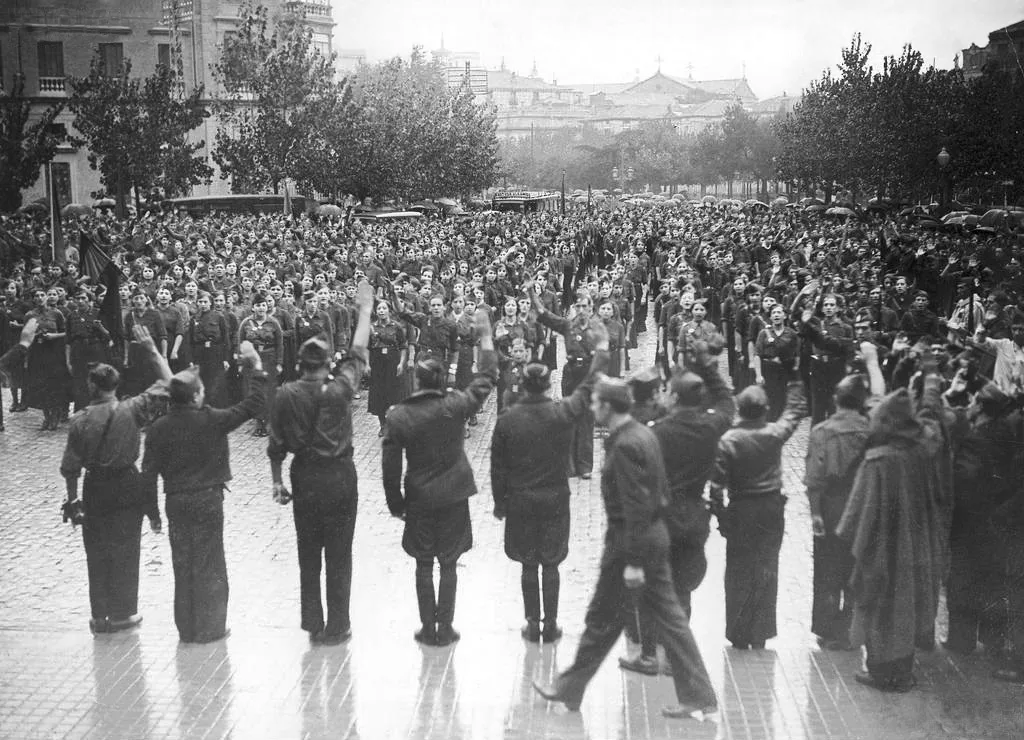
The Falange was a fascist movement in Spain that rose to become an important political and military force following the outbreak of the Spanish Civil War. In 1937, the Falangists merged with the royalist Carlists to form the F.E.T y de las JONS, the sole legal political party.
The Falange was a fascist movement in Spain that rose to become an important political and military force following the outbreak of the Spanish Civil War. In 1937, the Falangists merged with the royalist Carlists to form the F.E.T y de las JONS, the sole legal political party. Wikimedia
Other volunteers were considerably older. They included family men, whether married or divorced, who had failed to establish themselves, professionally or socially, in Switzerland. Placing the blame for their situation on the “elites” and the “democratic fat cats”, they chose to follow the National Front in Switzerland and the Falange in Spain. One of these men was 37-year-old Fritz Brunner. He wanted to be on the winning side in Spain and joined the Waffen-SS after the Civil War.
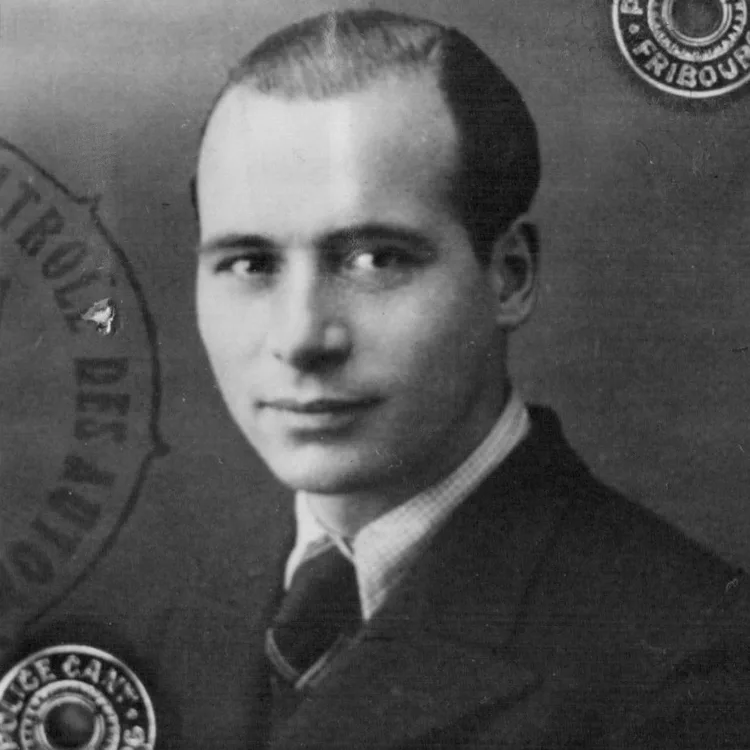
One-third of Franco’s Swiss volunteers had already fallen foul of the law before moving to Spain. This was especially true of men who had been involved in right-wing extremist factions since 1933 and who were fascinated by fascist militia. Take, for example, three activists from Lausanne: Roger Baudet, Jacques Rochat and Alois Zuber. In August 1937 they made their way to Genoa, from where they took a steamship to Cádiz. All had previous convictions for offences ranging from “violence against public officials” to wearing a knuckleduster, and from “slander” to damage to property. That same month, at the Spanish Legion’s Talavera de la Reina base in the province of Toledo, they joined the Bandera ‘Juana de Arco’, a battalion composed primarily of French volunteers. All three fell in 1938.
Alois Zuber in a portrait taken in 1938.
Alois Zuber in a portrait taken in 1938. Swiss Federal Archives
For these volunteers from Vaud, the struggle to establish a “healthy, national spirit”, directed in part against foreigners, was uppermost in their minds. Feeling the full brunt of the economic crisis, these supporters of the Front national, as the Swiss National Front was known in French-speaking Switzerland, whose Vaud branch disbanded in 1936, railed against those profiting from the crisis. In April 1938, when asked by an examining magistrate in Switzerland why he had gone to Spain, the volunteer Alois Zuber responded by letter: “The government is to blame for me leaving my homeland of Switzerland. You left me without work for three years while foreigners were able to work, yet I am a Swiss citizen. [...] The Swiss can no longer live because foreigners are taking their jobs away from them.”
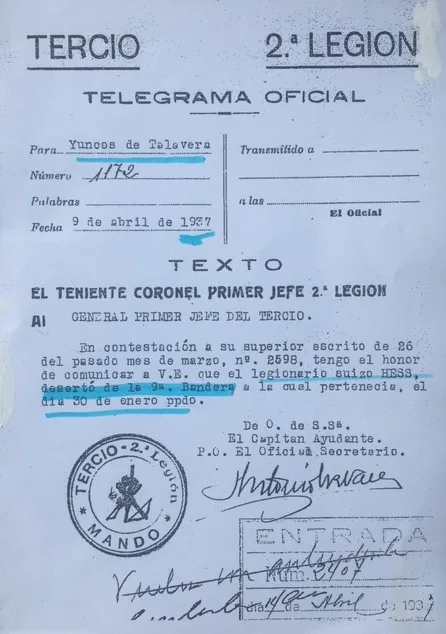
Volunteers hailing from Zurich and neighbouring eastern Switzerland were admirers of Hitler’s Germany. They made trips across the border and wrote reports from home for German newspapers – the only thing they had in common with the “proletarian wing” of the National Front was the ideology. Arthur Hess, a 20-year-old merchant from a well-to-do Protestant family, for instance, arrived in Seville in November 1936 equipped with credentials identifying him as a correspondent for the NZZ newspaper. He joined the Legion, but deserted after just two months. Hess returned to Spain in 1938, this time travelling to Mallorca, where he was arrested and forced back into the ranks of the Legion before being discharged at the end of the war.
A telegram confirming Arthur Hess’s desertion in 1937.
A telegram confirming Arthur Hess’s desertion in 1937. Archivo militar Viator
Karl Heinzelmann, an unskilled labourer and National Front sympathiser, lacked the money to travel to Spain. So, he signed up at an office of the French Foreign Legion in May 1937, deserted shortly after arriving in Algeria and made his way to Spanish Morocco, where he served in the ‘Melilla’ battalion until July 1939. Back in Switzerland, he admitted his National Socialist leanings to the examining magistrate, saying: “In Switzerland, they prefer to feed the damned stinking Jews than a poor chap who fought in Spain on the Nationalist side.”
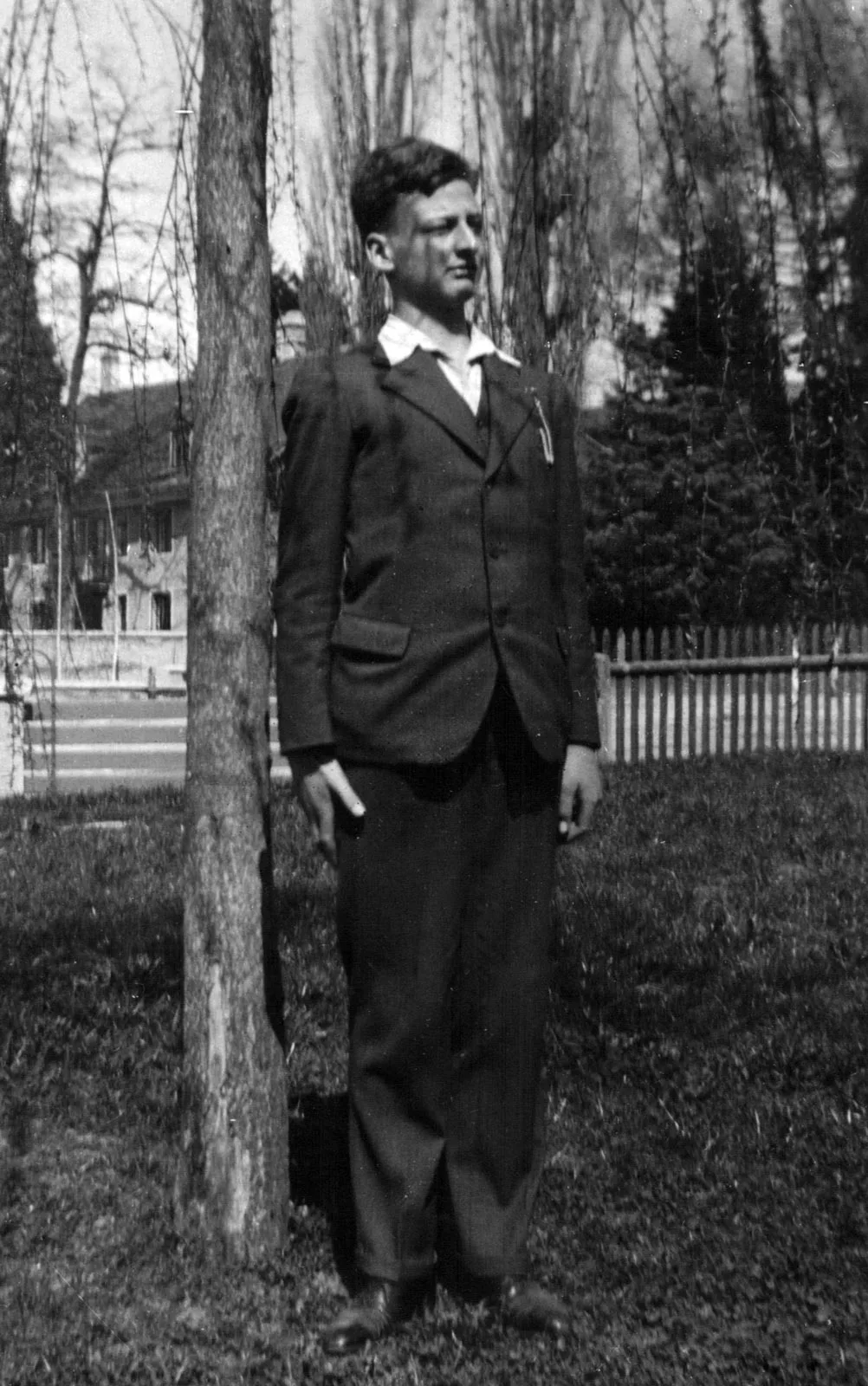
Fribourg, a deeply Catholic canton and anti-Marxist stronghold, provided the largest number of pro-Franco volunteers. The majority of them were reasonably well educated and came from stable backgrounds, with no tendency towards delinquency or inclination for political adventurism. They wanted to take up arms in Spain to support the Christian forces and crush Marxism. That was the motivation of two journalists, Marcel Heimoz and Rodolphe Thévoz, who drove all the way to Burgos, where they initially sent back reports from the front before finally joining the Legion in Talavera de la Reina at the end of October 1936. Another citizen of Fribourg who entered service on Franco’s side was 19-year-old Séverin Repond, the son of a former commander of the Papal Swiss Guard. The young man made his way to Saragossa via England in January 1937. He was killed in April that year near Celadas outside Teruel.
A Catholic, a fan of all things military and a loner: Séverin Repond from Fribourg.
A Catholic, a fan of all things military and a loner: Séverin Repond from Fribourg. Swiss Federal Archives

Who were the pro-Franco volunteers?
The largest block of pro-Franco volunteers – 39% – had no form of vocational qualification at all. Many had failed to establish themselves professionally or socially and had minimal prospects of advancement. This made them more disposed to leave their old lives behind and move on to pastures new. They had developed strong anti-bourgeois and anti-democratic resentments and were susceptible to the arguments of the Swiss fascist movement.
The percentage of high school graduates and university students was much higher among the Swiss pro-Franco volunteers than among their Republican counterparts. This confirms the well-known fact that students with left-wing leanings were the exception rather than the rule in Switzerland from the 1930s right up until the major educational reforms of the 1960s – universities were reactionary bulwarks, whose students mainly tended to join the rebel camp.
The rebels’ fiery polemic about saving Spain and Christianity from communism struck a chord in the French-speaking part of Switzerland and the Catholic rural areas in particular. It is no coincidence that the communist parties were banned from taking part in popular votes in these very areas from 1937 to 1939.
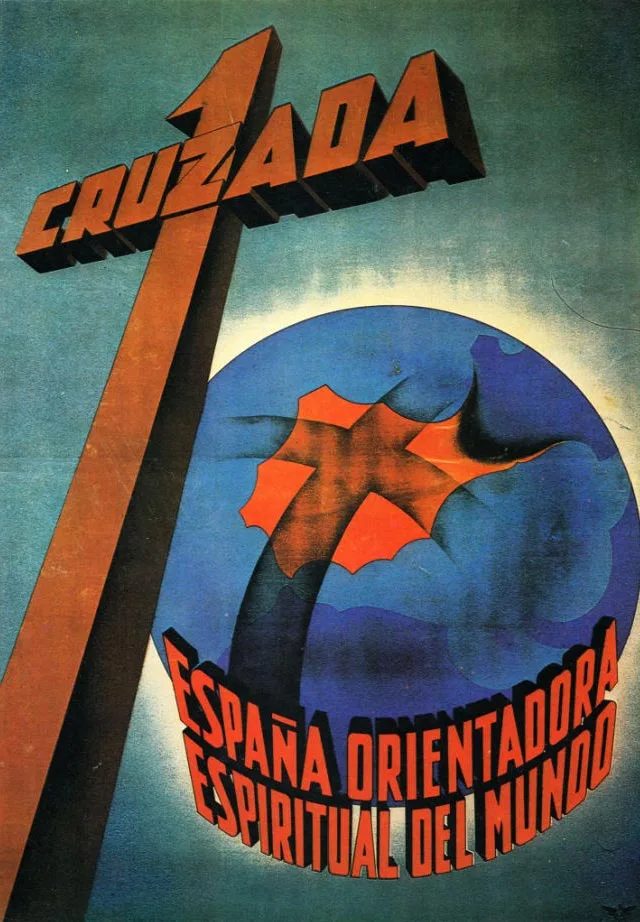
The Francoist side saw the Civil War as a crusade to save Christianity.
The Francoist side saw the Civil War as a crusade to save Christianity. Wikimedia
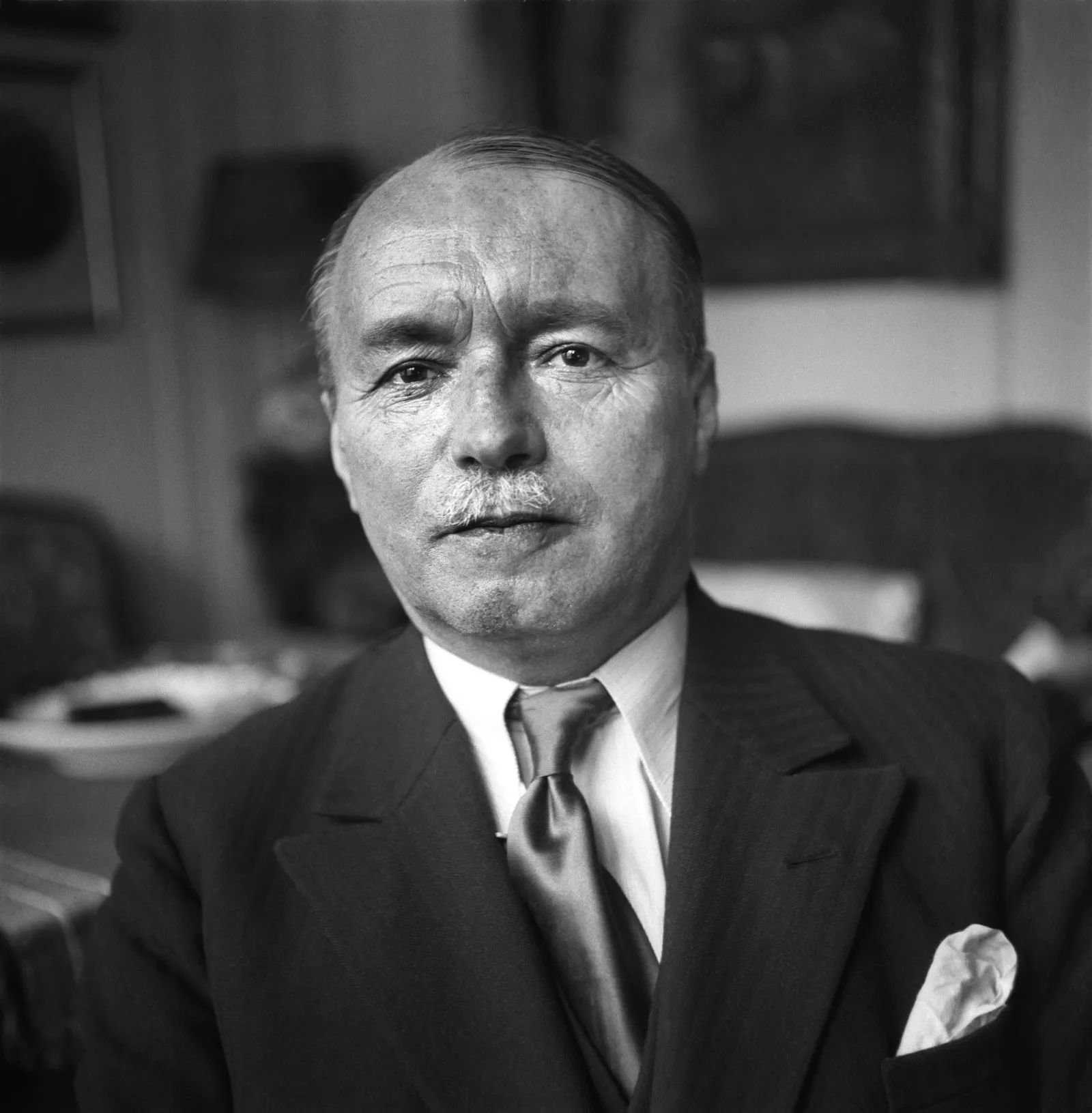
Spearheading this virulent anti-communist stance was the former Red Cross delegate Théodore Aubert and his Geneva-based Entente internationale contre la IIIe Internationale (International Anti-Communist Entente). Jean-Marie Musy, a former member of the Federal Council with Catholic-conservative leanings, led the way in Fribourg with his “Action against Communism”, presenting the rebel camp as standard bearers against moral decay. Musy travelled to Barcelona in 1940 to show his film “Die rote Pest” (The Red Plague) to Franco’s officers.
Radical anti-communist and former Federal Councillor Jean-Marie Musy, 1944.
Radical anti-communist and former Federal Councillor Jean-Marie Musy, 1944. Keystone

Consid­er­able understand­ing for the pro-Franco camp

A number of Switzerland’s consular representatives were noted for the reception they accorded to certain volunteers on arrival and for their attitude in reporting to Bern. Robert Stierlin in Seville was no doubt the most pro-Franco consul. From the moment the war began, he adopted the vocabulary and viewpoints of the insurgents, unfailingly referring to the “Reds”, the “Marxists” and the “bandits”. Writing to the mother of Emanuel Vischer, a Swiss citizen killed a few days after the putsch while “cleansing” villages as part of a Falangist troop, the Swiss representative informed her that her son had “met his death in a battle with the communists.”
Marcel Heimoz’s story shows how far the support of certain Swiss diplomats went. He received highly accommodating treatment not just from Stierlin, but also from the envoy in San Sebastián. Stierlin went in search of Heimoz’s requisitioned car and conducted all correspondence with the insurance company on the latter’s behalf. Even though Heimoz had been sentenced in absentia by a Swiss court, the legation in San Sebastián issued him with a passport, valid for six months, to enable him to attend to some business matters in France before returning home. The envoy wrote to Bern to say that Heimoz was “known to this legation” and has “made a good impression”. In December 1939, following Heimoz’s return, the court in Lausanne handed down a minimum sentence of one month in prison, suspended for two years.
Journalist Marcel Heimoz was a member of the notorious Castejón column.
Journalist Marcel Heimoz was a member of the notorious Castejón column. Swiss Federal Archives
His brother-in-arms Rodolphe Thévoz, who had also gone to Spain for political and ideological reasons, similarly received no more than a minimum sentence – a privilege not accorded by the courts and tribunals to Republican volunteers. Anyone on that side claiming to have joined the fighting on political grounds faced tougher penalties.
 
Even the cantonal police and the Office of the Attorney General of Switzerland declined to investigate any further when the previously mentioned Séverin Repond was found to be in possession of two pistols and ammunition when stopped at the border in the summer of 1936. Repond got off with a CHF 20 fine and a summons to appear for questioning. The subsequent police report contained no further consequences: “Our inquiries have shown that this young lad is a great military enthusiast, who has taken it into his head to become an officer in the Swiss Armed Forces. He is not a member of any political association.”
 
The Swiss authorities and courts were not alone in showing more sympathy for the pro-Franco rebels than for the Spanish Republic: institutions like the Geneva-based International Committee of the Red Cross (ICRC) that saw themselves as non-political organisations, committed purely to aiding victims, also did so. Four members of the International Anti-Communist Entente, which also had its headquarters in Geneva, sat on the ICRC’s 20-strong governing body. The Committee sent around 15 – exclusively Swiss – delegates to both zones in Spain to arrange visits to prison camps and prisoner exchanges. The reports they sent back to Geneva, especially those of delegate Jean d’Amman, testify to just how closely they related politically to the rebels. A letter in the personal records of one Swiss volunteer shows that this particular delegate had no qualms about recommending his cousin Ernest Maurice de Weck as officer material to the Legion’s inspector general, Juan Yagüe. Having joined the Legion in Melilla in August 1937 as a lieutenant, de Weck sought out the Falangist Yagüe at his headquarters brandishing the letter of recommendation from the ICRC delegate. This unusual form of assistance from an ICRC delegate, helping a young man to enter war service, reveals the pro-Franco leanings of many decision-makers.
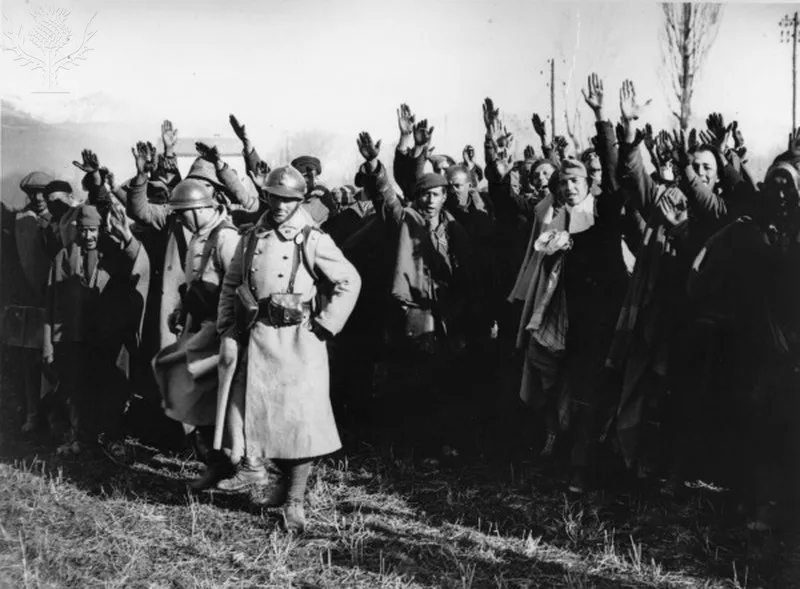
Franco supporters being released from captivity in February 1939.
Franco supporters being released from captivity in February 1939. akg-images / Universal Images Group

Victori­ous, but lacking recognition

The pro-Franco volunteers found themselves on the winning side in 1939, but no one had called on them to be there and no one wished to remember them, least of all the Francoist regime in Spain, which only saw the “Reds” as having volunteers. And so, their reward was meagre: 24 pesetas and a ticket to the nearest port.
Karl Heinzelmann left Spain as a stowaway inside the chain locker of a steamship, yet ‒ like most of his companions ‒ he remained faithful to the ideas that had brought him to Spain.

International conference on the Spanish Civil War

17 July 2026 marks the 90th anniversary of the putsch by high-ranking generals against the second Spanish Republic. To mark the occasion, the Swiss Social Archives, St. Gallen University of Teacher Education and the universities of Bern, Fribourg, Geneva and Zurich plus Humboldt University of Berlin are organising an international conference “Ninety Years Since the Spanish Civil War. Experiences, Memories, Concepts (1936–2026)” at the Social Archives in Zurich on 19 and 20 November 2026. Both the conference and the evening lecture are open to the public. Further information is available here: Ninety Years Since the Spanish Civil War
Further posts