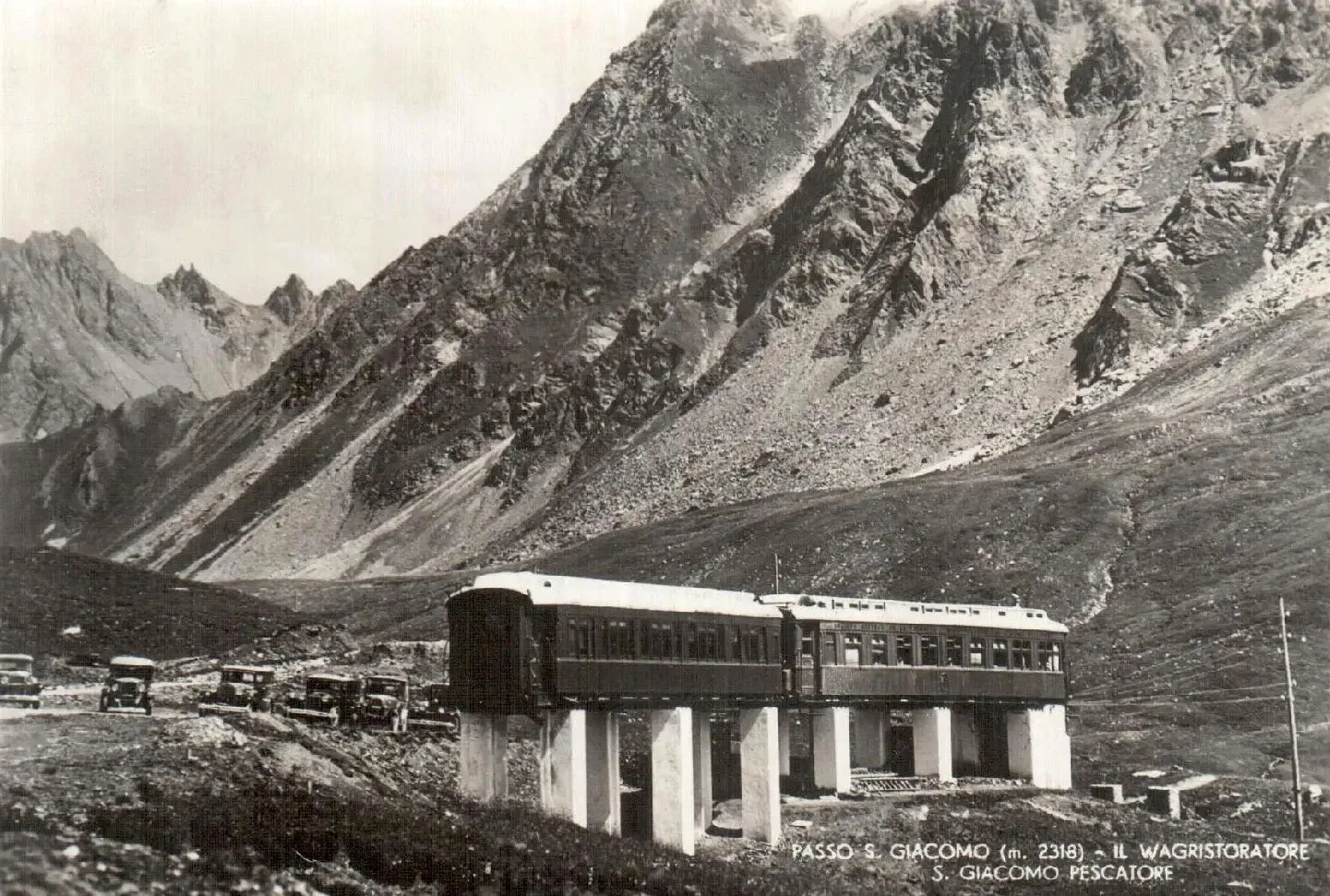
The ‘Wagristoratore’ pictured in 1930.
The ‘Wagristoratore’ pictured in 1930. Wikimedia

The quirky dining car on the San Giacomo Pass

In 1930, the Italians transported two railway carriages up the San Giacomo Pass to create a surreal restaurant close to the Swiss border. It demonstrated the threat posed by the military road built by Mussolini into the high mountains. Switzerland immediately got the message.

Helmut Stalder

Helmut Stalder

Helmut Stalder is a historian, publicist and book author specialising in economic, transport and technical history.

A century ago, a road construction project in Italy raised alarm bells in Switzerland when Italian dictator Benito Mussolini ordered his engineer corps to upgrade the route from Domodossola to the San Giacomo Pass, which lies at 2,318 metres. The lower section was a carriage road, the upper part a bridle path.
 
Officially, the 4.5-metre-wide road was intended to encourage tourism. But the Neue Zürcher Zeitung (NZZ) newspaper clearly recognised that a military thoroughfare was being created right on the Swiss border. It printed two long reports in November 1926 analysing what the construction of this road meant for Switzerland.
 
According to the NZZ, the San Giacomo Pass provided a “springboard” from which Italy could launch an attack on the Gotthard Pass. Thanks to the new road, “any number [of troops] would be able to arrive on the scene by car within the space of an hour, well rested, equipped with heavy artillery and everything needed to wage war”. The newspaper brusquely dismissed Italy’s calls for Switzerland to likewise improve the northern access route to the pass in order to promote tourism. “If the San Giacomo road were to continue down the Swiss side and be made fit for motorised traffic all the way to Airolo, then armoured cars and troop vehicles from the area around Domodossola would be able to reach Airolo, the Gotthard Tunnel and the top of the Gotthard Pass within a few hours in the dead of night and secure the bases at the very core of our Alpine defence system before a single man could be roused on our side.” This road represented a “foray into the heart of our southern frontier” and would “make a surprise attack easier”.
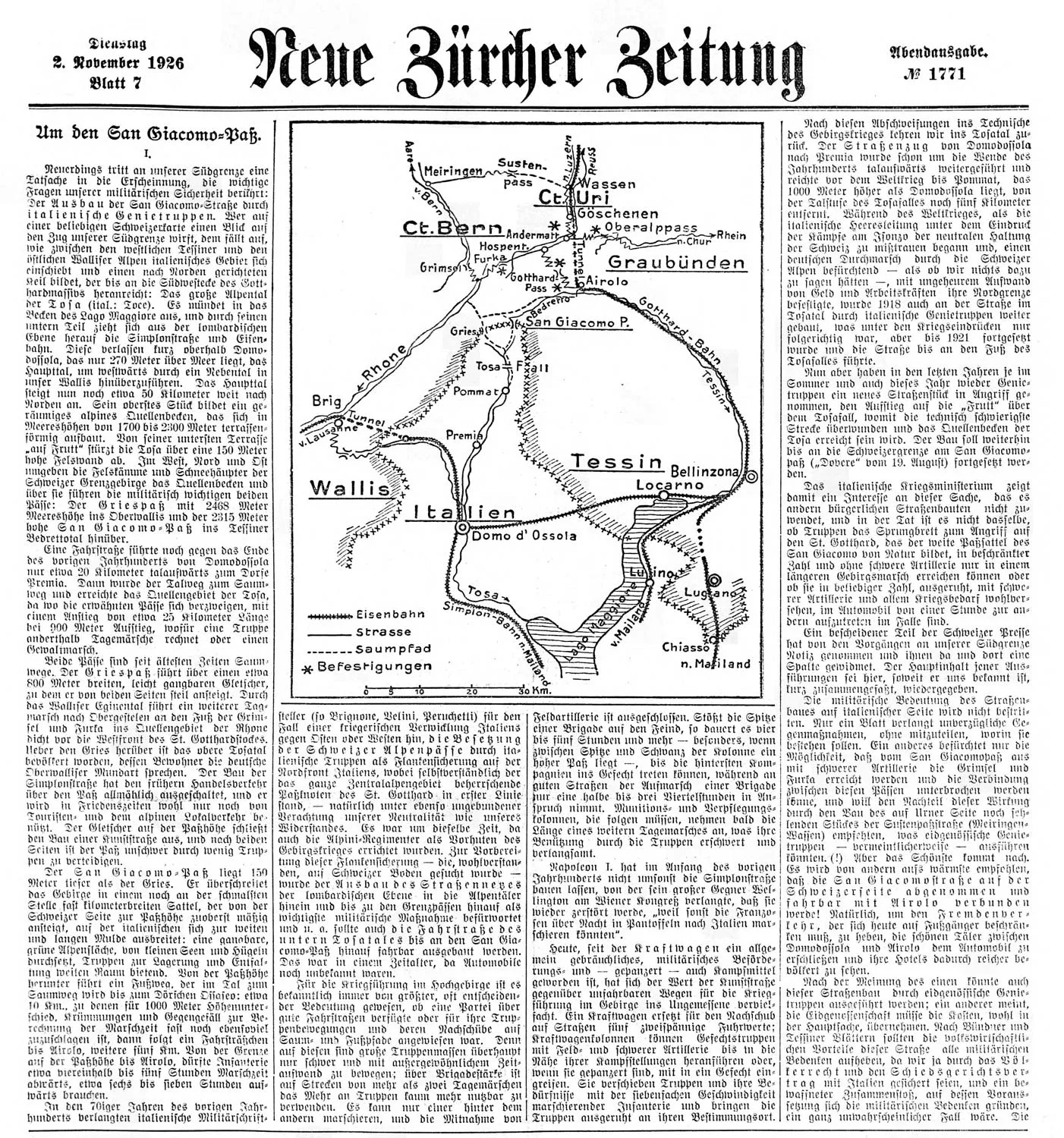
The NZZ newspaper reported at length on the ‘Wagristoratore’ located right on the Swiss border.
The NZZ newspaper reported at length on the ‘Wagristoratore’ located right on the Swiss border. e-newspaperarchives

Italy’s designs on Ticino

Switzerland’s military top brass had been afraid of an invasion scenario like this for quite some time. While still a fascist member of parliament in 1921, Mussolini had declared that a “degenerate and Germanised canton of Ticino” could pose a threat to the security of Lombardy. He claimed that the country could not be considered truly unified until Ticino was part of the Italian nation.
 
The following year, after his March on Rome and appointment as prime minister, he gave assurances that there were no territorial issues between Switzerland and Italy and that relations between the two were “entirely friendly”. Nevertheless, he stepped up the nation’s irredentism (from the Italian phrase terre irredente meaning ‘unredeemed territories’). This movement that pre-dated the First World War aimed to defend Italianità (the quality of being Italian), sought to annex the Italian-speaking areas of Switzerland and Austria, and called for the border to be pushed back to the Alpine divide ‒ to the “God-given borderline”, as Mussolini put it. His construction of roads in the Alpine region made his intentions all too clear.
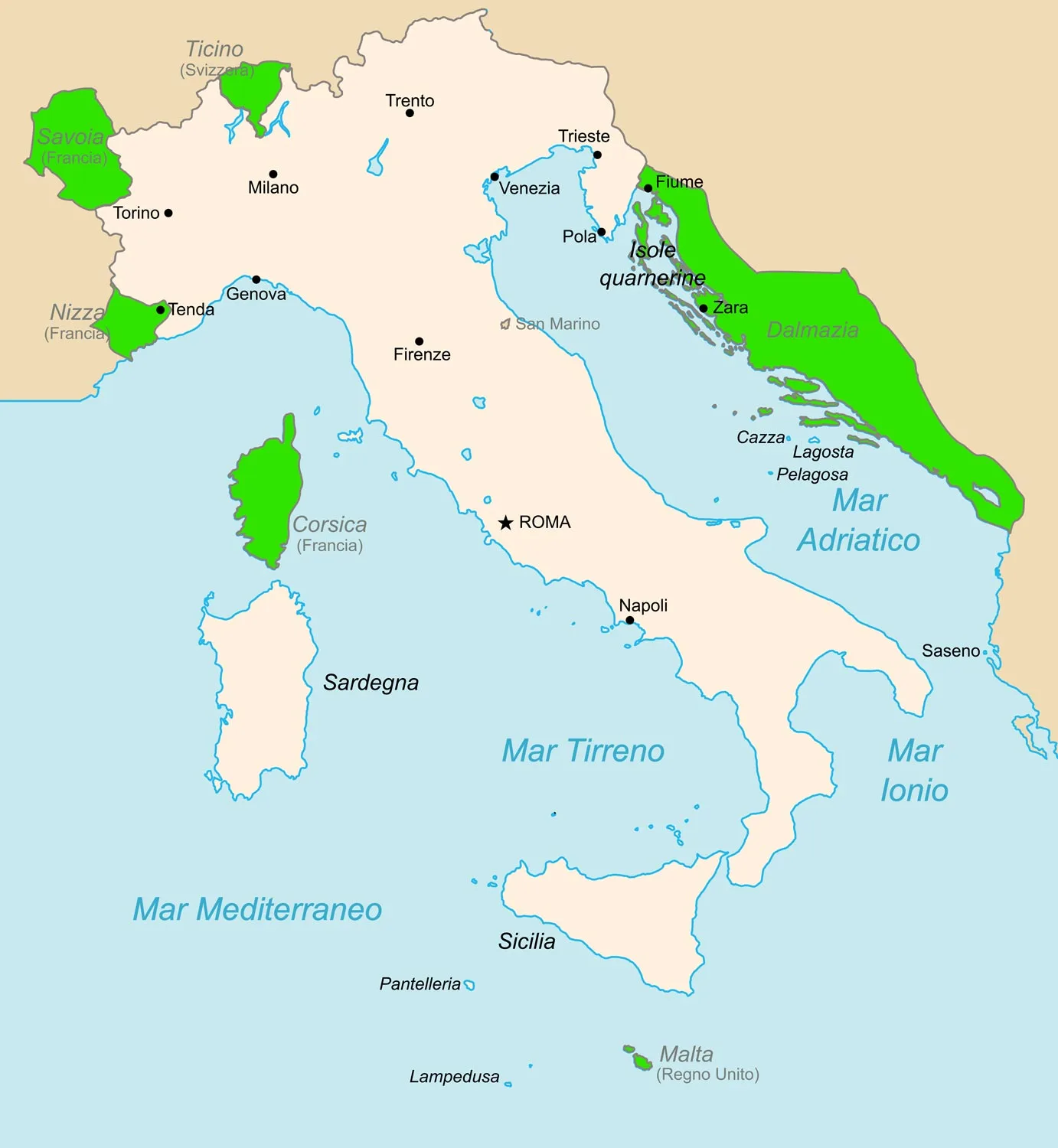
The proponents of irredentism believed the areas marked in green, including Ticino, should be part of Italy.
The proponents of irredentism believed the areas marked in green, including Ticino, should be part of Italy. Wikimedia

A surreal dining car atop the pass

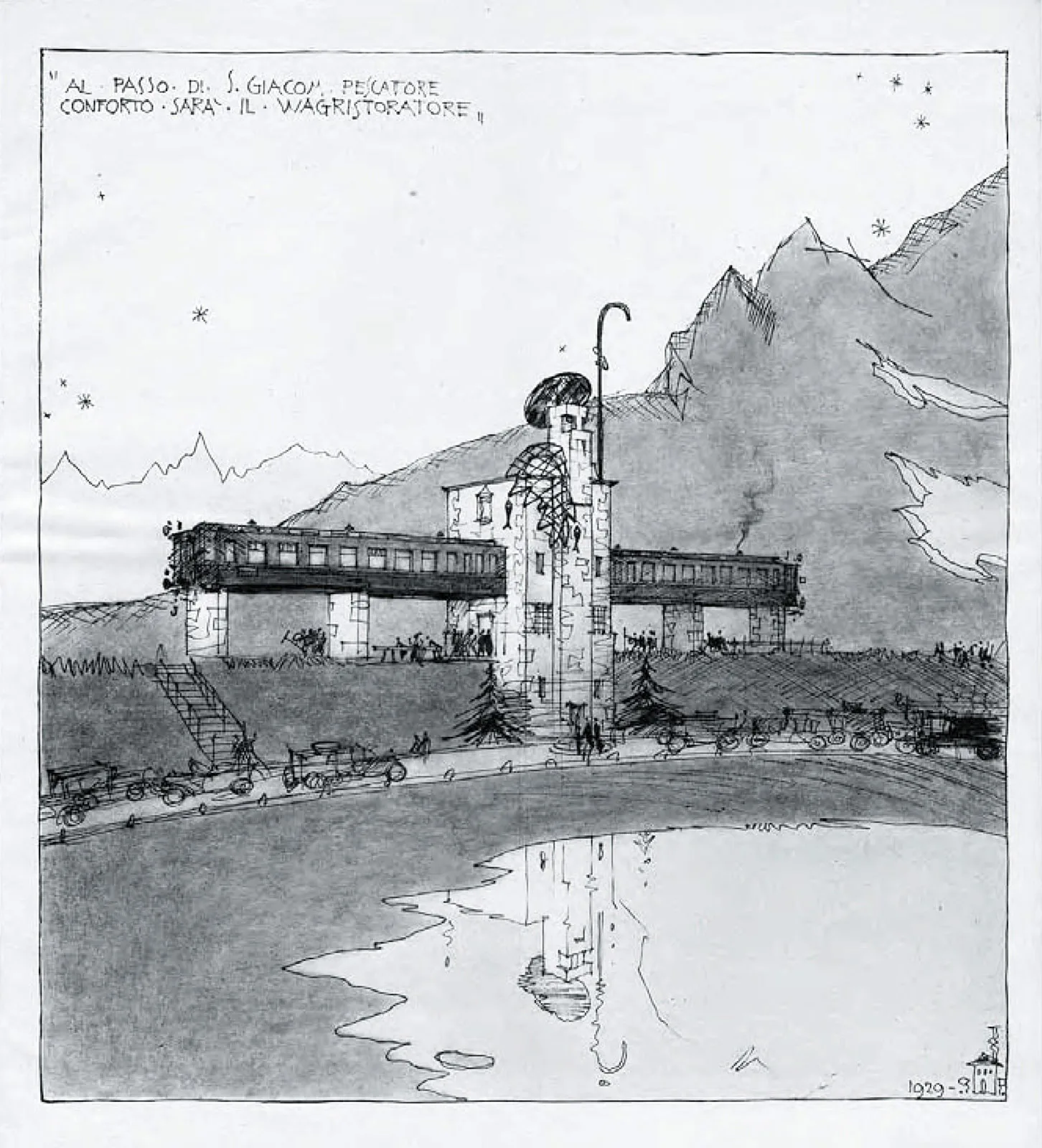
As soon as the road up the San Giacomo Pass opened in August 1929, strange activities commenced. Milanese architect Piero Portaluppi (1888–1967) erected 12 concrete pillars among the mountain scenery near the top of the pass at an altitude of 2,300 metres. He then had two railway carriages hauled up the new road and placed on top of these supports. A dining car and a sleeping car minus bogies formed his ‘Wagristoratore San Giacomo Pescatore’ – a bizarre hotel restaurant, painted blue and adorned with gold lettering, decked out in red velvet, with central heating, running water and electric light.
 
This peculiar establishment was meant to tempt the well-heeled citizens of Milan into the mountains. They could reach the ‘Wagristoratore’ by car in three hours. It stood in an unspoilt landscape, “with an abundance of luminous Alpine flora, conifers, clear mountain lakes, surrounded by a corona of colossal mountains whose summits rise majestically into the blue sky above, in a setting of perfect Alpine beauty”, as Portaluppi enthused in a brochure.
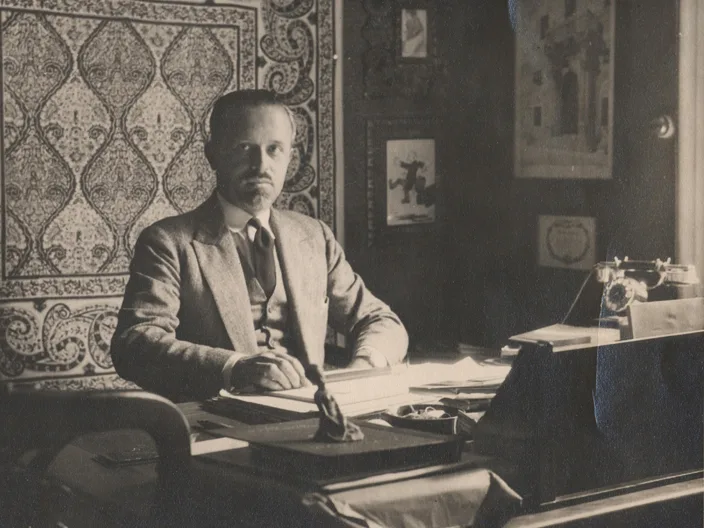
Piero Portaluppi in his studio, 1920.
Piero Portaluppi in his studio, 1920. Archivio Portaluppi
The unconventional architect with a penchant for irony had also planned a central building connecting the two carriages: a tower-like structure with a mast in the form of a shepherd’s crook that was supposed to recall Saint James (after whom the pass is named). But only the two waggons on stilts were ever put in place. As late as 1944, the Swiss Alpine Club’s yearbook Die Alpen reported: “The sleeping car is used as a base by tourists wishing to tackle ascents of the surrounding mountains. (…) It is a peculiar sensation to be sitting in a fancy, stationary railway carriage, in the midst of a sublime Alpine realm, with no trace of a railway line to be seen in any direction.”
A sketch showing how the finished ‘Wagristoratore’ would have looked.
A sketch showing how the finished ‘Wagristoratore’ would have looked. Archivio Portaluppi

Gotthard within firing range

Piero Portaluppi constructed many private residences, industrial buildings and power stations in the 1920s and 1930s. He joined the Fascist Party in 1936 and became a professor and dean of the faculty of architecture at Milan University. He received a large number of commissions from the regime. These included designing the headquarters of one local fascist group, the Montegani, extending the offices of another, the Baracca, and planning the HQ of the Milan Federation of Fascists.
 
The opening of Portaluppi’s quirky restaurant on the San Giacomo Pass in August 1930 was attended by Italy’s labour minister Giuseppe Bottai, a co-founder of the Fascist Party and close confidante of Mussolini, who posed in front of the carriages for a photo. This was a convenient detour for the minister on his way to inspect the Toggia Dam in Val Formazza, but it was also a propagandistic gesture aimed at Switzerland.
 
The pass was a location of strategic importance to the Duce’s military plans. The Val d’Ossola area practically forms a wedge between Ticino and Valais. San Giacomo is where Val Formazza on the Italian side almost touches Val Bedretto on the Swiss side. It is only 14 kilometres as the crow flies from the pass to Airolo and the southern portal of the Gotthard railway tunnel. This is the closest point in Italy to the Gotthard, whose transport routes thus lay within firing distance of the Italian artillery.
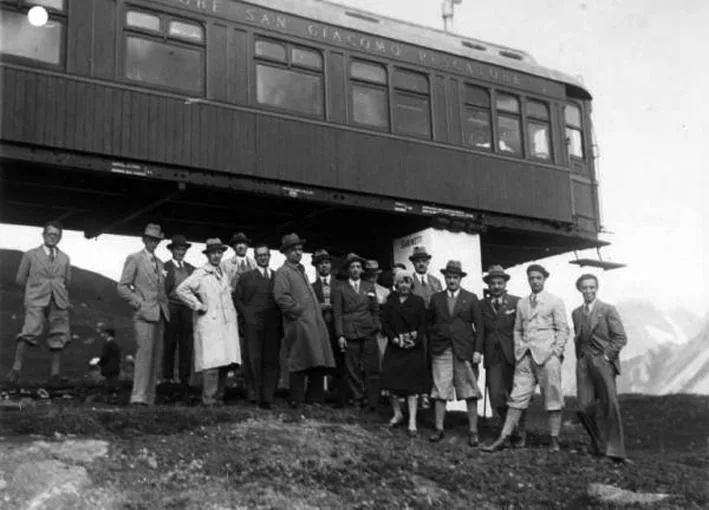
No coincidence: Fascist labour minister Giuseppe Bottai (2nd from right) attended the official opening of the ‘Wagristoratore’ on the pass in August 1930.
No coincidence: Fascist labour minister Giuseppe Bottai (2nd from right) attended the official opening of the ‘Wagristoratore’ on the pass in August 1930. Archivio Iconografico del Verbano Cusio Ossola

The Swiss mount a vigorous response

By this time, alarm bells were ringing among the Swiss army’s supreme command: after all, anyone with the ability to convey railway carriages up the San Giacomo Pass could just as easily transport troops and heavy artillery there. Securing the pass, whose only fortification was a refuge serving as an observation post, became top priority. The head of the Gotthard engineer corps came up with a proposal as early as 1931, but construction work did not start until 1935. An infantry bunker equipped with three machine gun emplacements was built near the pass itself. Further down stood the Grandinagia artillery fort, from where two cannons could be trained on Val Formazza. There were also emplacements for machine guns and mobile ordnance, shelters and three military cableways – thirty installations in total. By 1939, San Giacomo had been established as a blocking position and was ready to start firing. In addition, an emplacement with two cannons was built on the other side of Val Bedretto. It was high time.

“My eyes on Ticino”

In March 1939, Mussolini announced his foreign policy objectives to the Grand Council of Fascism: “I have turned my eyes on Ticino, as Switzerland has lost its way and must one day fall apart as many small states do.”
 
But the goings-on at the San Giacomo Pass were the main driver in stepping up the fortification of the Gotthard region. Fort Airolo and the Motta Bartola artillery battery were both outdated, as was the Fort Ospizio combat installation on the pass itself. The new Foppa Grande battery above the Airolo valley basin became operational even before the decision was taken in July 1940 to withdraw troops to the National Redoubt. Fort Sasso da Pigna, a key fortification on the Gotthard Pass, was completed three years later. From 1944, it was home to four 15cm cannons with a range of 23.5 kilometres. The guns in Airolo and on the Gotthard Pass were capable of firing on an area to the west ranging from Ulrichen in Valais to Ponte in Italy’s Val Formazza, thus covering the axis of invasion via the San Giacomo.
 
No shots were ever fired. Mussolini was captured by communist partisans while fleeing from the advancing Allies and executed in Mezzegra on Lake Como on 28 April 1945. The German forces in Italy capitulated the following day.
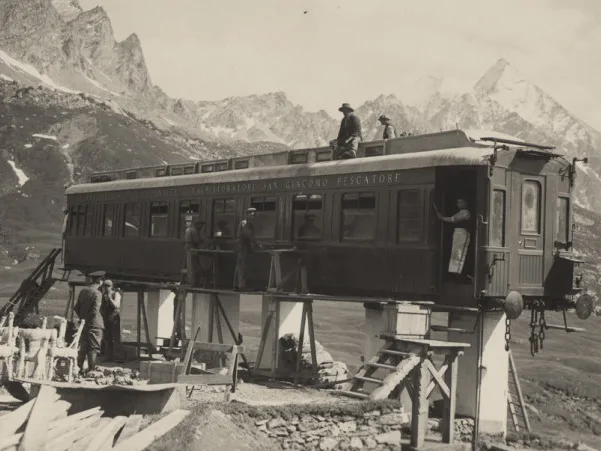
Whatever happened to the railway carriages?
Whatever happened to the railway carriages? Archivio Portaluppi
It is not clear what became of the railway carriages on the San Giacomo Pass. According to the Archivio Iconografico del Verbano Cusio Ossola blog, they fell into neglect and were abandoned during the war. Whether they were set on fire by partisans or by fascists aiming to deprive the partisans of a place to hide is a question that must remain unanswered. The wagons probably disappeared from the pass in the 1950s. Only the weathered pillars still rise up out of the Alpine meadow ‒ a testament to the fact that Mussolini once prepared to conquer Ticino from here.

Further posts