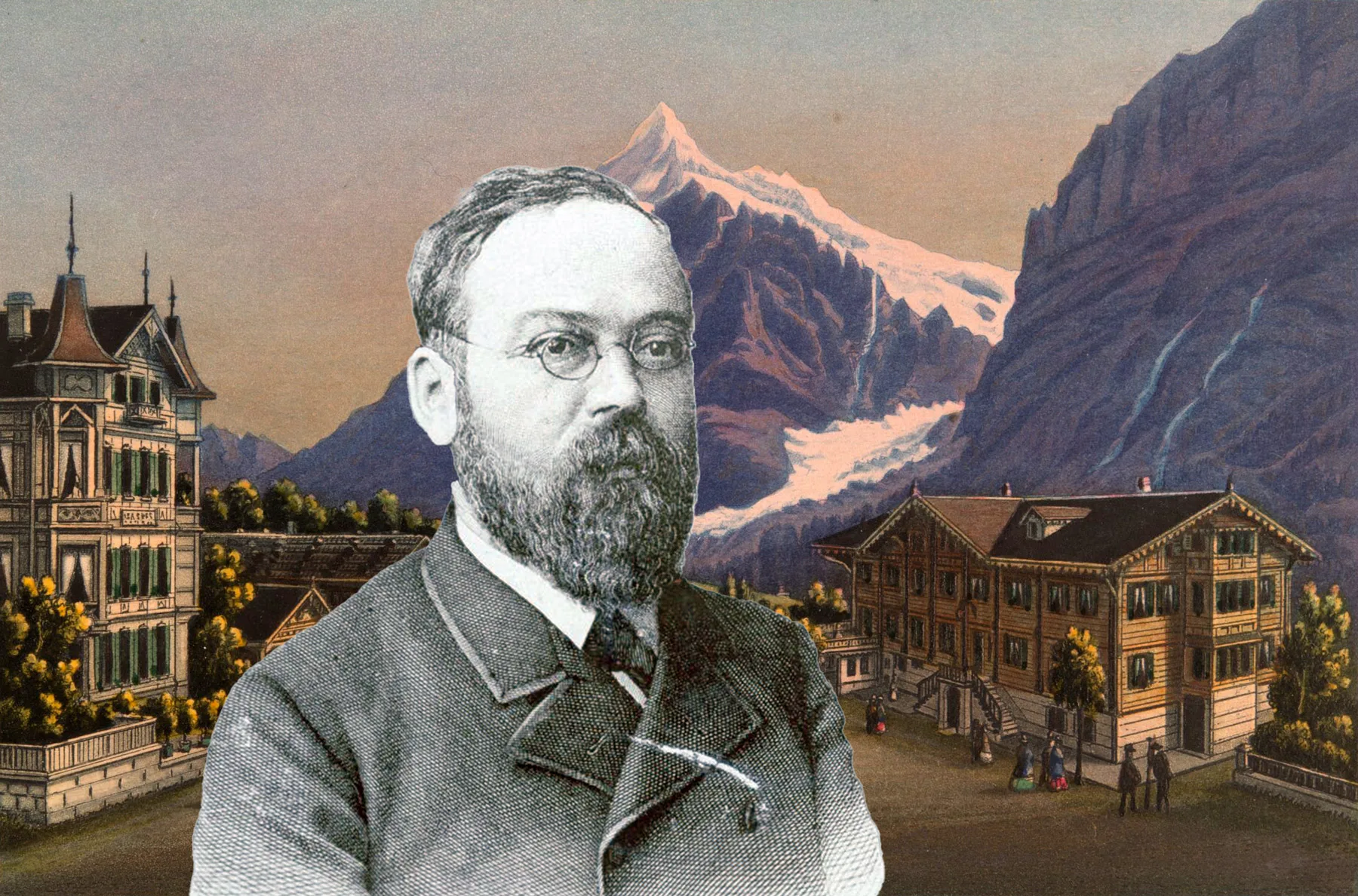
Gottfried Strasser served as Grindelwald’s pastor for more than 30 years and left a marked impression on the village.
Gottfried Strasser served as Grindelwald’s pastor for more than 30 years and left a marked impression on the village. Images: Swiss National Museum

The ‘glacier pastor’

On being appointed Grindelwald’s new pastor in 1879 the young Gottfried Strasser quickly made a name for himself, not just as a man of the cloth but also as an author, mountaineer, patron and philanthropist. He was soon known far beyond the bounds of the valley as the ‘glacier pastor’.

Reto Bleuer

Reto Bleuer

Reto Bleuer is a volunteer at the Archaeological Service of the Canton of Bern.

Gottfried Strasser was born on 12 March 1854 in Lauenen near Gstaad. His father Johannes, a clergyman, was married to Emilie Katharina Ludwig, whose father Emanuel had been a pastor at Bern Minster. The family moved to Langnau in the Emmental region in 1855. Gottfried grew up there, in a lively household of two sisters and five brothers, during an era of great change. At the age of ten he witnessed the opening of the railway line between Bern and Langnau, when horse-drawn coaches gave way to the ‘iron horse’. And the billeting in the town of around 500 soldiers from Bourbaki's army in 1871 left a lasting impression on the young lad.

Strasser’s penchant for poetry began to shine through at an early age. He penned sundry, mainly humorous texts in the pages of his friendship book while still at secondary school. He then went on to study theology in Bern from 1873, making additional study trips to Germany. He was put forward for the position of pastor in Grindelwald without actually applying and unanimously chosen by the congregation on 23 February 1879.

The colossal glaciers close by had earned this parish in the Bernese Oberland the nickname of ‘glacier village’. Strasser quickly settled in and soon came to be known far and wide as the ‘glacier pastor’. Himself a keen mountaineer, he made the most of the surrounding Alpine landscape to venture forth on a number of hiking tours, often accompanied by local mountain guides. His passion for the mountains led him to join the board of the Swiss Alpine Club (SAC), where he would later become secretary of the Grindelwald section and chair of the examination committee for mountain guide courses. It was at an official SAC event that he first met Elise Anna Rüegg from the Zurich Oberland area. The couple would marry in 1881 and have eight children together: four girls and four boys.
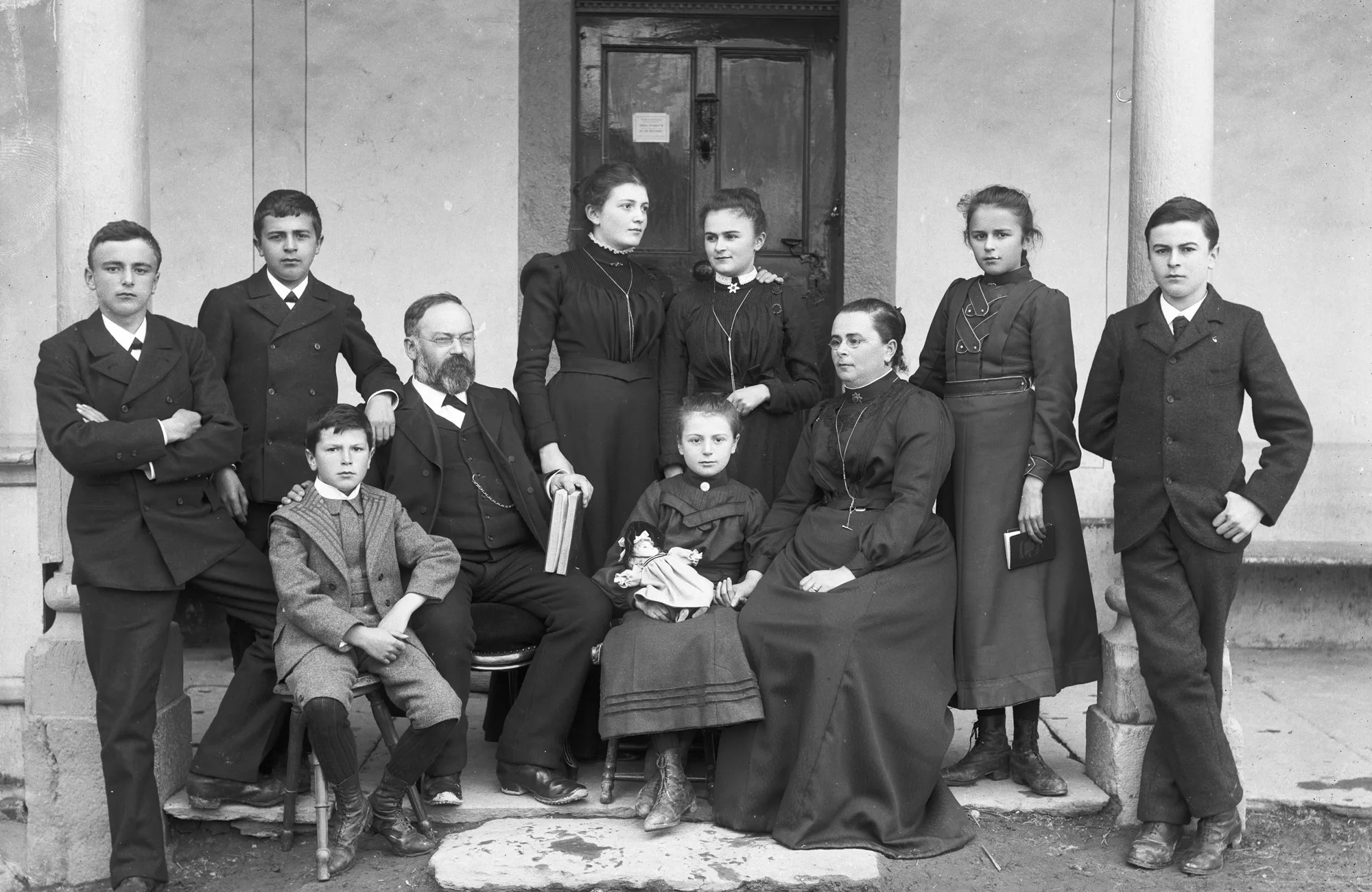
The Strasser family pictured on 14 April 1903 outside the parsonage in Grindelwald.
The Strasser family pictured on 14 April 1903 outside the parsonage in Grindelwald. Burgerbibliothek Bern
Strasser was not the kind of preacher given to hiding away in his study. He liked to be among people, was involved in a variety of associations and became particularly vocal in championing issues affecting children and their schooling. As chair of the school board, he set up a school savings association to teach pupils the importance of setting money aside. He also prompted the later establishment of the Sunneschyn home in Steffisburg for children with disabilities and special learning needs. And he proffered his services as a spiritual counsellor and preacher to the Swiss armed forces. Although passed unfit for service, the Federal Council appointed Strasser military chaplain to the 12th Bernese Oberland Regiment in 1883.
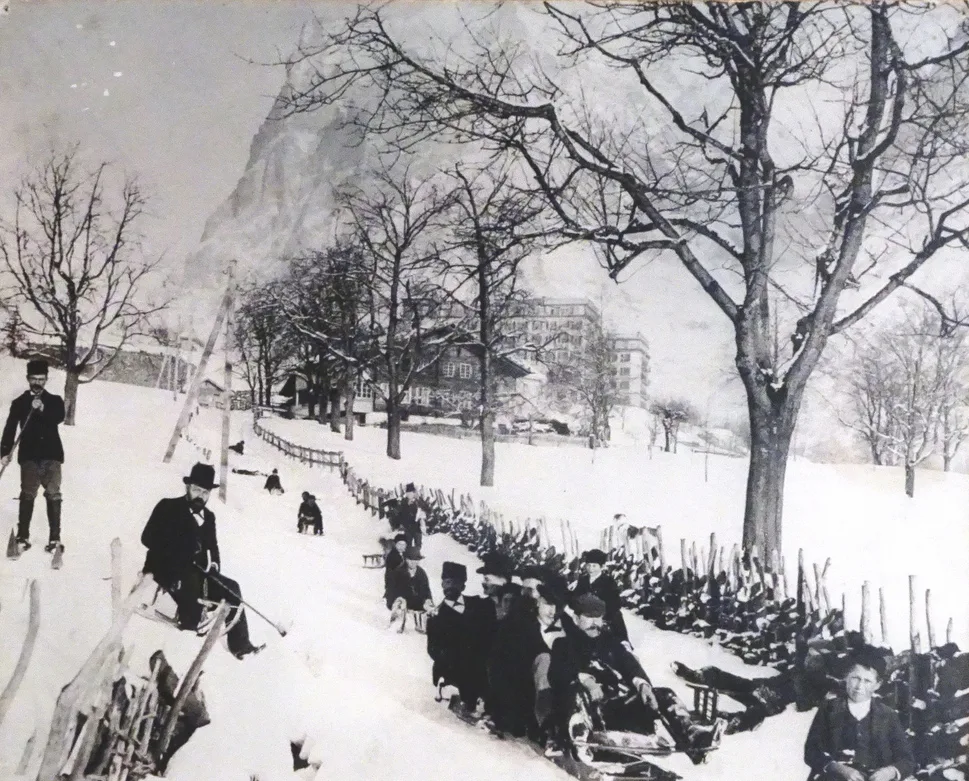
Pastor Strasser on his sledge (left), circa 1900.
Pastor Strasser on his sledge (left), circa 1900. Grindelwald Museum
Strasser’s time in Grindelwald coincided with its transformation from impoverished mountain village to flourishing spa resort. The pastor spotted the valuable opportunities that tourism opened up for the locals in the form of new ways to earn money, be that as a porter, mountain guide or hotel employee. Many hired hands were needed to tend to the stream of visitors, especially when Grindelwald became the first resort in the Bernese Oberland to stay open throughout the winter. This was made possible by the coming of the railroads and was one of the reasons why Strasser played an instrumental role in pushing for the construction of the Bernese Oberland Railway (BOB) line from Interlaken to Grindelwald and Lauterbrunnen, which opened on 1 July 1890.
 
Strasser also embraced businessman Adolf Guyer Zeller’s plans to construct a railway line up the Jungfrau and even wrote a travel guide to the Bernese Oberland in 1892. But the clergyman was not entirely uncritical of the way this development resulted in a veritable flood of tourists pouring into the region at the start of the 20th century. He composed a witty poem pillorying the boom in hotel and guesthouse construction, lamenting the fact that these “palaces” would soon completely block any view of the mountains and the natural beauty that attracted visitors to the area, and concluding with a plea for someone to invent a “serum” to cure this “building madness”.
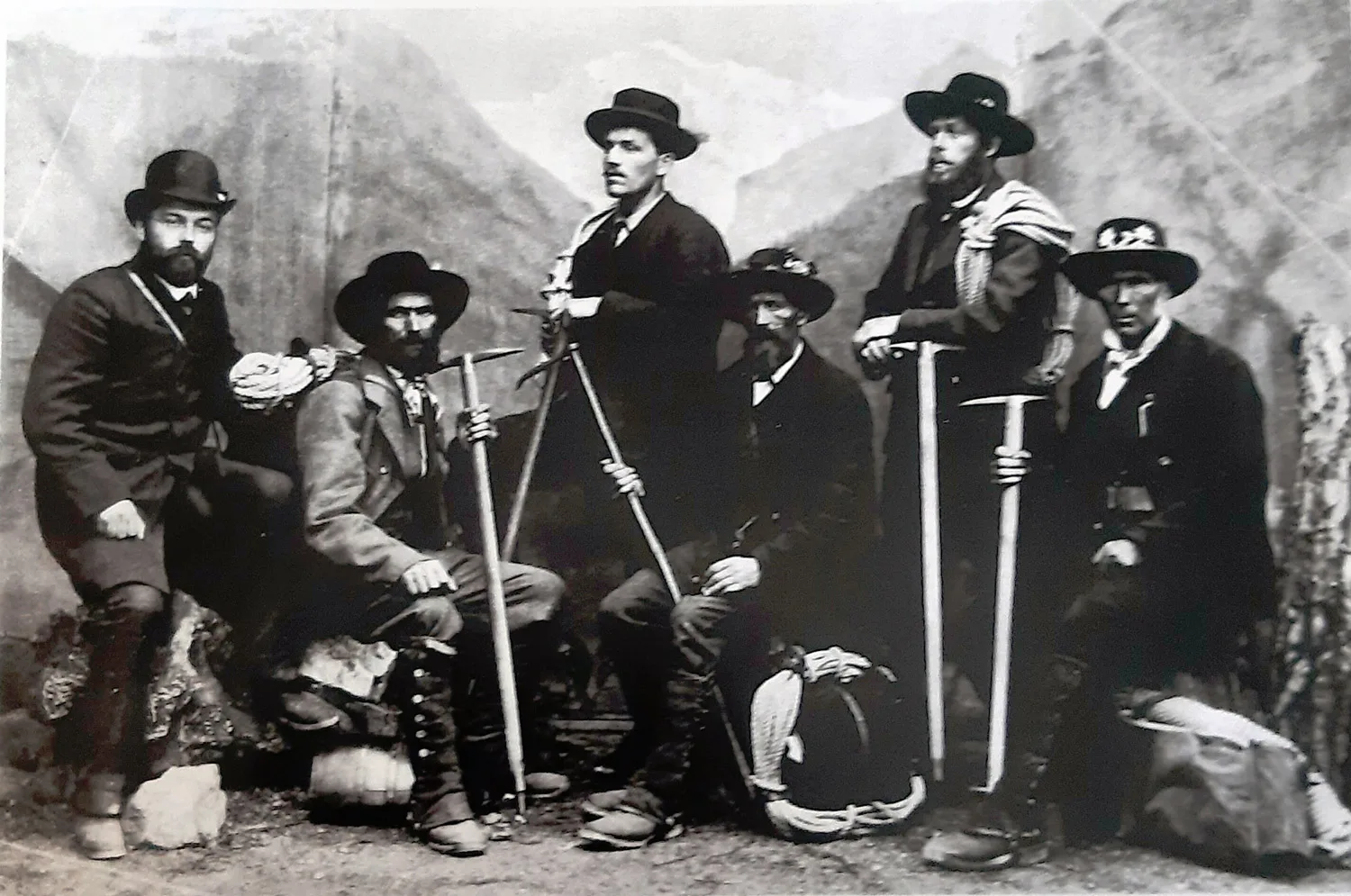
And then there were the victims of the emerging sport of mountaineering. As pastor, Strasser was called upon to perform the burial rites for many local mountain guides who lost their lives in avalanches, rockfalls and accidents while accompanying tourists into the mountains. To aid the families they left behind, Strasser initiated the introduction of insurance for mountain guides and took the lead in setting up a professional mountain guiding association in Grindelwald.
Pastor Strasser (far left) with mountain guides, circa 1890.
Pastor Strasser (far left) with mountain guides, circa 1890. Grindelwald Museum
Another defining moment in Strasser’s life came on 18 August 1892, when fire swept through the village. Fanned by a violent storm of warm, dry wind blowing down from the Alps, the flames engulfed more than 100 buildings and left some 400 people homeless. Three days later, the deeply distraught pastor addressed his congregation:

Believe me when I say that I have never found it so difficult to preach before you as I do now. I cannot get the terrible fire out of my mind. Preparing a proper sermon was impossible, my body and soul are still in a state of feverish agitation.
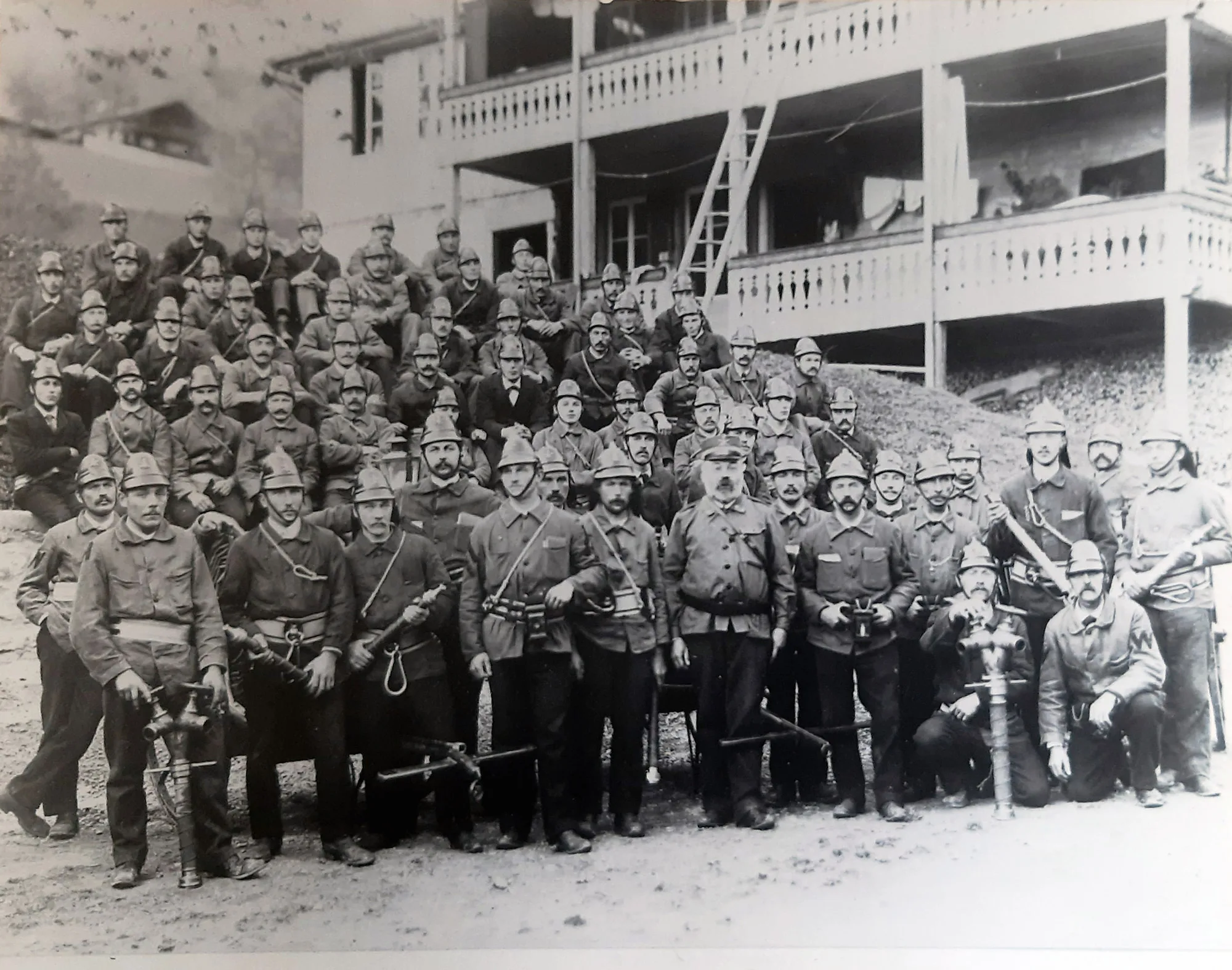
Yet Strasser was quick to act. He launched an appeal for donations, became chairman of the newly founded fire committee, organised the setting up of a modern, properly equipped fire brigade and insisted that a network of hydrants be put in place. And he did not confine himself to the purely administrative role of committee member, but played an active role in firefighting as deputy fire chief.
The village fire brigade, 1906. Pastor Strasser is in the middle of the front row, wearing a cap.
The village fire brigade, 1906. Pastor Strasser is in the middle of the front row, wearing a cap. Grindelwald Museum
In addition to his activism on social issues, Strasser produced a body of writing. His poems, commemorative publications, newspaper articles, brochures and song lyrics found a large readership outside Grindelwald. Together with his friend, the composer Johann Rudolf Krenger, he created the Grindelwaldlied folk song and Dr Trueberbueb, the unofficial hymn of the Emmental region. His play Bärgdorf [‘Mountain Village’] premiered in Zurich in 1898 to mark the grand opening of the National Museum and brought him to the attention of the nation at large. Strasser had contacts in the literary world, including publicist Peter Rosegger, Swiss dialect author Rudolf von Tavel and Johanna Spyri, the creator of the Heidi novels, who visited him in Grindelwald in 1898.
‘Dr Trueberbueb’ sung by the Yodeller’s Double Quartet of the Pontonierfahrverein Worblaufen. Youtube
Whether referring to the choral association, the introduction of lighting in the village, the founding of a Samaritan association or the running of a library, one name repeatedly crops up in documents from the period as initiator, secretary, chairman: that of pastor Gottfried Strasser.
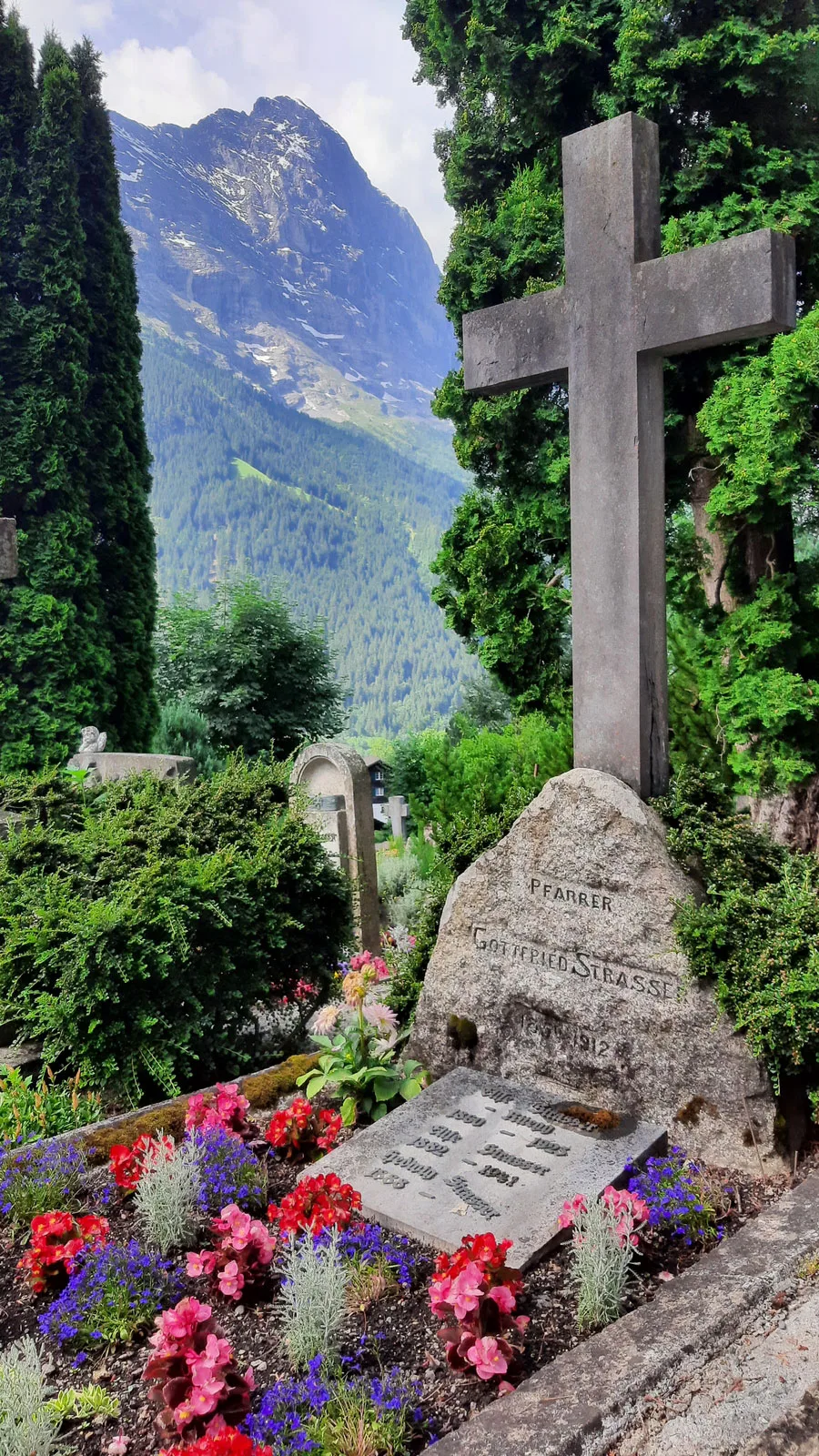
In the shadow of the north face of the Eiger: the grave of Gottfried Strasser, his wife Elise and their daughters Elise and Hedwig.
In the shadow of the north face of the Eiger: the grave of Gottfried Strasser, his wife Elise and their daughters Elise and Hedwig. Photo: Reto Bleuer
Strasser fell ill in the spring of 1911 with a serious heart condition from which he never truly recovered. He passed away on 9 April 1912 at the age of 58 in his beloved Grindelwald “close by the glaciers”. He had an influence and impact on the region like no other and left behind a lasting legacy.

Further posts