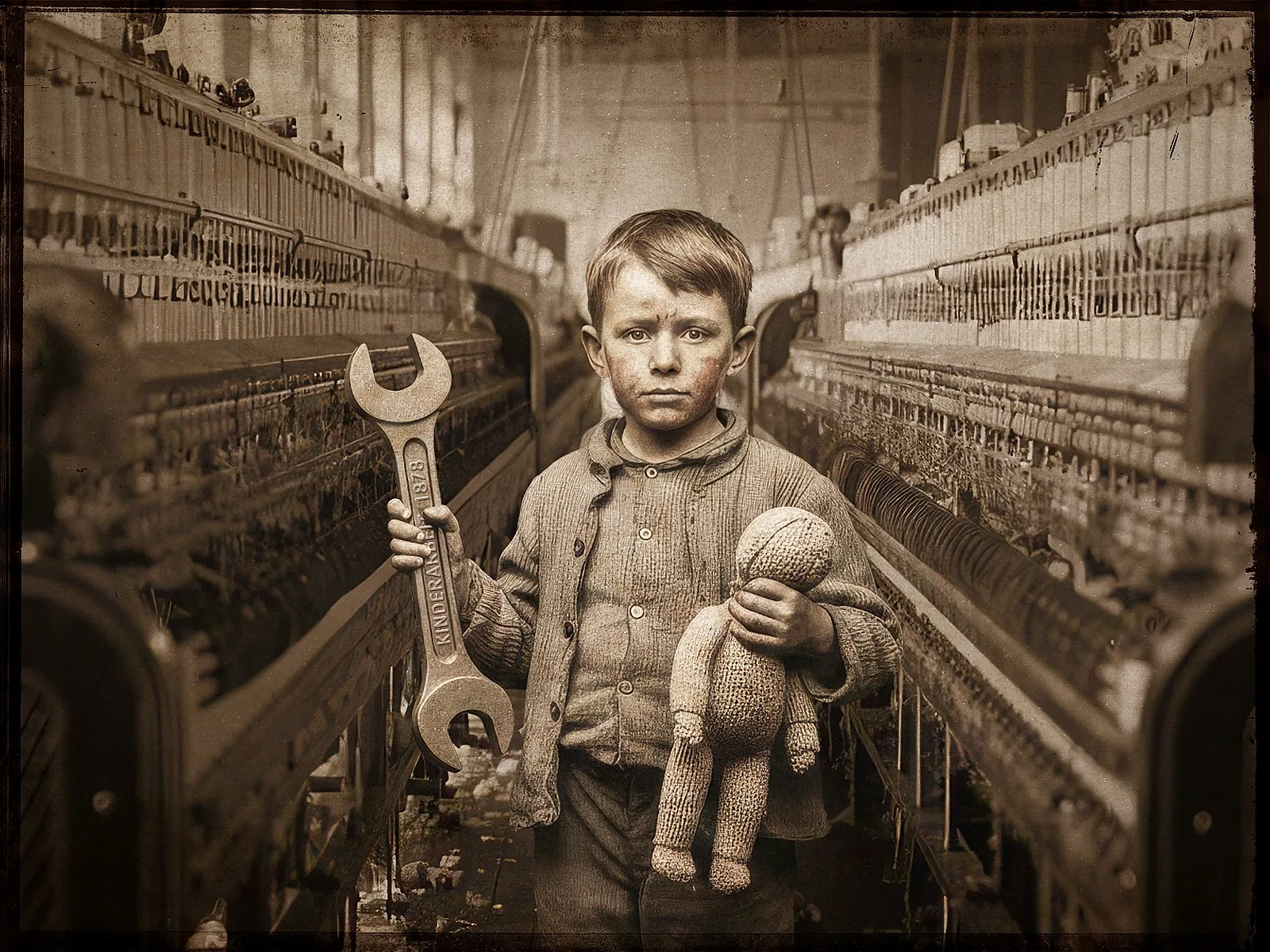
Child labour was commonplace at the beginning of industrialisation. Among its opponents and campaigners was Edmund Nüsperli, one of the first three federal factory inspectors. Illustration by Marco Heer.

Nüsperli: the indefatigable factory inspector

Edmund Nüsperli, the mechanic, revolutionary and industrialist from La Neuveville (canton of Bern) travelled all over Switzerland from 1878 having been mandated by the Federal Council to implement their (at the time) brand new Factory Act. Nüsperli campaigned against child labour, poor working conditions and lethal doses of a toxic substance.

Stefan Keller

Stefan Keller

Stefan Keller is a historian and journalist whose works include the investigative report “Maria Theresia Wilhelm, spurlos verschwunden”, published in 1991.
When Edmund Nüsperli died in the summer of 1890 at the age of 52, his colleagues gave him a glowing obituary: “He really cared about all oppressed and troubled people”, to quote the factory inspectors’ official report in 1890/91. A patient man, he always lent a ready ear to people’s problems and did his best to help them find justice. The socialist weekly newspaper The Grütlianer noted that the news of Mr Nüsperli’s sudden death had evoked “an outpouring of sympathy” among the working classes, while the Neue Zürcher Zeitung newspaper reported: “Nüsperli was a direct and open character as well as a dutiful, indefatigable official”.
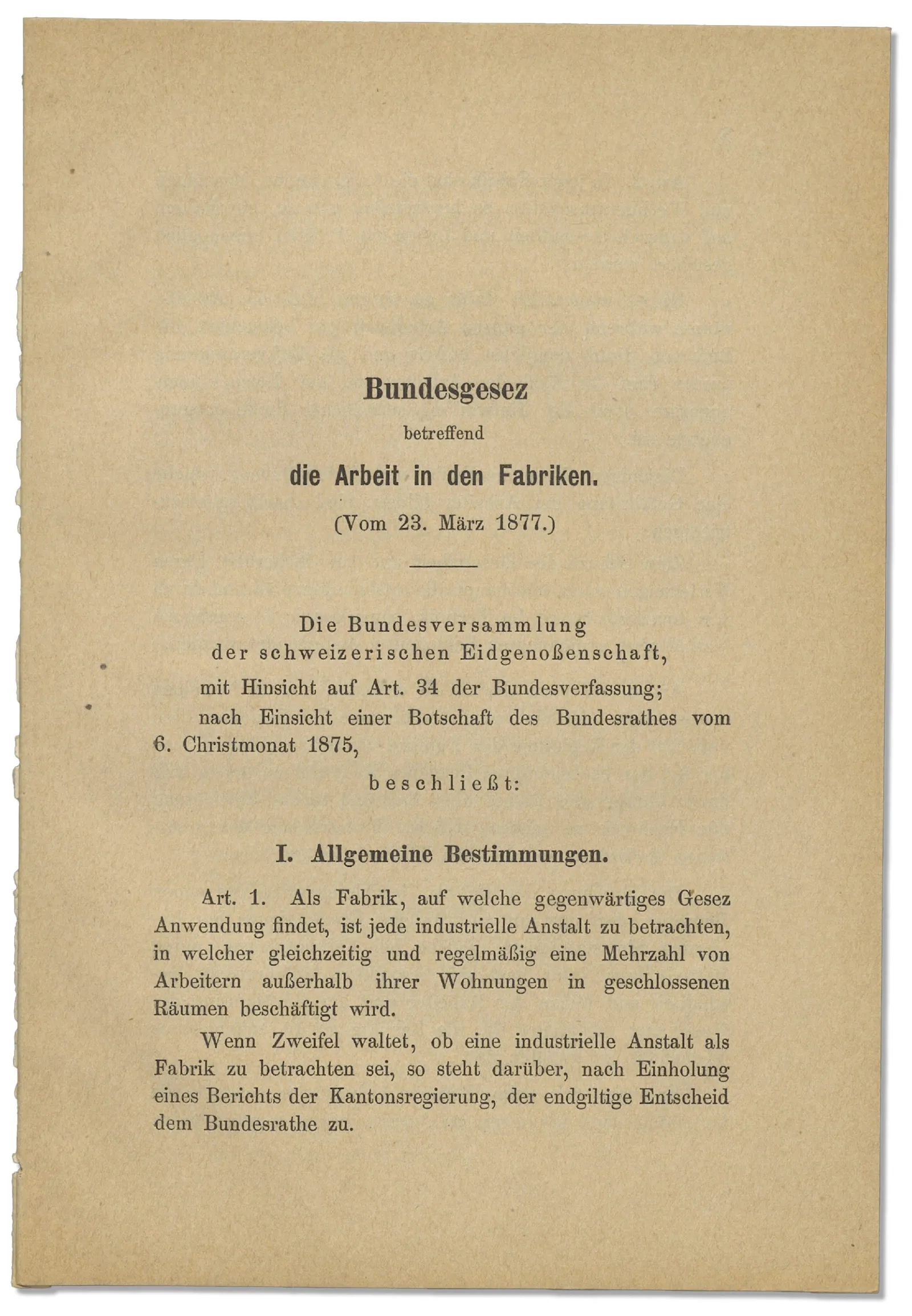
The other two factory inspectors appointed besides Nüsperli to implement the legislation were doctor Fridolin Schuler from Mollis in the canton of Glarus and former Cantonal Councillor Wilhelm Klein from Basel. The Federal Council selected them in August 1878, after the federal Factory Act had been approved by the people the previous year with a razor-thin majority of 51.5 percent. The new law forbade child labour under the age of 14, restricted the working week to 65 hours – 11-hours Monday to Friday plus ten hours on Saturdays, prohibited night shifts and Sunday work for women and stipulated the ineligibility of new mothers for factory work. There were also minimal liability provisions for factory owners in the event of occupational accidents.
The 1877 Factory Act brought in nationwide regulation for factory work for the first time and banned children under the age of 14 from working in factories.
The 1877 Factory Act brought in nationwide regulation for factory work for the first time and banned children under the age of 14 from working in factories. Swiss Federal Archives

A product of his environment

Edmund Nüsperli was the son of a district teacher in the canton of Basel-Landschaft. He attended the local secondary school, completed an apprenticeship as a mechanic, worked in the Rieter machine factory in Winterthur and travelled to France and England. In London he joined the socialist movement founded by Karl Marx. In 1864, Edmund Nüsperli was one of the two Swiss who were among the founding members of the international workers’ association which went down in history as the ‘First International’ and is the subject of the left-wing workers’ anthem ‘The Internationale’.
Nüsperli returned to Switzerland in 1865. In 1867, he teamed up with an engineer to co-found the machine factory Schnider & Nüsperli in La Neuveville, which specialised in agricultural machinery. It is not known why Edmund Nüsperli left his job as an industrialist after eleven years to offer his services as a factory inspector. The Federal Council initially appointed him to Kreis II, which covered French-speaking Bern, western Switzerland and Ticino. When Wilhelm Klein, who had been in charge of Kreis III encompassing Bern, Lucerne, Solothurn, Aarau, Basel, Schaffhausen and parts of eastern Switzerland, returned to politics in 1881, Nüsperli took over that region.
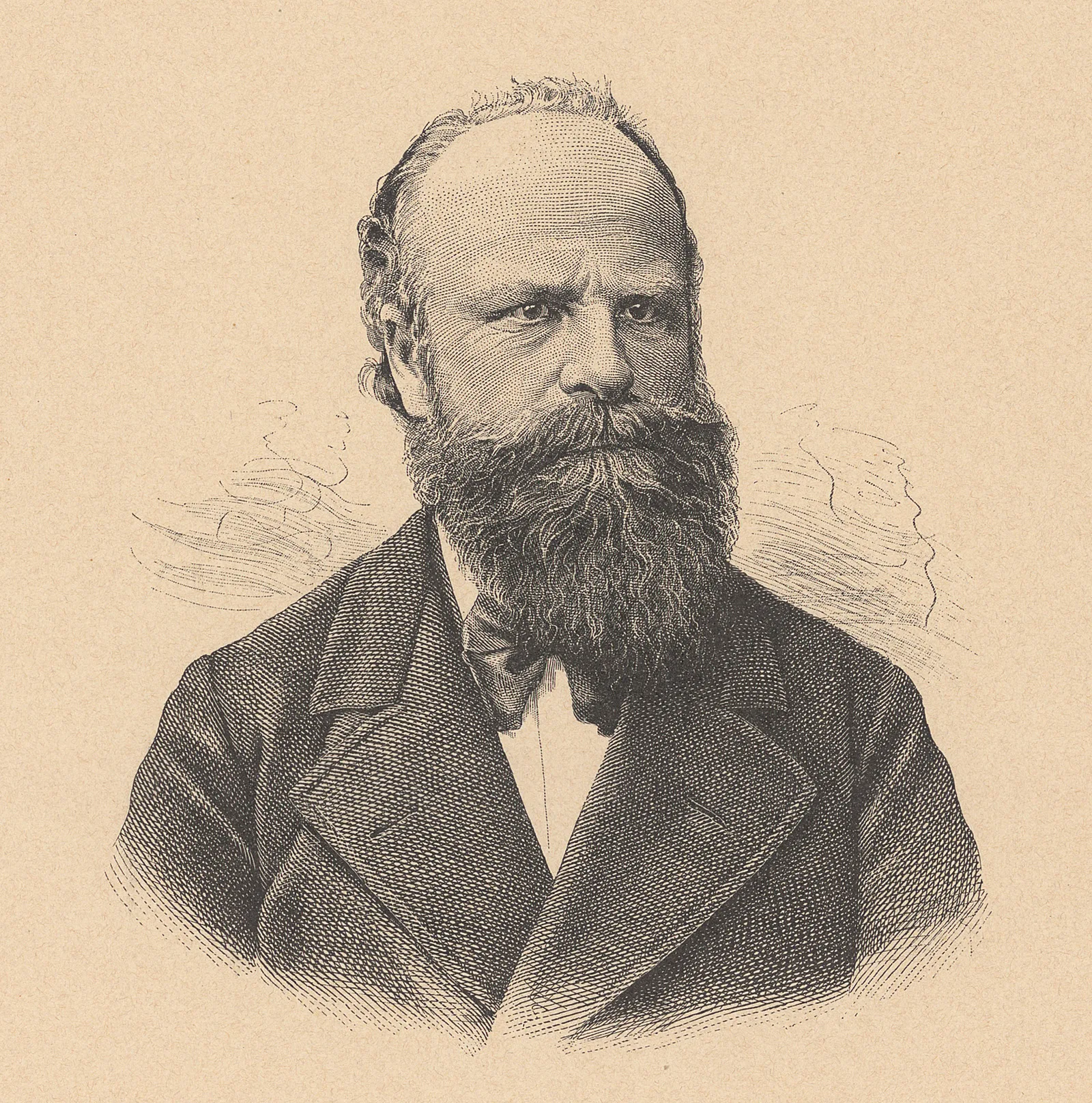
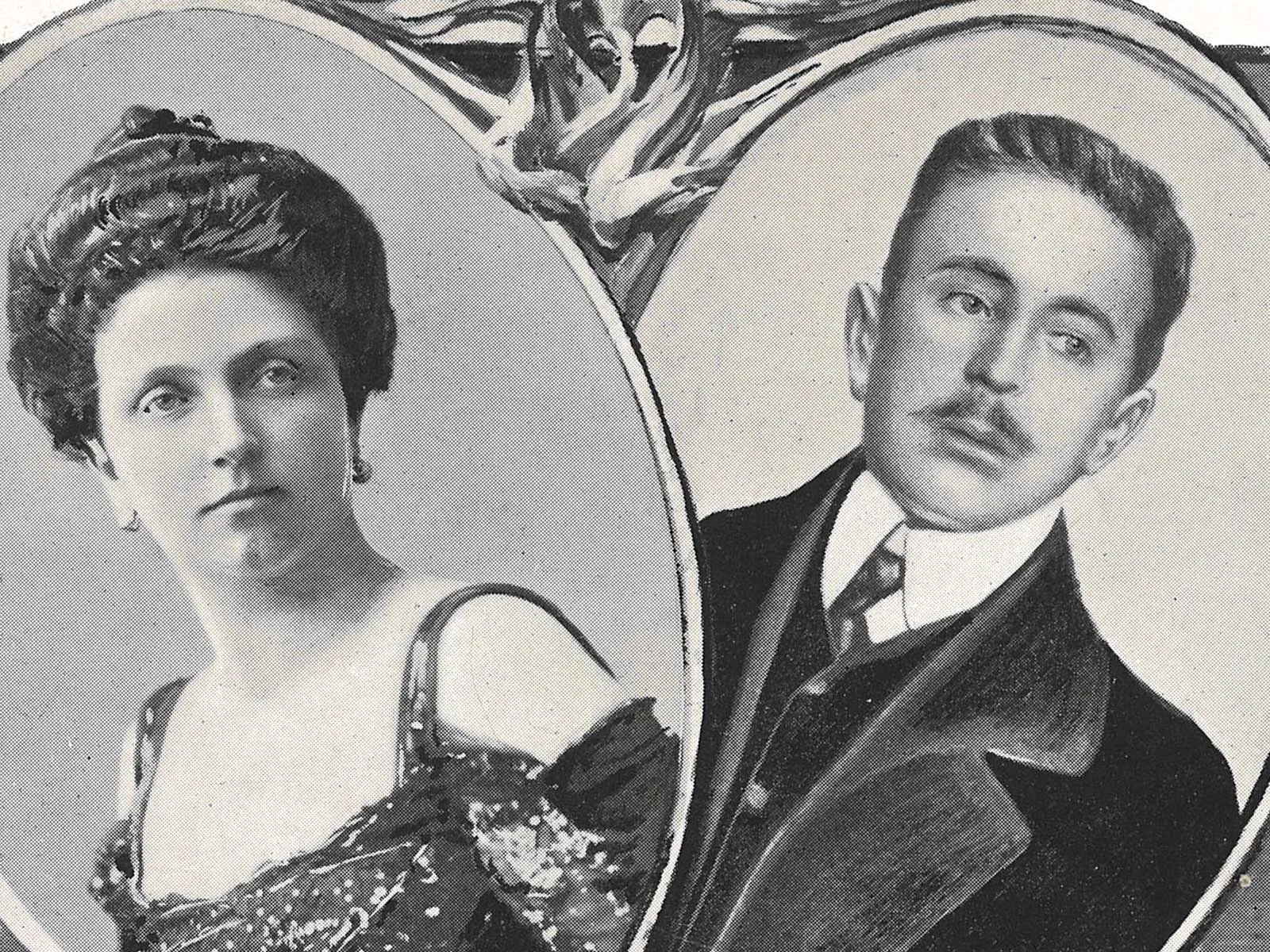
Portrait of Edmund Nüsperli, undated.
Portrait of Edmund Nüsperli, undated. Zentralbibliothek Zürich
The Factory Act was an early instance of state intervention in contractual freedom. The abolition of child labour deprived businesses of their cheapest workers. Moreover, many of the children’s families also lamented the loss of part of their income. The Act was a groundbreaking piece of legislation in Europe at the time. It was also very open-ended in parts. The factory inspectors advised the Federal Council on how to proceed with its implementation after they had been on a seven-month tour of Switzerland to learn about working conditions and define common standards. They wrote a report on their findings. After that every inspector travelled alone by rail, mail coach and on foot. The federal government published their findings for the public every two years.

The “pernicious and socialist” Factory Act
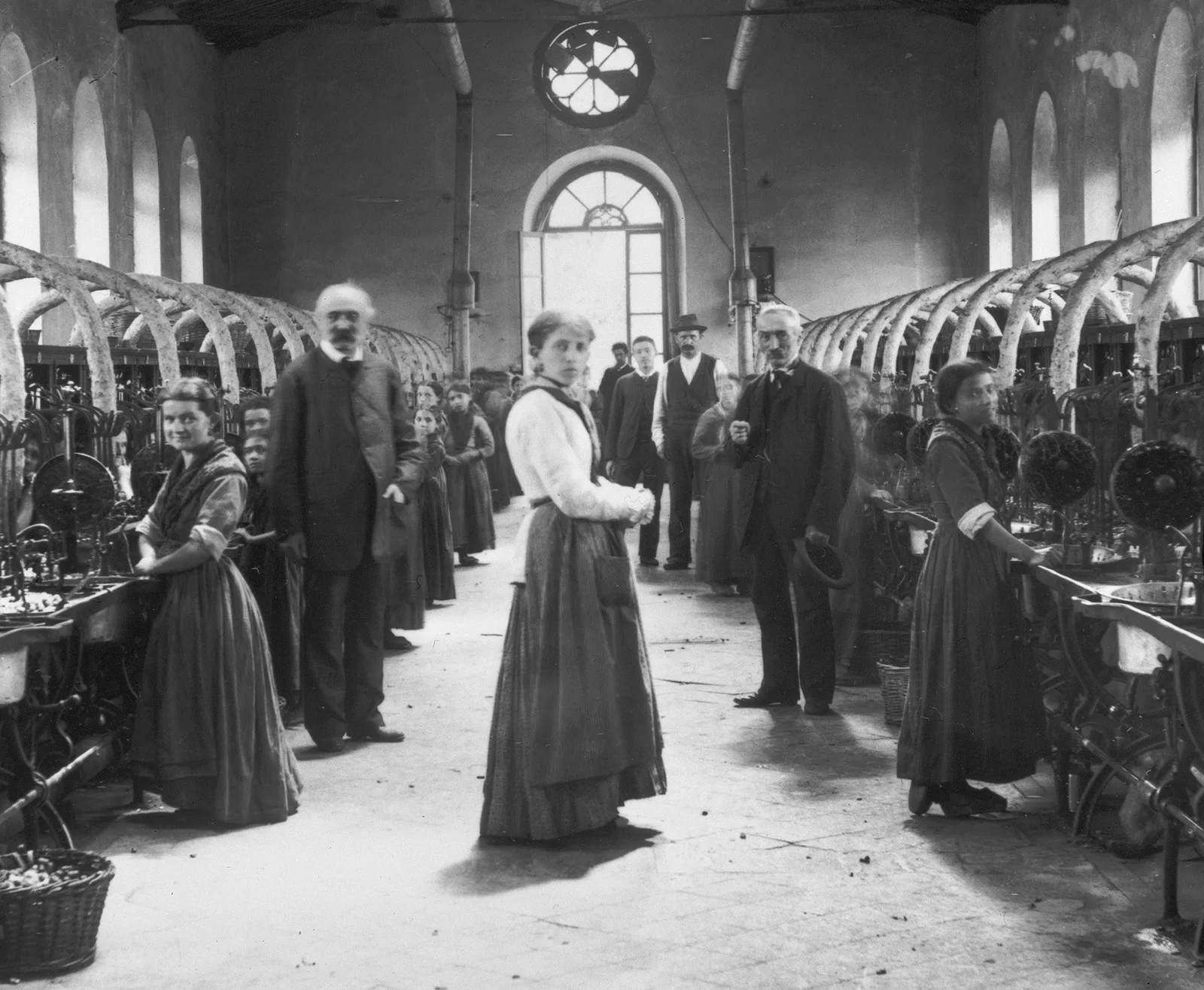
In November 1880, the Ticino Cantonal Parliament discussed the Factory Act: a cantonal councillor complained that cantonal authority had “been sidelined” after Inspector Nüsperli had visited all the factories in Ticino without informing the cantonal government and had reported three factories for employing children. A member of the parliament argued that children needed to be trained at an early age (in other words before turning twelve), particularly for the silk spinning mills. Another Ticino parliamentarian called the Factory Act pernicious and socialist. In nearby Como, children were allowed to work in factories from the age of nine. The Ticino parliament ended up backing these dissenting voices and Ticino’s silk spinning mills were allowed to continue employing twelve-year-old girls up to 1897.
Children at work in a silk-spinning mill. Photo by Rudolf Zinggeler-Danioth, circa 1890-1936.
Children at work in a silk-spinning mill. Photo by Rudolf Zinggeler-Danioth, circa 1890-1936. Swiss National Museum
However, most of the opposition to the new legislation did not come from policymakers but from the business community. Inspector Nüsperli reported conflicts in Schaffhausen (where young workers were beaten by their boss), in Appenzell (where he drafted regulatory standards with his colleague Schuler for embroiders who went on strike), and at the southern foot of the Jura (where a watch producer wanted to ban the trade union organisation). Tobacco producers in Wynental were also up in arms and an employer at an unknown location in Switzerland relocated factory workers to his chicken coop in 1888/89.
If they discovered any violations of the Act, the factory inspectors could only lodge a complaint, then it was up to the local and cantonal authorities to pursue the matter. However, these authorities were observed to “not be overly diligent” in enforcing the new laws. In a Toggenburg factory, one of the inspectors reported “a large number of children under the age of 14 for three consecutive years”. When the case finally went to court, the boss was fined a paltry CHF 5 as a symbolic penalty. A policeman, one of those responsible for preventing child labour, even had his own children making matches in the Bernese Oberland. That was because the Factory Act did not actually cover industry in its entirety: embroidery was a very widespread occupation at the time with whole families working from home beyond the inspectors’ reach. Agriculture and other commercial operations were also unaffected by the legislation. A survey found that there were still about 300,000 children working in Switzerland as late as 1904.
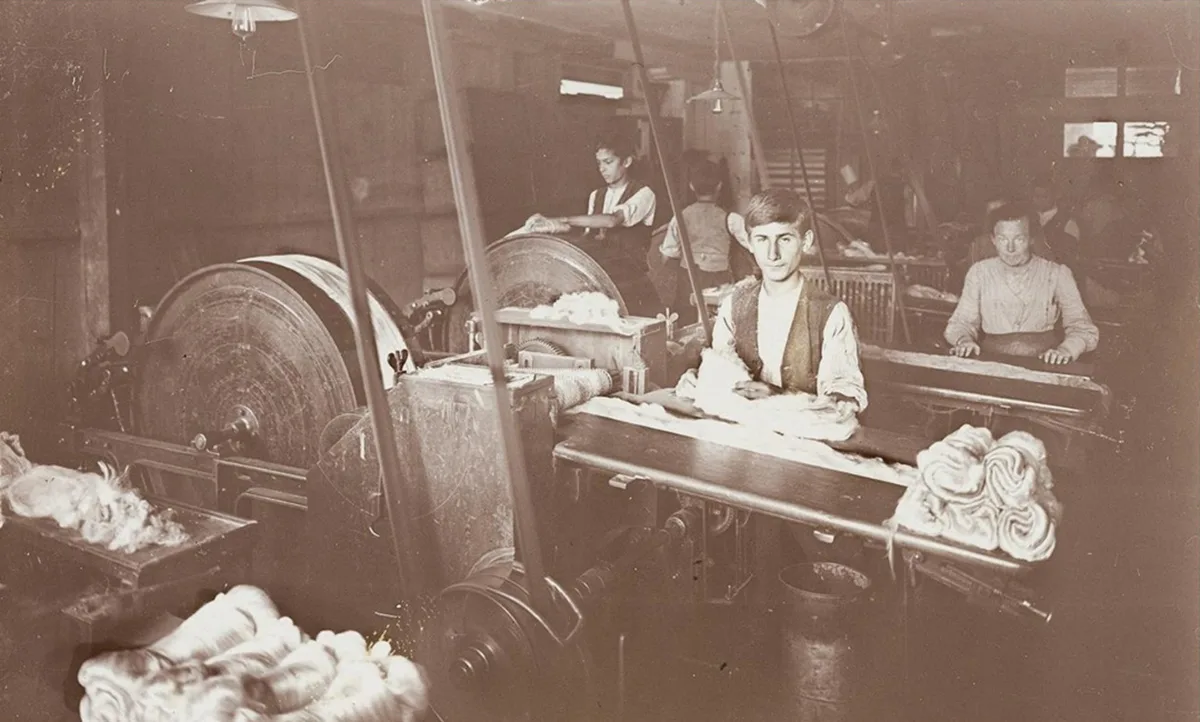
Machine work simplified many tasks to the extent that untrained and younger employees could perform them. Young people working the machines at Camenzind silk spinning mill in Gersau, circa 1920.
Machine work simplified many tasks to the extent that untrained and younger employees could perform them. Young people working the machines at Camenzind silk spinning mill in Gersau, circa 1920. Staatsarchiv des Kantons Schwyz / Camenzind + Co. AG, Gersau

The ‘Nüsperli system’

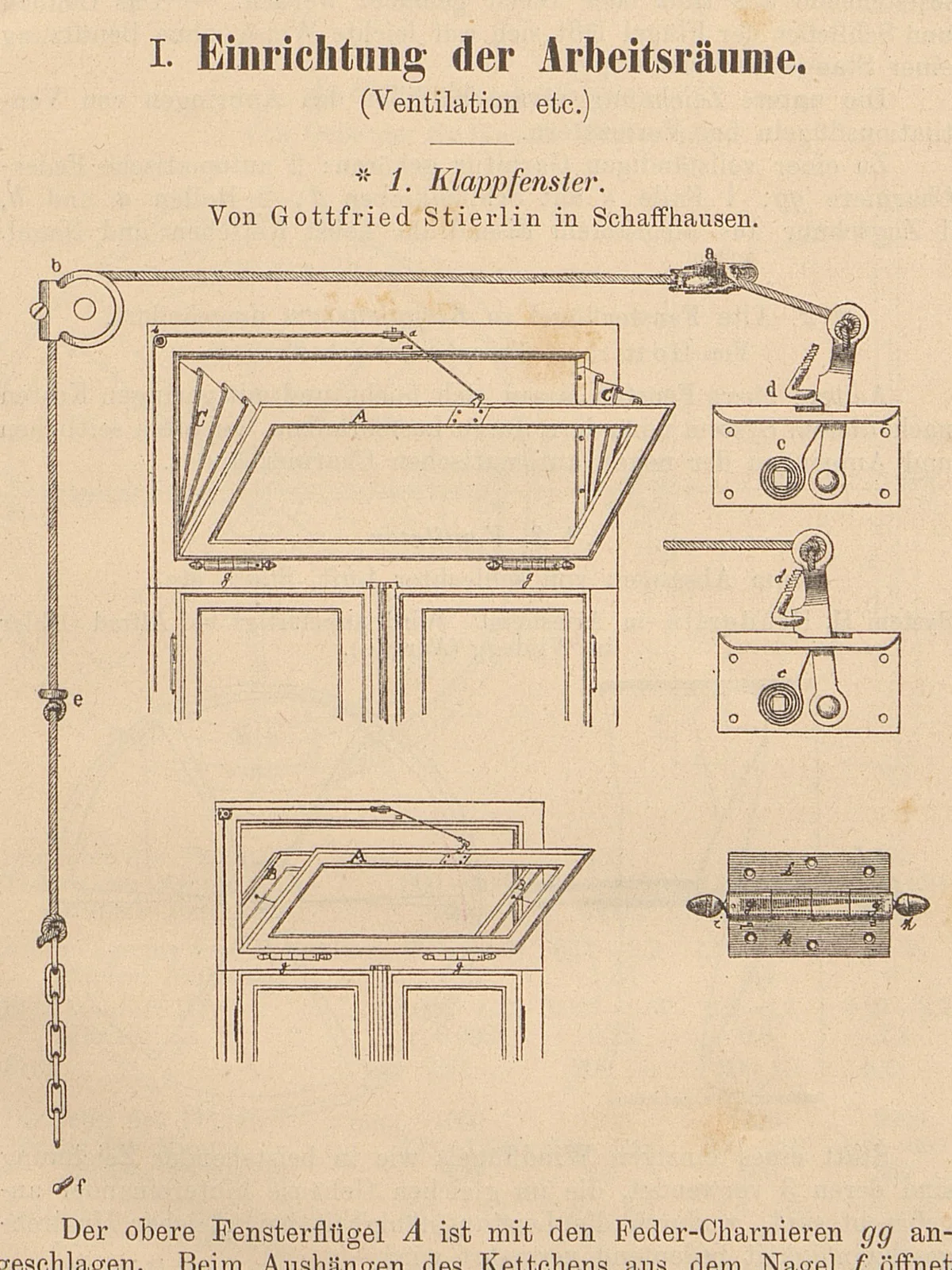
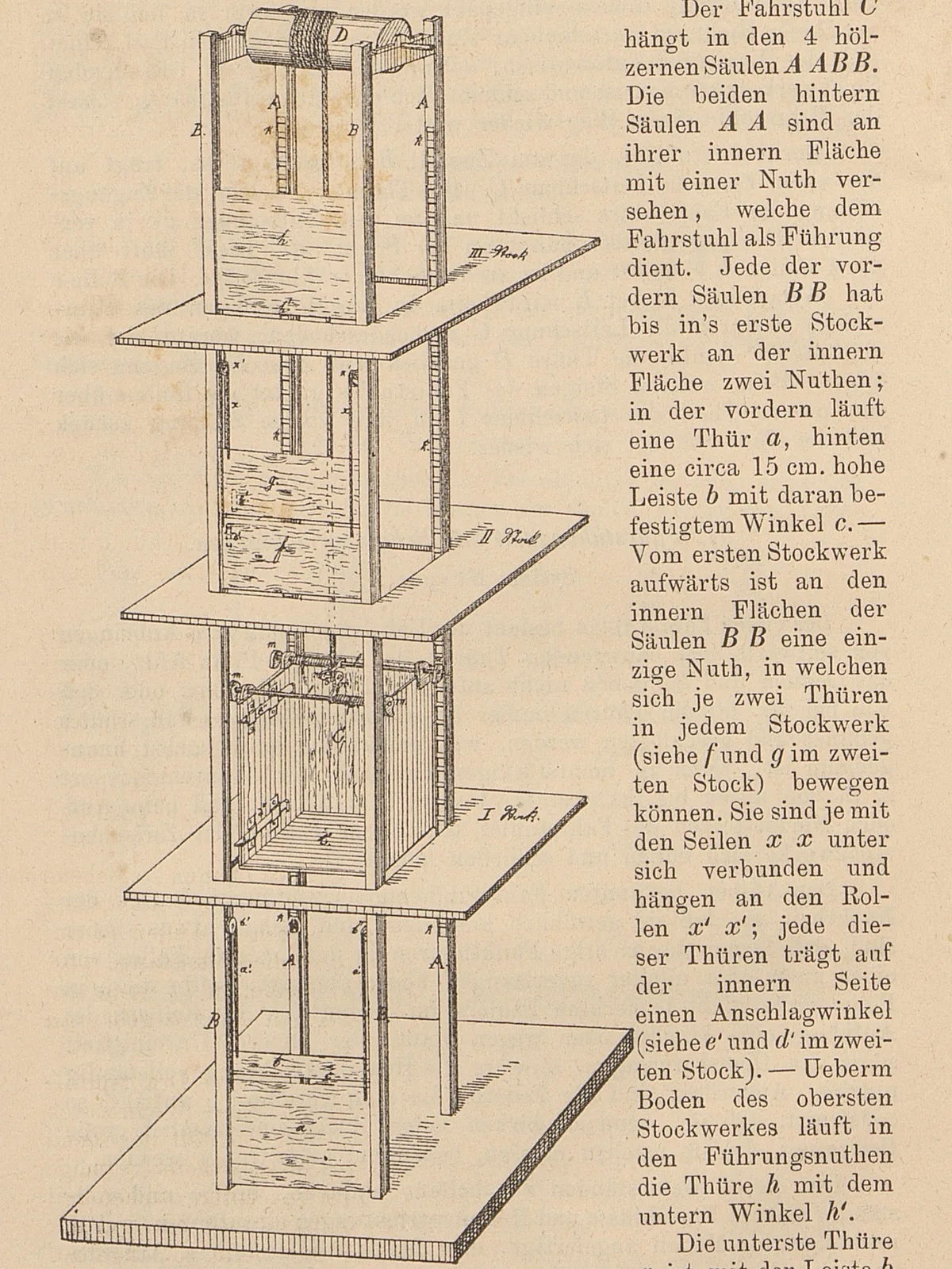
Edmund Nüsperli was always on the move and inspected many hundreds of facilities every year. He also studied factory regulations and plans for new builds and visited company-owned workers’ lodgings and other ‘charitable organisations’, proposing improvements across the board. He used his building experience to design all sorts of safety guards for factories and dangerous machinery. He compiled a booklet for the 1883 National Exhibition entitled Apparate und Einrichtungen zum Schutze von Fabrikarbeitern gegen Gefahren für Leben und Gesundheit (Appliances and machinery to protect factory workers from dangers to life and health), featuring over one hundred technical innovations including a hatch window to improve ventilation, respirators and security precautions for steam machines or transmissions and clothing for maintenance technicians when applying oil to machines. Some of these devices were labelled as the ‘Nüsperli system’.
Edmund Nüsperli was an occupational safety pioneer. Illustration showing hatch windows (left) and a model of a lift he designed with a safety guard (right).
Edmund Nüsperli was an occupational safety pioneer. Illustration showing hatch windows (left) and a model of a lift he designed with a safety guard (right). Zentralbibliothek Zürich / Zentralbibliothek Zürich
The factory inspectors were particularly concerned about a horrific disease affecting people working in match production. The yellow phosphorus used for the match heads exposed the workers to a condition known as phosphorus necrosis, which destroyed bones leading to facial disfigurement and ultimately death. Following a ban on yellow phosphorus in favour of the more benign alternative of white phosphorus, Nüsperli wrote a brochure on the new ‘safety matches’. Unfortunately, the new matches were expensive and more cumbersome than their old counterparts. People referred to them disparagingly as ‘allumettes fédérales’ (federal matches). The biggest setback for the fledgling practice of factory inspection came when parliament allowed match producers to resume the use of yellow phosphorus in 1882 leading to phosphorus necrosis rearing its ugly head again. Edmund Nüsperli passed away suddenly from a heart attack in 1890 and was not there to see the definitive ban of yellow phosphorus and the ensuing disappearance of necrosis in 1898.

Born into poverty. Child labourers

19.12.2025 20.04.2026 / National Museum Zurich
Even in the pre-industrial era, children had to make a contribution to the family economy, whether in the home, on the land, or in cottage industries. After industrialisation, they were exploited as cheap labour in factories and often could not attend school. The exhibition shows how children’s rights evolved and looks at the fate of children in forced foster care and institutions.

Further posts