Hot porridge all the way from Zurich to Strasbourg: an oat-standing achievement
In 1456, a pot of millet porridge was transported by boat from Zurich to Strasbourg in a single day. It was still warm on arrival. The trip was repeated in 1576 and feted as a great achievement, but it mainly served to solidify the alliance between the two cities in a politically and religiously charged period.

Christophe Droesch
Christophe Droesch was born and raised in Alsace. He works as a translator and has translated numerous blog posts from German into French.
Zurich and Strasbourg had been cultivating ties since at least the 13th century. Both cities were members of the first Rhenish League of 1254, a military alliance formed among imperial towns for mutual defence. They drew closer still in 1455, when an irregular military formation, which included Zurich soldiers, freed merchants from Strasbourg who had been detained in Eglisau by members of the nobility from Hegau (Duchy of Swabia).
Millet porridge was a popular dish in medieval Europe and the ‘Hirsebreifahrt’ event was named after it (‘journey with millet porridge’ in English). At that time, it normally took three to four days navigating the Limmat, Aare and Rhine to reach Strasbourg from Zurich by boat and twice as long by land. However, the spirited Zurich crew planned to forego the usual stopovers and complete the entire journey in one go.
It worked, as the men reached their destination in a mere 22 hours and were referred to thereafter by the chroniclers as “argonauts”. By accomplishing this feat, Zurich showed that it could deliver support to its ally promptly should the need arise. In fact, the porridge was so hot on arrival that it even burned the lips of the Strasburger who tasted it.
Deciding who to trust in times of change
Strasbourg again hosted a major shooting event in 1576. This was a time of religious tension in Europe, which was especially acute in Strasbourg and its environs, culminating in the outbreak of the Bishops' War there fifteen years later. The city therefore used the occasion to show how many allies it had – and chose to do so on the hundredth anniversary of the Battle of Murten, in which Strasbourg and other Alsatian towns had sided with the Confederates against the Duke of Burgundy.
Strasbourg spared no expense and put together a programme stretching over more than two-and-a-half months. The actual shooting festival took place in front of the city gates on the Schiessrain, where the Parc du Contades now stands. There was crossbow shooting on 28 May followed by the arquebus contest on 10 June. Then came the grand finale: a big lottery organised by the city government, with the draw starting on 13 July.
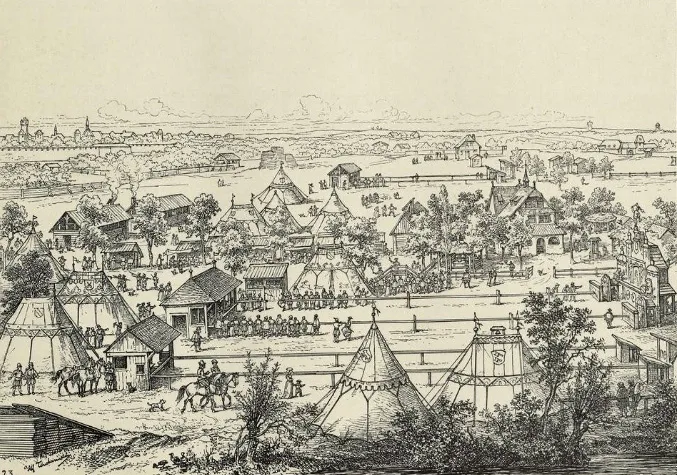
The second trip, however, was not an impromptu venture as it had been in 1456 but a matter of strategic importance for Zurich. The city wanted to strengthen its ties with its Protestant allies at a time when the Catholic rural cantons were clashing with the Protestant city cantons in the Confederacy, while the Counter-Reformation was well under way in the Holy Roman Empire. In early June, Zurich sent an official missive to the Strasbourg government announcing the planned trip and requesting accommodation for the boat crew. Zurich’s council also informed several major cities, including Basel, that the boat would be passing by.
From Zurich to Strasbourg
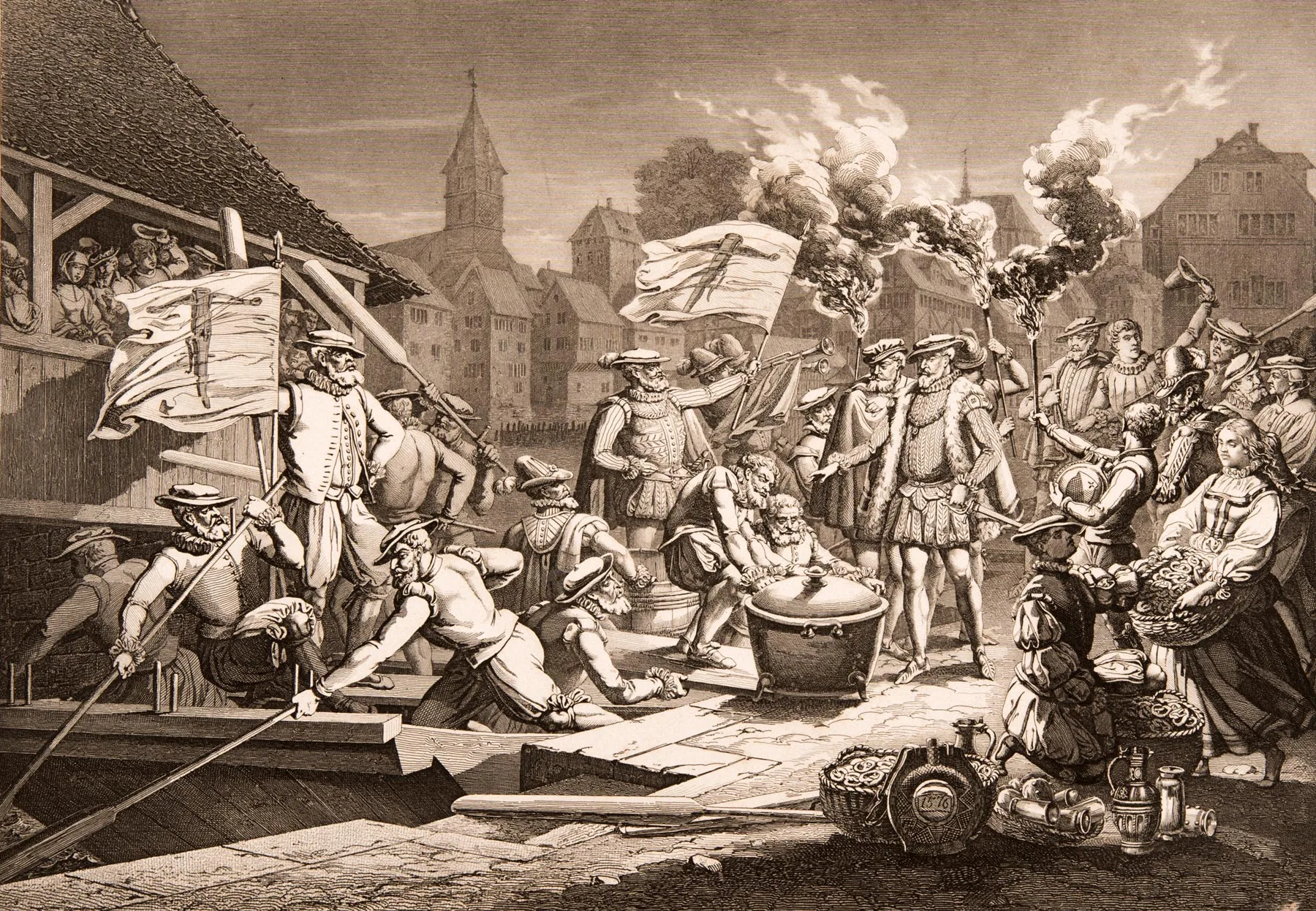
There were 18 rowers working in shifts with 6 helmsmen. The cargo was transferred to a new boat further down the river near Laufenburg, where the Rhine narrows into a dangerous bottleneck, and the Zurich crew continued their journey.
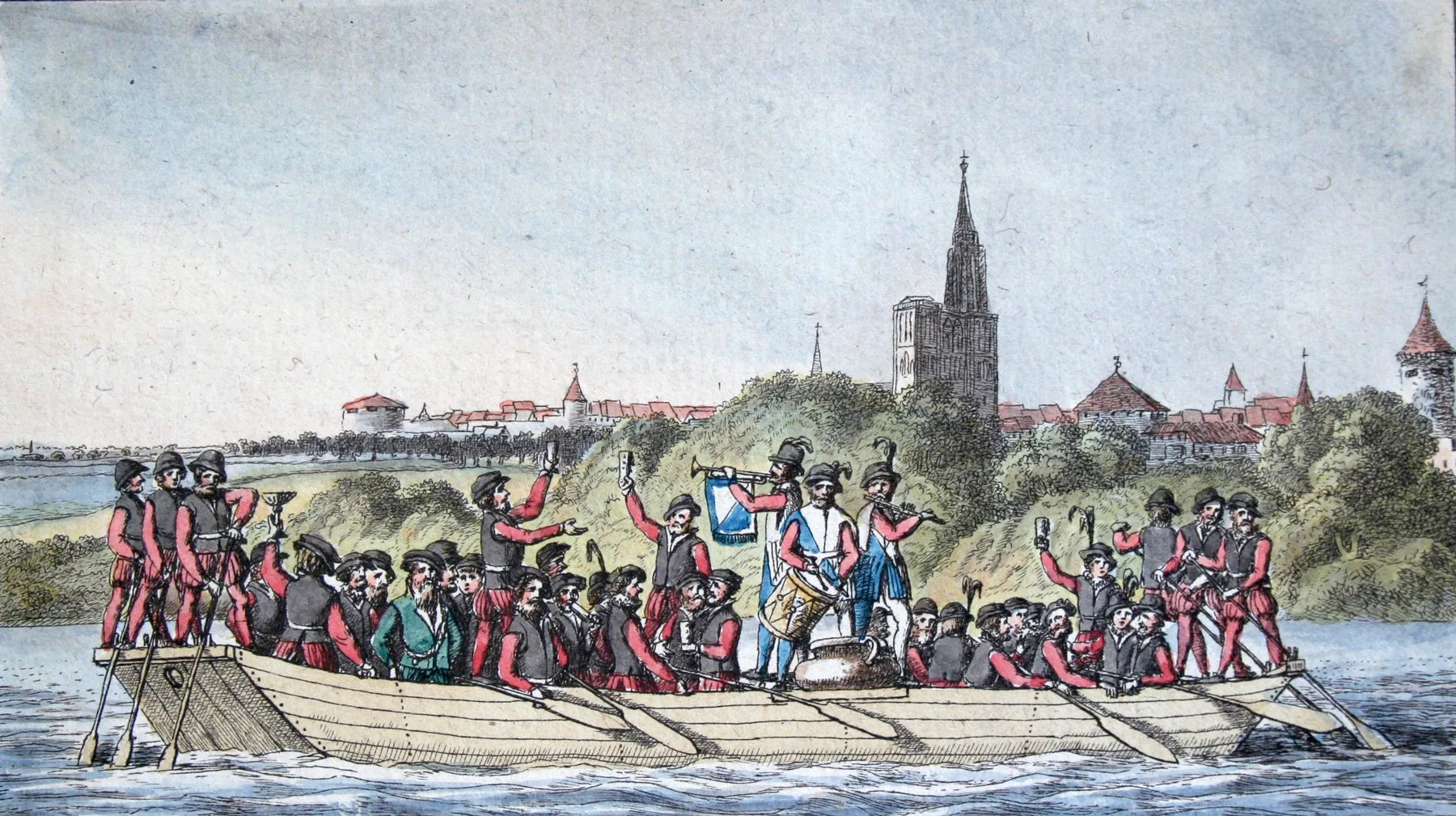
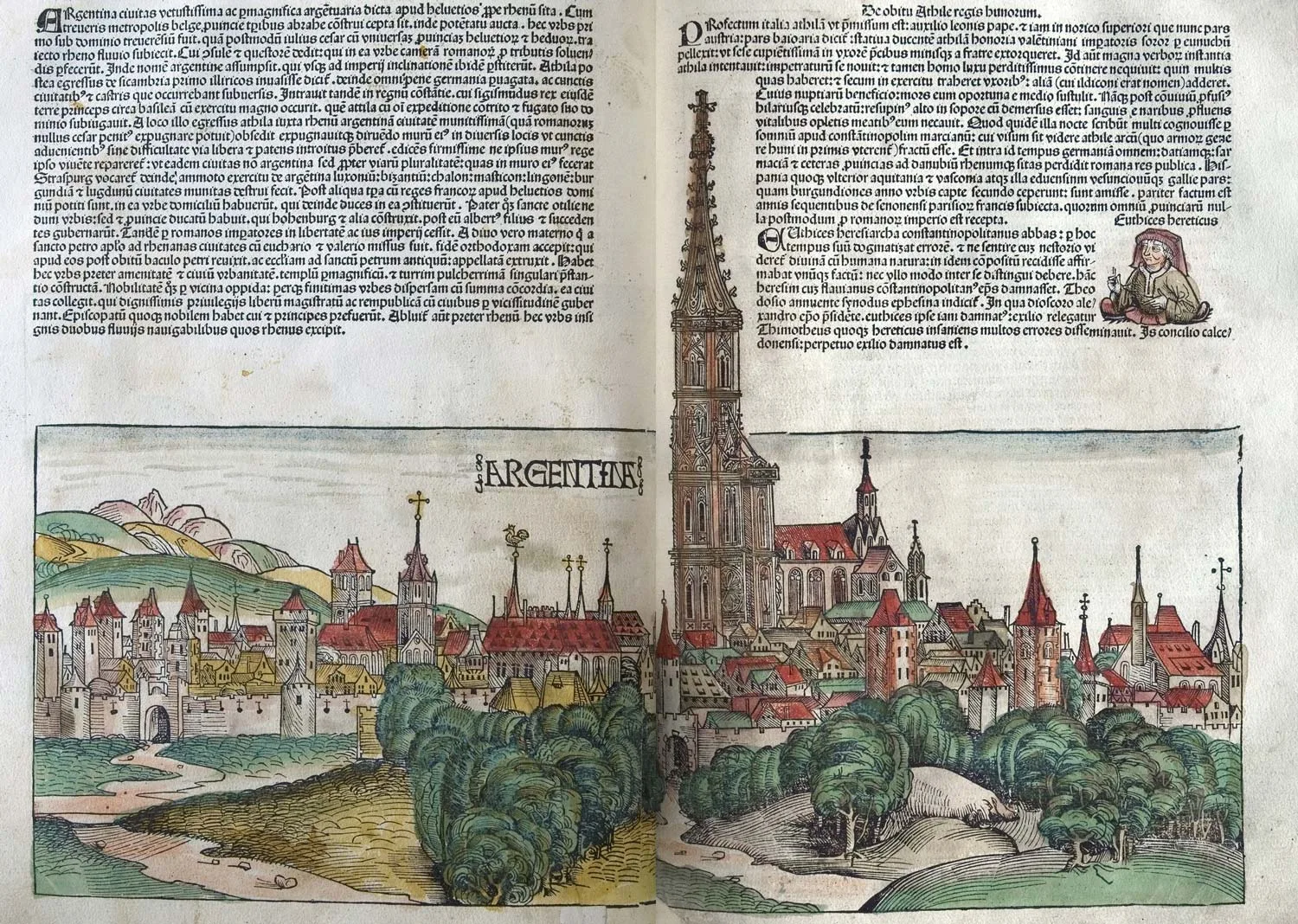
They passed Basel at ten and were able to see the spire of Strasbourg Cathedral from afar in the late afternoon. That meant it was time for the crew to put on their best clothes and attach the banner of the City of Zurich to the boat. They reached Strasbourg by early evening and moored at the Quai des Bateliers after a journey of about 20 hours and 200 kilometres. A huge crowd on both sides of the canal gave them a warm welcome. The onlookers eagerly caught the rolls thrown to them by the visitors.
After the boat had dropped anchor, the visitors from Zurich were greeted by a civic delegation. Kaspar Thomann addressed his Strasbourg allies and announced, “should Strasbourg ever find itself in need, it has friends ready to rush to its aid quicker than it takes for a dish of millet porridge to cool”.
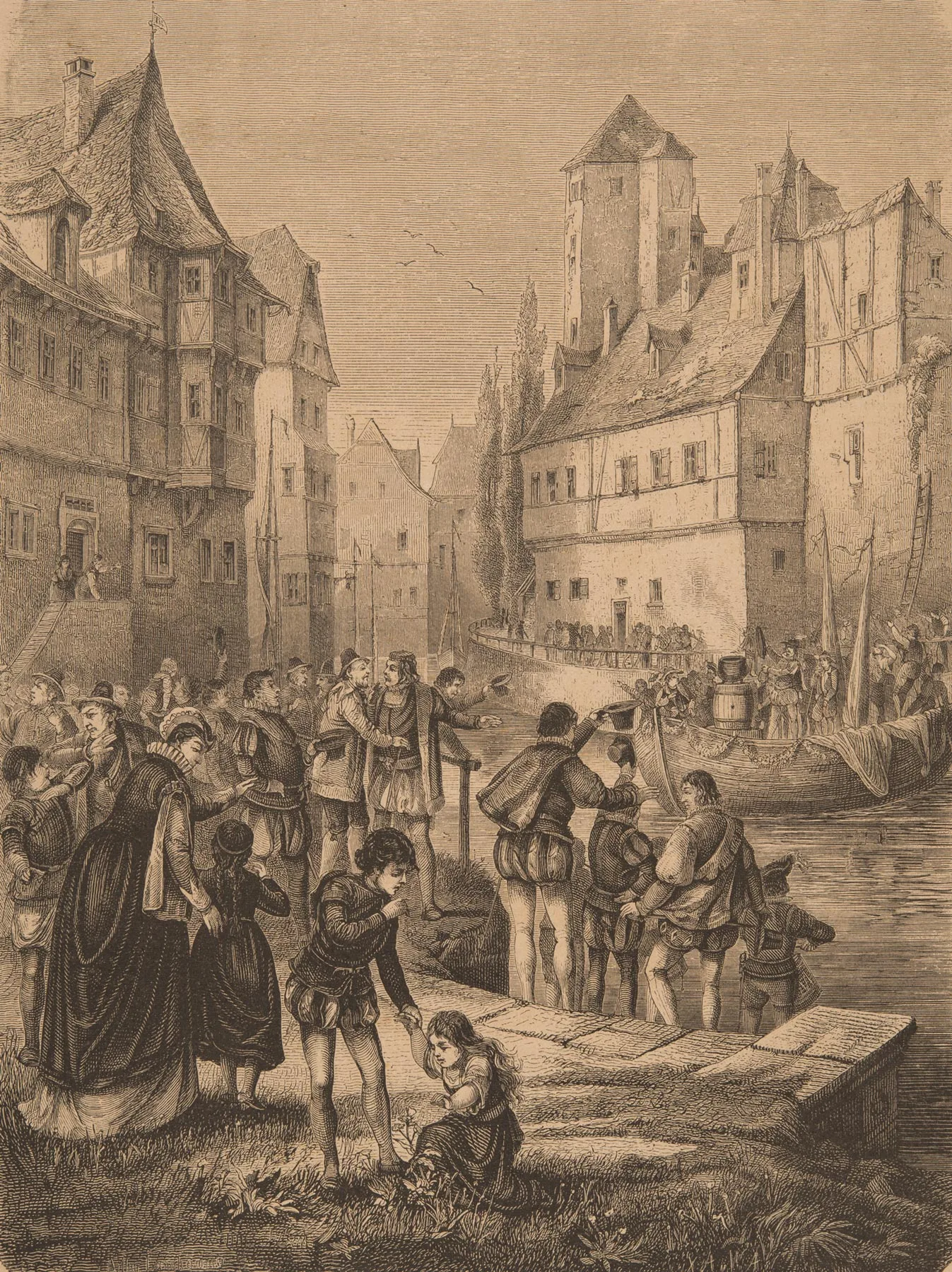
The intrepid crew members enjoyed the sights over the next few days, visiting the shooting festival, the city and its cathedral. They also marvelled at the flags taken from the Burgundians at Murten. Well-fed and having enjoyed many memorable experiences, they finally headed home. But not before presenting one last gift to their allies: the famous millet porridge pot.
The tradition lives on
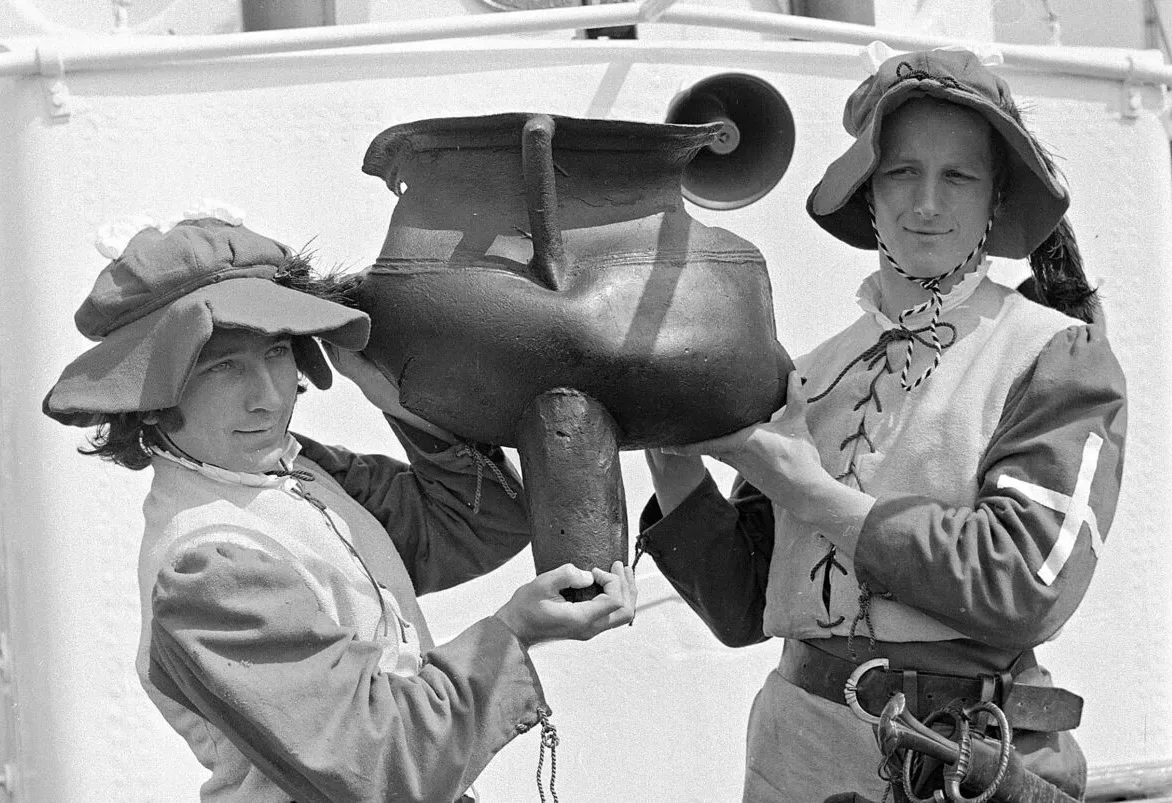
Poems were even written about them, including ‘Argo Tigurina’ by Rudolf Gwalther of Zurich and ‘Das Glückhafft Schiff von Zürich’ (the ship of good fortune from Zurich) by Johann Fischart from Strasbourg. The millet porridge pot, damaged by shelling from Prussian troops in 1870, is still on display in the Historical Museum of Strasbourg.
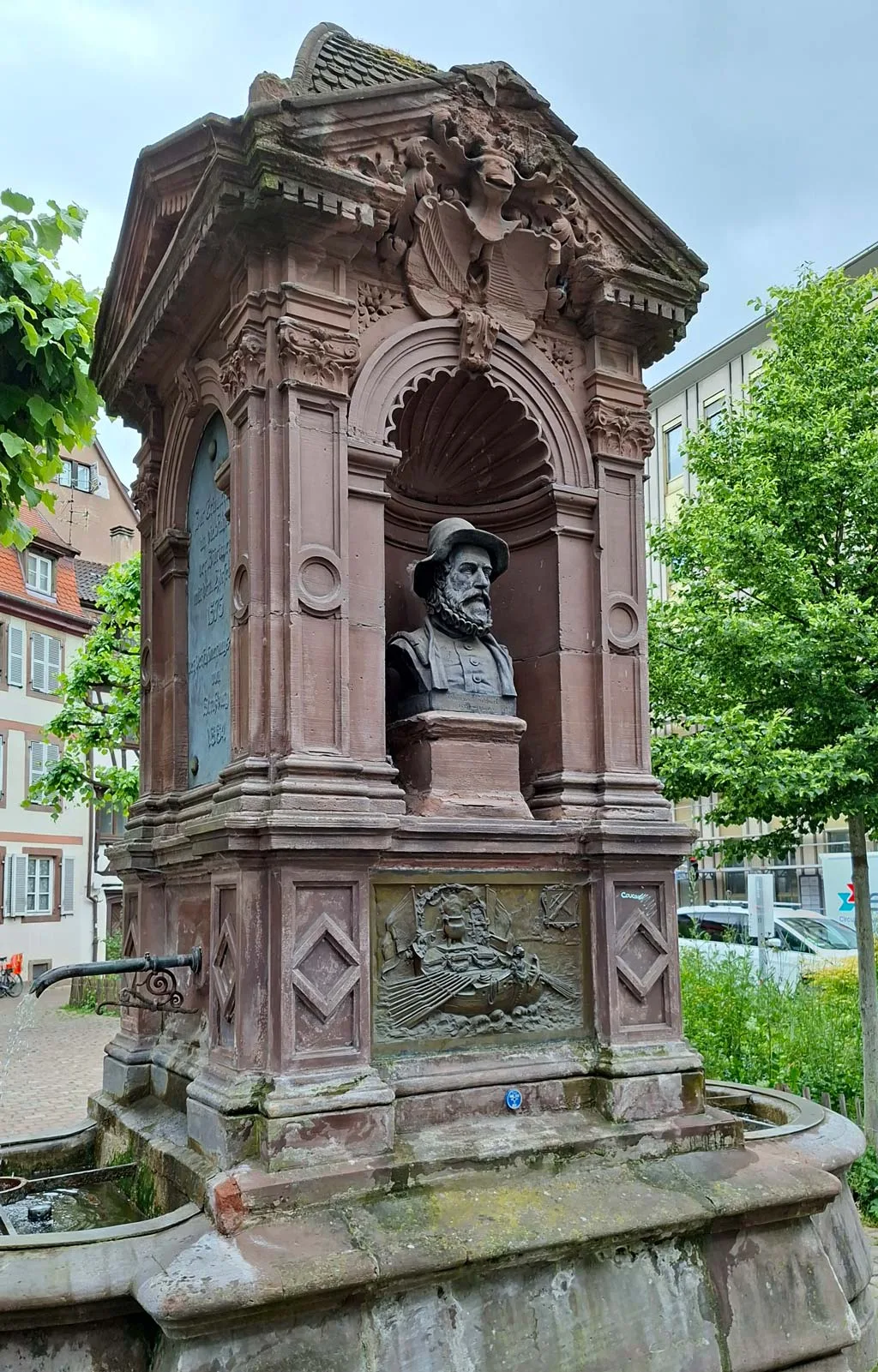
A fountain dedicated to the people of Zurich was constructed in Strasbourg in 1884. The monument is not just in memory of the ‘Hirsebreifahrt’ of 1576, but also of an event during the Franco-Prussian war of 1870, when the Prussians laid siege to the city. Representatives of Basel, Zurich and Bern negotiated the evacuation of over 2,000 civilians to Switzerland.
However, the waterways today bear no resemblance to what they were when the first ‘Hirsebreifahrt’ took place as dams, locks and other constructions have since been added. That is why the journey now takes two-and-a-half days, with a number of festive stopovers in Switzerland, France and Germany. In addition, the boats are motor-powered so they can negotiate those stretches where there is no current.
The pot of millet porridge is only loaded on board at Kehl on the opposite bank of the Rhine to Strasbourg. It is still shared among the people of the city and its arrival in Strasbourg is celebrated with a big festival attended by the city officials. A shooting competition is held on the next day in keeping with tradition as well as a water jousting tournament.
The next voyage takes place this year. On 19 August, the members of the Limmat Club will once again don their traditional costumes and set out on the Limmat amid musical fanfare. They will reach Strasbourg on the afternoon of 22 August.