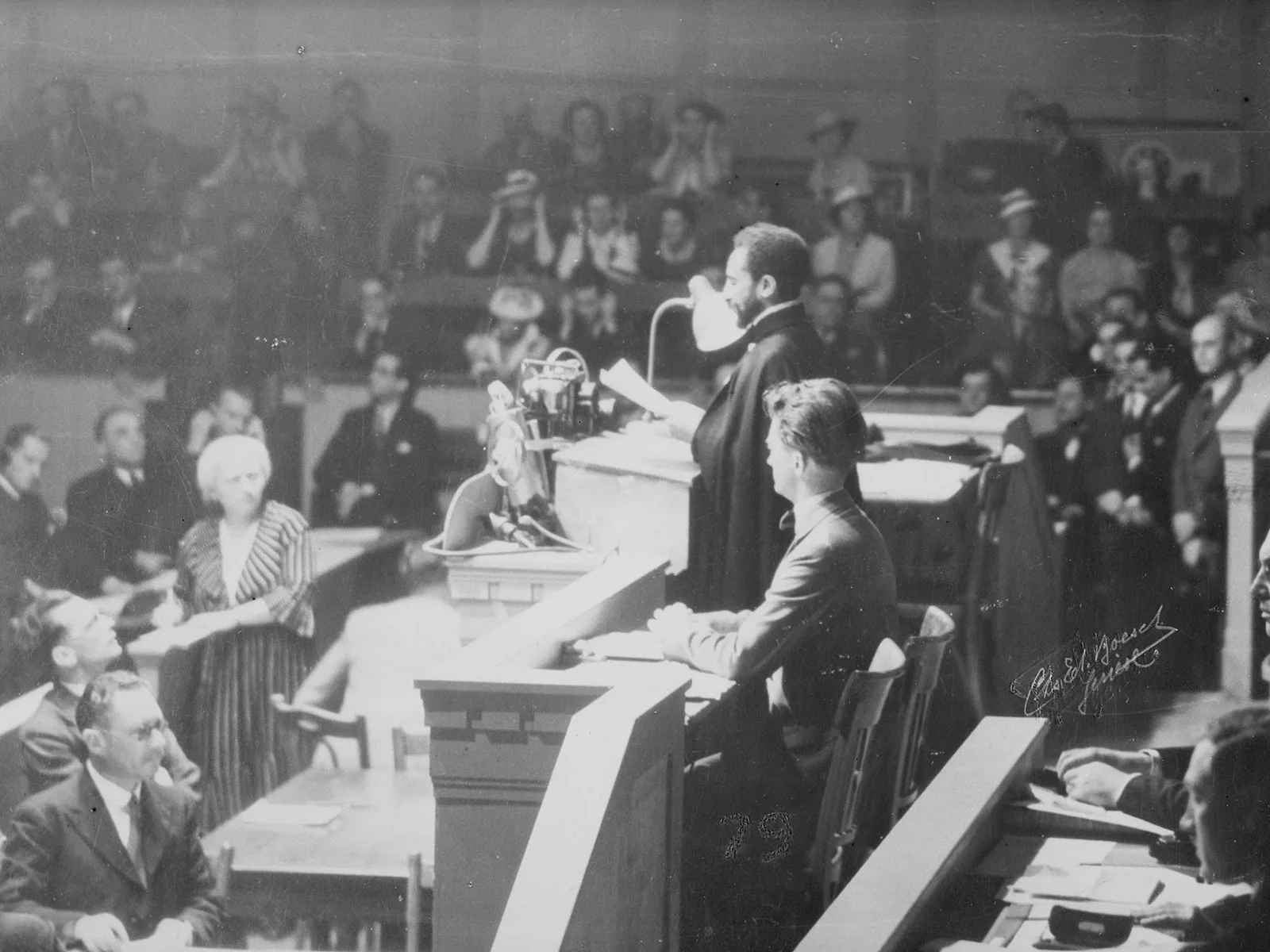
On 30 June 1936, Haile Selassie called on the League of Nations to support Ethiopia against invasion by Italy.
On 30 June 1936, Haile Selassie called on the League of Nations to support Ethiopia against invasion by Italy. Wikimedia / Bibliothèque de Genève

Haile Selassie let down by the League of Nations

Following Fascist Italy’s invasion of Abyssinia in 1935, the deposed Ethiopian Emperor Haile Selassie called on the League of Nations in Geneva for support. To no avail; Switzerland regarded him as an “inconvenient guest” and refused him asylum.

Murielle Schlup

Murielle Schlup

Freelance art historian and cultural scientist

After the First World War, on 10 January 1920, 42 nations united to form the League of Nations, headquartered in Geneva. The establishment of this first supranational world parliament had been decided by the victorious powers in 1919 and enshrined as an integral part of the Treaty of Versailles. The organisation, designed with solidarity in mind, was intended to mediate in international conflicts and safeguard lasting world peace. The League of Nations Covenant set out the obligation for all member states to provide immediate and direct military assistance if any member should be attacked. Besides Switzerland, the founding members in Europe were France, Italy and the United Kingdom. Germany only joined in 1926.

Ethiopia as a founding member

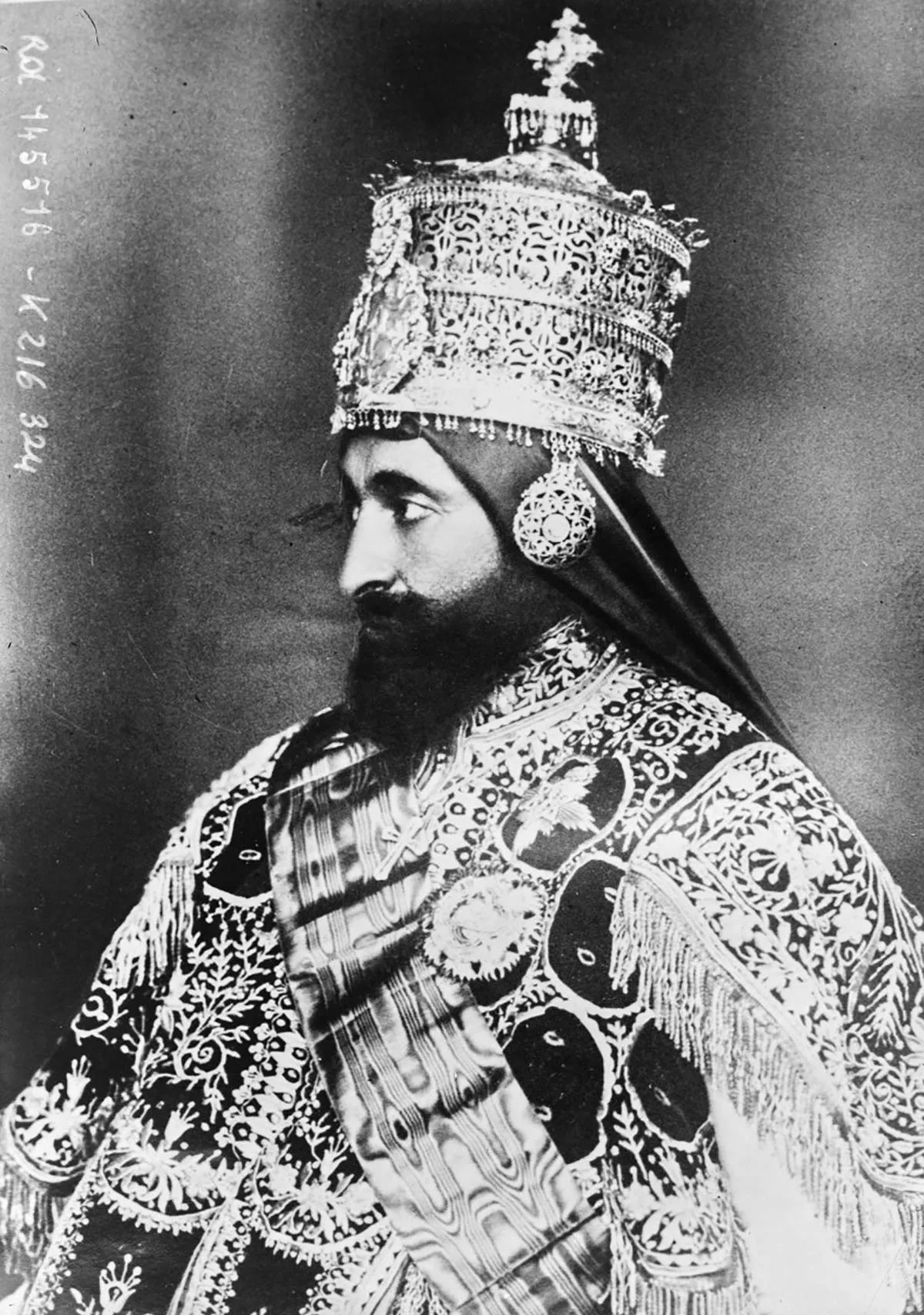
Ethiopia, which joined the League of Nations in 1923, is also counted as a founding member. Accession was initiated by Ras (Duke) Tafari Makonnen, who was a nephew of the sitting Empress Zewditu and was declared Ethiopian crown prince in 1916. While Empress Zewditu stayed out of day-to-day politics, Makonnen as Regent Plenipotentiary was appointed to govern the country. At the same time, he was also a skilled and visionary foreign policy actor. In particular, he pushed for closer alignment with the Western powers, yet the Ethiopian empire, which had been independent for 3,000 years, found itself increasingly isolated at the dawn of the 20th century in the midst of the ‘scramble for Africa’. After Italian dictator Benito Mussolini seized power in 1922, Ethiopia was on the alert. Makonnen, who rose to become Negus (king) in 1928 and was crowned Neguse Negest (king of kings) in 1930, had committed to the goal of safeguarding independence and fighting the threat of colonisation.
The ‘king of kings’, Emperor Haile Selassie I, on the day of his coronation, 1930. His coronation name means ‘power of the trinity’ in Amharic.
The ‘king of kings’, Emperor Haile Selassie I, on the day of his coronation, 1930. His coronation name means ‘power of the trinity’ in Amharic. gallica / Bibliothèque nationale de France
The coronation in Addis Ababa was attended by high-ranking guests and state representatives from all over Europe, whom the new Ethiopian ruler deliberately drew into his orbit. Through their attendance, he not only demonstrated to the world the standing he enjoyed including outside Africa, but also projected Ethiopia’s status as an independent country equal to the other League of Nations countries. The international press reported extensively on the event. And so, by 1930, Ethiopia was present on the world stage as a political power like never before.
TV documentary on the imperial coronation of Haile Selassie in November 1930. YouTube
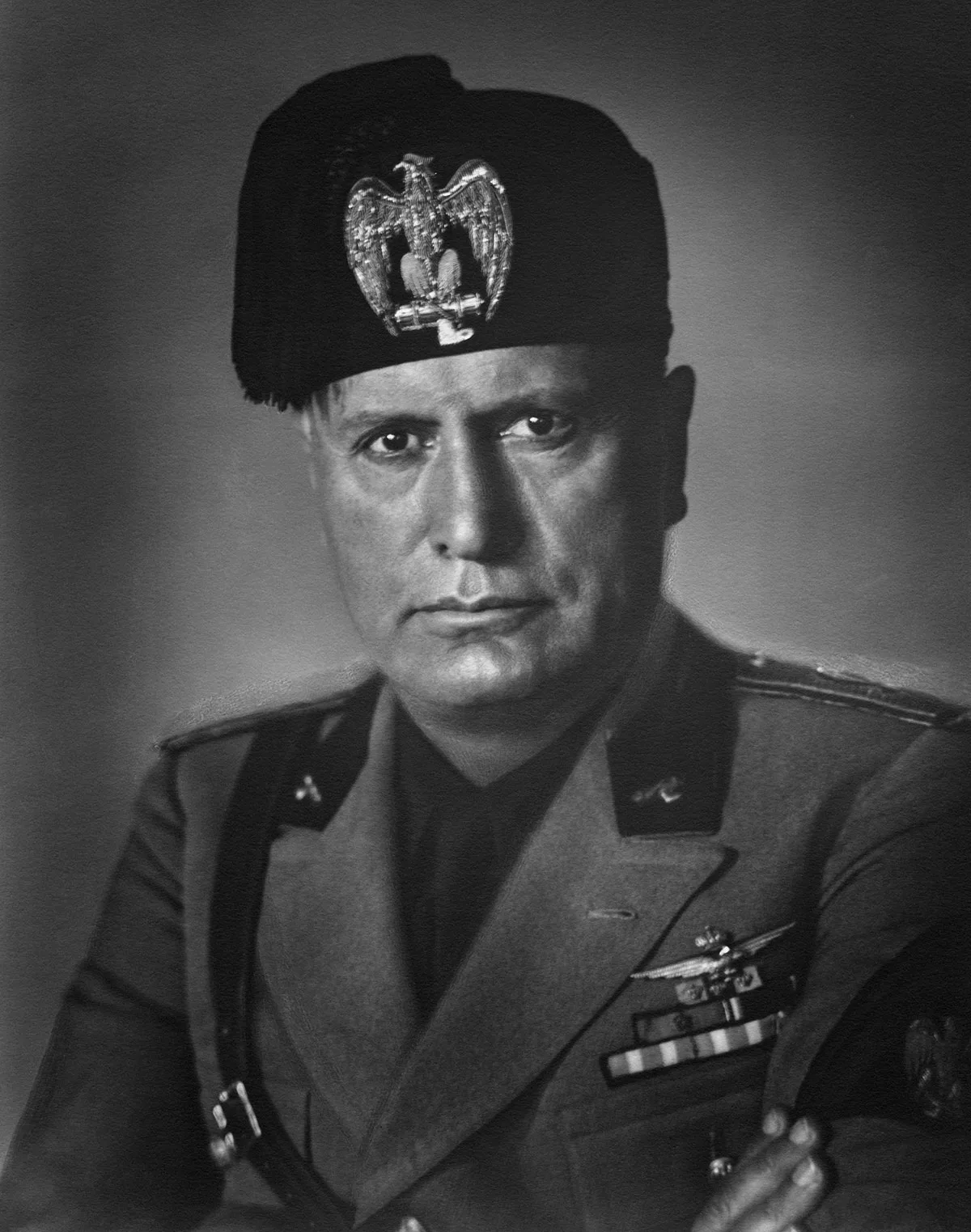
Someone who was unimpressed by all this was Benito Mussolini. As he saw it, the east African country was ideally suited to realising his future imperialist ambitions. This is because, on the one hand, Ethiopia was the only non-colonised and therefore ‘free’ country in Africa, besides Liberia which was under the protection and influence of the United States. On the other, Italy – which had kept the East African coastal strip under occupation through its colony Eritrea (since 1890) and parts of Somaliland – had an ideally located deployment base.
Dreaming of a revival of the ‘Imperium Romanium’: Mussolini pictured between 1937 and 1940.
Dreaming of a revival of the ‘Imperium Romanium’: Mussolini pictured between 1937 and 1940. Wikimedia
Mussolini did not see any great obstacle in the League of Nations. After notching up a number of successes in settling small-scale conflicts, the body showed its weaknesses for the first time when Japan successfully occupied Manchuria in 1931. That the League of Nations failed to deliver as soon as major powers were involved was revealed again in early October 1935 when Italian troops invaded Ethiopia. While the League of Nations publicly called the invasion an ‘aggression’, it only imposed a small number of ineffective sanctions and otherwise looked on, powerless and indifferent.
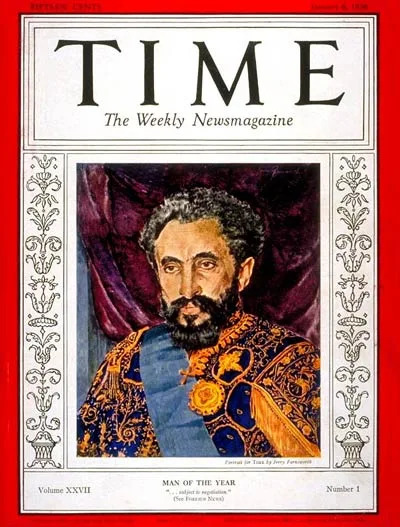
The long-prepared and foreseeable fascist war of aggression on Ethiopia sparked international outrage, even in large parts of Switzerland. Instead of obtaining immediate assistance for Ethiopia from the League of Nations, Haile Selassie was named ‘Man of the Year’ by Time magazine, three months after the start of the Italian invasion.
Time Magazine, 6.1.1936, Volume XXVII, No 1, cover.
Haile Selassie was crowned ‘Man of the Year’ by Time magazine in January 1936. Wikimedia
Ethiopia, which was far inferior in terms of soldiers and equipment, nevertheless vehemently resisted the brutal fascist military campaign. The ‘Abyssinian War’, also known as the ‘Second Italo-Ethiopian War’ was characterised by the most extensive air force operations that the world had ever seen up to that point. The nationwide poison gas attacks and numerous violations of the Hague Convention claimed the lives of more Ethiopian civilians than soldiers.
On 5 May 1936, Italian troops marched into Addis Ababa. On 9 May in Rome, Mussolini proclaimed the successful annexation of Ethiopia as part of Italian East Africa. King of Italy Victor Emmanuel III became emperor of Ethiopia and Rodolfo Graziani, commander of the southern front in Ethiopia, became Viceroy of Ethiopia. Yet the fact remains that Italy never controlled the whole country; Ethiopian resistance held steady and the sporadic brutal battles, the massacres of whole villages, and the targeted executions of civilians continued.
Italian troops enter Addis Ababa in 1936. YouTube / British Pathé

Spurned by Switzerland

As early as 2 May, the deposed emperor Haile Selassie fled via the Suez Canal with a small entourage – initially to Jerusalem and from there on to London. The emperor’s controversial decision to leave his country preceded his next step, which he planned from the UK: he wanted to appeal to the conscience of the member states at the League of Nations in Geneva and ask for assistance against the Italian aggressors. When the Federal Administration got wind of these plans, it immediately started to worry that if the emperor were to stay in Switzerland, it could strain relations with Italy and the League of Nations. Worried, officials sought advice from the Swiss envoy in London, Charles Paravicini, on how to deal appropriately with the deposed monarch in British exile, who was openly referred to as the “inconvenient guest” (hôte encombrant) and whose entry they would rather have prevented.
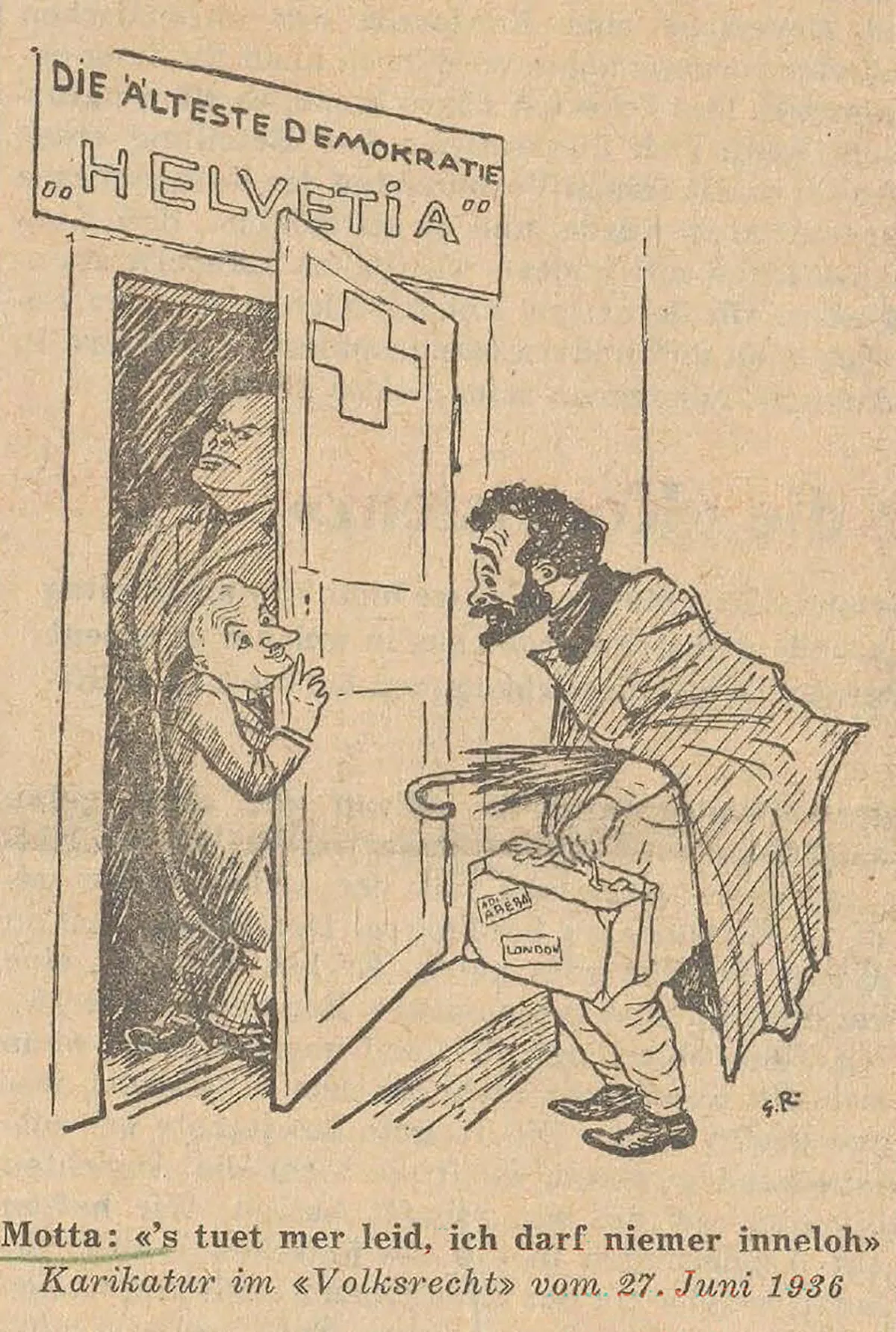
The emperor’s planned appearance was extremely inopportune, particularly for federal councillor and foreign minister Giuseppe Motta, an open admirer of Mussolini, as he was very worried about potentially alienating the ‘Duce’: “The Federal Council has advised the Negus against taking up residence in Switzerland until the Italo-Abyssinian conflict is definitively over, as granting a permanent right to stay to a foreign head of state that is itself at war with one of our neighbouring countries is bound to lead to some inconveniences,” so read an official communiqué of 24 June 1936.
Pro-Italian federal councillor Giuseppe Motta who had Mussolini in his corner, left the deposed Ethiopian emperor out in the cold. Caricature by Gregor Rabinovitch in the Zurich daily newspaper Volksrecht.
Pro-Italian federal councillor Giuseppe Motta who had Mussolini in his corner, left the deposed Ethiopian emperor out in the cold. Caricature by Gregor Rabinovitch in the Zurich daily newspaper Volksrecht. Swiss Federal Archives
Switzerland’s fear of finding itself at loggerheads with its fascist neighbour Italy due to Haile Selassie’s visit is also clear from other federal administrative records. Since little could be done to prevent the emperor entering the country at that stage, he was informed that his longer-term presence in Switzerland was not wanted and that he must leave immediately after his appearance at the League of Nations. The emperor, who had owned a villa in Vevey since Ethiopia joined the League of Nations in 1923, was not allowed to retreat to Vaud either.

Haile Selassie addresses the League of Nations

On 30 June 1936, Haile Selassie took to the stage at the Palais des Nations in Geneva and addressed the General Assembly of the League of Nations, which by then had grown to 52 member states. Barely had he started speaking when Italian journalists began heckling, jeering and insulting him with cries of ‘monkey’ and ‘murderer’. After the agitators had been escorted away, the emperor introduced his address in French before launching into his speech in Amharic: “I, Haile Selassie I, Emperor of Ethiopia, am here today to claim that justice which is due to my people, and the assistance promised.”
Haile Selassie’s iconic appearance of 30 June 1936 before the League of Nations in Geneva. YouTube
Haile Selassie denounced the violent Italian invasion of his country and called into question the basic concept of the international community: “The appeals of my delegates addressed to the League of Nations in Geneva had gone unanswered […]. That is why I decided to come myself to bear witness to the crime perpetrated against my people […] and give Europe a warning of the doom that awaits it, if it should bow before the fait accompli.” He called on the nations to honour their obligations towards Ethiopia under international law. He raised two questions: “What are you willing to do for Ethiopia? And to the great Powers who have promised the guarantee of collective security to small states on whom weighs the threat that they may one day suffer the fate of Ethiopia, I ask what measures do you intend to take?”

The League of Nations refuses

The answers to Haile Selassie’s two questions were simple: nothing and none. While the League of Nations did condemn the attack on Ethiopia, the appeal to the conscience of the statesmen in attendance fell on deaf ears. The few benign sanctions against Italy remained ineffective and were soon lifted – including by Switzerland, one of the first countries to legally recognise the Italian annexation of Ethiopia. Most member states did the same – whether implicitly or explicitly. The fascist journalists who had disrupted the emperor’s appearance in the League of Nations General Assembly – under diplomatic pressure from Italy – were released after a short spell in custody and were able to return to Italy unpunished.
But Selassie’s appearance made a strong impression on the public. His powerful words went ‘viral’, as we would say today. Both in Switzerland and further afield, the media reported on the first African statesman to have addressed the League of Nations.
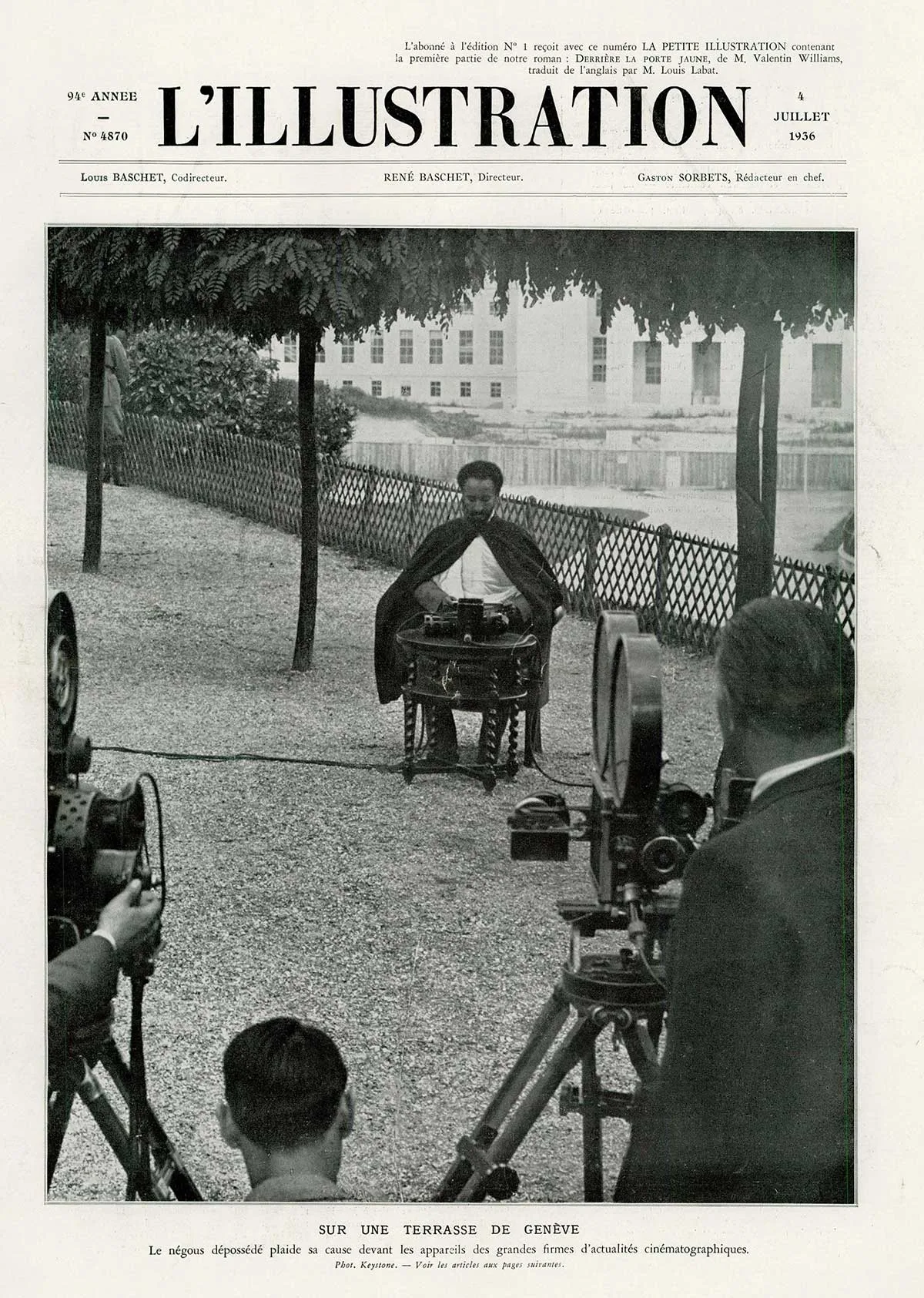
Haile Selassie’s appearance garnered media interest. The photo shows the deposed Ethiopian emperor in front of journalists in Geneva, with the newly built Palais des Nations in the background. Cover of L’Illustration of 4 July 1936.
Haile Selassie’s appearance garnered media interest. The photo shows the deposed Ethiopian emperor in front of journalists in Geneva, with the newly built Palais des Nations in the background. Cover of L’Illustration of 4 July 1936. Swiss Federal Archives
Selassie’s words also swept through the streets of Geneva as the Ligue suisse des droits de l’Homme in Geneva put up numerous posters summarising his speech in July 1936. The Federal Administration was not particularly pleased about the campaign, but decided to leave the posters up, relieved that the “inconvenient guest” and his entourage had already headed back to the UK.
Italy left the League of Nations in 1937, and following Japan and Germany’s withdrawal in 1933, this meant that three major powers had left the ‘peacebuilding’ organisation. When the Second World War broke out in September 1939, the failure of the organisation was plain for all to see.

The liberation of Ethiopia

Despite the great brutality of fascist warfare, the Italian invaders did not last long in Ethiopia. Ethiopia was the first country to be liberated from occupation by an Axis power during the Second World War. The recapture by British troops – with the involvement of the Ethiopian emperor on the ground – began in January 1941 with the East African campaign, culminating in the capture of Addis Ababa on 5 April 1941. On 5 May, five years to the day after the fascists had marched into Addis Ababa, Emperor Haile Selassie symbolically returned to the Ethiopian capital.
The Italian troops only surrendered on 27 November 1941, following their defeat in the Battle of Gondar.
On 5 May 1941 – the fifth anniversary of the Italian invasion – Emperor Haile Selassie returned to Ethiopia. YouTube / British Movietone
The emperor’s internationally recognised commitment in favour of his beleaguered country, his courageous denunciation of fascism, colonialism and racism before the League of Nations, and his – in earlier years of his reign sometimes very successful – reform and modernisation efforts in Ethiopia brought him great respect and sympathy from all over the world in the post-war years.
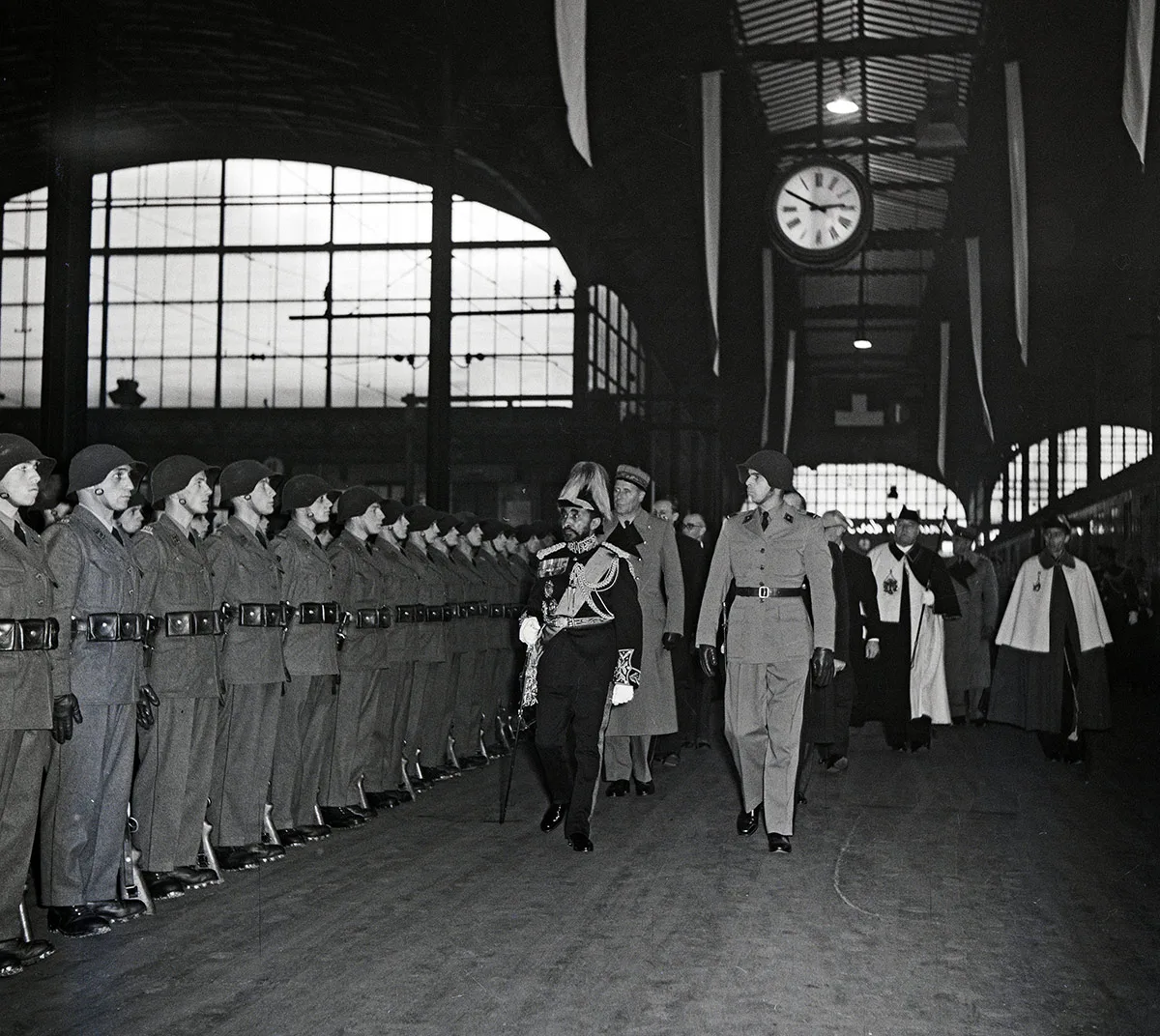
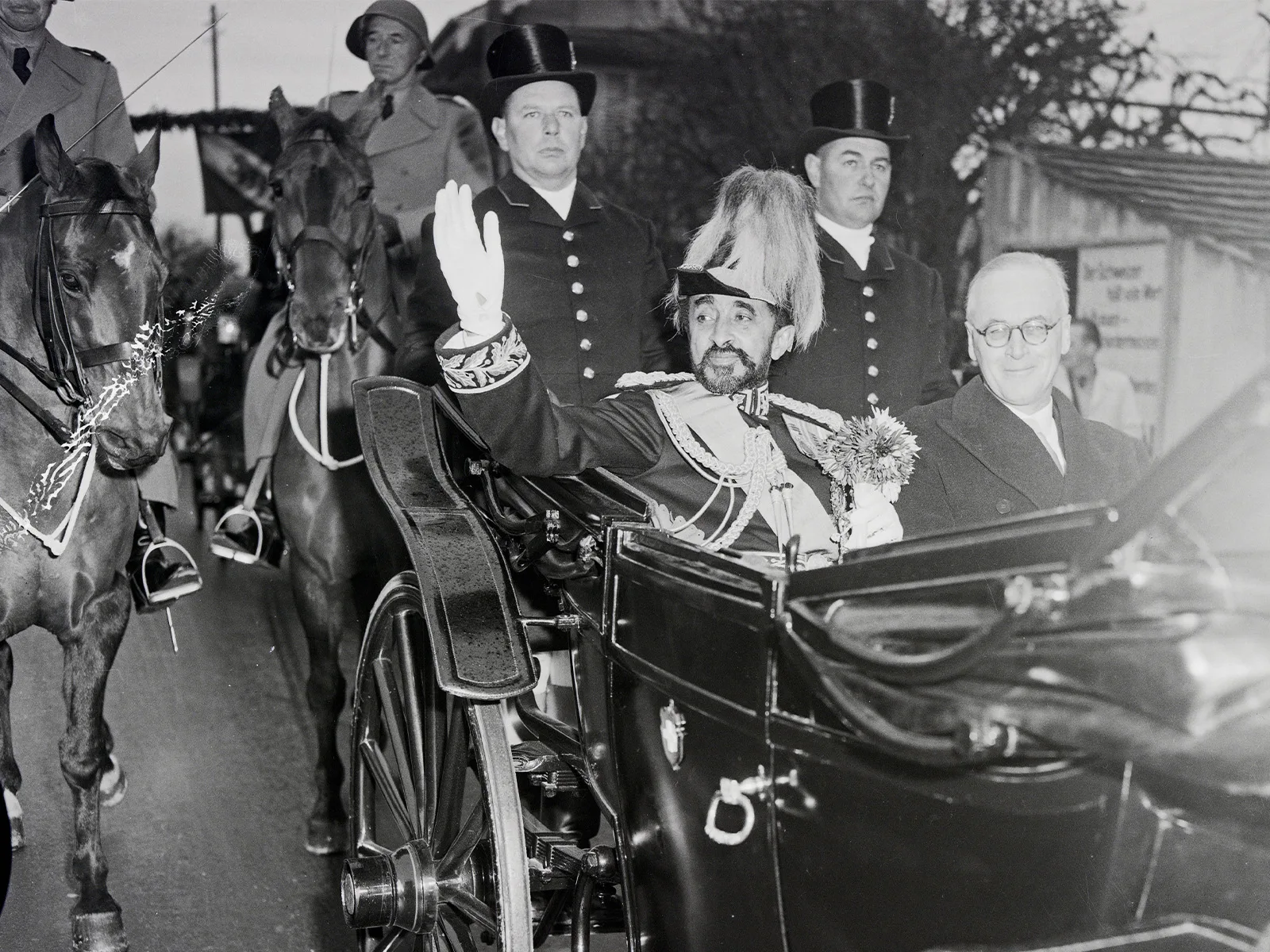
In Switzerland, too, Haile Selassie was again welcome: in November 1954, just under 20 years after the once “inconvenient guest” had had the door slammed in his face, he returned to Switzerland for a four-day state visit at the initiative and invitation of the Federal Council, and was given the red carpet treatment, with no expense spared to ensure the requisite pomp, perfection and political correctness.
Arrival of Haile Selassie in Basel in 1954.
Arrival of Haile Selassie in Basel in 1954. e-pics
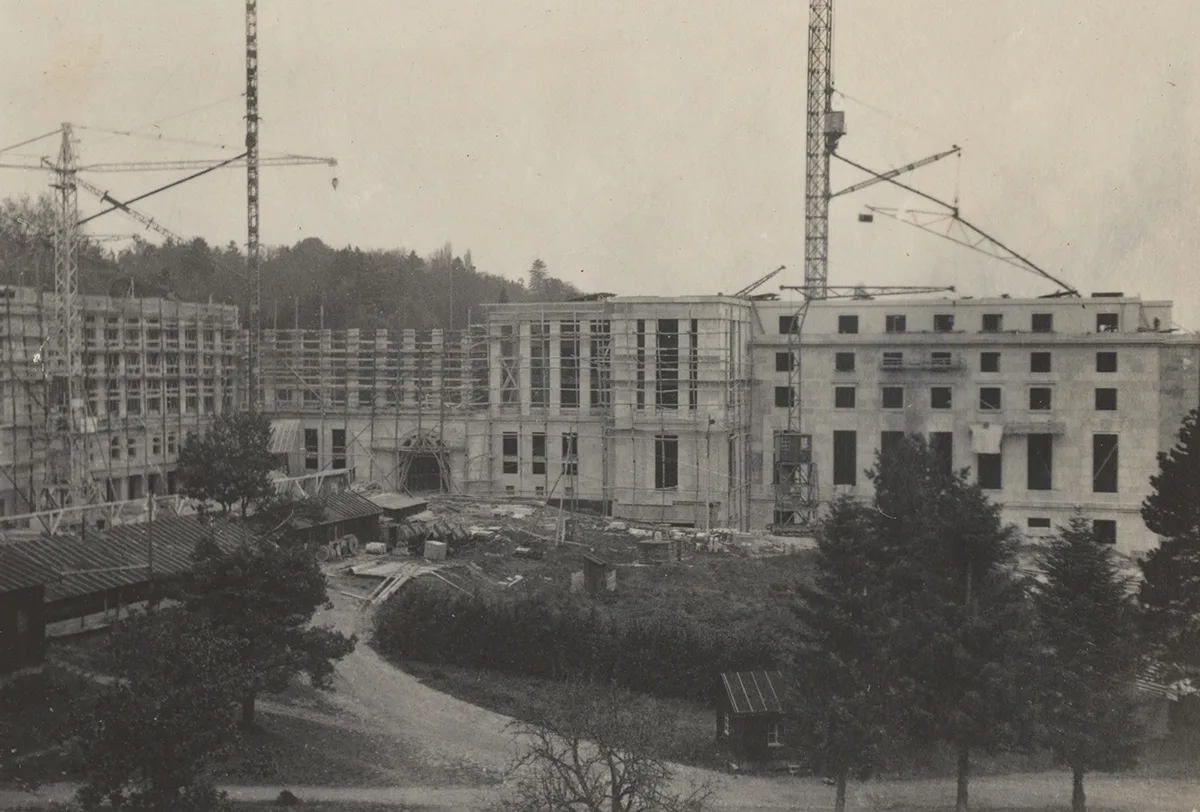
And what of the League of Nations? It was dissolved in 1946. When the UN Charter entered into force on 24 October 1945, it was replaced by the United Nations, which was initially headquartered in London and then moved to New York in 1951. The building complex Palais des Nations in Geneva’s Ariana Park, which was constructed between 1929 and 1938 as the headquarters for the League of Nations, has been the European headquarters of the United Nations since 1966 and its second most important centre after New York.
The Palais des Nations in Geneva was built between 1929 and 1938. It has been the European headquarters of the UN since 1966.
The Palais des Nations in Geneva was built between 1929 and 1938. It has been the European headquarters of the UN since 1966. e-pics

Further posts